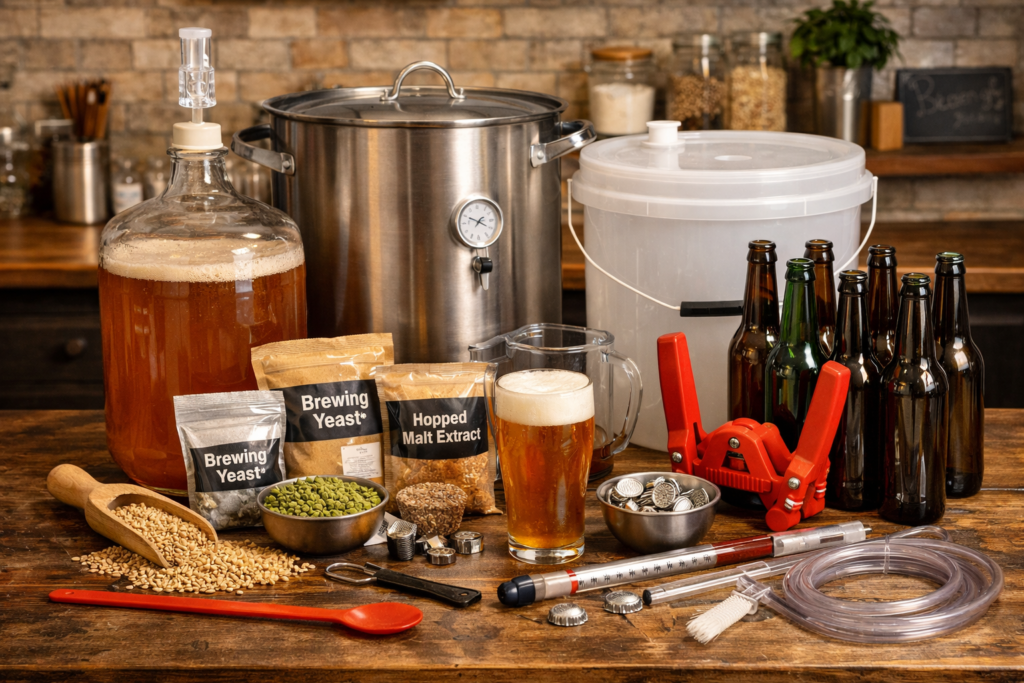
The cheap kit is the one that gets you.
Not the shiny stainless setup with pumps and valves. The small box on a bargain shelf. The one that makes brewing look like a harmless little weekend project. If you are looking at a b&m home brew kit, the straight answer is this: it can be a good first buy for a small, low-commitment batch, but it is usually a poor buy if you expect a full starter system or the sort of volume most homebrewers mean when they say “a batch.”
That is why people end up talking past each other on these kits. One person wants 20 or 23 litres and room to grow. Another wants one easy test run in a small kitchen, with no huge spend and no mountain of gear. Those are not the same job.
I have made both kinds of first-batch decisions. The cheap one can be fun. It can also leave you with a fermenter, a bag of caps, no sanitiser, and that annoying feeling that the “deal” only worked because the hard bits were left out.
At a glance
- Buy it if you want a cheap, small first extract batch and you are fine adding a few missing bits.
- Skip it if you want a complete starter setup, steady stock, or full-size 20L to 23L brewing.
- Step up if you already know this is going to become a hobby and not just a one-off experiment.
What this guide will show:
- What these bargain-store beer kits usually get right
- What is often missing from the box
- Why 10 litres changes the value equation
- How to avoid the mistake that turns a small kit into thin, forgettable beer
- Which alternatives make more sense when you need more than a test run
Best Suggestions Table (All products below are reviewed using the same criteria. Click the buttons below to jump to the reviews.)
| Product | Best for | Action |
|---|---|---|
| Mr. Beer Deluxe Edition Beer Kit | The easiest low-pressure first brew |
Check Price Review |
| Northern Brewer Brew. Share. Enjoy. HomeBrewing Starter Set | A fuller beginner setup with room to grow |
Check Price Review |
| Brooklyn Brew Shop Everyday IPA Beer Making Kit | Tiny kitchens, gifts, and stovetop brewing |
Check Price Review |
Tip: Use the buttons as a quick jump, then compare current retailer pricing once you know which kit actually fits.
Is the B&M home brew kit worth buying?
Yes, for the right person. No, for the wrong expectation.
If your goal is “I want to try home brewing without turning the spare room into a plastic bucket showroom,” a B&M-style kit can be a sensible buy. Small extract beer kits lower the barrier to entry. The American Homebrewers Association’s extract brewing guide makes the same basic point from a more formal angle: extract brewing strips away a lot of the grain-side complexity, which is why beginners often start there. That part is real.
Where people get burned is on the second half of the question. “Worth buying” is not the same as “best value.” If you are expecting a complete beginner package, a normal-size batch, and a neat upgrade path into the hobby, this kind of cheap starter kit starts to wobble. The small output, missing tools, and packaging hassle can make it feel more like a sampler than a setup.
Quick call: Buy it for a first taste of brewing. Skip it for a “real” starter system. Step up if you already know you’ll brew again next month.
That is the whole thing, really. The kit is not bad because it is cheap. It is bad only when the box is being asked to do a job it was never built for.
If the next move is already “what should a better long-term setup look like?”, this is where a fuller guide like 7 Best Home Brewing Systems That Actually Fit Your Brew Style starts to make more sense than another bargain-bin gamble.
Check the box, not just the shelf tag
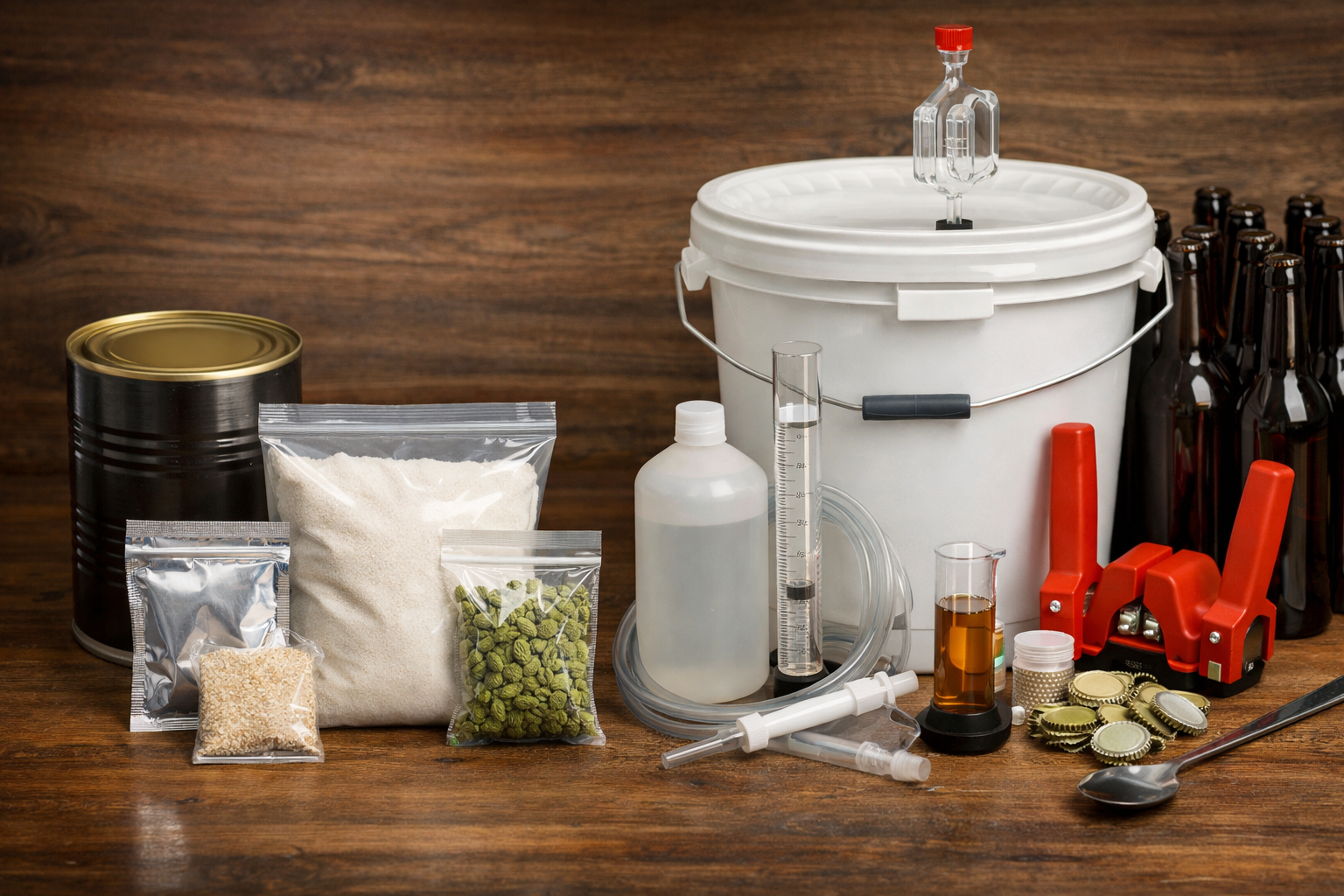
Cheap kits get judged by the wrong number. People stare at the price and miss the contents.
With a bargain home brew starter kit, the real question is not “How much is it?” It is “What job is this box actually covering?” On one shelf, “kit” can mean a can of hopped malt extract, a yeast packet, and a sachet of brewing sugar or dextrose. On another, it can mean a fermenter, caps, bottles, and basic handling gear. Those are wildly different offers.
That is why the label matters more than old forum chatter or a half-remembered video. Product bundles change. Retailers rotate stock. A kit that once included dry hops or extra bits for bottle conditioning might not look the same later on.
Here is the checklist I would use before buying one of these:
- Ingredients: malt extract or extract pouch, yeast, sugar or dextrose, and any dry hops
- Fermentation gear: fermenter or fermentation bucket, lid, tap or spigot, and airlock if supplied
- Packaging gear: bottles, caps, swing tops, bottling wand, or none at all
- Sanitation: sanitiser in the box, or another item you need to source before brew day
- Measurement: hydrometer and trial jar, or just guesswork dressed up as optimism
A box that includes only ingredients can still be a fair buy. You just need to price it honestly. Once you add sanitiser, bottles, and a hydrometer, the “cheap” kit can stop looking all that cheap.
Remember: “Home brew kit” does not always mean “all-in-one system.” Sometimes it means “ingredients, and good luck with the rest.”
Match the 10L batch size to the life you actually live
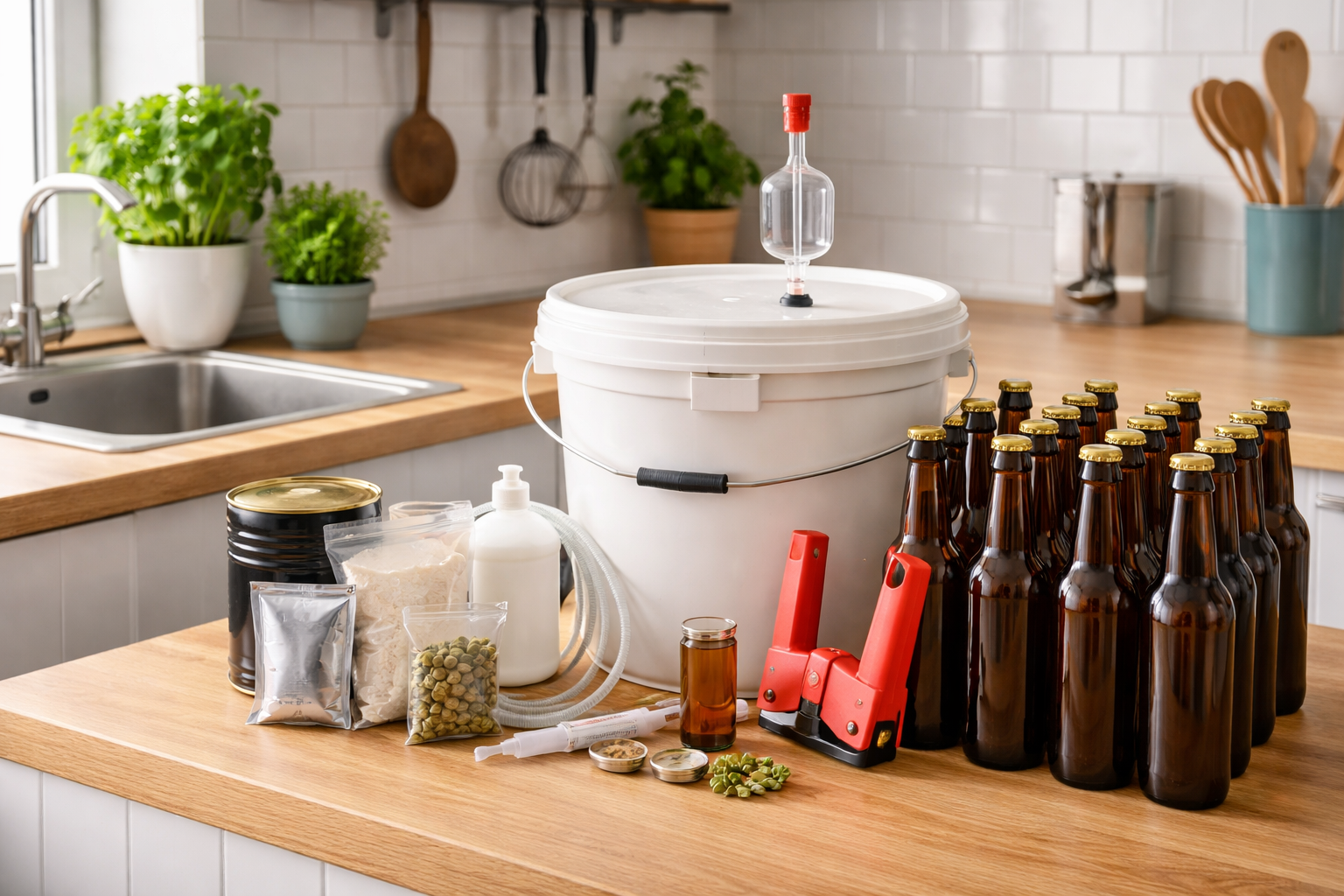
This is where a lot of the confusion comes from. A 10 litre beer kit is not automatically stingy. It is just aimed at a different life.
Ten litres works out to about 20 standard 500 ml bottles, give or take a little loss to sediment and spills. For a first batch, that is not silly at all. It means less wort to make, less beer to package, and a much lower “I just made too much mediocre beer” risk. If you live in a flat, brew in a kitchen, or want a gift that does not swallow an entire cupboard, small-batch brewing has a real point.
Where it turns sour is when the buyer expects the economics of a full-size 20L or 23L kit. That is not what a 10L box is built to do. The cost per pint is usually weaker. The effort per pint is weaker too. You still clean, ferment, prime, and bottle. You just get fewer finished beers out the other end.
| Batch size | Who it suits | Tradeoff |
|---|---|---|
| 10L | First-timers, small kitchens, gift buyers, cautious hobby testers | Less beer for nearly the same cleaning and bottling effort |
| 20L to 23L | Anyone who already knows they want a proper homebrew routine | More space, more gear, more commitment on day one |
That is the decision rule. If you want a test run, 10L can be a smart filter. If you want proper value and repeatability, it starts to feel cramped fast.
And if the thought in the back of your head is already “I’m going to outgrow this in two brews,” then a guide like 7 Smart Picks for the Best Equipment for All Grain Brewing is a better next read than forcing a starter kit to act bigger than it is.
Do not stretch a 10L kit into a weak 20L disappointment
This is the mistake that looks clever for about five minutes.
When people ask whether a 10 litre home brew starter kit can be “padded out” to 20 litres or more, they are really asking whether water can fake extra malt, extra body, and extra bitterness balance. It can’t. The maths is not mysterious, and the American Homebrewers Association’s guide to extract recipes lays out the basic gravity logic plainly: once the amount of extract stays fixed, adding more water drops the gravity.
In practice, that means lower alcohol, thinner mouthfeel, and a beer that tastes washed out long before it tastes “efficient.” The hop balance shifts too. A recipe built for a small batch can go oddly bland and bitty once you dilute it past the point it was made for.
Use the simple rule:
gravity points x starting volume = gravity points x final volume
So if a kit is built around a concentrated 10L batch, topping it up to 20L does not double the beer. It halves the concentration. That is why these stretched brews often end up a bit meh. Not ruined, just disappointing.
Better move: buy two identical small kits if you want more of the same beer, or buy a kit that was designed for the larger batch in the first place.
If you are trying to squeeze more litres out of the box on day one, that is usually the sign that the kit itself is the wrong fit.
Run the brew with the three controls that matter
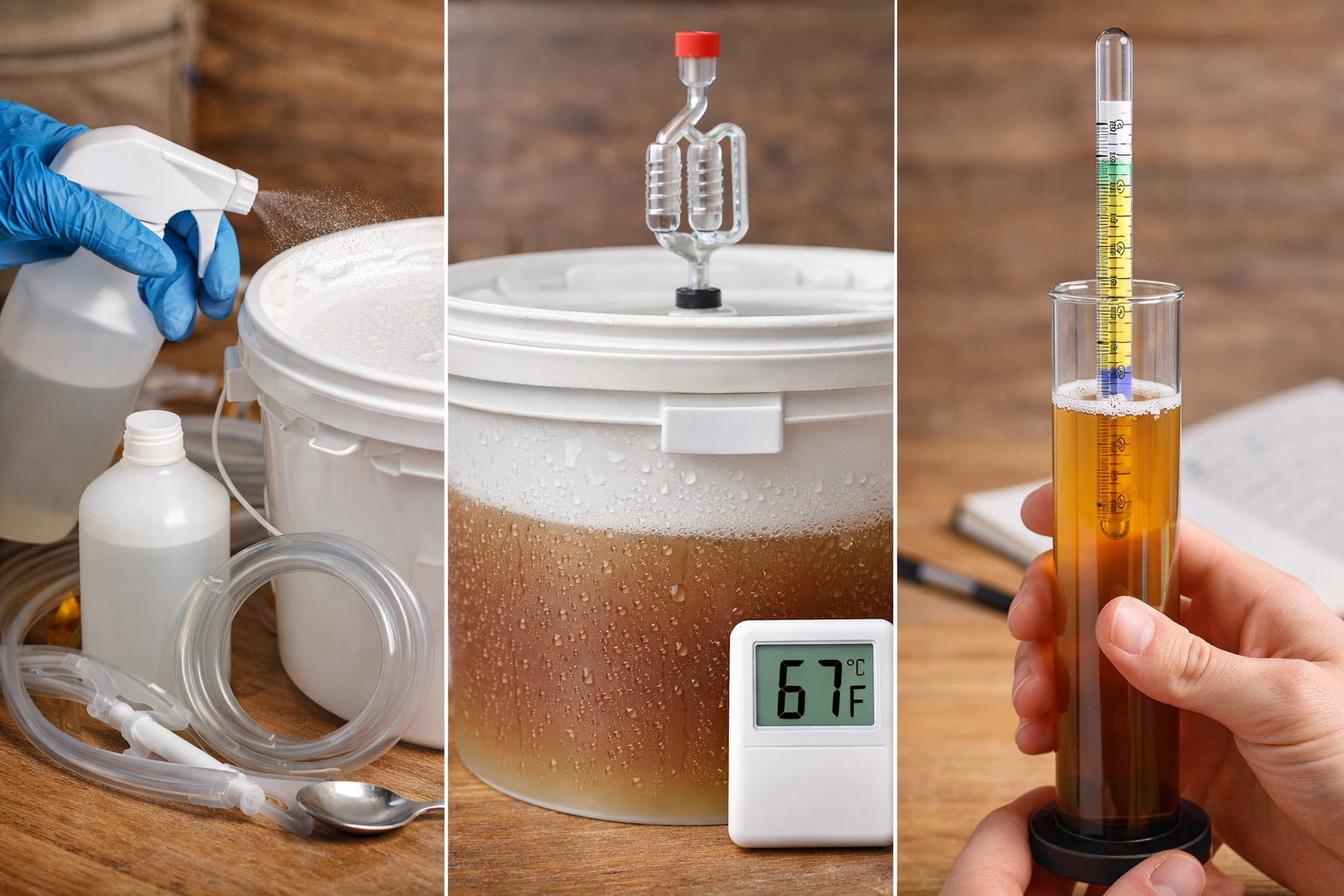
The box matters less than the process. Not in a mystical way. In a very boring, very practical way.
First, clean and sanitise properly. Dirty brewing gear does not always make a batch undrinkable, but it is the fastest route to weird off-flavours and “what went wrong?” panic. Clean first, then sanitise. They are not the same thing.
Second, keep fermentation temperature sane. The yeast does not care that the kit was cheap. It will still throw rough flavours if it ferments too warm. The American Homebrewers Association’s temperature control piece makes the point clearly: yeast can grow at warmer ranges than brewers actually want for flavour. For many clean ales, the first few days matter most. A room in the low 60s F ambient range can keep the beer itself from climbing into the rougher zone once fermentation heat kicks in.
Third, wait until fermentation is finished before bottling. That sounds obvious until you are staring at a quiet airlock and getting impatient. Airlock silence is not a reliable finish line. Gravity readings are. Bottling too early is where fizzy gushers and over-carbonated bottles come from. And once the bottles are filled, they still need warmth and time to condition. The bottle conditioning guidance from the American Homebrewers Association puts the usual conditioning range around 68 to 80 F, which is a good reminder that cold cupboards are not your friend here.
I know this sounds like the dull part. It kind of is. But this is also where beginner beer gets saved. A plain extract kit brewed cleanly at a stable temperature can surprise you. A “better” kit fermented hot and bottled early can still taste rough.
Note: If room temperature swings are the weak point, 5 Best Temp Controllers for Brewing, Ranked by Setup Fit is the natural next step. Better beer often comes from steadier fermentation, not fancier hardware on brew day.
Know when the bargain stops being a bargain
The shelf price is only the opening number.
A cheap beer kit can still be the right choice. But it stops being a bargain the minute you quietly stack on the missing parts: bottles, swing tops or caps, sanitiser, hydrometer, trial jar, maybe a second bucket for bottling, and the odd little thing no one mentions until you are halfway through the instructions.
This is where first-time buyers get that mildly cheated feeling. They did not buy the wrong product, exactly. They bought a partial answer.
There is also the stock problem. Discount-store brewing gear can be patchy. A kit that is easy to find one month can disappear the next. That is why I would not build a brewing plan around a retailer whose stock changes more like seasonal general merchandise than specialist brewing gear. Treat these kits as opportunistic buys, not a dependable ecosystem.
There is one fear you can probably drop, though. For ordinary hobby brewing in the UK, the law already carves out space for domestic use. Under the Alcoholic Liquor Duties Act 1979 and the related private-consumption exemption, home brewing for your own domestic use sits in a very different bucket from selling or commercial production. That does not turn your shed into a brewery business. It just means the legal side is not the scary bit here.
The scary bit, if anything, is buying a “starter kit” and finding out you still needed half a starter kit.
Choose the smarter alternative for your situation
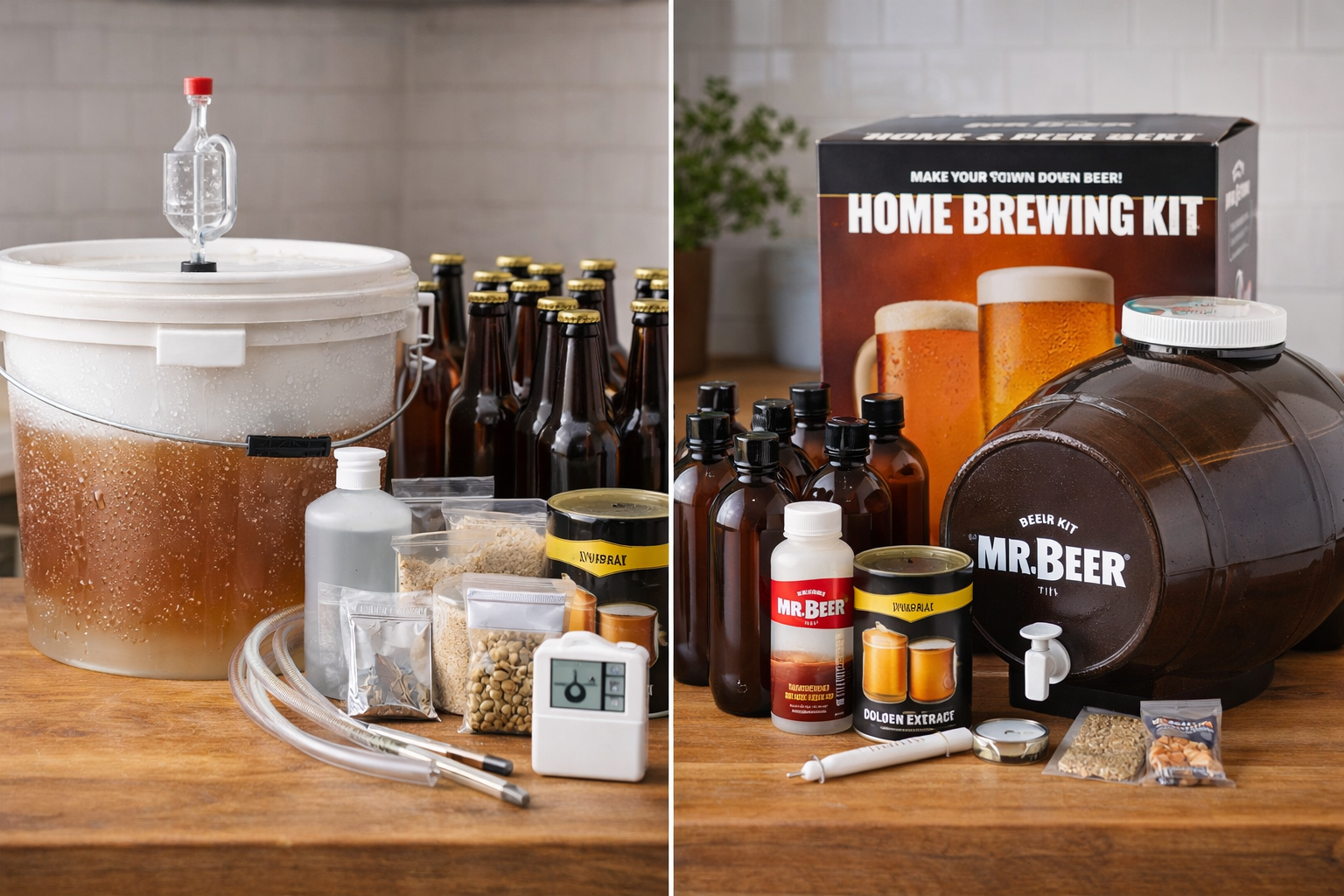
Once you know what the B&M-style bargain kit is and is not, the alternatives get easier to judge. I would score them on four things: how complete the box feels, whether the batch size matches a beginner’s actual life, how much bottling or setup friction it dumps on you, and whether it gives you a decent next step if you keep brewing.
That matters more than brand chatter. A good beginner kit is not the one with the loudest packaging. It is the one that lines up with your first honest use case.
How I would judge them: completeness, batch-size fit, learning curve, packaging burden, and upgrade path. Those five points tell you more than any shelf badge ever will.
Mr. Beer Deluxe Edition Beer Kit
Editorial score: 4.2/5
This is the one I would point to if the job is “make the first brew feel easy enough that it actually happens.” Mr. Beer has been around for ages, and the appeal is obvious once you stop pretending every beginner wants a full-size 5-gallon system on day one. It turns the first brew into something that feels closer to a kitchen project than a hobby infrastructure decision. That matters. A lot of new brewers are not scared of the beer. They are scared of the gear.
Where it beats a bargain-store kit is the packaging of the experience. The box tends to feel more self-contained, more intentional, and less like you accidentally bought ingredients without the rest of the plan. Where it loses is the same place small-format kits often lose: you can outgrow it fast. If your brain is already doing batch-size maths in the shop, you may find the format restrictive after one or two rounds. The other tradeoff is that these kits can feel a bit toy-like to brewers who already know they want more control and more repeatability.
Still, for the person who wants the least intimidating path to drinkable beer, it is a better answer than a random cheap box with fuzzy contents. I would pick it for a gift, for a curious first-timer, or for anyone who knows their biggest risk is not a bad recipe. It is never getting started.
Northern Brewer Brew. Share. Enjoy. HomeBrewing Starter Set
Editorial score: 4.7/5
This is the better pick for someone who already knows the hobby is going to stick. The name sounds cheerful, but the real draw is that it behaves more like an actual beginner brewing system than a bargain-store experiment. The box is built around a fuller setup, which changes the whole emotional tone of the first brew. You are not improvising your way around missing gear quite so much. That means less friction, fewer annoying mid-process pauses, and a cleaner path into the second and third batch.
The upside is easy to spot. You get a fuller learning arc, more normal batch expectations, and a better chance of feeling that the money went into brewing rather than into patching around missing pieces. The downside is just as obvious. This is not the “I might try brewing one time” option. It asks for more space, more commitment, and a bit more patience from the start. If someone wants a tiny-footprint extract beer kit for a one-off weekend, this is more gear than they need.
I would choose this when the hidden cost problem matters more than the ticket price. That is the insight a lot of beginners miss. A cheap kit plus a pile of add-ons can get surprisingly close to the cost of a fuller setup, while still being less pleasant to use. For a reader who wants a better beginner path, this one makes a stronger case than a B&M-style kit.
Brooklyn Brew Shop Everyday IPA Beer Making Kit
Editorial score: 4.1/5
This one suits a very specific person, and for that person it is pretty charming. The Brooklyn Brew Shop Everyday IPA kit leans into compact, stovetop, small-batch brewing in a way that makes sense for apartments, gifts, and “I want to learn the shape of the process first” buyers. It is not pretending to be a big-volume brewing rig. That honesty helps.
What I like here is the clarity of the use case. A lot of starter kits get muddy. They sit between gift item, ingredient pack, and proper starter system. This one is easier to place. It is for the small-space brewer who wants to handle a real process without managing a large fermentation bucket and a heavy bottle count. That makes it more educational than some bargain kits and less overwhelming than a bigger setup. The tradeoff is built in, though. If you care a lot about yield or long-term value per pint, a tiny batch can start to feel precious in the annoying way, not the artisanal way.
I would not pick it for someone chasing maximum output. I would pick it for someone who wants a clean gift, a compact first brew, or a simple route into recipe awareness. It sits closer to “learn brewing in miniature” than “start building a house kit,” and that is either exactly right or not right at all.
There is another fork in the road here. If the real pain point is not brewing the beer but packaging it, bottling may be the thing that pushes you into a different setup altogether. In that case, How to Keg Homebrew Beer: 7 Smart Steps to Avoid Foam becomes more useful than squeezing one more batch out of a basic bottle-first kit.
And if the next tweak on your mind is yeast quality rather than hardware, 7 Best Yeast for Brewing Beer and How to Pick the Right One is where the better conversation starts.
Make the final call with this buy, skip, or step-up framework
If you want the fastest final answer, use this.
- Buy the cheap B&M-style kit if you want a low-risk first brew, can live with a small batch, and do not mind sourcing a few extras.
- Skip it if you need predictable stock, a proper equipment bundle, or normal-size batch economics.
- Step up to a fuller starter kit if you already know you will brew again and want less friction on batch two.
Then run the one-minute check:
- Does the batch size fit your kitchen and your patience?
- Are you okay buying sanitiser, bottles, or measurement gear separately?
- Do you have a stable place to ferment, not just a warm room and good intentions?
- Are you fine bottling 20 or so beers, or are you already dreading that part?
- Are you testing the hobby, or trying to start it properly?
If your answers point toward “test the hobby,” the bargain kit can do the job. If your answers point toward “start properly,” save yourself the awkward halfway step. The false economy is not the money. It is the hassle of buying twice.
That is the real difference. A cheap extract kit can be a good first beer. It just should not be mistaken for a full homebrewing plan.
FAQ
Is a small beer kit good as a gift?
Yes, if the person likes hands-on projects and has space to ferment a small batch for a couple of weeks. It works best as a gift when the box feels self-contained or when you also include the missing basics, especially sanitiser and bottles.
Do I need a hydrometer for the first batch?
You can physically brew without one, but you lose the cleanest way to confirm fermentation is finished. For beginners, that matters most at bottling time. A hydrometer is cheap insurance against guessing wrong.
How long will a first extract beer kit take?
Plan on roughly two weeks for fermentation, then extra time for bottle conditioning before the beer tastes settled and properly carbonated. Some batches come round faster. Many taste better if you give them another week instead of cracking them open the second the bubbles appear.