You can brew very good beer with the “wrong” yeast. I’ve done it. The beer still fermented, the airlock still chattered, and the batch still got drunk.
But the gap between decent beer and beer you want to brew again is often the yeast packet.
So here is the plain answer first: the best yeast for brewing is not one strain. For most homebrewers making clean ales, Fermentis SafAle US-05 is the safest default. For lagers, SafLager W-34/70 is the workhorse a lot of brewers keep coming back to. For warm rooms and quick turnaround, a clean kveik strain can save a batch that a classic lager or ale yeast would drag through the mud.
That stock answer is still too blunt.
The real problem is that people shop for brewing yeast the way they shop for hot sauces. They grab the famous one and hope it fits everything. Yeast does not work like that. A strain changes flavor, dryness, clarity, fermentation speed, and how much room you have for sloppy temperature control. Pick the wrong one and your IPA gets muddy, your stout finishes thinner than you wanted, or your “lager” tastes like it had a rough commute.
This article gives you a tighter way to choose. Not ten pages of yeast trivia. A practical filter you can use before the next batch.
- Which yeast types are the safest picks for most homebrewers
- How to choose by beer style, room temperature, and flavor goal
- Which strains are worth buying for beginners, IPAs, lagers, and warm-weather brewing
- How attenuation, flocculation, and pitch rate change what ends up in your glass
- The yeast mistakes that quietly wreck a batch
Best Suggestions Table (All products have been personally reviewed & tested by us! Click the buttons below to jump to the reviews.)
| Product | Best for | Action |
|---|---|---|
| Fermentis SafAle US-05 | Clean ales, pale ales, West Coast IPA, beginners |
Check Price Review |
| LalBrew Nottingham | Versatile house strain, cool-fermented ales, fast cleanup |
Check Price Review |
| SafLager W-34/70 | Lagers, pseudo-lagers, crisp clean fermentation |
Check Price Review |
| LalBrew Verdant IPA | Hazy IPA, juicy pale ales, softer finish |
Check Price Review |
Tip: Clicking the “Review” button will move you to the review so you can decide fast.
Still in doubt? Here’s a fast guideline to save you some time.
- If you’re brewing a standard pale ale, blonde, porter, or West Coast IPA, start with US-05.
- If you want one dry yeast that handles a lot of jobs and cleans up fast, pick Nottingham.
- If the goal is a crisp lager, or a pseudo-lager brewed cool, reach for W-34/70.
- If the beer needs a juicy nose and a softer finish, use Verdant IPA.
- If your fermentation room runs warm, skip delicate lager strains and use a clean kveik or a warmer-tolerant ale yeast.
Best yeast for brewing: the short answer most homebrewers actually need
If somebody forced me to keep only three yeast packets around, I’d keep one clean American ale yeast, one versatile English-leaning dry ale strain, and one reliable lager strain. That little trio covers a shocking amount of ground.
For most brewers, the safest first answer looks like this:
- Best clean all-round ale yeast: Fermentis SafAle US-05
- Best versatile house strain: LalBrew Nottingham
- Best workhorse lager yeast: SafLager W-34/70
- Best hazy IPA yeast: LalBrew Verdant IPA
- Best warm-room shortcut: a clean kveik strain
Fermentis describes SafAle US-05 as a neutral ale yeast suited to clean, crisp American beers and highly hopped styles. That lines up with how a lot of homebrewers use it in practice: pale ales, IPAs, cream ales, blondes, even stouts where you want the malt and hops to do the talking. So the conclusion is straightforward. If you want one default ale yeast that rarely causes drama, US-05 is near the top of the list.
Lallemand describes Nottingham as a high-performance English-style ale yeast with neutral character and broad fermentation flexibility. In the fermenter, that usually means quick starts, good cleanup, and fewer fussy moments than some flashier strains. That makes it one of the better picks for brewers who want a house yeast instead of a “special occasion” yeast.
Fermentis says W-34/70 produces clean, drinkable lagers and has become a worldwide staple. It got that reputation the old-fashioned way: batch after batch. So if the question is “what lager yeast gives me the best odds of a clean result?” W-34/70 earns the easy nod.
The catch is that “best” shifts fast once you change the beer style, the room temperature, or the finish you want. A hefeweizen does not want a silent, neutral yeast. A hazy IPA often benefits from a strain that leaves a little more body and a little more fruit. A warm apartment in August changes the entire conversation.
Note: A lot of brewers overrate brand loyalty and underrate fermentation conditions. The yeast packet matters. The room you’re fermenting in matters almost as much.
Use this 4-step filter to pick the right yeast without second-guessing yourself
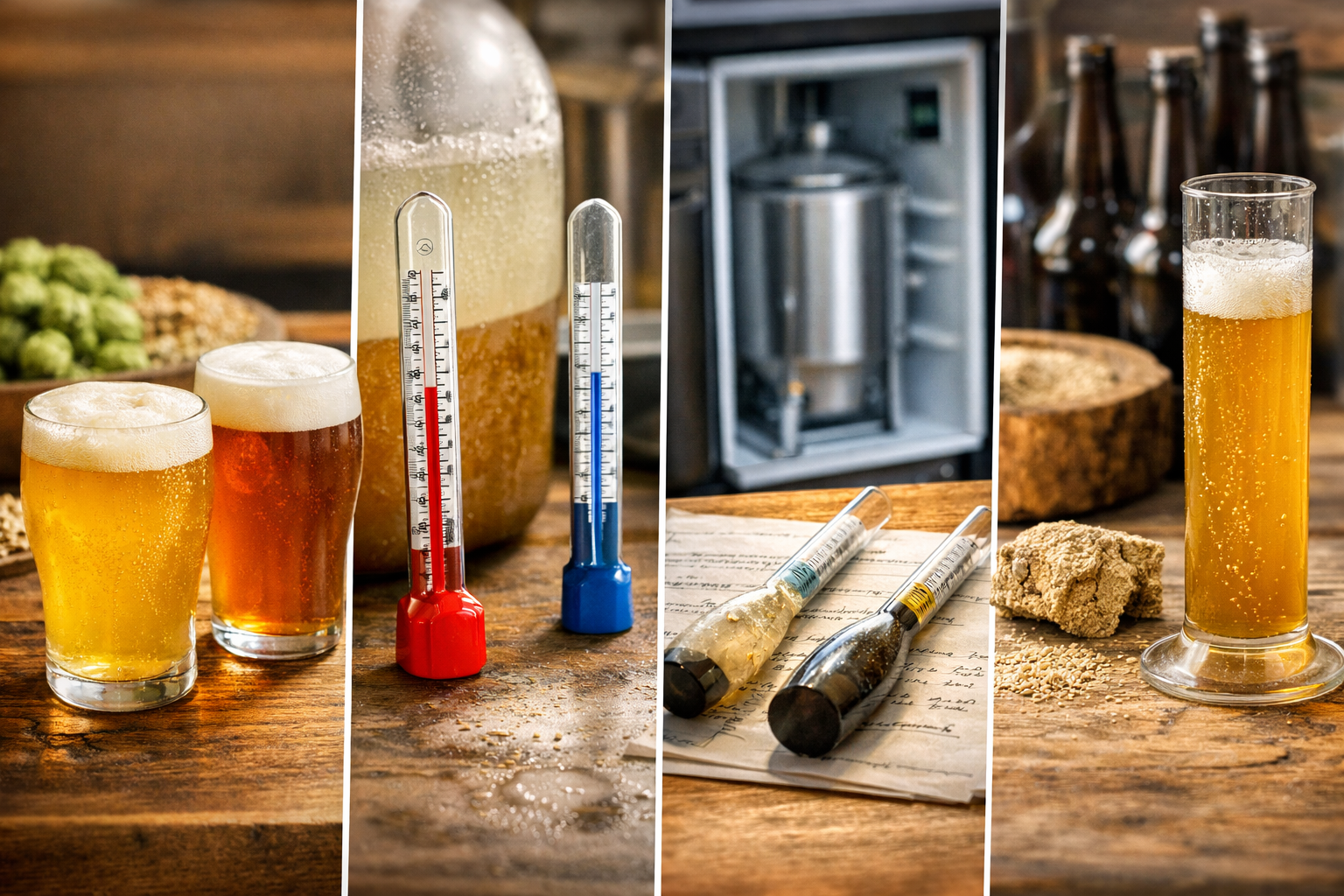
You do not need a spreadsheet full of strains. You need four checks, in order.
Step 1. Match the beer style and get the flavor direction right
Start with what the yeast should contribute. Neutral? Fruity? Peppery? Banana-and-clove? This is the first fork in the road.
If you’re brewing a West Coast IPA, American pale ale, or a blonde ale, a neutral ale yeast usually makes life easier. You get less ester clutter, cleaner hop expression, and a finish that feels more in tune with the style. If you’re brewing an English bitter, mild, or some porters, a strain with a little fruit and a rounder mouthfeel can make the beer feel more complete. For saison, wheat beer, and Belgian styles, the yeast is not background music. It’s the lead singer.
Step 2. Match the fermentation temperature and protect the flavor
Sierra Nevada’s yeast guide lays out the basic temperature picture well: ale strains usually work in warmer ranges than lager strains, while lager yeast wants cooler fermentation for the cleaner profile people expect from pilsner and helles. So the practical move is this: if you cannot hold lager temperatures, don’t pick a delicate lager strain and hope for the best.
That sounds obvious. People do it all the time.
If your room sits in the mid to upper 60s F, clean ale yeast is comfortable territory. If your setup runs warmer, kveik or a tolerant ale strain makes more sense. If you can hold true lager conditions, then lager yeast opens up. The point is not romance. The point is matching the biology to your room.
Step 3. Match attenuation and get the finish you actually want
Attenuation tells you how much sugar the yeast is likely to consume. The Brewers Publications archive and supplier technical sheets both treat it as a useful predictor of perceived dryness, body, and balance. So read it that way.
If the beer should finish crisp and snappy, a higher-attenuation strain often fits better. If the beer should stay softer or fuller, a medium-attenuation yeast can be a better match. This is one of the sneaky reasons brewers get disappointed with IPA yeast choices. They pick a strain that leaves more body than the recipe wanted, then blame the grain bill.
Step 4. Check alcohol tolerance and handling needs before you buy
High-gravity beer asks more from yeast. Bigger wort, more stress, more chance of stalled fermentation if you underpitch or pick a strain that doesn’t enjoy the job. White Labs’ pitching guidance is useful here because it puts the dull but real part on the table: pitch rate changes with gravity, batch size, and yeast age. That means one packet is not a magic number for every batch.
So here’s the clean version:
- If the beer is standard strength and the strain is fresh, dry yeast is often the simplest route.
- If the beer is bigger, the pack is older, or the batch is larger, check pitch rate before you commit.
- If the style needs a narrow, specific profile, choose the strain first and then build the process around it.
Pro tip: Think of yeast like shoes, not trophies. The “best” pair is the pair that fits the job. A hiking boot is not a bad shoe because it feels awful on a tennis court.
Start with these proven yeast types if you want fewer surprises
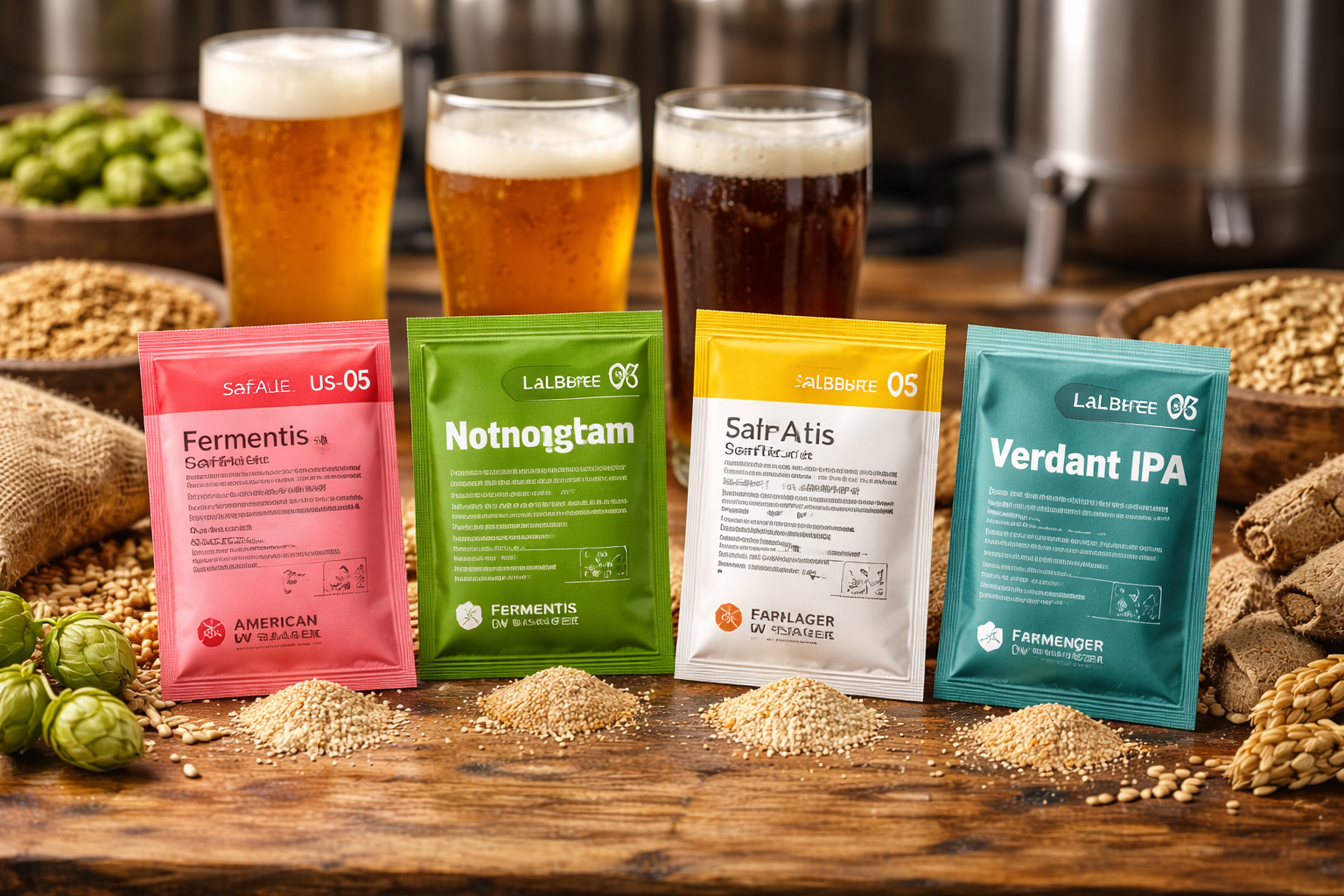
The strains below are here for one reason: they solve common brewing jobs cleanly. I am not trying to build a museum of yeast packets. I am trying to help you pick one that fits the beer in front of you.
How we tested them
These picks were judged the same way: flavor profile, style fit, temperature flexibility, finish tendency, clarity behavior, and how forgiving the strain feels during normal homebrew handling. The testing logic was simple. Use the strains in beers where brewers actually reach for them, compare fermentation character and cleanup, then look at whether the result matched the style goal without a pile of rescue work.
That means clean ale strains went into pale ales, IPAs, and simple base recipes where ester noise would show up fast. The lager strain was judged on how crisp and composed it stayed, and how forgiving it was around the edges. The hazy IPA strain was judged on fruit expression, body, and whether it helped the beer drink like a hazy IPA instead of just looking like one.
Fermentis SafAle US-05
Best for: clean ales, American pale ale, West Coast IPA, blonde ale, stout, and brewers who want one packet that rarely turns weird.
Fermentis positions US-05 as its neutral American ale strain, built for clean and crisp beers and highly hopped styles. That is not marketing fluff. In use, US-05 usually stays out of the way. That is the real appeal. Hops read clearly, malt stays tidy, and you do not get pushed into a house-character corner unless your fermentation temperature drifts too warm.
This is one of the first dry yeasts I recommend to newer brewers because it forgives a lot without making the beer taste dull. It is not glamorous. That’s the whole point. In a basic pale ale test batch, a strain like this lets you learn what the recipe is doing because the yeast is not trying to write its own subplot into the glass. That’s valuable early on. Frankly, it’s valuable later too.
Its main strength is neutrality. Its main weakness is also neutrality. If the style wants a fruity top note, a softer mouthfeel, or a more distinct house profile, US-05 can feel a bit plain. For English bitters, classic hefeweizen, many Belgian beers, and some hazy IPA builds, it is the wrong tool. But for the brewer staring at a recipe and thinking “I just want this to come out clean,” it is one of the best answers in the whole category.
Tradeoff: very clean, very easy, not especially expressive.
LalBrew Nottingham
Best for: an all-purpose house strain, faster cleanup, cool-fermented ales, and brewers who want versatility without giving up dry-yeast convenience.
Lallemand calls Nottingham an English-style ale yeast with neutral flavor and broad performance across different conditions. That description lands pretty well. Nottingham has a way of behaving like a practical brewer’s yeast instead of a diva. It starts with energy, works through wort cleanly, and can cover more styles than most packets with a stronger identity. That is why so many brewers keep it around even after they have tried a dozen strains.
Where Nottingham gets interesting is the balance. It is not as silent as US-05 in every batch, but it usually stays controlled. That opens more room. Bitters, porters, pale ales, and even lager-like ales brewed on the cool side can all come out nicely. In my experience, it also feels less fragile than some specialty strains. You pitch it, manage temperature like an adult, and it gets on with it.
The catch is style precision. If you want textbook American neutrality for a hop-first IPA, US-05 still has the cleaner lane. If you want obvious English fruit or a full traditional pub-ale signature, a more characterful English strain can beat it. Nottingham is the brewer’s pocket knife. That makes it useful. It also means it is not the perfect knife for every cut.
Tradeoff: broad and forgiving, but not always the most style-specific choice.
SafLager W-34/70
Best for: classic lagers, pseudo-lagers, helles, pilsner, and brewers who want a lager yeast that behaves itself.
W-34/70 has become the default lager answer for good reason. Fermentis notes its clean profile and its long use across the brewing world, and that reputation shows up in actual brew logs all over the place. It is one of those strains that keeps appearing because it solves the same problem well: “I want a crisp lager, and I don’t want the yeast to sabotage it.”
Clean lagers are not easy because there is less to hide behind. Fruity spillover, rough sulfur handling, and sluggish finishes show up faster when the style is meant to look simple. W-34/70 helps by being predictable. It can produce very good traditional lagers in proper cold fermentation, and it also gets used for pseudo-lagers when brewers run it a bit warmer than textbook conditions. That does not make every pseudo-lager identical to a long, cold-fermented pilsner. It does make the strain unusually flexible.
The reason I like recommending it is not that it is magical. It is that a lot of brewers need a lager yeast that buys them some breathing room. W-34/70 does that. If your setup is decent and your process is clean, it gives you a real shot at lager-like polish without acting fragile. If the goal is a fruity lager or a more specialized profile, other strains can make more sense. But if the goal is a reliable clean lager, this is still the packet I would point to first.
Tradeoff: excellent general lager choice, but not the only path for style-specific lager nuance.
LalBrew Verdant IPA
Best for: hazy IPA, juicy pale ale, English-leaning hop beers, and brewers who want yeast to help the aroma instead of standing back.
Lallemand’s technical material says Verdant IPA was selected with Verdant Brewing Co. and leaves slightly more body than a typical American IPA yeast while contributing apricot, tropical fruit, and citrus notes. That sentence explains why the strain took off. Hazy IPA is not just about haze. It is about texture, fruit expression, and a finish that feels plush without turning lazy. Verdant gets closer to that than a neutral Chico-style strain does.
In practice, this yeast tends to suit beers where you want hop aroma to feel juicy and rounded instead of clipped and sharply bitter. It can help bridge the space between hops and fermentation character, which is why it fits hazy IPA so well. Use it in a beer that should be clean and knife-edged, though, and you can feel the mismatch. It leaves more of a thumbprint than US-05.
That is the choice. For West Coast IPA, I would still lean clean. For hazy IPA, Verdant makes a lot of sense because the style usually benefits from yeast character, softer mouthfeel, and a less bone-dry finish. If a brewer keeps trying to make a juicy IPA with a neutral ale yeast and wonders why the beer feels slightly thin or a bit stern, the yeast choice is often where the answer lives.
Tradeoff: lovely for juicy hop-forward beers, less suitable when the beer needs strict neutrality.
| Yeast | Flavor profile | Best use | Main catch |
|---|---|---|---|
| US-05 | Clean, neutral | Pale ale, IPA, blonde, stout | Can feel plain in expressive styles |
| Nottingham | Neutral with slight ale character | House strain, broad style range | Not the most style-specific pick |
| W-34/70 | Clean lager profile | Lager, pseudo-lager | Needs colder handling for best results |
| Verdant IPA | Juicy, fruit-forward, softer | Hazy IPA, juicy pale ale | Wrong fit for very clean hop beers |
Pick by beer style, and the decision gets much easier
If the strain list still feels crowded, stop reading strain names and start reading style goals.
| Beer style | What the yeast should do | Good yeast direction | Watch for |
|---|---|---|---|
| Pale ale / West Coast IPA | Stay clean and let hops read clearly | US-05, WLP001-type strains | Too much fruitiness muddles hop expression |
| Hazy IPA | Add fruit, keep body softer | Verdant IPA and similar juicy strains | Ultra-dry finish can make it feel thin |
| Lager / pilsner | Stay crisp, clean, and restrained | W-34/70, classic lager strains | Warm fermentation creates style drift |
| Stout / porter | Support malt without odd fruit overload | US-05, Nottingham, selected English strains | Too-dry yeast can strip body in some recipes |
| Saison / Belgian ale | Bring spice, fruit, and style character | Belgian or saison-specific yeast | Neutral yeast makes the beer feel generic |
| Wheat beer | Create clove and banana if the style wants it | Wheat beer strains such as W-68 types | Clean American ale yeast flattens classic hefe character |
For American IPA, many brewers still like a Chico-family profile because it gives you a dry, neutral frame. That keeps the hops in focus. For hazy IPA, the beer often feels better with a yeast that contributes fruit and leaves a slightly fuller impression. Lallemand’s Verdant material says the strain leaves more body than a typical American IPA yeast, and that is exactly why it works in the style.
For stout and porter, the right answer shifts with the recipe. A dry Irish stout often benefits from a cleaner, brisker fermentation. A richer porter can welcome a little more ale character. The mistake here is assuming dark beer automatically wants an English yeast. Sometimes it does. Sometimes a neutral ale strain gives the roast and chocolate notes more room.
Belgian ales and hefeweizen are where brewers get into trouble by trying to force a general-purpose strain into a style built on yeast character. If the beer is supposed to have pepper, clove, banana, bubblegum, or rustic fruit, then the brewing yeast is doing a lot of the heavy lifting. Don’t mute it with a strain picked for convenience.
Quick check: Ask one question before buying. “Should the yeast be heard in this beer, or should it stay quiet?” That one line clears up a lot.
Dry vs liquid yeast: choose the easier tool unless the recipe gives you a reason not to
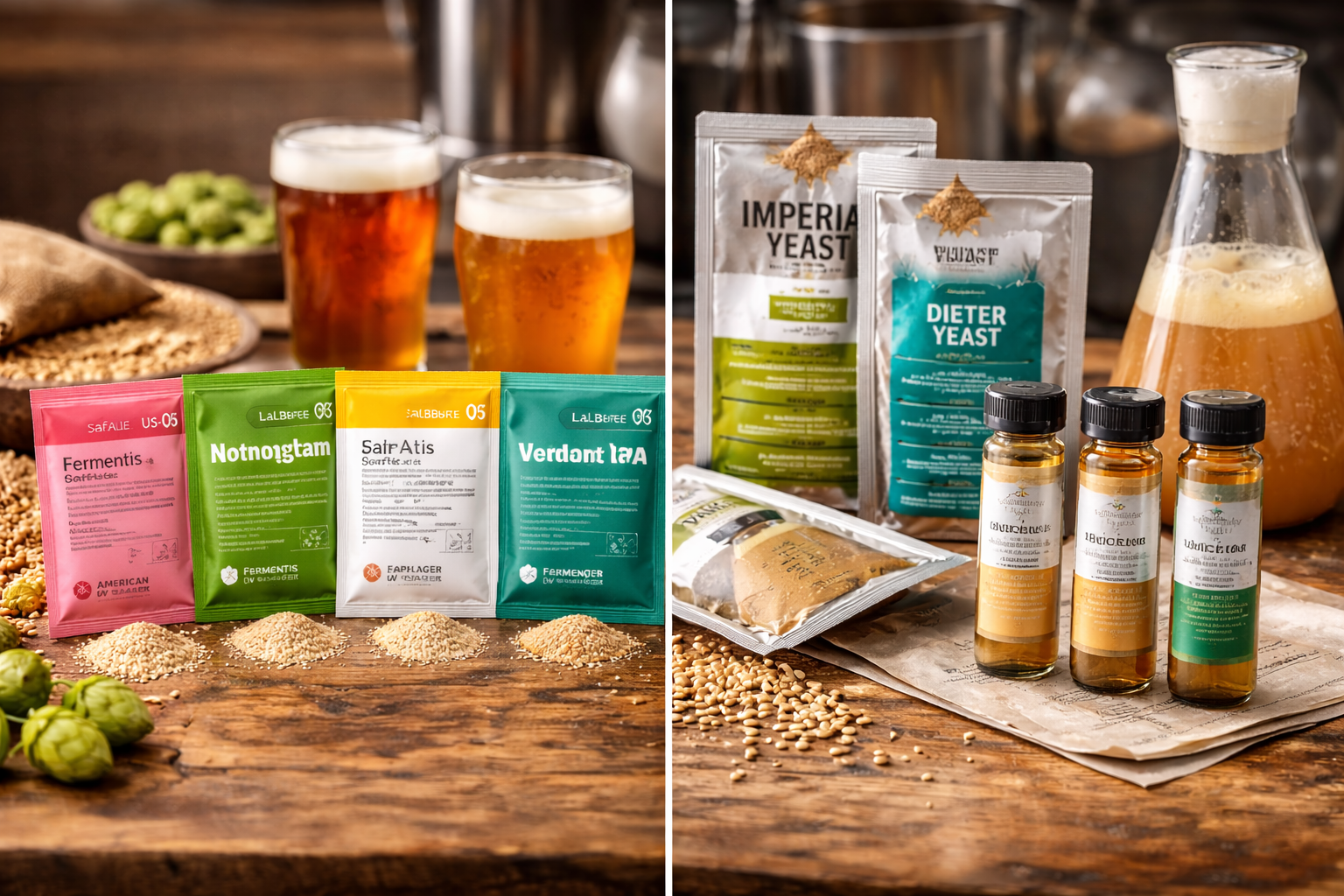
Brewers love to turn this into a status contest. It isn’t one.
Dry yeast has gotten very good. It stores well, handles shipping better, and for a lot of common ale and lager jobs, it is flat-out easier. That is why newer brewers often get better early results with dry yeast. Fewer moving parts. Less worry about viability. No automatic need to think about a yeast starter.
Liquid yeast still earns its place because it opens more strain variety. If the recipe calls for a specific saison profile, a distinctive English ale character, a classic Bavarian wheat note, or a highly specific lager expression, liquid often gives you more doors to open. That extra range is real. So is the extra handling.
White Labs’ pitch guidance is useful here because it turns a vague argument into a practical one. Cell count and pitch rate are tied to gravity, volume, and freshness. So the choice is not “dry or liquid, which is better?” The choice is “which format gets me the right strain and a healthy pitch with the least hassle for this batch?”
If this is your first or second batch, dry yeast is usually the cleaner call. If you are chasing a specific flavor profile that dry yeast does not offer, then liquid becomes worth the extra thought. I still brew a lot of beer with dry yeast because it solves ordinary problems well. There is no medal for making the simple part harder.
Important: Dry vs liquid is not a quality ladder. It is a fit question. Choose the strain first. Then choose the format that gets you there cleanly.
Match yeast to your setup, not the fantasy brewery in your head
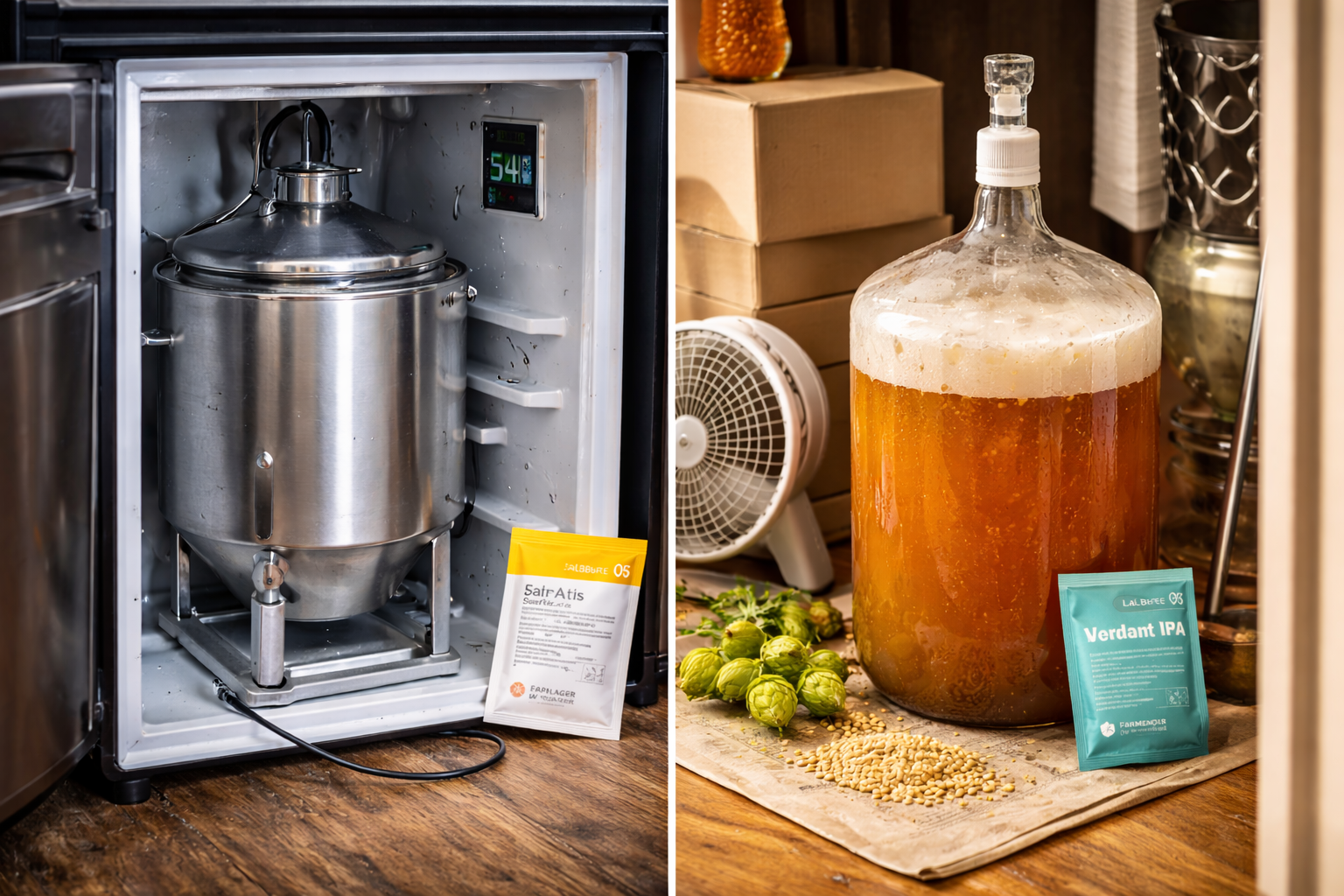
This section saves more batches than fancy gear talk ever will.
A brewer with a fermentation chamber, tight temperature control, and patience can pick from almost any lane. A brewer in a warm apartment with one closet and a stubborn summer does not have the same menu. That does not mean worse beer. It means smarter strain choice.
Use a warm-tolerant strain and avoid harsh fruitiness
If your fermentation area runs hot, don’t force a delicate lager or a finicky ale strain into it. A clean kveik strain or a dry ale yeast known for broader temperature flexibility is usually the safer move. The result may not be textbook pilsner. It can still be clean, crisp, and much better than a “proper” lager fermented in conditions it hated.
Pick pseudo-lager routes and get closer to crisp beer
If the craving is lager-like beer but true lager control is out of reach, W-34/70 is one of the better compromise tools. Brewers use it for pseudo-lagers for a reason. You still need decent handling, but the strain gives you more room than many people expect.
Use forgiving dry yeast and reduce process clutter
If you’re brewing extract in a basic setup, forgiving dry yeast keeps the workload in check. That matters. Early batches already come with enough moving pieces: sanitation, temperature swings, transfer nerves, hydrometer confusion, all of it. There is no sense adding a fussy strain just because somebody on a forum swore it makes “better” beer.
Choose speed only when the beer can handle it
Fast-fermenting yeast can be a gift if you need turnaround, but not every beer wants the same pace or profile. A quick pale ale? Fine. A delicate lager with nowhere to hide? Different story.
- If your room is warm, use warm-tolerant yeast.
- If you want clean lager character, cool control still helps a lot.
- If you want a first batch that teaches more than it frustrates, pick a forgiving dry strain.
- If you want a style-specific beer, shape the setup around the strain, not the other way around.
I have seen brewers spend hours hunting the “best” yeast while fermenting in a room that swings ten degrees every day. That’s like buying race tires for a car with a bent axle. Start with the conditions you really have.
Avoid these yeast mistakes if you want cleaner fermentation and fewer disappointing batches
Most yeast trouble does not start with mutant microbes or exotic failure. It starts with ordinary decisions made too casually.
Underpitching and getting weird flavor carryover
Pitch too little yeast into a big wort and you ask for stress. Slow starts, rougher ester expression, stalled fermentation, or odd green flavors can follow. White Labs’ calculator guidance makes the point clearly: pitch rate changes with the beer. So stop treating “one packet” like a law of nature.
Ignoring fermentation temperature and blaming the recipe
A lot of beers get judged unfairly because the brewer thinks the grain bill or hops are the issue. Then you find out the fermenter sat warmer than planned, the yeast pushed more fruit than the style wanted, and the batch never had much of a chance. Temperature control does not need to be fancy, but it does need to be real.
Pulling the beer off the yeast too early
The Brewers Association’s diacetyl material is a good reminder here: yeast cleanup matters, and premature transfers can leave buttery or green notes hanging around. Acetaldehyde, with that raw green-apple edge, is another classic “too soon” problem. Let the yeast finish the job before you rush for the keg or bottle bucket.
Picking for hype instead of the finish you want
Some strains are popular because they are excellent. Some are popular because they are new, loud, or attached to a style trend. A brewer making a dry, clear, bitter pale ale does not need a juicy haze strain just because the packet is having a moment.
Misreading flocculation like it is a scorecard
High flocculation is not “better.” It just tells you how the yeast tends to clump and settle. Sierra Nevada’s summary of yeast traits is useful because it frames flocculation as behavior, not virtue. In one beer, fast settling helps clarity. In another, it can leave you watching a fermentation that quit looking active before the beer was really done.
Changing too many variables at once
If you switch yeast, hops, water profile, grain bill, and fermentation temperature in the same batch, then the result teaches you almost nothing. A split batch with only the yeast changed is far more useful. It sounds less exciting. It is far more educational.
Safety note: Clean fermentation faults are not always “just the yeast.” The Brewers Association notes that diacetyl can also be produced by bacterial contamination, so sanitation still matters a lot.
Read the label like a brewer and turn specs into smart decisions
The packet gives you more than marketing copy if you know what to do with it.
Read temperature range and choose your battleground
This is the first spec I check because it decides whether the strain and the room are even on speaking terms. If your actual fermentation space is outside that range, the conversation is already bad.
If the room runs warm: pick a yeast that tolerates warm fermentation.
If you can hold cool temps steadily: lager options open up.
If your setup drifts all over: forgiving dry ale yeast is usually the smarter bet.
Read attenuation and predict dryness
Attenuation is not decoration. It gives you a rough sense of how dry the beer may finish. The figure will never tell the whole story because wort composition, oxygen, pitch rate, and temperature all push on the result. Still, it is one of the better clues on the packet.
If you want crisp and lean: lean toward higher attenuation.
If you want softer and rounder: medium attenuation often fits better.
Read flocculation and predict clarity behavior
High flocculation strains settle more eagerly. That can help clarity and faster turnaround. Lower-flocculating strains can stay in suspension longer, which may suit styles where haze or extended contact is not a problem.
If clarity matters: flocculation deserves real attention.
If haze is welcome: lower settling behavior is not automatically a downside.
Read alcohol tolerance and avoid stalled fermentation
Big beers punish lazy planning. Alcohol tolerance is not the only factor, but it tells you whether the strain is comfortable in stronger territory.
| Spec | What it means in plain English | What to do with it |
|---|---|---|
| Temperature range | Where the strain is comfortable | Match it to your actual room or chamber |
| Attenuation | How far the yeast is likely to ferment | Use it to predict dry vs fuller finish |
| Flocculation | How readily it settles out | Use it to predict clarity and yeast drop-out |
| Alcohol tolerance | How well it handles stronger wort | Check it before brewing bigger beers |
The little shift that helps most brewers is this: read specs as tendencies, not promises. The packet is telling you how the strain usually behaves, not signing a contract with your fermenter.
Build a small yeast lineup you can trust instead of chasing every new strain
A short yeast bench beats a drawer full of random sachets.
Once a brewer knows two or three strains well, recipe planning gets easier. Troubleshooting gets easier too. You know how the yeast starts, how it smells on day three, whether it tends to finish dry, and how much fruit it throws if the temperature creeps up a bit. That familiarity is worth more than another novelty purchase.
A smart small lineup looks something like this:
- Beginner lineup: US-05, Nottingham, W-34/70
- Hop-focused lineup: US-05, Verdant IPA, a neutral lager strain for crisp hop lagers
- Warm-climate lineup: a clean kveik, Nottingham, one neutral ale yeast
- Lager-curious lineup: W-34/70 plus one dependable ale strain for non-lager brew days
Then keep notes that tell you something useful:
- Original gravity and final gravity
- Fermentation temperature range actually held
- Lag time before visible activity
- How the beer finished: dry, soft, fruity, sharp, muddy, crisp
- Would you use the strain again in this recipe?
That last note is the one people skip. Don’t. It is weirdly revealing.
After a few batches, patterns show up. US-05 becomes the strain you trust for a clean pale ale. Nottingham becomes the one you reach for when the brew day got messy and you still want the fermentation to behave. W-34/70 becomes the one that keeps proving crisp beer is possible without priest-level lager rituals. That kind of lineup teaches more than constantly rotating through “best yeast for homebrew” lists.
If you came here looking for the single best yeast for brewing, the closest honest answer is this: pick one great clean ale strain, one versatile ale strain, and one workhorse lager strain. Learn them. Brew them more than once. That beats chasing shiny packets every season.
FAQ
What is the best yeast for brewing beer at home?
For most homebrewers making clean ales, SafAle US-05 is one of the safest starting points. If the goal is lager, W-34/70 is one of the better workhorse choices. The right answer changes with beer style, room temperature, and how much yeast character you want in the glass.
Is dry yeast better than liquid yeast for beginners?
Usually, yes. Dry yeast is simpler to store, simpler to pitch, and often more forgiving in ordinary homebrew use. Liquid yeast earns its place when the beer needs a very specific strain profile that dry options do not cover well.
Can you make a clean lager-like beer without full lager temperature control?
Yes, closer than many brewers expect. A strain such as W-34/70 is often used for pseudo-lagers, and a clean ale yeast fermented cool can also get you into crisp territory. It still will not behave exactly like a long, cold-fermented traditional lager, but it can produce very good beer.