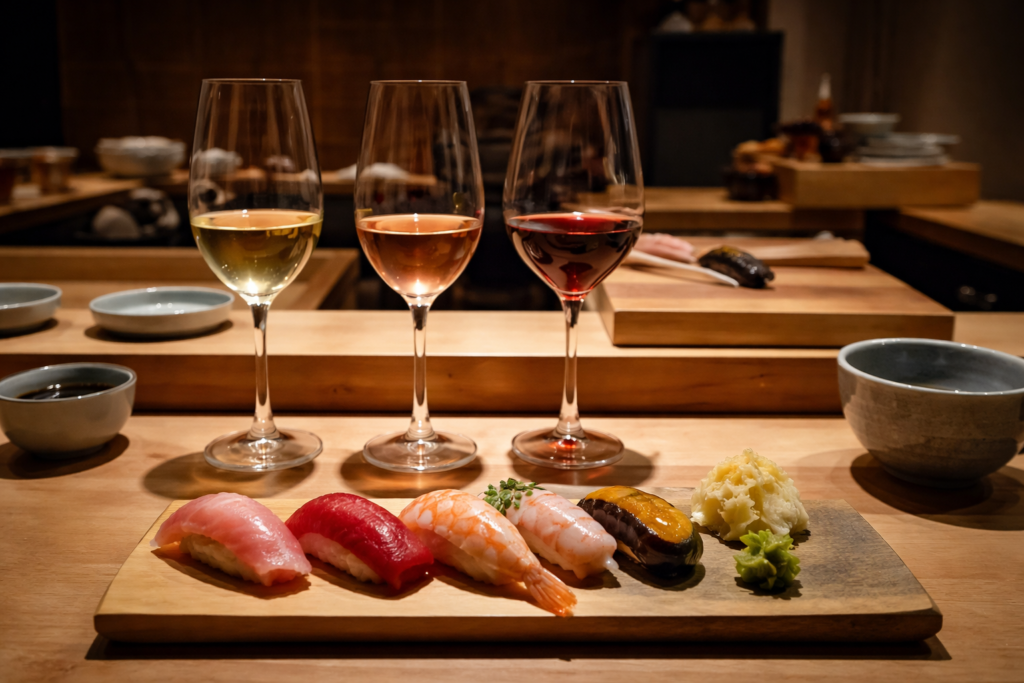
I’ve seen this happen more than once: someone brings a handsome, expensive bottle to omakase, the cork pops, the first piece of fish lands, and the wine lands with a thud. Not bad, exactly. Just wrong. The fish feels quieter, the rice feels sharper, and the whole meal loses its snap.
If you’re looking for the best wine for omakase, start with brut Champagne or another dry traditional-method sparkling wine. If you want still wine, reach for Chablis, dry Riesling, Muscadet, Albarino, or Koshu. Those styles have the one thing omakase asks for again and again: lift. They stay fresh with raw fish, handle rice vinegar better than softer wines do, and don’t stomp over the chef’s pacing.
That quick answer is only half the job, though. Omakase isn’t one dish. It moves. A meal can open with whisper-light hirame, swing into toro, brush past uni, turn crispy with tempura, and sometimes end up near wagyu. One bottle can still work, but only if it has enough range.
At a Glance
- Safest one-bottle pick: brut Champagne or dry traditional-method sparkling
- Best still-wine lane: Chablis, dry Riesling, Muscadet, Albarino, or Koshu
- Light reds can work, but mostly for richer later bites like toro or wagyu
- Heavy oak, high tannin, and hot alcohol are where pairings start to wobble
- Soy, eel sauce, spicy mayo, and fried bites change the math fast
| If the meal looks like… | Start here | Skip |
|---|---|---|
| Mostly raw fish, chef-seasoned nigiri, delicate pacing | Brut Champagne, Chablis, Muscadet, Koshu | Oaky Chardonnay, big reds |
| Richer fish, toro, uni, a few warm courses | Blanc de Noirs, dry Riesling, textured white | Jammy reds, sweet whites |
| Tempura or wagyu shows up late | Sparkling first, then Pinot Noir if needed | Cabernet-style tannin |
Here’s what follows: the safe answer, why it works, where it breaks, and how to pick one bottle without getting cute and regretting it.
The Best Wine for Omakase, in One Clear Answer
When sommeliers talk about sushi and omakase, the short list keeps circling back to the same place. In Michelin’s pairing guidance for sushi, crisp, restrained whites and Champagne show up for a reason: they stay nimble across raw fish, rice, and seasoning. That’s why brut Champagne is the cleanest first answer.
If you want one bottle and zero drama, pick a dry sparkling wine made in the traditional method. Brut Champagne is the obvious version, but good Cava or Cremant can play the same role. The bubbles scrub the palate, the acidity keeps the meal awake, and the wine usually has enough structure to survive richer bites later on.
If bubbles aren’t your thing, go still and stay sharp. Chablis is a classic for a reason. Dry Riesling works when the meal leans salty or drifts toward spice. Muscadet and Albarino bring that sea-breeze feel that works nicely with raw fish. And Koshu’s own producers describe the grape as delicate, restrained, and crisp, which is pretty much the profile you want when the chef is working in fine brushstrokes, not thick paint.
Quick rule: If you’re bringing one bottle, choose flexibility before personality.
That means the safest ranking looks like this:
- Brut Champagne or dry traditional-method sparkling
- Chablis, Muscadet, dry Riesling, Albarino, or Koshu
- A light red like Pinot Noir, but only when the meal clearly gets richer later
Why Omakase Breaks the Simple “Fish Means White Wine” Rule
The problem is not the fish. It’s the whole bite.
Rice vinegar, soy, nori, wasabi, brush-on sauces, and umami all change what the wine does in your mouth. The Wine & Spirit Education Trust notes that umami-heavy foods can make wine taste more bitter while muting fruit. That’s why a red with real tannin can turn oddly metallic or harsh next to sushi, even when the fish itself looks mild.
I’ve had a polished Pinot seem lovely on its own and then go a little stern next to soy-brushed tuna. Same bottle, same glass, different food. Omakase does that. It keeps changing the frame around the wine.
That is also why the lazy rule “white wine with fish” falls short. Lean flounder and fatty toro are not the same job. Uni is not tempura. Wagyu nigiri is not tai. Pairing omakase by fish alone is like buying shoes by color and forgetting the size.
What actually matters
- Acidity: keeps pace with rice vinegar and resets the palate
- Tannin: low is safer when umami and soy are in play
- Weight: lean fish wants restraint, fatty fish can handle more texture
- Prep: raw, seared, smoked, fried, and sauced all pull the pairing in different directions
Once you look at omakase as a moving set of textures and seasonings, the wine choices get a lot easier.
Start with These Wine Styles When You Need a Safe Bottle
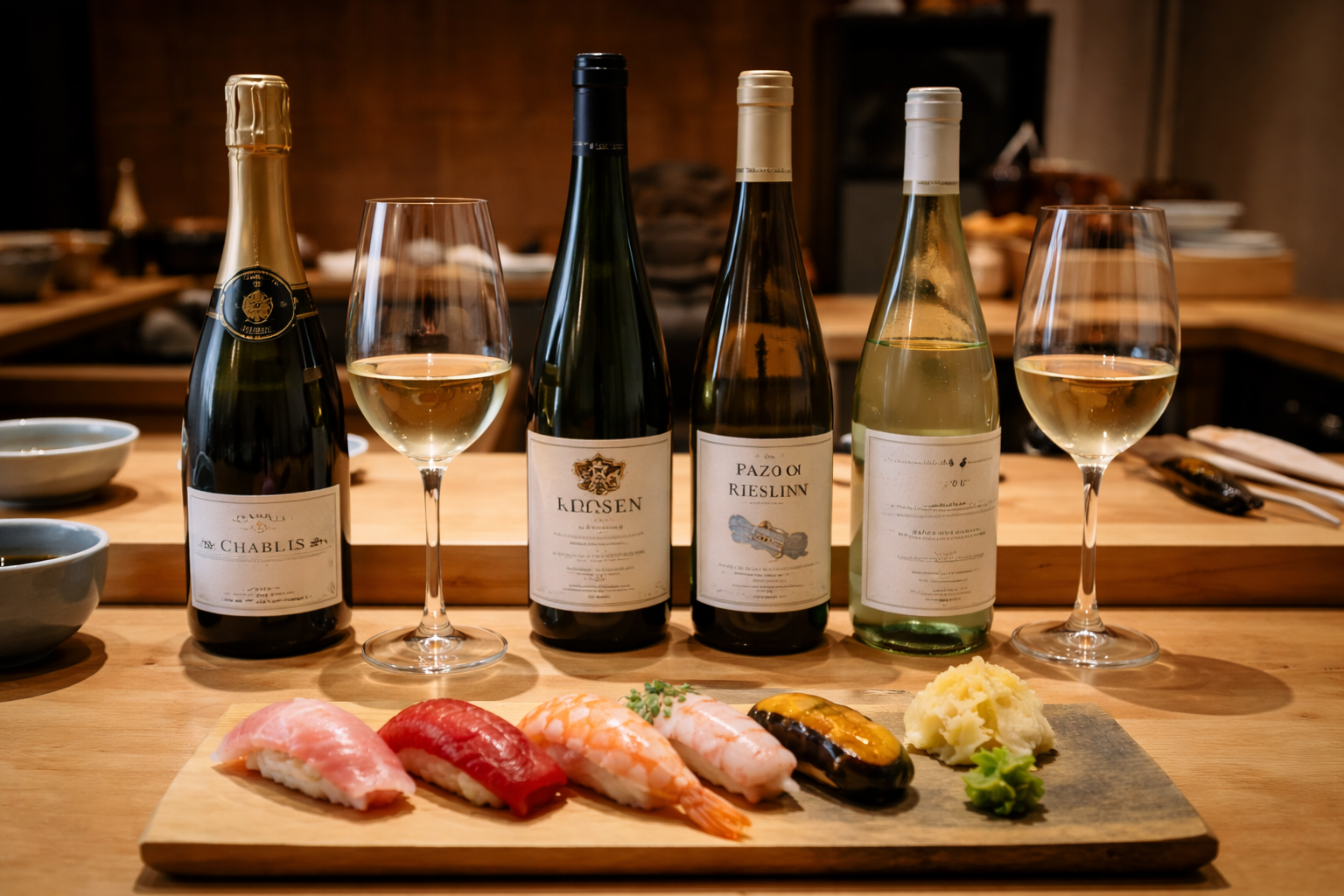
The safest wine styles for omakase are not the loudest ones. They’re the wines that stay composed while the menu wanders around.
Brut Champagne or dry traditional-method sparkling sits at the top because it handles the widest spread of courses. It can open on sashimi, stay fresh with nigiri, and still feel right when tempura shows up. This is the “I don’t know the exact menu, but I still want to get it right” bottle.
Chablis is the still-wine answer I’d trust most often. It usually brings chalk, citrus, and restraint rather than obvious oak. That matters. Raw fish hates clutter.
Dry Riesling is the smart pivot when there’s a bit more salt, a bit more spice, or a touch of sweetness in the meal. It isn’t there to make the food sweet. It’s there to keep the wine from feeling stripped out next to sharp seasoning.
Muscadet and Albarino are brilliant when you want saline, high-acid whites without spending your whole mental budget on the list. They make sense with shellfish-led otsumami too, and the same logic shows up in pairing rules for octopus, where freshness and texture matter more than sheer power.
Koshu deserves a real mention, not a novelty mention. Japan’s food export group highlights Koshu as one of the country’s standout pairing grapes, and that tracks with the glass. It tends to be low-key, clean, and quietly citrusy. With delicate fish, that calm style is a gift.
Low-oak Chardonnay can work for richer omakase, especially if the chef leans into warmer courses or buttery textures. But this is where people overreach. Chablis is still Chardonnay. It’s the oak and weight that cause the trouble, not the grape’s name.
Pro tip: For one bottle, chase energy, not heft. If the wine feels plush before food, it often feels clumsy with the early courses.
Use This Course-by-Course Pairing Map for Lean Fish, Toro, Uni, Tempura, and Wagyu
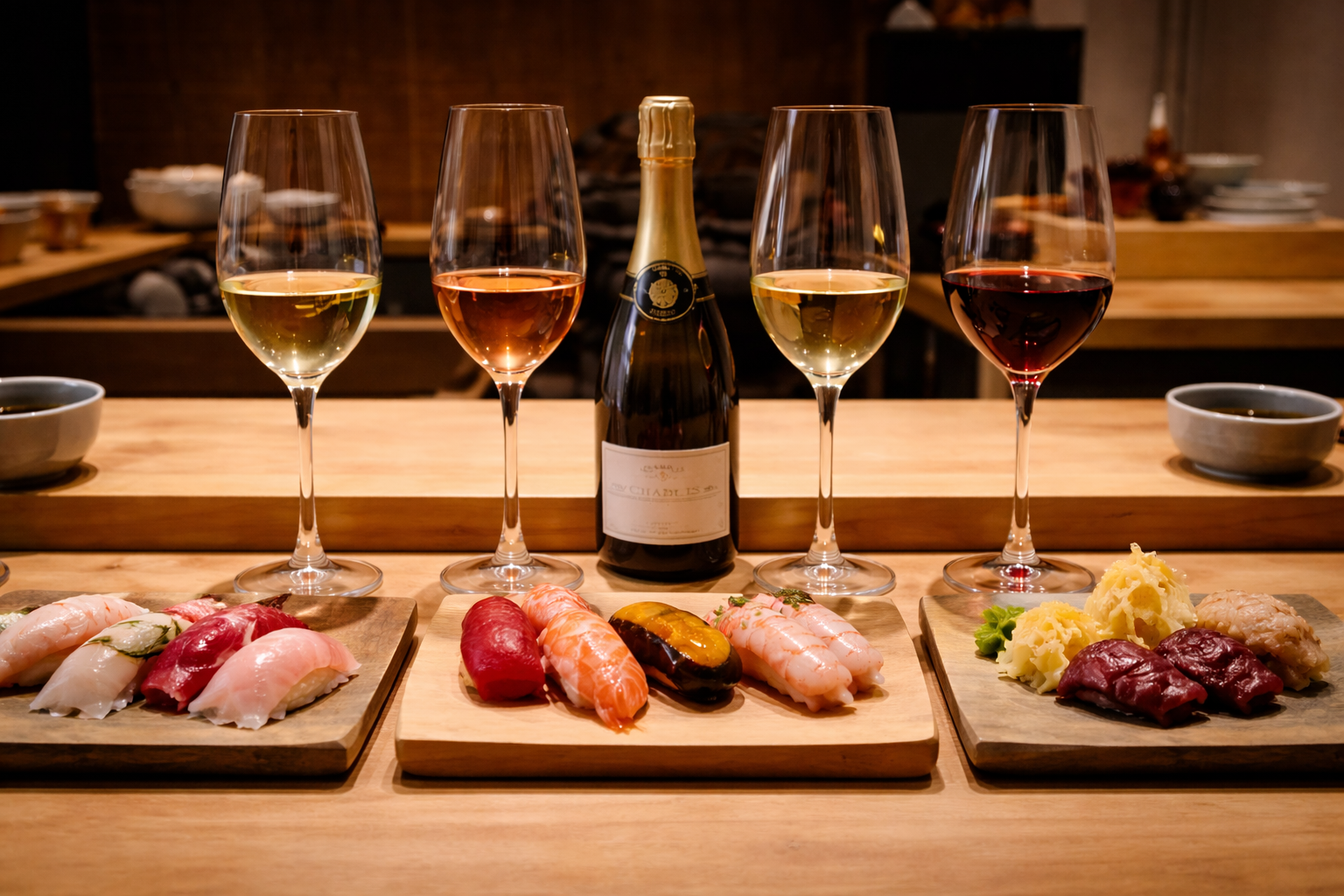
This is where the meal stops being abstract. If you know the rough shape of the omakase, you can narrow the wine fast.
| Course style | Best wine lane | Why it works |
|---|---|---|
| Lean white fish, delicate sashimi, lightly seasoned nigiri | Chablis, Muscadet, Koshu, brut Champagne | High acid and low weight keep the bite clear |
| Toro, salmon belly, richer oily fish | Blanc de Noirs, dry Riesling, textured white | More fat lets the wine carry more body |
| Uni, creamy briny bites | Brut sparkling, very clean whites | Bubbles and acidity keep richness from smearing out |
| Tempura or fried bites | Sparkling first, then acid-driven still whites | Freshness and fizz cut through oil |
| Wagyu or beef sushi | Pinot Noir, Gamay, richer Blanc de Noirs | The meat can carry more structure, but you still want finesse |
Lean fish is the easy part. It wants clean, bright, and quiet. That’s Chablis, Muscadet, Koshu, or sparkling territory.
Fatty fish opens the door a little wider. Toro, salmon belly, and richer tuna can handle Blanc de Noirs, a dry Riesling with some shape, or even a very light red if it shows up late in the meal. The same logic sits behind smart salmon pairings, where richness changes the bottle more than the species name does.
Uni is trickier than people admit. Creamy, briny, and sweet in a sea-salted way, it can flatten wine that lacks lift. Sparkling often cleans this up nicely.
Tempura is one of the happiest moments for sparkling wine. The bubble-and-acid combo makes the palate feel reset after each bite. That’s not romantic language, it’s just how the meal behaves.
Wagyu is where many people think, “Finally, red wine.” Fair enough. But this is still omakase. A pale Pinot Noir or bright Gamay makes more sense than anything muscular. If the meal runs seafood to beef in one arc, the same tension shows up in wine pairings for surf and turf, where finesse matters more than brute force.
When Red Wine Works with Omakase, and When It Turns Weird
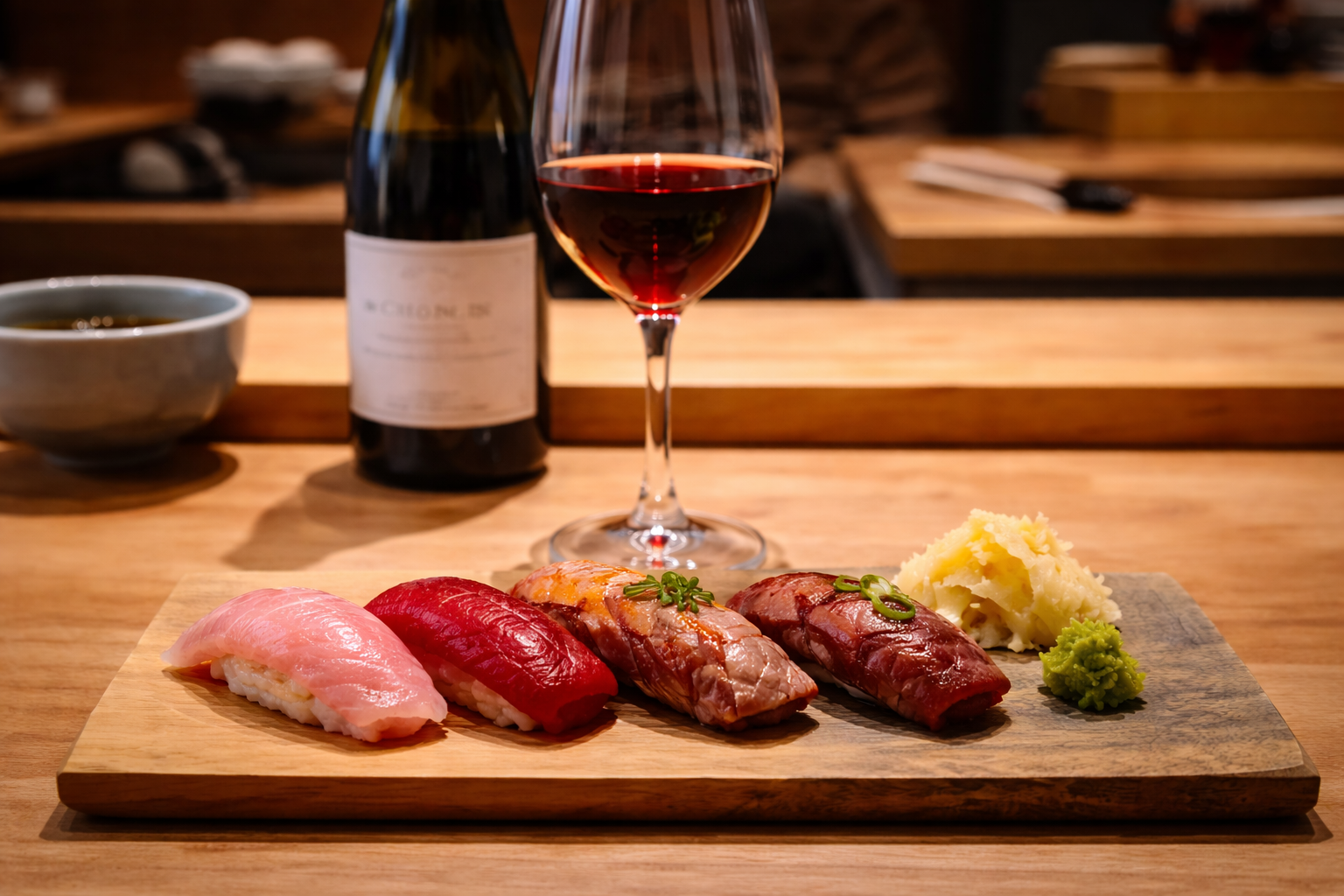
Red wine is not banned from omakase. It just has a short leash.
When it works, it works because the red is light, low in tannin, and fresh enough to stay upright beside soy, rice, and raw or lightly seared fish. Pinot Noir is the usual answer. Gamay can be lovely too. In a richer meal, those wines can feel smart rather than stubborn.
When it fails, it usually fails fast. The fish can taste metallic, the soy can push bitterness forward, and the wine’s fruit can seem to vanish. What felt silky before the food suddenly feels dry and bossy.
A slightly chilled red helps. Aim for about 12 to 14C. That little drop in temperature tightens the wine, tames the alcohol, and makes the whole thing feel more composed.
Good red-wine situations
- Toro or richer tuna later in the meal
- Seared fish with a little smoke
- Wagyu nigiri or beef sushi
- Chef’s menu with fewer ultra-delicate opening bites
What I would not do is bring a red because one late course might justify it. That’s planning the whole meal around the last five minutes.
Build a One-Bottle or Two-Bottle Plan for BYOB, Corkage, or Short Wine Lists
If the restaurant is BYOB or the list is brief and vague, don’t try to outsmart the meal. Use a simple plan.
One-bottle plan: bring brut Champagne or a dry traditional-method sparkling. This covers the most ground with the least risk.
One still-bottle plan: choose Chablis, dry Riesling, Albarino, Muscadet, or Koshu. If the menu is known to run richer, a low-oak Chardonnay can sneak in. But only if you know the chef is not opening with a run of very delicate fish.
Two-bottle plan: start with sparkling, then add either a still white or a light red. Go white if the meal stays fish-first and precise. Go red only if the back half of the menu really does get richer.
Ask this before locking the second bottle: “Will the menu include tempura, richer tuna, or any beef?” That one question saves a lot of overbuying.
If the list gives you almost nothing to work with, follow this order: sparkling first, mineral white second, light red third. That sequence is boring in the best way. It keeps you out of trouble.
Avoid the Wine Styles That Flatten, Sweeten, or Bully the Meal
Some bottles don’t just miss. They drag the meal sideways.
Heavy oak is one of the big offenders. A buttery, vanilla-rich Chardonnay can swamp subtle fish and make the rice feel oddly sharp. The problem isn’t Chardonnay as a grape. It’s the lumberyard effect.
High-tannin reds are another. Thanks to that umami-and-bitterness effect noted by the Wine & Spirit Education Trust, a tannic red can feel stricter and more metallic beside raw fish and savory seasoning. That’s why Cabernet-style reds are a poor bet here.
High alcohol is sneaky. It doesn’t always read as heat until wasabi, soy, or a warm course gets involved. Then the wine feels hot and floppy. Not ideal.
Obvious sweetness can work in narrow spots, but it often makes sushi feel sweeter and softer than the chef intended. If the meal is elegant and spare, a sweet wine usually looks like it brought the wrong invitation.
What a bad pairing tends to taste like
- Metallic or bitter after soy or umami-heavy bites
- Hot after wasabi, spice, or warm dishes
- Sweet in a clumsy way, even when the food is not sweet
- Flat, where the meal loses its edge and detail
If a wine feels rich and “serious” before food, that’s not a plus here. Omakase usually rewards restraint.
Fine-Tune the Pairing with Soy Sauce, Spicy Mayo, Eel Sauce, and Serving Temperature
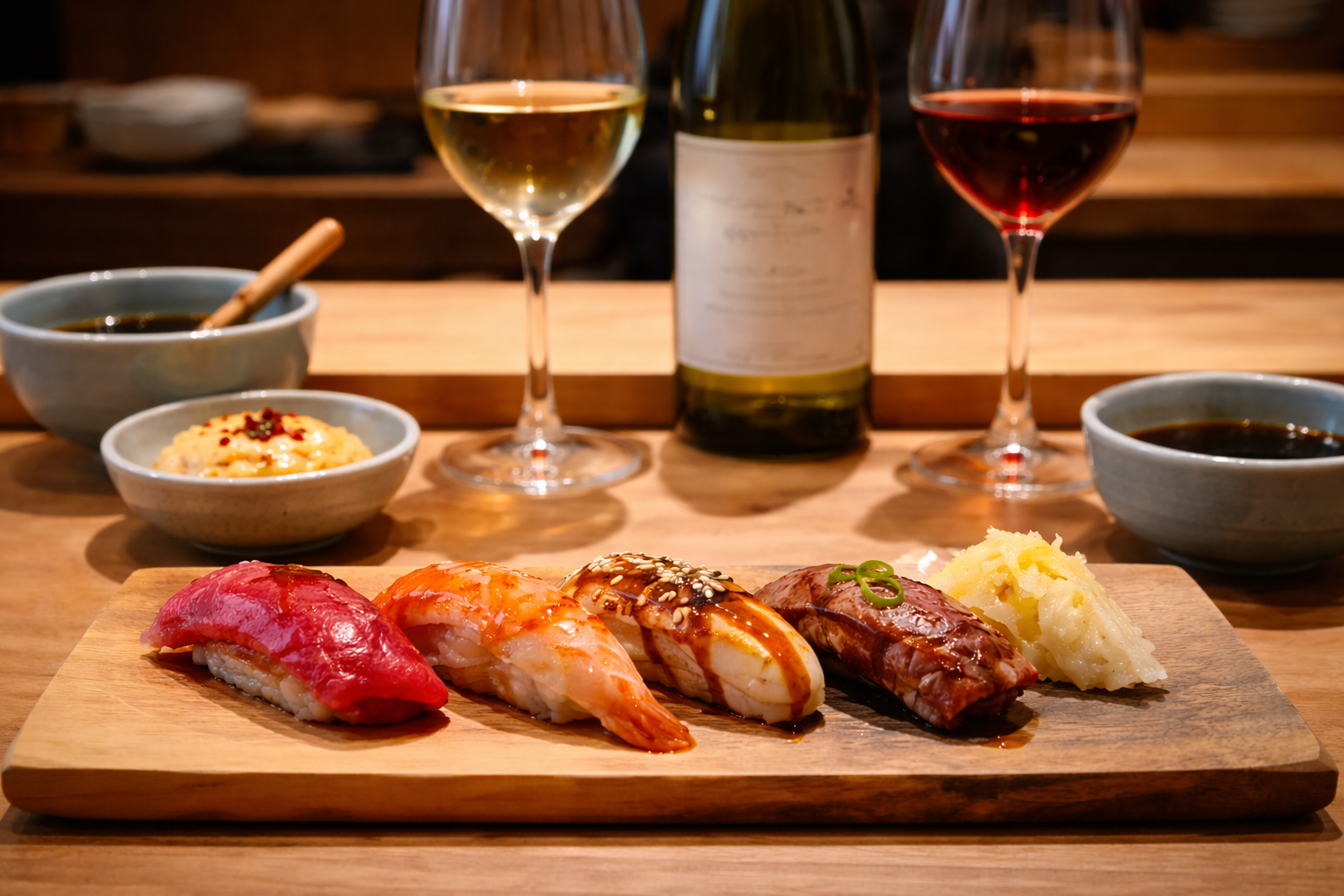
This is the last little adjustment layer, and it matters more than people think.
Soy sauce can help softer reds and richer whites, but it can also expose a wine’s bitter edge. If a sip turns stern after a soy-brushed bite, the wine is telling on itself.
Ponzu or yuzu pushes the pairing toward citrusy, high-acid whites. That bright top note makes wines like Albarino and dry Riesling feel very at home.
Spicy mayo and sweeter glazes change the game. Bone-dry, razor-sharp wines can feel a bit severe here. A white with a touch more fruit, or an off-dry Riesling in a very measured way, often lands better.
Eel sauce adds sweetness and depth. Super-lean wines can feel underdressed beside it. Sparkling still works, and a white with a touch more flesh can too.
Temperature is the cheap fix people forget. Keep sparkling properly cold, serve crisp whites chilled but not icy, and give light reds that 12 to 14C zone. A good wine served at the wrong temperature can look dumb. That’s a shame, because the fix is easy.
Remember: if a bite is chef-seasoned already, don’t dump soy on it and then blame the wine.
A tiny test works well at the counter: take a sip after a sauce-heavy bite. If the wine suddenly feels bitter, hot, or thin, move back toward sparkling or a softer, brighter white.
FAQ
Is non-vintage Champagne good enough for omakase?
Yes. In many cases, non-vintage brut Champagne is the sweet spot. It brings acidity, bubbles, and enough breadth for a full omakase without the weight or oak that can muddy delicate courses. Prestige is not the point here. Range is.
What should I order if I don’t like sparkling wine?
Start with Chablis, dry Riesling, Muscadet, Albarino, or Koshu. Those are the still-wine lanes that stay closest to what sparkling does well: freshness, restraint, and enough acid to keep the meal lively.
When is sake a better match than wine?
When the meal leans heavily on umami, subtle texture, and chef-seasoned bites, sake can be a better fit. The Wine & Spirit Education Trust points to sake’s low acidity and lack of tannins, which helps explain why it can glide through pairings that make red wine feel hard or white wine feel sharp.