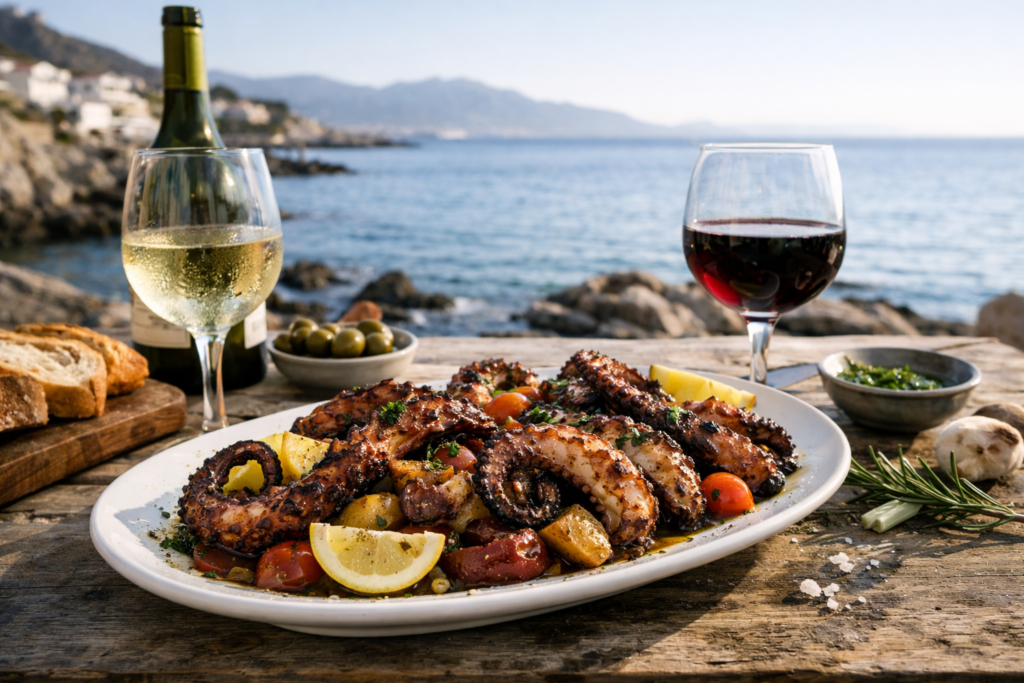
Octopus is one of those dishes that makes a bad wine choice look louder than it is. I’ve done it myself: lovely plate, good olive oil, a little smoke from the grill, a bottle that looked smart on the table, then the first sip made everything taste flatter and heavier.
If you want the best wine for octopus, start with Albariño. A dry, high-acid white like Vermentino, Assyrtiko, Picpoul de Pinet, or Chablis is the safe lane too. That short answer works for most plates, but grilled octopus, octopus salad, and octopus in paprika or tomato sauce do not want the same glass.
This guide will help you sort out:
- the safest bottle when you need a fast answer
- which white wines work best, and why
- when rosé, sparkling, or light red makes more sense
- what usually goes wrong with octopus pairings
- how to order from a vague restaurant list without overthinking it
At a Glance: fast pairing map
| Octopus style | Best first pick | Smart backup | Watch out for |
|---|---|---|---|
| Grilled with lemon and olive oil | Albariño | Vermentino or Assyrtiko | Big oak, heavy tannin |
| Cold salad, carpaccio, ceviche | Albariño or Txakoli | Vinho Verde or Brut sparkling | Creamy, broad whites |
| Garlic, olive oil, herbs, warm plate | Chablis | Unoaked Chardonnay or Assyrtiko | Buttery Chardonnay |
| Tomato or paprika-led sauce | Dry rosé | Brut sparkling or Gamay | Soft, low-acid reds |
| Spicy octopus | Brut sparkling | Lower-alcohol white | Hot alcohol, firm tannin |
The Best Wine for Octopus, in One Clear Answer
Albariño is the cleanest one-bottle answer for most octopus dishes. It brings the two things octopus likes again and again: freshness and shape. You get enough acidity for lemon, vinegar, and olive oil, but not so much aroma or oak that the wine starts shouting over the plate.
If Albariño is not on the list, reach for Vermentino, Assyrtiko, Picpoul de Pinet, or Chablis. A lean, unoaked Chardonnay also works when the dish is warm, garlicky, and a little richer. These are not prestige picks. They are practical picks.
Fast pick: If the menu only says “grilled octopus” and gives you nothing else, order Albariño first. If the white section looks weak, move to Brut sparkling before you gamble on a random red.
The catch is simple. Octopus is not a “seafood equals white wine” autopilot pairing. The garnish, the sauce, the temperature, and the char all change the bottle.
Why Octopus Pairing Depends on the Prep, Not the Seafood Rule
Octopus is meaty, but it is not steak-meaty. Pairing it by protein alone is like buying shoes by color and ignoring the size. The thing that makes the call is usually what lands around it: olive oil, lemon, garlic, paprika, parsley, vinegar, tomato, smoke.
That is why the generic “white wine with seafood” advice feels half-right and half-useless. A cold octopus carpaccio with lemon wants snap and lift. A warm grilled plate with olive oil and garlic can take more texture. An octopus braise with tomato and paprika starts behaving like a sauce pairing.
That logic lines up with WSET’s guidance on salty, oily Mediterranean food, which points toward structured whites with natural acidity because salt and oil soften the wine’s edge while letting the fruit and body show more clearly. That is a neat fit for octopus, because olive oil, sea salt, and char are often doing as much work on the plate as the octopus itself.
Quick rule: pair the garnish, not just the tentacle. Prep + sauce + temperature + char will get you closer than “fish means white.”
One more thing people miss: cold preparations make acidity feel sharper, and smoky preparations make soft wines feel sleepy. That’s why one bottle can sing with octopus salad and fall flat with the same octopus on the grill ten minutes later.
The Best White Wines for Octopus, Ranked by Safety and Personality
If you want the safest white wine ladder for octopus, start here. I would not rank these by pedigree or price. I would rank them by how often they save dinner.
| Wine style | Best with | Why it works | Watch for |
|---|---|---|---|
| Albariño | Most classic octopus plates | Citrus, saline lift, dry finish | Very ripe, broad examples |
| Vermentino | Herbs, olive oil, garlic | Mineral edge with Mediterranean feel | Flabby, overripe bottlings |
| Assyrtiko | Grilled and richer plates | High acid with more structure | Oakier versions when the dish is light |
| Picpoul de Pinet | Simple grilled or chilled octopus | Brisk, sharp, shellfish-bar energy | Too lean for richer sauces |
| Chablis or unoaked Chardonnay | Garlic, olive oil, warm service | More texture without buttery weight | Heavy oak, vanilla, cream |
| Txakoli, Vinho Verde, restrained Sauvignon Blanc | Cold, bright, lemony plates | Lift and refreshment | Too much pungent aroma |
Rías Baixas describes Albariño as crisp, elegant, fresh, and bone-dry. That style profile is almost tailor-made for octopus with lemon, sea salt, and olive oil. It is the bottle I reach for when I do not want to think too hard and I still want the pairing to feel sharp.
The Vermentino di Gallura consortium describes the wine as mineral and delicate with intense fruit notes, and that Mediterranean shape makes sense with parsley, garlic, and herb-heavy octopus dishes. The same salty-white-wine logic shows up in crisp Italian whites for briny seafood pasta too, which is why Vermentino keeps punching above its weight here.
Wines of Greece describes Assyrtiko as a textural grape that stays crisp in hot, dry conditions and works especially well with grilled fish and seafood. That extra structure matters when the octopus is charred hard or served over beans, potatoes, or chickpea puree.
Picpoul de Pinet is less glamorous, but it is a sneaky good call. It behaves like a squeeze of lemon in a glass. For plain grilled octopus or octopus salad, that is sometimes all you need.
Chablis and lean, unoaked Chardonnay belong here for one reason: they give you a touch more breadth without going buttery. That is handy when the dish has warm olive oil, garlic, white beans, or a richer mouthfeel.
Remember: “Safest” and “best” are not the same thing. Albariño is the safest. Assyrtiko or Chablis can be the better bottle once smoke, garlic, or richer sides show up.
The Best Bottle for Grilled Octopus and Lemony Plates

Grilled octopus is the version most people mean, and it is where the pairing gets more interesting. The char gives the dish a little more grip. Lemon keeps it bright. Olive oil rounds it out. You need a wine with freshness first, but a bit more texture is welcome here.
Albariño still works. Vermentino is excellent. Assyrtiko gets even more attractive, because its structure can take smoke without losing that clean line. Chablis or a lean Chardonnay is smart when the plate leans garlicky, oily, or warm rather than razor-bright.
This is also where people get lured into a heavier red because octopus feels “meaty.” I get the instinct, but most of the time it is a trap. Char can justify more texture. It does not justify brute force.
If the plate tastes mostly of grill, lemon, and herbs, stay in the white lane. If it tastes of smoke, paprika, and warm olive oil, move from Albariño toward Assyrtiko or Chablis. If it tastes of tomato or chilli, then the door opens for rosé, sparkling, or a light red.
Fast pick by flavor
- Smoky and lemony: Albariño or Vermentino
- Garlicky and olive-oil-rich: Chablis or unoaked Chardonnay
- Smoky with extra weight on the plate: Assyrtiko
The Best Bottle for Octopus Salad, Carpaccio, Ceviche, and Cold Preparations
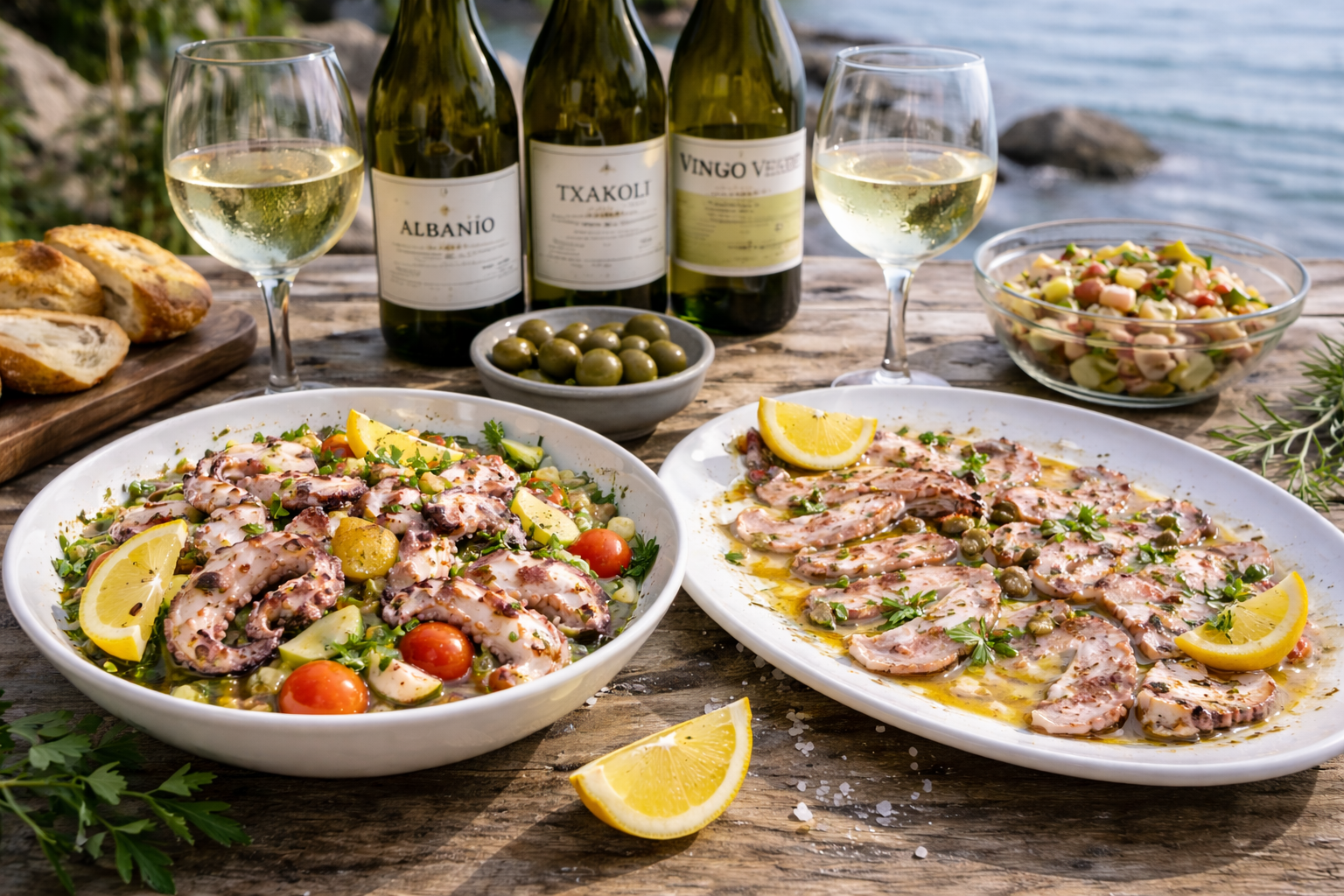
Cold octopus wants a lighter hand. This is where broad whites start to feel woolly and where a punchy, refreshing wine feels perfect.
For octopus salad with lemon, herbs, and olive oil, Albariño is still the cleanest all-rounder. Txakoli and Vinho Verde are great if you want something brisker and more playful. A restrained Sauvignon Blanc can work too, though I would skip the loud, grassy versions that smell like a hedge trimmer and steal the plate.
Carpaccio and ceviche push the needle even further toward freshness. Acidity matters more. Weight matters less. Brut sparkling wine becomes a smart move here, because bubbles add lift and the dry finish keeps raw or cured textures from feeling slick.
There is one useful edge case. Bon Appetit highlighted Chablis with octopus preserved in garlic, olive oil, and paprika, based on sommelier Derrick C. Westbrook’s pairing logic, and that makes sense. Once the octopus sits in oil or sauce, the wine can carry more texture without turning clumsy.
Note: Cold service makes sharp wines feel sharper. If a wine already feels angular on its own, it can get a bit poky next to chilled octopus with citrus.
When Tomato, Paprika, Garlic, and Spice Push You Toward Rosé, Sparkling, or Light Red
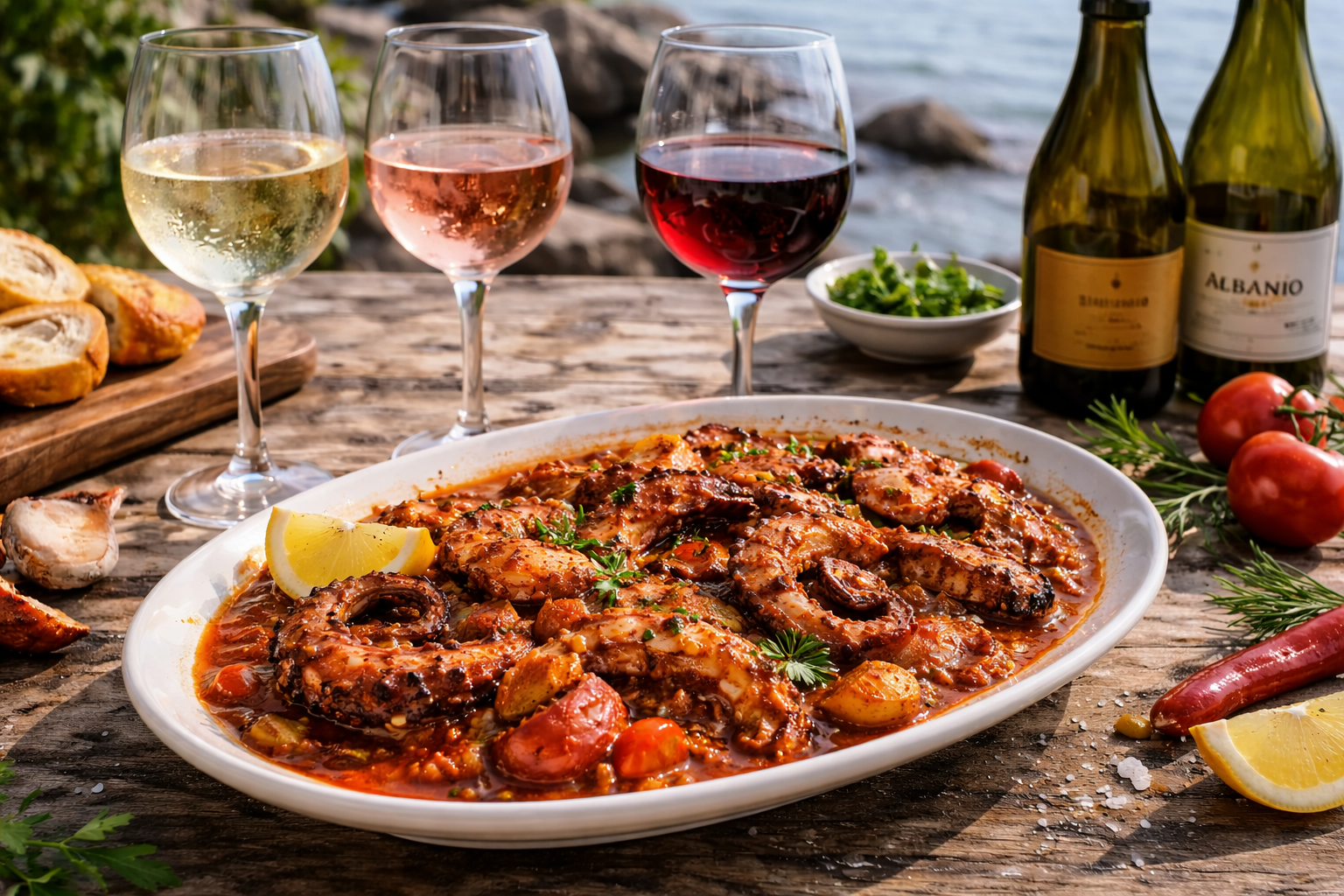
Garlic by itself does not send octopus into red-wine country. Garlic with paprika, tomato, or heat is a different story.
Tomato sauce changes the whole shape of the pairing. Acidic sauce can make soft, low-acid wines taste flat, and paprika can make oak feel muddy. This is where dry rosé starts looking very clever. It keeps the plate fresh, handles olive oil well, and does not fight the seafood.
Brut sparkling wine is another sharp answer here. It cleans up oil, plays nicely with salt, and has enough snap for spicy or paprika-led dishes. When I am staring at a menu description like “octopus, smoked paprika, tomato, chilli,” sparkling is often the calmest move on the board.
If you want red, keep it light, fresh, and low in tannin. Gamay works. Light Pinot Noir can work. Frappato can work. What you do not want is a thick, oaky red that turns the dish into a tug-of-war.
Seafood red sauce is its own little minefield, which is why seafood tomato sauce can want white, rosé, or sparkling is a handy companion piece when the octopus is swimming in more sauce than char.
Simple pivots that work
- Tomato-forward: dry rosé first, then Brut sparkling, then light red
- Paprika and olive oil: Assyrtiko, Chablis, or dry rosé
- Chilli-heavy: Brut sparkling or a lower-alcohol white
The Pairings That Usually Miss and Why
Most bad octopus pairings fail in pretty predictable ways.
Heavy oak is the first one. A buttery Chardonnay with toast, vanilla, and cream notes can make a bright octopus dish feel dull and sweet by comparison. That is not a subtle miss either. You notice it right away.
Big tannic reds are another common flop. Cabernet Sauvignon, firm Rioja Reserva, young Nebbiolo, and other stern reds tend to bully the texture of the dish. The octopus does not get “more meaty” because the wine is bigger. The pairing just gets noisier.
Overly pungent Sauvignon Blanc can miss too. The grape is not the problem. The style is. If the wine leans hard into aggressive gooseberry, jalapeno, or cut grass, it can sit on top of delicate octopus salad like a bright green siren.
Hot alcohol is rough with spicy octopus. Sweet wine is rough with most savory octopus unless the dish has some sweet glaze or sweet-spicy element to meet it. And low-acid wine beside lemon, vinegar, or tomato can taste sleepy fast.
Fast diagnosis: If the first sip makes the lemon taste harsher, the octopus taste sweeter, or the sauce feel heavier, the wine is usually too oaky, too broad, too tannic, or too low in acid.
The mistake behind most of these misses is simple: people mistake “meaty texture” for “red wine invitation.” Octopus can take shape. It rarely wants force.
A 30-Second Wine List and Store-Shelf Filter for Octopus

You do not need to memorize a dozen grapes. You need a short filter that works under pressure.
Step 1. Read the plate and narrow the lane
If the dish sounds grilled, lemony, herby, or olive-oil-based, start with dry, high-acid white. If it sounds cold, cured, or citrus-heavy, go even fresher. If it sounds tomatoey, spicy, or paprika-led, pivot toward dry rosé, Brut sparkling, or a light red.
Step 2. Find freshness on the label and skip the fluff
Words like “crisp,” “dry,” “fresh,” “mineral,” and “citrus” are green lights. Words like “buttery,” “toasty,” “reserve,” “rich,” and “full-bodied” are caution flags for many octopus dishes. Not always wrong, but the margin for error gets thinner.
Step 3. Use the grape shortlist and move fast
For whites, look for Albariño, Vermentino, Assyrtiko, Picpoul, Chablis, unoaked Chardonnay, Txakoli, or Vinho Verde. For rosé, keep it dry. For red, think Gamay, light Pinot Noir, or Frappato. That is enough to cover most restaurant lists and most shelves without getting lost.
Step 4. Let sparkling bail you out
When the list is vague or the pairings feel messy, Brut sparkling wine is the escape hatch. It has freshness, it handles salt and oil well, and it is less likely to get dragged around by tomato or spice than a random still white. I lean on this move more than I probably should, and, honestly, it keeps working.
One rule worth keeping
Buy freshness before power. With octopus, that rule will save you more often than any single grape recommendation.
FAQ
Is Albariño better than Sauvignon Blanc with octopus?
Most of the time, yes. Albariño usually gives you citrus, salinity, and dryness without the sharper herbal punch that can make Sauvignon Blanc feel louder than the plate. Sauvignon Blanc still works with octopus salad or ceviche when the style is restrained and fresh.
Can red wine work with octopus?
Yes, but only in the right lane. Red starts making sense when the dish has tomato, paprika, smoke, or spice, and even then the wine should stay light, fresh, and low in tannin. Gamay, light Pinot Noir, or Frappato make more sense than Cabernet or a big oaky blend.
What wine works with tinned octopus or octopus in oil?
That version can handle more texture than a plain grilled plate. Chablis, unoaked Chardonnay, Assyrtiko, and dry sparkling are all strong calls, especially when the octopus comes packed with olive oil, garlic, or paprika.