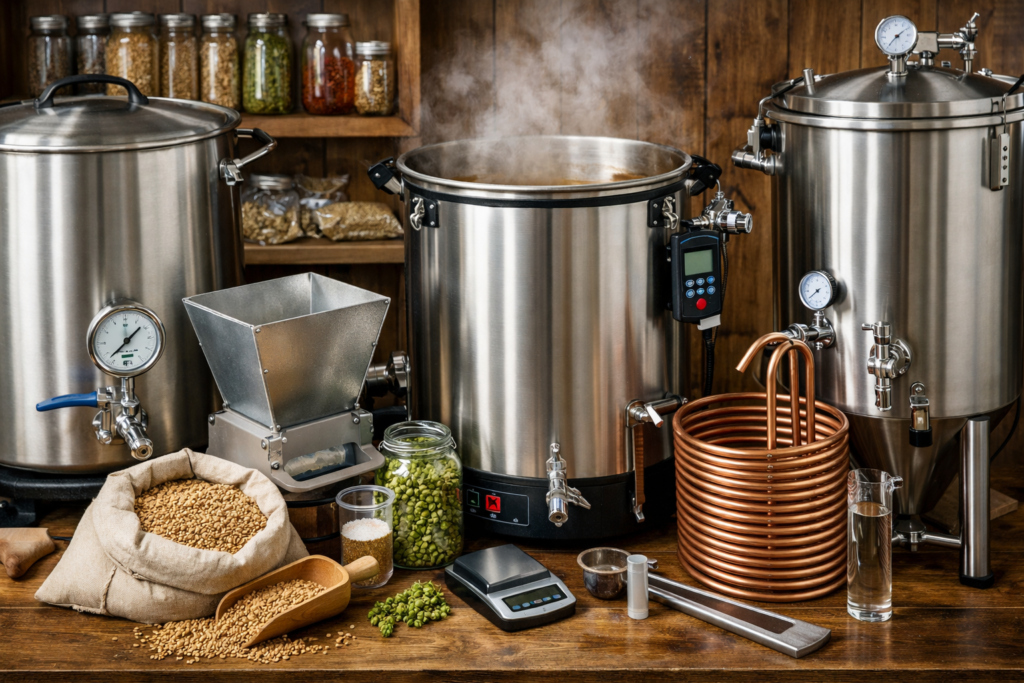
You search for the best equipment for all grain brewing and suddenly every answer looks like a stainless steel scavenger hunt. One page tells you to buy a mash tun, a hot liquor tank, a chiller, a grain mill, a pump, a controller, and half a garage. Another makes it sound like a single kettle and a bag will solve everything. Both are a little right, and both miss the point.
For most homebrewers, the best starting setup is either a properly sized brew-in-a-bag kit built around a 10-gallon kettle or a 30-liter class all-in-one brewing system. That gets you into all grain brewing without turning your first brew day into a plumbing project. The catch is that “best” changes fast once you factor in your stove, your outlets, your batch size, your budget, and one very unglamorous detail: whether you can safely lift a soaked bag of grain.
That is the tension here. The gear itself is not the hard part. Picking a setup that fits your real brewing life is.
- Which all grain setup makes the most sense for beginners
- How to choose between BIAB, a cooler mash tun, and an all-in-one electric system
- What gear you actually need now and what can wait
- How kettle size, power, and space change the answer
- Which buying mistakes make all grain feel harder than it really is
Best Suggestions Table (All products have been personally reviewed & tested by us! Click the buttons below to jump to the reviews.)
| Product | Best for | Action |
|---|---|---|
| Anvil Foundry 10.5 | Brewers who want outlet flexibility and a clean upgrade path |
Check Price Review |
| Grainfather G30 | Brewers who value polish, guidance, and tighter brew-day workflow |
Check Price Review |
| BrewZilla Gen 4.1 35L | Brewers who want an all-in-one system without climbing too high on cost |
Check Price Review |
Tip: Clicking the “Review” button will move you to the review so you can decide fast.
Still in doubt? Here’s a fast guideline to save you some time.
- If you want the lowest-cost path and do not mind lifting a wet grain bag, start with BIAB.
- If you want cleaner temperature control and less improvising, buy a 30L-class all-in-one system.
- If you already know you like building and tweaking gear, a cooler mash tun setup still makes sense.
- If you brew indoors on standard household power, check the unit’s voltage before you fall in love with the product page.
- If you are unsure about batch size, 2.5 to 5 gallons is the sweet spot for most first all grain setups.
The best equipment for all-grain brewing, without the hobby-shop rabbit hole
The shortest honest answer is this: most beginners do best with one of two paths.
Path one is brew-in-a-bag, usually called BIAB. That means a kettle big enough for full-volume brewing, a sturdy bag, a heat source, a fermenter, basic measuring gear, and cleaning supplies. Path two is a compact all-in-one brewing system with built-in heating and recirculation. Both can make very good beer. Both are simpler than the old three-vessel picture a lot of people still carry around in their head.
The American Homebrewers Association’s equipment guide still lays out the classic essentials clearly, but it also separates “Essentials” from “You Might Haves.” That distinction matters. A lot of brewing guides blur it, and that is how people end up buying a grain mill before they own a decent thermometer.
I’ve brewed on stripped-down BIAB rigs and on polished electric systems. The beers did not care how fancy the day looked. What changed was how much lifting, fiddling, cleanup, and second-guessing I had to do. That’s the real buying question.
Quick rule: If your first ten brew days need to happen in a kitchen or a tight garage corner, simple wins. If your setup already feels annoying on paper, it will feel worse with seven gallons of hot wort in front of you.
Choose your setup path first, because everything else depends on it
Start here, because the wrong setup path makes every later decision messy.
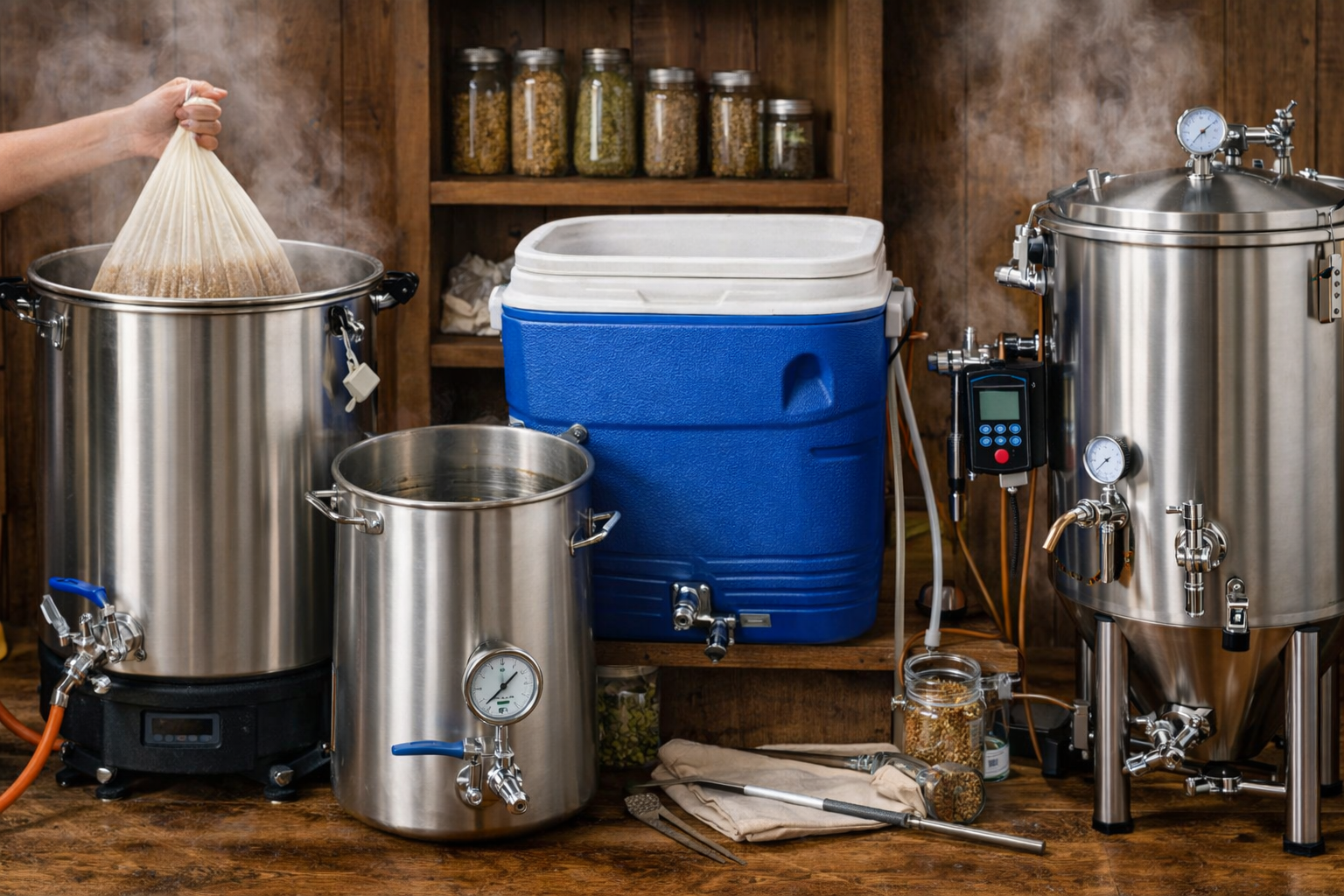
BIAB is the plain, stripped-down option. One kettle. One bag. One burner or stove. Fewer parts to clean. Fewer fittings to leak. For a beginner, that simplicity is not a compromise. It is often the reason the first batch actually gets brewed. The tradeoff is physical. A soaked grain bag is heavy, awkward, and annoyingly floppy. If you are brewing five-gallon batches with a healthy grain bill, lifting becomes part of the process whether you like it or not.
A cooler mash tun setup is the classic modular route. You mash in an insulated cooler, lauter through a valve and manifold or false bottom, then boil in a separate kettle. It works, and many brewers still like it because each piece is easy to replace or modify. But it asks more from you on day one: more vessels, more transfers, more cleanup, and more places to make a silly little mistake that turns into a sticky floor.
An all-in-one brewing system compresses the process. Systems like the Anvil Foundry 10.5, Grainfather G30, and BrewZilla Gen 4.1 35L combine kettle, heating, and grain basket into one unit. According to official product materials, the Anvil Foundry 10.5 can switch between 120V and 240V, the Grainfather G30 is built as a connected 110V all grain system in the US market, and the BrewZilla Gen 4.1 35L is sold as a compact single-vessel system designed for full all grain brewing. Those are not small details. They decide where you can brew and how smooth brew day feels.
If you are brewing in an apartment and want the fewest moving parts, BIAB is usually the best entry. If you want a cleaner system with better repeatability and less improvising, an all-in-one is the better buy. If you enjoy building your own path and already know you are the sort of person who tinkers with valves for fun, a cooler mash tun still has charm.
| Setup path | Best for | Tradeoff |
|---|---|---|
| BIAB | Lowest cost, fewest parts, easy first setup | Bag lifting and less built-in control |
| Cooler mash tun | Modular gear, DIY-minded brewers | More vessels, more transfers, more cleanup |
| All-in-one electric | Compact workflow, cleaner control, repeatable brew days | Higher upfront spend and power limits to check |
How we tested these picks: The evaluation lens here is practical, not romantic. We looked at batch-size fit, power flexibility, cleanup load, brew-day friction, control, and how forgiving each system feels for a new all grain brewer. I also weighted the parts that annoy people after the honeymoon phase: awkward lifting, slow heat-up, fiddly cleaning, and whether the unit pushes you toward better habits or just hands you more metal.
Anvil Foundry 10.5
The Foundry 10.5 gets recommended a lot because its spec sheet solves a real beginner problem. Anvil says the unit can run on either 120V or 240V, with 1600W on 120V and 2800W on 240V. That is a genuinely useful choice, not brochure fluff. If you are brewing in a normal house and want to start on standard power, you can. If you later add a 240V circuit, the same system gets quicker heat-up and a stronger boil. That saves you from the annoying “buy once, replace sooner than you planned” cycle.
It also hits a practical size sweet spot. The 10.5-gallon form factor is roomy enough for standard five-gallon batches without feeling absurdly oversized in a home setting. In use, systems like this feel less chaotic than stove BIAB because the vessel, grain basket, and controller all belong to one workflow. Cleanup is still cleanup, of course, but it is one controlled mess instead of several. The weak spot is the same one most all-in-one units share: you still need to think about lifting a grain basket, steam, and where the system lives while it runs. Still, for brewers who want a solid all-in-one brewing system with room to grow, this is one of the easiest picks to defend.
Grainfather G30
The Grainfather G30 has been a benchmark in this category for years because it does a very polished version of the all-in-one idea. Grainfather’s official US listing describes it as a 110V all grain brewing system with app connectivity, and the wider G30 platform has long been known for bundling a guided brew-day feel with a counterflow chiller in some versions. That polish matters more than it sounds. New brewers do better when the system nudges them toward an orderly day instead of inviting improvisation at every turn.
What stands out is workflow. The G30 feels like it was designed by people who know where brew days get sloppy: temperature steps, recirculation, and cooling. The counterflow chiller option is attractive if you want a more integrated chilling process than the usual immersion-coil routine. The catch is that the Grainfather is less about brute flexibility and more about a smooth, controlled experience. That makes it a strong pick for brewers who value guidance and repeatability, but less compelling for someone who just wants the cheapest path into all grain brewing. In other words, it is a good buy when you already know you enjoy the process and want the gear to get out of your way.
BrewZilla Gen 4.1 35L
KegLand describes the BrewZilla Gen 4.1 35L as a compact single-vessel all grain brewing system built for batches up to 30L. That framing is why it lands so often in buying conversations. It aims right at the brewer who wants the convenience of an all-in-one setup without jumping straight to the more premium end of the category. For that buyer, the BrewZilla makes sense.
The good part is the balance. It gives you built-in structure, step-mash functionality, and a pump-driven workflow in one footprint that still feels homebrew-sized. This is the sort of system that lets a new brewer graduate from extract or simple BIAB without feeling like they skipped three skill levels. The tradeoff is less glamorous and very normal: you still need to respect your circuit, your boil space, and your cleanup routine. A compact single-vessel system is not magic. It just removes a lot of the messier friction. If your goal is a sensible electric brewing system that stays grounded in home use, the BrewZilla 35L is easy to like.
Common miss: People often buy the “serious-looking” system, then realise three brews later that what they really wanted was less lifting, less cleanup, or fewer parts spread across the kitchen.
Size the kettle and batch volume so brew day stops fighting you
This is where small mistakes get expensive.
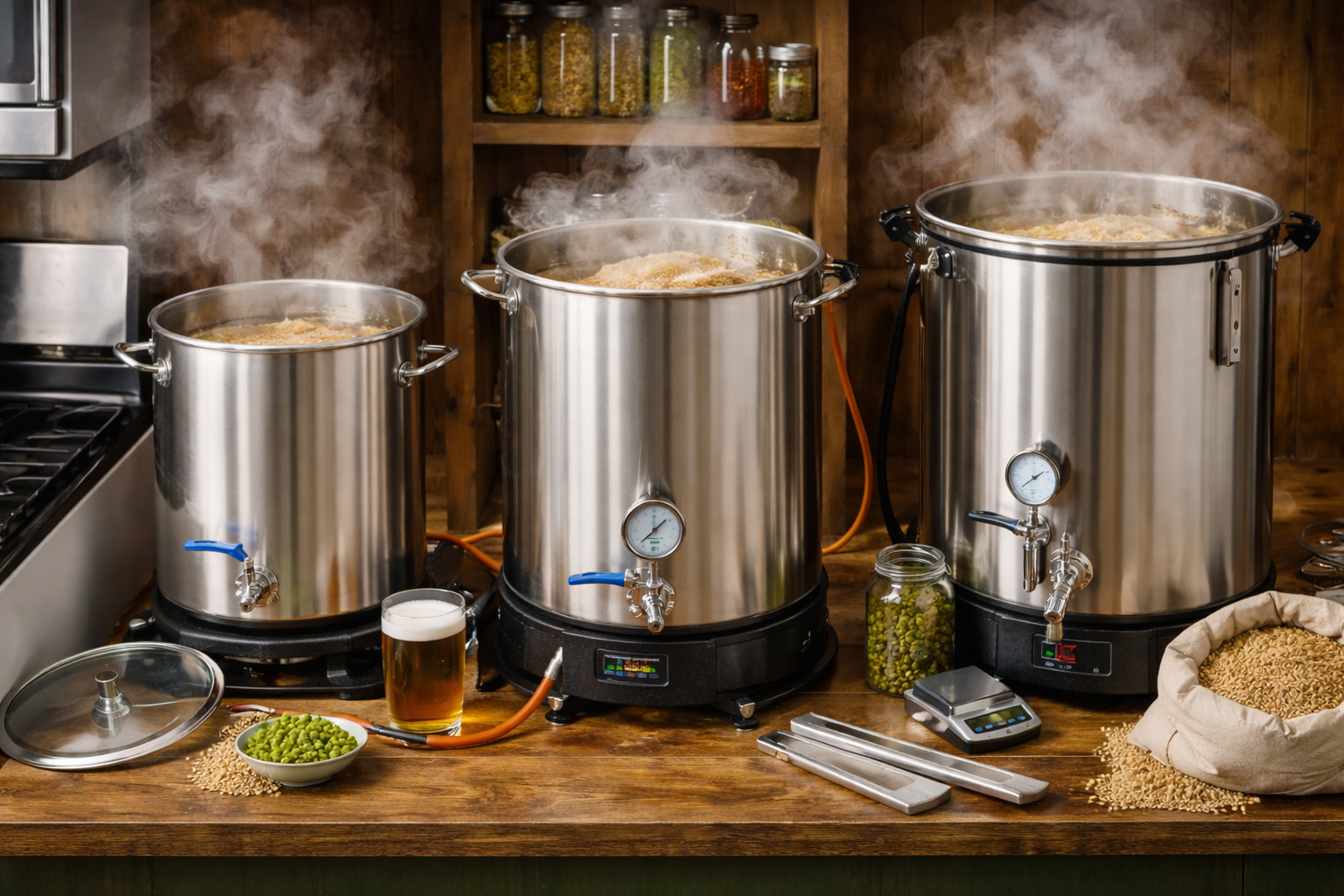
Brew Your Own’s all-grain guide notes that for a 5.0-gallon batch, you will need to boil at least 6 gallons, and more if you want high-gravity beers. That is the clue. You do not size a kettle by the beer you want to drink. You size it by the hot, foamy, pre-boil reality of making that beer.
For most five-gallon all grain batches, a 10-gallon kettle is the comfortable answer. An eight-gallon kettle can work, but it leaves less room for foam, stronger beers, and the tiny mistakes that happen on real brew days. If you already know you like pale ales, IPAs, and normal-strength amber or blonde beers, eight gallons can squeak by. If you want room to breathe, go to ten.
Small-batch brewing changes the math in your favor. A 2.5- or 3-gallon setup is easier on your stove, easier to chill, easier to lift, and a lot easier to clean up after a long day. That is why small-batch all grain brewing is not just a budget move. It is a sanity move.
One thing people rarely say plainly: a too-large kettle can be annoying too. A giant kettle on a weak stove is like towing a boat with a bicycle. You can pretend it will be fine. It won’t.
Fast sizing rule: Five-gallon finished batch? Think 10-gallon kettle or a comparable all-in-one volume. Small kitchen and no strong heat source? Drop to 2.5 or 3 gallons before you force a bad fit.
Build the must-have kit first, then ignore the shiny extras for now
The easiest way to waste money in home brewing is to buy for the hobby version of you that does not exist yet.
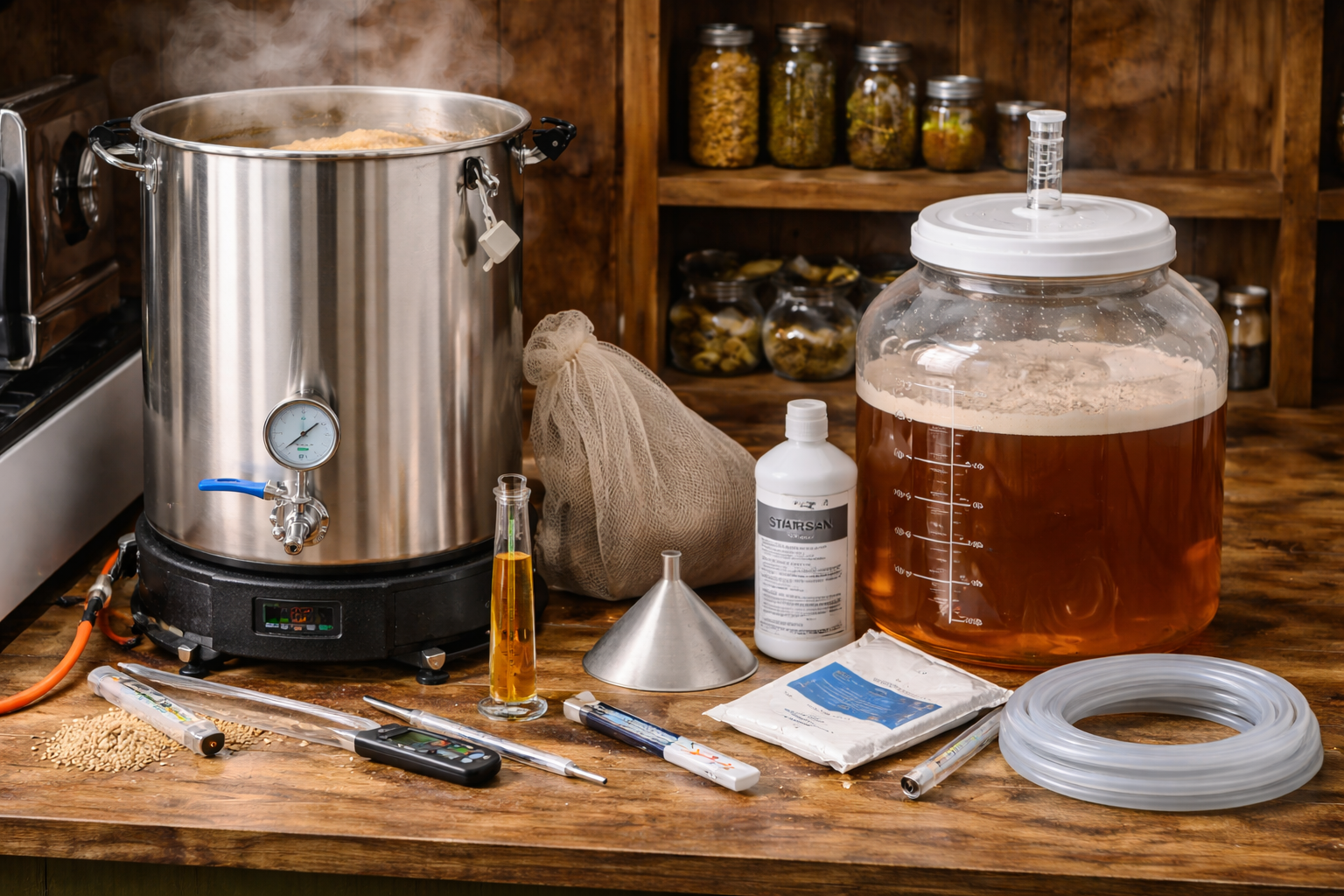
The must-have kit is not long. It is just easy to bury under “nice gear” lists.
- Kettle or all-in-one brewing system
- BIAB bag or mash tun, depending on your path
- Heat source
- Fermenter with airlock
- Thermometer
- Hydrometer or refractometer
- Cleaner and sanitizer
- Simple transfer gear such as tubing or an autosiphon
The American Homebrewers Association separates cold-side basics from the extra gear that can wait, and that split is dead right. Sanitizing is not the boring side quest. It is the part that saves your beer after the boil. The hot side is forgiving. The cold side is where sloppiness bites.
Now for the gear that usually looks more urgent than it is: grain mills, pumps, recirculation kits, dedicated hot liquor tanks, extra controllers, and elaborate sparge hardware. These are not bad tools. They are just not where a beginner gets the biggest return.
That is also why an article like 7 Best Home Brewing Systems That Actually Fit Your Brew Style becomes useful only after you have the basics straight. System shopping makes more sense once you know what problem you are trying to fix. Once you actually get to the shopping part, one of our favorite shops that we highly recommend everyone to check out is TrueBru, they got some high quality products and quick delivery.
| Buy now | Buy later | Skip for now |
|---|---|---|
| Kettle or all-in-one, fermenter, thermometer, hydrometer, cleaner, sanitizer | Chiller upgrade, grain mill, improved transfer gear | Complex recirculation hardware, extra vessels, fancy control add-ons you do not yet need |
Add the tools that improve beer, not just the ones that look impressive
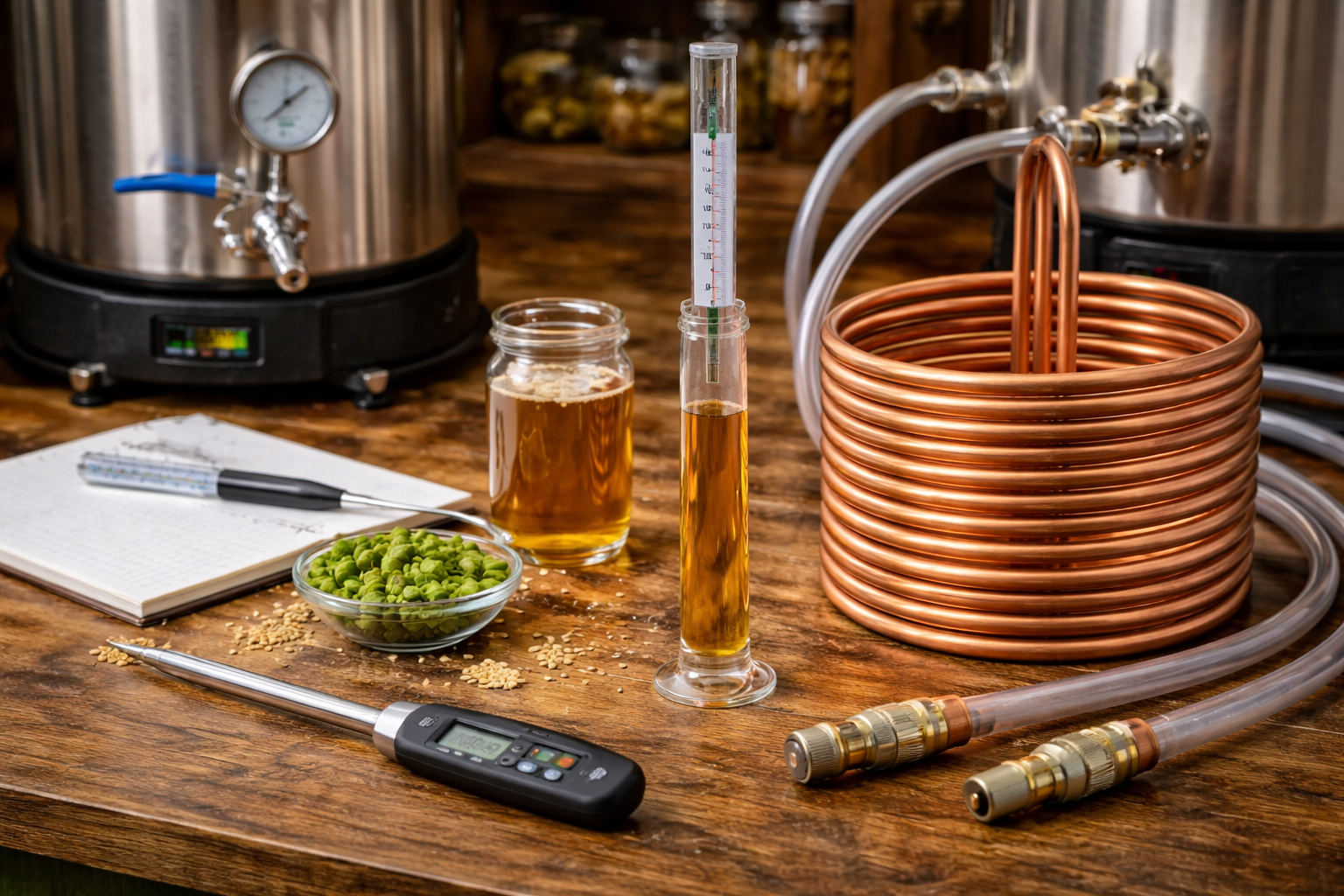
If a tool changes a decision or catches a mistake early, it earns its place. If it only looks good in a photo, leave it on the shelf.
A decent thermometer matters because mash temperature shapes fermentability. A hydrometer matters because it tells you what actually happened, not what you hoped happened. A wort chiller matters because cooling a full-volume batch in a sink full of lukewarm water gets old fast and stretches the awkward time between boil and pitching yeast.
The AHA’s batch-sparge tutorial lists a wort chiller as optional. That is fair. Optional does not mean useless, though. For small batches, an ice bath can get you through. For regular five-gallon brewing, an immersion chiller is one of those “why did I wait?” purchases.
One of the best habits for new brewers has nothing to do with buying more gear: run water through the whole setup before your first brew day. Learn the controller. Mark your volumes. Measure your boil-off. Figure out where hoses want to kink and where steam wants to collect. That quiet little test run saves more swearing than almost any accessory.
Pro tip: Built-in volume markings are handy, but do not trust them blindly. Check them with measured water once. Future you will be glad you did.
And once you get into fermentation, the next decision that changes results is yeast choice, not another shiny kettle fitting. That is where a guide like 7 Best Yeast for Brewing Beer and How to Pick the Right One fits naturally.
Match the equipment to your space, power, and brew-day reality
This part gets skipped too often, maybe because it is less fun than talking about pumps.
Space decides more than people admit. A kitchen brewer using a standard stove has different needs from someone brewing on a patio with propane. A narrow apartment sink changes chilling. A cramped laundry room changes where steam goes. A weak circuit changes whether an electric brewing system feels smooth or maddeningly slow.
Anvil’s manual is unusually clear here. In 120V mode, the Foundry heats more slowly and produces a lower boil intensity than it does in 240V mode. That is not a flaw. It is just what electricity does. So if you are choosing an all-in-one brewing system for a normal household outlet, go in with the right expectation.
Then there is lifting. BIAB fans sometimes hand-wave this away, but a wet grain bag from a full five-gallon mash can be heavy enough to turn a cheerful brew day into a clumsy little disaster. The problem is not your strength. It is awkward hot weight. Grain baskets on all-in-one units help, but they still need a plan.
The safety side deserves plain language too. The BYO all-grain guide puts safety front and center for a reason. Hot liquid, slick floors, steam, and propane are not abstract risks. Keep hoses and cords out of walk paths. Do not normalize carrying big volumes of near-boiling wort across the room. If the setup needs a weird reach or a risky lift, change the setup.
Apartment brewer? Small-batch BIAB or a compact electric unit usually beats trying to shoehorn a big classic system into a small room. Garage brewer? You have more freedom, but steam, drainage, and power still matter.
Use simple upgrade logic so you do not buy the same answer twice
Upgrades make sense when they fix a bottleneck. They are silly when they just change the shape of your clutter.
If your pain point is lifting, solve lifting. That might mean dropping batch size, using a pulley for BIAB, or moving to a grain-basket system. If your pain point is temperature control, fix temperature control. If cleanup is the drag, stop adding fittings and extra vessels. If consistency is the problem, start with measurement before hardware.
This sounds obvious, but homebrewers miss it all the time. They buy a grain mill because it feels like progress, when the real issue is that their chilling routine is slow and messy. They bolt on recirculation gear because it looks advanced, when the real issue is that their mash readings are sloppy and their volumes are guessed at.
Some upgrades do pay off early. A better chiller is one. Cleaner transfer gear is another. A grain mill starts making more sense once you are brewing often enough to care about crush control and recipe flexibility. Full-blown HERMS or RIMS systems? Those are for brewers who already know they want that complexity. Nobody needs to earn stripes by buying a harder brew day.
Avoid the buying mistakes that make all-grain feel harder than it is
Most first-timer frustration comes from a handful of very fixable mistakes.
- Buying too much system too soon. Fancy hardware cannot rescue a bad fit.
- Undersizing the kettle. A cramped boil turns simple batches into foam management.
- Ignoring sanitation. Cold-side sloppiness wrecks more beer than the wrong false bottom ever will.
- Forgetting power and ventilation. Electric units and propane burners both ask practical questions before brew day, not during it.
- Underestimating hot weight. Wet grain and full kettles are clumsy. Plan the lift or remove it.
- Assuming advanced gear makes better beer on its own. It usually just makes a more expensive mess when the basics are shaky.
If you want the sharpest version of the answer, here it is: buy the setup that lowers friction without lowering control. For many people that means a simple BIAB rig. For many others it means a compact all-in-one brewing system. Very few beginners need a sprawling multi-vessel setup to make excellent beer at home.
That is why the best equipment for all grain brewing is not the most impressive system. It is the one that fits your room, your power, your batch size, and your patience well enough that you keep brewing on it.
FAQ
Is BIAB really enough for good all-grain beer?
Yes. BIAB is enough to make very good all grain beer. The tradeoff is not beer quality. It is workflow. You get fewer parts and lower cost, but you also take on grain-bag lifting and a bit more manual handling.
Do I need a wort chiller for my first all-grain setup?
Not always. For small batches, an ice bath can work. For regular five-gallon all grain brewing, a chiller quickly becomes one of the most useful upgrades because it shortens cooling time and makes brew day less clumsy.
What size kettle works best for five-gallon all-grain batches?
A 10-gallon kettle is the comfortable choice for most five-gallon all grain batches. An eight-gallon kettle can work for some beers, but it leaves less room for foam, higher-gravity recipes, and simple brew-day margin.