The funny part about a first batch of homemade wine is that crushing grapes feels easy. The part that trips people up comes later, when the bucket goes quiet and you start wondering whether it is finished, safe to bottle, or one impatient move away from fizzy glass grenades.
If you’re searching for how to make wine at home with grapes, the short answer is simple: clean and sanitize everything, crush good grapes, measure the must, pitch wine yeast, manage fermentation, rack off the sediment, and bottle only after the wine is dry and stable. The process is not hard. The process is picky about timing, oxygen, and guessing less than your instincts want to.
That is the gap in a lot of beginner advice. It makes homemade grape wine sound like a rustic weekend project, when the better mindset is “small food process with a few moments that matter a lot.”
At a glance
- Best first batch: 1 gallon. It is cheaper, easier to lift, and a lot less punishing if you miss something.
- Rough grape amount: about 18 pounds for 1 gallon. Berry size and pressing style nudge that number around.
- Most useful tools: hydrometer, fermenting bucket, carboy or demijohn, airlock, siphon.
- Most useful measurement lane: around 22 Brix for a dry table wine, with juice pH kept in a safe range.
- Hard rule: do not bottle by calendar or bubbles alone. Bottle after stable gravity readings and obvious stillness.
| Decision | Good first-batch call | Why |
|---|---|---|
| Batch size | 1 gallon | Lower cost and easier troubleshooting |
| Grape type | Sound, ripe wine grapes if possible | Better sugar, acid, and skin balance |
| Fermentation proof | Hydrometer readings | Bubbles can mislead you |
| First aging target | A few months | Young wine is usually rougher than it looks in the bucket |
If you are in the U.S., federal rules allow limited home wine production for personal or family use and not for sale.
Here’s what this guide will help you sort out fast:
- which grapes work and which ones make life harder
- what changes between red, white, and rose
- when sugar, pH, and acidity actually matter
- how to know fermentation is really done
- why early bottling is the rookie mistake that keeps showing up
- how to rescue a cloudy, sharp, or stuck batch without flailing
How to Make Wine at Home With Grapes, in One Clear Answer
A clean first batch follows the same spine every time. You crush or press the grapes, turn that fruit into must, check the must before fermentation starts, run primary fermentation in a bucket, move the young wine into a narrower vessel, rack it off sediment, then bottle when the readings say it is done.
That is the full path. The catch is that three forks in the road change the result a lot: the grape itself, the red-versus-white process, and whether you measure before you adjust.
Fast call: For a first batch, aim for “clean and drinkable” instead of “tiny winery in the garage.” That one mental shift saves money, cuts clutter, and keeps you from buying lab gear before you even know whether you enjoy the process.
In practice, the basic flow looks like this:
- Sort out rotten, moldy, or underripe fruit.
- Crush or press based on the style you want.
- Sanitize gear and check the must before yeast goes in.
- Ferment with control, not with hope.
- Rack and protect the wine from oxygen once the noisy part is over.
- Bottle only when gravity stays put and the wine has settled.
I like to frame homemade wine as baking bread with fruit chemistry. The broad pattern is forgiving. The timing is not. You can improvise a little on bucket shape or siphon style. You cannot improvise your way around dirty gear, wild swings in acidity, or bottling sweet wine by accident.
Start With the Right Grapes, Batch Size, and Gear
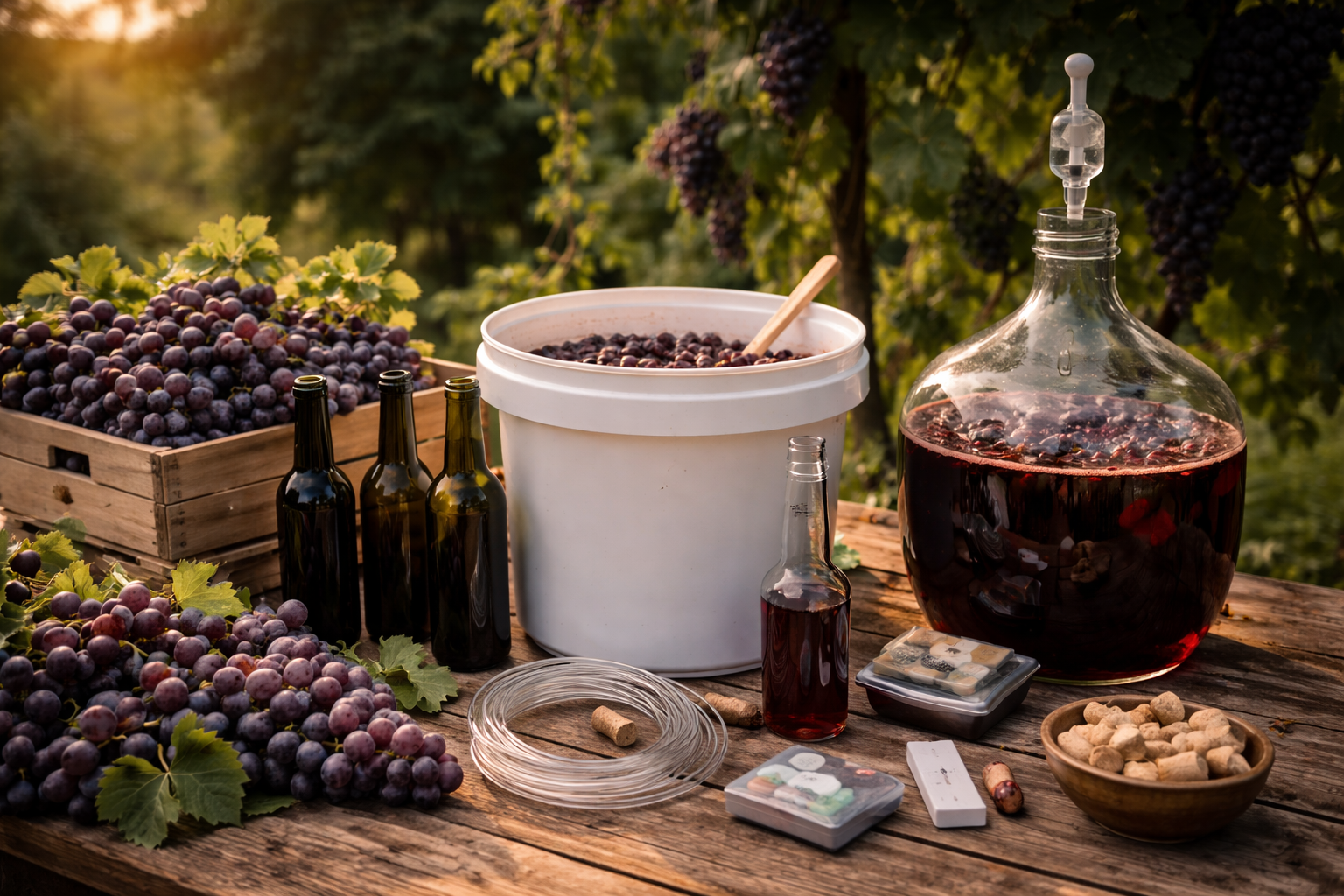
The best wine you can make at home starts with the best grapes you can actually get, not with the fanciest fermenter. If the fruit is thin, sour, sunburned, or half-split, no carboy on earth fixes that.
Wine grapes and table grapes are not built for the same job. The University of Minnesota’s grape guidance shows how table grapes are bred as eating grapes with different texture and flavor priorities. They can ferment just fine, but they tend to give you less of the sugar-acid-skin balance that makes winemaking smoother. You can make drinkable wine from supermarket grapes, sure, but it is a bit like making espresso with beans sold for cold brew. You can still get coffee. You are fighting the raw material from the start.
Pick a batch size that leaves room for mistakes
One gallon is the sweet spot for a first run. It usually means around five standard bottles, which is enough to learn from and not so much that a flawed batch feels like a financial event. A five-gallon batch is fun once you trust your process, but lifting it, racking it, and correcting it are all more annoying than people expect.
Buy enough grapes to get the yield you want
A good practical rule is about 18 pounds of grapes for 1 gallon of finished wine. You might squeeze a touch more or less from that, depending on berry size, how hard you press, and how much you lose to lees. For 5 gallons, think in the neighborhood of 85 to 90 pounds. Better to have a little extra fruit than to discover your container is full of optimism and not enough juice.
Keep the gear list short and functional
For batch one, you need:
- a food-grade bucket or fermenter for primary fermentation
- a mesh bag or straining setup
- a hydrometer and test jar
- a carboy or demijohn for the quieter phase
- an airlock and bung
- siphon tubing
- clean bottles and closures
- a sanitizer
The hydrometer earns its place fast. It tells you where the sugar starts and whether the ferment has really finished. Without it, you are trying to judge doneness by surface drama, and surface drama lies.
Note: Fancy upgrades can wait. A press, pH meter, and acid kit are helpful. They are not the price of admission for a decent first gallon.
Pick the Right Winemaking Path for Red, White, or Rosé
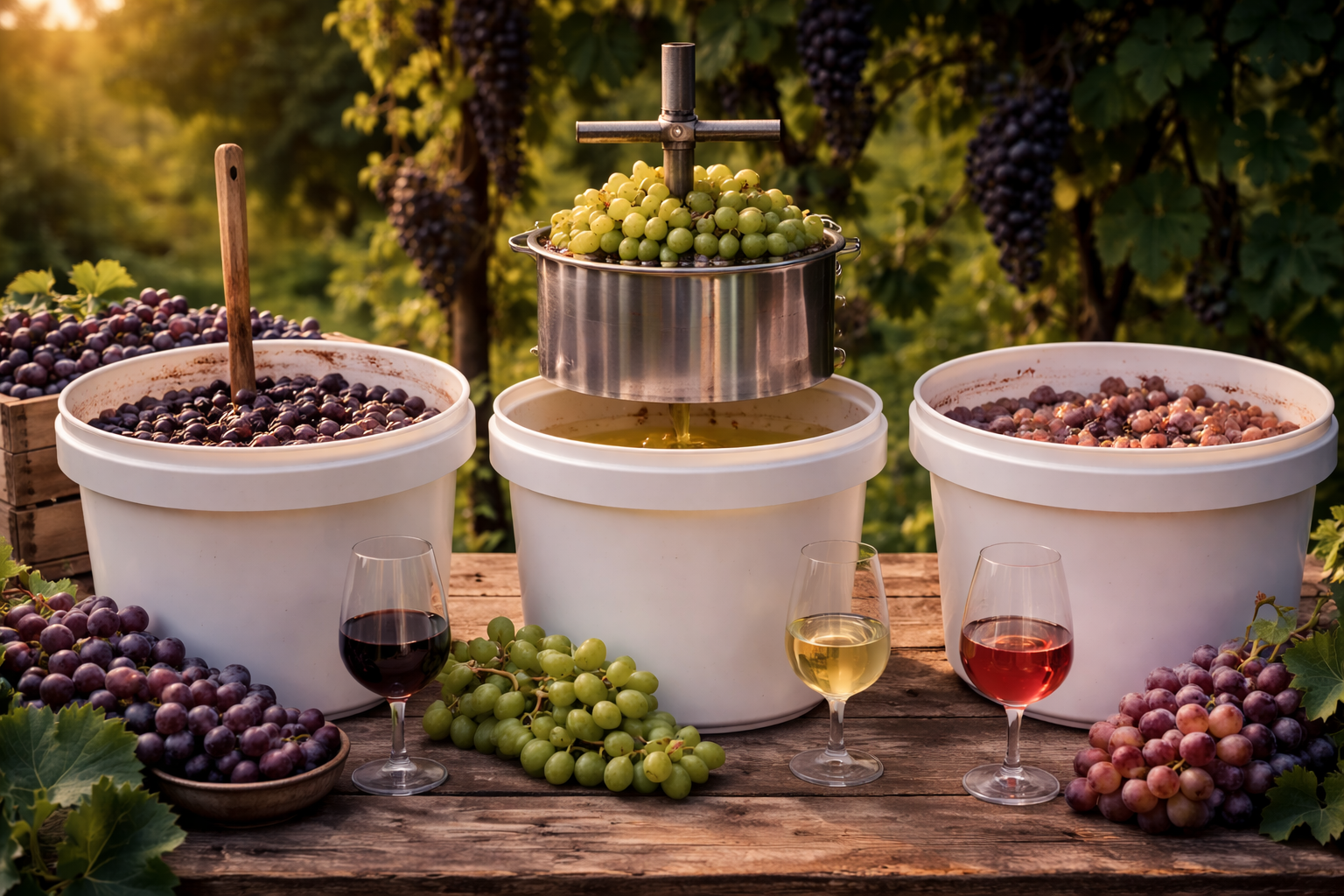
The biggest style decision is not the grape name. It is skin contact.
Red wine gets much of its color, tannin, and grip from fermenting with skins and pulp. White wine usually gets pressed early, then fermented mostly as juice. Rose sits in the middle. It gets brief skin contact, then the juice comes off before it starts behaving like a red.
| Style | What happens to the skins | What that changes |
|---|---|---|
| Red | Stay in during fermentation | More color, tannin, body, daily cap management |
| White | Come out early | Cleaner fruit profile, less bitterness risk |
| Rose | Short contact, then off the skins | Light color, softer tannin, narrower timing window |
Choose the red path if you want structure and don’t mind more handling
Red ferments ask you to punch down the cap, which is the floating blanket of skins that rises as carbon dioxide pushes it up. That cap needs wetting and movement. If you ignore it, you invite uneven extraction and a higher spoilage risk on exposed fruit.
Choose the white path if you want a simpler first run
White wine skips a lot of the skin-contact mess. You press early, run a cleaner fermentation, and usually get a more direct read on fruit and acidity. For a total beginner, white or blush wine often feels less like wrangling produce in a bucket.
Choose rose only if you can pay attention
Rose is not hard, but the timing matters more than people think. Leave the juice on skins too briefly and it can taste a bit thin. Leave it too long and you drift toward light red with more grip than you wanted.
One quiet detail here: stems are rarely your friend in a home batch. Destemming takes a little time up front and pays you back with less green bitterness later.
Crush, Measure, and Adjust the Must Before Fermentation Starts
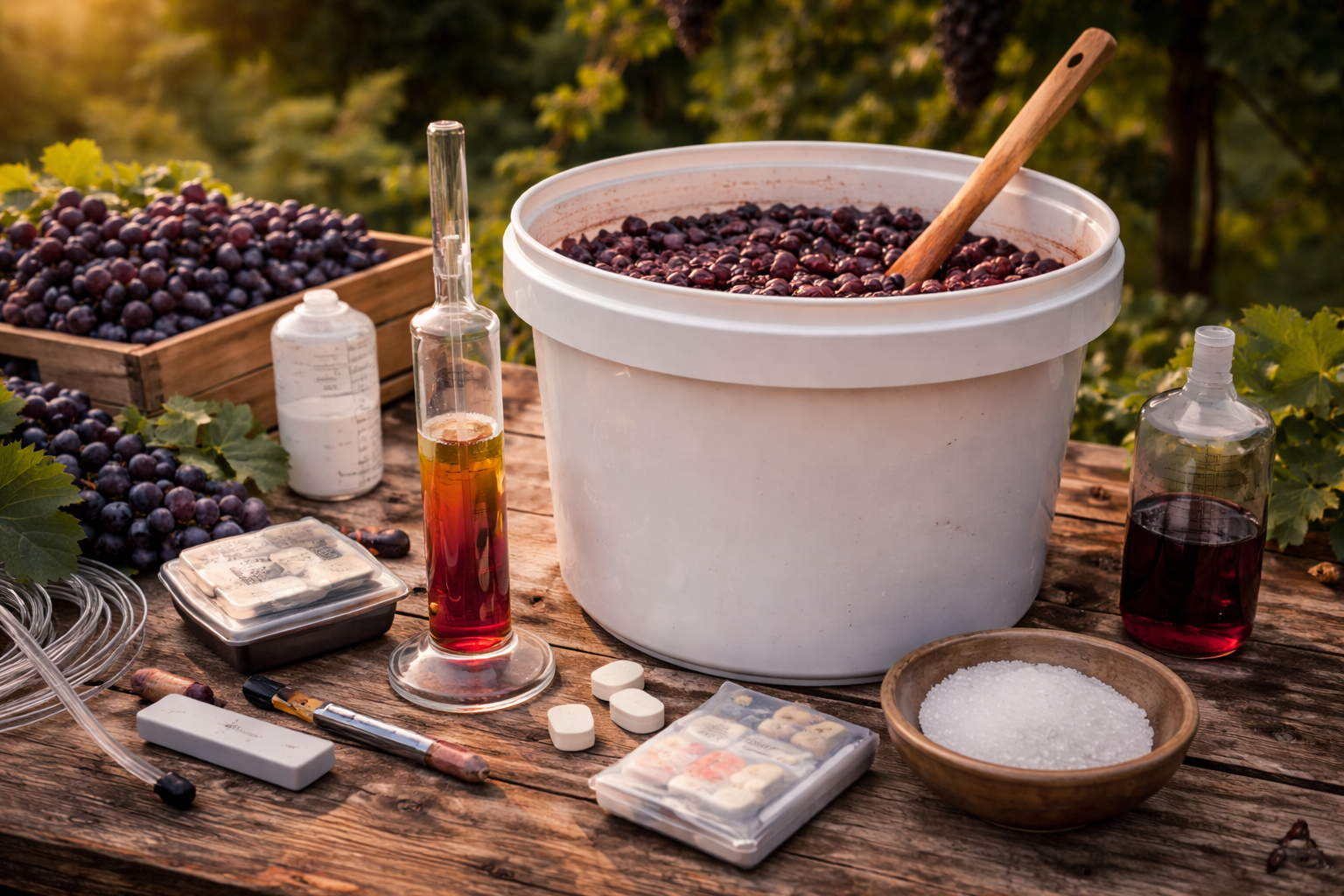
This is the section beginners try to skip because it sounds “technical.” It is also the section that stops you from making three avoidable mistakes in a row.
Clean first so the yeast has a fair fight
The University of Georgia’s home winemaking guide spells it out plainly: a hydrometer helps remove guesswork and Campden or potassium metabisulfite helps check wild yeast and vinegar bacteria. Clean and sanitize everything that will touch the must. Bucket, spoon, tubing, airlock, test jar, hands, all of it.
That same habit shows up in how to brew honey mead too, because once sugar and liquid are together, microbes line up for the job.
Measure the must so you know what the fruit gave you
Oregon State University’s pre-fermentation guide lays out the standard checks cleanly: pH, titratable acidity, and Brix are the core pre-fermentation grape measurements. Those three numbers tell you whether your grapes came in balanced, overripe, thin, or a little awkward.
- Brix tells you how much sugar is in the juice. For many dry table wines, around 22 Brix is a good starting lane.
- pH tells you how microbiologically comfortable that juice is going to be.
- Titratable acidity gives you a broader feel for the acid structure the wine will carry.
You do not need to become a lab rat. You do need enough information to stop making blind adjustments.
Correct the easy problems before yeast goes in
If the must is well below the sugar range you want, a sugar adjustment can make sense. If the juice tastes flat and the measurements back that up, an acid adjustment can make sense. What does not make sense is tossing sugar in because the grape skins tasted tart.
The pH number matters more than many first-timers realize. The University of California, Davis notes that grape juice pH is generally desired below 3.6. Once you get well above that zone, spoilage risk and dullness both get easier to find.
Use cultured yeast if you want a calmer first batch
Wild fermentation can work and sometimes produces lovely character. For batch one, pitched wine yeast is the saner call. It starts faster, behaves more predictably, and gives you one less variable to diagnose when something looks off.
Remember: Measurement only earns its keep when it changes your next move. If the grapes are sound and the numbers are close, keep the corrections light. The beginner mistake is not “too little chemistry.” It is over-correcting fruit that was already good enough.
Ferment the Must and Read the Signs Before It Goes Sideways
Primary fermentation is the noisy part. It smells alive, it foams, and it makes beginners feel like they are finally winemaking. Good. Just do not let the theater distract you from the reading.
Pitch the yeast and give it a decent working environment
Follow the yeast packet for rehydration and temperature. Wine yeast is not terribly fragile, but shocking it with very hot or very cold must is an annoying way to create your own problem.
Manage the cap so red wine extracts evenly
If you are making red wine, the cap needs regular punch-downs to stay wet and keep extraction even. Once or twice a day is a normal home-scale rhythm. It is sticky work. Wear old clothes and accept your fate.
Watch gravity, not just bubbles
Airlocks can slow down because a lid is loose, because the room cooled off, or because the ferment really is winding down. They do not tell the whole story. A falling hydrometer reading does.
For a dry wine, many home winemakers aim for the wine to finish around 0.998 specific gravity or close to it. More useful than the exact number is the pattern: if the reading is low and stays stable over a few days, the fermentation is done or close enough to move into the next phase.
Trust your senses, but make them second in command
A healthy ferment usually smells fruity, yeasty, warm, maybe a little bread-dough-ish. A harsh vinegar edge or a solvent-like note is different. Smell matters. It just should not outrank the hydrometer.
At a glance: signs fermentation is healthy
- gravity keeps dropping
- the cap rises on reds and needs punching down
- aroma stays fruity or yeasty, not sharp like vinegar
- foam and fizz show up early, then calm down as sugar runs out
In my experience, this is the week when people get itchy. The bucket looks calmer, so they start planning bottling day. Slow down. Quiet wine is not always finished wine.
Press, Rack, and Protect the Wine From Oxygen
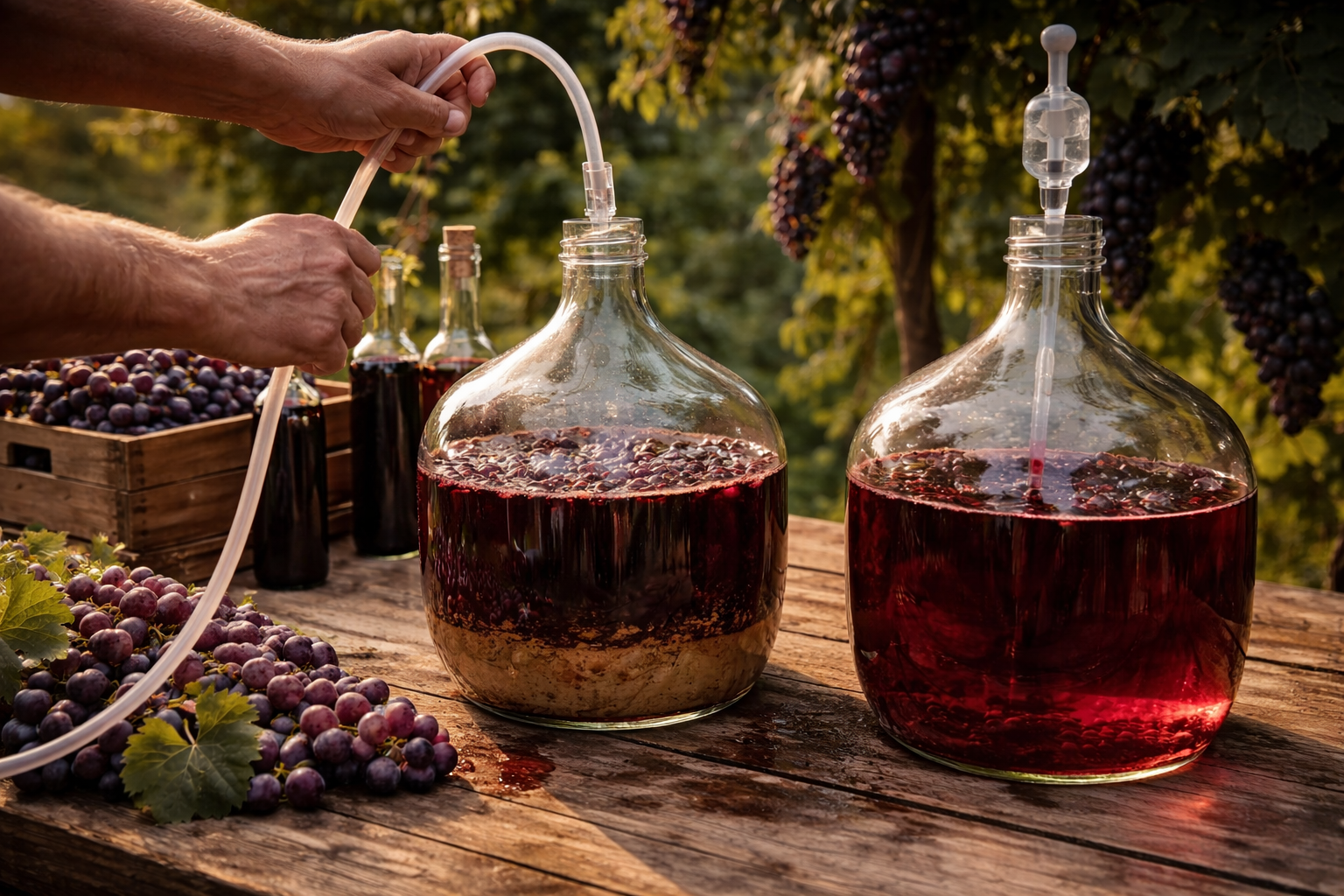
The middle stretch is less glamorous and more decisive. Fermentation has burned off some of the easy mistakes. Oxidation now becomes the one that sneaks in wearing normal clothes.
Press at the right moment for the style you chose
White wine gets pressed early because you want juice, not prolonged skin extraction. Red wine usually stays on skins longer and gets pressed after fermentation has done most of its work or reached dryness. If you press reds too early, you leave color and tannin on the table. If you leave whites sitting on skins too long, bitterness can creep in fast.
Rack off the heavy sediment so the wine can settle cleaner
Once the wine has thrown a layer of lees, siphon the clearer wine into a clean vessel and leave the sludge behind. Racking does two useful things at once. It gets the wine off spent solids that can muddy the flavor, and it gives you a cleaner view of what the batch is becoming.
Reduce headspace so air stops being a casual guest
During active fermentation, carbon dioxide helps protect the wine. After that, too much empty space above the liquid becomes a problem. Keep the receiving vessel topped up as much as you reasonably can. This is the stage where sloshing, splashing, and half-full containers stop being innocent.
Note: A little sediment later in the bottle is common. Oxidized, flat, bruised-fruit character from sloppy transfers is a different thing. The first is cosmetic. The second is damage.
If you have ever stirred a cut apple and watched it brown, you already understand the basic logic here. Wine is more complicated than apple slices, but the direction of the problem is the same.
Bottle and Age the Wine Only When It Is Actually Ready
Bottling is where patience gets tested and shortcuts turn expensive. Young wine can look clear enough to seduce you. That is not the same as being stable.
Wait for stable gravity so the bottle stays quiet
If the wine is still dropping gravity, it is still changing. Give it more time. For a dry wine, wait until the reading is down near dry territory and stays there across repeated checks. No hiss, no fresh sediment bloom, no sneaky restart.
Let the wine clear so you are not bottling half the mess
Time does a lot of the work here. Young wine often looks one week away from ready and then throws another layer of sediment. If the wine is still hazy and still dropping junk, you are rarely rewarded for rushing.
Bottle cleanly and store with a little patience
Sanitize bottles and closures. Fill with steady siphon flow, leave sensible headspace, and close them up. Then let the wine sit. A rough first batch can smooth out more in a few months than people expect. Months, not weekends, is the right mindset.
At a glance: bottle now or wait
| If you see this | Do this |
|---|---|
| Gravity still moving | Wait and recheck |
| Wine still cloudy with fresh sediment | Let it settle and rack again if needed |
| No fizz, gravity stable, wine clearing | Prepare for bottling |
| Sweet taste and any sign of activity | Do not bottle yet |
I’ve seen more first-gallon batches spoiled by early bottling than by bad crushing. That makes sense when you think about it. Crushing is obvious. Waiting is boring. People rush boring parts.
Fix Cloudy, Harsh, Stuck, or Vinegary Homemade Wine
When a batch goes weird, the first move is not to throw five fixes at it. The first move is to identify the symptom that matters most, then check the one or two causes most likely to match it.
| What you notice | First thing to check | Best next move |
|---|---|---|
| Wine is cloudy | Is fermentation really finished? | Wait, then rack again if needed |
| Fermentation stopped early | Gravity, temperature, yeast stress | Warm gently and reassess before re-pitching |
| Wine tastes harsh or sharp | Underripe fruit or acid imbalance | Give it time before making big corrections |
| Wine smells like vinegar | Oxygen exposure and spoilage | Protect the remaining wine and do not expect miracles |
Treat cloudiness as a timing question first
Cloudy wine is not always faulty wine. Sometimes it just is not done dropping solids. If gravity is stable and the wine keeps clearing, time and another rack often beat panic-fining.
Treat a stuck ferment as a diagnosis job, not a drama job
If fermentation stalls high, check the temperature and the gravity before you do anything else. A room that got chilly can slow yeast more than people expect. So can a rough start from bad rehydration or a must that was harder on the yeast than it looked.
Treat harsh young wine with restraint
Very young wine often tastes harder than the finished bottle will. If the fruit was underripe, you may always taste some sharpness. But a surprising amount of “this is too rough” softens after a few months. New winemakers tend to correct too soon, then spend the next month correcting the correction.
Treat vinegar notes as a prevention lesson
A little oxidative bruised-fruit character can sometimes be lived with. Full vinegar drift is another story. Once acetic spoilage gets hold, rescue options get skinny fast. Cleaner transfers, lower headspace, and smarter sulfite use beat trying to reverse the damage later.
Fast call: If one thing in the batch looks wrong, check the hydrometer before you check your mood. It is the quickest way to sort “unfinished” from “actually flawed.”
FAQ
Can you make homemade wine with store-bought grapes?
Yes. Store-bought grapes will ferment. The catch is that table grapes are bred for eating, so the sugar, acidity, skin character, and flavor concentration are often less suited to winemaking than true wine grapes. If that is your only option, choose the ripest sound fruit you can find and keep the batch small.
How strong is homemade grape wine?
A dry homemade wine often lands in the same broad range as commercial table wine, usually around the low teens in alcohol, because the starting sugar level of the must drives that result. If your grapes come in with modest sugar, the wine will finish lighter unless you adjust the must before fermentation.
Can you reuse screw-cap wine bottles?
You can reuse the bottles if they are clean and sound. The closure is the issue. Standard screw caps are not ideal for repeated home bottling unless you have matching caps and the setup to seal them well. Many home winemakers find corkable bottles simpler for small batches.