The wine aisle gets weird right around the moment the labels start trying too hard.
You pick up a bottle that looks serious. Dark glass. Fancy crest. Gold script. Then you flip the tag and the price jumps for no obvious reason. That is where a lot of people lose money. For most shoppers, the best wine for your buck lives in the boring-looking middle of the shelf: bottles in the $12 to $25 lane, usually from less hyped regions, with fresh, food-friendly styles and labels that tell you something useful instead of just sounding grand.
That answer is only half useful, though. A bright party sparkler, a Tuesday pasta red, and a bottle for a boss gift are not the same job. I have bought enough ordinary “special occasion” wine to know this one hurts twice: once at checkout, then again at dinner when the wine tastes fine and nothing more.
Here’s what this guide will help you do:
- Figure out where value usually peaks by price band
- Spot the regions and styles that overdeliver most often
- Read labels for clues that actually matter
- Know when spending more is smart and when it is just shelf theater
- Avoid the few mistakes that make cheap wine feel cheaper
- Pick a better bottle in about a minute, even in a grocery store
Best Suggestions Table (All products have been personally reviewed & tested by us. Use “Check Price” to jump to the price guide, then compare the bottle on the shelf. “Review” jumps to the full tasting notes.)
| Product | Best for | Action |
|---|---|---|
| Masciarelli Montepulciano d’Abruzzo | Weeknight red that still works at dinner |
Check Price Review |
| Kim Crawford Sauvignon Blanc | Bright white for seafood, salads, and mixed groups |
Check Price Review |
| Freixenet Cordon Negro Brut | Party bubbles and easy celebration duty |
Check Price Review |
Current shelf pricing moves around with vintage, shop, and state. The better move is to judge whether the bottle still sits in the right value lane for the job.
Fast value rule: If you know nothing else, buy in the $12 to $25 lane, skip the prestige region when the bottle is entry-level, and lean fresh before heavy. That one rule alone dodges a lot of dud purchases.
The price sweet spot where wine value usually peaks
Cheap wine and value wine are cousins, not twins.
Below about $12, you can still find drinkable bottles, but the odds tilt toward simple fruit, less texture, and a finish that drops off fast. That is fine for sangria, a picnic, or a Tuesday when you just want something cold and harmless. It is not where I go when dinner matters.
The strongest value band for most people sits between $12 and $20. This is the zone where good producers from smart regions can still offer real character without asking you to pay for the region’s fame. Think bright Sauvignon Blanc, honest Montepulciano d’Abruzzo, Portuguese reds, Vinho Verde, Cava, and a lot of Chilean Cabernet that tastes more put together than the price suggests.
From $20 to $30, the step up can be worth it when you want more polish, better texture, or a bottle that needs to carry a meal rather than just wash it down. You often get more length, finer tannin, and better balance here.
From $30 to $40, value is still possible, but only when the producer, region, and occasion line up. If you are buying blind in a famous region at this level, you can still overpay fast. That is where a lot of people get clipped.
| Price band | What you can expect | Best use |
|---|---|---|
| Under $12 | Simple fruit, less depth, less consistency | Casual pours, mixing, experimentation |
| $12 to $20 | Best everyday value, solid balance, broad food use | Weeknights, hosting, safe buys |
| $20 to $30 | More detail, better texture, stronger producer expression | Dinner, gifts, known favorites |
| $30 to $40 | Can be excellent, can also be overpriced by reputation | Step-up bottles with a clear purpose |
If you want a simple rule, use this one: buy lower when the crowd is casual, buy higher when the meal is doing real work. A pizza night does not need your money the way a roast dinner does.
Note: The mistake is not buying a cheap bottle. The mistake is expecting a cheap bottle to do a premium bottle’s job.
The best value wine styles and regions to buy first
Once you stop treating price like the main clue, wine gets easier. Regions and styles tell you more.
For reds, the easiest value wins usually come from places that make a lot of solid wine but do not charge luxury-region rent. Montepulciano d’Abruzzo is a classic example. It often gives you dark fruit, a little earth, medium body, and enough structure for pasta, roast chicken, or burgers without needing a long lecture. Argentine Malbec does something similar in a softer, plusher way. Chilean Cabernet can punch above its weight too, especially when you want black fruit and a bit of grip without Napa pricing.
For whites, look for freshness and directness. Vinho Verde is one of the cleanest value buys on the shelf when you want low-stakes refreshment. New Zealand Sauvignon Blanc is less of a secret, sure, but it still earns its place because it is so reliable. If you know you like zingy citrus, herbs, and passionfruit, it is a safe lane. The Wine & Spirit Education Trust’s explanation of climate and ripeness gives a handy rule here: cooler places tend to show more acidity and fresher fruit, while warmer places push riper fruit and lower acidity. That is why Marlborough Sauvignon Blanc feels so bright, and why warmer-climate whites can feel broader and softer.
For sparkling wine, Cava is still one of the smartest shelves in the store. It gives you bottle-fermented sparkle, good food range, and enough structure to feel like real wine instead of just fizzy mood lighting.
| Style | Best value picks | Why they work |
|---|---|---|
| Red | Montepulciano d’Abruzzo, Argentine Malbec, Chilean Cabernet, Portuguese red blends, Rioja Crianza | Fruit, structure, and flexibility without prestige premiums |
| White | Vinho Verde, New Zealand Sauvignon Blanc, Soave, Muscadet | Freshness reads as “quality” fast, especially with food |
| Sparkling | Cava, then Crémant, then good Prosecco for easy-drinking crowds | Bubbles forgive a lot, and these categories often stay sane on price |
A small but useful shortcut: when you want familiarity, start with the grape. When you want value, start with the region. That keeps you from paying extra just to see Cabernet or Chardonnay from a fancy zip code.
Remember: Freshness hides flaws better than weight does. That is one reason bright whites and dry sparkling wines are so forgiving in the value bracket.
How to trade prestige for value without buying blind
This is where the money leaks out. You think you are buying quality, but you are often buying the region’s reputation, tourism aura, and years of dinner-party shorthand.
If you want the feel of a richer Cabernet, you do not need to start with Napa. Chile and some value-driven New World regions can give you ripe black fruit, oak influence, and enough body to scratch that itch for a lot less. If you want the shape of red Burgundy, Beaujolais or a lighter Pinot from a cooler region can get you much closer than a random expensive bottle from a famous name you only know because movies and steakhouse lists taught you to know it.
And for sparkling wine, this substitution game is almost unfair. Champagne is great. It is also expensive. Cava and Crémant are where value buyers get to act like they know a little trick. Sometimes they do.
| If you were reaching for… | Try this instead | Why the trade works |
|---|---|---|
| Entry Napa Cabernet | Chilean Cabernet or Argentine Malbec | You keep fruit and body, but lose much of the luxury-region tax |
| Basic Burgundy | Beaujolais or cool-climate Pinot Noir | You keep freshness and food-friendliness without paying for the postcard |
| Champagne for a casual party | Cava or Crémant | You still get bottle-fermented bubbles with stronger value |
| Tuscan “serious red” vibes | Montepulciano d’Abruzzo, Puglia reds, Sicily, smart Rioja | Savory, food-friendly reds often land at friendlier prices |
A good way to think about it: fame is a quality clue, but it is not a value clue. That is a different question. A region can be excellent and still be the wrong buy for your budget.
My own version of this lesson came from too many $30-ish “entry luxury” reds that tasted polished but weirdly anonymous. The label had more status than the wine had personality. That happens.
How to read a wine label like a value hunter
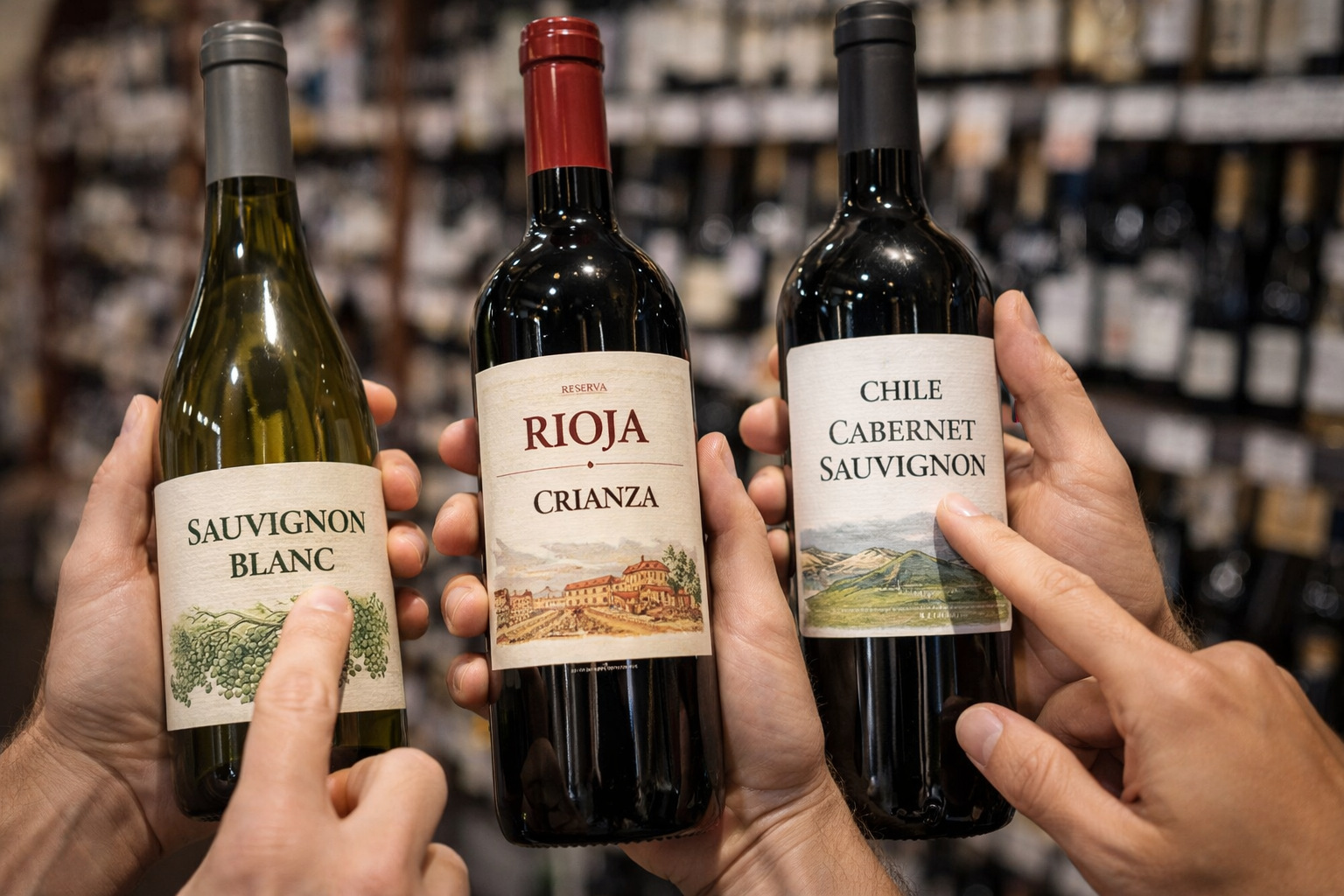
A useful wine label gives you handles. A useless one gives you mood.
Start with the grape. In the United States, a varietal label usually means at least 75% of the wine comes from that named grape. That does not mean the label tells you every detail, but it does mean “Sauvignon Blanc” and “Cabernet Sauvignon” are not just decorative words. They are a real style clue.
Then look at the region. If you know the place, good. If you do not, ask one question anyway: does this sound like a famous luxury region, or a strong working region? Famous and cheap is where disappointment often lives. Working region and modest price is often where value hides.
Then look for aging or method terms that carry rules behind them. Rioja is a great example. The official Rioja classification says a Crianza spends a minimum of two years aging, with at least one year in oak, while a Reserva spends at least three years aging, including oak time and bottle time. That means those words are not fluff. They shape the style. A Crianza often makes the better everyday buy because it keeps more fruit. A Reserva can be the smarter step-up when you want more depth and the price jump stays sane.
Cava works the same way. The D.O. Cava production guide lays out that Cava is made with second fermentation in the bottle, and it also spells out the aging bands: Cava de Guarda starts at 9 months, Reserva at 18 months, and Gran Reserva at 30 months. That helps explain why some inexpensive Cava feels tighter, toastier, and more complete than a random sparkling wine that is all fizz and no grip.
Quick label check: Grape. Region. Aging term. Method. Vintage. If the label gives you two or three of those, it is already more helpful than the one with a castle drawing and no straight answer.
One more thing. If you know you like a grape, that is a fine safety net. But grape plus place is what turns the guess into a decent bet.
When spending more on wine actually pays off
Sometimes the upgrade is real. Sometimes it is just better packaging and a louder backstory.
There is a clean reason to be skeptical. In the well-known study “Marketing actions can modulate neural representations of experienced pleasantness”, higher stated prices made the same wines seem more enjoyable to tasters. So if a bottle looks expensive and the price says it should be good, your brain can get a bit bossy before the first sip even lands.
That does not mean expensive wine is fake. It means you should spend more for a reason, not for a mood.
Spend more when one of these is true:
- You are buying for a meal with some weight, like lamb, beef, or a long dinner where the bottle stays on the table
- You want a gift bottle and recognition matters a little
- You already know the producer or style, and you are moving one rung up, not guessing blind
- You are buying a grape that often gets thin or rough at the bottom end, like Pinot Noir
Do not spend more when the crowd is mixed, the food is casual, or the bottle will compete with noise, ice, mixers, or six other flavors on the table. Great wine in the wrong setting is not value. It is just bad timing.
One slightly under-talked-about point: the jump from ordinary to good is often bigger than the jump from good to expensive. The first step buys fewer flaws. The second step buys refinement. If your crowd will not notice refinement, save the money and buy the better category, not the pricier bottle.
Pro tip: Upgrade for purpose, not for hope. “Maybe this one is amazing” is how wallets get lighter.
Reliable bottles that overdeliver for the money
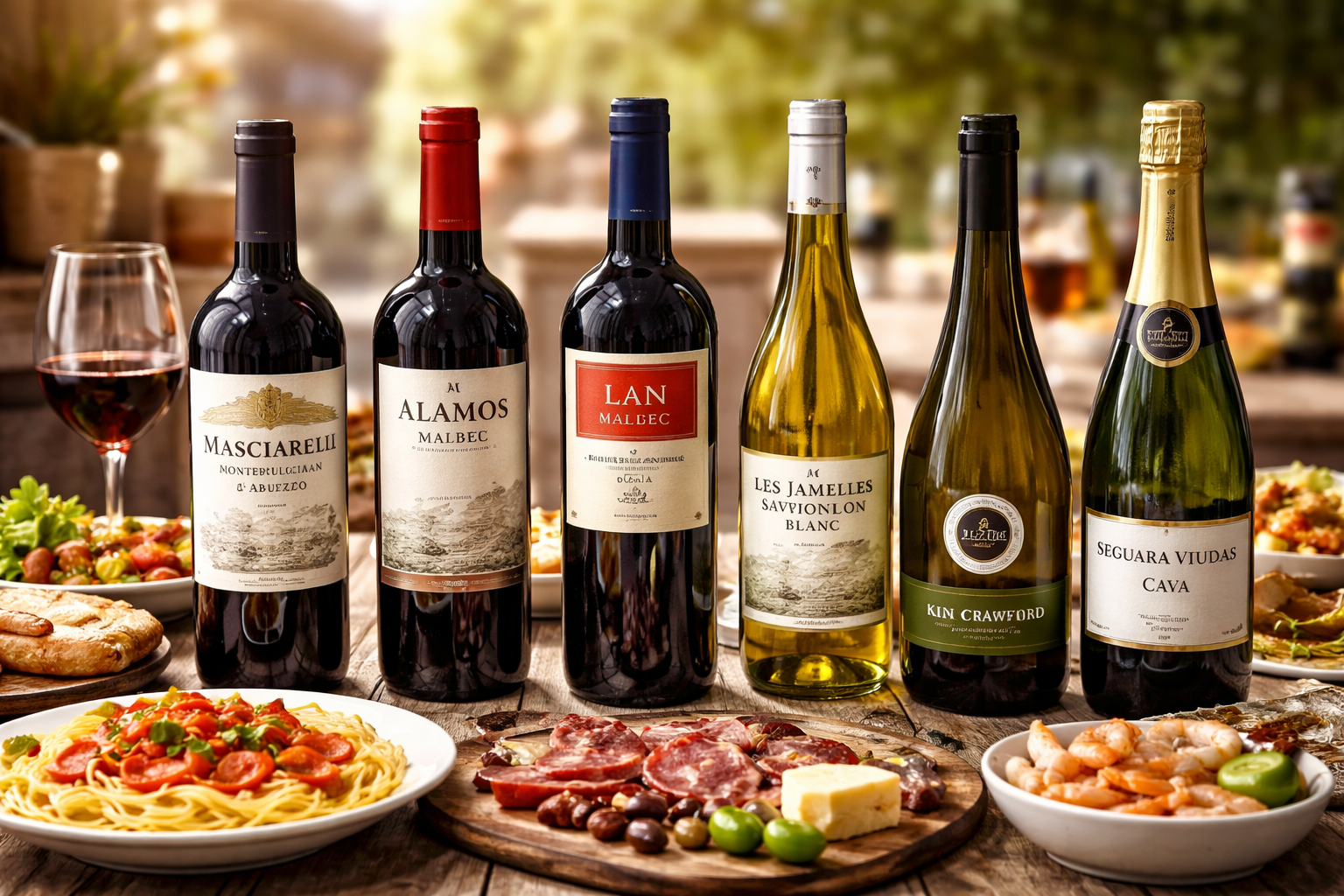
Lists can get sloppy here, so I kept this tight. These bottles were judged on five things: flavor quality, food range, availability, price stability, and how well they still make sense when the vintage changes. I tasted them the way normal people actually use value wine, not in some perfect quiet room at 11 a.m. One went with red-sauce pasta and leftovers the next day. One got poured with seafood and a mixed table. One had to survive the party test, which is the meanest test of all.
Note: Ratings here reflect value, not absolute greatness. A 4.7/5 value wine is not trying to beat a top Bordeaux. It is trying to beat the bottles next to it on a normal shelf.
Masciarelli Montepulciano d’Abruzzo
Editorial rating: 4.7/5
This is the sort of bottle that makes value wine feel like an actual category, not a consolation prize. In the glass it usually lands where a lot of people want their weeknight red to land: dark cherry and plum, a little earth, soft tannin, no drama. That matters. Too many cheap reds try to fake seriousness with hard oak, harsh edges, or jammy heaviness that turns dinner into a slog. This bottle usually does the opposite. It stays medium-bodied, keeps its feet under it, and works with tomato sauce, sausage, roast chicken, meatballs, and even a burger that got a bit over-charred.
The test that sold me was not the first pour. It was the second glass with food. That is where value reds either tighten up nicely or go flat and gummy. Masciarelli tends to hold shape. It is not profound, and thank God for that. It does not need to be. It needs to be reliable, savory enough to feel adult, and friendly enough that the bottle disappears without anybody making a speech. It also gives you a good lesson in style fit: if you want a flexible Italian-leaning red without paying Chianti or Tuscany premiums, this is a very smart lane. For pasta nights, casual dinners, and “I need one bottle that will not start arguments,” it is one of the safer red buys around.
Kim Crawford Sauvignon Blanc
Editorial rating: 4.5/5
This is not the cleverest pick on the page. It is here because it is one of the most dependable. Value is not always about finding a hidden gem from a region your friends cannot pronounce. Sometimes value is buying the bottle that does its job every single time, especially when the job is “bring a white that most people will like.” Kim Crawford has that kind of utility. You get grapefruit, lime, cut grass, a little tropical fruit, and the brisk acid snap that makes Sauvignon Blanc feel awake. It pairs well because that bright edge cuts through oily fish, goat cheese, salads, herbs, and salty snacks without needing much ceremony.
I like it most when the crowd is mixed and the food is moving around. One plate is shrimp, another is chicken, someone brought a citrusy salad, and nobody wants an oaky Chardonnay debate. This bottle handles that room. It also shows why freshness is one of the easiest ways to buy value. Fresh wines feel clean, direct, and put together fast, which lets them overdeliver without much age or oak complexity. Is it subtle? Not really. Is that a problem? Nope. At its best, value wine is not always trying to whisper. Sometimes it just needs to be crisp, honest, and useful. For seafood dinners, patio pours, and broad-appeal hosting, this is a sturdy white to keep in rotation. It also plays nicely with wine with salmon when the plate leans fresh rather than creamy.
Freixenet Cordon Negro Brut
Editorial rating: 4.6/5
Party wine gets judged unfairly. People want it cheap, festive, food-friendly, and a little bit “nice” all at once. That is a hard brief. Freixenet Cordon Negro Brut gets close more often than most bottles in its lane. You usually get apple, citrus, a dry finish, and enough structure to feel like wine first and bubbles second. That last part matters. Lots of low-cost sparkling wine gives you fizz and not much else. This one tends to hold together better, which is one reason Cava keeps showing up in value conversations. Bottle fermentation gives it a firmer spine than a lot of anonymous sparkle.
I like this bottle for the moment before the meal settles. Aperitif hour, salty snacks, fried bits, mixed guests, one person who swears they only drink red, another who wants “something dry but not too dry.” This sort of Cava handles that chaos. It is also one of those bottles that makes people think you spent more than you did, not because it tastes fancy in some vague way, but because it tastes coherent. The bubbles are useful, the fruit is clear, and the finish is cleaner than many cheap sparkling wines manage. It is not the bottle for a long, quiet tasting dinner. It is the bottle for a lively table, a holiday crowd, or a casual gift where “good taste” matters more than prestige labels. That is real value.
How to buy for weeknights, dinners, gifts, and mixed crowds
The same bottle can feel like a steal on one night and a miss on another. Occasion matters more than people admit.
For weeknights, keep it in the $12 to $20 lane and lean toward fresh, food-friendly styles. This is where Montepulciano d’Abruzzo, Portuguese reds, Vinho Verde, and Sauvignon Blanc shine. You want easy compatibility, not a bottle that demands a courtroom hearing.
For dinner with a real centerpiece, move one rung up and buy for the plate. Tomato sauce likes acidity. Roast chicken likes balance. Steak likes structure, but not always the heaviest thing you can find. This is where Rioja Crianza, a better Malbec, or a more polished white can make sense.
For gifts, recognition matters a bit. People do react to the label, the category, and the feel of the bottle. That does not mean you need to chase luxury regions. It means you buy a known, clean, reputable style and go one rung above your weeknight comfort zone. For a work gift, the logic overlaps with these safe bottles for a boss: clear style, strong category, no weird gamble.
For mixed crowds, dry sparkling wine is still the cheat code. A crisp brut Cava or another bottle-fermented sparkler works with appetizers, fried food, salty snacks, and the general chaos of people arriving late and eating in waves. Bright Sauvignon Blanc is another safe lane. So is a medium-bodied red that does not go hard on oak or tannin.
Fast value rule: For groups, buy versatility before complexity. For gifts, buy category confidence before rarity.
If you are hosting, ask about case discounts. Many shops shave roughly 10% to 15% off a mixed case. That turns a good-value bottle into a better one without changing the actual wine.
The budget-wine mistakes that waste money fastest
You can save a lot of money just by avoiding a few bad habits.
- Buying the region instead of the bottle. Entry-level bottles from famous places often cost more because of the place, not because the wine outperforms the shelf around it.
- Trusting scores without context. A score cannot tell you whether the wine fits your dinner, your taste, or your crowd. A 91-point bruiser can still be the wrong bottle.
- Confusing heaviness with quality. Oak, high alcohol, and dense fruit can read as “expensive” for one sip and tiring by glass two.
- Ignoring the meal. A bright, simpler wine with the right food often beats a more expensive bottle with the wrong food. This happens all the time.
- Buying “special occasion” wine too early. If the bottle costs more because it is serious, but the night is casual, you are paying for nuance the room will never cash in.
- Forgetting vintage drift. Big brands can shift from year to year. If a bottle used to be a steal, that does not mean it still is.
There is also a social mistake people do not say out loud. They buy the bottle that looks smart instead of the bottle people will actually enjoy. You see it at tables all the time. The expensive bottle gets politely sipped. The fresh, humble bottle gets emptied.
Remember: One wrong variable can wipe out a good price. Great value is still a bad buy if it fights the food, the crowd, or the moment.
A 60-second routine for picking a better bottle in the store
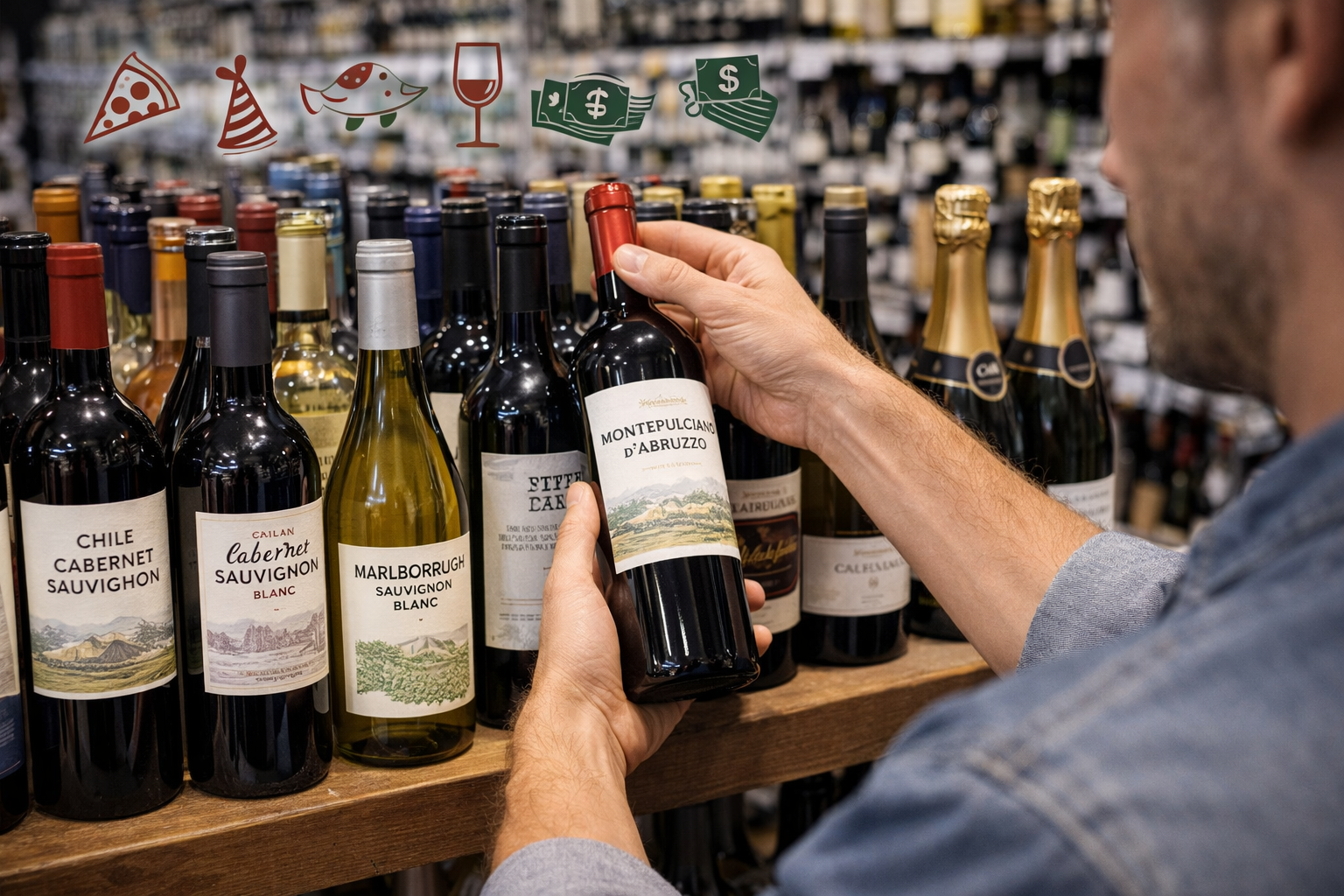
If you remember nothing else from this article, remember this little routine. It works because it narrows the shelf before the label can start sweet-talking you.
Step 1. Set the ceiling and the occasion
Decide the budget first. Decide the job second. Weeknight, dinner, gift, crowd, seafood, pizza, party. Put the bottle in a lane before you touch it.
Step 2. Choose style before producer
Red, white, or sparkling. Fresh or richer. Light or fuller. This one move cuts the noise fast. If you start with producer names when you do not know the shelf, you are already playing catch-up.
Step 3. Pick a value-friendly region
Go toward Montepulciano d’Abruzzo, Portuguese reds, Chile, Argentina, Vinho Verde, Marlborough Sauvignon Blanc, or Cava before you reach for luxury-region entry bottles. One step sideways from fame is where value often starts.
Step 4. Scan the label for one concrete clue
Grape. Region. Aging term. Method. Vintage. Find one real clue that tells you what the bottle is. If the label tells you nothing, put it back unless the producer is already trusted.
Step 5. Buy the bottle that fits the table, not your ego
The best wine for your buck is not the one that looks most expensive. It is the one that beats its price for this exact moment. That is the whole game.
A quick calibration test
Buy three bottles over two weekends: one familiar grape, one smart substitute from a value region, and one sparkling or bright white as a control. Pour them blind with food. See which bottle disappears first. See which one you actually finish. Your taste will tell you more than the shelf talker will.
FAQ
Are screw-cap wines worse?
No. A screw cap tells you more about packaging choice than quality level. Many fresh whites and everyday reds are better under screw cap because the closure is consistent and practical.
Is boxed wine ever a smart value buy?
Yes, for parties and casual pours. The trick is to buy boxed wine for volume situations, not for a dinner where nuance matters. Good boxed wine can be a very smart hosting move.
Should you buy wine at a grocery store or a wine shop?
Both can work. Grocery stores are fine for widely distributed winners. Wine shops are better when you want a recommendation, a less obvious region, or a bottle that is not built for mass shelf space.