
You can spot a bad first-bottle decision from the first sip. The label looked pretty. The pour looked promising. Then the glass hit the table with that quiet, polite face people make when the wine is too bitter, too boozy, too sweet, or just plain wrong for the night. That is why “best wine for women in india” is not really a one-bottle question. For most people shopping in India, the safest starting lanes are dry rose, off-dry Chenin Blanc or Riesling, lightly sweet sparkling wine, crisp Sauvignon Blanc, and soft reds like Pinot Noir or an easy Merlot.
The useful part is not the stereotype. It is the fit. Some women love dry, salty whites. Some want soft fruit and a little sweetness. Some say they want red, then realise what they hate is tannin, not red wine itself. So the clean way to buy is this: choose by taste and occasion first, then by price, then by label clues.
- Which wine styles are easiest to start with in India
- How to pick between red, white, rose, and sparkling
- What works with spicy food, brunch, gifts, and girls’ night
- How to read a wine label in under 30 seconds
- What to spend without buying a bottle that feels “serious” and tastes miserable
Fast pick matrix
| If this sounds like you | Start here | Why it works | Skip for now |
|---|---|---|---|
| “I like fruity cocktails and spritzes” | Off-dry Chenin Blanc, Riesling, or light sparkling | Soft fruit and less bite | Dry, tannic red |
| “I want something fresh and easy with snacks” | Dry rose | Chilled, bright, very easy to share | Heavy oaked wine |
| “I want white, not sweet, not boring” | Sauvignon Blanc | Crisp, lively, food-friendly | Warm, buttery white |
| “I want red, but I don’t want bitterness” | Pinot Noir or soft Merlot | Softer texture and less grip | Young Cabernet-style reds |
Best Wine for Women in India: The Direct Answer
The direct answer is not one bottle. It is a short list of styles that are easy to like and hard to mess up.
For a blind buy, dry rose is the safest move. It is chilled, bright, social, and flexible with Indian snacks and casual dinners. For someone who likes sweeter drinks, off-dry Chenin Blanc, Riesling, or a light sparkling wine usually lands better than a stern dry white. For someone who wants crisp and clean, Sauvignon Blanc is a better pick than buttery Chardonnay. For someone who insists on red, start soft. Pinot Noir or a gentle Merlot makes far more sense than a young, bold, grip-heavy red.
In Indian shops, the most practical starter lane sits around Rs 700 to Rs 2,000. That is where you can find plenty of fresh, easy-drinking local bottles without paying for prestige theatre. And yes, local matters. State taxes and city-by-city stock can make one exact bottle vanish fast, so style matters more than chasing a single name.
Choose by Taste, Not by Gender
I have watched this happen more than once: someone says, “I don’t like red wine,” then later loves a light Pinot Noir poured a touch cooler with food. The issue was not red. The issue was texture.
That is the whole game here. You are not shopping for a “women’s wine.” You are shopping for the shape the wine has in the mouth.
Sweetness is the easiest one. It is the soft, obvious fruit-sugar feel. Acidity is the mouth-watering zip. The Wine & Spirit Education Trust explains that acidity makes your mouth water while tannins create a drying effect. That drying grip is what turns a lot of first-time red-wine drinkers off. Alcohol adds warmth and weight. Too much of it can make the wine feel hot and tiring, especially in warm weather.
Here is the easy translation:
- If you like mojitos, spritzes, cider, or fruitier cocktails, you will usually be happier in the off-dry white or light sparkling lane.
- If you like lemonade, soda with lime, or crisp beers, dry rose and Sauvignon Blanc make more sense.
- If you like richer, smoother drinks and want red, look for soft fruit and low tannin, not “reserve” and not a wallop of oak.
One useful way to think about tannin: it is the difference between peach skin and strong black tea. A little grip can feel grown-up and nice. Too much on a first bottle feels like the wine is scraping your tongue.
The Easiest Wine Styles to Start With in India
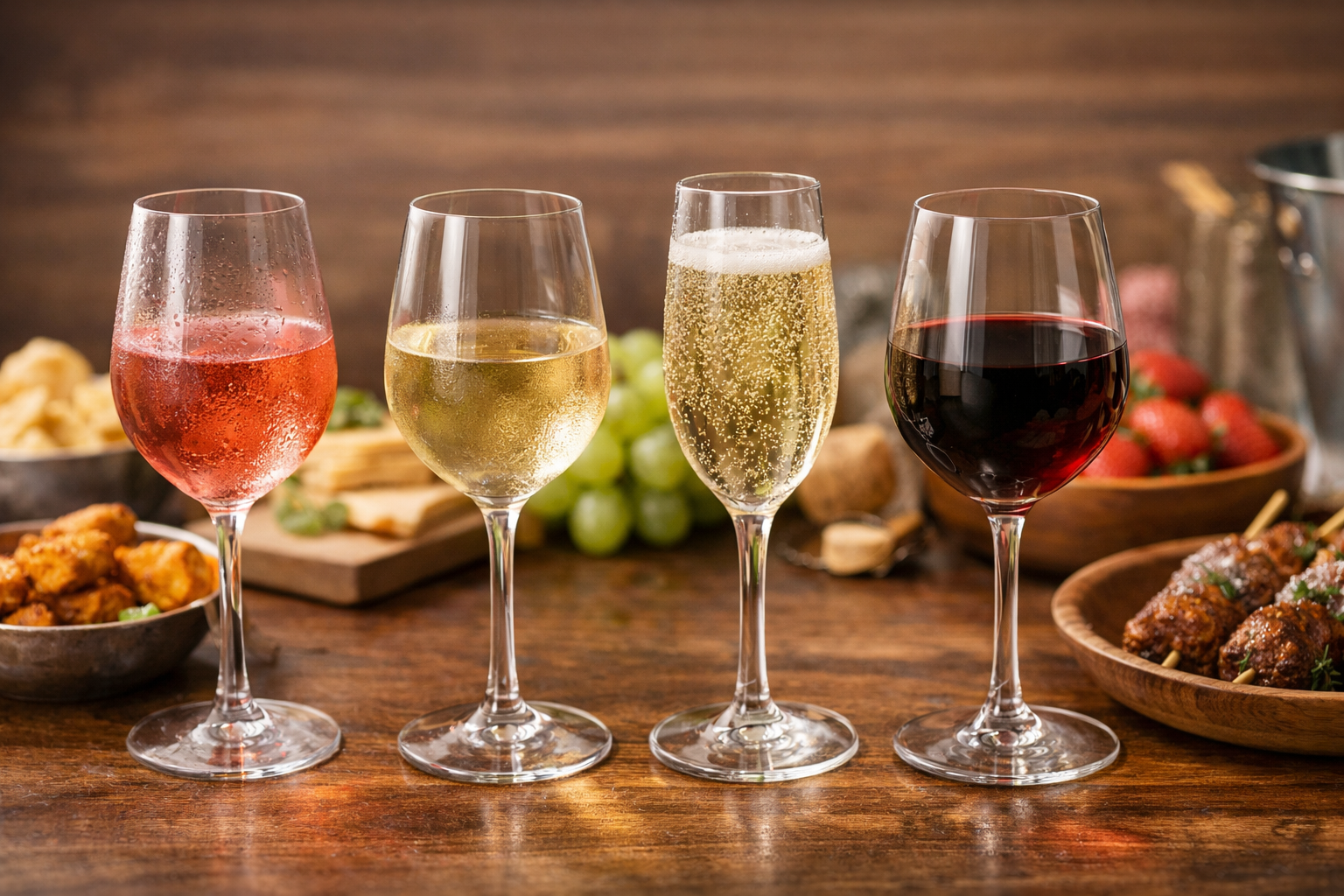
This is where the shelf gets less fuzzy. These are the styles that usually give the highest hit rate for beginners.
Dry rose
Dry rose is the easiest blind buy for most social settings. It is chilled, flattering, and forgiving. It can handle salty snacks, kebabs, paneer, chips, chaats, and the half-random mix of food that shows up at house parties. Many Indian drinkers also find it less intimidating than both red and white, which sounds silly on paper but matters in real life.
One correction, though. Pink does not mean sweet. Good dry rose tastes fresh and fruity, not syrupy. That is why it works so well at brunch, girls’ night, and casual dinners.
Off-dry Chenin Blanc or Riesling
This is the smart lane for people who say they “want something smooth” or “don’t want it too dry.” A small cushion of sweetness softens the wine and makes spice easier to handle. In India, Chenin Blanc is also a practical category because it is common, approachable, and often priced sensibly.
Riesling, when it is off-dry rather than bone dry, can be brilliant with spicy food. It keeps the fruit alive and doesn’t clash with chilli the way harsher, hotter wines can.
Light sparkling wine and Moscato-style bottles
This lane works for celebrations, easy aperitifs, and anyone who likes a fresher, lighter feel in the glass. As a reference point, the official Prosecco DOC production rules describe floral notes with apple and pear fruit, plus a fresh balance between sugar and acidity. That balance is the appeal. It feels lively, not heavy.
For sweeter palates, Moscato d’Asti is officially described as slightly sweeter, less sparkling, and lower in alcohol, with peach, apricot, lemon, and orange blossom notes. That is a big reason it wins people over early. It gives pleasure fast without the hard edges that make beginners retreat to cocktails.
Sauvignon Blanc
For the person who says “I don’t want sweet and I don’t want something heavy,” this is the crisp-white lane. New Zealand Wine calls Sauvignon Blanc an excellent food-pairing wine, and that rings true on the table. It is sharp in a good way. It wakes food up. With seafood, grilled chicken, herby dishes, and lighter Indian starters, it can feel almost effortless.
The risk is simple: some bottles can be too sharp for someone who wants softness. So it is not the best first bottle for every palate. It is best for the clean, zippy crowd.
Pinot Noir or soft Merlot
This is the red-wine on-ramp. Not every Pinot Noir is soft and not every Merlot is easy, but the category is a better place to start than Cabernet-led or heavily oaked reds. You are looking for red fruit, low grip, and a smoother finish.
I would take a light, chilled-enough Pinot with food over a grand-looking, dense red every single time for a first bottle. The softer wine feels alive. The bigger one often feels like homework.
For a broader list of easy, crowd-pleasing styles, that guide goes deeper on the same taste lanes.
Match the Bottle to Indian Food and the Occasion
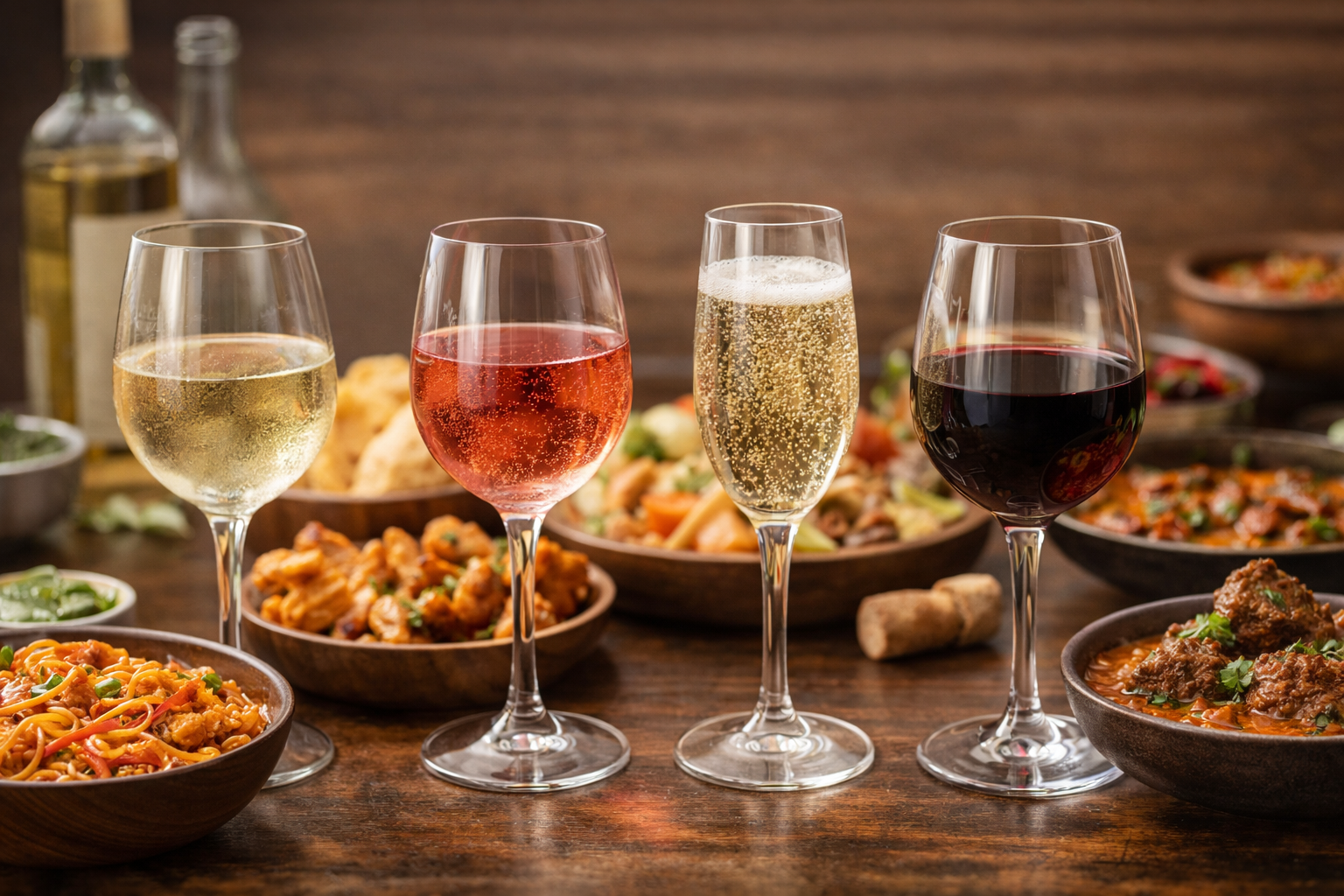
The right wine changes with the setting faster than most people think. A bottle that feels lovely on its own can feel clumsy with the wrong food.
| Moment | Best style | Why it fits |
|---|---|---|
| Spicy takeout | Off-dry Chenin Blanc or Riesling | A touch of sweetness softens heat and keeps the fruit alive |
| Snacky girls’ night | Dry rose or light sparkling | Cold, easy, works with salty and fried food |
| Brunch | Rose or light sparkling | Feels bright and social without dragging the meal down |
| Dinner date | Sauvignon Blanc or soft Pinot Noir | One stays clean and fresh, the other gives red-wine mood without roughness |
| Gift for a mixed group | Dry rose or sparkling | These styles offend the fewest people |
Indian food changes the math. Chilli, sweetness, smoke, tang, fried snacks, and spice blends can make a dry, tannic red feel harder than it already is. That is why slightly softer whites and fresh rose often outperform “serious” reds in real dinners.
For chaats, fried snacks, paneer tikka, light kebabs, and seafood, rose is such an easy move. For spicy noodles, chilli paneer, Thai-ish dishes, or sweeter-spiced curries, off-dry white works better. For lamb or richer, savoury mains, a soft red can work nicely. Just don’t let the bottle bully the plate.
Read the Label in 30 Seconds and Avoid the Wrong Bottle
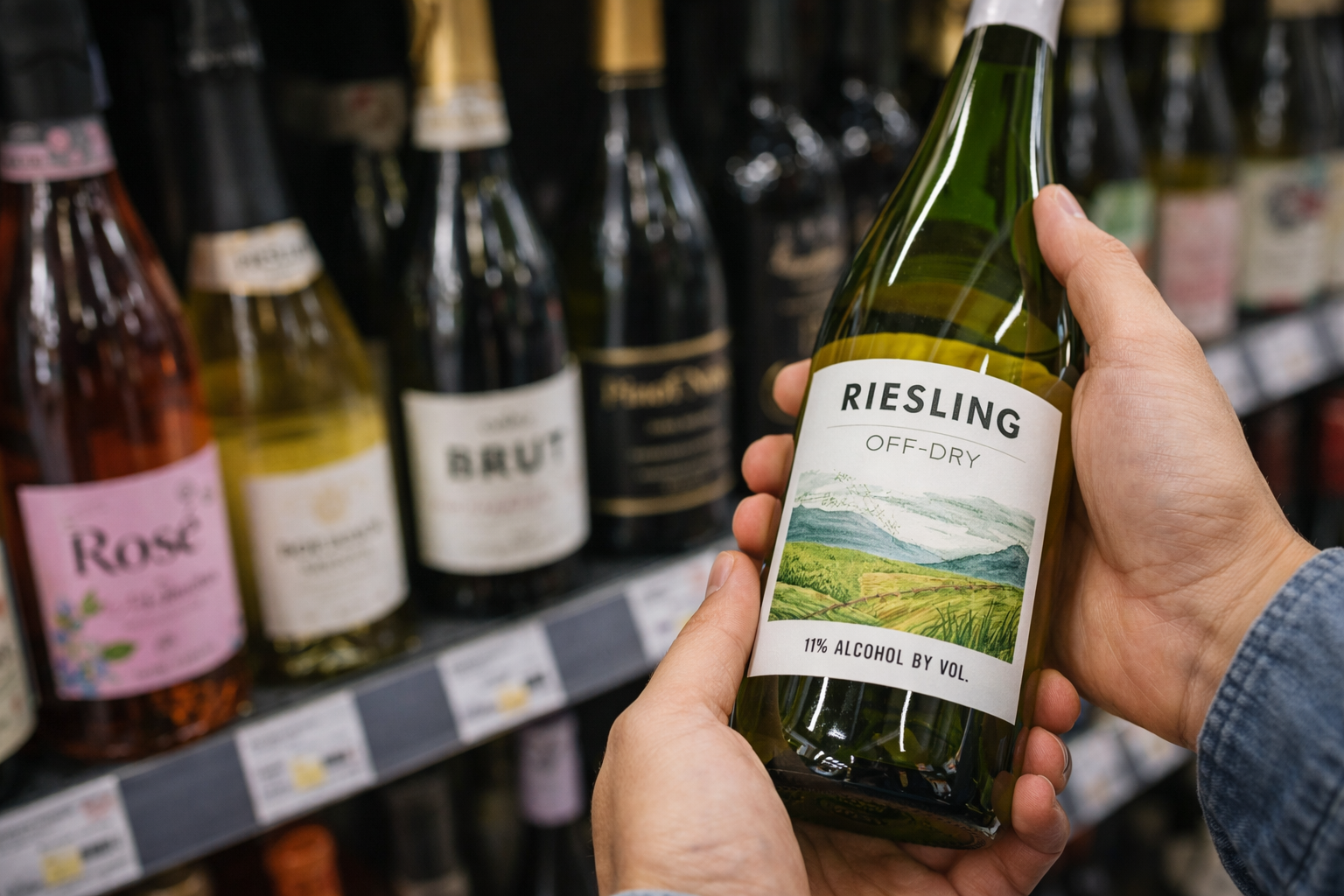
You do not need wine-school vocabulary to dodge a bad buy. You need a fast scan.
Start with the style or grape. Rose, Riesling, Chenin Blanc, Sauvignon Blanc, Pinot Noir, and Merlot tell you more than the region alone when you are standing in a shop. Those categories give a rough map of what the wine is trying to do.
Then check for sweetness clues. Words like “off-dry,” “semi-dry,” “medium sweet,” “Demi-Sec,” or “Amabile” point toward softness. Brut and extra brut point the other way in sparkling wine. If the label says nothing, the style itself becomes the clue. Sauvignon Blanc is usually drier. Moscato is usually sweeter. Rose can go either way.
Then glance at alcohol. This is not a perfect rule, but it helps. A bottle that reads hot on paper can feel heavy in the glass, especially in warm weather or without food. For beginners, balance usually matters more than brawn.
Then watch for trap words. “Reserve” and heavy oak language can signal more body, more wood, and more structure. That does not mean bad wine. It means higher risk for a first bottle. A lot of shoppers treat those words like adult badges. On the table, they can turn into dry mouths and untouched glasses.
Last thing: don’t be fooled by label design. Pretty pastel labels can hide very dry wine. Dark glass and gold script can hide clumsy wine. The label is marketing. The grape, style, and a few key words tell the real story.
What to Spend in India Without Overbuying
Price matters in India, but not in the way people think. The jump from one city to another can be maddening. Taxes, stock, and retailer margins shuffle everything around. So think in lanes, not fixed numbers.
Under Rs 1,000: This is the “keep it simple” zone. Good for fresh local rose, basic Chenin Blanc, and easy weekday bottles. Stay style-first here. Don’t chase prestige. Look for freshness and clarity.
Rs 1,000 to Rs 2,000: This is the sweet spot for most beginner-friendly shopping in India. You get better texture, cleaner fruit, and more choice without sliding into status buying. For girls’ night, date-night dinner, or a safe gift, this is the lane I would check first.
Above Rs 2,000: Spend more only when the purpose is clear. Sparkling for a celebration makes sense. A prettier Pinot for a planned dinner can make sense too. Buying a bigger, pricier red “just because it costs more” is where people lose the plot and the money.
A boring middle-shelf bottle with a clean style often beats the louder, fancier one. That rule holds up more often than people expect. For extra bottle-buying rules, smart bottle-buying rules covers the value side well.
The Mistakes That Make a Good Bottle Feel Bad
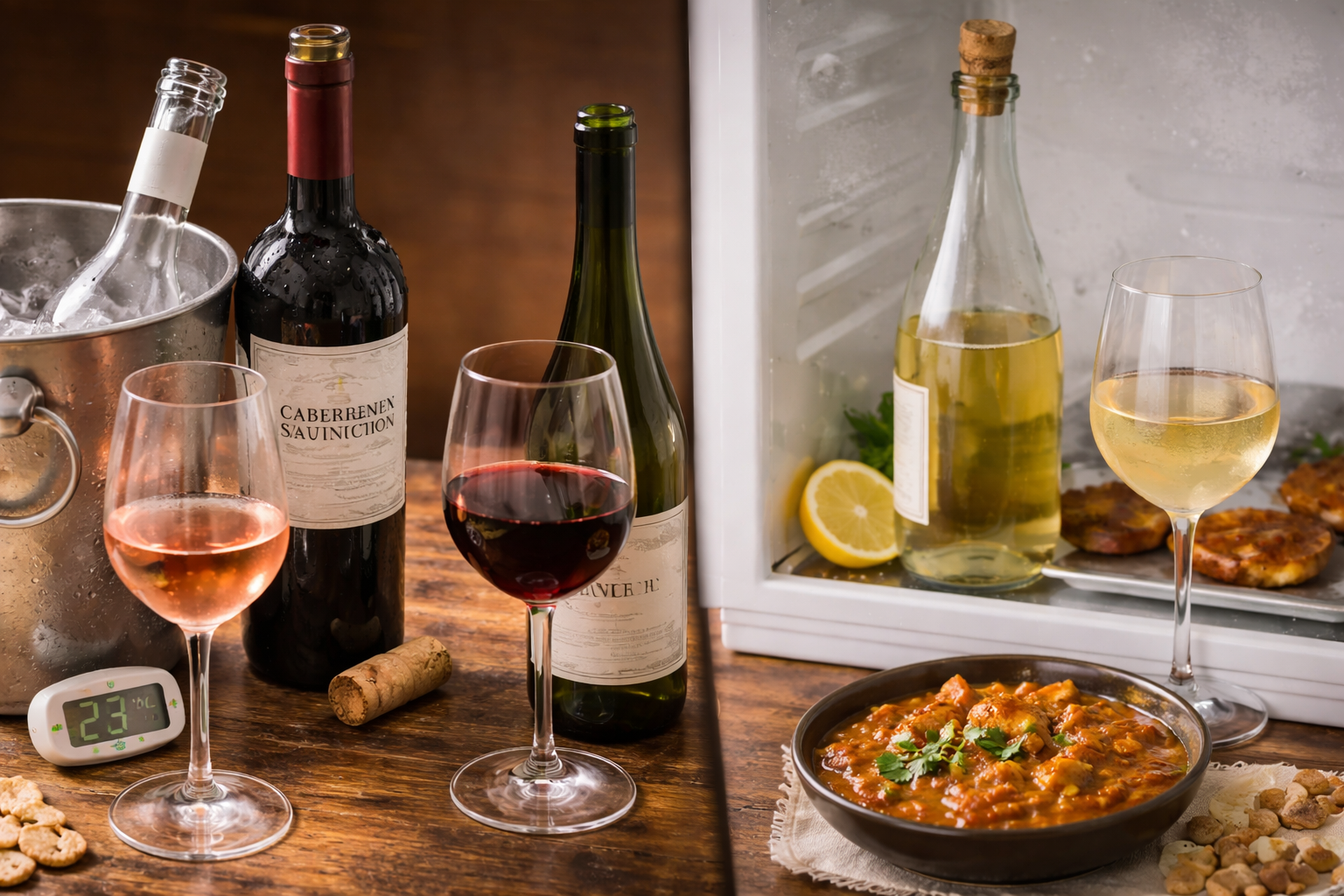
Sometimes the bottle is fine. The setup is the problem.
Starting with the wrong red. Young, tannic red is the most common way people convince themselves they hate wine. A firm Cabernet-style red with no food and a warm room is rough going for a new drinker.
Serving whites and rose too warm. Rose is much better around 8 to 10 degrees C. Light sparkling and Moscato-style bottles usually show best colder than that, around 6 to 10 degrees C. Warm rose can feel floppy and flat. Warm sparkling loses its snap. This one mistake ruins a lot of perfectly decent bottles.
Ignoring the food. A dry, sharp wine with very spicy food can feel mean. A sweet wine with a rich savoury dinner can feel sticky and odd. The wine does not live alone. It has to get along with dinner.
Keeping an opened bottle too long. Most opened rose and lighter whites are best within about 3 to 5 days in the fridge. After that, the fruit starts to sag. Beginners often meet a tired leftover bottle and assume the style is bad. It isn’t. It is just old.
Buying the label, not the taste lane. This is the big one. Dark bottle. crest. reserve. Imported-sounding region. None of that tells you the bottle will suit the person drinking it.
A Simple Rule for Picking the Right Bottle Fast
When the shelf gets noisy, use this:
- Know nothing about her taste? Buy dry rose.
- Likes sweeter drinks or wants an easy first wine? Buy off-dry Chenin Blanc, Riesling, or a light sparkling bottle.
- Wants crisp and clean, not sweet? Buy Sauvignon Blanc.
- Wants red, but not rough? Buy Pinot Noir or a soft Merlot.
- Buying for food or a mixed group? Choose freshness before power.
That last line is the one worth keeping. Freshness beats force for most first buys, most blind buys, and most social occasions in India.
And that, really, is the answer. Not “women like sweet wine.” Not “pink is safest.” Just this: match the bottle to the palate and the moment. The hit rate goes up fast.
FAQ
Is rose always the best wine style for women in India?
No. Dry rose is the safest blind buy for many occasions, but not for every palate. Someone who likes sweeter drinks may enjoy off-dry Chenin Blanc, Riesling, or light sparkling wine more. Someone who wants red can start with Pinot Noir or soft Merlot.
Is imported wine better than Indian wine for beginners?
Not automatically. For beginner-friendly drinking, a fresh Indian rose or Chenin Blanc can beat a pricier imported bottle that is too oaky, too dry, or simply wrong for the meal. Style fit matters more than passport value.
Can red wine work for a first-time drinker?
Yes, but start soft. Pinot Noir and gentle Merlot are better first-red choices than tannic, heavily oaked, or very high-alcohol reds. Serve them with food and don’t pour them too warm.