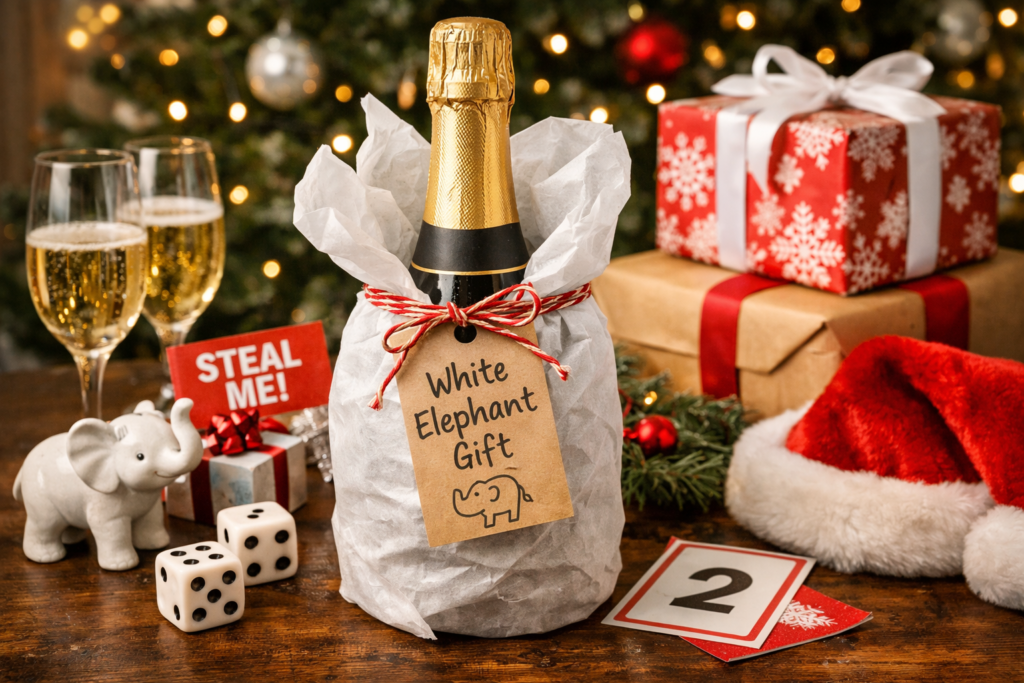
You know that moment in the wine aisle when the bottle that looks “impressive” suddenly feels all wrong?
The label is heavy, the glass is dark, the price is creeping above the party cap, and now you’re thinking less about taste and more about whether the room will side-eye the thing. I’ve done that once with a big Napa Cabernet at a holiday swap. Nice bottle. Bad white elephant gift. It sat there like dress shoes at a beach party.
If you’re trying to pick the best wine for white elephant gift exchanges, start with brut sparkling wine. It feels festive, fits more palates than most still wines, and gives the right kind of signal: fun, giftable, easy to steal, easy to open later. If sparkling doesn’t fit the room, the safest backups are Pinot Noir, Rioja Reserva, or a dry Riesling.
The hard part is not “good wine.” The hard part is “good wine for a game.”
- Which bottle style gets the least pushback in a mixed crowd
- How to match the wine to an office party, family swap, or food-heavy gathering
- What price range feels thoughtful without making the room weird
- Which label clues save you from buying the wrong sweetness or style
- What to avoid, even when the bottle itself is nice
At a glance: pick your bottle lane fast
| Situation | Best bet | Why it works |
|---|---|---|
| Taste is unknown | Brut sparkling wine | Festive, broad appeal, easy to re-gift or open |
| Mostly red drinkers | Pinot Noir or Rioja Reserva | Soft tannin or polished structure, less risky than a huge red |
| Food-heavy holiday table | Cava, Cremant, Pinot Noir, or Rioja Reserva | Food-friendly and easy to explain |
| Office or mixed crowd | Classic-label brut, or skip alcohol | Lower social risk and easier room fit |
A white elephant bottle should feel easy to want. That matters more than showing off.
The safest wine for a white elephant gift when taste is unknown
Comite Champagne notes that non-vintage brut styles are built for consistency and broad use at the table, which is exactly why brut sparkling is such a clean blind pick for a white elephant exchange. It has enough acidity to stay fresh, enough celebratory feel to seem “special,” and it doesn’t trap the recipient into liking oak, sweetness, or heavy tannin.
That’s the real test here. Not whether the bottle is fancy. Whether the bottle is easy to want.
A brut sparkler also travels well through different party types. It can land at an office exchange, a family swap, a Dirty Santa game, or a Yankee Swap without feeling too personal. People know what it is. They know when they’d use it. And when gifts get opened, a bottle with a little sparkle to it tends to pull more attention than a random still white with a label nobody can read.
If sparkling feels off for the group, use one of these backup lanes:
- Pinot Noir if the room leans red but not “big red”
- Rioja Reserva if you want something classic and a bit more polished
- Dry Riesling if you want a white with energy and range
- Balanced Chardonnay if the crowd likes familiar wines but not buttery bombs
Note: The generic advice to “just buy Champagne” misses the point. A white elephant gift lives inside a budget cap, a group vibe, and a little social theater. Brut sparkling is the best default, but the room still matters.
One more thing I learned the slightly dumb way: a bottle can be objectively better wine and still be a worse gift. A serious Barolo may thrill one person. A crisp brut gets stolen by three.
A one-minute filter for choosing the right bottle lane
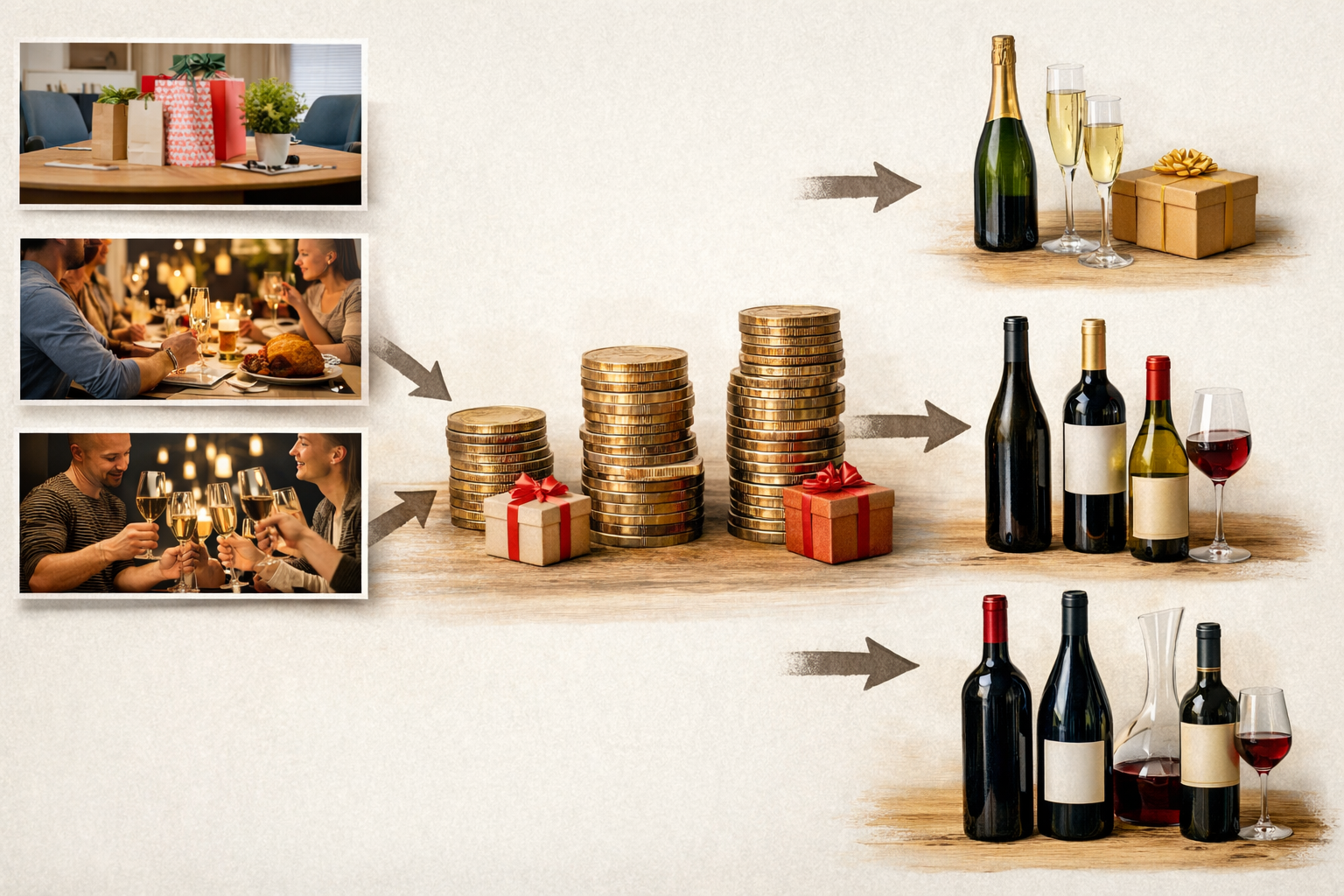
You can cut through most of the aisle noise with three filters: the room, the budget, and the certainty of taste. Pick those first. Then pick the bottle.
Start with the room and cut the risk
If the exchange is at work, keep the bottle neutral, polished, and familiar. If it is a family gathering with dinner on the table, food-friendly wines jump ahead. If it is a friendsmas crowd full of people who already talk about grower Champagne and cru Beaujolais, you can move one click more distinctive.
Set the spend and keep the room comfortable
Most white elephant exchanges live in the $15 to $35 lane. Staying near the stated cap matters more than squeezing out a little extra prestige. Overspending changes the mood. It stops being a game and starts feeling like a flex.
Use taste certainty to choose your lane
If you know nothing about who might end up with the bottle, buy for broad appeal. If you know the crowd drinks red, then Pinot Noir or Rioja Reserva makes sense. If you know one half of the room says “I don’t really like red,” sparkling or dry Riesling is safer.
Here’s the quick version:
- Low certainty: brut sparkling
- Medium certainty: Pinot Noir, Rioja Reserva, dry Riesling
- High certainty: a more specific bottle that matches the crowd’s known taste
Remember: known preference beats prestige every time. A $22 bottle that fits the room will play better than a $45 bottle chosen for its reputation.
A white elephant bottle also needs what I think of as “one-sentence defense.” If someone picks it up and asks why it’s good, the answer should be easy. “Brut sparkling goes with almost anything.” “Rioja Reserva feels classic and holiday-friendly.” “Pinot Noir is a softer red.” Clean. Done.
The wine styles most likely to get stolen
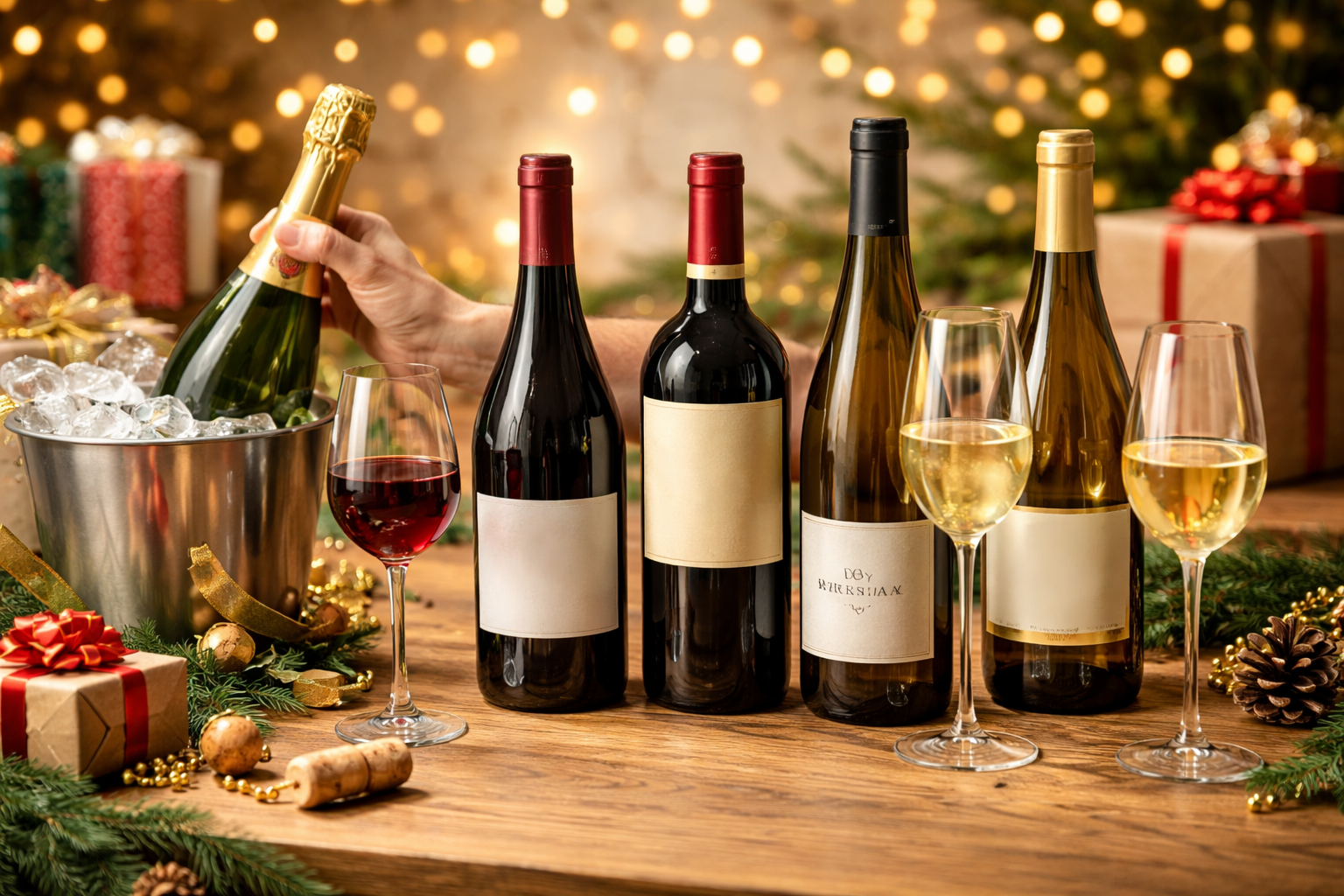
Not every good wine is a good gift-exchange wine. The styles below tend to win because they strike the sweet spot between broad appeal, social signal, and easy use.
| Style | Why it works | Watch for |
|---|---|---|
| Brut sparkling | Festive, broad use, strong gift signal | Avoid bottles with unclear sweetness cues |
| Pinot Noir | Soft tannin, familiar, easier red | Skip overripe, jammy styles |
| Rioja Reserva | Classic, polished, holiday-table friendly | Avoid bargain-bin anonymous labels |
| Dry Riesling | Fresh, bright, flexible with food | Make sure it is actually dry |
| Restrained Chardonnay | Familiar and easy to explain | Skip heavy butter-and-oak styles |
Sparkling wine: best all-around pick. Champagne has the prestige edge, but value bottles from Cava and Cremant often make more sense in a gift exchange because they bring the same celebratory cue without eating the whole budget. Prosecco can work well too, especially when the room likes fruit-forward wines. Just watch the sweetness terms on the label.
The Wine & Spirit Education Trust points out that “Extra Dry” is actually sweeter than “Brut”, which trips up shoppers all the time. Brut sits around 0 to 12 grams per liter of sugar. Extra Dry is usually 12 to 17 grams per liter. So if you want a cleaner, less sweet sparkling bottle for a mixed crowd, Brut is the safer word to scan for.
Pinot Noir: the easiest red recommendation when you need softness, not muscle. Pinot tends to have lighter tannin and a calmer texture than a big Cabernet or Zinfandel. In a gift swap, that matters. A bottle that feels easy on its feet gets picked up with less hesitation.
Rioja Reserva: the “I want this to look classic” choice. Rioja’s official classification says Reserva wines age for at least three years, with at least one year in oak and six months in bottle. That doesn’t mean every bottle is perfect, but it does give the category a dependable shape: red fruit, spice, some polish, and a label term people can actually recognize.
Dry Riesling: the sleeper pick when the crowd is food-driven or mixed on reds. WSET notes that Riesling keeps high acidity even in ripe fruit, which is a big reason dry examples stay lively and useful at the table. If the label gives you a clear dry cue, it can be a killer gift. Quietly killer, but killer.
Chardonnay and rose: both can work, but both need more care. Chardonnay should lean balanced rather than buttery. Rose should be dry and clean, not candy-like. I wouldn’t make either my first blind pick unless I knew the room a little better.
Pro tip: In a white elephant game, wines that taste a little easier than they look usually outperform wines that look more serious than they taste.
Match the bottle to the room: office, family, friends, and food-heavy swaps

The same bottle can feel smart in one room and awkward in another. This is where a lot of gift-exchange guides go mushy. They treat “holiday party” like one single situation. It isn’t.
Office exchange: keep it classic, neat, and readable. A brut sparkler with a clean label works. So does a polished Pinot Noir. What doesn’t work as well is anything too personal, too boozy, or too inside-baseball. For a work-gift angle built around the same social logic, this office wine gift guide lands in the same place: the bottle is only half the gift, and the room read is the other half.
Family swap: broad-appeal sparkling gets even better here because families often open bottles later with food. Rioja Reserva also shines. It feels generous without looking like you were trying to win Christmas.
Friendsmas or wine-savvy crowd: you can get a touch more distinct. This is where a dry Riesling with a clear dryness cue, a good Cremant, or a well-chosen Rioja Reserva can be more fun than default Prosecco. But don’t swing so far into niche territory that only one person in the room gets the joke.
Food-heavy gathering: think about the table, not just the gift pile. Sparkling wine, Pinot Noir, and Rioja Reserva all have a nice “bring me to dinner” feel. Monster reds don’t. A heavy, hot Cabernet at a snack-and-roast holiday table can feel like the wrong tool.
Mixed crowd: this is the big one. If the room includes uncertain drinkers, non-drinkers, underage guests, or workplace norms that feel unclear, the bottle stops being a safe default. In that case, either go very neutral with the wine choice or skip alcohol and bring something else.
Important: A white elephant bottle should fit the room before it fits a tasting note. That’s the whole game.
Spend enough to look thoughtful, not loaded
Most gift exchanges are budget games, so the best move is rarely the most expensive bottle you can justify. It is the bottle that looks intentional inside the cap.
| Budget band | What to buy | Best use |
|---|---|---|
| Under $20 | Brut Cava, value brut Prosecco, dry rose | Casual swaps and bigger groups |
| $20 to $35 | Best overall lane for sparkling, Pinot Noir, Rioja Reserva, dry Riesling | Most white elephant exchanges |
| $35 to $50 | Stronger sparkling, better Pinot, stronger Rioja | Smaller groups or premium caps |
| $50+ | Only if the exchange itself is built for it | Upscale swaps or group gifting |
Under $20: don’t get cute. A clean brut Cava or a solid brut Prosecco is a better play than forcing a red that tastes thin or a Chardonnay that tastes oaky and cheap.
$20 to $35: this is the sweet spot for most people. There is enough room here for a bottle that feels gift-worthy without drifting into “why did they spend that?” territory. If you’re shopping in this range and want more bottle-by-bottle ideas later, this guide to gift-worthy bottles around $50 is still helpful because many of the style calls scale down cleanly into the high-$20s and low-$30s.
$35 to $50: use this lane when the party cap supports it or the room is smaller and a touch more wine-aware. This is where better sparkling wine starts to feel very comfortable, and where Rioja Reserva and Pinot Noir can look properly polished.
$50 and up: only do this if the swap is clearly premium. Otherwise the bottle starts speaking too loudly. For higher-cap situations, a round-up of premium bottles around $100 gives the right mental model: spend more only when the occasion can carry it.
The rule is simple. Hit the cap with taste, not ego.
Read the label fast so you do not buy the wrong wine
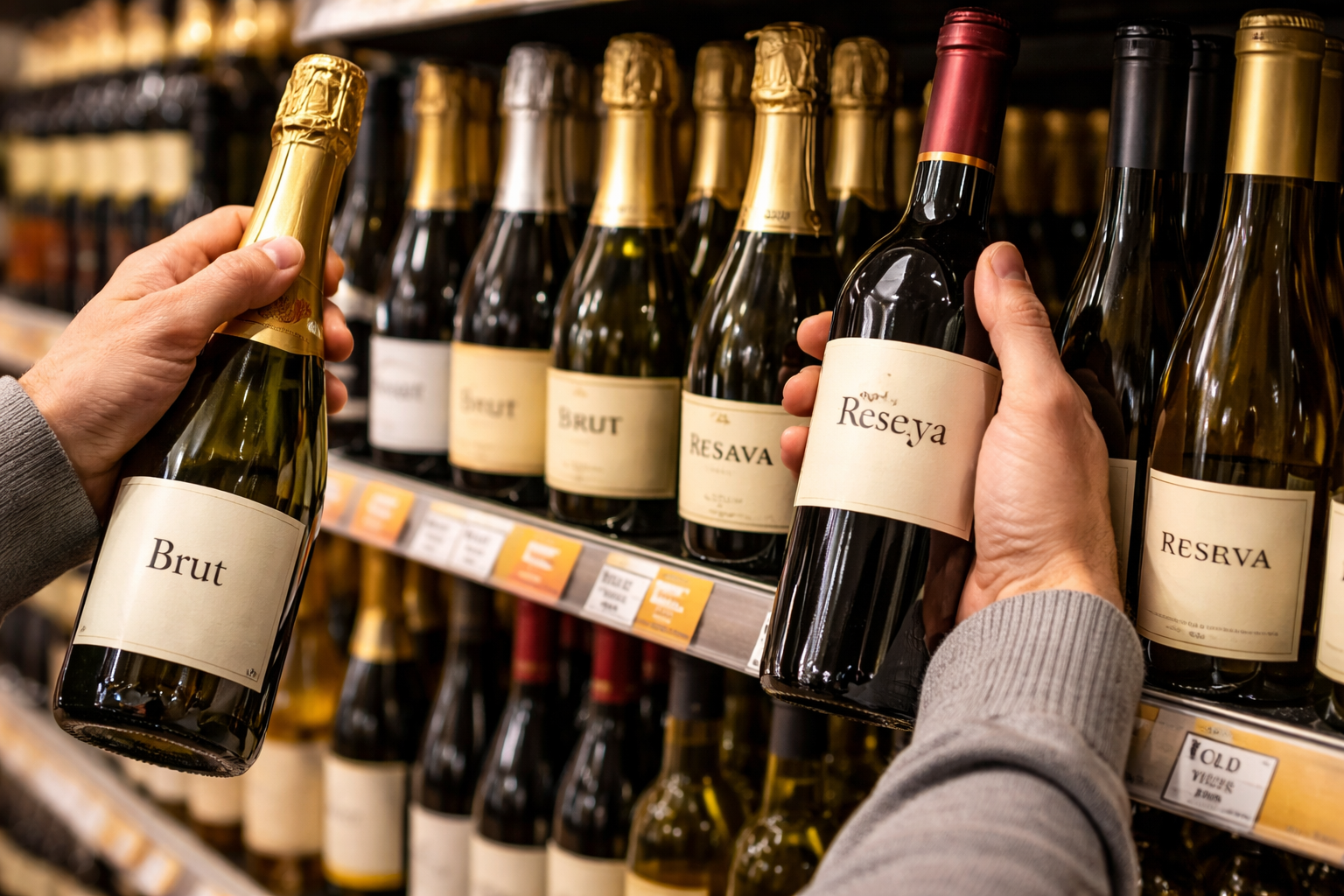
The wine aisle gets easier once you know which words actually help and which ones just look fancy.
Brut: usually the safest sparkling cue. It tells you the wine is dry to lightly off-dry, not sweet. For a mixed crowd, that is where you want to live.
Extra Dry: the sneaky term. As noted earlier, it is often sweeter than Brut. If the group likes a softer, fruitier sparkling wine, fine. If not, keep moving.
Non-vintage or NV: not a downgrade in sparkling wine. It usually means the producer is blending for a consistent house style. For gift exchanges, that consistency is a plus.
Reserva: on Rioja, this is one of the few shelf terms that gives you a meaningful style clue. It tends to signal a wine with some age, some spice, and a more classic frame.
Trocken or a clear dry cue: useful on Riesling when you want freshness without sugar.
Alcohol can help as a rough shelf shortcut too. A bottle pushing very high alcohol often drinks bigger and warmer. Not always, no, but often enough that it matters when you’re buying for people you don’t know. If the goal is “easy to want,” middle-of-the-road alcohol usually plays safer than the chest-thumping stuff.
Three words worth trusting
- Brut
- Reserva
- Dry or Trocken
Three words worth pausing on
- Extra Dry if you wanted a dry sparkler
- Buttery if you wanted freshness
- Old vines if the bottle gives you no other style clue and looks like pure shelf theater
The best label is not the one with the most romance. It is the one that quietly tells you what the wine will be like.
Avoid the wine mistakes that make a good white elephant gift feel wrong
Most misses fall into one of four buckets.
Too niche: orange wine, funky natural wine, pet-nat with cloudy sediment, or a wild skin-contact bottle can be fun in the right crowd. In a blind gift exchange, they often land like a private joke.
Too heavy: giant reds with lots of oak, heat, or tannin look serious, but they are not easy gifts. This is the mistake I made with that Napa Cabernet. The bottle looked like a power move. It drank like homework.
Too anonymous: bargain-bin wines with forgettable labels can make even a decent bottle feel tossed in at the last minute. You don’t need ornate packaging, but the bottle should look like it was picked on purpose.
Too personal: joke labels, romance-coded wines, anniversary-looking bottles, or highly specific regional geek picks can all make the exchange feel weirdly intimate or self-referential.
There is also the “safe but dull” trap. A bottle can be technically fine and still feel dead on arrival. That is why sparkling keeps winning. It is safe, yes, but it also looks like something people want. That second part matters.
Quick gut check: if the bottle’s appeal depends on a long explanation, it is probably the wrong white elephant gift.
When wine is the wrong white elephant gift
Wine is a common white elephant gift. It is not an automatic good one.
Emily Post’s guidance on gifting wine is useful here for a simple reason: if you are not sure someone drinks alcohol, pick something else. That applies to offices, mixed-age family gatherings, friend groups with sober members, and any exchange where drinking feels like an assumption rather than a shared norm.
Use this red-flag check:
- You know the group includes non-drinkers or people in recovery
- Underage guests are part of the exchange
- Workplace rules or workplace culture make alcohol feel touchy
- You have no clue how the host or the group handles alcohol
If two or more of those are true, skip the bottle. Bring something neutral and useful instead.
And if you do bring wine, don’t expect it to be opened right away. Emily Post makes that point too, and it is worth remembering because some shoppers weirdly treat wine like a performance gift. It isn’t. It is a future-use gift.
Presentation should stay simple. A plain gift bag works. Remove the price sticker. A short note can help if the bottle is a little more specific than average, but don’t write tasting notes like you’re auditioning for a sommelier job.
Good judgment beats a brave bottle. Every time.
FAQ
Is Champagne too fancy for a white elephant gift?
Not if the exchange cap and the room support it. The trouble is not “too fancy” on its own. The trouble is using Champagne when the party budget, the group, or the tone of the exchange points somewhere simpler. In most swaps, a good brut sparkling wine from Champagne, Cava, Cremant, or Prosecco works better than chasing prestige for its own sake.
Is a screw-cap bottle okay for a gift exchange?
Yes. Screw cap says more about packaging choice than wine quality. For a white elephant gift, label clarity, style, and room fit matter more than closure. A clean, well-chosen screw-cap Pinot Noir or dry Riesling can be a better gift than a cork-finished bottle picked for appearance alone.
Is one full-size bottle better than a set of mini bottles?
Usually, yes. A standard 750 milliliter bottle reads more like a real gift and less like filler. Mini bottles can work in a playful exchange, but they rarely look as steal-worthy unless the whole event leans novelty-heavy.