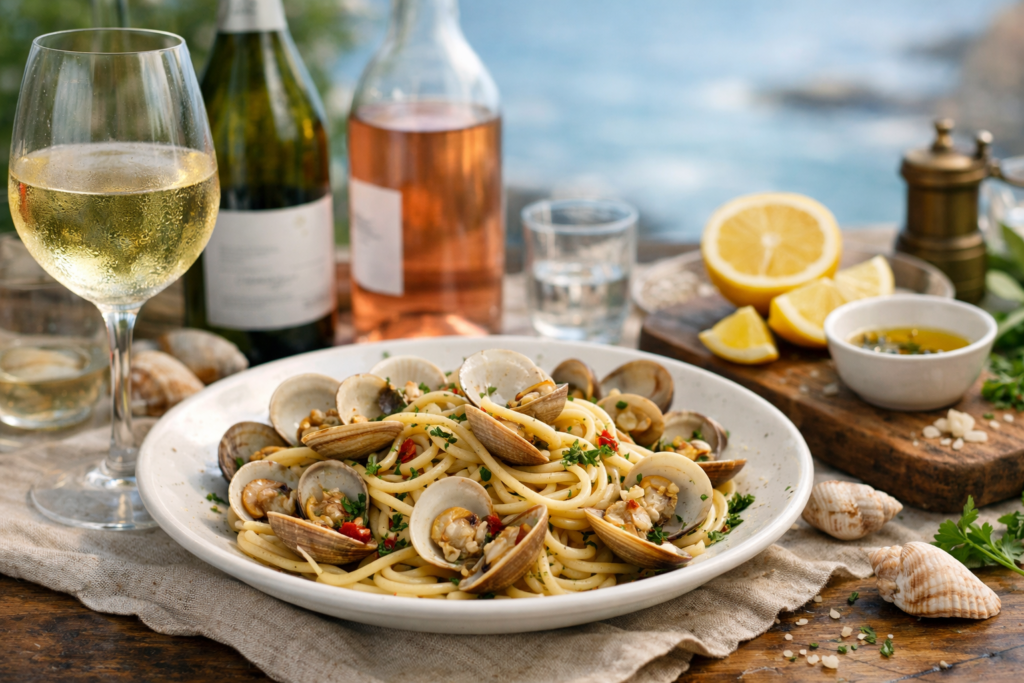
Clam pasta is one of those dishes that makes bad wine choices look louder than they are. I’ve done it myself: lovely-looking bottle, pan full of spaghetti alle vongole, first sip, then the whole plate suddenly tastes dull or weirdly sweet. If you want the best wine for vongole, start with a crisp, dry, light-to-medium white. Vermentino, Soave, Verdicchio, and a good Italian Pinot Grigio are the cleanest first picks.
That quick answer works for classic vongole bianco. The useful answer is a little sharper. Garlic, olive oil, clam brine, white wine, parsley, and often chilli make this dish bright, saline, and delicate at the same time. So the right bottle needs freshness and shape, not weight and swagger.
Here’s what you’ll get from this guide:
- the safest bottle to order when you have five seconds
- the best upgrade when you want more flavour than basic Pinot Grigio
- what changes when the sauce has tomato, extra chilli, or lemon
- when sparkling, rosé, or even a light red can work
- the bottles that usually miss, and why they miss
At a Glance
| If the plate tastes like… | Best move | Safe backup | Usually skip |
|---|---|---|---|
| Classic white clam sauce | Soave or Vermentino | Italian Pinot Grigio | oaky Chardonnay |
| Extra garlic and olive oil | Verdicchio or Soave | dry sparkling wine | thin, watery white |
| Tomato-touched or rosso | high-acid white or dry rosé | light red with low tannin | big Cabernet |
| Spicy, chilli-heavy version | dry sparkling or lower-alcohol white | Pinot Grigio | hot, boozy white |
The Best Wine for Vongole, in One Clear Answer
For classic spaghetti or linguine alle vongole, the safest answer is a dry white with bright acidity, light-to-medium body, and little or no oak. If I am ordering blind in an Italian restaurant, I reach first for Soave, Vermentino, Verdicchio, or Italian Pinot Grigio. That short list covers almost every good version of white clam pasta.
The reason those wines work is simple. They stay fresh next to briny shellfish and olive oil, and they do not smother the garlic-and-parsley side of the dish. A lot of wine guides stop at “dry white,” but that is still too broad. Dry Sauvignon Blanc can work. Unoaked Chardonnay can work. But the most reliable lane is still crisp Italian white, especially styles that feel salty, citrusy, and nimble rather than creamy or perfumed.
Fast answer: If you want one bottle to cover the most common versions of clam pasta, pick Soave for balance, Vermentino for a livelier coastal feel, Verdicchio for more character, or Italian Pinot Grigio when the only goal is “please don’t miss.”
There is also a difference between safest and best. Pinot Grigio is often the safest by-the-glass order because almost every list has one, and many are neutral enough to behave. But if the list is halfway decent, Soave or Verdicchio usually makes the plate feel more awake. Vermentino is the bottle I like when the dish leans a little more lemony, salty, and summery.
Why Crisp, Dry Whites Usually Win With Vongole
A classic spaghetti alle vongole recipe uses garlic, chilli, white wine, parsley, olive oil, and clams. That tells you almost everything. This is not a buttery seafood pasta. It is a brothy, saline, high-aroma dish with just enough fat to need refreshment.
The Wine & Spirit Education Trust lays out the core pairing mechanics plainly: foods high in salt, acidity, fat, or chilli change how wine tastes on the palate. In practice, that means vongole asks for a white that feels fresh after each forkful. Acid helps the wine cut through olive oil. A light frame keeps the bottle from flattening the clams. And a mineral, saline edge often feels right because it rhymes with the shellfish without turning the pairing into a gimmick.
When this goes wrong, it usually goes wrong fast. Heavy oak puts vanilla and toast in a conversation that wanted lemon peel and sea spray. Soft, broad whites can make the dish feel sleepy. Big aromatics can sit on top of the pasta like too much cologne.
That is why “white wine with seafood” is not enough.
You want a white that behaves more like a squeeze of lemon and a clean breeze than a blanket. A big, buttery bottle next to delicate clam pasta is like wearing hiking boots on a dance floor. Technically possible. Still wrong.
The Best Wine Styles for Vongole, Ranked by Safety and Personality
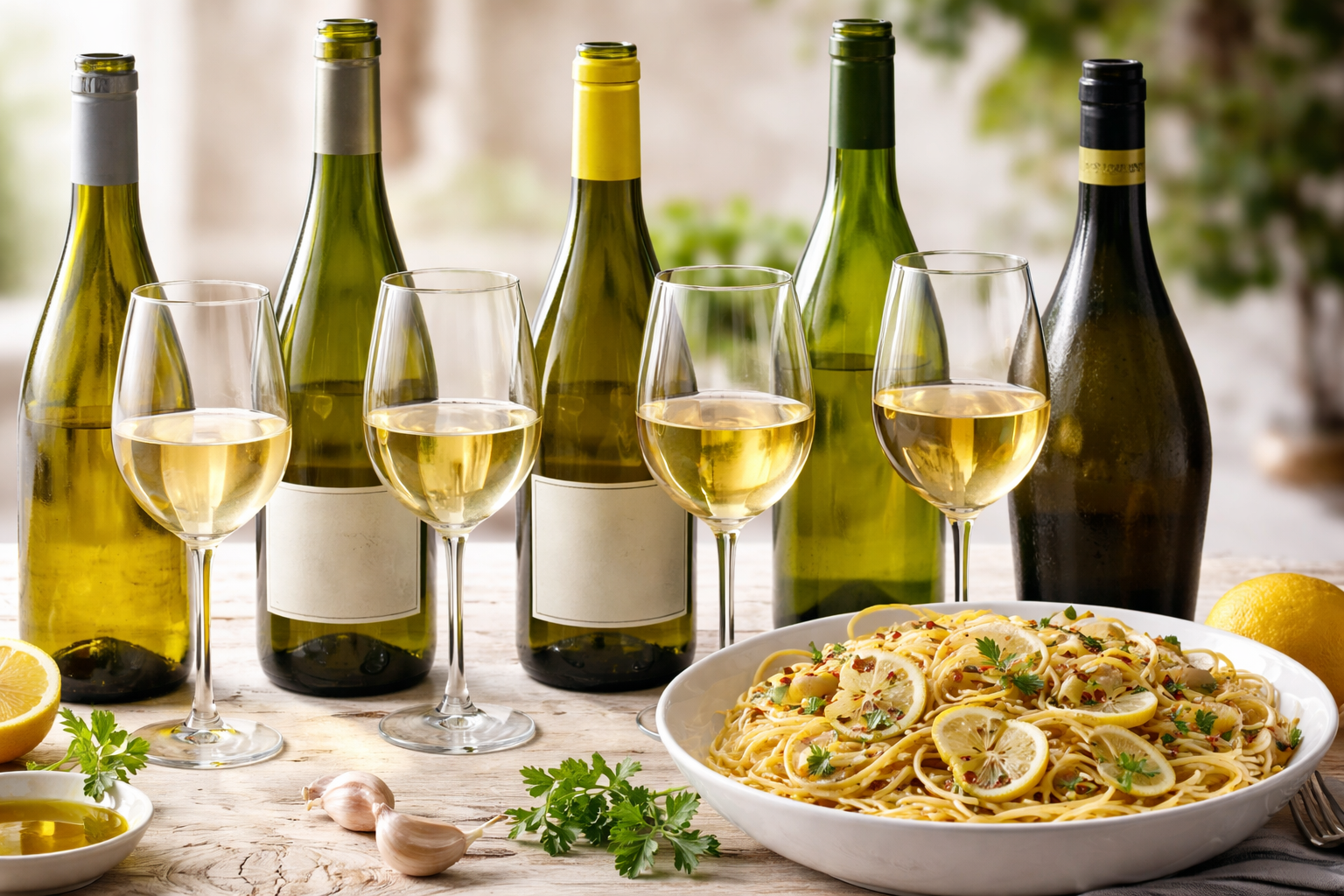
Not every good pairing does the same job. Some wines are there to stay out of the way. Some make the dish taste sharper and more alive. Some feel gorgeous with one version of vongole and a little too chatty with another. So this is the ranking I actually use.
| Style | Why it works | Watch for | Best use |
|---|---|---|---|
| Italian Pinot Grigio | fresh, light, easy to find | can feel too neutral | restaurant safety pick |
| Soave | balanced, food-friendly, quietly complex | avoid softer, flatter examples | classic vongole bianco |
| Vermentino | salty, citrusy, lively | very ripe versions can feel broad | lemony or coastal-feeling plates |
| Verdicchio | fresh with extra depth | not always easy to spot quickly | garlicky, olive-oil-rich versions |
| Muscadet or Albariño | bright shellfish backups | less Italian in feel | when the list is missing the usual suspects |
1. Italian Pinot Grigio
This is the low-drama pick. It is not always the most exciting glass, but it is one of the least risky. When a wine list is vague, the kitchen is moving fast, and you just need something that will not throw elbows at the clams, Pinot Grigio does the job. The downside is obvious after a few bites of a really good plate. A bland example can feel like cold water with a diploma.
2. Soave
Soave is often the smartest all-round choice. The official tasting profile from the Soave consortium describes limestone-grown examples as subtle and elegant, with white flowers, orchard fruit, sweet herbs, and a slight almond bitterness on the finish. That tiny bitter edge is one reason Soave works so nicely with garlic, parsley, and clam broth. It does not shout, but it does not disappear either.
3. Vermentino
When vongole tastes bright, breezy, and almost sunlit, Vermentino is lovely. The Vermentino di Gallura consortium notes that the region’s soils give the wine a typical mineral flavour, and younger styles are described as slightly acidic and suited to light lunches. That checks the right boxes for clam pasta. I like it most when there is lemon zest or a little extra salinity in the dish.
4. Verdicchio
Verdicchio is the bottle I reach for when I want more shape without losing freshness. The official description for Verdicchio dei Castelli di Jesi says the wine is made with at least 85% Verdicchio grapes, and good examples often carry a firm citrus-and-almond line that feels brilliant with shellfish. If the sauce has more garlic, more olive oil, or just more savoury pull, Verdicchio often lands better than the thinnest Pinot Grigio.
5. Useful backups
Frascati, Falanghina, Muscadet, and Albariño all make sense when the main Italian four are missing. Muscadet is especially handy with shellfish. Albariño can be great when the dish has extra lemon or herbs. I would still keep the article’s main promise intact though: if you can buy or order Soave, Vermentino, Verdicchio, or Pinot Grigio, start there.
Quick rule: If you want the safest glass, choose Pinot Grigio. If you want the best all-round bottle, choose Soave. If you want more snap and sea-breeze energy, choose Vermentino. If you want more depth with the same basic logic, choose Verdicchio.
How the Sauce Changes the Bottle: Bianco, Rosso, Chilli, and Lemon
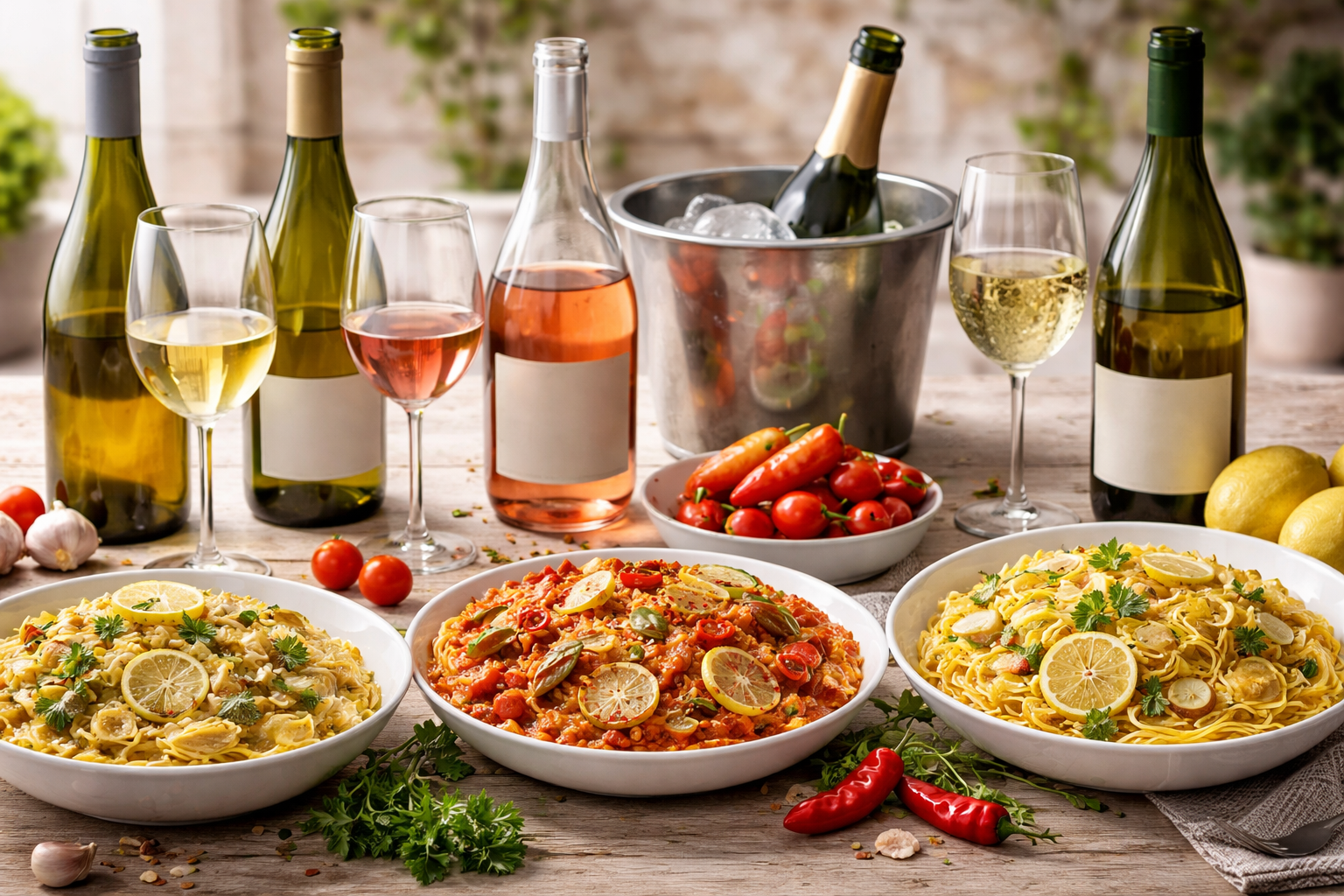
This is the part many pairing guides rush past, and it is the part that actually saves you from a bad bottle. “Vongole” is not one fixed flavour. The pasta shape can stay the same while the sauce shifts enough to change the answer.
Classic vongole bianco
This is the white-wine, garlic, olive-oil version most people mean. Crisp Italian white is still king here. Soave, Vermentino, Verdicchio, and Pinot Grigio all make sense, with the final call based on how bright or how savoury the plate feels.
Vongole rosso or tomato-touched versions
Once tomato enters the pan, acidity becomes a bigger player. You still do not need to run to a heavy red. A sharper white, dry rosé, or very light red with low tannin can work. This is where a pale rosato or a chilled light red can stop looking weird and start looking smart.
Chilli-heavy vongole
Spice changes the mood. Hotter food can make wine feel hotter too, so lean away from boozy bottles. Dry sparkling wine is excellent here. A light Pinot Grigio or crisp Vermentino also does nicely. If the chilli is more than a background note, I would take sparkling over a rich still white almost every time.
Lemon-forward versions
When the dish smells of lemon zest before it hits the table, pick a wine that can meet it without turning sour. Vermentino is a natural fit. Soave is great. Some restrained Sauvignon Blancs work. Very green, pungent Sauvignon Blanc is another story.
Extra garlic and olive oil
This is where a slightly more structured white earns its keep. Verdicchio and Soave often handle that savoury weight better than an ultra-light Pinot Grigio. You do not need more power. You just need a bit more shape.
Sauce-first cheat sheet
- If the sauce tastes brighter than rich, lean sharper and fresher.
- If the sauce tastes more savoury than bright, lean a touch broader, not heavier.
- If chilli is obvious, lower alcohol and bubbles usually beat richness.
- If tomato shows up, high acid matters more than strict “white with seafood” rules.
When Rosé, Sparkling, or Light Red Can Work
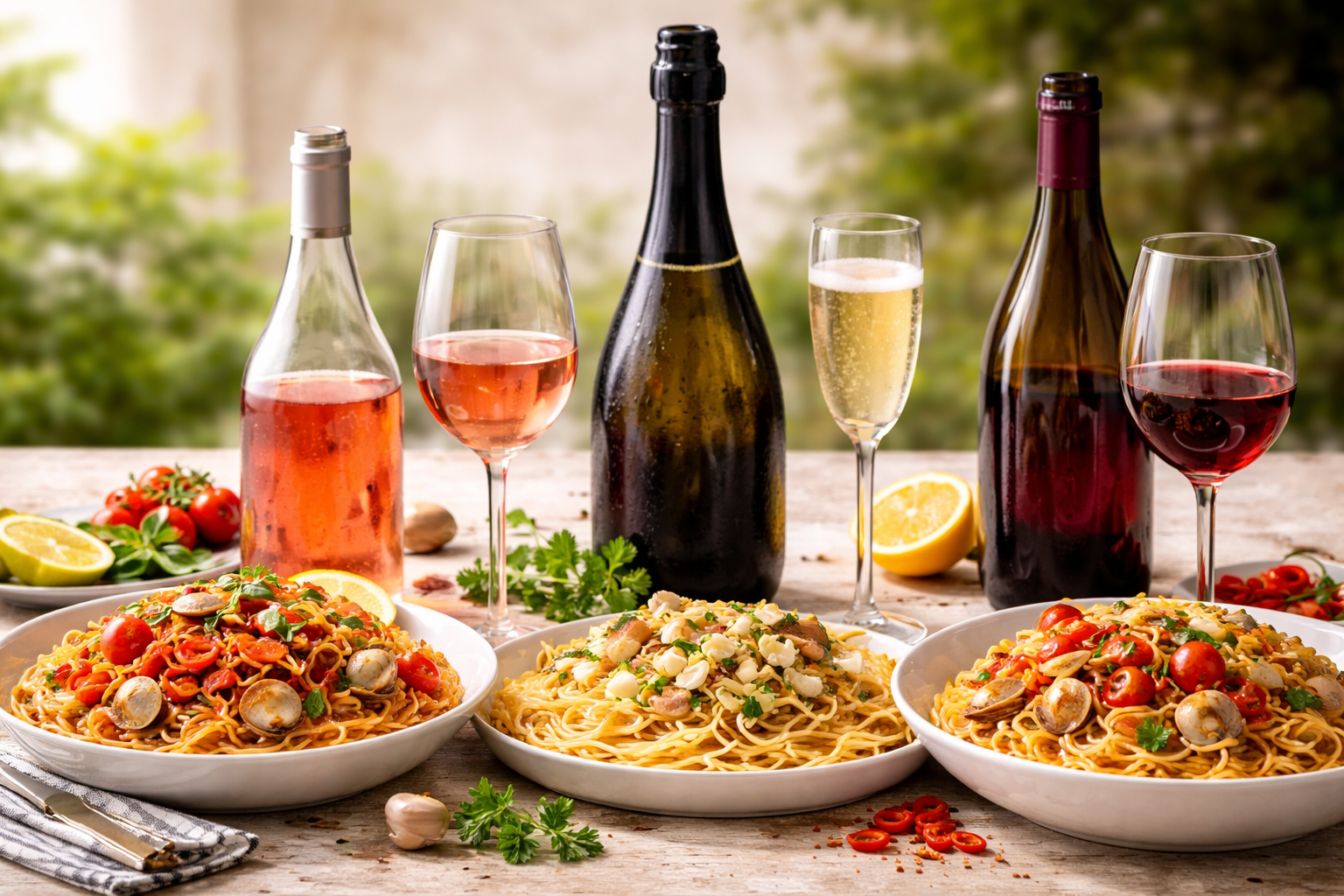
These are not the headline pairings, but they are not fake exceptions either. They just need a reason.
Dry rosé works when the dish has tomato, chilli, or a summer-lunch feel that wants something brisk but not plain. A dry Mediterranean rosé with good acidity can bridge shellfish sweetness and tomato brightness more gracefully than a random white pushed too far out of its comfort zone.
Sparkling wine is better with vongole than many people expect. The salt and citrus logic that works with oysters works here too. Bubbles scrub the palate after olive oil, and the wine stays lifted beside garlic and clam liquor. Brut sparkling is also one of the best rescue options on a weak list. If the whites look sleepy, a dry sparkling wine can save dinner.
Light red is the narrowest lane. Think low tannin, modest body, and a slight chill if the sauce has tomato or noticeable chilli. Light Pinot Noir or Gamay can work. A serious red with oak and grip? No. That move still feels like forcing a friendship.
Best rescue move if you dislike white wine: pick a dry sparkling wine first. It is a safer detour than red, and it still plays nicely with shellfish.
The Pairings That Usually Miss and Why
Most bad pairings with vongole are not bad because the wine is bad. They are bad because the wine is wearing the wrong outfit.
Heavily oaked Chardonnay
Oak brings vanilla, toast, and often a creamy feel. Classic clam pasta usually wants citrus, herbs, and salt. Those are different conversations. If your only Chardonnay is lean and clearly unoaked, fine. If it smells like buttered popcorn and sweet toast, leave it alone.
Off-dry whites
A hint of sweetness can be lovely in other seafood contexts, but with garlicky vongole it can make the plate feel muddled. The sauce loses edge. The clams feel less precise. This is one of those pairings that sounds harmless and then tastes floppy.
Big tannic reds
Shellfish and firm tannin rarely make each other look better. Add tomato and the door opens a little for red, but not for Napa-sized Cabernet or stern Syrah. The dish is too delicate and too saline for that kind of push.
Very pungent Sauvignon Blanc
Some Sauvignon Blancs are bright and perfect. Some smell like a hedge trimmer and passion fruit got into an argument. The greener, louder versions can dominate a simple vongole bianco. If the dish is lemony and herb-heavy, restrained Sauvignon Blanc can work. If it is minimalist, I would still rather have Soave or Vermentino.
Cooking wine in a glass
A lot of people blur “wine for the pan” and “wine for the table.” They overlap, but they are not identical. The cheapest bottle that works in the sauce is not always the bottle you want to sip with dinner.
Easy shelf test: if the wine smells of obvious vanilla oak before the food arrives, or tastes a little sweet on its own, it is probably the wrong lane for classic clam pasta.
A 30-Second Store or Wine-List Filter for Vongole
You do not need to memorize half of coastal Italy to get this right. Use this filter.
Step 1. Check the sauce and narrow the lane
Ask yourself if the dish is bianco, rosso, chilli-heavy, or lemon-forward. That one call cuts the bottle list down fast.
Step 2. Start with dry Italian white
If it is classic vongole bianco, go to Soave, Vermentino, Verdicchio, or Italian Pinot Grigio first. This is the no-fuss lane.
Step 3. Rank by risk, not by prestige
On a basic list, Pinot Grigio is often safer than a flashier bottle with more oak or perfume. On a good list, Soave or Verdicchio usually gives more pleasure. Vongole rewards freshness more than status. That is one reason everyday, food-friendly bottles so often beat fancy ones, which lines up with the buying logic in best wine for your buck.
Step 4. Use sparkling as the backup plan
If the white section looks tired, dry sparkling is your escape hatch. It is a smarter pivot than forcing a serious red into the meal.
Step 5. Keep the budget sane
This dish does not need a grand gesture. A fresh, young, well-balanced bottle from the everyday tier often suits it better than a solemn expensive white. Delicate food is funny that way. More money does not always buy more fit.
The fastest order at a restaurant: “A crisp dry Italian white for the vongole, preferably Soave or Vermentino.” If they do not have either, ask for Verdicchio or Pinot Grigio.
Cooking Wine vs Drinking Wine for Vongole
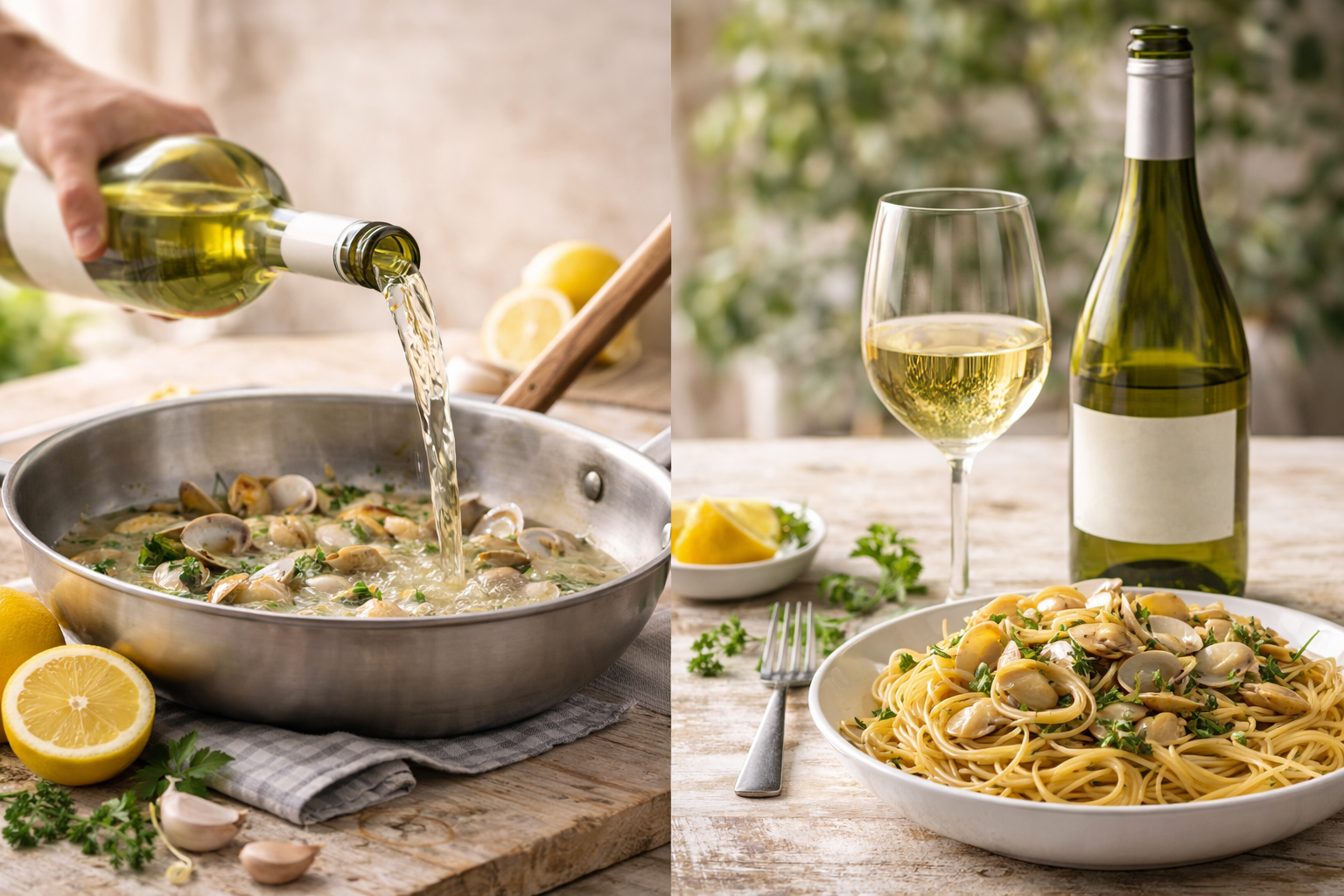
The overlap is real, but it is not perfect. In the pan, you want a dry, drinkable white that reduces cleanly and does not dump oak or sweetness into the sauce. In the glass, you want something with a bit more poise, freshness, or character.
For most home cooks, the easiest move is to stay in the same family. If you cook the vongole with a clean Pinot Grigio, Soave, or Vermentino, one of those same styles will usually work at the table. The bottle in the sauce does not need to be the exact bottle in the glass. It just needs to rhyme with it.
That matters because reduction makes mistakes louder. A wine that feels merely oaky on its own can taste clumsy once it cooks down with clam liquor and garlic. A bottle with a little sweetness can feel even sweeter after the sauce tightens up. The basic cooking rule in best wine for white wine sauce applies neatly here too: use a dry white you would willingly drink, and skip anything harsh, heavily oaked, or syrupy.
If I am cooking at home, I usually pour the simpler bottle into the pan and keep the slightly better bottle for the table. Not because the dish “deserves” luxury. Just because freshness in the sauce and clarity in the glass make the whole meal feel tidier.
The Simple Rule That Makes Vongole Pairing Easier Every Time
Pick freshness before power, and pick the sauce before the grape.
That little rule gets you most of the way there. If the dish is classic white clam sauce, start with crisp Italian white. If the sauce gets brighter, saltier, or more lemony, lean sharper. If it gets more savoury from garlic and olive oil, lean a touch broader without getting heavy. If tomato or chilli show up in a real way, the door opens to rosé, sparkling, or a very light red.
And if you are standing in front of a shelf with no patience left, buy the bottle that looks fresh, dry, and unshowy. Vongole is not a dish that rewards swagger. It rewards balance.
FAQ
What serving temperature works best with wine for vongole?
For crisp whites and sparkling wines, aim for properly chilled but not icy. Around 8 to 10C usually keeps the wine fresh without muting the aroma. If the glass is too cold, Pinot Grigio and Soave can taste flatter than they should.
What is the safest one-bottle compromise if the table ordered mixed seafood pastas?
Dry sparkling wine is the safest compromise. It handles shellfish, olive oil, salty starters, and even a little tomato or chilli better than most still wines. If sparkling is off the table, Soave is the calm, reliable backup.
Do you need to avoid Chardonnay completely?
No. You just need to avoid the wrong Chardonnay. Lean, unoaked, high-acid examples can work with vongole. Rich, buttery, heavily oaked Chardonnay usually feels too broad and too sweet-toned for classic clam pasta.