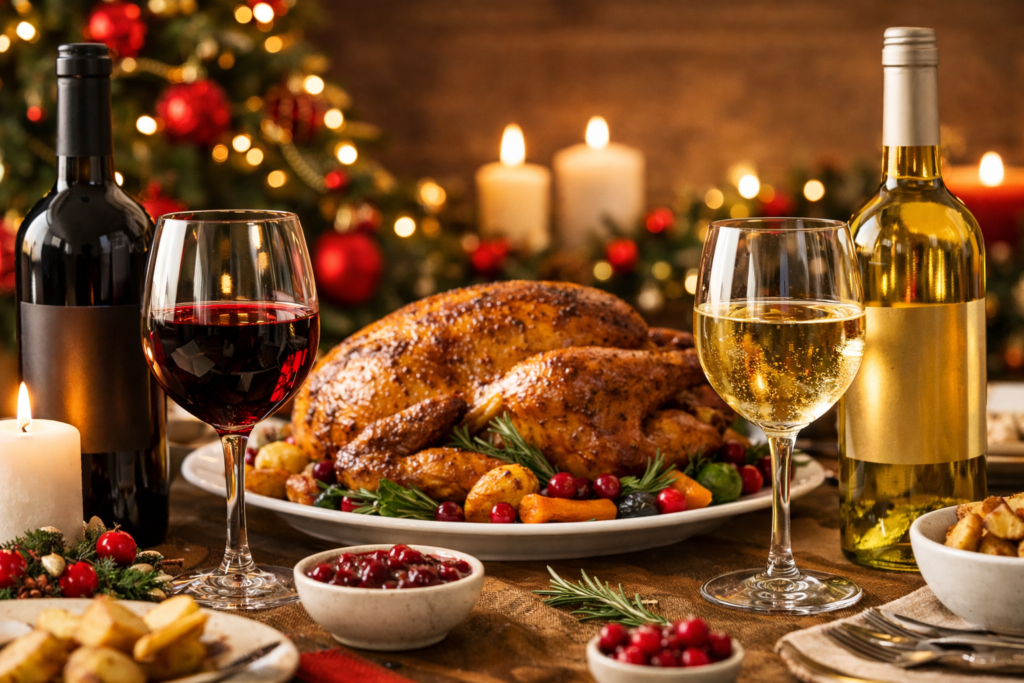
The Christmas wine miss is usually not a bad bottle. It’s the “special” bottle that looked right on paper and then felt clumsy once turkey, gravy, stuffing, cranberry sauce, roast veg, and bacon all hit the same fork.
If you’re looking for the best wine for turkey Christmas dinner, start with a fresh low-tannin red like Pinot Noir or Cru Beaujolais, a fuller white like balanced Chardonnay or Chenin Blanc, or a dry sparkling wine. Those styles work because they have enough flavor for the whole plate, but they do not bully the turkey. The catch is that turkey is only half the job. The sides usually make the call.
I’ve watched a proud young Cabernet get strangely dry next to turkey breast and cranberry sauce, and I’ve watched a modest Beaujolais disappear by mid-meal because it just kept working. Christmas dinner is like that. The loudest thing on the plate wins.
At a Glance: pour by the plate, not by the bird
| If your table leans like this | Best wine lane | Why it works |
|---|---|---|
| Herby stuffing, roast veg, mushrooms | Pinot Noir or Cru Beaujolais | Low tannin, enough fruit, easy with savory food |
| Creamy sauces, bread sauce, mixed crowd | Chardonnay or Chenin Blanc | More texture, still fresh enough for the plate |
| Salty sides, pigs in blankets, aperitif-to-table | Brut sparkling | Cleans the palate and handles variety well |
| Sweet cranberry or fruit-led stuffing | Fresh red or lightly aromatic white | Fruit and freshness stop the pairing from going flat |
Fast pour rule: when the menu is fuzzy, buy flexibility first.
- How to choose between red, white, and sparkling without second-guessing yourself
- Which side dishes change the pairing more than the turkey does
- What bottles usually miss, even when they look festive
- How to handle smoked turkey, cranberry-heavy plates, and mixed tables
- The easiest one-bottle and two-bottle plans for Christmas Day
The best wine for turkey Christmas dinner, in one clear answer
The safest all-round answers are Pinot Noir, Cru Beaujolais, balanced Chardonnay, Chenin Blanc, and dry sparkling wine. If you want one fast rule, go with a wine that has freshness and moderate weight, not a wine that shouts with tannin, oak, or alcohol.
That short list works for a reason. Turkey is fairly mild, so it does not need muscle. The meal around it does need shape, though. You want enough acidity to keep gravy and roast potatoes from feeling heavy, enough fruit to sit comfortably beside cranberry sauce, and enough body that the wine does not vanish once stuffing and sides land.
Quick pour rule: If the table is savory and earthy, start red. If it is creamy, mixed, or unpredictable, start white or sparkling. If cranberry sauce is loud and sweet, keep fruit and freshness in the wine.
The generic answer, “just buy Pinot Noir,” is fine as far as it goes. It just stops one step too early. A lean, tart, delicate Pinot and a plush, oaky Pinot do not behave the same way. Same grape, different outcome. That’s why style matters as much as the label.
Read the whole plate, not just the turkey
The USDA’s lean-protein guide notes that much of the fat in chicken and turkey sits in or under the skin. Translate that to the table and one thing gets clearer fast: turkey breast on its own does not cushion tannin the way fatty beef does. That is why a young, structured red can feel drier than you expected.
Then the sides step in. WSET’s food-matching basics point to salt, acidity and fat as the main drivers of how food shifts a wine. So gravy, roast potatoes, bread sauce, bacon, and buttery veg can make a fresh wine feel rounder and friendlier. Sweet cranberry sauce can do the opposite. It can make a dry, stern red feel meaner.
That’s where people get turned around.
If you pair only to the roast name, you miss the part of the meal that actually steers the sip. In most homes, the real pairing target is not “turkey.” It is turkey plus gravy plus stuffing plus cranberry plus whatever your family insists on putting next to it every single year.
I like to think of this as matching the loudest voice at the table. Turkey is often the quiet one. Mushroom stuffing, sweet cranberry, smoky bacon, or creamy bread sauce are the ones doing all the talking.
Remember: Pair to the loudest side, sauce, or texture on the plate. The bird does not get the final vote on its own.
Choose between red, white, sparkling, and rosé without overthinking it
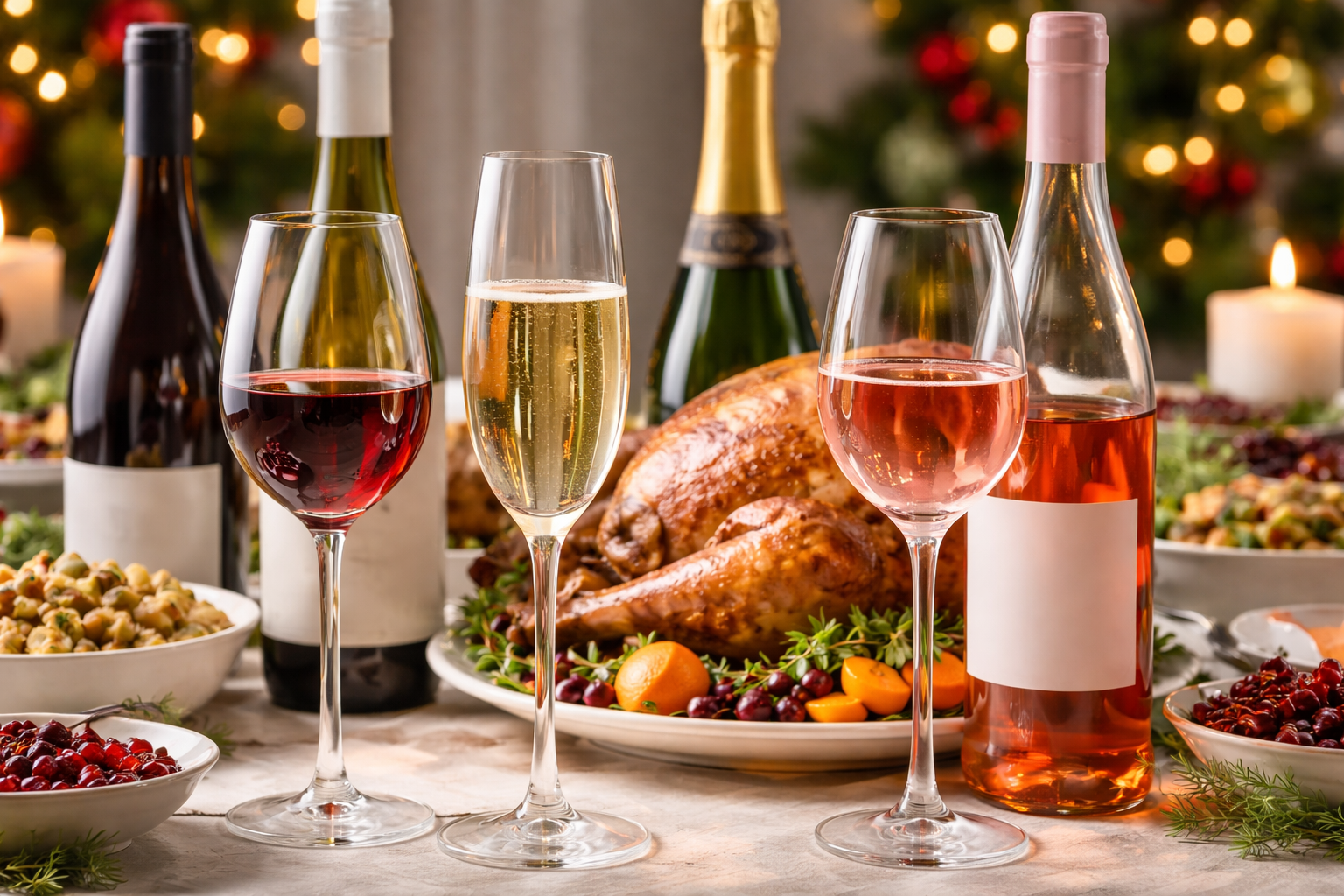
Red wine with turkey works best when the dinner leans savory, herby, earthy, or mushroomy. This is where Pinot Noir and Beaujolais earn their reputation. They give you fruit, lift, and enough shape for the meal, but they usually avoid the drying grip that bigger reds bring.
White wine with turkey makes more sense when the table leans creamy, buttery, or all over the place. A balanced Chardonnay is a classic for a reason. It can echo roast flavors and handle richer sauces, but it needs restraint. Too much oak and the wine starts tasting like furniture polish next to lean meat. Chenin Blanc is another good call because it brings texture and acidity at the same time. That combo is gold at Christmas.
Sparkling wine with turkey is the easiest crowd-pleaser of the lot. The Champagne committee’s own FAQ places Brut in the dry camp, which is one reason Brut works so well from aperitif through dinner. It cuts through salty sides, wakes up the palate, and does not ask you to commit to either the red or white lane too early.
Rosé can work, especially sparkling rosé, but it is usually a supporting actor here rather than the first recommendation. When the table includes ham, pigs in blankets, or a lot of salty bits, rosé starts to look smarter.
Best fallback bottle: If the menu is still a bit of a mystery, dry sparkling or a fresh Pinot Noir gives you the most room for error.
And yes, aged Bordeaux or mature Rioja can work with turkey. “Can” is doing a lot of work there. Those are exception bottles, not default bottles. Once the tannins have softened and the oak has calmed down, the pairing starts to make sense. Young, firm versions are another story.
Match the wine to the side dish that is actually steering dinner
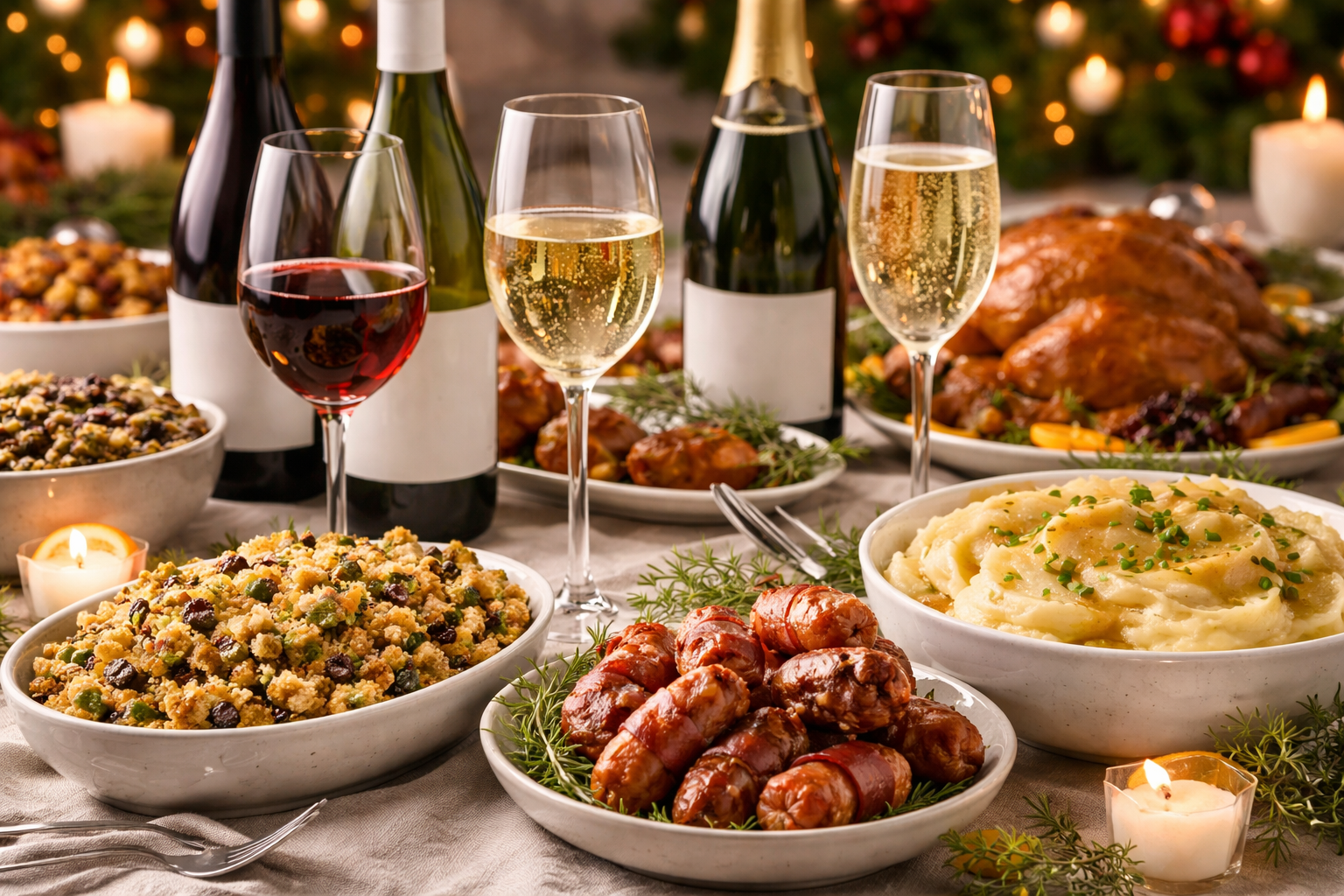
This is where a decent pairing turns into a good one. Side dishes are not garnish on Christmas Day. They’re co-stars.
| Side dish or flavor | What it does to the pairing | Best style lane |
|---|---|---|
| Cranberry sauce | Sweet-tart note can make stern dry reds feel harsher | Pinot Noir, Beaujolais, sparkling, lightly aromatic white |
| Herb stuffing and roast veg | Pushes the meal toward savory, earthy flavors | Pinot Noir, Beaujolais, fresher Sangiovese-style reds |
| Bread sauce or creamy gravy | Needs texture, but not a big wall of oak | Chardonnay, Chenin Blanc, fuller white blends |
| Mushroom stuffing | Adds earthiness and depth | Pinot Noir or balanced Chardonnay |
| Pigs in blankets and salty extras | Salt and fat beg for a palate reset | Brut sparkling or bright, low-tannin red |
If cranberry sauce plays a big role on your plate, fruit in the wine stops being a luxury and starts being helpful. This is one reason Beaujolais often overdelivers at Christmas. It has that cheerful red-fruit snap that sits more easily next to sweet-tart flavors than a darker, firmer red.
If bread sauce, creamy gravy, or butter-heavy sides are the real center of gravity, white wine becomes easier to defend. A good Chardonnay or Chenin Blanc has enough shape to feel like part of the meal rather than an afterthought. If sauce is the big theme on the table, best wine for white wine sauce is a useful side road because the same texture logic shows up here too.
The mistake is easy to make: you think “turkey equals light red” and then the sauce quietly changes the whole thing.
Avoid the bottles that sound impressive but usually miss
Young Cabernet Sauvignon is the classic trap. It sounds celebratory. It also often tastes too strict for turkey. The tannin can feel chalky, the fruit can feel too dark, and the whole pairing starts to pull in two directions at once.
Big Shiraz can do the same thing for a different reason. The issue is not just tannin. It is heat, weight, and sweetness of fruit. On a long holiday meal, that kind of wine gets tiring. By the time you’ve had turkey, stuffing, potatoes, and seconds you do not need more push from the glass.
Heavily oaked Chardonnay is another sneaky miss. A little oak can be lovely with roast flavors. Too much oak turns the wine broad and woody, and then lean turkey tastes even leaner. If a Chardonnay smells more like the barrel than the fruit, I’d leave it on the shelf for another dinner.
What to skip most often: young Cabernet, heavy Shiraz, hot jammy reds, and whites that lean too hard on oak.
There is also a quieter mistake: wines that are too thin. A sharp, skinny white can feel tidy before food and then vanish once the plate fills up. Turkey dinner needs energy, yes, but it still needs some stuffing of its own. A wine should have a bit of shoulder to it.
Handle tricky Christmas dinner scenarios without guessing
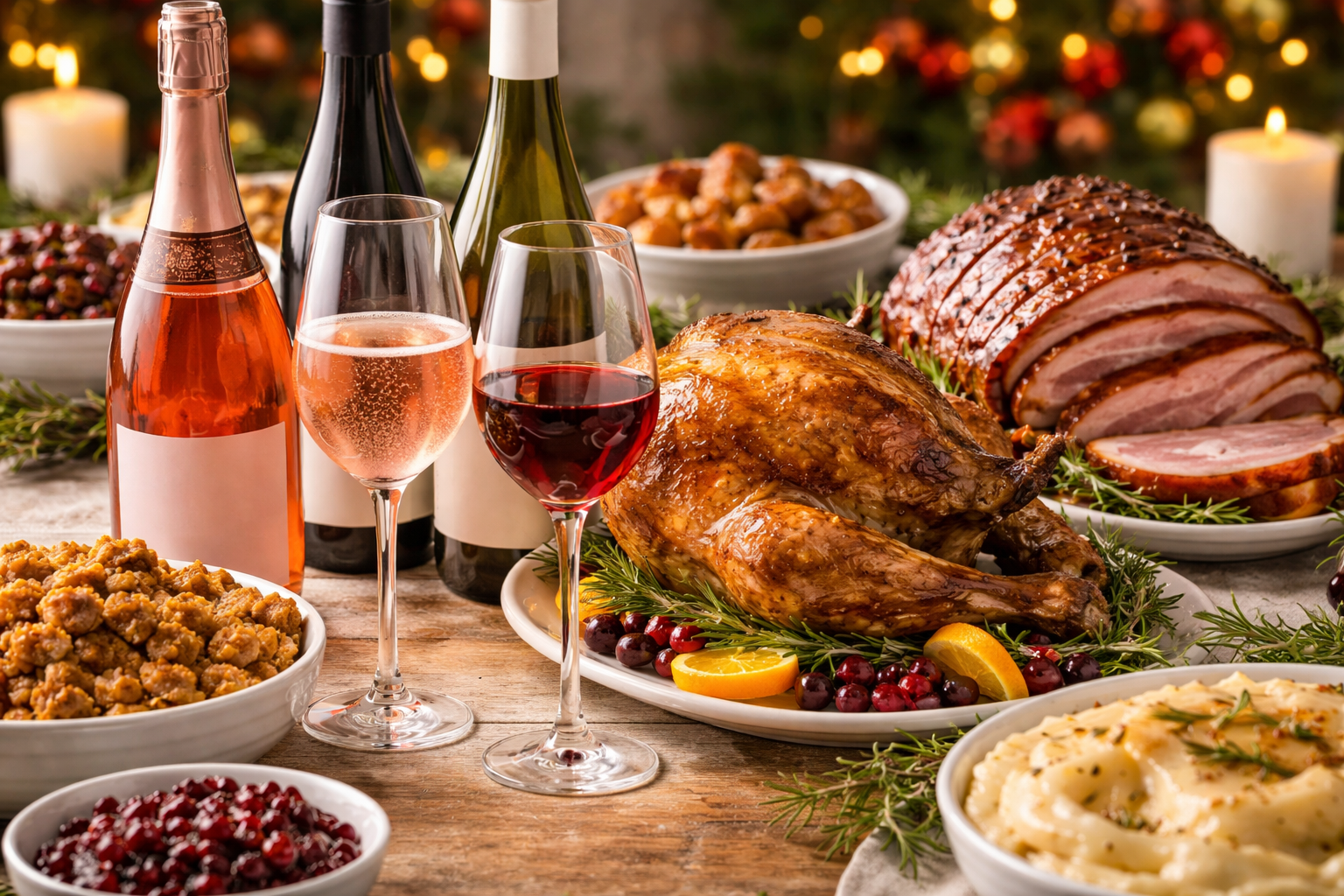
Smoked turkey changes the whole mood. Smoke loves sparkling wine and can work well with Pinot Noir too, but the heavier the smoke gets, the less I want delicate wine. A slightly fuller sparkling rosé can be a very smart bridge there.
Spice-heavy stuffing needs a gentler hand. WSET’s guide to pairing drinks with spice points straight at lower tannin levels, and that tracks with how these meals behave in real life. Peppery sausage stuffing, clove, or fruit-and-spice mixtures can make tannic reds feel rough fast. Fresh reds or aromatic whites are safer.
Turkey and ham on the same table is one of those small Christmas headaches nobody mentions until they’re standing in the shop. Dry sparkling handles it well. Pinot Noir can too, especially if the ham is not glazed into sticky sweetness.
Mature splurge bottles can be brilliant. A softened Rioja Reserva or mature Bordeaux can bring cedar, dried fruit, and savory notes that feel right at home. But mature is the whole point. If the bottle is still built like a clenched fist, it belongs with beef, not turkey.
Guests who only drink white or only drink red are easy to manage if you stop trying to find a mythical bottle that pleases everyone equally. Buy two wines. One fresh low-tannin red. One fuller white. Christmas dinner is not the day to make one bottle do all the emotional labor.
Serve the wine at the right temperature so it actually tastes better
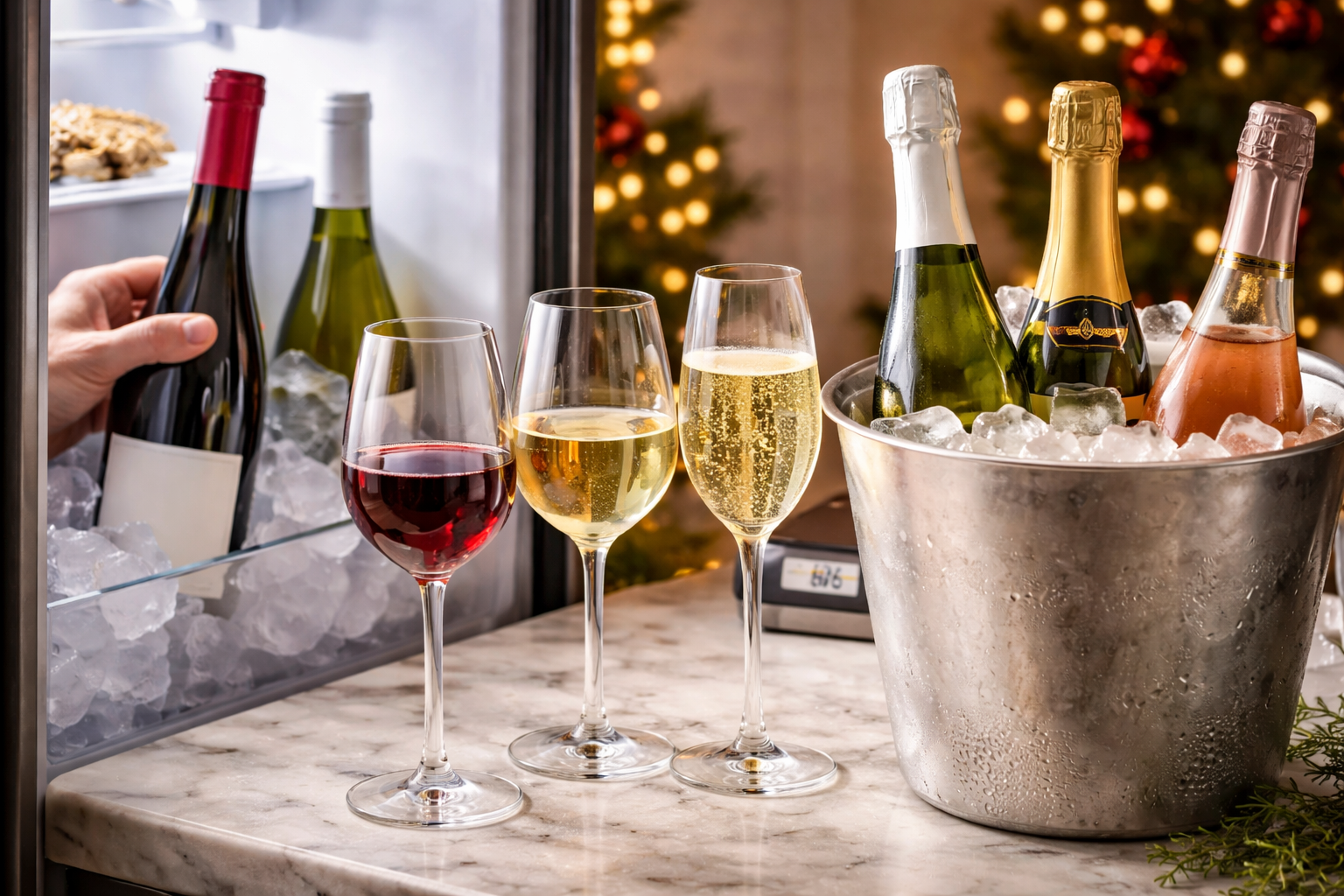
Service temperature matters more than people think, and Christmas dining rooms are almost always too warm for red wine. WSET puts “room temperature” for wine closer to 15 to 18°C, not the heated living-room warmth many bottles end up getting. That alone is enough to make a decent Pinot feel loose and blurry.
For most light-to-medium reds, a short chill helps. Ten to fifteen minutes in the fridge before serving is usually enough. Fuller whites are happiest cool, but not fridge-numb. Around 10 to 13°C is a good target. If the white is too cold, you mute the texture you bought it for in the first place.
There is a simple home test that works better than guesswork. Take one bite of turkey, one bite of the loudest side on the plate, then sip. If the wine suddenly tastes thinner, rougher, or oddly hot, adjust the temperature first before you blame the bottle. That tiny fix saves a surprising number of pairings.
Note: A slightly cool red nearly always tastes more precise with Christmas dinner than a red served from a warm room.
A simple bottle plan for your table, budget, and stress level
If you want the easiest possible answer, here it is.
One-bottle plan: buy dry sparkling if the menu is uncertain or the table is mixed. Buy fresh Pinot Noir if you know the meal leans savory and earthy. Those are the safest “walk into the room and relax” bottles.
Two-bottle plan: buy one fresh low-tannin red and one fuller balanced white. This is the sweet spot for most hosts. Pinot Noir or Cru Beaujolais on one side, Chardonnay or Chenin Blanc on the other, and you’ve covered almost every normal Christmas dinner without getting too clever.
Three-bottle plan: start with sparkling, then put both a red and a white on the table for dinner. This is the nicest setup for a bigger gathering because it gives people choice without creating chaos.
If you’re the guest bringing wine and you do not know the menu, dry sparkling is still the safest move. It feels festive, it works before the meal, and it keeps working when the plate gets more complicated. Fresh Pinot Noir is the best still-wine backup.
There is also a tiny but useful mental shortcut I keep coming back to. Buy flexibility first, then specificity. In practice that means sparkling or fresh Pinot first, and only then more tailored bottles if you know the cranberry is extra sweet, the stuffing is spicy, or the sauce is especially rich.
If broader cold-weather pairings are on the mind, holiday wine styles for the whole season makes sense as a next read. For the Christmas table itself, though, the rule is simpler than people make it: freshness over force, and the whole plate over the bird alone.
FAQ
Is Pinot Noir or Chardonnay better with turkey Christmas dinner?
Pinot Noir is better when the meal leans savory, earthy, and herb-led. Chardonnay is better when creamy sauces, bread sauce, or mixed side dishes are doing more of the work. If the table is split, both together is the smarter play.
Can you serve red wine with turkey and cranberry sauce?
Yes, but the red should stay fresh and low in tannin. Pinot Noir and Beaujolais are safer than young Cabernet because cranberry’s sweet-tart edge can make firmer reds feel dry and awkward.
What is the safest wine to bring if you do not know the full Christmas menu?
Dry sparkling wine is the safest bottle for an unknown Christmas menu. It works as an aperitif, handles salty sides well, and usually has enough lift for turkey and the trimmings.