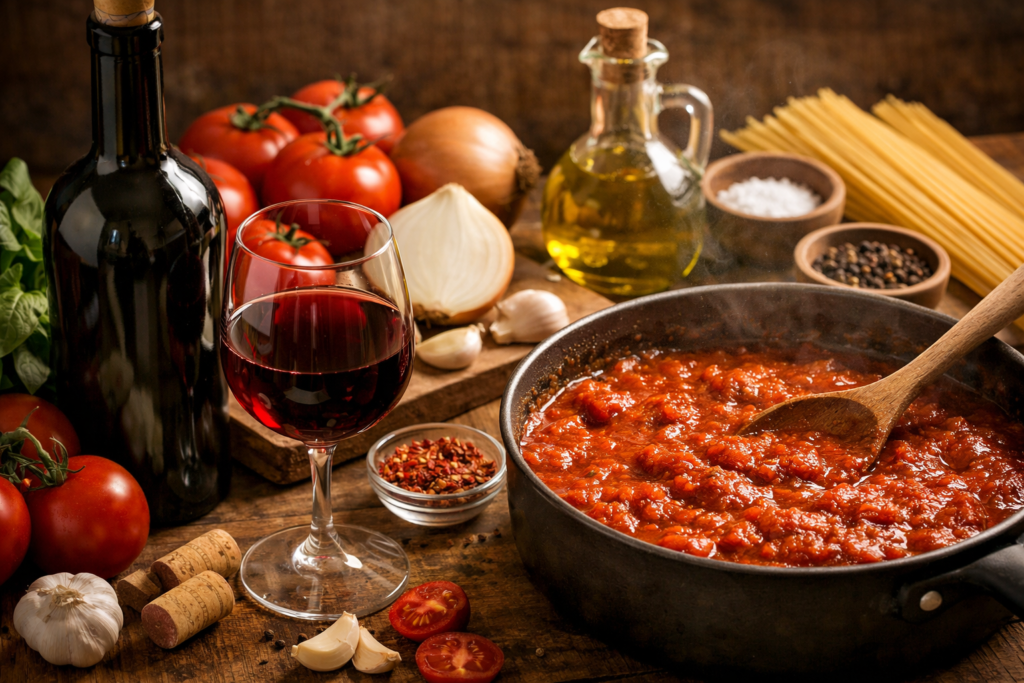
The bad bottle for tomato sauce usually looks like the smart one. Dark glass. Heavy punt. Serious label. Then dinner lands, you take a sip, and the wine turns woody, hot, or oddly sour next to the pasta.
If you want the best wine for tomato sauce, start with Chianti Classico, other Sangiovese-led reds, or Barbera. Those styles have the acid and shape to keep up with tomatoes without flattening out beside garlic, herbs, and cheese. The catch is that “tomato sauce” covers a lot of ground. A clean marinara wants one thing. A slow meat sauce, a spicy arrabbiata, or a seafood red sauce can want something else.
I learned that the annoying way. A dense Cabernet once made a simple spaghetti al pomodoro taste harder and duller at the same time. Swap in a lighter, brighter Chianti and the whole plate clicked back into place.
Tomato Sauce Pairing Matrix
| Sauce style | Best first pick | Why it works |
|---|---|---|
| Simple marinara | Chianti Classico or straight Sangiovese | Bright acid, savory edge, no need for extra weight |
| Spaghetti and meatballs | Barbera | Fresh enough for tomato, softer around meat and cheese |
| Meat sauce or ragù | Montepulciano d’Abruzzo or Nero d’Avola | More depth without turning rough |
| Spicy arrabbiata | Lighter Sangiovese, Barbera, or dry Lambrusco | Keeps heat from feeling harsher |
| Seafood tomato sauce | Vermentino, Soave, or brut sparkling wine | Lets the seafood stay clean and the tomato stay bright |
- Use the sauce, not the pasta shape, to make the call.
- Buy freshness before power.
- As spice rises, alcohol and tannin become riskier.
- Seafood tomato dishes often work better with white, rosé, or sparkling than with red.
The best wine for tomato sauce, in one clear answer
The short list is refreshingly small. For classic red sauce pasta, Chianti Classico, basic Sangiovese, and Barbera are the safest lanes. They sit in the sweet spot for tomato-based food: enough acidity to stay lively, enough fruit to keep the plate from feeling tart, and not so much tannin or oak that the sauce turns bitter.
If the dish gets heavier, the wine can step up a notch. Meat sauce, sausage ragù, and baked pasta can handle Montepulciano d’Abruzzo or Nero d’Avola. If the dish gets lighter, especially with shellfish or a cleaner tomato broth, red can stop making sense. That is where Vermentino, Soave, dry rosé, or a brisk brut starts looking smarter.
| Dish | Safest bottle | Strong backup |
|---|---|---|
| Spaghetti marinara | Chianti Classico | Barbera |
| Meatballs in red sauce | Barbera | Chianti or Montepulciano |
| Lasagna or baked ziti | Montepulciano d’Abruzzo | Nero d’Avola |
| Arrabbiata | Barbera | Dry Lambrusco |
| Seafood tomato pasta | Vermentino | Brut sparkling wine |
If you’re buying blind: grab Chianti Classico for a classic tomato dinner, or Barbera if the meal sounds a little softer, cheesier, or more meatball-ish. Fancy wine is not the job here. Fresh wine is.
Match the wine to the sauce, not just the pasta
Pasta shape is noise here. Tomato sauce is the boss.
The Wine & Spirit Education Trust places tomato-based pizza and pasta in the “acidic, salty” camp and points toward high-acid reds such as Barbera, Lambrusco, and Sangiovese. That lines up with what happens in the glass. Tomatoes bring sharpness. Salt and cheese soften tannin a bit. Herbs like basil and oregano like wines with a savory side, not just sweet fruit.
So the cleanest way to choose is this:
- Acid first: tomato wants a wine that stays awake beside it.
- Weight second: plain marinara wants medium body, while meat sauce and baked cheese can take more depth.
- Heat third: once chili shows up, high alcohol and firm tannin get touchy fast.
Three quick questions will usually get you home:
- Is the sauce bright and simple, or rich and slow-cooked?
- Is there meat, sausage, or a blanket of cheese?
- Is the sauce spicy, briny, or a little sweet?
Quick rule: if the sauce tastes brighter than the wine, the wine will feel flat. If the wine tastes tougher than the sauce, the sauce will feel sharper.
That little see-saw is why tomato sauce rewards balance and punishes brute force.
Choose the safest reds for classic marinara, spaghetti, and meatballs
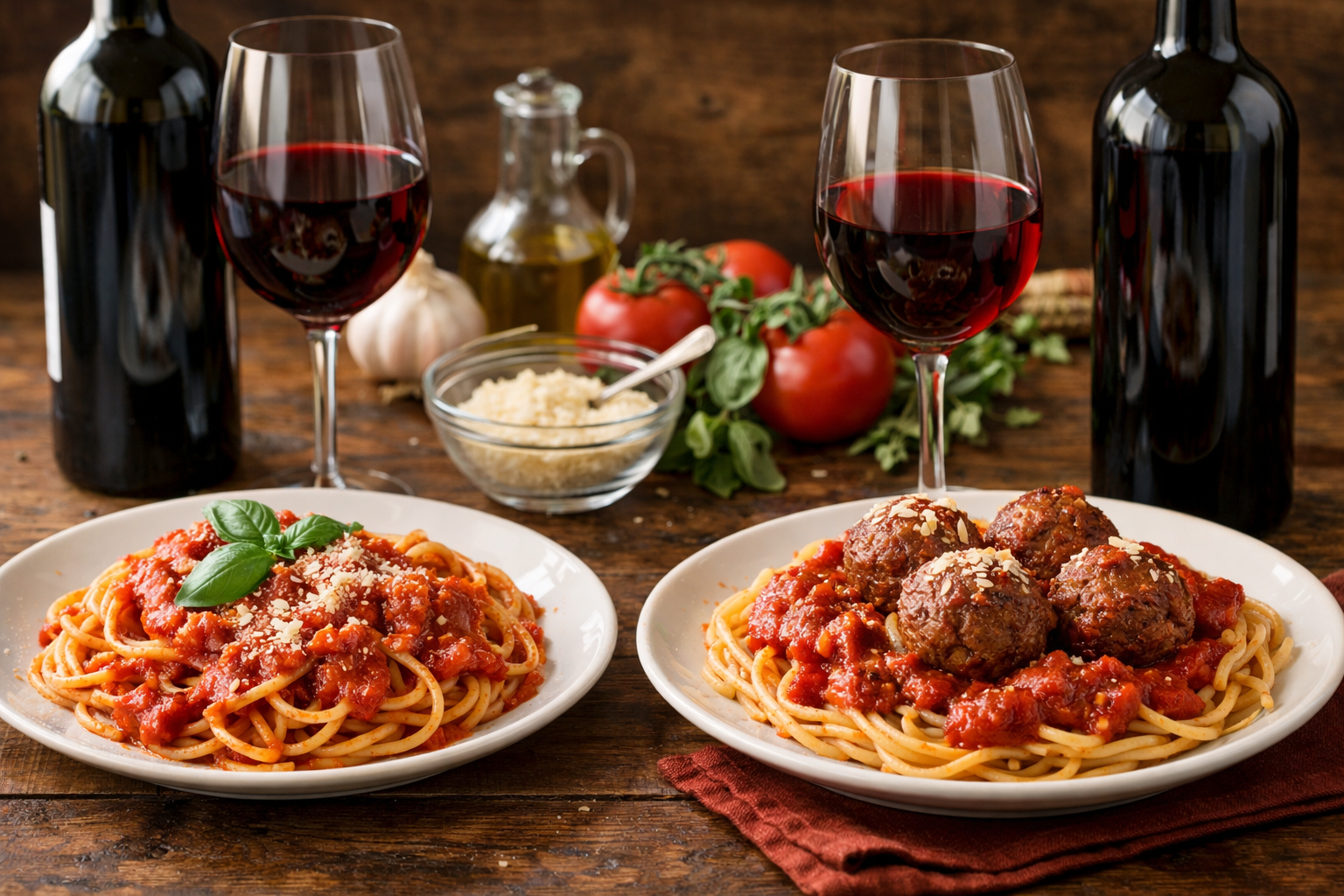
If dinner is classic marinara, spaghetti and red sauce, or meatballs with a straightforward tomato base, this is the heart of the answer.
Chianti Classico works so often because the style is built around Sangiovese. The Chianti Classico consortium states that Chianti Classico must be made with at least 80% Sangiovese, which is useful shelf shorthand when you want sour cherry fruit, brisk acidity, and that slightly savory, dried-herb edge that feels at home next to tomato, garlic, oregano, and Parmesan.
Barbera shifts the mood. Italian Wine Central describes Barbera as low in tannin and high in acidity, which is why it often feels juicier and easier beside spaghetti and meatballs, especially when the sauce is a touch sweeter or the meatballs bring more richness. If Chianti is the more savory answer, Barbera is the friendlier one.
That tradeoff matters. When the sauce is lean, herbal, and tomato-first, Chianti usually wins. When the plate gets softer from meat, cheese, or a sweeter red sauce, Barbera can feel less strict and more welcoming.
| Wine | Best with | What it feels like |
|---|---|---|
| Chianti Classico | Marinara, spaghetti pomodoro, herb-led red sauce | Savory, bright, a little firmer |
| Basic Sangiovese | General red sauce pasta | Middle lane, very safe |
| Barbera | Meatballs, cheesier tomato pasta, softer jar sauce | Juicier, softer, still lively |
A non-Italian fallback can work, but keep the same profile in mind. Pinot Noir and Gamay are safer than a big Cabernet. Freshness beats muscle here almost every time.
Step up for meat sauce, ragù, sausage, and baked pasta without going too big
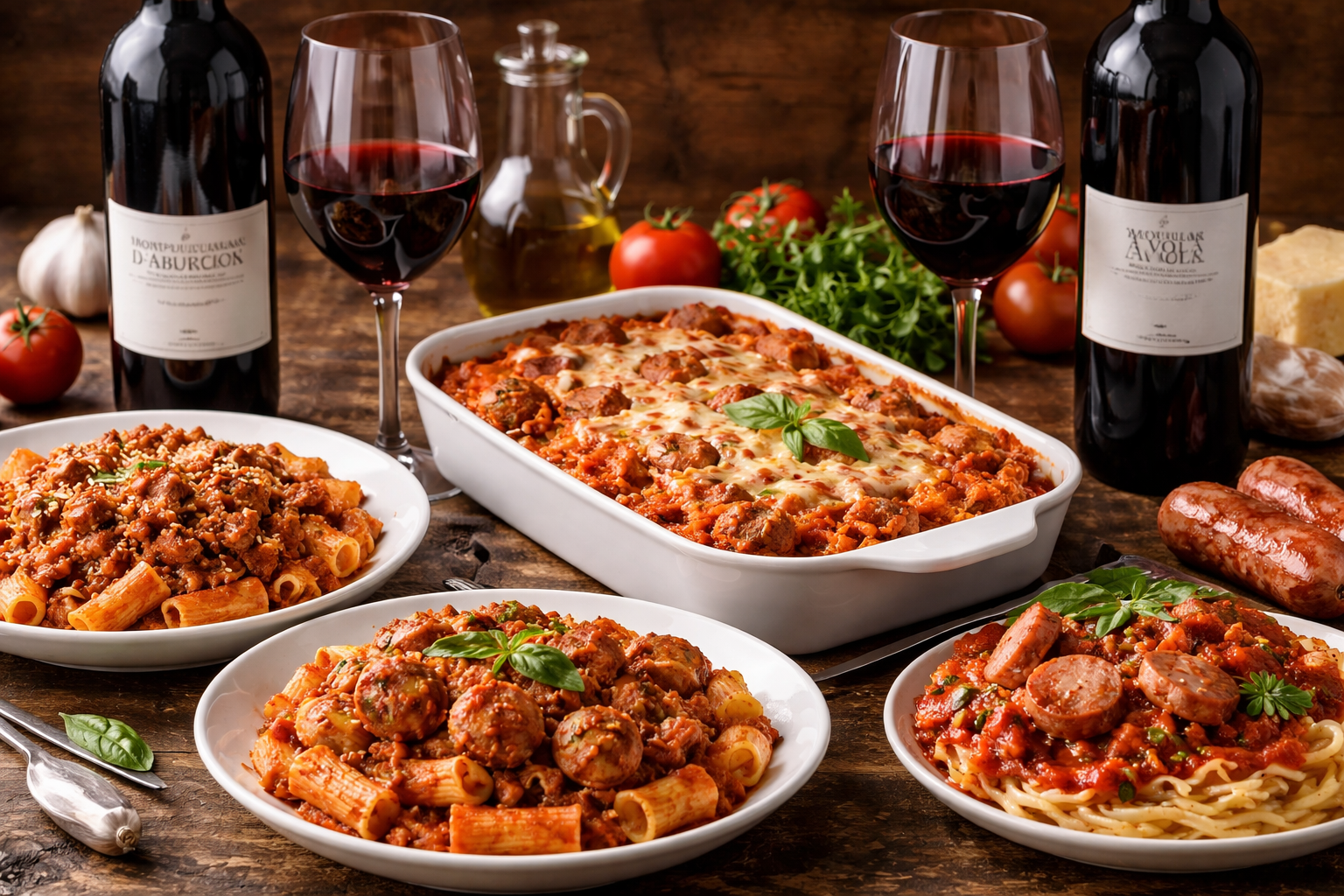
Heavier tomato dishes need more wine, but not a sledgehammer. That is where people overcorrect.
Once the sauce picks up ground meat, sausage fat, long cooking, or a baked layer of cheese, the plate can handle a fuller red than plain marinara. Montepulciano d’Abruzzo and Nero d’Avola are good examples. They bring darker fruit and more body, yet they do not usually hit with the same dry grip that can make tomato feel meaner than it is.
Lasagna and baked ziti are the classic trap. The pan looks hearty, so people reach for Cabernet or a heavy oaky red. The cheese says yes. The tomato often says no. A softer, medium-to-full red with decent freshness tends to land better. The same logic shows up in best wine for lasagna, where tomato, meat, and cheese all get a say instead of just the weight of the dish.
Worth remembering: richer sauce asks for more body, not more tannin. That difference saves a lot of disappointing bottles.
If the sauce is sausage-heavy, peppery, and a little rustic, Nero d’Avola can be great. If the dish sits closer to traditional baked pasta with tomato, mozzarella, and meat, Montepulciano often feels right in the pocket. Barbera still works here too, especially if the sauce stays bright.
Handle arrabbiata, puttanesca, and sweeter sauces without a clash
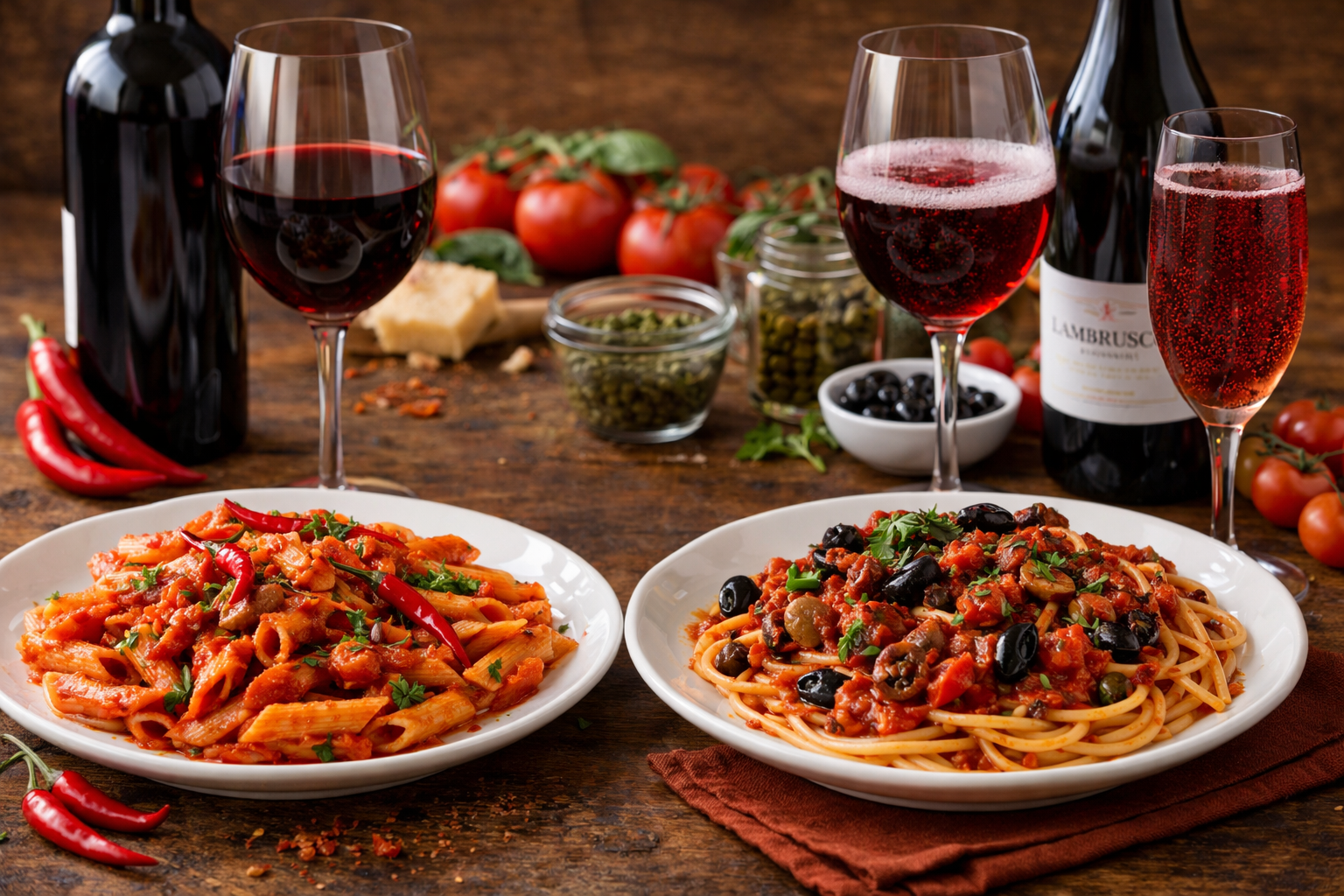
This is where generic pairing advice starts to wobble.
Spicy arrabbiata is still tomato sauce, but chili changes the rules. The Wine & Spirit Education Trust notes that alcohol feels hotter with capsaicin and tannin can turn harsh with spicy food. That is exactly why a hot, dry, oaky red can feel like sandpaper next to a fiery tomato sauce. A lighter Sangiovese, Barbera, or dry Lambrusco usually behaves better.
Puttanesca is a different beast. Anchovies, olives, and capers add salt, brine, and umami, which can make stern tannic reds taste rough and strip out their fruit. Here, a fresher red or a dry sparkling style can be oddly brilliant. The wine does not need to dominate the plate. It needs to stay clean while the sauce does its loud, salty thing.
Then there is sweeter tomato sauce, which shows up more often with jarred sauces than people admit. A wine that is already dry, tannic, and a bit oaky can taste even drier against that sweetness. Barbera often handles this better than Chianti. Dry Lambrusco can work well too because the bubbles and snap keep the whole pairing from feeling sticky or heavy.
Fast fix for spicy red sauce: go lighter, lower the tannin, and back off the alcohol a bit. The goal is relief, not chest-beating.
If the heat is really up there, a dry or off-dry white can beat red outright.
When white, rosé, or sparkling wine makes more sense than red
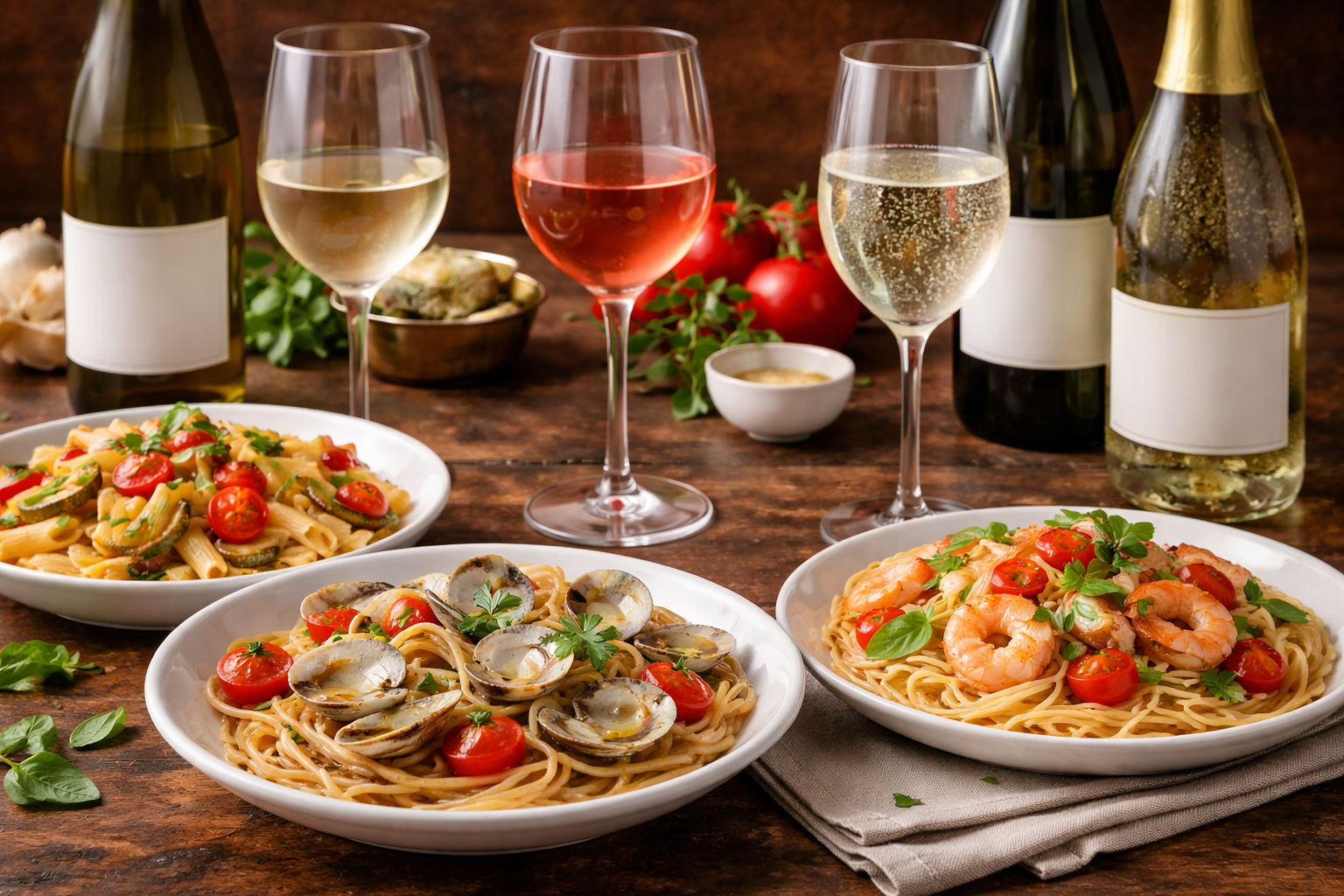
Red is the default. It is not the law.
Lighter tomato sauces with shellfish, white fish, or a cleaner olive-oil base often work better with crisp white wine than with red. Vermentino and Soave are two strong picks because they bring acidity and enough texture to stand up to tomato without dragging tannin into the mix. For clam pasta and related coastal styles, best wine for vongole sits in the same neighborhood for a reason.
Dry rosé can be a handy middle lane when the dish mixes tomato brightness with a bit of richness, grilled vegetables, or herbs. It keeps the meal light on its feet. It also helps when one person wants red and another really should not get it.
Brut sparkling wine is better with tomato sauce than many people expect. Bubbles reset the palate. Dry sparkling also works nicely when the dish brings fried eggplant, mozzarella, or salty cured meat into the picture.
Lambrusco deserves a separate nod. The Lambrusco consortium describes Lambrusco di Sorbara as fresh, clean, delicate, and light-bodied, which explains why dry versions can feel so right with tomato, salt, and spice. It gives you red-fruit familiarity without the heaviness that can make tomato pasta feel clumsy.
If the sauce slides away from tomato and toward cream, butter, or lemon, the logic changes. Best wine for white wine sauce covers that side of the fork in the road.
The wines that usually miss, and why they miss
There is no need to ban whole grapes forever, but a few styles miss often enough that they are worth naming.
| Usually misses | What goes wrong | Possible exception |
|---|---|---|
| Big Cabernet Sauvignon | Too much tannin and oak for bright tomato sauce | Very meaty ragù with little tomato edge |
| Young Nebbiolo | Tannins can feel dry and severe | Older, softer bottle with a rich meat sauce |
| Heavily oaked reds | Wood notes can fight the tomato and herbs | Cheesy baked dishes with less acidity |
| Delicate, neutral whites | They disappear beside tomato and garlic | Very light seafood tomato broth |
| Sweet red table wines | Can feel syrupy with savory tomato sauce | Almost none for this job |
The common thread is structure. Tomato sauce rarely wants aggressive tannin, heavy oak, or obvious sweetness. A pricier bottle does not fix that. It can make the mismatch more obvious.
And yes, there are exceptions. A mellow older Cabernet with a mostly meaty Sunday sauce can be fine. A polished Nebbiolo with softened edges can work with braised meat ragù. Those are not where most people should start.
Buy a bottle fast with this 30-second label checklist
If you are standing in front of the shelf and dinner starts in an hour, use this.
- Classic tomato sauce: look for Chianti Classico, Chianti, or Sangiovese.
- Meatballs or softer red sauce: look for Barbera, especially Barbera d’Asti.
- Meat sauce, sausage, or baked pasta: look for Montepulciano d’Abruzzo or Nero d’Avola.
- Spicy arrabbiata: keep the wine lighter and less tannic. Barbera, basic Sangiovese, or dry Lambrusco are safer than a heavy red.
- Seafood tomato pasta: look for Vermentino, Soave, or brut sparkling wine.
One-bottle fallback: Chianti Classico if the dinner sounds classic and tomato-first. Barbera if the recipe sounds softer, meatier, or a touch sweeter.
Simple memory hook: match the sauce first, then the richness, then the heat.
That last line is the one worth keeping. It is easy enough to use on a rushed weeknight, and it still holds up when the menu gets more interesting.
FAQ
Can you cook tomato sauce with the same wine you plan to drink?
Yes, as long as it is a wine you would happily pour into a glass. For a classic red sauce, that usually means a dry red with good acidity such as Chianti or Barbera. Avoid “cooking wine” and avoid anything heavily oaked or obviously sweet.
Can Cabernet ever work with tomato sauce?
Sometimes, but it is not the safe first move. Cabernet works better when the dish is more meat than tomato, like a long-cooked ragù with only a modest tomato edge. For plain marinara, spaghetti pomodoro, or spicy red sauce, it usually feels too firm and too woody.
Does jarred tomato sauce change the pairing?
It can. Many jarred sauces taste a little sweeter and softer than a bright homemade sauce, which can make Barbera or a gentler Sangiovese feel better than a stricter Chianti. If the label says “roasted garlic,” “sweet basil,” or anything that suggests a rounder style, lean away from hard tannin.