
I learned this the annoying way. A beautiful pan of tiramisu went on the table, a nice dry sparkling wine got poured, and the whole thing turned weird fast. The cocoa tasted more bitter. The wine tasted thinner. Nobody said anything rude, but everyone drifted back to water.
So here’s the straight answer: the best wine for tiramisu is usually a sweet or clearly off-dry wine with enough flavor to stand up to coffee, cocoa, and mascarpone. For classic coffee tiramisu, the safest lanes are sweet Marsala, Vin Santo, Tawny Port, or Moscato d’Asti. Marsala and Vin Santo feel the most classic. Moscato d’Asti feels lighter and brighter. Tawny Port works when the dessert leans darker, richer, and more cocoa-heavy.
The catch is that tiramisu is not just sweet. It is creamy, coffee-bitter, cocoa-dry, and sometimes boozy. That’s why generic dessert wine advice falls apart here.
At a glance
| If the tiramisu is… | Best wine style | Why it works |
|---|---|---|
| Classic coffee and cocoa | Sweet Marsala or Vin Santo | Nutty, deep, and sweet enough for the coffee-cocoa mix |
| Light, airy, less boozy | Moscato d’Asti | Fresh lift, floral notes, and soft sweetness |
| Dark chocolate-heavy | Tawny Port | More dried fruit, caramel, and wood-toned depth |
| Berry or strawberry tiramisu | Sweet sparkling or soft red dessert wine | Fruit needs freshness, not nutty heaviness |
Fast Pick: Match the loudest note in the dessert. Coffee and cocoa want nutty depth. Berries want freshness. Extra richness wants a wine with more body.
- Which wine is safest for classic tiramisu
- When sparkling beats fortified wine
- How berry tiramisu changes the answer
- Which bottles usually clash
- How to buy the right style in a normal wine shop
- How to test the pairing before guests show up
The Best Wine for Tiramisu, in One Straight Answer
If you’re serving a standard tiramisu with espresso, cocoa, mascarpone, and a soft boozy edge, sweet Marsala is the cleanest answer. It tastes like it belongs in the same room as the dessert. The caramel, dried fruit, and nutty notes don’t fight the coffee. They settle into it.
If Marsala sounds too weighty or the crowd doesn’t love fortified wines, go to Vin Santo. It still brings the dried-fruit and honeyed depth that tiramisu likes, but it can feel a touch more refined and less overtly boozy in the glass.
If dinner has already been heavy and you want the dessert course to feel lighter, pour Moscato d’Asti. It won’t echo the coffee in the same way, but it resets the palate and keeps the finish from dragging.
If the tiramisu is especially dark, chocolate-forward, or rich with cocoa dusting, Tawny Port often lands better than people expect. It has the dried-fruit, nut, and caramel profile to meet the dessert at full volume.
Short version: For classic tiramisu, buy sweet Marsala first. Vin Santo is the polished second pick. Moscato d’Asti is the lighter crowd-pleaser. Tawny Port is the richer cocoa-friendly move.
Why Tiramisu Is Harder to Pair Than Most Desserts
Tiramisu looks easy from a distance. Sweet dessert, sweet wine, done. But the dessert has four things pulling in different directions at once: sugar, fat, bitterness, and often a little alcohol. That’s where pairings go sideways.
The WSET rule that sweet foods should be paired with sweeter wines matters here because once the dessert hits your palate, a dry wine can taste sharper, thinner, and more bitter. That is exactly why brut sparkling wine or a dry red can feel oddly harsh with tiramisu. Then the coffee and cocoa push the wine even harder.
Mascarpone brings richness, which means the wine can’t just be sweet. It needs either some freshness or enough aromatic life to keep the finish from feeling sticky. That’s why Moscato d’Asti can work so well when the tiramisu is lighter. And it’s why nutty dessert wines work when the dessert is denser. They don’t just match sweetness. They match mood, texture, and aftertaste too.
I’ve found this is where people get fooled. Tiramisu is creamy, so they grab an oaky Chardonnay. Tiramisu is grown-up, so they grab a dry red. Tiramisu has coffee, so they think bitter-plus-bitter will somehow make sense. It doesn’t. That’s like putting black coffee next to dark cocoa and hoping both turn kinder. They won’t.
What the dessert is asking for
- Sweetness so the wine doesn’t go lean and bitter
- Flavor weight so coffee and cocoa don’t drown it out
- Freshness or lift so mascarpone doesn’t make the finish feel heavy
- The right kind of depth, either floral and bright or nutty and oxidative
The 4 Safest Wine Styles for Classic Coffee Tiramisu
1. Sweet Marsala
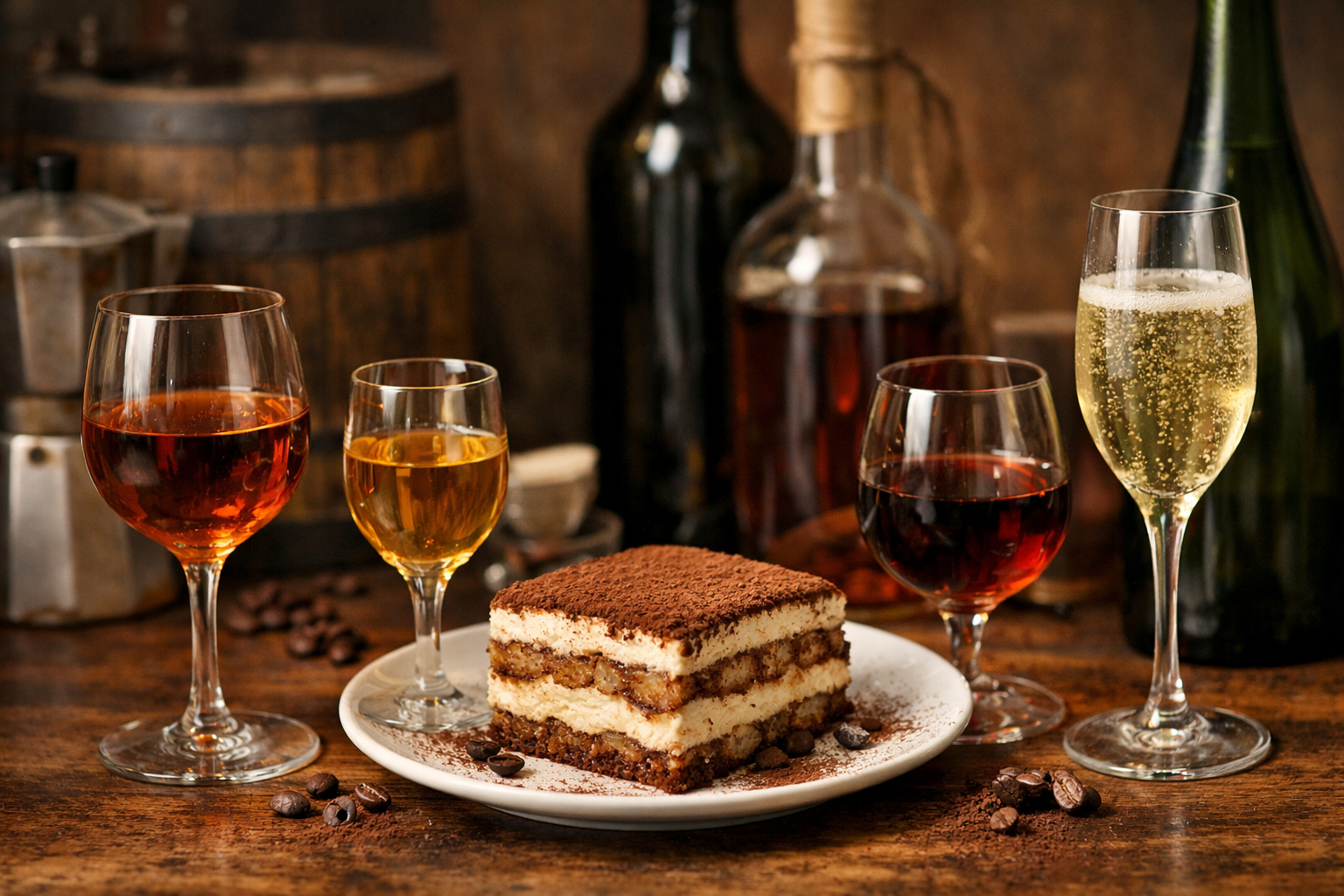
This is the closest flavor echo. The dessert often already carries Marsala in the recipe or at least shares the same family of caramel, dried fruit, and gentle nuttiness. Marsala DOC can be labeled secco, semisecco, or dolce, with dolce sitting above 100 grams per liter of sugar and semisecco in the middle band. For classic tiramisu, semisecco to dolce is the safe zone. Secco can work only if the dessert itself is sweet and soft enough to carry it, and that’s a gamble I’d skip unless you’ve already tasted both together.
2. Vin Santo
This is the elegant classic. The Consorzio Vino Chianti notes that Vin Santo del Chianti is made from dried grapes and aged in small barrels, which helps explain the dried-fruit, honeyed, and oxidative notes that work so neatly with mascarpone and cocoa. Vin Santo feels less blunt than Marsala and a little more lifted. If the tiramisu is homemade and balanced rather than sugary, this is often my favorite pour.
3. Tawny Port
Port can seem like overkill until you try it with a darker tiramisu. The Instituto dos Vinhos do Douro e do Porto explains that aged Tawny Port develops dried-fruit and wood notes. That matters because tiramisu with a heavier cocoa dusting or a darker coffee punch needs more than sweetness. It needs depth that lasts past the first sip. Tawny Port does that.
4. Moscato d’Asti
This is the light-footed choice. According to the Asti DOCG consortium, Moscato d’Asti DOCG’s natural sweetness and fine perlage are part of the style, and the wine can be low in actual alcohol. That’s why it feels breezy instead of dense. With tiramisu, Moscato d’Asti does not mirror the coffee. It cleans up after it. For spring dinners, brunch desserts, or crowds that don’t enjoy fortified wine, that fresh lift is gold.
Fast Pick
| Pick this style | When the tiramisu feels like… |
|---|---|
| Sweet Marsala | Classic, cozy, coffee-first, and dessert-shop rich |
| Vin Santo | Balanced, elegant, and a touch less boozy |
| Tawny Port | Dark, cocoa-heavy, and built for a slow finish |
| Moscato d’Asti | Airy, lighter, and better with a fresher meal |
Berry, Chocolate, and Boozy Tiramisu Need Different Wines

This is the part lots of pairing guides rush past. The word “tiramisu” tells you the format. It does not tell you which flavor is doing the heavy lifting.
Berry or strawberry tiramisu moves the pairing away from nutty fortified wines and toward something brighter. A sweet sparkling wine or a soft red dessert style like Brachetto d’Acqui makes more sense because the fruit wants freshness and perfume. Pouring Tawny Port here can feel like wearing a velvet jacket to the beach. Nice jacket. Wrong day.
Chocolate-heavier tiramisu pushes you the other way. More cocoa means more bitterness and more depth. That’s when Tawny Port, Banyuls, Maury, or a richer Vin Santo start making better sense than Moscato d’Asti. A light floral wine can get swallowed up.
Extra-boozy tiramisu needs a little care. If the dessert already tastes strongly of Marsala, rum, or liqueur, a hot fortified wine can pile on too much warmth. In that case, Vin Santo often feels steadier than a punchier fortified option. Or you can go with Moscato d’Asti if the dessert still reads light on its feet.
Coffee-light tiramisu, which shows up in some restaurant versions, is a different animal again. When the coffee note backs off and mascarpone comes forward, floral or sparkling wines get a wider opening. That’s when Moscato d’Asti stops feeling like the “lighter alternative” and starts feeling like the best move, full stop.
Rule to remember: match the wine to the loudest note in the tiramisu, not the dessert name on the menu.
When Sparkling Wine Works Better Than Fortified Wine

Fortified wines get most of the pairing glory with tiramisu, and fair enough. They make obvious sense. But sparkling wine can be the better move when the dessert is soft, airy, or fruit-led and the meal before it was already rich.
Moscato d’Asti is the smart example because it brings sweetness, perfume, and fine bubbles without the dryness problem of many brut wines. The bubbles scrub some of the mascarpone off the palate. The sweetness keeps the wine from turning severe. The low alcohol helps too. That combination is why it feels refreshing instead of shrill.
Dry Prosecco, on the other hand, is where people wander off the path. Even “Extra Dry” in sparkling wine can land drier than the name suggests in a dessert pairing context. With classic tiramisu, that can make the cocoa seem harsher and the wine seem skinny. It is not that sparkling wine is wrong. It is that the wrong sparkling wine is wrong.
So when should sparkling beat fortified?
- When the tiramisu is light and creamy rather than dark and cocoa-heavy
- When berries or strawberries are part of the dessert
- When the meal has already been rich and you want a cleaner finish
- When guests do not like the weight or warmth of fortified wine
And when should fortified wine stay in front? When the dessert tastes darker, nuttier, more boozy, or more coffee-driven. That’s the fork in the road.
Wines That Usually Clash With Tiramisu
Dry tannic reds are the biggest trap. Cabernet Sauvignon, young Syrah, and similar wines bring tannin and dryness to a dessert that already has cocoa bitterness. That tends to make the pairing feel more severe, not more grown-up. The tiramisu gets sweeter by comparison. The wine gets meaner. It’s a bad trade.
Oaky Chardonnay misses in a different way. The vanilla and oak can sound promising on paper, but the texture often turns heavy next to mascarpone and the wood notes can feel clunky beside coffee. I’ve seen this one happen at restaurants a lot. It looks clever until the second sip.
Bone-dry sparkling wine is another common misfire. The bubbles feel festive, but once the dessert lands first, the wine can come off hard and acidic. That’s why sweet sparkling wine and dry sparkling wine are not interchangeable in this pairing.
Delicate still whites often just disappear. If the wine smells faint and tastes light, coffee and cocoa will flatten it in a hurry.
The one red-wine exception worth keeping in mind is a soft, sweet red dessert wine. Those can work with berry tiramisu or lighter chocolate versions because they bring fruit instead of tannic grip.
Quick skip list
- Dry Cabernet or Syrah
- Oaky Chardonnay
- Brut or extra-brut sparkling wine
- Very light still whites with little aroma or sweetness
How to Buy the Right Bottle Without Memorizing Wine Regions
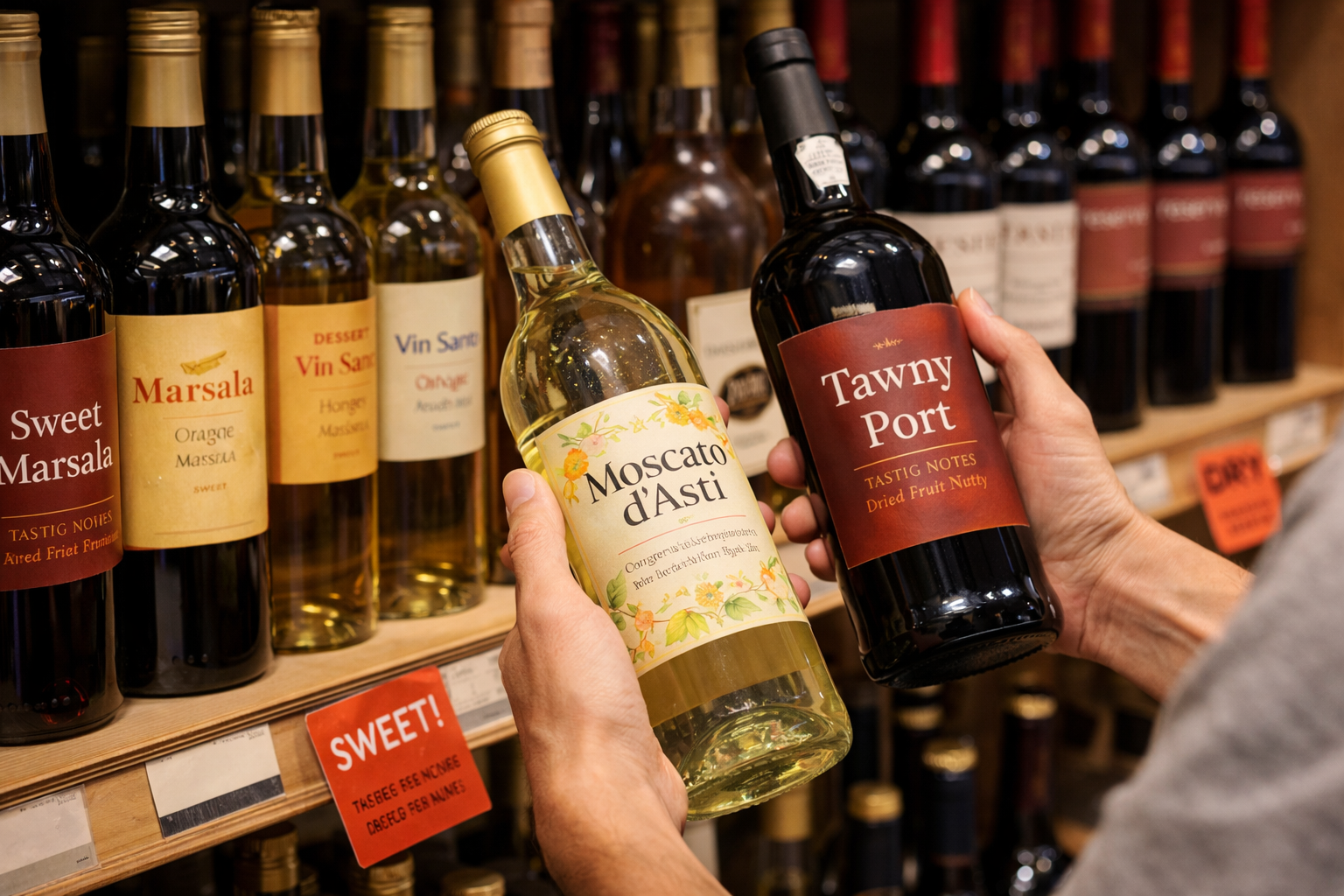
You do not need a map lesson for this. You need a few label clues and one honest question: does the bottle look built for sweetness and flavor, or built for dryness and prestige?
Start with the easiest shelf rule. If the dessert is classic tiramisu, look for these style lanes first:
- Sweet Marsala, ideally semisecco or dolce
- Vin Santo
- Tawny Port
- Moscato d’Asti
Then scan the label language. Words and tasting notes like honey, dried fruit, caramel, apricot, orange blossom, raisin, toffee, nutty, and sweet are good signs. Words like brut, dry, reserve, or a shelf full of stern red blends are not where I’d spend time for tiramisu.
If the shop does not have the exact region you want, buy the structure instead of the passport. A sweet aromatic sparkling wine can stand in for Moscato d’Asti. A nutty oxidized dessert wine can stand in for Vin Santo. A mellow tawny-style fortified wine can stand in for Port. The style matters more than the postcard.
For value-focused shopping, a short list of smart value wine picks is a better place to start than a random shelf talker. And for a dinner-party splurge, these bottles worth the spend at the $50 mark make more sense than grabbing a serious-looking red and hoping charm saves it.
Fast Pick in a wine shop
- Find the dessert wine or sparkling dessert section first
- Look for sweet, semisecco, dolce, Tawny, or Moscato d’Asti
- Choose nutty depth for classic tiramisu or fresh lift for lighter tiramisu
- Skip dry reds, dry sparklers, and oaky whites
A 10-Minute Tasting Test That Catches a Bad Pairing Early
This is the fastest way I know to avoid serving a mismatch. No tasting grid. No wine-speak. Just one bite and one sip.
Step 1. Take one bite and lock in the dessert’s loudest note
Is the tiramisu reading as coffee-first, cocoa-heavy, creamy, berry-led, or boozy? Pick one. If you try to answer for every layer at once, you’ll overthink it.
Step 2. Sip the wine right after and watch what gets louder
If the wine suddenly tastes sour, hotter, or more bitter, it is too dry or too hard-edged. If the dessert tastes flatter after the sip, the wine may be too heavy or too sweet for that version.
Step 3. Fix the mismatch with one move
- Too bitter? Move sweeter.
- Too heavy? Move lighter or bubblier.
- Too thin? Move nuttier or richer.
- Too boozy? Step down from fortified to Vin Santo or sweet sparkling.
The right pairing doesn’t have to feel magical. It just has to make both sides calmer. That’s the tell. The dessert tastes more complete. The wine tastes more open. Nothing sticks out in a bad way.
Nice little trick: If you’re torn between two wines, test the lighter one first. Once a richer fortified wine goes in the glass, it can make the lighter option feel washed out even if the lighter one is better with the dessert.
The Pairing Mistakes That Ruin Tiramisu Fast
Buying by prestige instead of fit. A fancy dry red is still a dry red. Tiramisu does not care how impressive the label looks.
Ignoring the version of tiramisu on the plate. Berry tiramisu and classic coffee tiramisu are not asking for the same bottle. Treating them as if they are is how good wine ends up looking silly.
Choosing bubbles that are too dry. Sweet sparkling wine can be lovely here. Brut sparkling wine often is not.
Serving rich dessert wine too warm. Tawny Port or Marsala can feel sticky and hot if they are poured too warm. A light chill helps. Not fridge-cold. Just a little cooler than room temperature so the sweetness stays tidy.
Thinking “dessert wine” is a full answer. It is only half an answer. The rest is whether the wine brings nutty depth or fresh lift. Tiramisu usually wants one of those two paths.
If you remember one thing, make it this: for classic tiramisu, buy sweetness plus either nutty depth or fresh lift. Don’t buy dryness and hope personality will do the rest.
FAQ
Is Marsala the best wine to drink with tiramisu, or just the best wine to cook with?
For classic tiramisu, sweet Marsala is often the best all-around choice for both the recipe and the glass because the flavor family lines up so neatly. The catch is the sweetness level. A dry Marsala can feel too firm with dessert, so semisecco or dolce is the safer buy.
Is Prosecco too dry for tiramisu?
Usually yes for classic coffee tiramisu. Dry Prosecco can make the cocoa seem more bitter and the wine more severe. A sweet sparkling wine like Moscato d’Asti is the better call if you want bubbles.
Can red wine work with tiramisu?
A dry red rarely works well. A soft sweet red can work with berry tiramisu or lighter chocolate versions because fruit and sweetness matter more here than tannin. For classic tiramisu, fortified or sweet aromatic wines are safer.