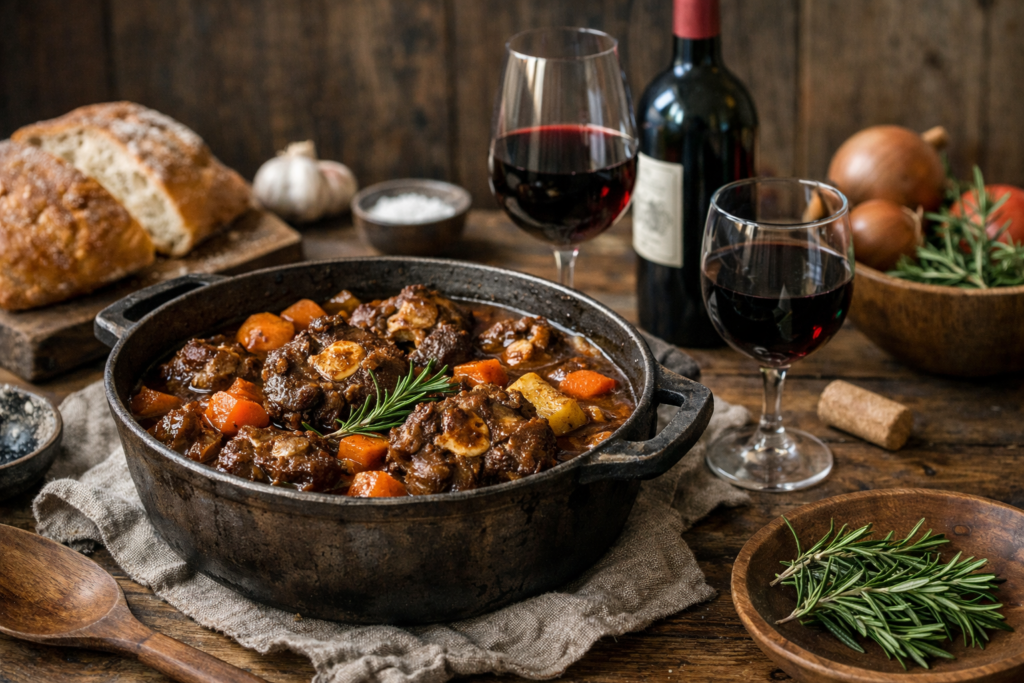
I’ve watched this go sideways at my own table more than once. The pot of oxtail stew smells deep and savory, the bottle looks serious, and then the first sip lands a bit wrong. The stew feels heavier. The wine feels hotter. Nobody says it out loud, but everyone reaches for water.
For most pots, the best wine for oxtail stew is Syrah or Shiraz, Malbec, Chianti or another Sangiovese-led red, or Rioja Reserva. Those styles have enough shape for the richness, but they still bring the lift that a long-cooked stew needs. The catch is simple: tomato-heavy oxtail, spicy Jamaican oxtail, and a dark stock-led braise do not want the same bottle.
That is where generic “big red with rich meat” advice falls apart. Oxtail is rich, yes, but stew is a sauce dish first. Once tomato, chilli, sweetness from onions, or peppery spice starts steering the pot, the wine has to follow.
At a glance: match the bottle to the pot, not the cut
| If the stew tastes like… | Start here | Watch out for |
|---|---|---|
| Dark, savory, stock-heavy, low spice | Syrah/Shiraz, Malbec, Rioja Reserva | Jammy reds and heavy oak |
| Tomato-led, herbal, brighter | Chianti, Sangiovese, Barbera | Over-oaked Cabernet |
| Spicy, peppery, Jamaican-style | Juicy Malbec, fresher Rioja, Pinot Noir | High-alcohol, hard-tannin reds |
Fast pour rule: match weight first, then adjust for tomato and heat.
- Which 5 wine styles give oxtail stew the best odds
- How tomato, spice, and onion sweetness change the answer
- What makes a pairing taste hot, bitter, flat, or muddy
- How to pick the right bottle in about 30 seconds
- When the wine in the pot should match the wine in the glass
The best wine for oxtail stew depends on the sauce, but these 5 styles rarely miss
If the stew is classic, rich, and not too spicy, Syrah/Shiraz, Malbec, Chianti or another Sangiovese-led red, Rioja Reserva, and restrained Cabernet-led reds are the safest lanes. They cover the main versions of oxtail stew without forcing you into one narrow region or one expensive bottle.
Syrah/Shiraz is the dark, savory answer. It suits stew that leans meaty, peppery, and stocky. Malbec is the easy crowd-pleaser. It has enough body for the collagen-rich sauce, but it often arrives with softer edges than young Cabernet. Chianti and other Sangiovese-led reds step in when tomato, celery, and herbs are driving the pot. Rioja Reserva works when you want polish, savory spice, and a bit of oak without turning the pairing into a lumber yard. Cabernet-led reds can work, but only when the stew is dark, low-spice, and not sharply tomato-led.
Two bottles sit just outside that core group. Pinot Noir is better than many people expect when the stew is lighter, more herbal, or has a spicy kick. Barolo is the splurge lane. It can be beautiful with a rich braise, but it is not the bottle I’d hand to somebody buying blind on a Tuesday night.
Quick call: If the recipe says tomato paste, herbs, and a long simmer, lean Chianti or Sangiovese. If it says stock, mushrooms, and deep browning, lean Syrah, Malbec, or Rioja.
Why oxtail stew wants acidity, structure, and not just raw power
Oxtail stew looks like a “bigger must be better” dish. It isn’t. The bowl brings fat, gelatin, salt, browned meat, and usually some sweet-savory depth from onions and carrots. That mix needs a wine with enough structure to stay upright, but it also needs freshness so the whole thing does not slump into one dark blur.
In WSET’s food pairing guide, salt, acidity, and fat are shown to make tannic wines seem softer and fruitier. That is exactly why a well-seasoned bowl of oxtail can tame a firm red. The same guide uses steak and Barolo to show how salt and fat smooth a wine’s rougher edges. Oxtail stew plays a similar trick, just in a wetter, slower-cooked form.
Then there is the sauce issue. Wine Folly’s pairing basics puts it plainly: match the wine to the sauce rather than the protein. That rule matters here more than people think. Oxtail by itself points you toward red wine. The finished sauce decides which red, and sometimes whether a lighter red or even an off-dry white sneaks in through the side door.
Here’s the practical version. Think of the wine like boots for a muddy field. You want enough grip to walk through it, but not steel-toed work boots for a short stroll to the mailbox. Raw power without freshness can make the stew taste sleepy. Freshness without enough shape can make the wine disappear.
So the useful rule is this: rich and savory stew wants medium-to-full reds with acidity and moderate-to-firm structure. Once tomato or chilli rises, pull the tannin and oak down a notch and keep the wine fresher. Tomato-heavy braises follow the same logic laid out in best wine for tomato sauce.
Choose the right bottle for classic, tomato-based, and spicy oxtail stew
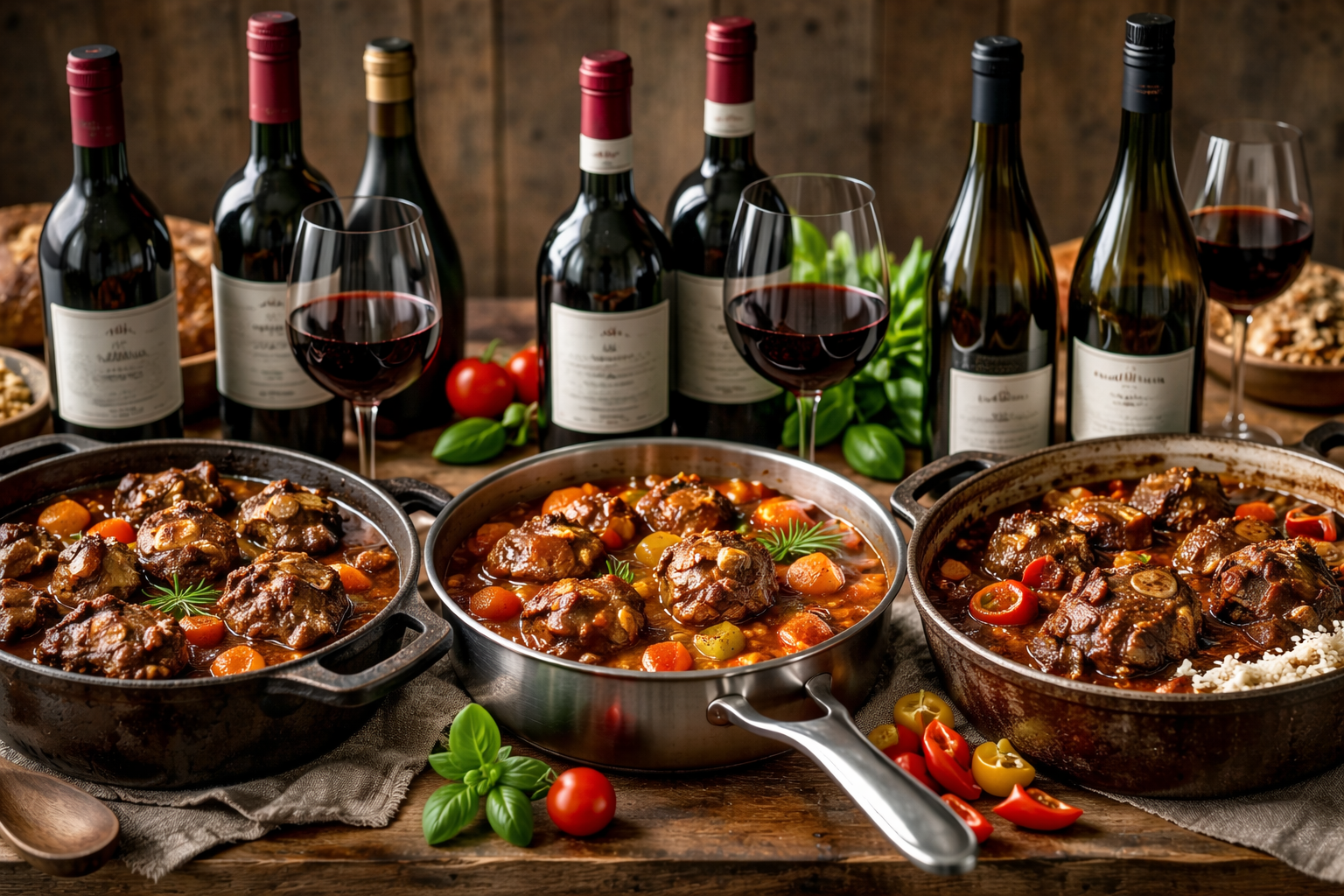
This is the section most pages glide past. They tell you “oxtail stew = bold red” and leave you to sort out the rest. But classic dark braise, Roman-style tomato oxtail, and Jamaican oxtail do not behave the same on the palate.
Classic dark braise: when the stew is heavy on stock, browned meat, mushrooms, or black pepper, move fuller. Syrah/Shiraz, Malbec, and Rioja Reserva all make sense. These wines mirror the savory depth without drowning the dish in vanilla or jam.
Tomato-based oxtail: when tomato paste, crushed tomatoes, celery, and herbs are steering the pot, you need a brighter line through the middle. Chianti, other Sangiovese-led reds, and Barbera fit because they carry the dish instead of wrestling it. The Chianti Classico consortium’s own production rules describe Annata as balanced and fresh, with minimum total acidity set at 4.5 g/L. That does not magically make every bottle perfect, but it does explain why this style keeps showing up beside tomato and herbs.
Spicy Jamaican oxtail: this is where big, stern reds can turn on you. In WSET’s guide to pairing drinks with spice, alcohol is shown to feel hotter next to chilli, tannin can come off harsh, and a little sweetness can soften the burn. That means very alcoholic, heavily oaked reds are asking for trouble if Scotch bonnet is doing real work in the pot. A juicy Malbec, a fresher Rioja, or Pinot Noir usually behaves better. If the heat is serious, off-dry Riesling is the quiet assassin here. Not traditional, no, but awfully effective.
Fast pour rule
- Dark and meaty: move fuller
- Bright and tomato-led: move fresher
- Hot and spicy: move softer, less tannic, and often lower in alcohol
That last point matters. A spicy stew does not need the loudest bottle in the room. It needs one that does not turn the heat dial from “pleasant” to “why am I sweating?”.
Dark, slow-reduced winter stews follow similar pairing logic to best wine for venison stew, where freshness matters just as much as depth.
Syrah, Malbec, Chianti, Rioja, and Cabernet each solve a different oxtail problem
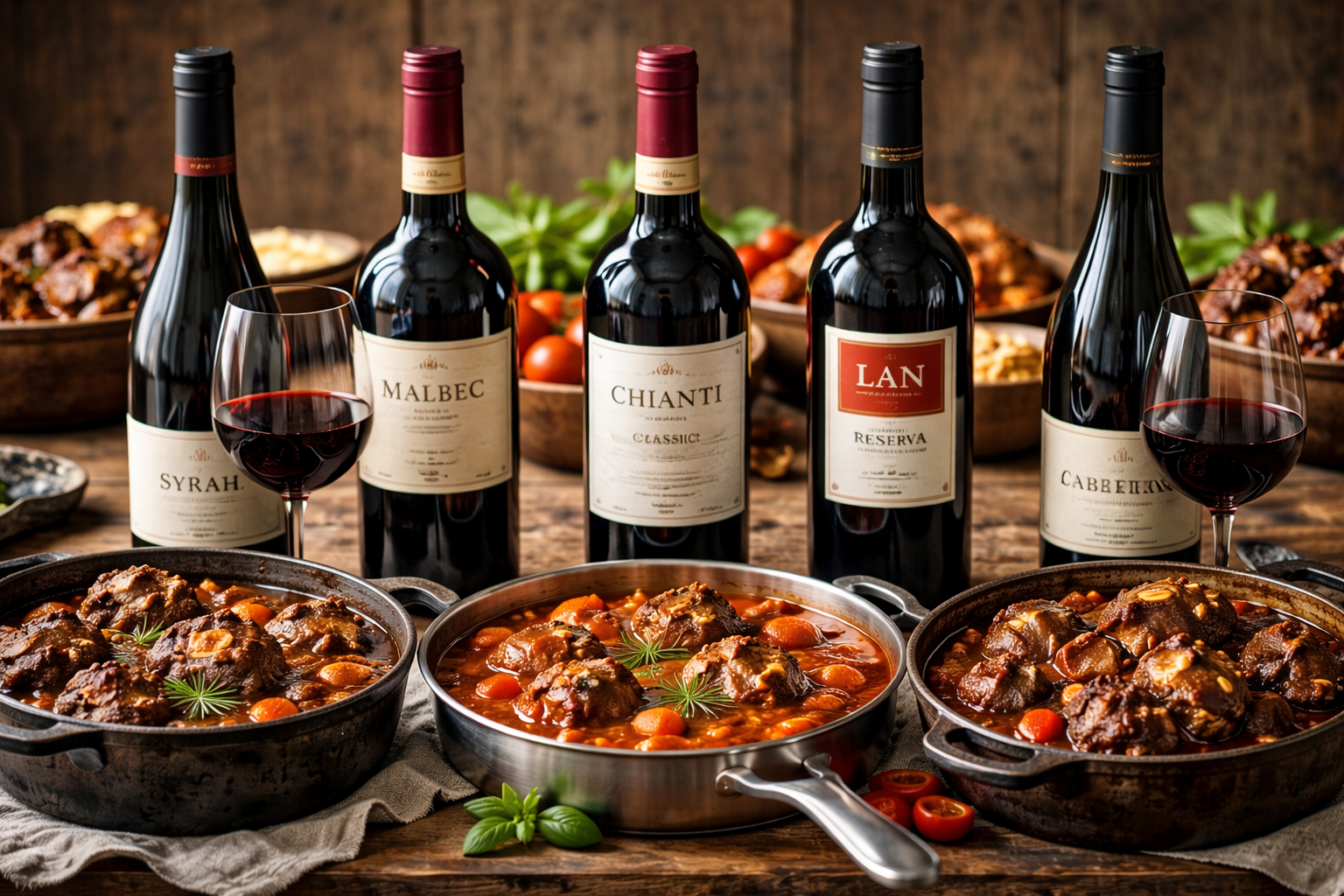
These styles are not interchangeable. They overlap, sure, but each one fixes a different issue in the bowl.
| Wine style | Best with | Why it works | Watch out for |
|---|---|---|---|
| Syrah / Shiraz | Dark, savory, peppery braises | Matches depth and brings savory spice | Can feel hot with chilli-heavy stew |
| Malbec | Classic rich stew, mixed crowds | Good body, friendly fruit, softer grip | Very jammy versions can feel thick |
| Chianti / Sangiovese | Tomato-led, herbal oxtail | Freshness and savory edge suit tomato | Thin bottles can get lost in very dark braises |
| Rioja Reserva | Balanced, dinner-party-safe versions | Savory spice, smoother tannin, tidy oak | Heavy oak can muddy spicy stew |
| Cabernet-led red | Low-spice, non-tomato, very rich pots | Firm frame for dense stew | Often too oak-heavy or too stern |
Syrah/Shiraz is the bottle I reach for when the stew smells like browned meat, stock, and black pepper. It gives you the feeling of a proper red-meat pairing without always going as severe as Cabernet.
Malbec is the safe bottle for mixed company. It usually lands with enough fruit to keep the pairing alive, but not so much that the stew tastes sticky next to it. That balance is why it works so often with braised dishes.
Chianti and other Sangiovese-led reds are my first call for tomato-based oxtail. They cut through the sauce and keep the dish from turning heavy. French-style beef braises often reward the same freshness-over-force logic seen in best wine for beef bourguignon.
Rioja Reserva is the diplomat. It has enough savory spice and mature shape to flatter a rich bowl, but it is often smoother and more flexible than younger, rougher reds. For dinner parties, that matters more than theory.
Cabernet-led reds are trickier. They can be wonderful with a deep, dark, low-spice braise. But this is also the lane where people overshoot. Too much oak and too much alcohol, and the pairing feels like both the stew and the bottle are shouting.
One smart exception deserves a quick nod. The Bourgogne Wines profile of Pinot Noir describes the style as capable of elegance and freshness, with “assured yet delicate tannins.” That is why Pinot Noir can outperform heavier reds when the pot leans herbal, mushroomy, or spicy rather than purely dark and beefy.
Run this 30-second shelf test and buy the right bottle faster
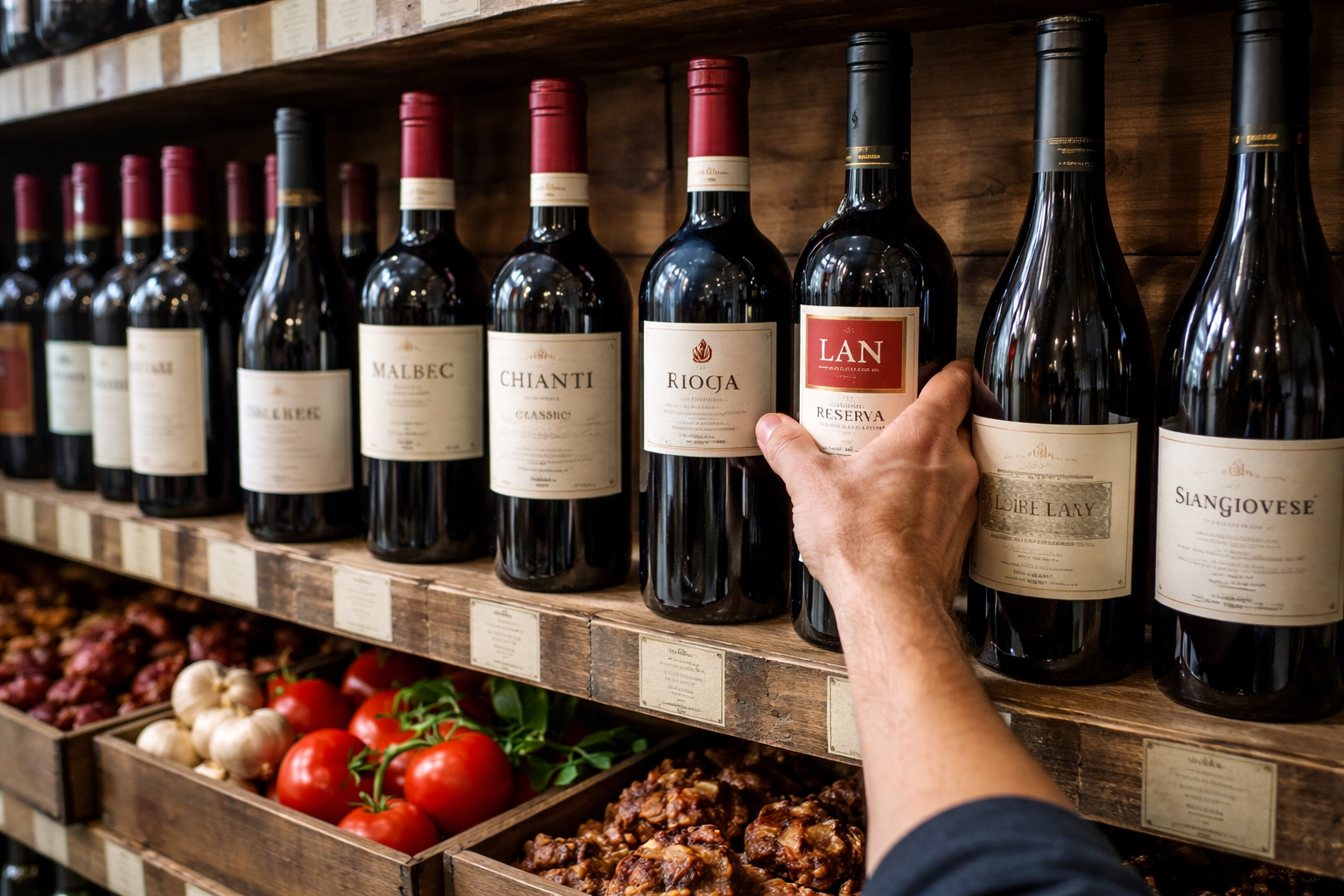
You do not need a memorized atlas for this. You need a decent shortcut.
Step 1. Read for style, not prestige. Dry, food-friendly reds beat flashy labels here. Syrah/Shiraz, Malbec, Chianti Classico, Sangiovese, Rioja Reserva, and fresher Cabernet Franc are the cleanest first picks.
Step 2. Notice the stew lane. Tomato in the recipe? Drift toward Chianti, Sangiovese, or Barbera. Dark stock and mushrooms? Drift toward Syrah, Malbec, or Rioja. Spice and chilli? Pull back from the hardest, hottest reds.
Step 3. Avoid the obvious traps. Bottles that read sweet, jammy, toasted, or vanilla-heavy often fight with stew more than they help. This is one of those dinners where “smooth” on the back label can mean floppy and overripe.
Step 4. When in doubt, blind buy Rioja Reserva or Malbec. Rioja Reserva is the neater dinner-party answer. Malbec is the easier Tuesday-night answer. Neither is perfect for every pot, but both miss less often than a random big Cabernet or a very soft supermarket red blend.
30-second shelf test: dry, savory, moderate oak, enough freshness, and no obvious sweetness. If the bottle sounds like dessert or barbecue sauce, keep walking.
The wines that make oxtail stew taste hot, bitter, or muddy
Bad pairings are usually easy to diagnose after the first sip. The trick is knowing what the symptom means.
If the wine tastes bitter or rough, the tannin is too hard for the finished dish. That can happen with young, stern reds, especially if the stew is not salty or rich enough to soften them. It also happens when the wine brings too much oak spice on top of an already reduced sauce.
If the wine tastes hot, alcohol is the usual culprit. Spicy Jamaican oxtail is where this bites hardest. High alcohol plus chilli can make the whole pairing feel sharp and tiring within two bites.
If the pairing tastes muddy, you probably stacked richness on richness. Jammy fruit, sweet oak, and a glossy stew can flatten each other out. This is the red that looked plush in the shop and then turned the whole meal brown and sleepy. Not ideal.
If the wine feels flat, it likely lacks the acidity to deal with tomato or the sweetness that builds in a long braise from onions and carrots. That is why a bright Chianti can wake up a tomato-led stew while a soft, broad red just lies there.
What to skip most often
- Heavily oaked Cabernet with tomato-based oxtail
- Very high-alcohol reds with spicy Jamaican oxtail
- Sweet red table wines with savory stew
- Very light reds with a dark, stock-heavy braise
That last one catches people. Light reds are not “wrong” by rule. They are just easy to drown when the pot is all depth and no brightness.
Cooking wine and serving wine should sound related, not identical
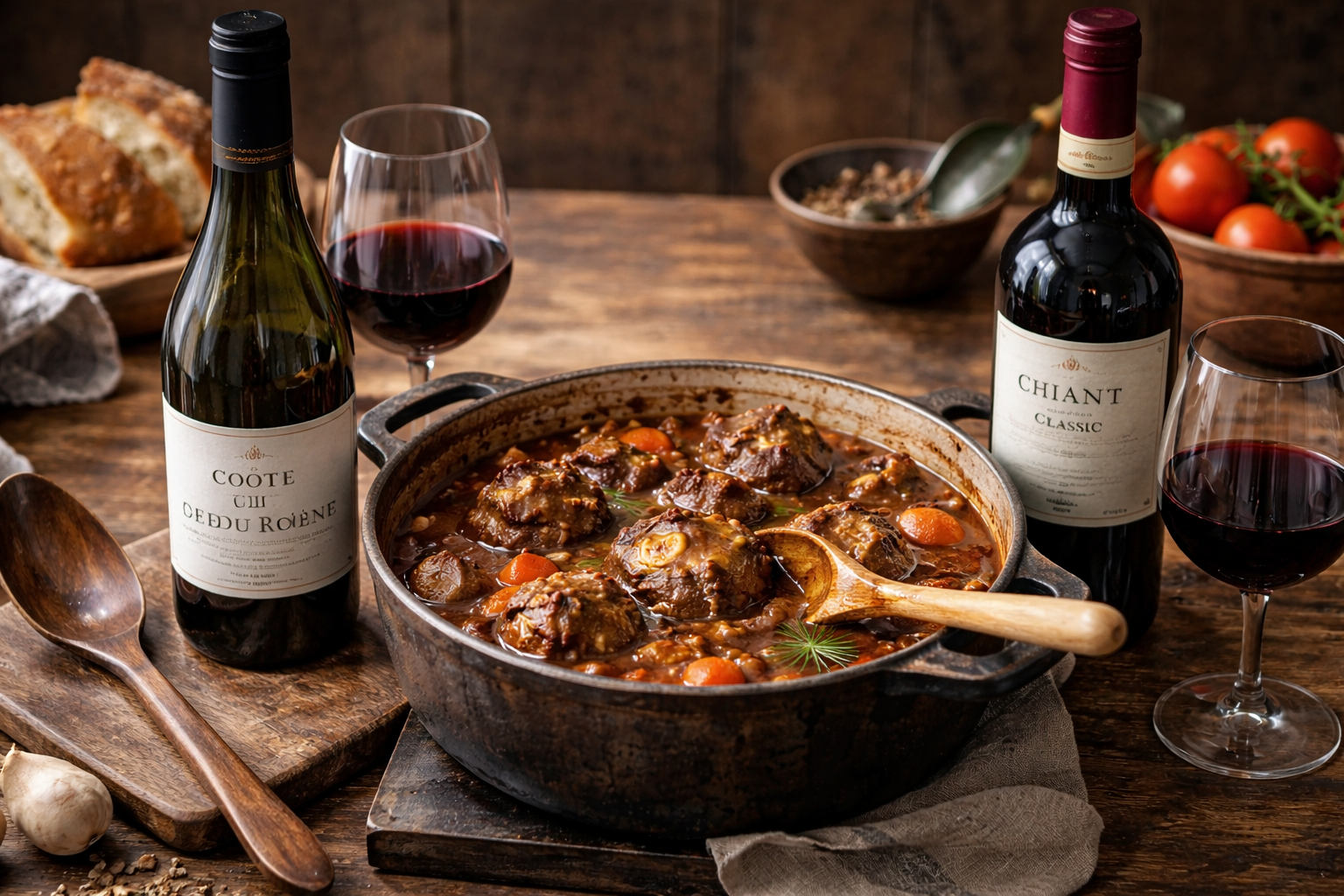
The old advice says to cook with the same wine you drink. That is tidy, but a bit too tidy. The more useful rule is to keep the pot and the glass in the same family, not to clone them.
If the stew is built with a dry red, use a drinkable dry red in the pot. Then serve the same style or a slightly better version at the table. That could mean a basic Cotes du Rhone or Syrah in the braise and a better Syrah in the glass. Or a simple Sangiovese for cooking and a more polished Chianti Classico for dinner.
What you do not need is a prestige bottle vanishing into three hours of simmering just because the internet got a little romantic about “same wine, same dish.” Save the better bottle for the table where you can taste it.
The one twist worth keeping in mind is this: serve for the finished sauce, not the original ingredient list. A stew that started as a dark braise can finish brighter and more tomato-led than you expected. A stew that began with tomato can reduce into something richer and sweeter. Taste the pot first, then pour.
Easy rule: same family beats same exact bottle.
A quick pairing matrix for weeknights, dinner parties, and different sides
Context matters. The same stew with mashed potatoes drinks a bit differently from the same stew with rice and peas. Sides change the feel of the meal, and the bottle can shift with them.
| Scenario | Best pick | Why |
|---|---|---|
| Weeknight classic oxtail stew | Malbec | Generous enough for the stew, easy to like |
| Dinner party, classic dark braise | Rioja Reserva | Savory, polished, flexible across palates |
| Tomato-based oxtail | Chianti or Sangiovese | Freshness keeps the sauce alive |
| Spicy Jamaican oxtail with rice and peas | Pinot Noir or fresher Malbec | Softer tannin, less heat clash |
| Big splurge bottle night | Barolo | Works with very rich braise and proper seasoning |
Mashed potatoes, polenta, and crusty bread all make fuller reds feel more comfortable because they add softness and absorb some of the stew’s intensity. Rice and peas, especially beside a spicy Jamaican-style pot, pull the meal lighter and make fresher, less aggressive wines feel smarter.
If somebody wants one sentence to remember, make it this: match the weight first, then tune for tomato and heat.
Cold-weather braises and bigger comfort-food bottles sit in the same lane as best wine for winter, where freshness keeps rich food from dragging.
FAQ
Can white wine ever be better than red with oxtail stew?
Yes, with spicy Jamaican-style oxtail or a lighter, brighter version of the dish. An off-dry Riesling can beat a big red when chilli is strong, because a touch of sweetness and high freshness calm the heat better than hard tannin does.
Should red wine be served a little cooler with spicy oxtail?
Usually yes. Serving a red slightly below warm room temperature, around cool cellar range, can make alcohol feel less pushy and keep the pairing fresher. That helps a lot with spicy or tomato-heavy versions.
What is the safest one-bottle answer if the recipe is unclear?
Rioja Reserva or Malbec. Rioja Reserva is the tidier dinner-party pick, while Malbec is the easier casual pick. If the recipe turns out very tomato-heavy, Chianti becomes the cleaner answer.