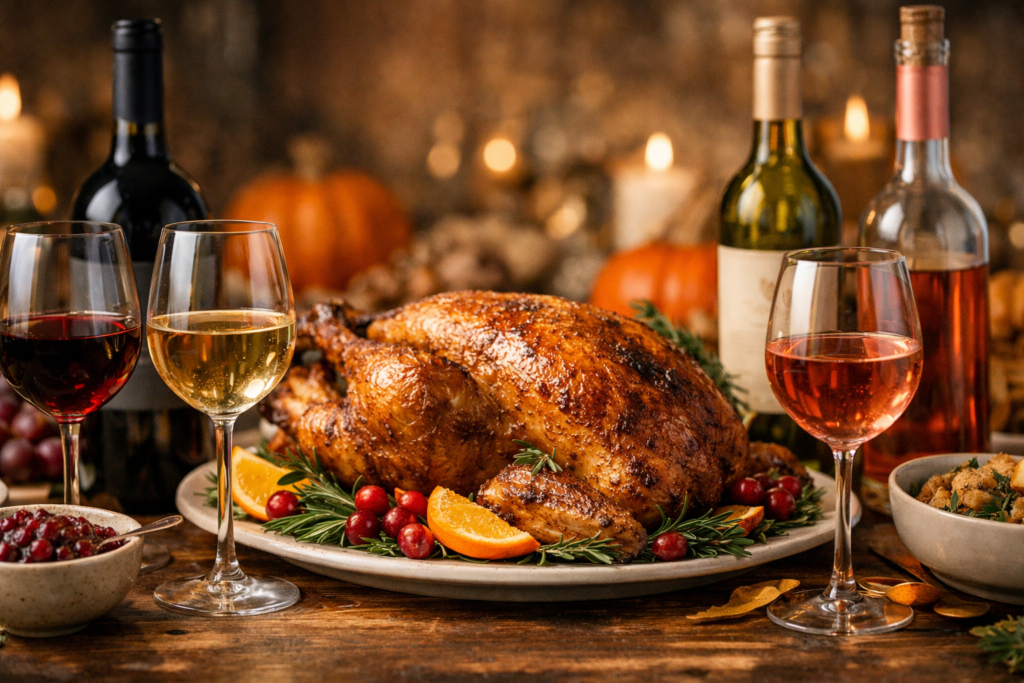
You can feel the trap coming when you’re standing in front of the wine shelf on turkey day. One bottle says “rich and powerful.” Another says “crisp and elegant.” Then you remember the plate isn’t just turkey. It’s gravy, stuffing, cranberry sauce, roast veg, maybe smoke, maybe butter, maybe Aunt Linda insisting she only drinks red.
The best wine for turkey is usually one of these styles: Pinot Noir, Cru Beaujolais, balanced Chardonnay, Chenin Blanc, dry or lightly off-dry Riesling, or Brut sparkling wine. Those wines tend to work because turkey is mild, the sides are not, and a good pairing needs freshness, moderate body, and a light touch with tannin or oak.
That short answer is useful. It is not complete.
Turkey gets judged like a single roast. It eats like a whole orchestra. I’ve seen a lovely bottle of Cabernet look downright grumpy next to dry breast meat and cranberry sauce, then watched a good Beaujolais disappear in an hour because it made the whole plate feel brighter.
What this guide will help you do
- Pick the right wine fast if you’re buying one bottle
- Choose between red, white, rose, and sparkling without guesswork
- Adjust for roast, smoked, fried, or cranberry-heavy turkey dinners
- Avoid the bottles that make turkey taste flatter or drier
- Buy for a crowd without turning dinner into a wine exam
At a Glance: pick your lane in 20 seconds
| Dinner setup | Best move | Why it works |
|---|---|---|
| Classic roast turkey with gravy and stuffing | Pinot Noir or balanced Chardonnay | Fresh, flexible, and not too heavy |
| Cranberry sauce and sweeter sides steal the show | Cru Beaujolais or dry to lightly off-dry Riesling | Bright fruit and acid handle sweet-savory plates |
| Smoked or fried turkey | Brut sparkling or a darker-fruited Pinot Noir | You need more cut or a little more flavor weight |
| One bottle for mixed tastes | Brut sparkling | It plays well with the whole table |
If the goal is one clean rule, here it is: buy for the whole plate, not just the bird.
Best Wine for Turkey: The Short Answer
If you’re in a rush, the safest styles are still the safest for a reason. Pinot Noir is the easy red because it brings enough fruit and acidity without the sandpapery tannin that lean turkey hates. Cru Beaujolais gives you similar comfort with a juicier, brighter feel. Chardonnay works when it’s balanced and not drenched in oak. Riesling shines when cranberry sauce, sweet squash, or spiced stuffing start crowding the plate. Brut sparkling is the all-rounder that almost never feels out of place.
My fast picks look like this:
- Safest red: Pinot Noir
- Safest white: balanced Chardonnay
- Best value red for a lively table: Cru Beaujolais
- Best fix for sweet-savory sides: dry or lightly off-dry Riesling
- Best one-bottle answer: Brut sparkling wine
Quick rule: If the table leans red, grab Pinot Noir. If it leans white, grab Chardonnay. If no one agrees on anything, grab Brut sparkling and move on with your life.
For bigger holiday menus, a paired lineup helps more than a “best bottle” does. Something like Pinot Noir plus Chardonnay covers most roast turkey dinners. Add Riesling or sparkling and the whole thing gets easier. That’s one reason a related guide to wines for Thanksgiving that work with the whole plate is useful once the side dishes start getting louder than the turkey.
Why Turkey Is Harder to Pair Than People Expect
Plain roast turkey is mild. Some parts can be juicy. Some parts can be a little dry. On its own, it does not demand a huge wine. But turkey dinner is rarely just turkey. The gravy adds salt and fat. The stuffing brings herbs and savory depth. Cranberry sauce adds sweetness and tang. Roast vegetables can turn earthy or caramelized. That changes the game.
The Wine & Spirit Education Trust’s guide to how food changes the way wine tastes makes the core point nicely: salt can soften tannin and acidity, while umami-heavy foods can make wine taste more bitter and less fruity. That matters here because turkey dinner often carries both. So a wine that feels polished on its own can come off harder and duller at the table.
That is why low-tannin reds do so well. It is why fresh acidity matters. It is why a huge, oaky red that feels “special” in the shop can feel oddly clumsy once gravy and stuffing enter the room.
One of the most common misses is choosing for the breast meat alone. Dark meat, gravy, mushrooms, and herb stuffing pull the wine in a richer direction. Cranberry sauce pulls it in a brighter, fruitier one. You’re not matching a slice of turkey. You’re matching the plate you actually eat.
Remember: pairing wine to turkey without the sides is like picking shoes based on sock color. Technically related. Not the part that decides the outfit.
Red, White, or Sparkling: A Fast Decision Framework
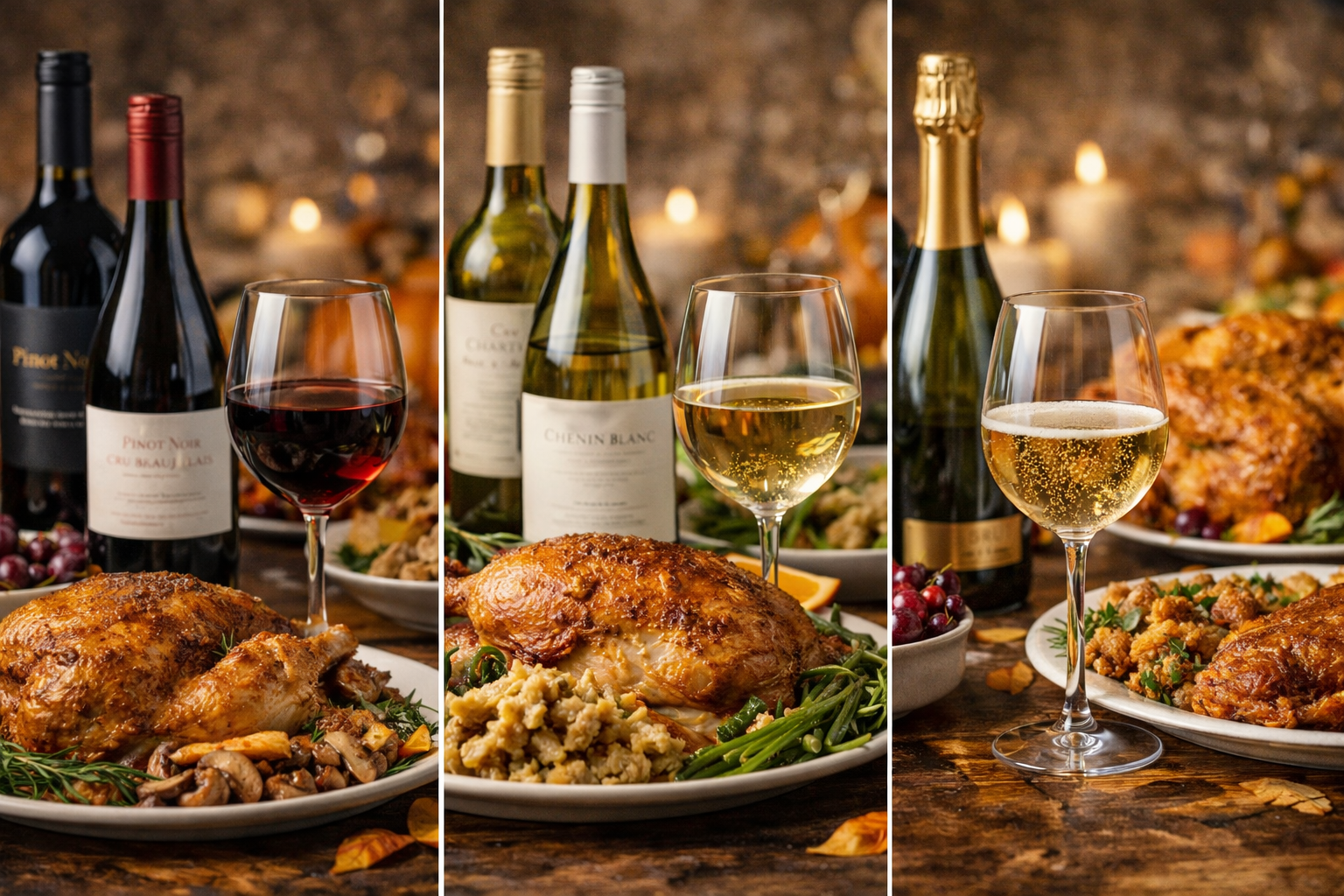
You do not need a sommelier flowchart here. You need three lanes.
Choose red
Go this way if the meal is savory, herb-driven, mushroom-heavy, or gravy-led. Pinot Noir and Beaujolais are the usual sweet spot.
Choose white
Go this way if the turkey is buttery, the stuffing is rich, or the crowd likes something broader and softer. Chardonnay and Chenin Blanc fit neatly here.
Choose sparkling
Go this way if the table is mixed, the meal has fried or salty elements, or you want the safest all-purpose bottle. Brut sparkling is the peacemaker.
Use these if/then rules and you’ll get very close, very fast:
- If the dinner is classic roast turkey with gravy: Pinot Noir or balanced Chardonnay.
- If cranberry sauce and sweet veg are loud: Cru Beaujolais or dry to lightly off-dry Riesling.
- If the turkey is smoked or fried: Brut sparkling or a slightly darker, fuller Pinot Noir.
- If you need one bottle for everyone: Brut sparkling.
- If red drinkers and white drinkers both need something: dry rose is the useful middle seat.
Color sounds like the big choice. Structure is the big choice. A fresh, light-to-medium red can beat a clumsy white. A dry sparkling wine can beat both if the menu is salty, rich, and all over the place.
The Best Red Wines for Turkey
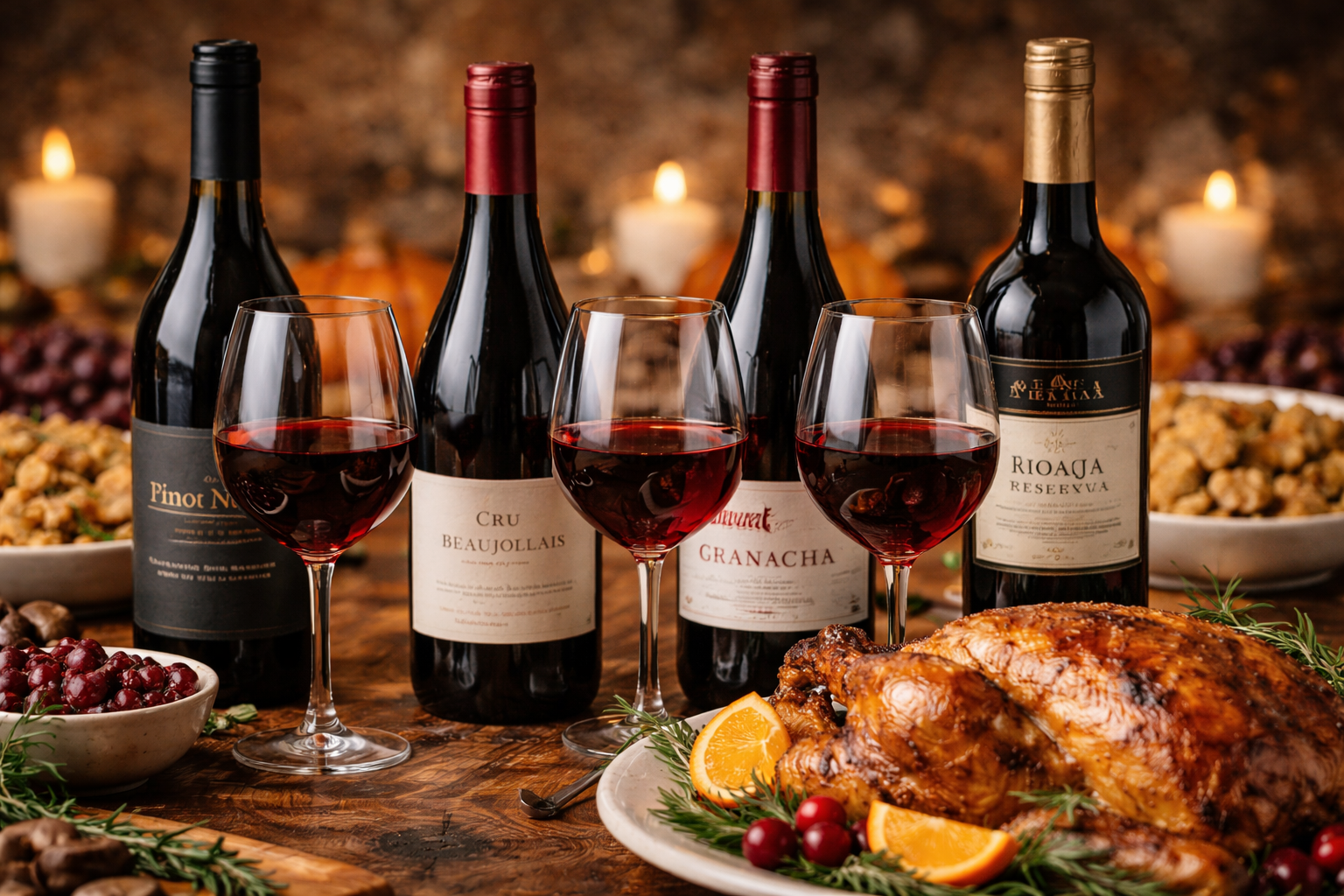
Pinot Noir is the safest red because it hits the turkey pairing brief almost perfectly. It has enough fruit to keep the plate from feeling dry, enough acidity to freshen each bite, and usually not much tannin. If I had to blind-pour one red for a room full of people eating roast turkey, Pinot is where I’d start. It rarely bullies the food.
Cru Beaujolais, made from Gamay, is the brighter and more playful option. It tends to feel juicier than Pinot Noir, which makes it great with cranberry sauce and sweeter sides. It also has a nice trick that many holiday reds do not: it keeps the dinner feeling lively rather than heavy halfway through the plate.
Lighter Grenache or Garnacha can work when the turkey has more seasoning or the sides lean warmer and spicier. The trick is to keep it in the lighter lane. You want soft fruit and spice, not a hot, jammy bruiser.
Mature Rioja Reserva or Gran Reserva is the richer upgrade pick when the meal is more formal and the savory elements are stronger. Rioja’s own classification rules say a red Gran Reserva spends at least five years ageing, with two of those years in oak and two in bottle. That kind of ageing can soften the wine, add leather, tobacco, and dried herb notes, and make it fit dark meat, mushrooms, and gravy better than a flashy young powerhouse would.
What to look for in a red wine for turkey
- Light to medium body
- Fresh acidity
- Soft tannins
- Modest oak, not heavy oak
- Fruit that feels fresh, not syrupy
What should you skip? Big Cabernet Sauvignon is the classic wrong turn. So is an over-extracted Syrah or a very ripe, high-alcohol red blend. Those wines can work with beef, duck, or smoked brisket. Turkey just doesn’t have the shoulders for them.
The Best White, Rosé, and Sparkling Wines for Turkey
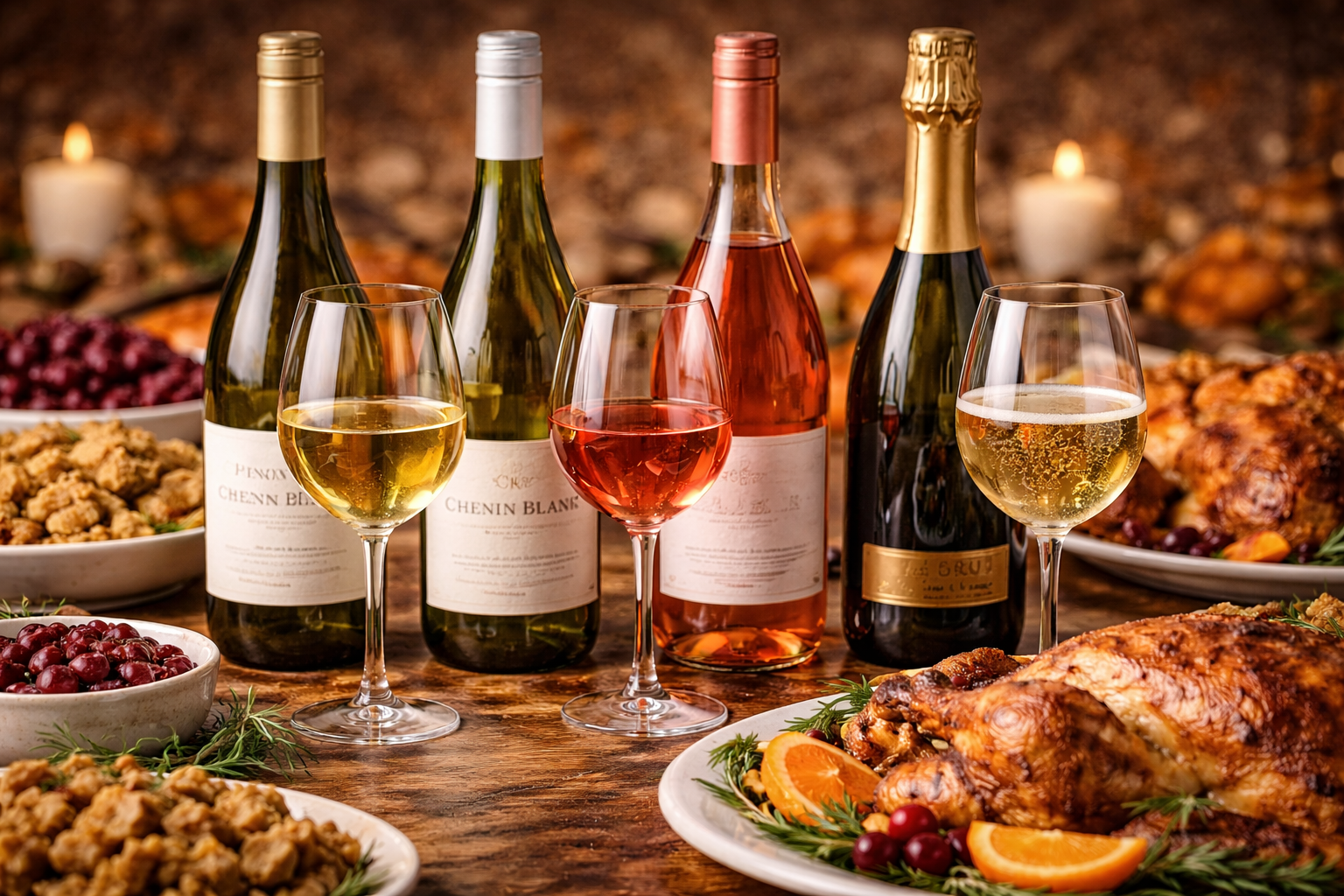
Balanced Chardonnay is the best white wine with turkey for a lot of people because it has enough body to stand with stuffing and gravy. The word “balanced” matters. A lightly oaked or restrained Chardonnay is lovely here. A heavily buttery one can flatten the plate and make everything feel sleepy.
Chenin Blanc is a smart pick when you want texture and lift in the same glass. Good Chenin can handle herbs, roast vegetables, and savory stuffing while still feeling fresh. It is not always the first bottle people think of. That’s partly why it can be such a neat little win.
Dry or lightly off-dry Riesling is the move when cranberry sauce, glazed carrots, sweet squash, or spice are in play. A bone-dry white can feel sharp next to sweet elements. A touch of residual sugar smooths that edge and keeps the wine from tasting leaner than it is. Too sweet, though, and it starts drifting away from the meal.
Sauvignon Blanc works best when the meal is herb-heavy or greener in tone. Think parsley, sage, celery, green beans, and less cream. It is more situation-specific than Chardonnay or Riesling. When it fits, it fits cleanly.
Brut sparkling wine may be the best utility player of the lot. The Comité Champagne notes that a non-vintage Brut can be served with a main course and enjoyed throughout a meal, and that lines up with how it behaves at the table. The bubbles lift rich bites. The acidity cuts through fat. The wine still feels festive without demanding total attention.
Dry rosé is the bridge bottle. When one half of the table wants red and the other wants white, dry rosé often lands gracefully in the middle. It has enough fruit for turkey and cranberry. It stays light enough not to swamp the meal.
Nice little cheat: if the menu feels split between savory and sweet-savory, Riesling and sparkling wine usually give you more breathing room than a neutral white does.
Match the Wine to How the Turkey Is Cooked
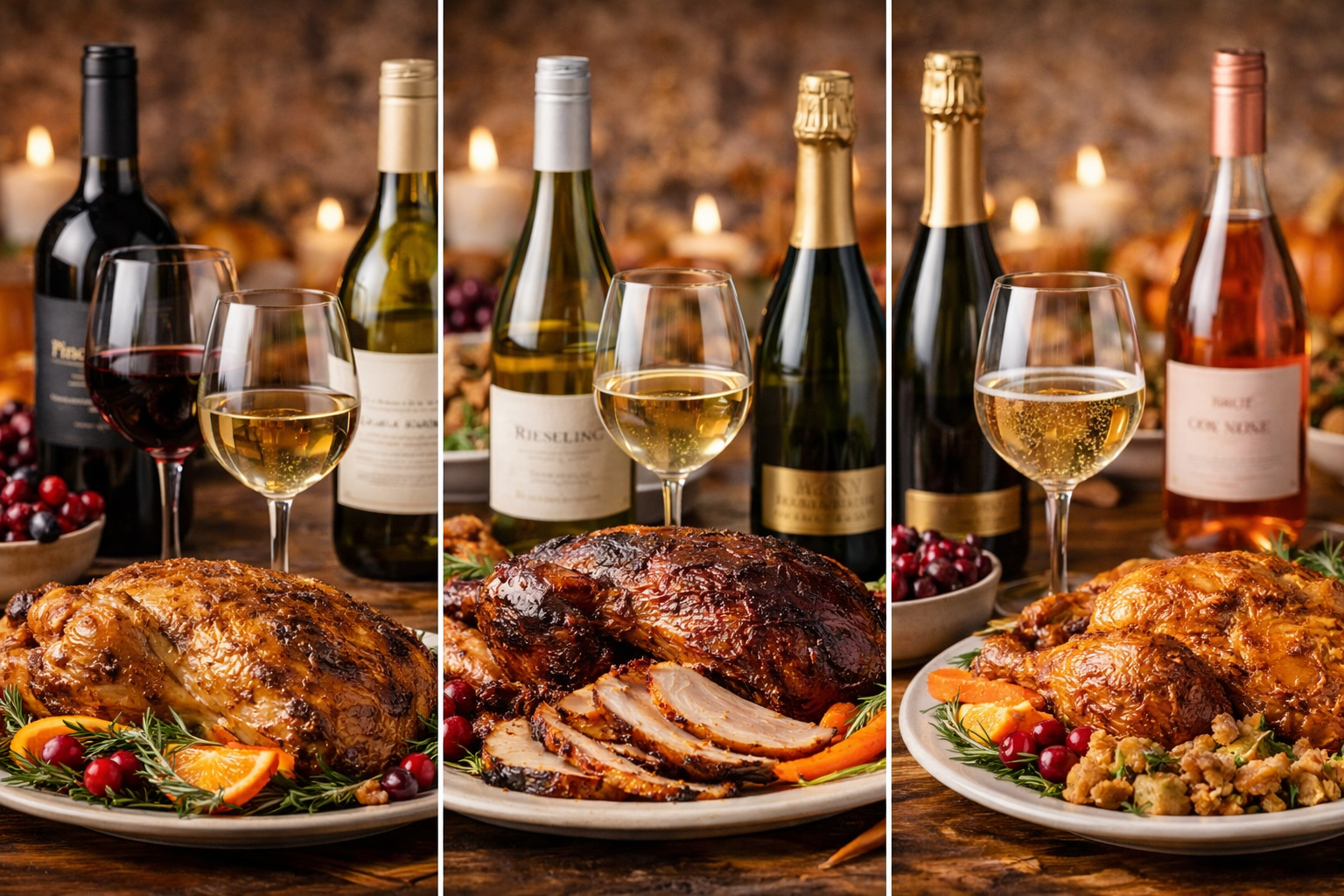
Roast turkey is the classic setup. This is where Pinot Noir, Cru Beaujolais, and balanced Chardonnay feel most at home. The flavors are gentle, the herbs are familiar, and the wine does not need to shout.
Smoked turkey changes things fast. Smoke adds depth and a faint bitterness, so the wine needs more flavor weight. Brut sparkling still works because acid and bubbles scrub the palate. Darker-fruited Pinot Noir can work too. A dry to lightly off-dry Riesling is great when the smoke comes with a sweet glaze.
Fried turkey asks for cut. This is the easiest call of the bunch. Go sparkling. The Wine & Spirit Education Trust points out that sparkling wine’s acidity works beautifully with salty, fatty fried foods, which is exactly why it feels so right here. Dry rosé is a good fallback. Crisp whites with enough body can work too.
Herb-heavy turkey plays nicely with Sauvignon Blanc, Pinot Noir, and fresher Chardonnay. The more the plate smells like sage, thyme, parsley, and roast onion, the more fresh, savory wines start to click.
Sweet-glazed turkey or a cranberry-heavy plate needs a brighter answer. Beaujolais is often better than Pinot here because the fruit feels more vivid. Riesling makes even more sense if sweetness is built into the meal.
For a more seasonal spin on roast bird pairings, this guide to wine for turkey Christmas dinner lines up closely with the same rules, just with a slightly richer holiday table in mind.
The Wine Mistakes That Make Turkey Taste Worse
Buying a “serious” red because it feels festive. This is the big one. Powerful reds can make turkey seem drier and duller. They can also push the plate into a weird tug-of-war where the gravy and cranberry sauce are fighting the wine from opposite sides.
Choosing an oaky white that tastes like vanilla furniture polish. A touch of oak is fine. Heavy oak can make the meal feel flat and heavy, especially once butter, stuffing, and roast vegetables pile up.
Ignoring the sweet parts of the meal. Cranberry sauce, sweet potato, glazed carrots, and squash can make a dry, sharp wine seem even drier. That’s where Beaujolais, Riesling, or sparkling tends to rescue the pairing.
Serving the wine at sloppy temperatures. Lighter reds usually show better with a short chill. Fifteen minutes in the fridge does wonders. Whites that are ice-cold can hide their texture and flavor, so take them out a little before pouring.
Buying by prestige instead of shape. You want freshness, modest oak, and moderate body. That is the shape. A famous label with the wrong shape is still the wrong bottle.
Skip this / buy this instead
- Skip big Cabernet. Buy Pinot Noir.
- Skip heavily oaked Chardonnay. Buy balanced Chardonnay or Chenin Blanc.
- Skip jammy red blends. Buy Cru Beaujolais.
- Skip a thin, neutral white for a rich plate. Buy Chardonnay or Brut sparkling.
Turkey pairings usually fail from too much wine, not too little. That’s the part people miss.
How to Buy for a Crowd Without Overthinking It
If you’re hosting, keep the math simple.
One-bottle plan: Brut sparkling. It covers the most ground and offends almost no one.
Two-bottle plan: Pinot Noir and Chardonnay. That pair covers classic roast turkey better than most more expensive combinations do.
Three-bottle plan: Pinot Noir, Chardonnay, and Riesling or sparkling. This is the sweet spot for bigger mixed tables.
Shopping gets easier when you stop hunting for “the best bottle” and start hunting for the right style. Freshness beats power. Texture beats oak. Moderate structure beats prestige. That sounds a bit plain, I know, but it works.
If you’re pouring for a group, the National Institute on Alcohol Abuse and Alcoholism defines a standard glass of table wine as 5 ounces at about 12% alcohol. That is a handy planning measure, even if real pours at family dinners drift north of that. They always do.
One more practical note. If the meal rolls into sandwiches and leftovers the next day, store the food properly. FoodSafety.gov advises refrigerating leftovers as soon as possible and using refrigerated leftovers within three to four days. That matters more than the wine, honestly.
The simplest rule in the article: buy for the plate, then buy for the people, and only then buy for the label.
FAQ
Is Pinot Noir or Chardonnay better with turkey?
Pinot Noir is the safer call if the meal leans savory, earthy, or gravy-heavy. Chardonnay is the better call if the plate is richer and creamier, or the group wants white. If both sound right, that usually means both will work.
Does cranberry sauce change the pairing?
Yes. Cranberry sauce adds sweetness and sharpness, which can make some dry wines feel leaner and harsher. That is why Cru Beaujolais, dry to lightly off-dry Riesling, and Brut sparkling often work better when cranberry is a big part of the plate.
What wine works with leftover turkey sandwiches?
Leftover turkey sandwiches usually lean salty, savory, and a bit messy in the best way, so Pinot Noir, Beaujolais, dry rosé, and sparkling wine all make sense. If the sandwich has cranberry sauce, Riesling gets even more attractive.