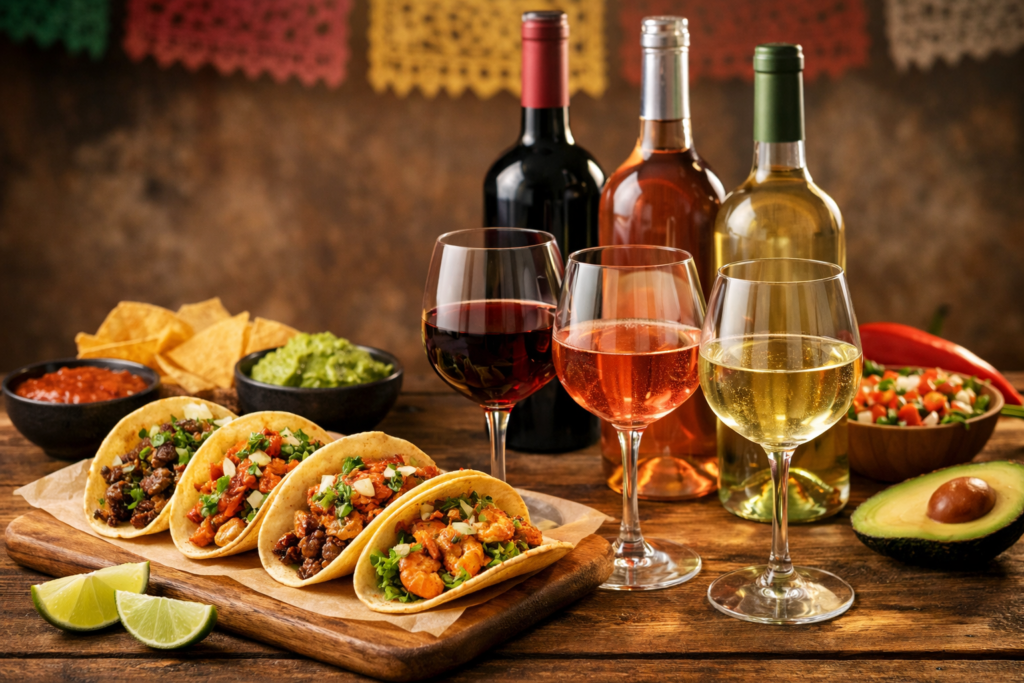
You can spot a bad taco pairing from the first sip. The tacos look great, the bottle looked smart on the shelf, and then lime, salsa, onion, and heat hit the glass and suddenly the wine tastes hot, flat, or weirdly bitter. I’ve done this with a burly red beside fish tacos before. It was not elegant.
If you want the best wine for tacos, start with dry rose, Brut sparkling wine, Albarino, Vinho Verde, Sauvignon Blanc, or off-dry Riesling. For meatier tacos with less heat, a fresh low-tannin red like Pinot Noir, young Garnacha, or young Tempranillo can work really well. That short list covers most taco nights because tacos reward freshness, acidity, and flexibility more than brute force.
What makes this annoying is that “tacos” sounds like one food. It isn’t. Fish tacos with lime crema want one thing. Carnitas with salsa verde want another. Al pastor with pineapple plays by its own rules. And birria? That’s almost a broth pairing wearing a taco costume.
Taco wine at a glance
| Taco situation | Best first move | Why it works |
|---|---|---|
| Menu unknown | Dry rose or Brut sparkling | They handle mixed fillings, bright toppings, and fried textures better than most single-style bottles. |
| Fish tacos | Albarino or Vinho Verde | High acid and freshness keep pace with citrus, slaw, and delicate seafood. |
| Spicy tacos | Off-dry Riesling | A little residual sugar and lower alcohol calm chili heat instead of turning it up. |
| Carnitas or carne asada | Pinot Noir or young Tempranillo | Fresh red fruit and moderate tannin suit savory meat without bullying the toppings. |
| Fried tacos or battered fish | Brut Cava | Acid and bubbles scrub the palate clean after each crunchy bite. |
Use this as the fast lane. The sections below show when to swap lanes.
What you’ll get here: the safest one-bottle answers, the best pairings for fish, pork, beef, chicken, and vegetarian tacos, the role of salsa and heat, the reds that actually work, and the mistakes that make a good bottle taste worse than it is.
The best wine for tacos in one clear answer
For most tables, the safest answer is not a single bottle. It is a short list of styles that stay lively beside acid, salt, char, herbs, and heat. If I had to buy blind for Taco Tuesday, I would reach first for dry rose, then Brut sparkling wine, then a crisp white like Albarino, Vinho Verde, or Sauvignon Blanc. If I knew the tacos were richer and less spicy, I’d happily move to Pinot Noir or a fresh young Tempranillo.
The reason is pretty simple. Tacos punish wines that are heavy, tannic, boozy, or oaky. They reward wines with lift. You want a bottle that can deal with lime juice, cilantro, salsa, pickled onion, maybe crema, maybe smoke, maybe fried batter, and still taste awake.
So the real answer is this: buy freshness before power. That rule won’t cover every edge case, but it gets you out of trouble fast.
Fast ranking for most taco nights
- Dry rose
- Brut sparkling wine, especially Cava
- Albarino or Vinho Verde
- Sauvignon Blanc
- Off-dry Riesling for spicy tacos
- Pinot Noir or young Garnacha for savory meat tacos
Read the taco before you read the label
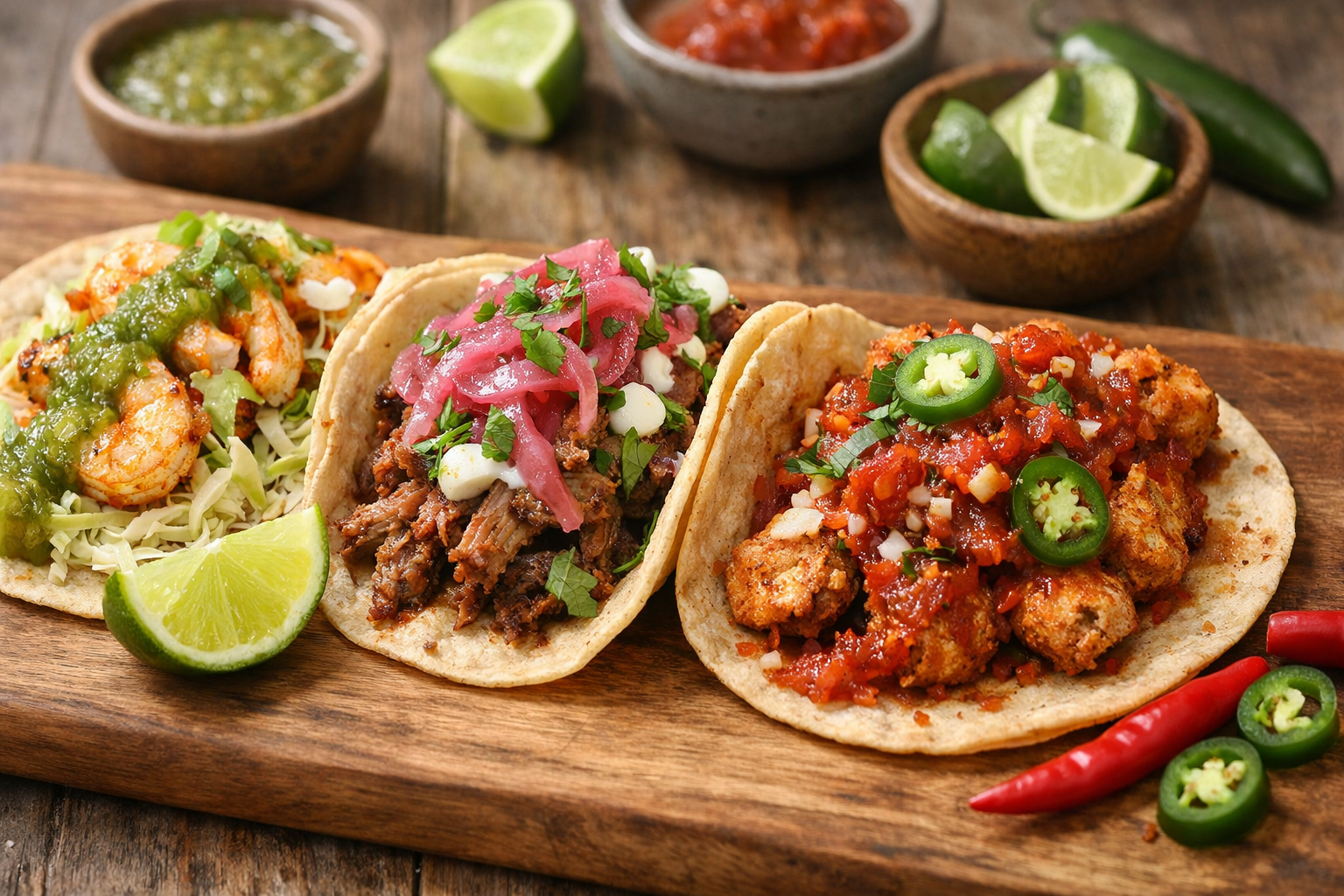
A lot of pairing advice starts with the meat. That is half-right and half-useless. With tacos, the toppings often make the final call. A grilled shrimp taco with cabbage slaw, lime, and salsa verde behaves nothing like grilled shrimp on a plate. Same protein. Totally different glass.
Use this three-step filter.
Step 1. Check the filling and spot the weight.
Fish and many chicken tacos sit in the lighter lane. Carnitas, barbacoa, birria, and carne asada move heavier.
Step 2. Find the loudest topping.
Salsa verde, lime, pickled onions, cilantro, crema, pineapple, and char are not extras. They can overrule the meat. That sounds a bit fussy. It isn’t. It is usually the difference between “nice” and “why does this taste so rough?”
Step 3. Check the heat level.
According to WSET’s guide to pairing drinks with spice, alcohol feels hotter with chili heat, sweetness softens heat, acidity brings lift, and tannin can feel harsh. That is why spicy tacos often like lower-alcohol whites, rose, sparkling wine, or off-dry Riesling more than a stern red.
There is another wrinkle. WSET also notes in its takeaway pairing guide that umami-heavy foods can make tannic wines taste more bitter while muting fruit, which is one reason deeply savory fillings like birria or barbacoa can make the wrong red feel meaner than it did on its own. That part gets missed all the time.
Remember: tacos are often a condiment pairing more than a protein pairing. Match the loudest thing on the taco, not the first thing you read on the menu.
The safest bottles when you do not know the taco lineup
This is the party problem. You got invited. You know tacos are happening. You do not know whether that means battered fish, spicy chicken, carnitas, or a mixed platter with three different salsas and somebody’s very enthusiastic jalapeno habit.
When the lineup is fuzzy, I would rank the safest bottles like this.
1. Dry rose
This is the best all-around answer more often than people think. Dry rose has enough snap for fish tacos and herb-heavy toppings, enough fruit for pork, and enough body for grilled chicken. It rarely feels too heavy. It rarely feels too thin. That middle gear matters.
2. Brut sparkling wine
Brut Cava is especially handy. The D.O. Cava pairing guide points out that crisp bubbles can carry fried food without overwhelming it. That translates beautifully to tacos with battered fish, crunchy shells, or rich toppings. Bubbles also reset your palate, which helps when every taco lands a bit different.
3. Albarino
This is one of the cleanest fish taco wines and one of the safer broad picks for bright, citrusy taco spreads. The Rias Baixas region describes Albarino as naturally medium-to-high in acidity with a food-friendly mineral edge. That is exactly what you want when lime and salsa are flying around the plate.
4. Vinho Verde
The Wines of Portugal profile for Vinho Verde describes the whites as particularly aromatic, clear, and refreshing. Which is why they feel so natural with fish tacos, grilled chicken tacos, and anything with cilantro, cabbage, or fresh herbs.
5. Off-dry Riesling
This moves up the list the minute the heat rises. You do not need dessert-level sweetness. You need just enough softness to keep the chili from punching the wine in the throat.
If you need one bottle and want the least drama, buy dry rose. If the table is leaning fried or mixed, buy Brut Cava. If the table is bright and citrusy, buy Albarino. That’s the short version.
Match the wine to the taco style, not to a rule you heard once
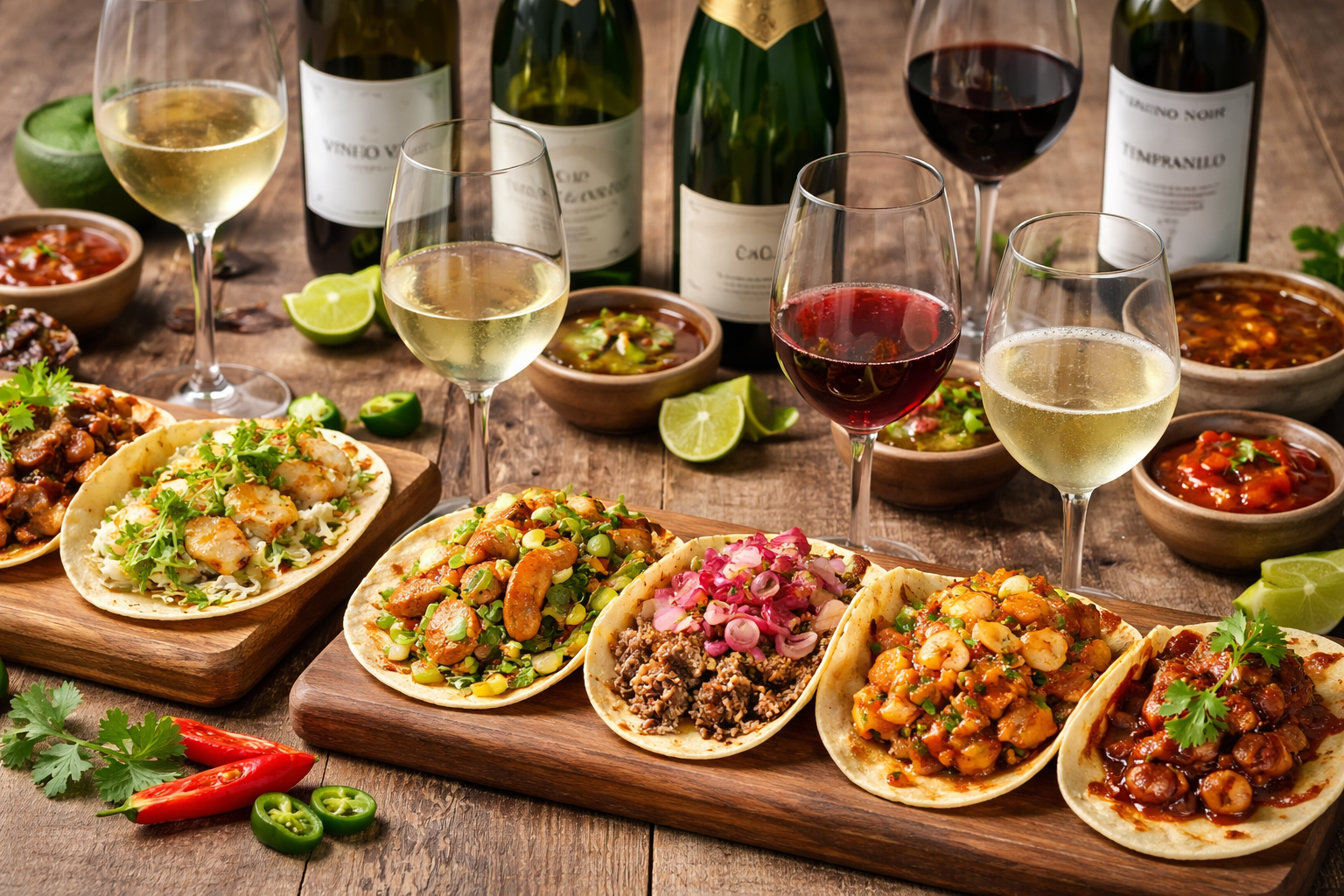
Here is where the broad advice gets more useful. Match the taco style, then make a small adjustment for salsa and heat.
| Taco style | Best first pick | Strong backup | Why |
|---|---|---|---|
| Fish tacos | Albarino | Vinho Verde, Sauvignon Blanc, dry rose | Bright acid and freshness fit slaw, citrus, and delicate seafood. |
| Chicken tacos | Vinho Verde | Sauvignon Blanc, lighter Chardonnay | Flexible with grilled, citrusy, or herb-forward builds. |
| Carnitas | Pinot Noir | Dry rose, Brut rose | Pork wants freshness and enough shape for richness. |
| Al pastor | Brut Cava | Off-dry Riesling, balanced Chardonnay | Pineapple and spice pull the pairing away from standard red-meat logic. |
| Carne asada | Young Tempranillo | Pinot Noir, Garnacha | Savory meat and char like a fresh red more than a bruiser. |
| Birria or barbacoa | Pinot Noir or fresh Tempranillo | Off-dry Riesling if the salsa is hotter | Brothy, savory fillings need fruit and acid without rough tannin. |
| Vegetarian tacos | Dry rose | Sauvignon Blanc, sparkling wine, Pinot Noir for mushrooms | Roast, smoke, and spice matter more than the absence of meat. |
Fish tacos: this is where Albarino shines. High acid, citrusy energy, and that stony edge work with slaw, lime, and flaky white fish. For richer fish or grilled salmon tacos, a little more body can help, and the logic lines up with these salmon pairing rules where char and oil ask for more shape than delicate seafood does.
Chicken tacos: grilled chicken with lime and herbs leans toward Vinho Verde or Sauvignon Blanc. Creamier chicken tacos can handle a balanced Chardonnay, but keep the oak in check. Heavy vanilla-oak Chardonnay gets clumsy fast here.
Carnitas: this is one of my favorite taco-and-wine matches because the pork gives you room to play. Pinot Noir is usually the neatest red. Dry rose is the easier bottle when the toppings get punchy. Brut rose is quietly excellent if the pork is crisp at the edges.
Al pastor: the pineapple changes the whole thing. This is the taco that proves why protein-only pairing advice falls apart. The pork matters, yes, but the sweet-savory fruit note and spice often make Cava or off-dry Riesling a better call than a dry red.
Carne asada: here a young Tempranillo or Garnacha makes sense. You get enough fruit for the grill marks and enough acidity to stay alive with salsa. Big Cabernet can look tempting. It misses more than people admit.
Birria: think about the broth, the dunking, and the spice. You need fruit and freshness. A fresh Tempranillo or Pinot Noir can be lovely. If the consommé and salsa roja lean hotter and more tomato-driven, the same acid-first thinking behind these tomato sauce pairings starts to matter.
Vegetarian tacos: roasted mushroom tacos can take Pinot Noir. Cauliflower with chile and lime is happier with rose or Riesling. Bean tacos, oddly, are more about texture and salsa than the beans themselves.
Let salsa, lime, and heat make the final call
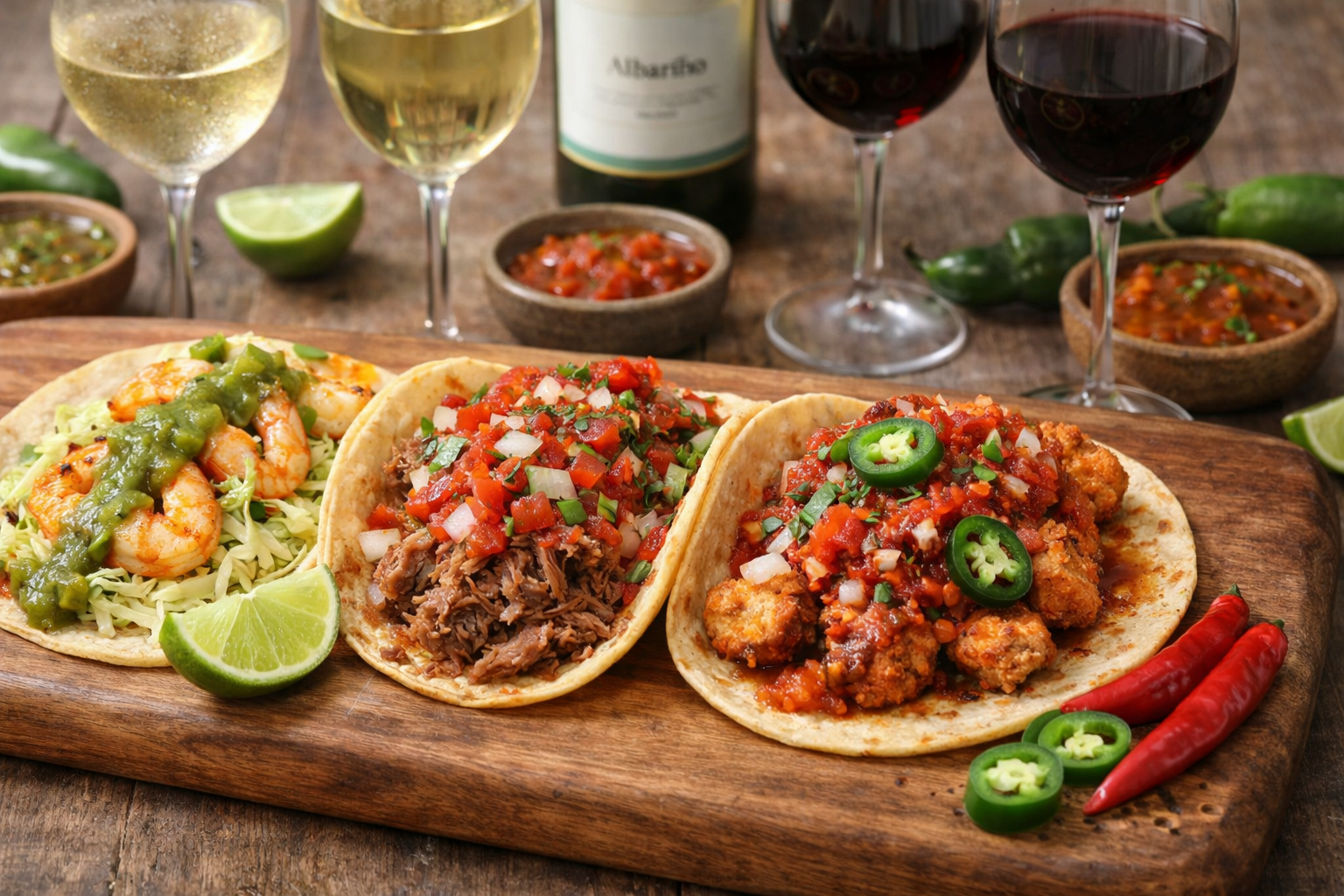
This is where most pairings live or die. A taco can start in one lane and end in another once the toppings land.
Salsa verde and lime: both push you toward high-acid wines. Albarino, Vinho Verde, Sauvignon Blanc, and Brut sparkling wine all handle that zippy green brightness well. Soft, low-acid wines can taste sleepy next to fresh acid. You notice it right away.
Salsa roja and tomato-heavy sauces: now you need enough acid in the wine to keep up. This does not mean “red only.” It means the wine cannot be lazy. Fresh Tempranillo, Sangiovese-led reds, rose, and some sparkling wines all make sense based on the whole taco.
Hot salsa and fresh chiles: this is where off-dry Riesling earns its paycheck. WSET explains that a touch of residual sugar can soften the perception of heat, while lower alcohol avoids amplifying the burn. That is why spicy tacos and bone-dry high-alcohol reds often feel like a dare you did not agree to.
Crema, avocado, and fried batter: go back to acid and bubbles. WSET’s takeaway pairing guide notes that sparkling wine cuts through fat, oil, and salt with a palate-cleansing effect. You can taste that with battered fish tacos in one sip. Crunch, richness, then reset. Very satisfying.
Pineapple, mango, or sweet-spicy toppings: think balance, not force. This is one reason the same dry red that behaves with carne asada can stumble with al pastor. Fruit in the taco shifts the center of gravity.
Small cheat sheet: green and citrusy tacos like high-acid whites, fried tacos like bubbles, and spicy tacos like lower alcohol plus a touch of sweetness.
The same logic shows up with herb-heavy, chili-driven meals outside tacos too. This Vietnamese food pairing guide lands in a very similar place: acid, freshness, and lower tannin beat muscle wine most of the time.
When red wine works with tacos, and when it falls apart
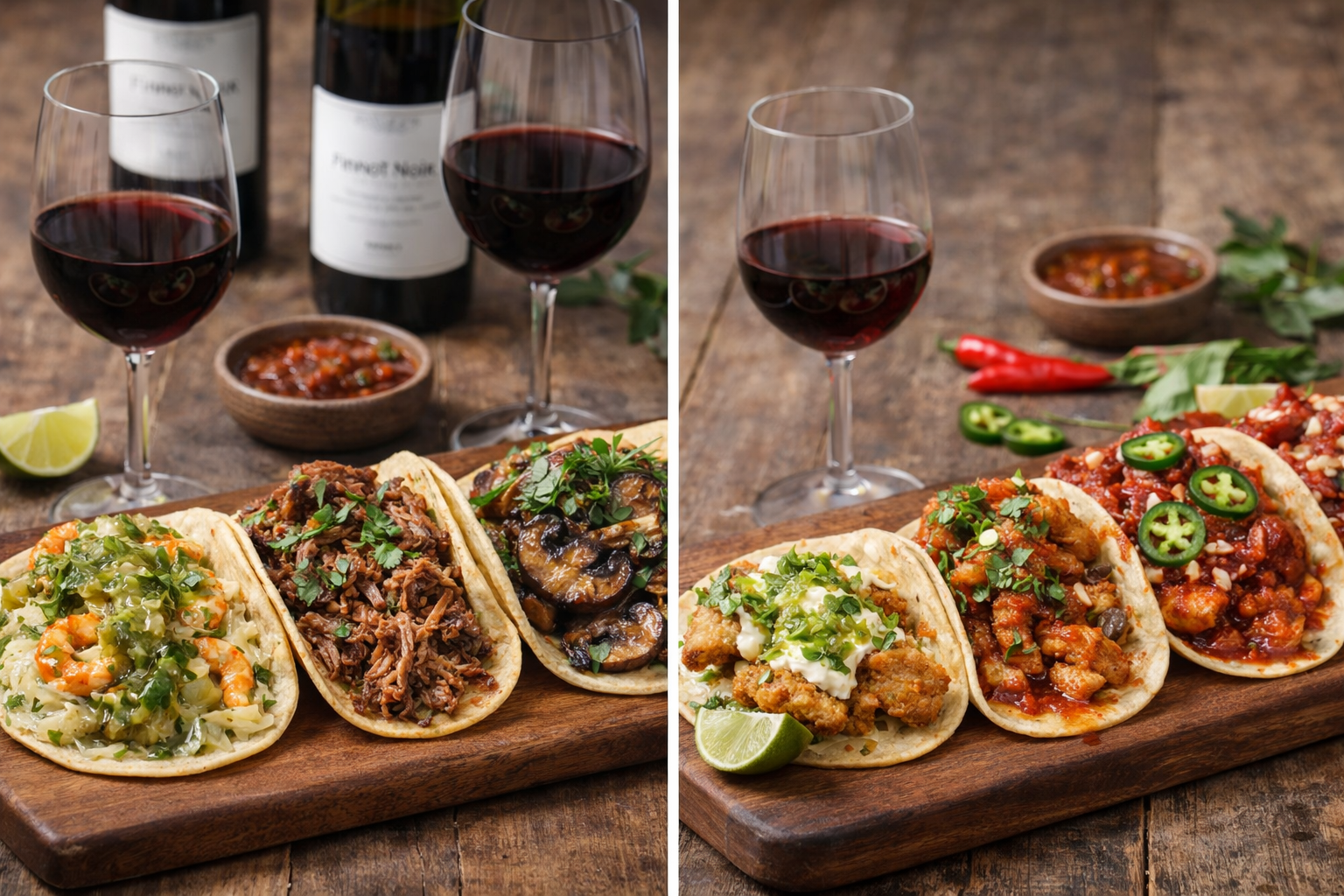
Yes, red wine can work with tacos. It just has to be the right kind of red.
Red works when the taco is more savory than spicy. Carne asada, carnitas, grilled mushroom tacos, barbacoa, and some birria builds can pair beautifully with Pinot Noir, young Tempranillo, fresh Garnacha, or a light Sangiovese-based red. These wines have enough fruit and structure to hold the meat, but they do not come in swinging.
Red falls apart when heat, acid, or frying take over. Fresh jalapeno, hot salsa, a hard squeeze of lime, and crisp fried batter all make many reds look older, rougher, and more alcoholic than they are. That is not a flaw in the wine. It is a mismatch in the moment.
WSET’s spice guidance is useful here too: tannin can feel harsh with spicy food, and alcohol can feel hotter. So if you want a red, lower tannin is the safer lane. Pinot Noir is usually the easiest. Young Garnacha can be great with smoky pork or beef. Young Tempranillo works with char and savory depth. Give the bottle a light chill if the day is warm or the tacos are herb-heavy. About 12 to 15 degrees Celsius feels good for fresh reds like these.
Red wine yes / maybe / no
- Yes: carne asada, carnitas, grilled mushrooms, barbacoa with mild salsa
- Maybe: birria, depending on heat and tomato
- No, usually: battered fish tacos, very spicy tacos, lime-heavy tacos, sweet-spicy al pastor
The mistake here is thinking “more flavor” means “bigger red.” Tacos rarely want a bigger red. They want a fresher one.
The taco-and-wine mistakes that make good bottles taste worse
Buying a bold tannic red for spicy tacos.
This is the classic miss. Chili heat plus tannin can feel drying and rough. The wine did not fail on its own. The pairing did.
Using high alcohol to fight heat.
That move backfires. WSET notes that alcohol intensifies when it meets spice. So the hot, ripe red that felt plush on its own can turn sharp and boozy next to salsa.
Ignoring acidity in the taco.
Lime, salsa verde, pickled onions, and tomato-based salsas need a wine with enough zip to stay awake. Low-acid wines can go flat really fast.
Assuming all Chardonnay is the same.
A balanced, lightly oaked Chardonnay can work with grilled chicken tacos or al pastor. A thick, buttery, vanilla-heavy Chardonnay with fish tacos and lime? Usually a mess. Grape name is not enough. Style matters.
Forgetting that texture changes the match.
Fried fish tacos and soft-braised birria are not even remotely the same pairing problem. Fried food loves bubbles and acid. Brothy, savory tacos ask for fruit and gentler tannin.
Letting the protein bully every other detail.
This is the big one. Beef does not always mean red. Fish does not always mean still white. Tacos are built dishes. Read the whole thing.
Quick sanity check: if the taco is bright, spicy, fried, or topped with fruit, step away from the heaviest red on the shelf.
A 30-second routine for choosing the right wine every time
You do not need a tasting grid for this. You need a fast routine you can run in a store aisle or off a restaurant menu.
Step 1. Spot the loudest element.
Is it the fish? The grilled beef? The salsa verde? The jalapeno heat? The pineapple? Pick the one thing you will taste first and last.
Step 2. Decide whether the taco feels bright, rich, or savory.
Bright means lime, herbs, slaw, salsa verde. Rich means fried batter, crema, avocado, melted cheese. Savory means char, broth, roasted meat, mushrooms.
Step 3. Check the heat honestly.
Mild, medium, or loud. People under-call heat all the time. Be real with yourself here.
Step 4. Pick the lane.
Bright tacos: Albarino, Vinho Verde, Sauvignon Blanc, dry rose.
Rich or fried tacos: Brut sparkling wine, especially Cava, plus dry rose.
Savory meat tacos: Pinot Noir, young Garnacha, young Tempranillo.
Spicy tacos: off-dry Riesling.
Step 5. If still unsure, buy dry rose or Brut sparkling wine.
That is the safety net. Not flashy. Just smart.
The rule worth remembering is simple: pair to the brightest or hottest thing on the taco, not the thing buried underneath it.
FAQ
Is rose really the safest one-bottle answer for taco night?
Most of the time, yes. Dry rose covers more taco styles than almost any still wine because it has enough freshness for fish and lime-heavy toppings, but enough body for pork, chicken, and many beef tacos. Brut sparkling wine is the other top blind pick when the table leans fried or mixed.
What wine goes best with birria tacos?
Fresh Pinot Noir and young Tempranillo are good first picks when the birria is more savory than fiery. If the consommé, salsa, or tomato note gets louder, shift toward a higher-acid option or even off-dry Riesling if the heat is noticeable.
Can Chardonnay work with tacos?
Yes, but only the right style. A balanced, not-too-oaky Chardonnay can work with grilled chicken tacos or al pastor. Heavy buttery Chardonnay usually struggles with fish tacos, bright salsa, and lime because the wine feels bulky next to all that freshness.