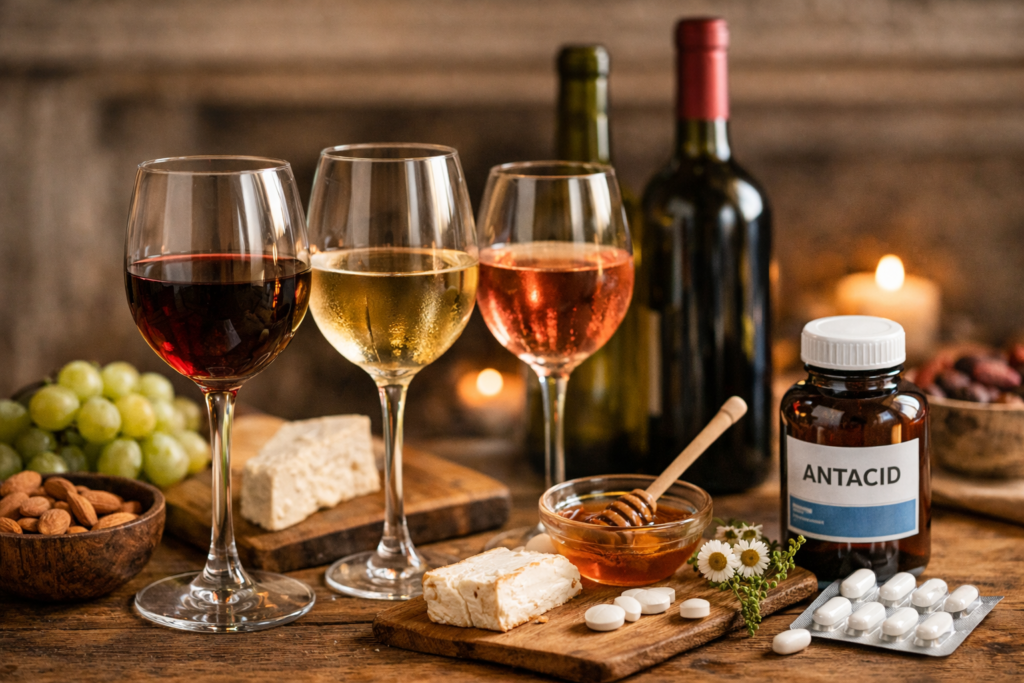
If you’re looking for the best wine for ulcers, the blunt answer is this: during an active or suspected peptic ulcer, the best pick is usually no wine at all.
That’s the part most pages dance around. They start talking about gentle drinks, soothing teas, or lower-acid options. Fair enough, but it skips the real point. An ulcer is not a wine-pairing puzzle. It is a sore in the stomach or duodenal lining that needs time and treatment to heal.
I’ve watched smart people get pulled into the same trap. The pain flares after a glass of red, so the hunt begins for a smoother white, a softer Pinot, a low-acid bottle, something that sounds less sharp. It feels tidy. It just points at the wrong lever.
Shopping for a gentler wine while an ulcer is active is a bit like choosing softer laces for a twisted ankle. The tweak is somewhere else.
- why wine is usually a bad bet while an ulcer is healing
- what actually causes most stomach ulcers
- why “low-acid wine” is a weak shortcut
- what to drink instead right now
- when alcohol can be reconsidered after healing
- which red-flag symptoms need medical care, not more experimenting
Fast call: what to do next
| Your situation | Best move | Why |
|---|---|---|
| Active ulcer symptoms now | Skip wine | Alcohol can irritate an already raw lining |
| Ulcer not confirmed yet, but pain, nausea, or burning are ongoing | Skip wine and get checked | You do not need a “better bottle” before you know what is going on |
| On ulcer treatment | Hold alcohol | Symptoms can flare and some regimens clash with alcohol |
| Ulcer healed and cleared by a clinician | Re-test slowly, with food | Now the question becomes personal tolerance, not a magic wine type |
One useful rule: if the ulcer is still an active issue, think healing first and wine second.
Best Wine for Ulcers? Usually None Until the Ulcer Heals
The short answer belongs right up front. If you have an active stomach ulcer, a duodenal ulcer, or ulcer-like symptoms that have not been worked up yet, there is no wine style with a good safety case behind it.
That includes red wine, white wine, dry wine, sweet wine, and the whole “maybe a low-acid bottle is fine” lane. None of those has been shown to be ulcer-safe during active healing. The smarter move is plain, boring, and annoyingly right: pause wine until the ulcer is treated and the stomach settles.
Remember: the main mistake here is treating an active ulcer like a flavor problem. It is a healing problem.
That’s not fearmongering. It is just a clean read of the situation. When the lining is already injured, adding alcohol on top is rarely the clever play. Some people feel that after two sips. Others notice it later in the evening. Either way, the bottle is not helping you win.
The answer changes after healing. We’ll get to that. But while the ulcer is active, “best wine” is basically the wrong question.
What Causes Ulcers and Why Wine Is Only Part of the Problem
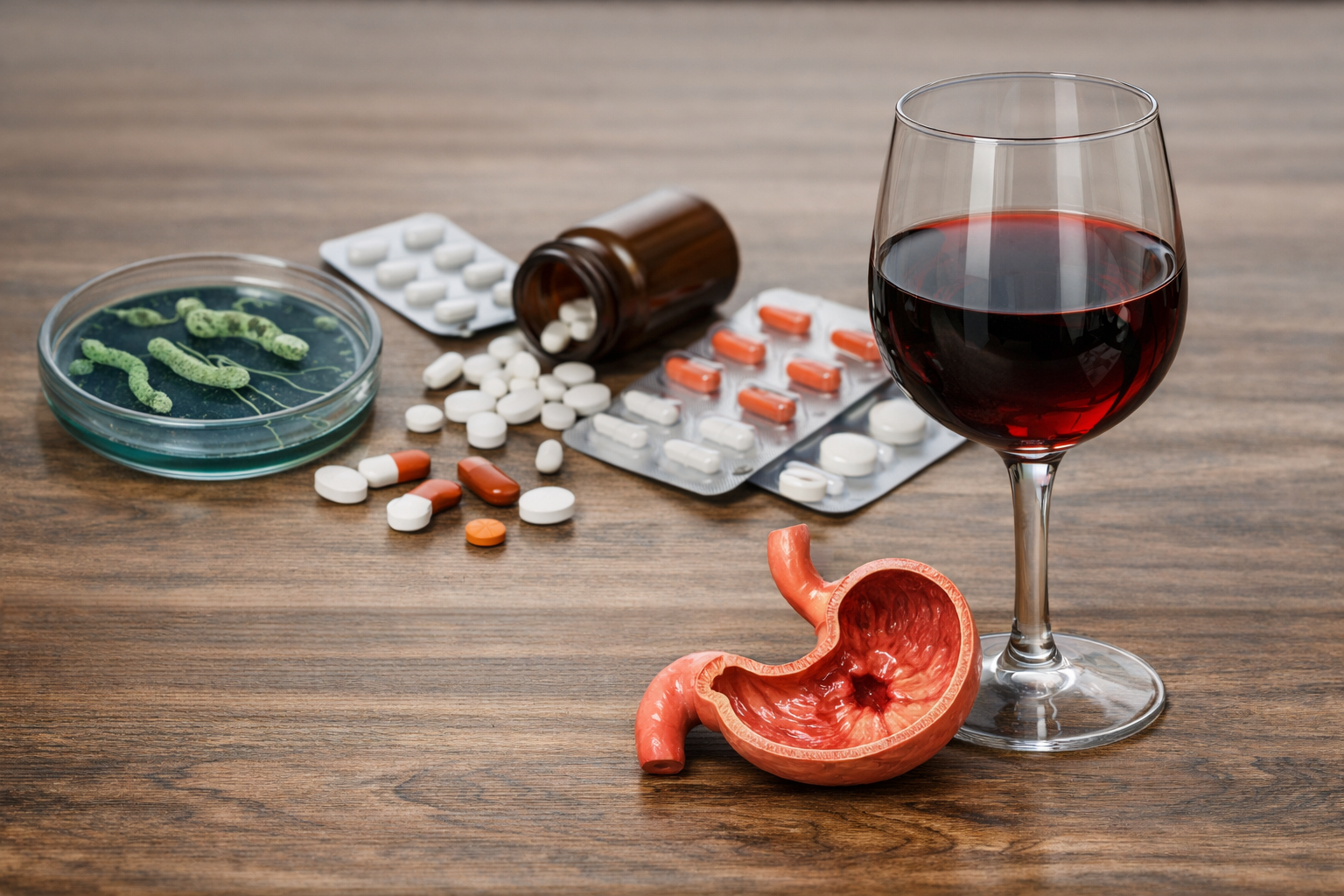
The National Institute of Diabetes and Digestive and Kidney Diseases lists H. pylori infection and nonsteroidal anti-inflammatory drugs such as aspirin, ibuprofen, and naproxen as the two most common causes of peptic ulcers. So if you’re only looking at the wine glass, you’re often staring at the side issue and missing the main one.
That matters because people love to blame whatever hurt last. The wine burned, so wine must be the cause. Sometimes it is just the thing that exposed the sore spot. If the real driver is H. pylori, or a steady run of NSAIDs for headaches, joint pain, or period cramps, then the fix lives in diagnosis and treatment, not in swapping Cabernet for Pinot Grigio.
Ulcer treatment usually means proton pump inhibitors, sometimes H2 blockers, and antibiotics when H. pylori is present. That is the stuff that moves healing along. A clever drink choice does not do that job.
Wine still matters, just not in the starring role. It can stir up symptoms, it can make an already irritated lining feel worse, and it can muddy the picture when you’re trying to tell whether treatment is working. That’s why I like a simple frame here:
- If the ulcer is untreated, deal with the cause.
- If the ulcer is being treated, do not give it extra friction.
- If the ulcer is healed, then you can test tolerance with more sense and less guessing.
Why Low-Acid or Red Wine Is Not a Reliable Workaround
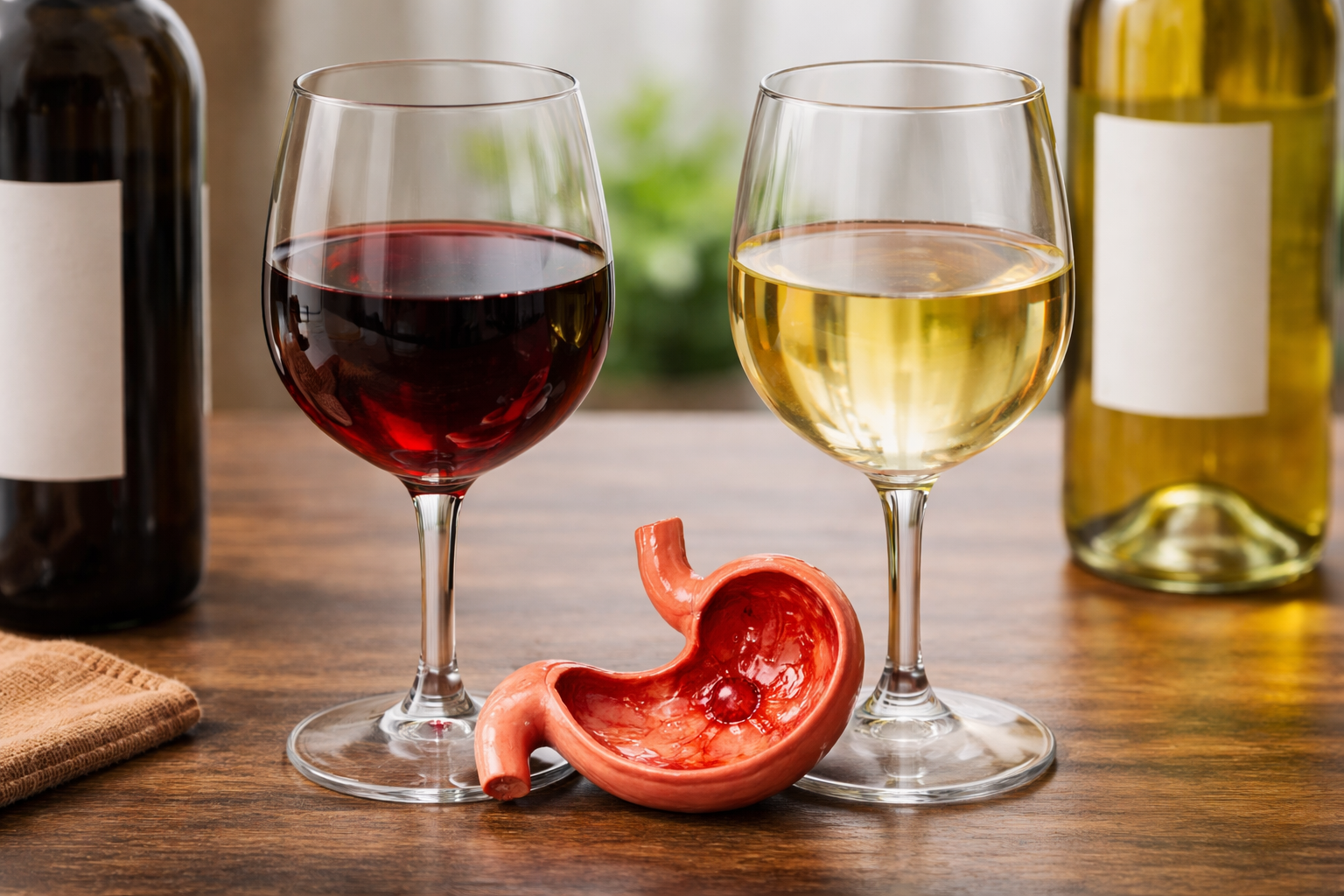
Mayo Clinic notes that too much alcohol can irritate and eat away at the mucous lining in the stomach and intestines, which gets to the core issue fast. The trouble is not just grape acidity. It is the alcohol itself landing on tissue that is already sore, inflamed, or healing.
That is why “low-acid wine” sounds smarter than it often is. It borrows logic from acid reflux content and tries to paste it onto peptic ulcers. There is overlap, sure. Acidic drinks can sting. But with ulcers, the bigger question is whether alcohol belongs in the picture at all while the lining is trying to recover.
Red wine gets dragged into this in two opposite ways. One camp says red is better because it has polyphenols and antioxidant chatter around it. The other says red is worse because of tannins and a rougher feel. Both arguments overplay small details and underplay the main fact that you are still drinking alcohol.
Some lab and animal research on red-wine compounds gets stretched way past its lane online. That’s how myths get legs. A test tube finding or a compound extracted from wine is not the same thing as you having a glass with dinner while your stomach is still angry.
Note: If a wine tip starts with pH, tannin, sweetness, or grape variety but skips healing status, it is upside down.
So no, red wine is not the “healthy” loophole here. White wine is not the clean loophole either. And dry wine is not a secret pass. If your ulcer is active, the smart answer is still to sit this round out.
What to Drink Instead While Your Ulcer Settles
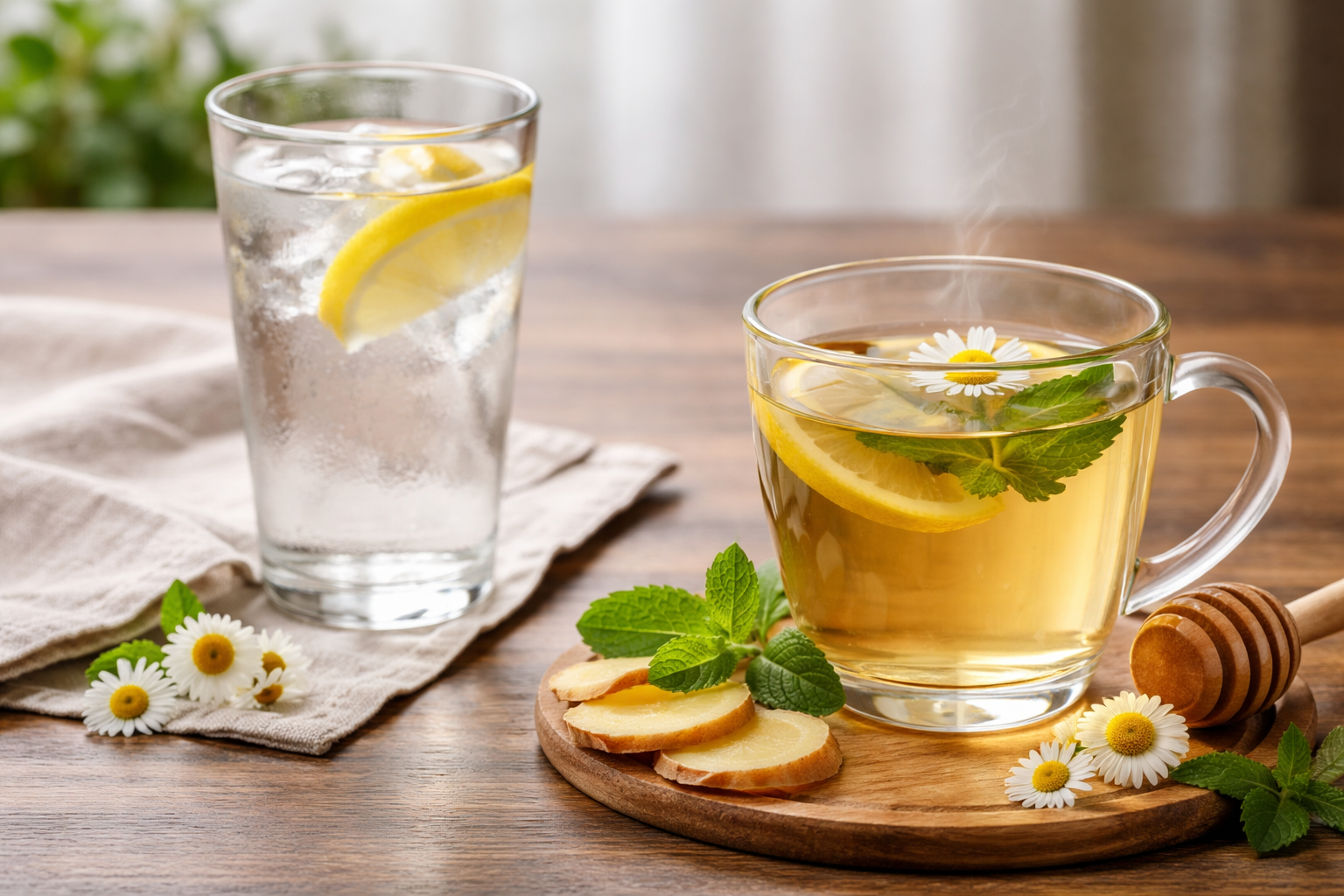
This part does not need to be glamorous. In fact, bland is your friend for a bit.
Water is the safest starting point. Then, if your stomach tolerates it, gentle non-caffeinated drinks such as a mild herbal tea can be fine. The useful filter is not “what sounds healthy.” It is “what does not stir things up.”
The same NIDDK guidance says doctors do not recommend a special diet or avoiding specific foods and drinks to treat or prevent peptic ulcers. That line matters. A soothing drink can calm symptoms for a while, but it is not doing the heavy lifting that ulcer treatment does.
So think in two buckets.
Bucket 1: low-drama drinks
- water
- plain still drinks that do not sting
- mild herbal tea if it sits well
Bucket 2: drinks that often annoy things
- wine and other alcohol
- coffee if it clearly bothers you
- very fizzy drinks if they make symptoms louder
- very citrus-heavy drinks if they burn on the way down
I would not chase trendy ulcer drinks too hard. Cabbage juice, kombucha, aloe, and “gut shots” can sound exciting on social media, but this is where people waste time. If a drink feels soothing and does not provoke symptoms, fine. If it feels like a weird little chemistry experiment in your stomach, bin it.
One practical trick helps more than people expect: drink nothing irritating on an empty stomach while symptoms are active. Even plain coffee drinkers who are normally sturdy sometimes notice that food changes the whole feel of things.
When Alcohol May Be Reconsidered After Healing
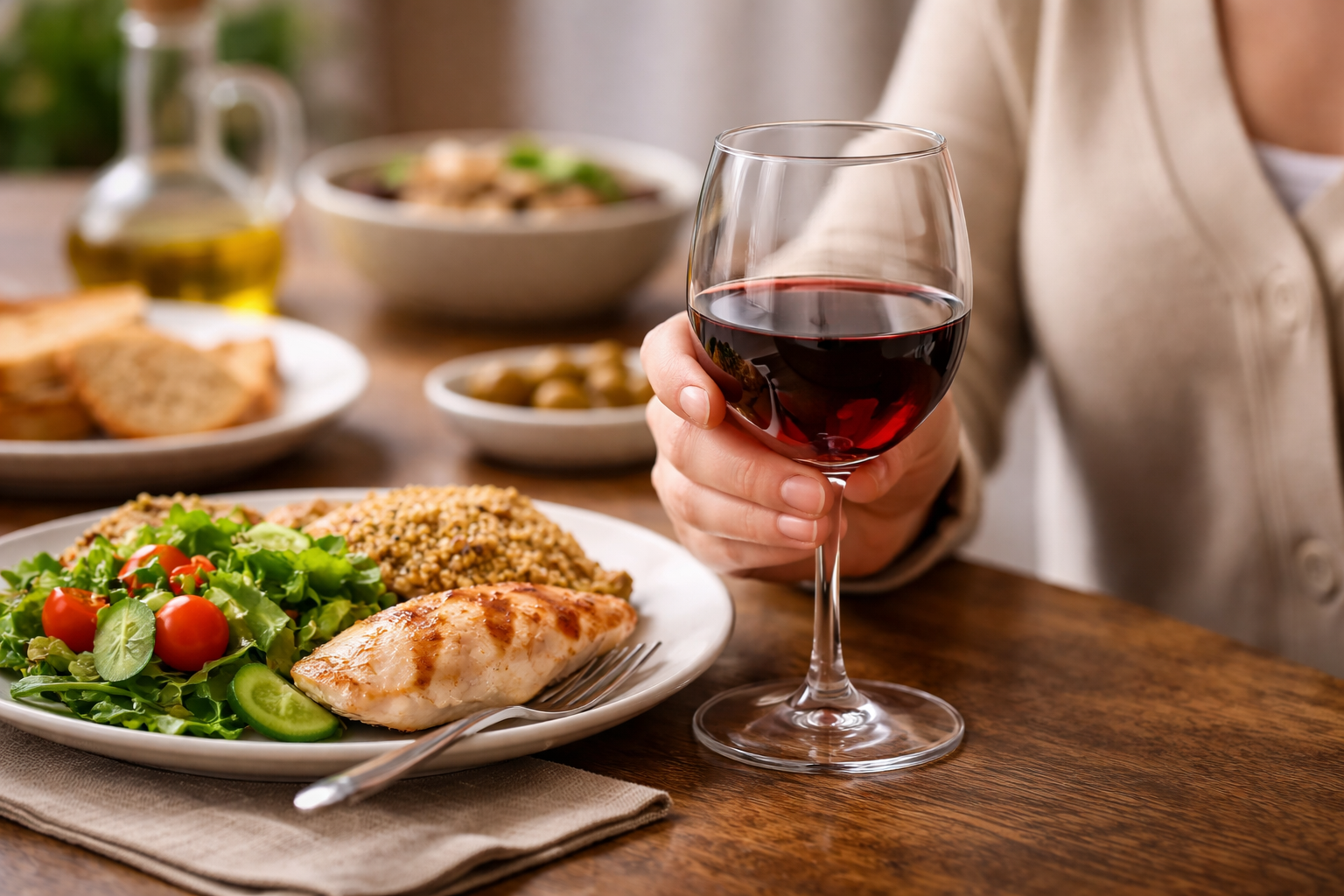
This is where the question gets more interesting.
Once the ulcer has been treated, symptoms have settled, and your clinician is happy with how things look, the issue is no longer “Which wine heals ulcers?” None does. The issue becomes “Can I tolerate alcohol again without symptoms coming back?” That is a different test.
MedlinePlus says to avoid alcohol while taking the bismuth, metronidazole, and tetracycline combination used for some ulcer-related H. pylori regimens, and for at least 3 days after treatment finishes. So if you are on that pack, the answer is easy for now: no wine.
After healing, the least messy way to re-test is pretty simple:
- Wait until the ulcer is actually under control. Feeling a bit better is not the same as being ready to experiment.
- Try a small amount. Not a generous pour. A small one.
- Drink it with food. Not on an empty stomach. That is where people get cocky and then regret it.
- Watch the next 12 to 24 hours. Burning, nausea, gnawing pain, bloating, or that familiar sore feeling count as your answer.
Fast call: after-healing test
If one small glass with food brings symptoms back, stop there. You do not need a second trial to prove the point.
The useful mindset here is not “find the safest grape.” It is “let your stomach vote.” Some people go back to a glass now and then with no trouble. Some never really do. That can be annoying, but it is clean information.
Ulcer Myths That Keep People Sore Longer
Myth 1: Milk heals ulcers.
Milk can feel soothing for a short stretch. That does not mean it is treating the ulcer. Relief and healing are cousins, not twins.
Myth 2: Spicy food causes ulcers.
The usual heavy hitters are H. pylori and NSAIDs. Spicy food can make symptoms louder in some people, but that is not the same thing as causing the sore in the first place.
Myth 3: A perfect ulcer diet can fix this on its own.
Food choices can make you feel better or worse, sure. They do not replace proper treatment when an ulcer is there.
Myth 4: Red wine gets a pass because it sounds healthier.
That is one of those ideas that survives because it is flattering. A thing can have interesting compounds in it and still be the wrong move for an active ulcer.
Myth 5: If the pain faded, the ulcer must be gone.
Not always. Symptoms can soften before the underlying issue is fully sorted. That is why people get into trouble by feeling halfway normal and then rushing back to coffee, ibuprofen, or wine.
Remember: symptom relief is nice. It is not a lab result.
The pattern I see most is this: a few quieter days, then a “just one glass” test, then surprise when the stomach bites back. That is not bad luck. That is timing.
Signs You Need Medical Care, Not Another Drink Swap
The NHS says vomiting blood, vomit that looks like coffee grounds, black sticky stools, and severe tummy pain are danger signs that need urgent care. Once any of those are on the table, this is no longer a drinks question.
Get checked quickly if you have:
- black or tar-like stool
- blood in vomit, or vomit that looks dark and grainy
- sudden strong stomach pain
- fainting, weakness, or dizziness with ulcer symptoms
- ongoing pain that is not calming down
- weight loss you did not mean to have
- trouble eating because you feel full too fast or sore too fast
And if the symptoms are not dramatic but keep hanging around, that still deserves attention. A month of adjusting drinks, nibbling plain food, and hoping for the best is not some noble gut-health experiment. It is usually just a detour.
Here is the rule worth keeping: if changing the drink is the only move left in the plan, the plan is too small.
FAQ
Is non-alcoholic wine safer if I have an ulcer?
Usually safer than regular wine because the alcohol piece is gone, yes, but not automatically comfortable. Some non-alcoholic wines are still acidic, sweet, or a bit irritating for people with active symptoms. If the ulcer is flaring, water and plain non-trigger drinks are still the cleaner bet.
Can I drink wine if I’m taking omeprazole?
Omeprazole itself is not a free pass. The bigger question is why you are taking it. If it is for an active ulcer or ulcer symptoms, wine can still make the stomach feel worse. If you are also on a metronidazole-containing treatment pack, alcohol should be avoided during treatment and for 3 days after it ends.
Is gastritis close enough to an ulcer that the same wine advice applies?
Close enough for the practical answer, yes. Gastritis and peptic ulcers are not the same thing, but both involve an irritated stomach lining. If alcohol clearly stings, worsens nausea, or brings back that gnawing pain, backing off wine while things calm down is a sensible move in either case.