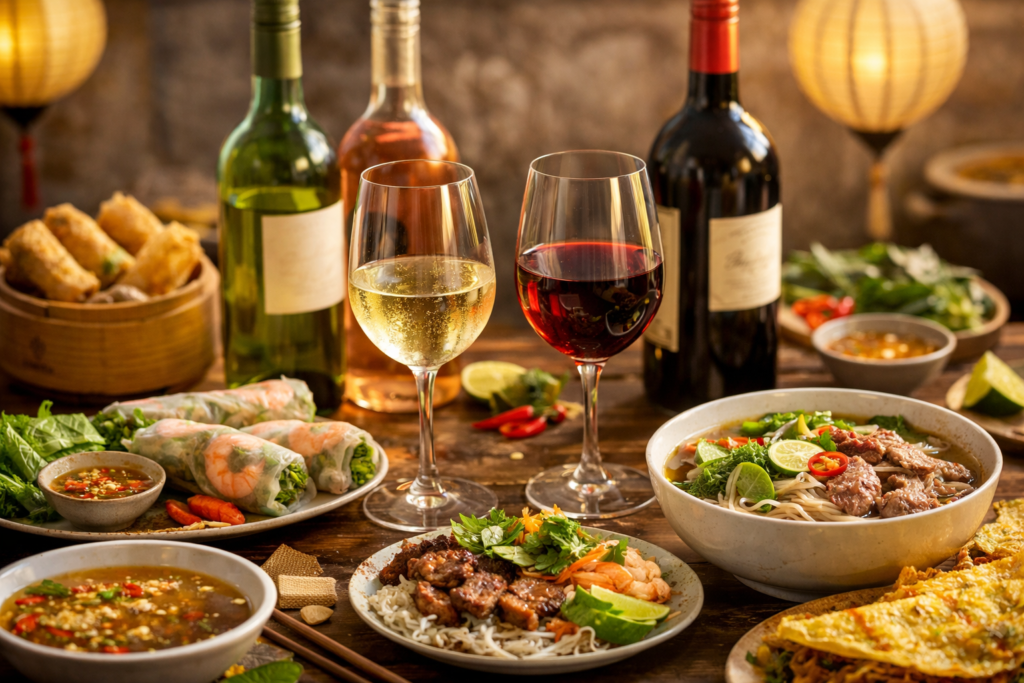
One bottle beside a Vietnamese spread can make you feel smart for about thirty seconds. Then the table fills up, the herbs hit, the fish sauce lands, someone adds chili, and the “safe” red you brought starts tasting like it showed up to the wrong party.
If you want the best wine for Vietnamese food, start with dry Riesling, Gruner Veltliner, Sauvignon Blanc, dry sparkling wine, or dry rose. If the meal leans grilled, beefy, or charred, light reds like Pinot Noir or Gamay can work too. That is the short answer.
The useful answer is a little sharper. Vietnamese food is not one flavor pattern. Vietnam Tourism notes that tables often include fish sauce, garlic and chili in vinegar, lime, herbs, and dipping sauces, which is exactly why generic “Asian food goes with Riesling” advice falls apart so fast. The bottle has to match the loudest thing on the plate, not just the cuisine name.
That is where people usually miss.
- Which wines are the safest overall with Vietnamese food
- When Riesling, Gruner, Sauvignon Blanc, sparkling, rose, or Pinot Noir wins
- What to pour with pho, banh mi, spring rolls, banh xeo, grilled pork, and shaking beef
- How fish sauce, herbs, chili, lime, and sweetness change the pairing
- Which wines usually fail, and why they fail
- A 30-second filter for restaurants, takeout, and bottle shops
At a glance: the fastest way to choose
| If the dish feels like… | Best wine lane | Why it works |
|---|---|---|
| Herbal, bright, limey | Gruner Veltliner or Sauvignon Blanc | Fresh acidity keeps up with herbs and citrus |
| Brothy and aromatic | Dry Riesling or Gruner Veltliner | Aromatics and lift fit the broth without crowding it |
| Fried and salty | Dry sparkling wine | Bubbles cut grease and wake up the palate |
| Sweet-spicy | Off-dry Riesling | A touch of sugar softens heat better than a bone-dry wine |
| Charred, porky, beefy | Pinot Noir, Gamay, or dry rose | Low tannin gives shape without turning bitter or harsh |
Best Wine for Vietnamese Food, in One Clear Answer
If you need the short list and nothing else, here it is.
Best overall white: dry Riesling or Gruner Veltliner.
Best bright backup: Sauvignon Blanc.
Best mixed-table rescue: dry sparkling wine.
Best bridge option: dry rose.
Best red lane: Pinot Noir or Gamay.
Those styles keep showing up for a reason. Vietnamese dishes often pull in herbs, broth, citrus, salt, and a little sweetness all at once. You want a wine with freshness and some aromatic lift, not a wine that arrives heavy, oaky, or hot. Think running shoes, not work boots.
Note: There is no single perfect bottle for every Vietnamese dish. There is a short list of wines that miss less often.
I’ve had Gruner save more Vietnamese takeout nights than any other white. It has enough snap for herbs and lime, enough savor for fish sauce, and it does not act like the loudest person at the table. Dry Riesling is just behind it, and sometimes ahead, especially with aromatic broths or visible chili.
If the menu is broad and you’re bringing one bottle, dry sparkling wine is the most forgiving move. It can handle fried starters, pork, herbs, and the usual mix of dips without getting weird.
Read the Dish Before You Read the Label
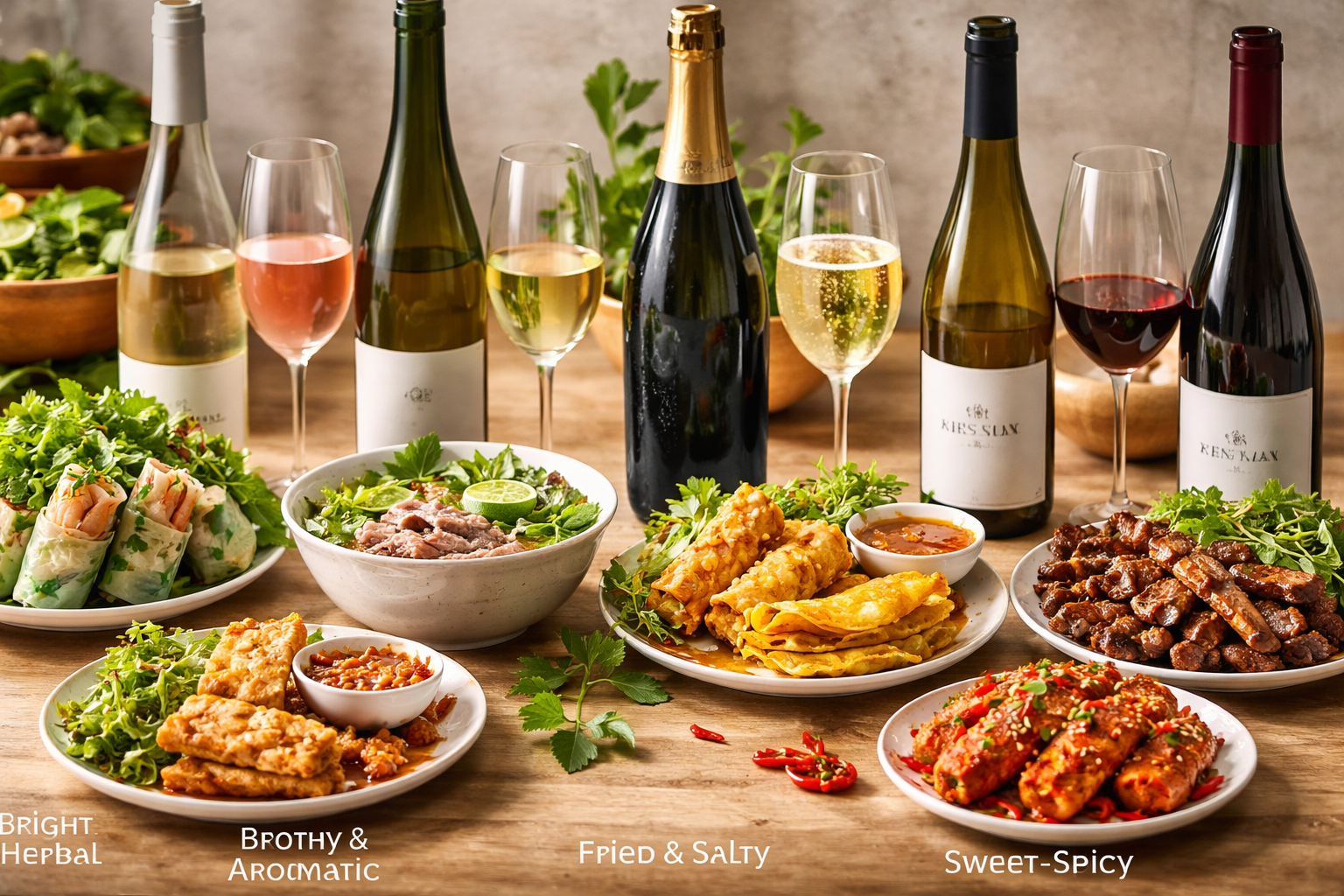
The cleanest pairing rule for Vietnamese food is simple: pair to the dish profile, not the cuisine label.
Most plates fall into one of five buckets, and once you spot the bucket the bottle gets much easier to call.
Bright and herbal. Think fresh rolls, herb-heavy salads, bun dishes, and plates with lots of mint, basil, cilantro, lime, or green crunch. These want high-acid whites, rose, or sparkling.
Brothy and aromatic. This is pho territory, and also gentler soups and noodle bowls. The wine has to respect aroma and texture. Dry Riesling and Gruner are the first places I’d look.
Fried and salty. Cha gio, banh xeo, and crispy bites like bubbles. Sparkling wine is not a fancy answer here. It’s the practical answer.
Sweet-spicy. If the dish has visible chili and a sweet-savory glaze, a bone-dry wine can taste sharper than you want. A little residual sugar smooths that out.
Charred or meaty. Grilled pork, shaking beef, and beefier broths can take more structure, but not a ton of tannin. Light reds and dry rose start to make sense.
This same dish-first logic shows up in other pairings too. A glazed or herb-led fish dish changes the bottle faster than the word “salmon” does, which is why these dish-first pairing rules for salmon line up so neatly with Vietnamese food.
Pro tip: If the dip is louder than the protein, pair to the dip first. Nuoc cham can change the whole call.
The Best White and Sparkling Wines for Vietnamese Food
Dry Riesling is one of the best answers for Vietnamese food because it brings citrus, floral lift, and real precision. It slides into pho, fresh herbs, lime, and cleaner noodle dishes without making the meal feel heavier. It also plays nicely with warm broth spices.
Off-dry Riesling is the better move once the dish turns spicy-sweet. WSET explains that spice changes how alcohol, sweetness, acidity, and tannin feel, and that is exactly why a touch of residual sugar helps with chili. Not a lot. Just enough to take the hard edge off.
Gruner Veltliner is the one I reach for when herbs and savory condiments are all over the table. It has that peppery, fresh thing that makes mint, basil, cilantro, lime, and fish sauce feel more connected. Gruner also behaves well with pork, which is handy because Vietnamese menus love pork in a lot of forms.
Sauvignon Blanc works best when the dish is green, crisp, and high-toned. Goi cuon, herb piles, lettuce wraps, and bright seafood dishes can make Sauvignon sing. But there is a catch. Loud Sauvignon Blanc can bulldoze a quiet bowl of pho ga. Good pairing, wrong mood.
Dry sparkling wine is the no-regret bottle for a mixed Vietnamese table. Fried food gets cleaned up, salty dips feel sharper, and the wine never asks for center stage. Brut Champagne, cava, and many traditional-method sparklers do the job well. Even a good dry prosecco can be a solid casual pick if the menu is light and snacky.
Dry rose is the sleeper. It can bridge pork, shrimp, herbs, fried food, and mild spice better than people expect. When the table is all over the map, dry rose is often calmer and more useful than a fancier white.
One useful label clue: standard wine sweetness scales place off-dry between dry and medium-sweet styles. That matters because “Riesling” alone tells you very little. Dry Riesling and off-dry Riesling can behave like two different people at dinner.
When Red Wine Works With Vietnamese Food
Red wine is not wrong with Vietnamese food. Big red wine is usually wrong.
The best red wine with Vietnamese food is usually Pinot Noir or Gamay. Both bring fruit, freshness, and low tannin. They give the dish shape, but they do not turn fish sauce, herbs, and chili into something metallic or bitter.
Pinot Noir works when the plate leans toward grilled pork, shaking beef, duck, mushroomy broth, or richer noodle dishes. The trick is to keep the style light on oak and sane on alcohol. Cool-climate Pinot is often the sweet spot.
Gamay, especially in a juicy Beaujolais style, is even safer in some cases. It has less brooding weight than many Pinots, and that can be a gift with Vietnamese food. Grilled pork with herbs, caramel notes, and char can make Gamay look very smart for not much money.
Dry Lambrusco is the oddball that can work better than you’d think with pork, fried bites, and richer snacky tables. The fizz helps, the fruit helps, and the tannin stays low. It is not the first answer, but it is a fun one.
Remember: Beef does not automatically mean Cabernet. With pho or shaking beef, broth, sauce, herbs, and sweetness still matter more than the protein headline.
If you want a red, look for three things: low tannin, moderate alcohol, and little or no obvious oak. If the bottle sounds stern, dense, or “powerful,” keep walking.
Match the Bottle to Classic Vietnamese Dishes
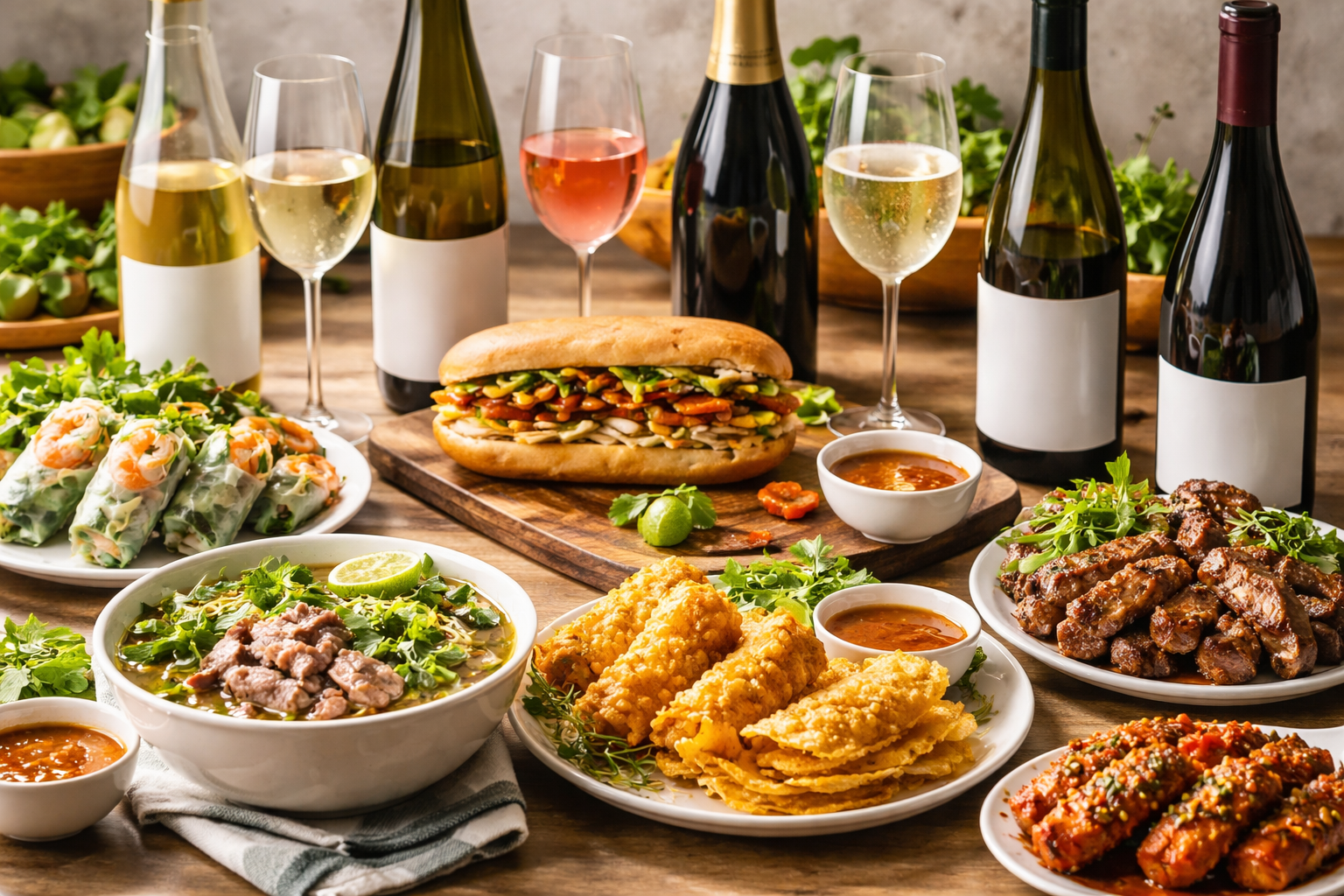
This is where the theory turns into dinner.
| Dish | Best wine styles | What makes the match work |
|---|---|---|
| Pho | Dry Riesling, Gruner Veltliner, light Pinot Noir for beef pho | Aromatics, broth lift, gentle structure |
| Fresh spring rolls | Sauvignon Blanc, dry Riesling, sparkling wine | Herbs, crunch, dipping sauces, brightness |
| Banh mi | Dry rose, sparkling wine, Pinot Noir | Salt, fat, pickles, chili, and texture all at once |
| Banh xeo and fried bites | Dry sparkling wine, rose, fresh whites | Fried texture and savory dips want lift |
| Bun cha and grilled pork | Gamay, Pinot Noir, Gruner, dry rose | Char, pork fat, herbs, and sweet-salty balance |
| Bo luc lac and richer beef dishes | Pinot Noir, Gamay, fuller dry rose | Beef can take more shape, but still not harsh tannin |
Pho: This is where people get overconfident with red wine. Britannica describes pho broth as a mix of star anise, cloves, cinnamon, cardamom, coriander, and often fish sauce. That means the wine has to handle broth, spice, herbs, and salt. Dry Riesling is beautiful here. Gruner is excellent too. Beef pho can stretch to a light Pinot Noir, but only if the wine stays silky and low in tannin.
Fresh spring rolls and herb-heavy plates: Go bright and alive. Sauvignon Blanc, dry Riesling, and sparkling all make sense. If the peanut sauce is thick and sweet, dry rose starts looking better.
Banh mi: Banh mi is a little chaos machine. Meat, pate, pickled vegetables, chili, herbs, and crusty bread all in one bite. Dry rose is the easiest answer. Sparkling is close behind. Pinot Noir can work with pork versions, especially if the chili stays moderate.
Banh xeo and fried starters: Bubbles. This is one of those times the obvious answer is also the best one. Sparkling wine cuts through oil and keeps the herbs from tasting sleepy.
Bun cha and grilled pork: This is where Gamay really earns its seat. You get smoke, pork, sugar, herbs, and a dipping sauce that can flip the meal from bright to savory in one forkful. Pinot Noir, dry rose, and Gruner can all work here too.
Shaking beef and richer beef dishes: You can move a notch darker, but not too far. Pinot Noir and Gamay still make more sense than Cabernet or Syrah in most cases. The dish may be beef, but the seasonings stay Vietnamese.
For shellfish-heavy rolls or lighter seafood plates, the same briny logic from clean white-wine pairings for vongole can help, especially if the dish is more about salinity, herbs, and citrus than heat.
Handle the Ingredients That Change the Pairing Fast
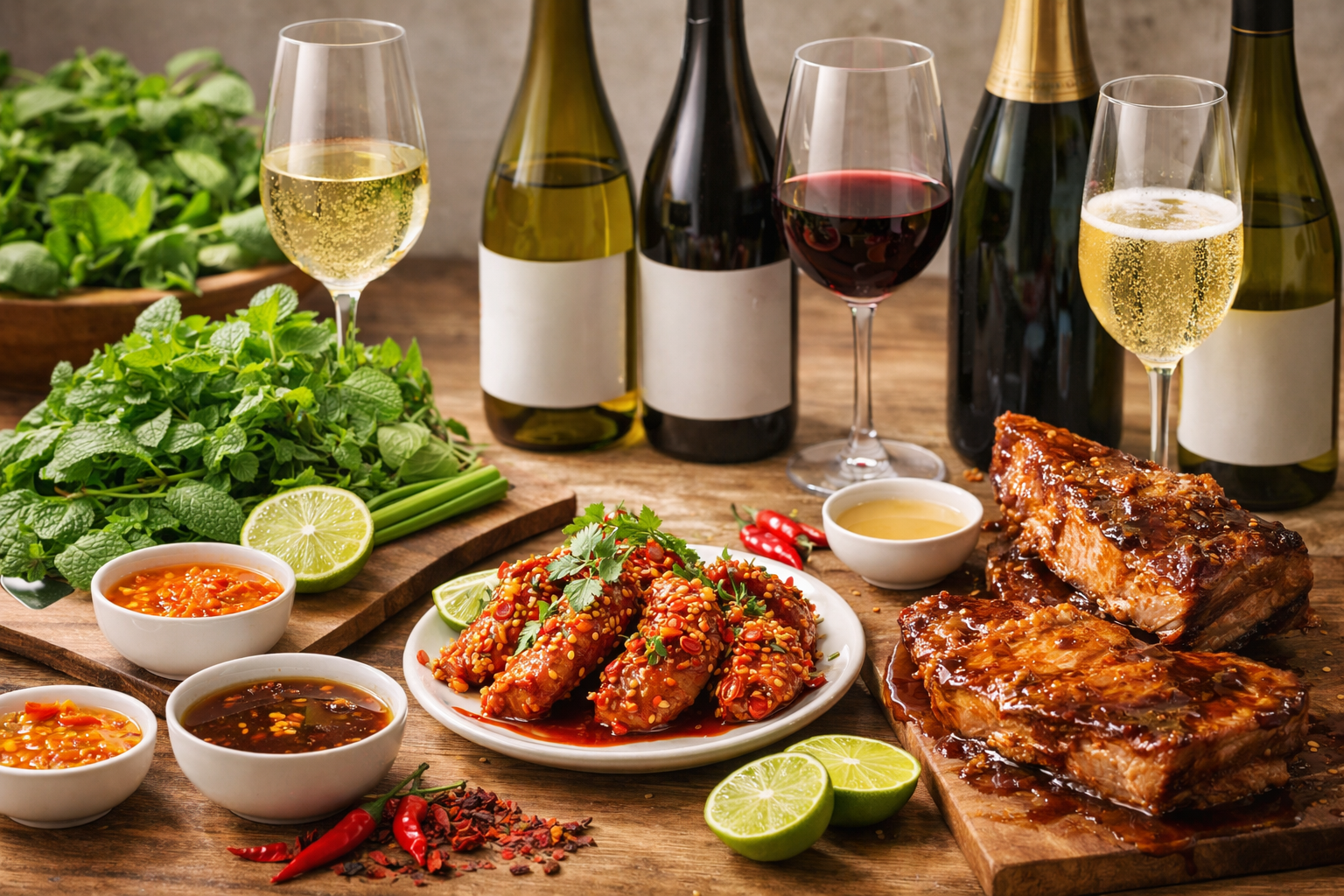
Sometimes the dish name helps. Sometimes it hides the real issue. These are the ingredients that swing the bottle hardest.
Fish sauce and nuoc cham: Salty, savory, a little sweet, sometimes sharp. Fresh whites and sparkling usually handle this better than tannic reds. Fish sauce can make stern reds feel rough and clumsy.
Fresh herbs: Mint, cilantro, basil, lettuce, and scallions push the meal toward fresher, higher-acid wines. Heavy oak with a big herb pile is not cute. It tastes tired.
Chili heat: This is where wine gets punished. WSET points out that alcohol feels hotter with spice, while a touch of sweetness can soften heat. That is why off-dry Riesling often beats a hotter, drier wine when the chili level rises.
Lime and vinegar: Acid in the dish asks for acid in the glass. Flat, soft wines tend to go dull here. Crisp wines feel cleaner and more awake.
Sugar and caramelized sweetness: Southern-style dishes, glazes, and sweet-savory sauces can make bone-dry wine seem hard. If the dish tastes a little sweet, the wine does not need to be sweet, but it should not be austere.
Fried texture: Bubbles love crispy food. That one is as close to a free square as pairing gets.
Quick switchboard
If herbs and lime lead: choose Gruner, Sauvignon Blanc, or dry Riesling.
If chili and sweetness lead: choose off-dry Riesling.
If frying leads: choose dry sparkling wine.
If char and pork lead: choose Gamay, Pinot Noir, or dry rose.
If broth and aromatics lead: choose dry Riesling or Gruner.
Avoid the Pairings That Usually Miss
Big tannic reds. Cabernet Sauvignon, heavily extracted Syrah, and other firm reds can make fish sauce, herbs, and chili feel harsher. The wine starts scraping the dish instead of supporting it.
High-alcohol wines with spicy food. If the dish has real chili heat, boozy wine throws fuel on it. You feel the alcohol first, and that is not where you want the meal to go.
Heavily oaked Chardonnay with delicate dishes. Oak can be lovely with roast chicken or creamy sauces. With spring rolls, herbs, or light pho, it often lands like a heavy coat in warm weather.
Bone-dry wine with sweet-savory dishes. If the plate has a little sugar in the glaze or sauce, severe dryness can make the wine taste meaner than it is.
Aggressive Sauvignon Blanc with quiet broth. This one catches people. Sauvignon is great with bright dishes, but some bottlings scream grapefruit and cut grass so loudly that a gentler soup just disappears.
Remember: Vietnamese food usually rewards restraint more than prestige. A humble, fresh bottle often beats a “serious” one.
Use a 30-Second Restaurant or Wine-Shop Filter
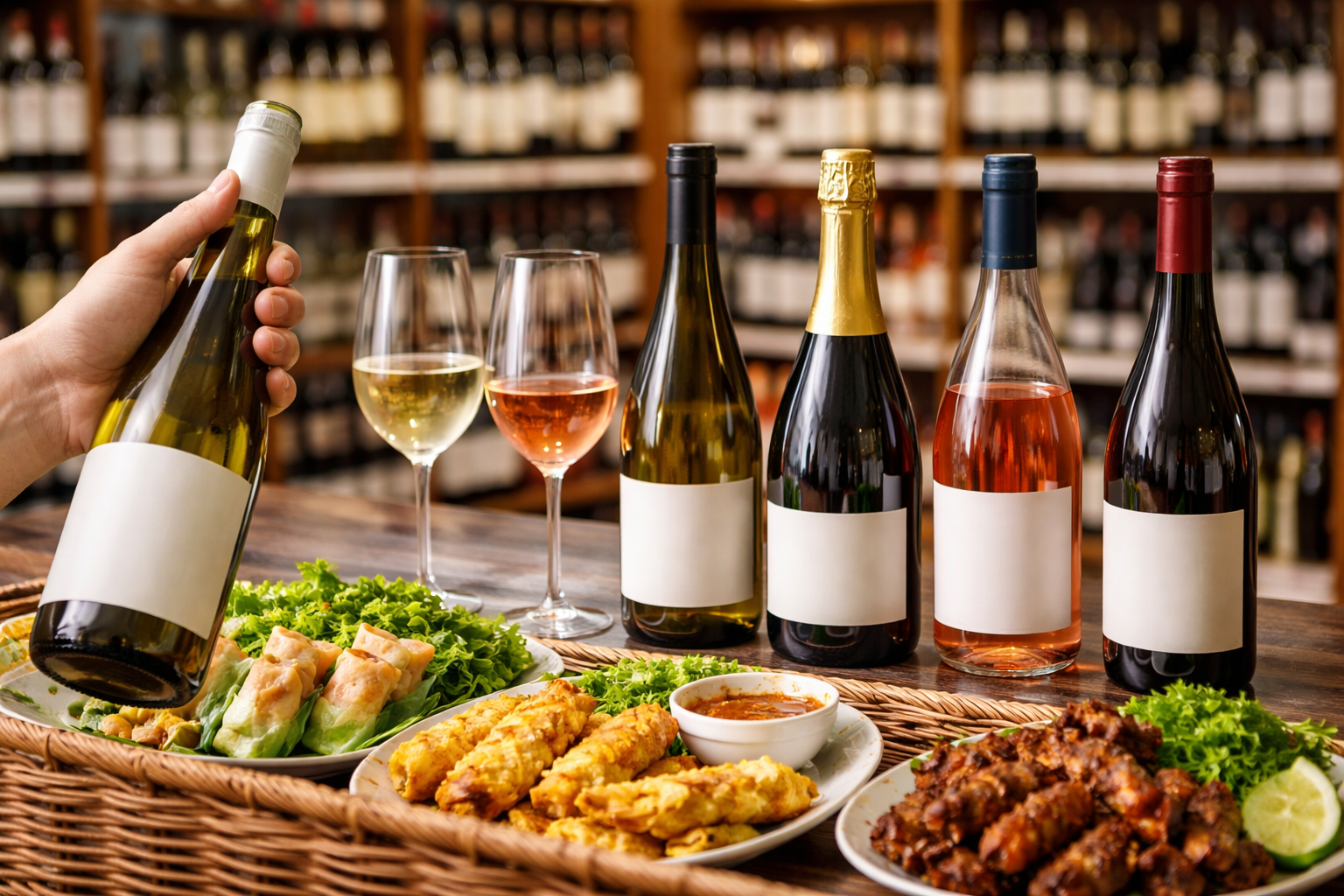
When you’re staring at a list or a shelf, this is the fastest clean method I know.
Step 1. Spot the loudest flavor.
Is the dish mainly herbal, brothy, fried, sweet-spicy, or charred? Do not start with the protein. Start with the loudest flavor event.
Step 2. Pick the right shape of wine.
Herbal and brothy means high-acid white. Fried means sparkling. Sweet-spicy means off-dry. Charred pork or beef means light red or dry rose.
Step 3. Cut out the risky bottles.
Skip obvious oak, high alcohol, and grippy tannin unless the dish is rich enough to carry them, and most Vietnamese dishes are not asking for that kind of push.
Step 4. Use a fallback if the table is mixed.
For one bottle with a broad Vietnamese order, go dry sparkling first. If sparkling feels wrong for the mood, go dry rose. If the table wants white, go Gruner or dry Riesling.
Three no-regret fallback picks
Best all-around white: Dry Riesling or Gruner Veltliner
Best mixed-table bottle: Brut sparkling wine
Best safe red: Pinot Noir or Gamay
If you need one sentence for a wine shop or server, use this: “I need something fresh, not oaky, and low in tannin for Vietnamese food.” That gets you closer, fast.
And if you want the whole article boiled down to one line, it is this: the best wine for Vietnamese food is usually a fresh, aromatic, low-tannin style that matches the dish’s herbs, broth, spice, or char instead of fighting it.
A few quick answers worth having
Is Riesling always the best wine for Vietnamese food?
No. Riesling is one of the safest overall answers, but not the only one. Dry Riesling is better for aromatic broths and fresher dishes, while off-dry Riesling is better once chili and sweet-savory sauces get louder. Gruner Veltliner, sparkling wine, dry rose, Sauvignon Blanc, Pinot Noir, and Gamay can all be better fits in the right lane.
What is the best red wine for Vietnamese food?
Pinot Noir is the safest red, with Gamay very close behind. Both keep tannin low and freshness high, which matters with herbs, fish sauce, broth, and chili. They work best with grilled pork, bun cha, pho bo, and richer beef dishes.
What should I bring if the table is ordering several Vietnamese dishes to share?
Bring dry sparkling wine first. It handles fried food, herbs, pork, seafood, and dipping sauces better than most still wines when the menu is mixed. Dry rose is the next easiest crowd-safe bottle.