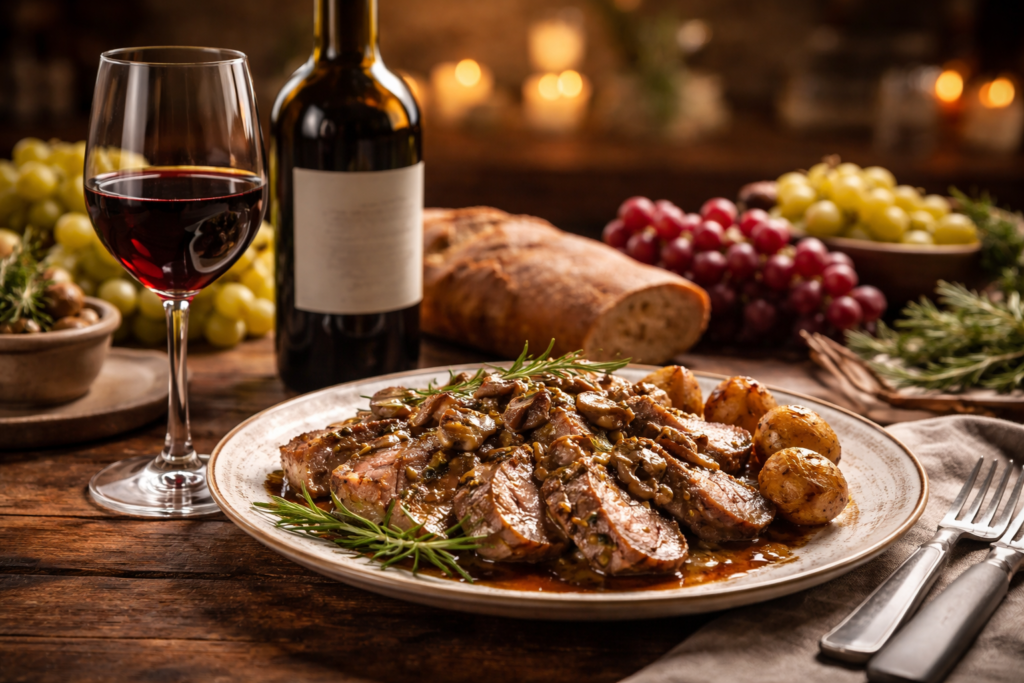
Veal is one of those dinners that makes lazy wine rules fall apart fast. I learned that the annoying way with a pretty serious red I opened for simple veal cutlets. The wine was lovely on its own. With the plate, it felt loud, woody, and just plain wrong.
If you want the best wine for veal, start with this short list: Pinot Noir, Barbera, Chianti, Chardonnay, Sauvignon Blanc, Pinot Grigio, or a dry sparkling wine. The trick is not the meat by itself. It is the sauce, the breading, and the cooking method that decide where the bottle should go.
That is why veal piccata, veal Milanese, veal parmesan, and osso buco should not share the same default pour.
Here is what this page will sort out for you:
- When red, white, or sparkling makes the most sense
- Which five wine styles are the safest starting lanes
- How lemon, cream, tomato, mushrooms, and breading change the answer
- What to pour with veal piccata, veal Marsala, veal chops, roast veal, and osso buco
- Which wine styles usually overpower veal or make the sauce taste flat
- What to bring when the host only says “we’re having veal”
At a glance: match the bottle to the loudest part of the plate
| If the veal is… | Start here | Why it works |
|---|---|---|
| Lemony, caper-led, or lightly sauced | Sauvignon Blanc or Pinot Grigio | Fresh acidity keeps up with the brightness on the plate |
| Creamy or mushroomy | Restrained Chardonnay or Pinot Gris | More texture, still not too heavy |
| Roasted, grilled, or served as chops | Pinot Noir or Barbera | Enough shape for meat, not so much tannin that it swamps it |
| Breaded or fried | Dry sparkling wine | Bubbles and acid cut through oil and crumbs beautifully |
| Tomato-led or cheesy | Chianti or Barbera | Tomato likes wines with real acidity |
| Braised and rich, like osso buco | Barolo, Barbaresco, or another earthy structured red | The dish finally has enough depth to handle more grip and savoriness |
Fast rule: pair to the sauce first, then check whether the wine’s body matches the weight of the dish.
The best wine for veal, in one clear answer
For most veal dishes, the safest answer is a fresh, balanced wine with moderate body and controlled tannin. That usually means a light-to-medium red like Pinot Noir, Barbera, or Chianti, or a crisp to lightly rounded white like Sauvignon Blanc, Pinot Grigio, or Chardonnay. If the veal is breaded and fried, dry sparkling wine often beats both.
The reason this works is pretty simple. Veal has a gentler flavour than beef, so huge tannin and heavy oak can make the plate feel smaller and the wine feel larger. Veal does have enough savoury depth to take red wine, but only when the red stays tidy.
Quick answer box
If you know nothing else, pour Sauvignon Blanc for veal piccata, Pinot Noir for veal chops, Chianti for veal parmesan, and Barolo or Barbaresco for osso buco.
The most common mistake is pairing to the word “veal” as if every recipe lives in the same lane. A pale, lemony scallopini and a slow braise with marrow are barely asking the same question.
Read the sauce first and the meat second
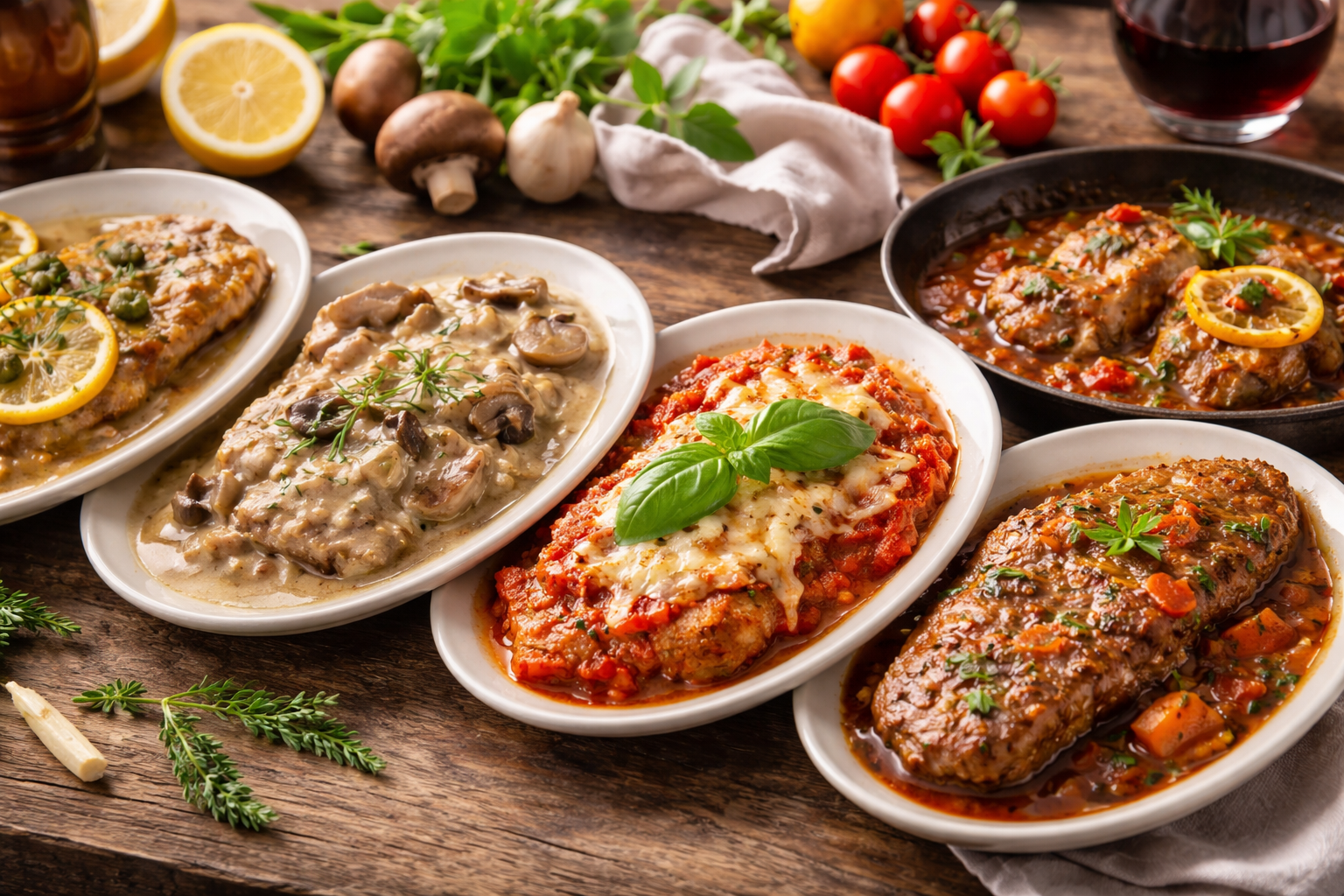
Le Cordon Bleu’s food and wine pairing guide tells cooks to balance intensity and pair to the most dominant flavour on the plate. That one rule clears up most veal confusion straight away. The meat matters, yes, but the louder element is often lemon and capers, cream and mushrooms, tomato and cheese, or the browned depth that comes from roasting and braising.
WSET’s pairing guidance on how fat, acid, salt, and tannin change the way wine tastes at the table helps here too. Acidic food can make wine feel softer. Fat can tame tannin. Salt can make fruit feel brighter. Once you know that, veal becomes less mysterious and much more mechanical in a good way.
So if the dish leans bright, your wine needs some zip. If the dish leans creamy, the wine needs a bit more roundness. If the sauce is tomato-heavy, the wine needs enough acidity not to sag. If the veal is braised until silky and rich, then you can step into a firmer, earthier red without knocking the plate over.
Choosing wine by protein alone is like buying shoes by colour. It sounds decisive, but it tells you almost nothing about the fit.
Read this part of the plate before you buy the bottle
- Lemon or capers
- Cream, butter, or mushroom sauce
- Tomato, cheese, or herbs
- Breading and frying oil
- Roast caramelization
- Braise, marrow, or stock reduction
That last point matters more than people think. Osso buco is still veal, but the marrow, stock, aromatics, and long cooking pull the dish into a darker, more savoury place. The wine has to meet that version of veal, not the delicate one people picture first.
Red or white wine with veal? Use this 30-second decision rule
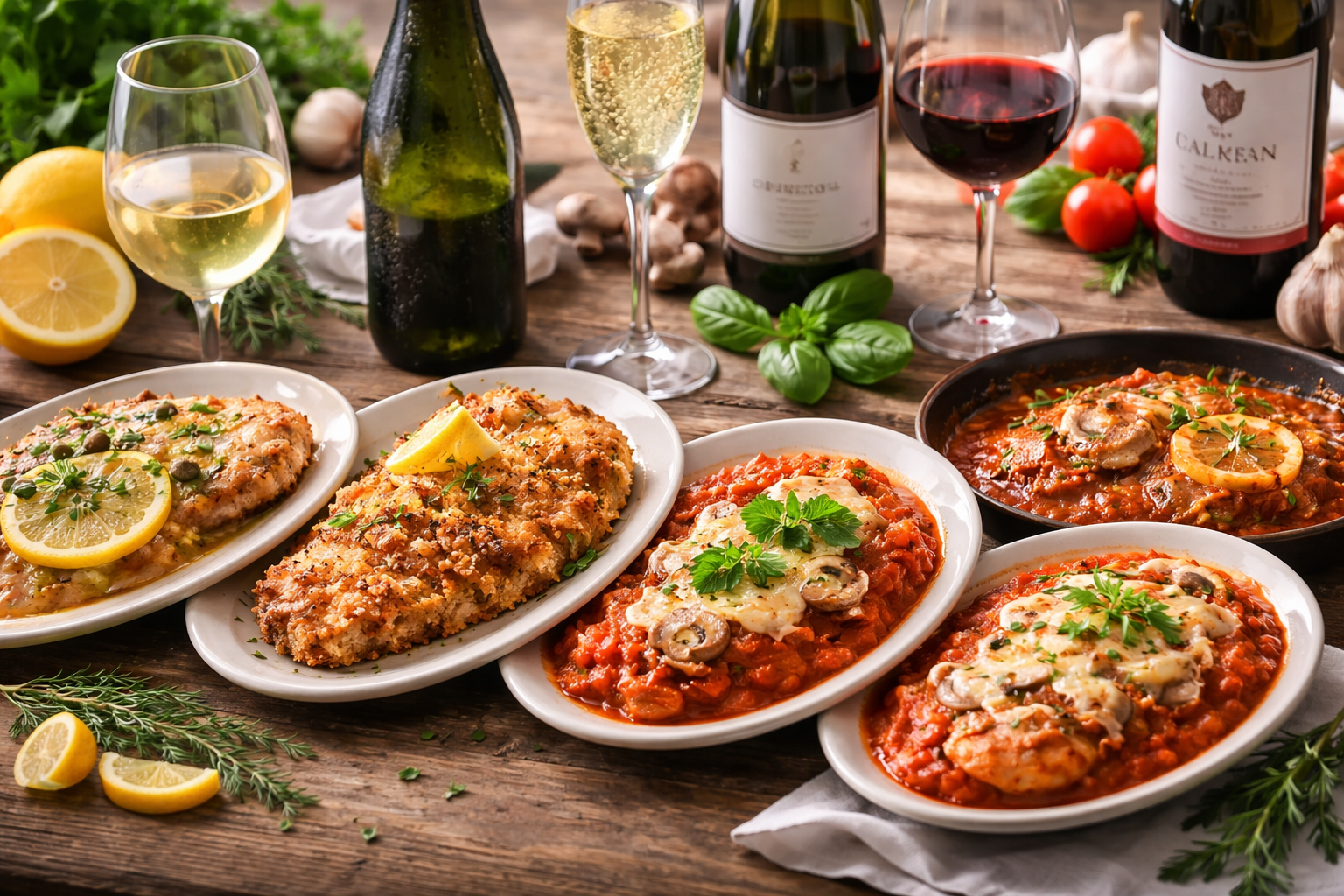
Use white wine when the dish leans bright, herbal, lemony, or lightly creamy. Use red when the veal is roasted, grilled, mushroom-led, tomato-led, or braised. Reach for sparkling when the cutlet is breaded and fried.
That is the fast version. Here is the useful version:
- If the plate smells of lemon, parsley, butter, or capers, start with Sauvignon Blanc, Pinot Grigio, Soave, or Vermentino.
- If the plate smells of roast juices, mushrooms, or browned edges, start with Pinot Noir, Barbera, or a soft Beaujolais.
- If the sauce is tomato-based, go acid-first with Chianti, Sangiovese-led reds, or Barbera.
- If the cutlet is fried, a dry sparkling wine is often the cleanest and most forgiving match.
- If the veal is braised and rich, then a structured earthy red starts to make sense.
The fallback rule for uncertain menus is handy: if you only know “veal” and nothing else, dry sparkling wine is the safest social answer. Fresh Pinot Noir is the safest still red. Between those two, you can cover a lot of ground without looking like you brought a battering ram to dinner.
Remember
The first fork in the road is not “red or white.” It is “bright, creamy, fried, tomato-led, roasted, or braised?” Answer that and the colour choice gets much easier.
Pinot Noir, Chardonnay, Sauvignon Blanc, Chianti, and Barbera are the five safest lanes
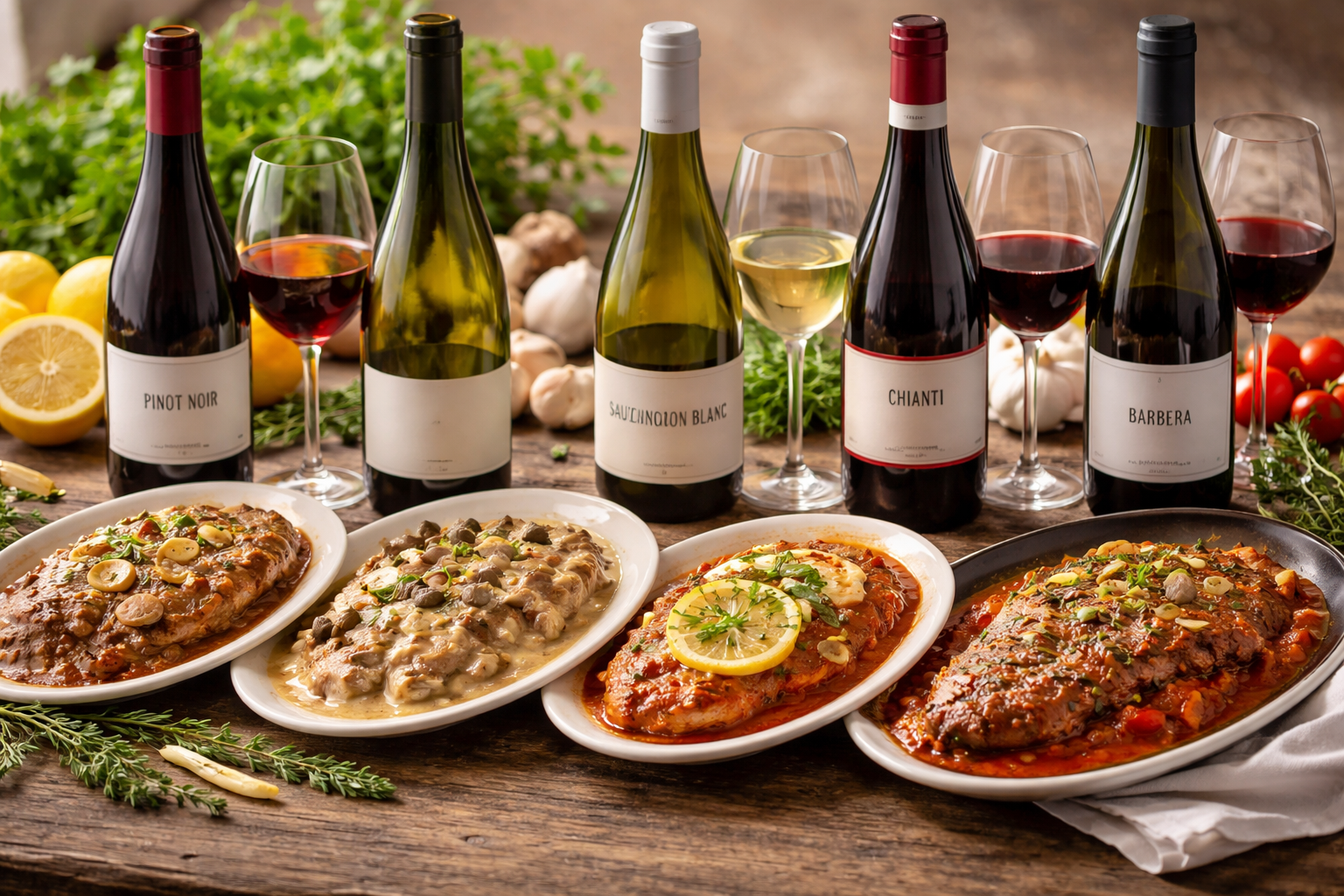
You do not need a thirty-grape masterclass for veal. You need five reliable lanes and a sense of when each one starts to wobble.
Pinot Noir
Pinot Noir is the classic “I want a red, but I do not want a fight” bottle. It works best with roast veal, veal chops, mushroom sauces, and lighter braises. The sweet spot is a fresh, medium-bodied style with gentle tannin and enough acidity to stay alert. Oregon Pinot Noir, lighter Burgundy, and cooler-climate examples usually behave well here.
Where it misses: jammy, overripe, heavily oaked Pinot can feel oddly sticky next to delicate veal.
Chardonnay
Chardonnay is the white lane for creamy veal, buttery sauces, and dishes with a fuller mouthfeel. It is especially good with veal in cream sauce or mushroom cream sauce. The key word is restrained. A lightly oaked or unoaked Chardonnay keeps the match elegant. A very toasty, buttery bottle can push the whole dinner into lumbering territory.
If the dish has lots of lemon or capers, Chardonnay gets less automatic. That is where Sauvignon Blanc usually pulls ahead.
Sauvignon Blanc
Sauvignon Blanc is the sharp white for bright veal dishes. Piccata, scallopini, light pan sauces, herbs, and capers all play nicely here. The wine’s acidity helps the plate feel lively instead of oily or flat.
Where it misses: aggressive grassy styles can feel too pointy with rich cream sauces.
Chianti
Chianti is the easy red answer when tomato enters the room. Veal parmesan is the obvious example, but any veal dish that carries tomato sauce, cheese, and herbs will usually do well with a Sangiovese-led wine. The fruit is bright, the acidity is there, and the structure does not usually turn harsh.
Where it misses: very delicate veal with lemon or light cream. Then it feels like it showed up for the wrong event.
Barbera
GuildSomm’s look at Northern Italian food and wine highlights one of Barbera’s best traits: high acidity with low tannin. That is gold with veal. It gives you the comfort of red wine without the rough grip that can bully a finer-textured plate.
Barbera is especially good with roast veal, veal Marsala, tomato-based veal, and some mushroom-led dishes. It is one of the few reds that can move between gentle and hearty veal preparations without feeling awkward. I keep coming back to it because it solves more veal dinners than people expect.
A practical shopping rule
Buy fresh and balanced before you buy famous and forceful. A modest, lively Barbera is often a better veal wine than a grand, oaky red with a bigger name.
Match the bottle to the veal dish you are actually serving
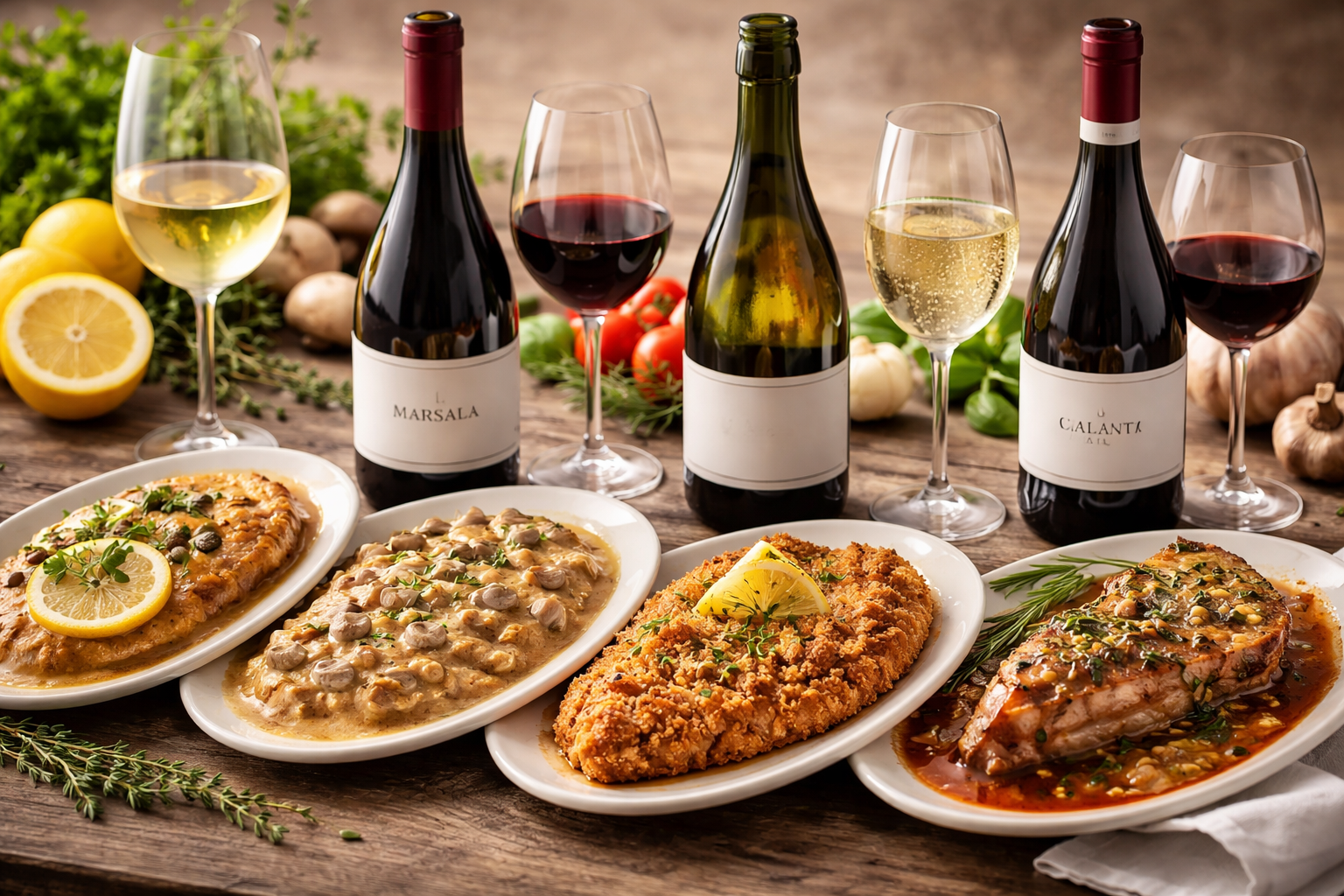
Veal piccata and veal scallopini
These dishes are built around brightness. Lemon, capers, butter, and herbs push the pairing toward Sauvignon Blanc, Pinot Grigio, Soave, or Vermentino. A white with energy makes the whole plate feel sharper and cleaner.
If you already like pairing by sauce style, the same logic shows up in this guide to wine with white wine sauce. Bright sauce wants a bright bottle. That part does not change just because the protein happens to be veal.
Veal Marsala
Veal Marsala is a little trickier because the wine sauce and mushrooms pull the dish in two directions at once. You have savoury depth, a touch of sweetness, and sometimes cream. Barbera is a very smart middle lane here. Pinot Noir can work too. If the recipe is fuller and creamier, a restrained Chardonnay can be good, but I still prefer a soft red more often than not.
Veal Milanese or schnitzel-style veal
Breaded, fried veal loves bubbles. Dry sparkling wine is excellent because the acidity and mousse cut through oil and crumbs without adding weight. Think brut sparkling, Franciacorta, Cava, or Champagne if you feel like splashing out. Crisp whites also work, but sparkling is the one that makes people pause and grin after the first bite.
Roast veal and veal chops
This is where Pinot Noir earns its reputation. Roast notes, juices, and a bit of browning give the dish enough depth for a light red. Barbera is a great alternative if you want something a little more vivid. Soft Beaujolais can work too. What you do not want is a big, drying red that turns the tenderness of veal into a footnote.
Veal in cream or mushroom sauce
Chardonnay and Pinot Gris are the cleanest first picks here. The extra texture in the wine sits better with cream than a razor-sharp white would. Pinot Noir can work if the sauce leans mushroomy rather than buttery and if the bottle is fresh, not jammy.
Veal parmesan
Tomato sauce changes the whole conversation. Acidic tomato can make soft, low-acid reds taste dull, while cheese and crumbs ask for a wine with some shape. Chianti, Barbera, and other Sangiovese-led reds are the practical winners. If lasagna pairings are already familiar, the same tomato-and-cheese rule runs through this breakdown of wine with lasagna too.
Osso buco and braised veal
This is the place where Nebbiolo makes sense. Osso buco is rich with stock, aromatics, long cooking, and often marrow. A good Barolo or Barbaresco can hold that weight, especially when the dish carries saffron risotto or gremolata on the side. A mature bottle is lovely, but you do not need an old trophy wine to make the pairing work. You need structure, savoury depth, and enough acidity to keep the braise from feeling heavy.
A regional shortcut that often works
Italian veal dishes often behave nicely with Italian wines because the acidity, herbs, tomato, olive oil, and cooking styles are already speaking the same language.
Avoid the wine styles that usually bully veal or flatten the sauce
This part saves more bad dinners than the “best bottle” lists do.
Big Cabernet Sauvignon is the classic miss. With delicate veal cutlets, especially ones with lemon or a light pan sauce, the tannin can feel bitter and the oak can push the whole pairing out of balance. That does not mean Cabernet can never work. It means the dish has to earn it, and most veal dishes do not.
Heavy oak is another common problem. Toasty vanilla and char can be delicious in the glass, but with veal piccata or scallopini they often taste like a side conversation nobody asked for.
Low-acid reds struggle with tomato-based veal. Le Cordon Bleu’s advice to pair acids with acids is the cleanest way to think about it. Tomato wants a wine that can keep up, not a plush, sleepy red that falls flat beside it.
Very sharp whites can miss too. Pour a steely, severe white next to a creamy mushroom veal and the wine may feel all edges, while the sauce feels heavier than it should.
The broad rule is easy enough to remember: veal rewards finesse far more often than force. A giant red with simple cutlets is like hiking boots with a linen suit. Technically possible. Not the move.
Pick a safe bottle fast when you do not know the exact recipe
If the invitation says “veal” and nothing else, do not overcomplicate it.
Your safest bottle overall is dry sparkling wine. It handles fried food, lighter sauces, salty starters, and a surprising amount of richer food without cornering the meal. It also looks generous without looking showy, which helps.
Your safest still red is fresh Pinot Noir or Barbera. Pinot Noir is the smoother, more delicate play. Barbera is the brighter, more food-flexible one. If the dinner might lean tomato, mushroom, or roast, Barbera gets the nod. If it might lean elegant and simple, Pinot Noir is hard to argue with.
Your safest still white is a restrained Chardonnay if the meal might be creamy, or Sauvignon Blanc if you suspect lemon, herbs, or a lighter pan sauce. If you have no clue at all, sparkling still beats both because it leaves you the most room for error.
No-regret order for uncertain veal dinners
- Dry sparkling wine
- Fresh Barbera
- Fresh Pinot Noir
- Restrained Chardonnay
- Sauvignon Blanc
A small opinion here, because it matters: when the menu is vague, do not bring the most “serious” bottle you own. Veal is usually kinder to balance than bigness.
A few veal pairing questions that still come up
Can you cook veal with one wine and serve another at the table?
Yes. That is normal. A pan sauce with Marsala or white wine does not force you to serve that exact same wine with dinner. Match the finished flavour of the dish, not just the bottle that went into the pan.
Is rose a good match for veal?
Sometimes, yes. Dry rose works well with lighter roast veal, grilled veal, and some breaded cutlets, especially in warm weather. It is not the first pick for osso buco or a creamy mushroom sauce, but it is better with veal than many people assume.
Does Barolo have to be old to work with osso buco?
No. A mature Barolo can be gorgeous, but you do not need an old collector bottle. A younger Barolo or another earthy structured red can work well if the braise is rich enough and the wine is not all oak and aggression.