You smell the cloves before the first sip. The kitchen feels right. Then the mug lands a little bitter, a little flat, and oddly stern. Nine times out of ten, that is not a spice problem. It is a bottle problem.
If you want the best wine for vin brule, start with a young, fruit-forward red that is dry or just off-dry, low to medium in tannin, and not heavily oaked. The safest lanes are soft Merlot, approachable Primitivo or Zinfandel, juicy Grenache or Garnacha, and a younger Sangiovese or basic Chianti. Fancy wine is not the goal here. Friendly wine is.
After plenty of winter batches, the bottles that behave best are rarely the serious ones. The wines that work are the ones that still taste cheerful once orange peel, cloves, sugar, and heat start pushing them around.
At a glance
- Choose red first. White vin brule can work, but red is easier to get right.
- Look for juicy fruit, modest tannin, and little to no obvious oak.
- Skip stern, age-worthy reds that sound better for a steak than a mug.
- Warm gently. A simmering pot is usually the start of trouble.
- Sweeten the drink yourself instead of buying a wine that is already sweet.
| Bottle trait | Good sign | Bad sign |
|---|---|---|
| Fruit | Cherry, plum, berry | Savory, leathery, austere |
| Tannin | Soft or moderate | Grippy, firm, drying |
| Oak | Little or none | Heavy vanilla, toast, smoke |
| Style | Young and easygoing | Reserve, cellar-worthy, very serious |
The Best Wine for Vin Brule, in One Short Answer
The short answer is this: buy a red that tastes good for casual drinking, not deep study. You want fresh fruit, modest grip, and enough body to carry spices without turning heavy.
If the shelf gives you a basic Chianti, a soft Merlot, a younger Primitivo, or a juicy Grenache, you are in the right zip code. If the label starts sounding like cigar box, tobacco leaf, charred oak, and long aging, keep walking.
Fast rule: buy the bottle that sounds like cherries and plums, not the one that sounds like a leather armchair and a campfire.
There is one wrinkle. “Use red wine” is too broad to be useful. A younger Sangiovese can make a classic, lively vin brule. A stricter Sangiovese can taste sharp once citrus and cloves join the party. Same grape family, different result. That is why the bottle’s structure matters more than the passport.
The Wine Profile That Actually Works in Vin Brule
When I am choosing wine for vin brule, I run through five filters. It takes maybe 20 seconds.
Fruit first. You want a wine that already leans toward cherry, plum, blackberry, or ripe red fruit. Heating pulls aromas around. Soft fruit holds up. Strict herbal notes can get a bit mean.
Keep tannin modest. Decanter’s plain-English guide to tannin lays out what tannins do in the mouth: they create that drying, puckering grip. In a mug of vin brule, that grip does not disappear. Heat and sweetness can make it stick out even more. So a low-to-medium tannin red is the safer play.
Watch the acidity. A bright wine can make the drink feel alive. Too much acidity, paired with orange peel and sugar, can push the whole thing toward sharp instead of cozy. This is why Barbera can be great one night and a little edgy the next.
Go easy on oak. Wine Enthusiast’s breakdown of oak in wine explains how barrels can add vanilla, toast, smoke, and sweet spice notes. In vin brule, those flavors can stack on top of cinnamon and clove until the drink feels muddy. A little oak is fine. Loud oak is usually a mess.
Start dry and sweeten later. This gives you control. If your recipe has sugar, honey, or a splash of port, a dry base is easier to steer. Starting with a sweet wine is like salting soup before you taste it. You have boxed yourself in.
A useful if/then rule
If the pot is sugar-heavy and orange-heavy, pick a drier, softer red.
If the pot is lightly sweetened and spice-led, you can get away with a little more body.
The Red Wine Styles That Work Best in Vin Brule
These are the styles I would actually reach for.
| Style | Why it works | Watch for |
|---|---|---|
| Younger Sangiovese or basic Chianti | Feels traditional, bright, cherry-led | Avoid stern, woody, high-acid examples |
| Merlot | Soft texture, easy fruit, very forgiving | Skip heavily oaked versions |
| Primitivo or Zinfandel | Richer, darker, great for a fuller mug | Can get jammy if the recipe is already sweet |
| Grenache or Garnacha | Juicy red fruit with gentle grip | Thin bottlings can disappear under spice |
| Barbera | Fresh and lively when the bottle is plush enough | Too much acidity can read sharp with lots of citrus |
For the classic Italian lane, younger Sangiovese or a basic Chianti is hard to beat. WSET notes that Chianti must contain at least 70% Sangiovese. That is why Chianti often feels like the most natural bridge between “Italian mulled wine” and “bottle I can actually buy on a weekday.” Go for simpler bottlings though. Riserva-style seriousness is not helping here.
Merlot is the crowd-pleaser. It is not the most romantic answer, but it is a smart one. If you are cooking for a group and want the batch to land softly, Merlot gives you fewer ways to fail.
Primitivo and Zinfandel make a deeper, darker vin brule. This is the mug you want when the weather is rude and you want something with a little heft. The catch is sweetness. If you are adding port, honey, or plenty of sugar, these can get a bit gooey fast.
Grenache and Garnacha are underused here. They often give you red fruit and warmth without the rough edges of a tougher red. When the label reads juicy and open instead of powerful and structured, it is often a very good sign.
Barbera is the fussy one. The Barbera d’Asti consortium describes Barbera as a grape known for high acidity. In the pot, that can feel bright and delicious or a bit sharp, especially if you are generous with orange peel. Pick a rounder, juicier bottle and it can be lovely.
For a wider look at fruit-led bottles that stay friendly under spice, this guide to fruit-forward red for mulled wine fills in a few extra bottle styles without wandering too far off track.
When White Vin Brule Actually Makes Sense
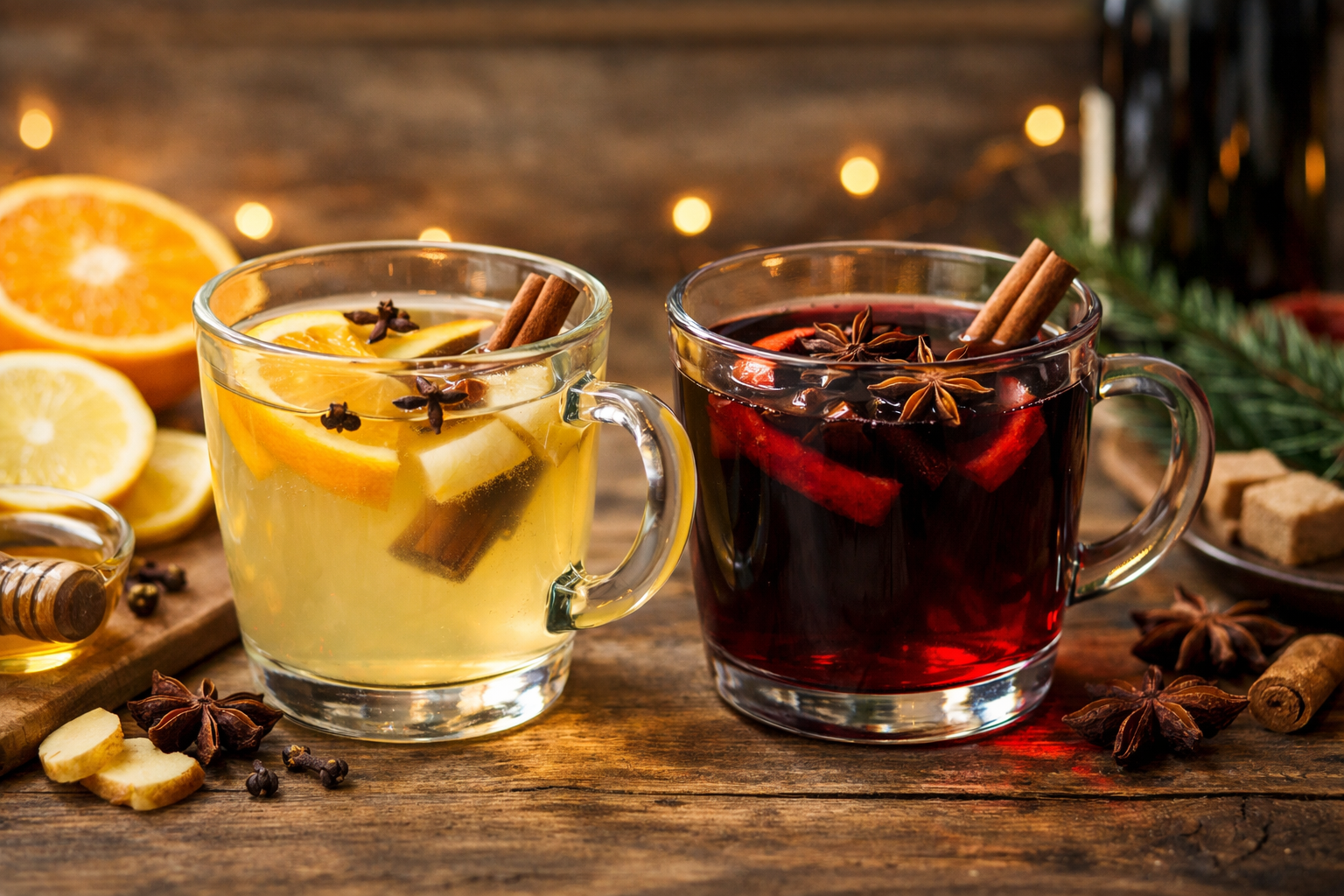
White vin brule is not a gimmick. It is just less forgiving.
If you want a lighter, brighter mug where citrus leads and the spice sits in the background, white wine can work really well. Dry Pinot Grigio, Pinot Blanc, and a clean unoaked Chardonnay are safer bets than anything sweet or tropical.
The trick is keeping the whole build lighter. Fewer cloves. Gentler sweetness. Less of that sticky Christmas-market mood and more of a clean winter warmer. If you pile heavy clove, star anise, and sugar onto white wine, the drink can taste thin in the middle and sticky around the edges. Not fun.
Good use case: white vin brule makes sense for brunch, milder weather, or a lighter menu. For the dark, deep, blanket-and-boots version, red is still the easier call.
If you only have white wine at home, do not force it into a heavy red-style recipe. Lighten the spice bill and keep the sweetener under control. That is the whole game.
The Wines That Make Vin Brule Taste Bitter
Bitterness in vin brule usually comes from one of four places: tannin, oak, over-heating, or citrus pith. You fix the problem faster when you know which one you are tasting.
Tannin bitterness feels drying and grippy. The finish clings to your gums a little. This is where Nebbiolo, Barolo, Brunello, and some Cabernet-heavy bottles can trip you up. Gorgeous with food, maybe. Great in a sweetened hot mug, not usually.
Oak bitterness is not always bitter in the classic sense. Sometimes it shows up as a fake-sweet, woody muddle. The drink smells like vanilla and toast and spice all at once, then lands oddly flat. That is why reserve Rioja or heavily oaked reds often feel like too much furniture in a small room.
Heat damage makes the wine smell cooked and tired. The fruit goes missing. The spices stay loud. You get aroma without shape.
Pith bitterness comes from the white part of the orange peel. This one fools people all the time. They blame the wine, then the real culprit turns out to be thick strips of peel simmered too long.
| What you taste | Most likely cause | What to change next time |
|---|---|---|
| Dry, puckering finish | Too much tannin | Use Merlot, Grenache, or a softer Chianti |
| Woody, muddy spice | Too much oak | Pick a younger, less barrel-driven bottle |
| Flat, cooked aroma | Pot got too hot | Warm gently and never let it boil |
| Sharp orange bitterness | Too much pith | Peel thinly and remove earlier |
Cheap wine is not the enemy by itself. Faulty wine is. A simple everyday red can make very good vin brule. A thin, harsh, badly made red will still be thin and harsh after the cinnamon turns up.
Match the Bottle to Your Vin Brule Recipe
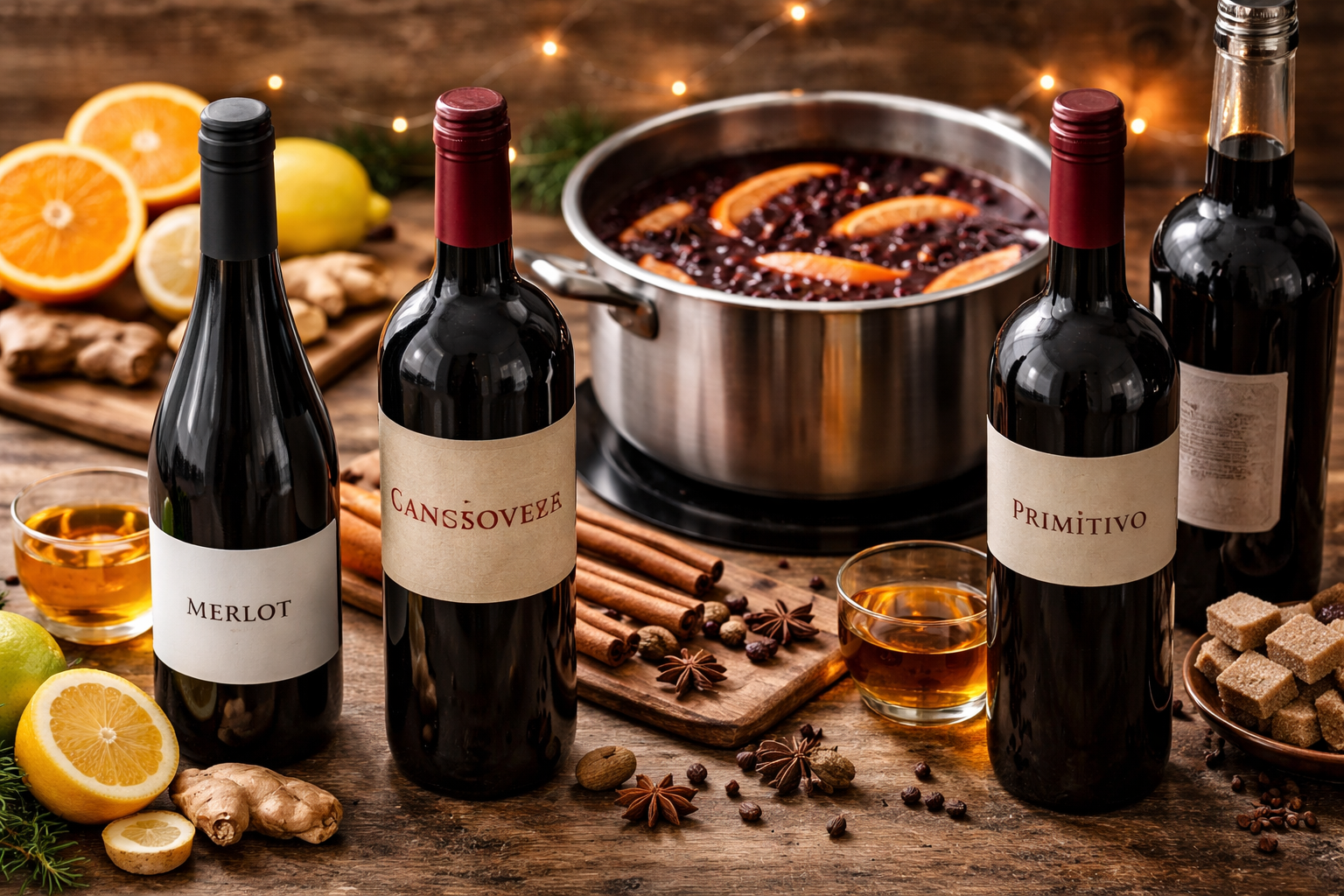
The bottle does not live alone. It has to survive the rest of the pot.
If the recipe is sweet and citrus-heavy, go drier and softer. This is where Merlot or a gentle Grenache earns its keep.
If the recipe is spice-led and only lightly sweetened, you can step up in body. A younger Primitivo or a broader Sangiovese can work well here.
If you are adding brandy or port, simplify the base wine. You already have extra warmth and sweetness coming in. This is not the moment for a jammy Zinfandel plus half a sweet cupboard.
If you are unsure, test one cup before you commit the whole bottle. Warm a mug-size sample with the same spice mix and sweetener. It sounds fussy but it saves whole batches. I started doing this after one too many “eh, it will probably be fine” experiments. It is faster than apologizing to six people holding mugs.
One-cup test
- Warm one cup of wine gently.
- Add a scaled-down pinch of the same spice mix.
- Sweeten lightly.
- Taste after a few minutes and decide whether the wine is fighting or cooperating.
If the whole drink starts leaning toward baked apple, spice, and holiday punch territory, this guide to wine for wassail is the better side road. Vin brule usually wants the wine itself to stay more visible.
How to Pick a Bottle From the Shelf Without Overthinking It
You do not need a tasting note dissertation. You need a few shelf cues that save time.
Stay in the everyday range. About $10 to $20 is usually the sane middle lane. Below that, flaws show up more often. Above that, you start paying for detail that heat and spice will blur anyway.
Read for fruit, not prestige. Cherry, plum, berry, red fruit, juicy, smooth, easygoing. Those are good signs. Reserve, gran reserva, cellar-worthy, age-worthy, powerful, structured, tobacco, cedar, smoke. Those words should make you pause.
Do not worship the grape name. A soft Merlot is safer than a stern Chianti. A juicy Garnacha is safer than a pricey bottle that wants a decanter and silence.
Young is usually better than serious. You are shopping for a base layer, not a solo act.
Shelf checklist
- Dry or just off-dry
- Fresh fruit on the label or back note
- Little or no heavy barrel language
- Young drinking style
- Everyday price band
One small warning. Words like “reserve” are not automatic bans. Some are still fruit-led and easy. But when the whole package screams oak, grip, and gravitas, it is probably the wrong bottle for a spiced hot drink.
How to Heat Vin Brule Without Flattening the Wine
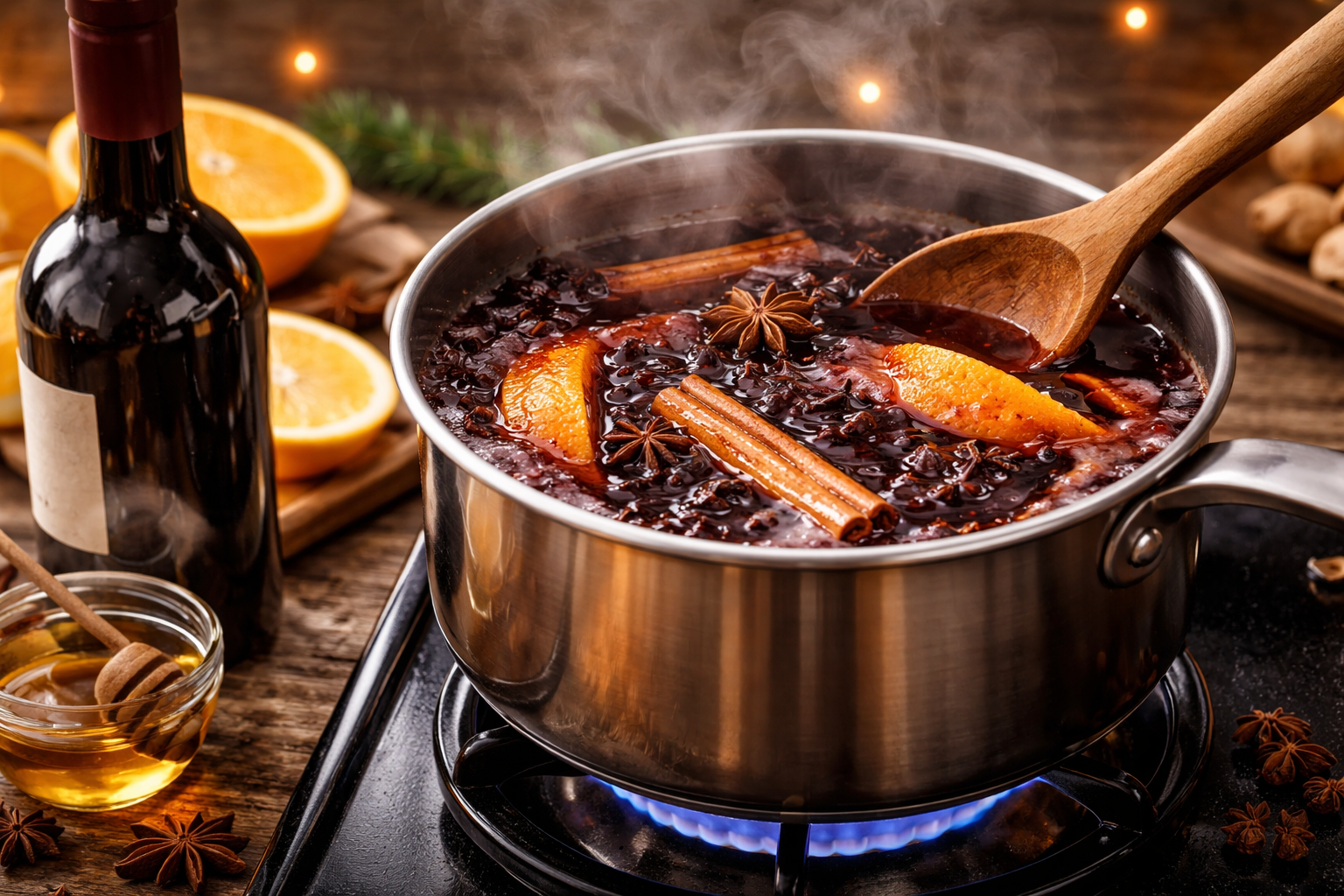
The bottle choice can be dead right and the pot can still go sideways if the heat is too high.
Warm low and keep the aroma. Britannica lists ethanol’s boiling point at about 78.5C. That is lower than water. So once the pot starts bubbling, you are not just heating it. You are driving off alcohol and delicate aroma. That is why a boiled batch smells big for a minute and then tastes oddly thin.
Taste early and then pull the spices. Cloves and orange peel keep talking the longer they sit there. Once the balance feels right, strain the pot. Leaving everything in because it looks festive is how the drink gets bossy.
Add extra spirits late. If you are using brandy or another spirit, stir it in near the end and away from direct flame. This is half flavor move and half plain kitchen safety.
Use a slow cooker carefully. It works well for serving, not for aggressive cooking. Warm on low, then hold. If it starts steaming hard, back it off.
Simple target: vin brule wants to be steaming hot, not simmering. Think warmth, not punishment.
The Simple Rule That Gets Most People to the Right Bottle
If you forget everything else, keep this one rule: choose a young, juicy, dry red with modest tannin and modest oak.
That one sentence gets you most of the way there.
If you are standing in an Italian shop, reach for a younger Sangiovese or basic Chianti. If you are in a regular supermarket and want the safest crowd-pleaser, reach for Merlot or Garnacha. If you want a darker, fuller mug for a cold night, Primitivo or Zinfandel makes sense. If white wine is all you have, lighten the spice and sweetness and make the style work for the bottle you own.
The best wine for vin brule is usually not the bottle with the biggest reputation. It is the bottle that still sounds cheerful after the pot starts talking back.
FAQ
Can boxed wine work for vin brule?
Yes, if the wine itself fits the same rules: dry, fruit-forward, low to medium in tannin, and not heavily oaked. Boxed wine is fine for vin brule when it tastes clean and friendly on its own. The format is not the problem. The flavor is.
Should you sweeten vin brule at the start or at the end?
Start light, taste, and then add more if needed. It is much easier to build sweetness than to back out of it. That is also why a dry base wine is easier to manage than a sweet one.
Can vin brule stay warm in a slow cooker?
Yes. A slow cooker is great for holding vin brule once the flavor is where you want it. Keep it on low and avoid letting it bubble. If it starts steaming hard for long stretches, the wine will lose fruit and aroma.