Cold night, heavy pot on the stove, bottle on the counter, and somehow the wine still lands wrong.
That happens more than people admit. A young Cabernet can bulldoze mushroom risotto. An oaky Chardonnay can taste sleepy when it’s fridge-cold. A sparkling bottle can save a whole table of salty starters, yet it gets ignored because “winter wine” sounds like it has to be red. The best wine for winter is not one bottle. It’s a small set of styles that match the food and the moment: full-bodied reds for braises and roasts, medium-bodied earthy reds for mushroom and tomato dishes, rich whites for cream and poultry, dry sparkling for party food, and fortified wines for cheese or dessert.
I’ve learned this the annoying way, usually with the wrong bottle already open. Winter wine isn’t about picking the darkest label on the shelf. It’s about weight, texture, sweetness, spice, and what the dish is doing on your palate.
- Which wines feel right with stews, roasts, creamy dishes, appetizers, and dessert
- When a medium red beats a big Cabernet
- Why white wine can make more sense than red on plenty of winter nights
- How sparkling wine earns a place at the winter table
- What to fix when a good bottle tastes flat, hot, or oddly harsh
- A fast cheat sheet so you can choose in under a minute
At a Glance: pick by the plate, not the weather report
| If dinner looks like… | Pour this style | Why it clicks |
|---|---|---|
| Braised beef, roast lamb, smoky dishes | Full-bodied red | Tannin, body, and dark fruit can keep up |
| Mushroom pasta, pork, lasagna, tomato sauce | Medium-bodied earthy red | More flexible, less tiring, better with savory food |
| Roast chicken, cream sauce, gentle spice | Rich white | Texture and acidity handle cream, butter, and aromatics |
| Salty starters, fried bites, holiday snacks | Dry sparkling | Bubbles and acid cut through fat and salt |
| Blue cheese, chocolate tart, after-dinner sipping | Port, Sherry, or Madeira | Sweetness, depth, and warmth suit the last course |
Quick rule: heavier food wants more body. Cream and spice often pull you toward white. Salt and fried food often pull you toward bubbles.
How to Pick the Right Winter Wine in 30 Seconds
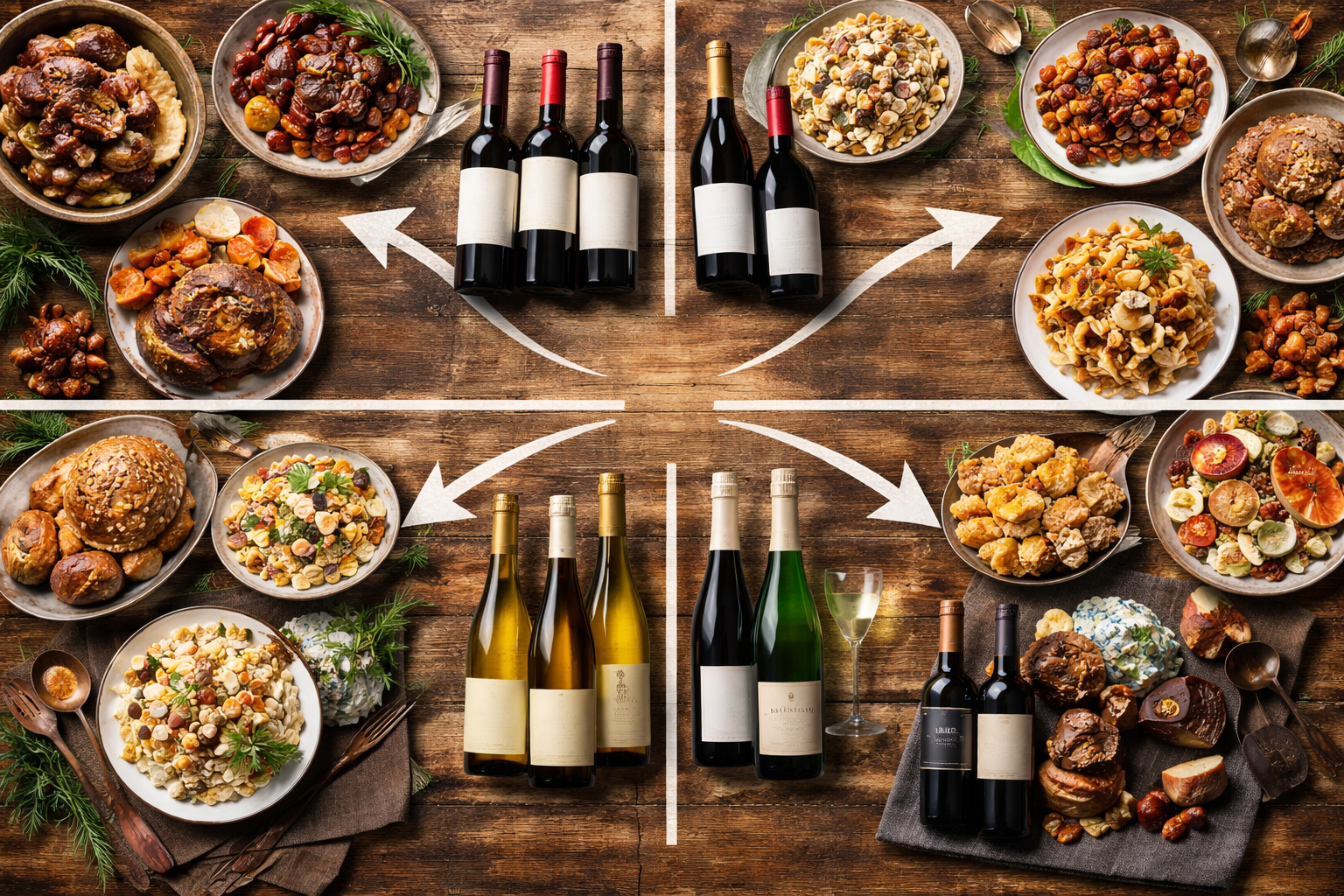
Start with one question: what is the food actually doing?
Wine & Spirit Education Trust explains that salt, acidity, and fat can make tannic wines seem softer and fruitier. That matters because it tells you why a structured red can feel polished with short ribs and strangely stern next to a creamy mushroom dish. Once you see that, winter wine stops feeling mysterious.
Here’s the fast chooser I keep coming back to:
- Rich meat and braises: go full-bodied red. Cabernet Sauvignon, Syrah, Shiraz, and some Zinfandel make sense here.
- Mushrooms, pork, tomato dishes, roast vegetables: go medium-bodied red. Pinot Noir, Sangiovese, Rioja, and Grenache are often better.
- Cream sauce, roast chicken, squash, mild spice: go rich white. Oaked Chardonnay, Viognier, off-dry Riesling, or Gewurztraminer can be spot on.
- Salty starters, smoked fish, fried nibbles: go dry sparkling.
- Dessert, blue cheese, walnuts, quiet after-dinner glass: go fortified.
Picking winter wine by color alone is like buying boots by color and ignoring the sole. It looks right right up until you hit the ice.
Note: If you have no clue what the menu is, dry sparkling is the safest bring-along. It plays well with appetizers, salty snacks, fried food, and a surprising amount of dinner.
Full-Bodied Reds for Stews, Roasts, and Cold Nights
This is the classic lane for a reason. When dinner has char, fat, smoke, or a long-cooked texture, a bigger red feels less like a flex and more like common sense.
Wine Australia describes Shiraz as a style that can range from medium- to full-bodied and work beautifully with casseroles and rich meat dishes. That’s why Shiraz or Syrah is such a smart winter pick. You get dark fruit, spice, and enough grip for stews without always hitting the brick-wall tannin that some young Cabernet bottles carry.
Cabernet Sauvignon is the obvious answer, and sometimes the right one. Roast lamb, beef stew, braised short ribs, and aged hard cheese can absorb its tannin and oak. Yet Cabernet is not the automatic winner just because the weather is cold. I’ve had plenty of winter dinners where the bottle looked serious and the food got pushed into the background.
Syrah and Shiraz often feel more relaxed at the table. Northern Rhone-style Syrah brings pepper, smoke, and savory edges. Riper Shiraz can lean plush and dark-fruited. Both can stand up to roast beef, smoky sausages, and barbecue without turning the evening into a tannin lecture.
Zinfandel is worth a nod when the meal has sweet smoke, sticky glaze, or a little chili heat. The jammy fruit and spice can work well with ribs, sausages, and wintry barbecue.
Mourvedre and Tannat are the niche picks. They make sense for readers who like structure, savory depth, and meat on the plate. They’re not crowd-pleasers in the same way, but on a cold night with roast lamb or game, they can be brilliant.
The easiest rule here is not “biggest wine wins.” It’s this: use the sauce as your clue. Peppery jus, reduced stock, barbecue glaze, pan drippings, and slow-cooked richness all point toward fuller-bodied reds.
Pro tip: A young, tannic red often improves with 30 to 60 minutes in a decanter. Not because decanting is magic, but because a bit of air can soften the edges and wake up the fruit.
If braised beef is on the menu, beef bourguignon pairings give a good snapshot of how full-bodied reds behave when the dish is deep, savory, and sauce-driven.
Medium-Bodied Reds When You Want Warmth Without Fatigue
This is the part most winter roundups undersell. A medium-bodied red can feel more comforting than a heavyweight because it stays lively through the meal.
Mushroom risotto is the classic example. Creamy texture, earthy flavor, not much char, and not a lot of fat. A tough young Cabernet can feel like the wrong coat. Pinot Noir or Sangiovese, on the other hand, feels like it belongs there.
Pinot Noir works with duck, pork, mushroom pasta, and root vegetables because it brings perfume, acidity, and earth without shoving the food aside. In winter, that can be more satisfying than sheer muscle.
Sangiovese is one of the smartest comfort-food bottles around. Tomato sauce, sausage ragù, roast vegetables, hard cheese, and baked pasta all make it shine. If dinner leans red-sauced or savory rather than beefy, Sangiovese is often the better call.
Rioja or Tempranillo fills the middle lane nicely. You get enough spice and gentle oak to feel seasonal, but not so much tannin that pork, mushrooms, or chicken get flattened.
Grenache deserves more winter love than it gets. It can be soft, generous, and quietly spicy, which makes it good for relaxed meals and nights when you want a red that doesn’t wear steel-toe boots.
A simple test helps here. If the dish is earthy, tomato-based, or built around pork instead of beef, start with a medium red. That’s the move.
Remember: winter comfort does not always mean the loudest bottle. Sometimes the bottle that stays out of the food’s way feels more “wintery” because the meal tastes fuller.
For baked pasta and sauce-heavy dinners, lasagna pairings are a good extension of this same logic.
Winter Whites That Hold Up to Cream, Spice, and Roast Chicken
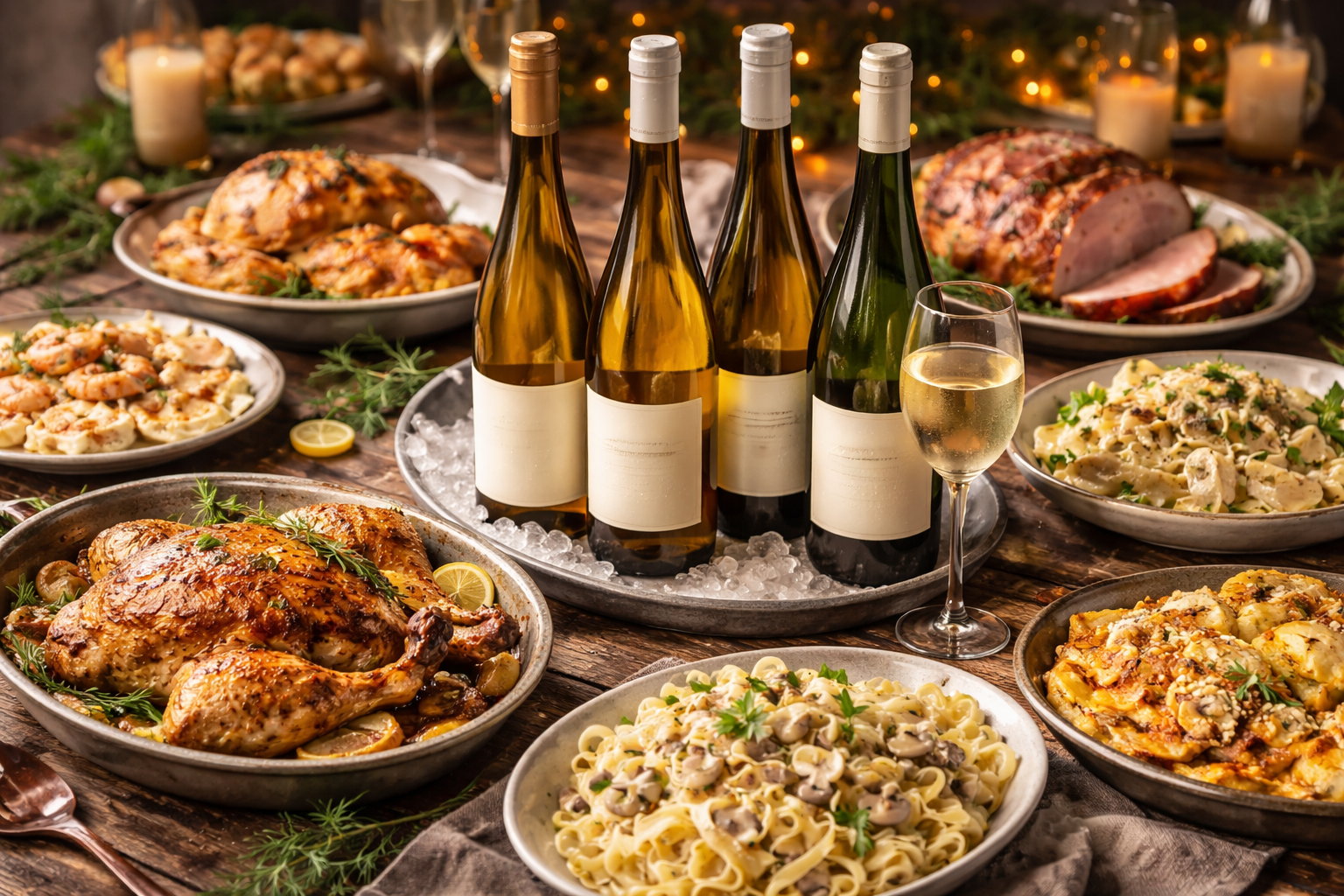
White wine in winter makes some people nervous, which is odd once you taste the right bottle with the right food.
Cream sauces, roast chicken, buttery fish, squash, mild curry, glazed ham, and soft cheese all create a problem for many red wines. Tannin can clash. Oak can feel clunky. Rich white wines solve that mess more neatly.
WSET recommends serving full-bodied whites such as oaked Chardonnay around 10 to 13C, which is lightly chilled rather than fridge-cold. That one detail changes a lot. Serve a rich white too cold and the aroma shuts down. Serve it at the right temperature and the texture finally shows up.
Oaked Chardonnay is the obvious winter white. It handles roast chicken, creamy mushroom pasta, gratins, and buttery sauces with ease. Done right, it feels broad and warming without turning heavy.
Viognier brings body and aromatic lift. It’s lovely with roast chicken, squash dishes, and food that wants a little floral spice rather than sharp citrus.
Off-dry Riesling and Gewurztraminer do a different job. They shine with gentle heat, sweet spice, glazed ham, and dishes that mix sweetness with savory notes. That’s why they can be so good in winter. A lot of cold-weather cooking leans that way.
One of the easiest winter mistakes is serving every white straight from the fridge. You taste cold first, wine second.
Pro tip: If a rich white tastes mute, wait ten minutes. That’s often enough to bring back the nose and texture.
If dinner is built around cream, herbs, and a pan sauce, white wine sauce pairings show why richer whites often beat red by a mile.
Sparkling Wines That Work Far Beyond New Year’s Eve
Dry sparkling wine gets pushed into the party corner, which is a waste. In winter, it can be one of the best tools on the table.
Salt, fat, fried edges, smoked fish, creamy fillings, and buttery pastry all love acidity and bubbles. That’s why sparkling wine works with canapes, potato dishes, cheese twists, gougeres, smoked salmon, and all the snacky holiday bits that pile up before dinner starts.
Champagne’s official guide notes that Blanc de Noirs has more body and generous aromas because it is made from dark-skinned grapes. That’s a useful cue. When you want sparkling wine for winter food rather than a simple toast, Blanc de Noirs is often the richer, more food-friendly lane.
Brut Champagne or any good traditional-method sparkling wine is the safe broad pick. It can handle appetizers and still make sense with parts of the main course.
Blanc de Noirs is the stronger winter-specific choice. It has a bit more breadth and structure, so it can stand beside roast pork, richer starters, and even some mushroom dishes.
If you don’t know the menu, this is the bottle I’d carry through the door. Not because it’s flashy. Because it’s hard to make it look silly at the table.
Note: Sparkling is a contrast pairing. Think of it like squeezing lemon over something rich. The dish doesn’t shrink. It sharpens.
Port, Sherry, and Madeira for Dessert, Cheese, and Fireside Sipping
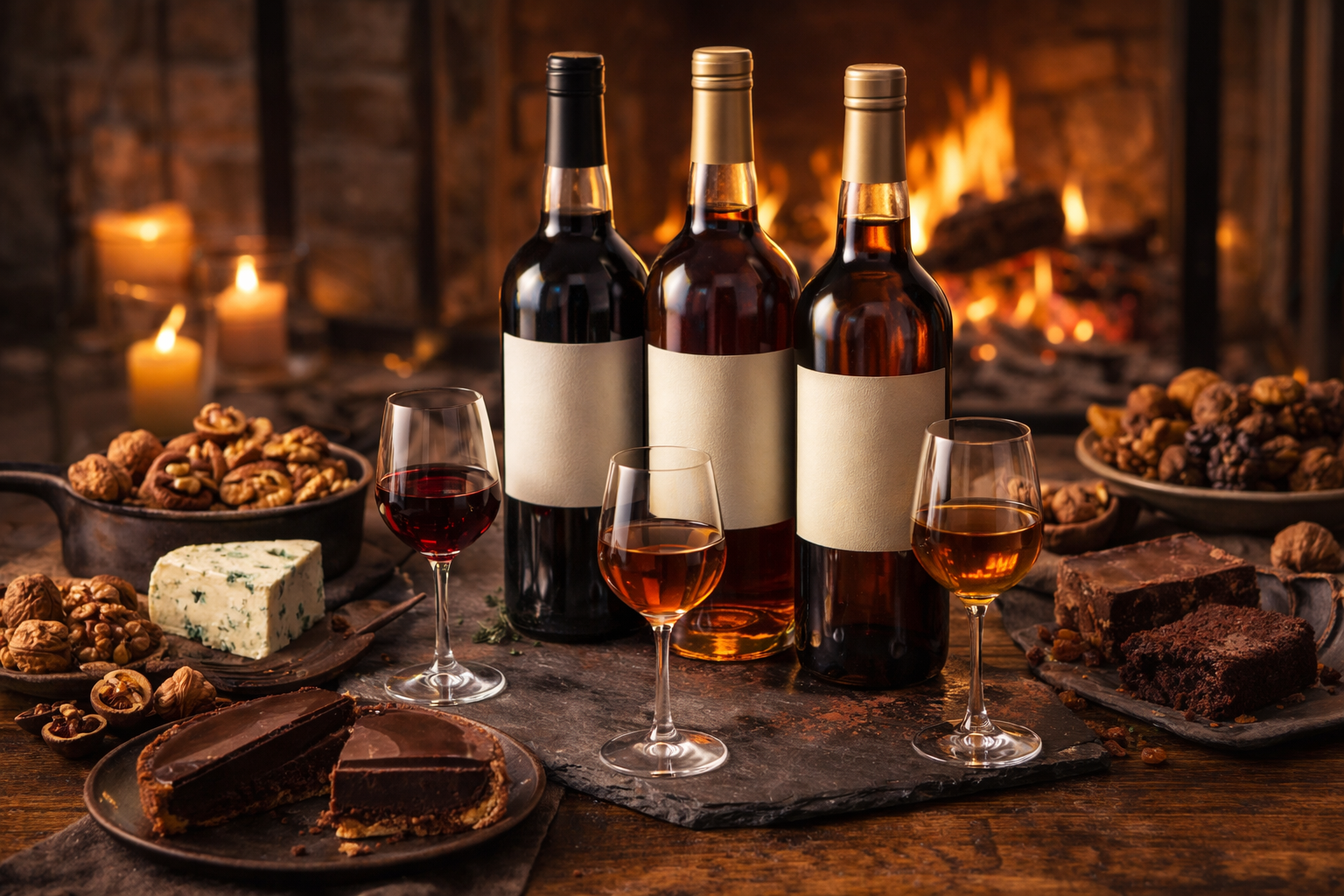
Winter wine is not only dinner wine. A small glass after dinner can be the nicest pour of the night.
The Port and Douro Wines Institute describes Ruby Reserve Port as full-bodied, rich, fruity, and intense, while aged Tawny styles develop dried-fruit, vanilla, nut, and spice notes through time in cask. That split tells you almost everything you need to know at the table.
Ruby Port leans toward dark fruit and chocolate. It’s a natural fit with chocolate tart, brownies, black forest flavors, and berry-dark desserts.
Tawny Port moves into walnuts, caramel, toffee, dried fruit, and blue cheese territory. Put a tawny next to Stilton, pecans, or a nutty tart and it feels like winter in a glass.
Sherry covers a wider spread than many people realize. Nutty, oxidative styles like Amontillado and Oloroso are lovely with roasted nuts, mushroom dishes, and hard cheese. Sweeter styles move toward dessert.
Madeira is the oddball I wish more people opened in winter. It carries nutty, caramelized flavors and a bright line of acidity, so it feels rich but not sleepy.
There is one clean dessert rule worth keeping: the wine should be at least as sweet as the dessert. If not, the wine can seem sharp and thin.
Remember: cheese and dessert do not need the same fortified wine. Tawny often loves nuts and blue cheese. Ruby often loves chocolate.
And if the winter mood leans spiced and steaming rather than sipped neat, mulled wine picks and wine for wassail take that same after-dinner instinct in a warmer direction.
Common Winter Wine Mistakes That Flatten Flavor
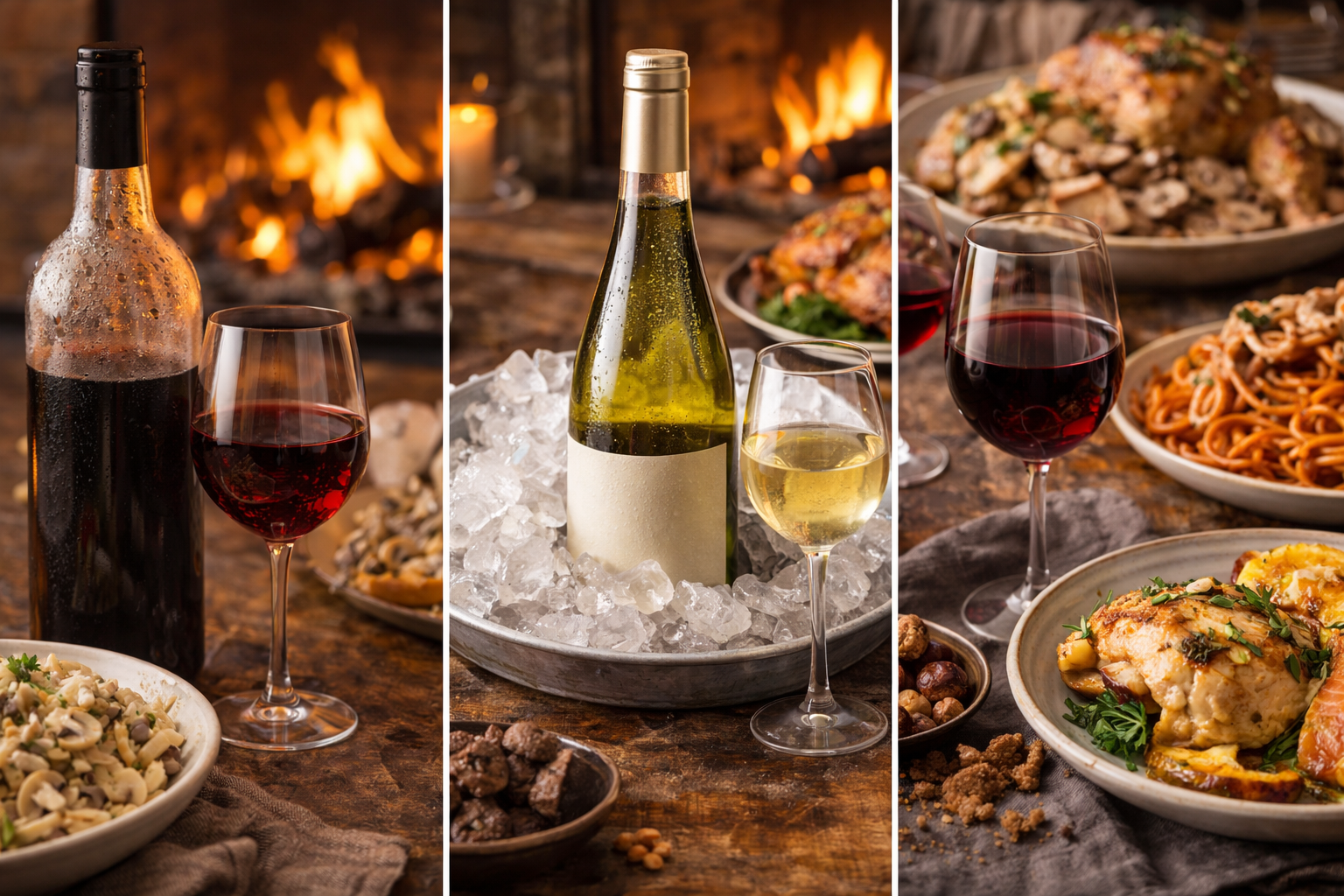
Most bad winter wine experiences are not really about the bottle. They’re about the setup.
WSET puts medium- to full-bodied reds around 15 to 18C and full-bodied whites around 10 to 13C. They also note that chilling whites, rose, and sparkling below about 6C can hide flavor. That’s why “room temperature red” and “ice-cold white” both go wrong so often in modern homes.
- Red served too warm: central heating pushes red wine into flat, hot territory. If the room feels cozy to you, the bottle may already be too warm.
- Rich white served too cold: fridge-cold Chardonnay can taste dull and woody. Let it warm a little.
- Big tannic red with delicate food: mushroom risotto, roast chicken, and creamy pasta often want less force.
- Sweet or jammy red with savory dinner: this can turn a balanced meal syrupy.
- Decanting everything: some bottles open beautifully with air. Others lose their charm if you treat them like a project.
- Confusing winter with high alcohol: a warmer-feeling wine is not always a better winter wine. Texture and balance matter more.
The old advice to serve red at room temperature came from cooler rooms than most of us live in now. That’s the whole trick. You’re not warming the wine for winter. You’re trying not to overheat it.
Quick fix: if a red tastes hot and blurry, give it 10 to 15 minutes in the fridge. If a rich white tastes sleepy, give it 10 minutes out of the fridge.
A Winter Wine Cheat Sheet by Meal, Mood, and Moment
If you only save one section, make it this one.
| Meal or moment | Best style | Why |
|---|---|---|
| Beef stew, short ribs, roast lamb | Cabernet Sauvignon, Syrah, Shiraz, Tannat | They can handle fat, char, stock, and deep savory flavor |
| Mushroom risotto, pork, roast vegetables | Pinot Noir, Sangiovese, Rioja, Grenache | More flexible, more savory, less tiring |
| Roast chicken, creamy pasta, gratin | Oaked Chardonnay, Viognier | Texture and acidity suit butter, cream, and roast flavors |
| Thai curry, glazed ham, gentle heat | Off-dry Riesling, Gewurztraminer | A touch of sweetness calms spice and glaze |
| Salty starters, smoked salmon, fried snacks | Brut sparkling, Blanc de Noirs | Bubbles and acid keep the palate awake |
| Blue cheese, walnuts, toffee desserts | Tawny Port, older Madeira | Nutty, spiced flavors echo the food |
| Chocolate tart, berry-dark dessert, late-night small glass | Ruby Port, rich sweet wine | Fruit and sweetness meet dessert instead of fighting it |
One last rule is worth keeping in your head: match the weight and mood of the dish, not just the season. That’s the thing most people miss, and once you get it, choosing winter wines gets a lot easier.
FAQ
Is Cabernet Sauvignon always the safest winter pick?
No. Cabernet is a strong pick with beef, lamb, and smoky or braised dishes. But with mushroom pasta, pork, tomato sauce, or creamy food, a medium-bodied red or a rich white can taste much better.
What wine should you bring to a winter dinner party if you don’t know the menu?
Dry sparkling wine is the safest broad choice. It works with appetizers, salty snacks, fried foods, and often enough of dinner to stay useful after the first course.
Does every winter red need decanting?
No. Young, structured reds often benefit from 30 to 60 minutes of air. Softer or older bottles may not need it at all. If the wine already smells open and tastes balanced, leave it alone and enjoy it.