Wedding wine gets weirdly stressful right when it should be simple. You look at a wall of bottles and every option seems wrong in its own special way: too cheap, too fancy, too sweet, too bold, too boring. After helping with wedding menus and doing the home-tasting drill more than once, the clean answer is this: the best wine for wedding service is usually one crisp white, one soft medium-bodied red, and one dry sparkling wine for the toast. Add rosé if the wedding is warm, outdoors, or buffet-heavy.
That answer works because weddings are hospitality events, not blind-tasting contests. Guests want wine that feels easy, food-friendly, and familiar enough that the second glass still tastes good once dinner is rolling and the room gets louder. The generic “buy something special” advice misses the real job.
You are not buying a wine to impress a wine shop clerk. You are buying bottles that need to survive roast chicken, summer heat, mixed palates, dancing, and the uncle who only drinks red because red is “proper.”
At a glance: the fast-pick rule
- Pick styles before bottles: fresh white, soft red, dry bubbles.
- Let menu, weather, and guest mix decide the final lineup.
- Plan on roughly 1/2 to 3/4 bottle per drinking adult for table wine.
- For toasts, start around 1 bottle of sparkling for 6 to 8 guests.
- Spend more on the moment, not the mass pour.
What this guide covers: safest wine styles, menu matching, bottle math, budget rules, tasting shortcuts, service details, and the mistakes that quietly wreck a good plan.
The Best Wine for a Wedding Is a Flexible Lineup, Not One Fancy Bottle
The question sounds like it wants one label. It almost never does.
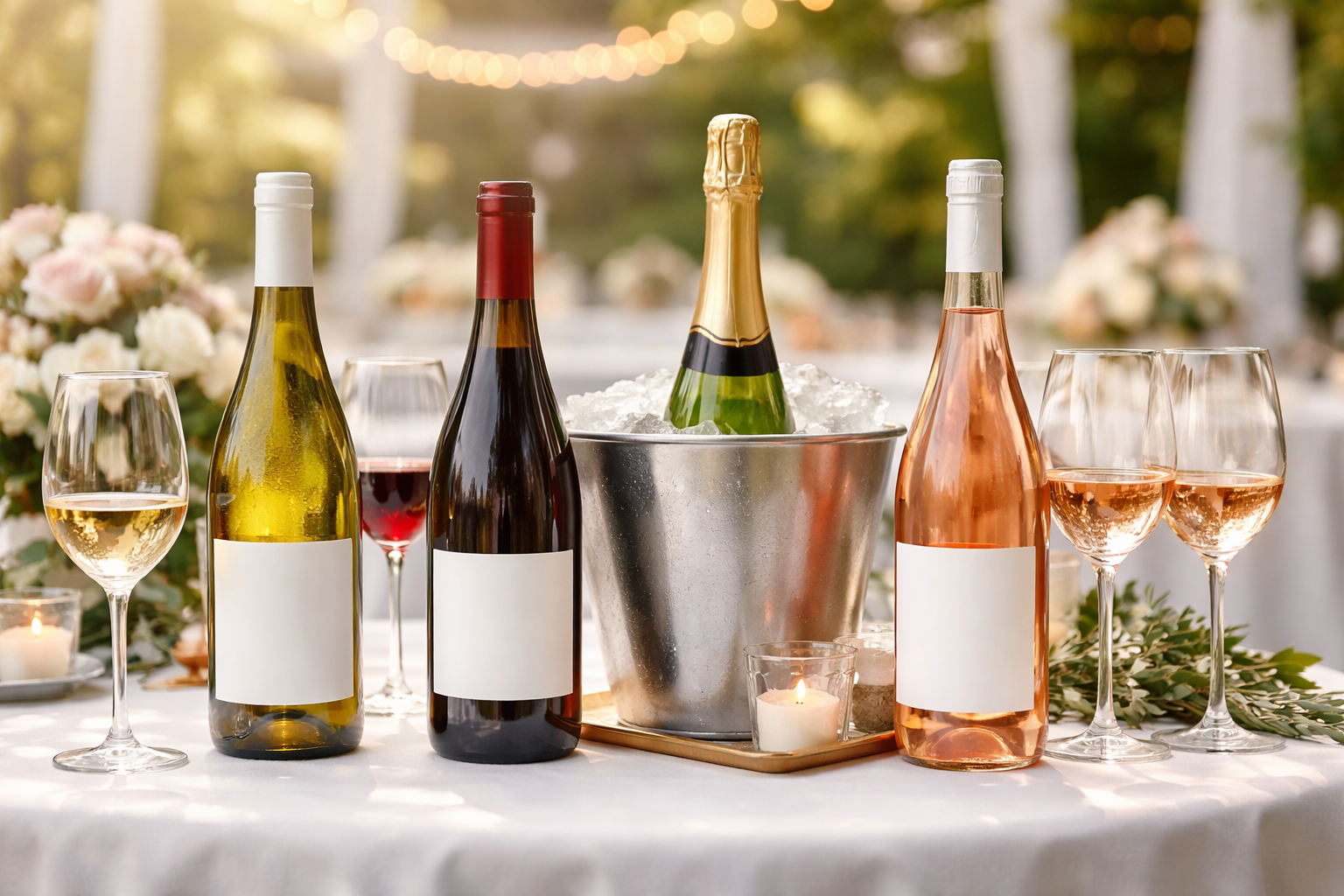
For most receptions, the winning move is a small lineup with clear jobs. One bottle handles dinner tables. One bottle handles the toast. One bottle acts as the broad-appeal red for guests who want red no matter what the menu is doing. That is why a flexible lineup beats a single “special occasion” wine nearly every time.
Think of it this way. A wedding wine lineup is closer to packing shoes for a long weekend than buying one perfect pair. A polished black boot might look great in the box, but it is not going to handle the beach, the lawn, the dance floor, and the late-night walk back to the hotel. Wine works the same way.
The safest starting point looks like this:
| Wine job | Best style lane | Why it works |
|---|---|---|
| White table wine | Sauvignon Blanc, Pinot Grigio, or lightly oaked Chardonnay | Fresh, food-friendly, easy across fish, chicken, salads, and lighter mains |
| Red table wine | Pinot Noir, Merlot, or Garnacha | Soft tannins and medium body play better with mixed crowds |
| Toast wine | Brut Prosecco, brut Cava, Crémant, or Champagne | Festive, bright, and easier to pour across the room than still wine |
| Optional fourth lane | Dry rosé | Great for warm weather, outdoor receptions, and buffet-style service |
Note: If the wedding is small and the guest list drinks widely different things, add rosé before you add a second heavy red. Rosé solves more problems than another “serious” bottle does.
There is room for personal taste here. If the couple loves Rioja Reserva or a lean Chablis, lovely. Just do not let personal taste overrule crowd behavior. A wedding is the wrong time to find out that the groom’s favorite tannic red is only loved by four people and one of them brought it up first.
Match Your Wine to Menu, Weather, and Guest Mix
If you want the lineup to feel obvious instead of random, filter the choice in this order: menu first, weather second, guest mix third. That order matters. Couples often reverse it. They start with labels they like and then try to shoehorn food around them. That gets clunky fast.
Wine & Spirit Education Trust shows why this works. Salt and fat can soften tannin and sharp acidity. A richer sauce can make a lean wine seem better. So the texture of the plate usually matters more than the protein name on the menu card. Creamy mushroom sauce and grilled chicken do not want the same bottle even if the menu says “chicken” in both cases.
Here is the short version.
- Light menu: seafood, salads, herby chicken, canapés, vegetable-forward plates. Lean toward crisp whites, dry rosé, and sparkling.
- Middle-weight menu: roast chicken, pork, mushroom dishes, mixed buffets, pasta, family-style service. This is Pinot Noir, Merlot, rosé, and flexible whites territory.
- Heavier menu: braised meats, steak, lamb, rich sauces. You can step up body a bit, but keep tannin sane unless the crowd really drinks serious reds.
Weather changes the math too. Hot afternoon weddings make full-bodied reds feel a bit like wearing a wool coat in July. A summer garden reception wants more chilled white, sparkling, and rosé. A cold-weather evening can carry a richer red and a lightly oaked Chardonnay without feeling sleepy.
Then comes the guest list. This is the part people under-rate. A room full of easygoing drinkers will forgive a lot. A mixed crowd with beer drinkers, occasional wine drinkers, older relatives, and one or two label-watchers needs safer shapes. Soft tannins, moderate alcohol, and bright acidity beat swagger almost every time.
Remember: If the menu is mixed and the crowd is mixed too, buy wine that still tastes good on its own after dinner. That one rule saves a lot of awkward overthinking.
If there is also a full cocktail bar, trim wine down by roughly a quarter to a third. Cocktails pull attention away from table wine. People toast with bubbles, drift to mixed drinks, and then leave the expensive red sitting on half the tables. Seen it happen. It hurts a little every time.
Choose the Safest Red, White, Sparkling, and Rosé Styles
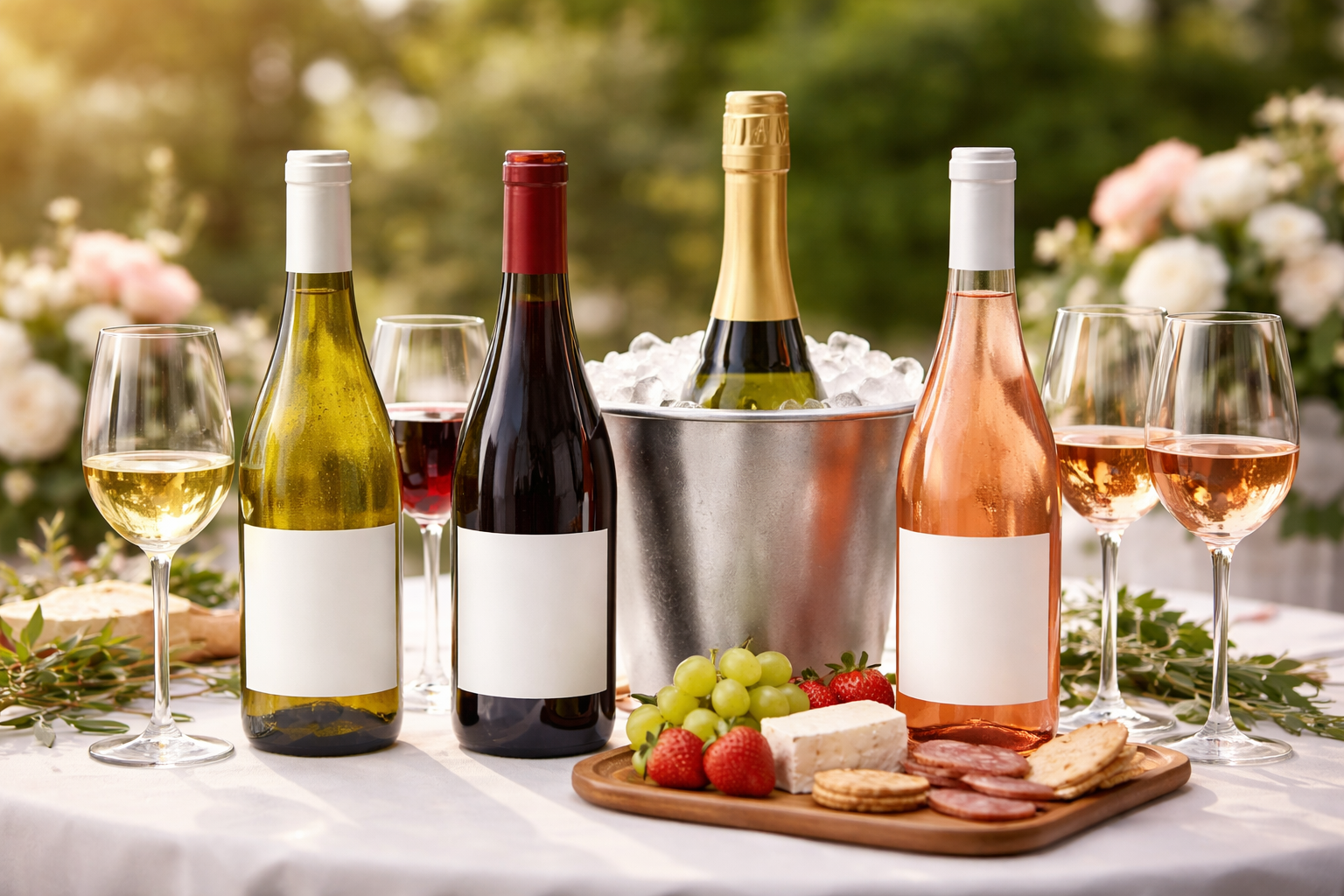
This is where most couples want named categories, not poetry. Fair.
For red wine, the safest lane is medium-bodied, smooth, and not too tannic. Pinot Noir is the obvious crowd-pleaser because it stays lighter on its feet. Merlot works well when the menu has a bit more heft. Garnacha can be great for value if it stays juicy and not too boozy. What tends to miss? Young aggressive Cabernet, harsh Syrah, and reds with oak turned up so high the wine tastes like a carpentry project.
For white wine, keep the fruit clean and the oak under control. Sauvignon Blanc and Pinot Grigio are easy calls because they stay lively with food. Lightly oaked Chardonnay works when the menu has butter, cream, roast poultry, or richer fish. Fully buttery, heavily toasted Chardonnay can feel heavy in a wedding setting unless the whole menu is rich and the room is cool.
For sparkling wine, you do not need Champagne for the toast. The official Champagne designation is limited to wines from Champagne, France, which is why Prosecco, Cava, and Crémant exist as separate lanes rather than “cheap Champagne.” That is a good thing. Brut Prosecco is bright and friendly. Brut Cava often gives a drier, more food-friendly shape. Crémant can be a sweet spot when you want traditional-method texture without going full prestige mode.
For rosé, think dry, pale-to-medium colored, and crisp. Rosé earns its keep at spring and summer weddings, outdoor receptions, and buffets where people keep circling back to mixed plates. It also solves a subtle problem: guests who want red fruit flavor but do not want a red wine in the heat.
A rough safe-style card looks like this:
- Best red wine for wedding service: Pinot Noir, Merlot, Garnacha
- Best white wine for wedding service: Sauvignon Blanc, Pinot Grigio, lightly oaked Chardonnay
- Best sparkling wine for wedding toast: brut Prosecco, brut Cava, Crémant, Champagne
- Best optional add-on: dry rosé
I also like one plain test. Ask whether the wine feels “easy” after the second sip. Not simple. Easy. The flashy bottle that wins the first sip can get tiring halfway through dinner. That is one of the least glamorous truths in wine and one of the most useful.
Skip these for most weddings: heavy oak bombs, stern young reds, dessert-level sweetness at the wrong moment, and niche aromatic whites unless the crowd already loves them.
Calculate How Much Wine to Buy Without Guessing
The bottle math gets much calmer once you stop thinking in bottles and start with pours. In the United States, a standard 5-ounce glass of wine counts as one standard drink. A regular 750 ml bottle usually gives you about five decent pours. That is the piece most wedding math is built on.
For table wine, a useful planning range is 1/2 to 3/4 bottle per drinking adult. Stay near the low end if wine is poured with dinner and there is beer or a cocktail bar doing real work. Move toward the high end if wine is the main drink from cocktail hour through dinner.
For sparkling toast pours, start around 1 bottle for every 6 to 8 guests. That range works because toast pours are smaller than full glasses and because some guests will already have a drink in hand and never finish the bubbly.
| Guest count | Table wine if wine is with dinner only | Table wine if wine runs through much of the event | Sparkling for toast |
|---|---|---|---|
| 50 guests | 5 to 6 cases | 7 to 8 cases | 7 to 9 bottles |
| 100 guests | 10 to 12 cases | 14 to 15 cases | 13 to 17 bottles |
| 150 guests | 15 to 18 cases | 21 to 23 cases | 19 to 25 bottles |
Those case counts look big on screen. In real rooms, they are not wild. A case is 12 bottles. Once the glasses start moving, numbers stack up faster than people expect.
Use these simple splits to avoid a lopsided order:
- Warm-weather wedding: 45% white, 25% red, 20% sparkling, 10% rosé
- Cool-weather wedding: 35% white, 40% red, 20% sparkling, 5% rosé
- Buffet or mixed-menu wedding: 35% white, 30% red, 20% sparkling, 15% rosé
Add a 5% to 10% buffer if the reception is long, the crowd drinks well, or the venue is awkward to restock. If there is a full open bar and beer station, pull the total down. If the event is wine-led, stay closer to the upper range.
Fast-pick rule: Dinner-only wine? Think half a bottle per drinking adult. Wine flowing all night? Think three-quarters. Toast? One sparkling bottle for 6 to 8 guests.
Build a Budget That Prioritizes Drinkability Over Prestige
This is the part where people burn money for no practical return. Guests notice whether the wine is pleasant. They notice whether the bubbles feel festive. They do not, in most rooms, notice that the table red came from a famous village no one can pronounce after two drinks.
The clean budget move is to break the spend into three lanes:
- Table wine for the bulk pour
- Toast wine for the visible celebration moment
- Optional splurge bottle for the couple, parents, or head table
That split keeps you from making the classic mistake: overspending on volume wine and then feeling squeezed everywhere else.
For table wine, the smart lane is often the boring middle of the shelf. The advice in best wine for your buck fits wedding buying nicely: look for fresh, food-friendly bottles from less hyped regions instead of chasing a prestigious name. Spain, Portugal, southern France, Chile, and Argentina often do a lot of heavy lifting here. So do reliable supermarket and wine-merchant own labels when they stay dry, balanced, and clean.
For the toast, you can step up a little if that moment matters to you. Sparkling is seen, photographed, and remembered more than the third white refill at table twelve. That does not mean you need Champagne. It means the bubbles should feel crisp and celebratory, not sticky or dull.
Then there is the optional splurge lane. If the couple wants one better bottle to share privately before the room fills up, that is where a focused spend makes sense. A guide like best wine for 50 dollars is a better place to shop that moment than the bulk order sheet. If the plan is one real statement bottle for the couple or parents, best wine for 100$ fits that lane better than trying to stretch premium wine across 120 guests.
Case discounts matter too. So do return policies for unopened bottles. Ask about both. I have seen couples fixate on a tiny difference in bottle price while ignoring a good case discount sitting right there on the invoice. That is like haggling over napkins while the caterer quietly adds another course.
Spend here, save there: spend a bit more on sparkling or one private bottle if that memory matters. Save on mass-pour table wines by choosing reliable, fresh styles over label status.
Run a Simple Home Tasting and Pick Winners Fast
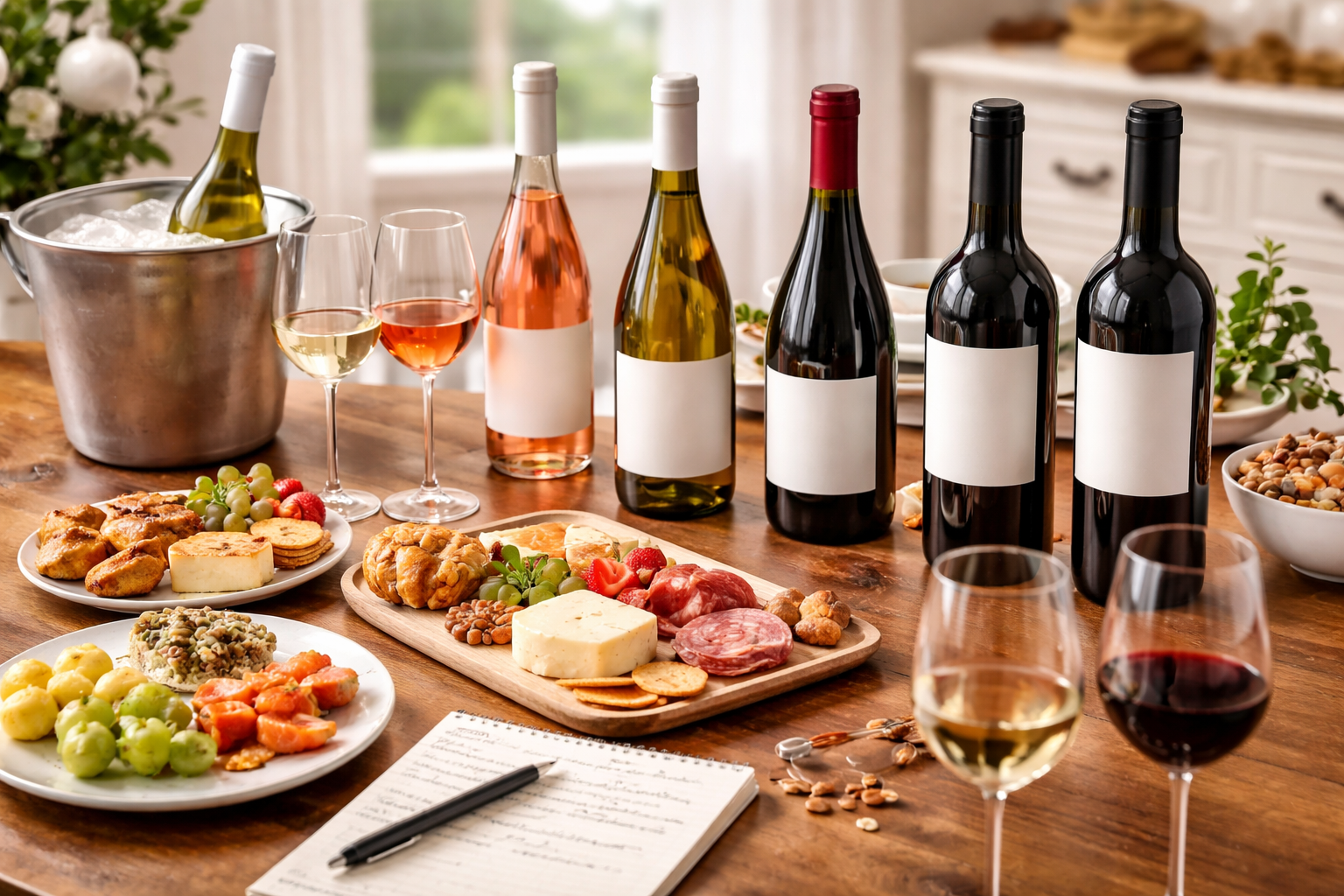
You do not need a sommelier grid and six identical crystal stems. You need a short shortlist, a couple of bites of food, and a way to compare wines in the budget you will actually pay.
Buy 4 to 6 bottles per category and keep them in the real range you plan to spend. Taste the whites chilled, the reds slightly cool, and the sparkling well chilled. Then bring food into it. Salted nuts, a creamy cheese, roast chicken, smoked salmon, tomato-based bites, even a decent supermarket quiche. The point is not elegance. The point is context.
The most useful tasting card is boring in the best way. Score each wine from 1 to 5 on these four things:
- First-sip appeal
- Food friendliness
- Second-glass ease
- Value for the job
That second-glass score is gold. I have tasted bottles that looked brilliant for thirty seconds and then felt tiring with actual food. One rich Chardonnay once won the first round in a home tasting because it smelled expensive and plush. Twenty minutes later the lightly oaked bottle was nearly gone and the flashy one was sitting there half-finished, looking smug and not very useful.
That little test tells you more than shelf talkers ever will.
Quick method: taste blind if you can. Put the bottles in paper bags. Labels can nudge people harder than they think.
One more thing: write down why a wine won. “Fresh and easy with food” is better than “nice.” “Too sweet after three sips” is better than “not for me.” When the invoice comes a week later and nerves kick in, those notes save you from changing direction for no good reason.
Best Wedding Wine Setups for Common Scenarios
This is where broad advice gets real. The right setup shifts with the room.
Summer outdoor wedding
Keep the whites crisp and the reds lighter. Sauvignon Blanc, Pinot Grigio, dry rosé, and brut sparkling work hard here. Pinot Noir is the safer red than Cabernet. Heat turns big reds clumsy fast and guests drift toward chilled drinks anyway.
Formal plated dinner
You can tighten the pairing a bit. A lightly oaked Chardonnay works with roast chicken or richer fish. Merlot or softer Bordeaux-style reds can fit beef or lamb, but still avoid anything too stern. Sparkling for the toast and one polished white plus one polished red is enough. Fancy menus do not need five wine choices.
Buffet or family-style meal
This is where sparkling, rosé, and Pinot Noir shine. Buffets create mixed plates and mixed plates punish rigid pairings. Versatile wines beat specific ones.
Cocktail-heavy reception
Buy less still wine. Keep one white, one red, one sparkling. Do not overstock premium table wine when half the room plans to spend the night with gin and tonics.
Vegetarian-heavy menu
Lean on bright whites, rosé, and reds with modest tannin. Mushrooms, tomato, herbs, and roasted vegetables often play better with freshness than with giant oak and brute-force body. WSET’s food-pairing guidance is handy here because salt, acidity, and fat can shift a wine’s texture more than people expect, which is why a lighter wine can feel better with a richly dressed vegetable dish than a bigger red can.
| Scenario | Best lineup | Watch out for |
|---|---|---|
| Hot outdoor wedding | Sauvignon Blanc, rosé, Pinot Noir, brut sparkling | Over-ordering heavy reds |
| Formal plated dinner | Lightly oaked Chardonnay, Merlot or soft red blend, sparkling | Adding too many choices |
| Buffet reception | Rosé, Pinot Noir, crisp white, sparkling | Rigid protein-based pairing |
| Cocktail-heavy bar | Simple three-bottle lineup | Buying volume like wine is the only drink in the room |
Handle Venue Rules, Chilling, and Non-Alcoholic Options Before They Become Problems
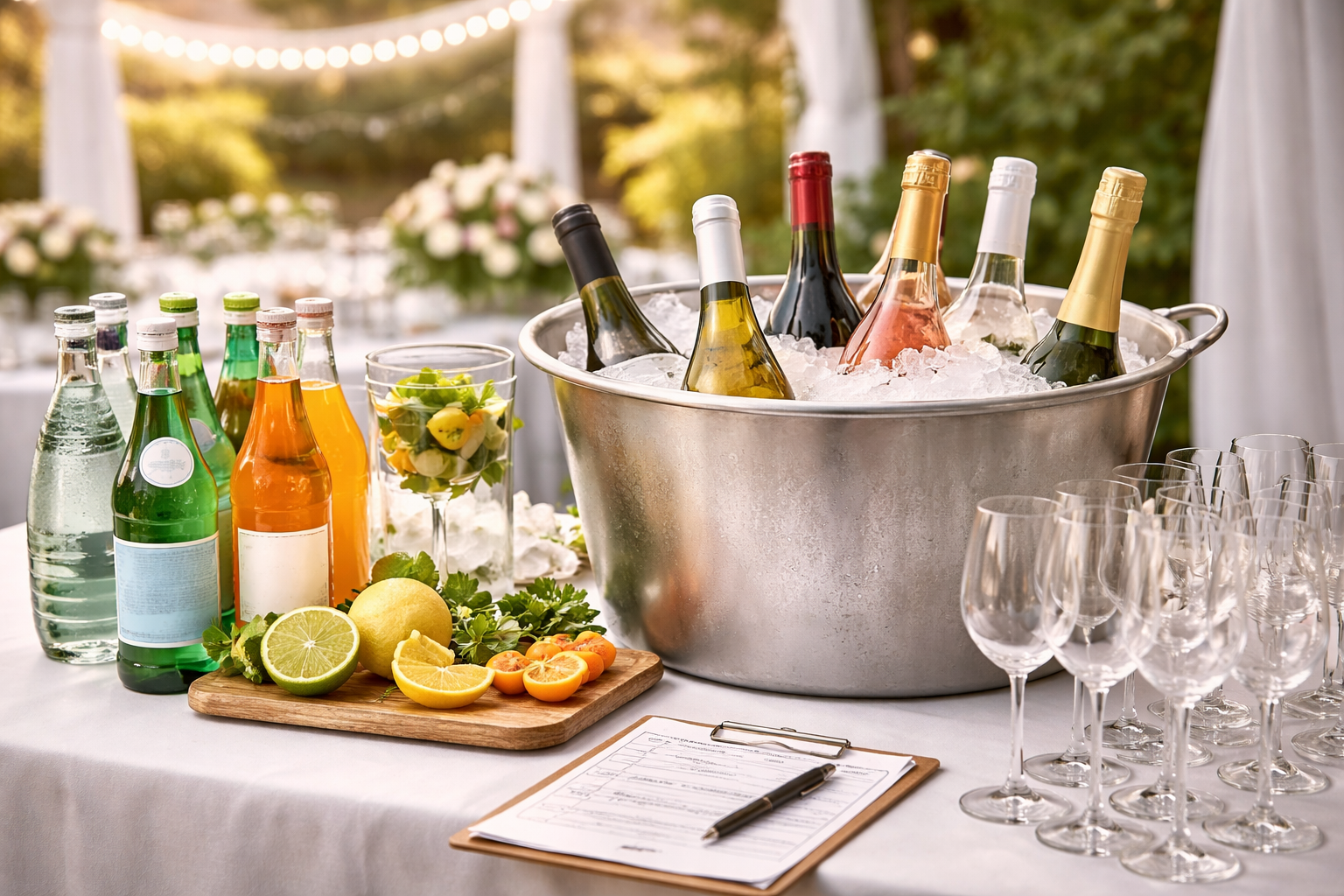
Good wine can taste pretty average once service gets sloppy. This is the least glamorous part of the job and one of the most useful.
Check corkage, glassware, fridge space, ice access, and who is opening bottles. Ask the venue whether they can chill enough white, rosé, and sparkling at once. Ask whether leftovers can be packed back out. Ask whether bartenders will rotate bottles or leave six whites sweating in the sun. These are not annoying details. These are the difference between a smart order and a warm mess.
WSET’s serving guide is helpful here. Full-bodied whites such as oaked Chardonnay only need light chilling around 10 to 13°C. Over-chilling below 6°C can mute whites, rosés, and sparkling. Reds are often better a little cooler than people think too. Once full-bodied reds drift above 18°C they can lose freshness and feel muddled. And this bit is pure wedding gold: an ice bucket works far faster with both ice and water than with ice alone.
Storage before the event matters as well. Keep bottles in a cool, stable, dark place. Not the kitchen. Not the back seat of a car. Not the garage that turns into a slow cooker in the afternoon. If the wine is sealed with cork and will sit for a while, store it on its side. Screwcaps can stand up just fine.
Then there is the part many wedding drink menus still get wrong. Non-alcoholic options should feel intentional, not apologetic. Put an alcohol-free sparkling wine, a sharp mocktail, or a good citrus-and-soda setup in plain view. Pregnant guests, drivers, and people who just do not drink should not feel like they were handed the kid’s menu. Even wine labels carry pregnancy and driving warnings, so making room for non-alcoholic choices is just decent hosting.
Service shortcut: chill more bottles than you think you need early, then rotate them. Warm white wine shows every flaw fast.
The Best Wedding Wine Mistakes to Avoid
The big mistakes are not mysterious. They are just common.
- Buying labels instead of styles. Prestige is not a flavor profile. Guests drink styles they like, not stories on the back label.
- Going too bold with red. Big tannin and high alcohol can feel impressive in a shop and exhausting at a wedding.
- Over-ordering red for a warm-weather crowd. Summer weddings nearly always drink whiter than couples expect.
- Under-ordering sparkling. Bubbles disappear fast because they get used for toasts, arrivals, and “just one more” top-ups.
- Skipping a home tasting. This is how couples end up locked into a wine that looked right and drank wrong.
- Ignoring service temperature. Good wine served too warm can taste sloppy. Good sparkling served half-flat is just sad.
- Forgetting non-drinkers. A strong wedding drinks menu includes them on purpose.
If there is one mistake I would put at the top, it is this: do not buy wine to impress the five keenest wine drinkers in the room. Buy wine that keeps the whole room comfortable. Weddings are about momentum. Anything fussy slows that down.
So the simple rule is easy to remember. Pick wines that are pleasant before dinner, better with food, and still welcome in a second glass. If a bottle cannot do at least two of those jobs, it is probably not the right wedding wine.
FAQ
Do you need Champagne for a wedding toast?
No. Champagne is great if the budget suits it, but brut Prosecco, brut Cava, and Crémant can do the toast job very well. The key is dry sparkling wine with clean acidity and enough freshness to feel celebratory.
Are screwcap wines too casual for a wedding?
Not at all. Screwcap tells you about closure, not quality. Plenty of very good Sauvignon Blanc, Riesling, Chardonnay, and Pinot Noir bottles use screwcap. For wedding service, they are often easier to open and easier to manage.
How far ahead should wedding wine be bought?
A few weeks to a few months ahead is fine for most young table wines and sparkling wines, as long as storage stays cool, dark, and steady. Buy earlier if the venue needs final numbers well in advance or if a return policy makes the order safer.