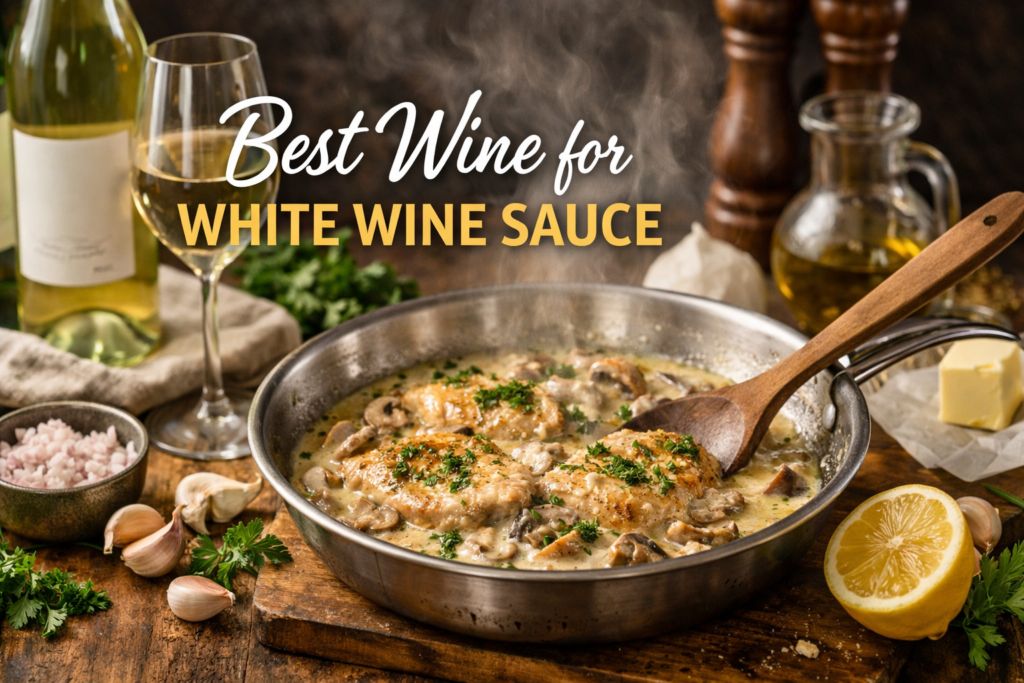
Most white wine sauces do not go wrong because the recipe is bad. They go wrong because the bottle is. I learned that the annoying way with a creamy chicken pan sauce. I grabbed a plush, oaky Chardonnay that tasted perfectly nice on its own. Six minutes later the pan smelled like toasted wood and butter flavoring, and not in a good way.
For most dishes, the best wine for white wine sauce is a dry, drinkable white such as Pinot Grigio, Sauvignon Blanc, or an unoaked Chardonnay. But “dry white” is only the first filter. A lemony shrimp sauce wants one kind of bottle. A buttery mushroom cream sauce wants another.
Here’s what this article will help you sort out:
- Which white wine is the safest default when you just want the sauce to work
- When Chardonnay is the right call and when it gets clumsy
- How cream, lemon, seafood, and mushrooms change the choice
- Which wines usually make white wine sauce taste bitter, flat, or oddly sweet
- How to pick a bottle fast when you’re standing in front of a shelf
At a Glance: Match the wine to the sauce, not just the protein
| Sauce style | Best lane | Why it works | Watch out for |
|---|---|---|---|
| Lemony, herby, light | Sauvignon Blanc or Pinot Grigio | Fresh acidity keeps the sauce lively | Very grassy or very sharp Sauvignon Blanc |
| Buttery, creamy, richer | Unoaked Chardonnay | More body, softer edges | Heavy oak, vanilla, sweet butter notes |
| Shellfish, briny, garlic-butter | Pinot Grigio | Clean and neutral, so the seafood stays in front | Sweet whites and loud aromatics |
| Earthy, mushroom-heavy | Unoaked Chardonnay or another restrained dry white | Enough roundness to meet umami without getting sticky | Thin, sour wines that make the sauce feel hollow |
The Best Wine for White Wine Sauce, in One Clear Answer
If you want the shortest possible answer, start with Pinot Grigio. It is usually the safest bottle for white wine sauce because it is dry, light, and not too bossy. It deglazes well, reduces cleanly, and rarely hijacks the pan.
If the sauce is brighter and sharper, especially with lemon, herbs, or capers, Sauvignon Blanc can be the better fit. If the sauce is buttery or creamy, unoaked Chardonnay often lands better because it has a rounder shape.
That is the part many articles skip. They hand you “use a dry white” and stop there.
A dry white wine for cooking is the baseline. The better choice comes from the sauce’s texture and acidity. The bottle should support the pan, not step on it. A delicate fish sauce wants lift. A creamy pasta sauce wants weight. A beurre blanc needs freshness, but not a wine so sharp it pokes through the butter.
Note: Cheap is fine. Harsh is not. For white wine sauce, a modest bottle that you would still drink from a glass beats a “cooking wine” bottle almost every time.
That last point matters. White cooking wine is often salted and rough. It can make the sauce taste flat and oddly preserved, like it came from a packet instead of a pan. Spend enough to get a clean, drinkable wine. Then stop. Fine-grained bottle nuance tends to vanish once shallots, stock, cream, butter, and reduction get involved.
Match the Wine to the Sauce Style, Not Just the Recipe Name
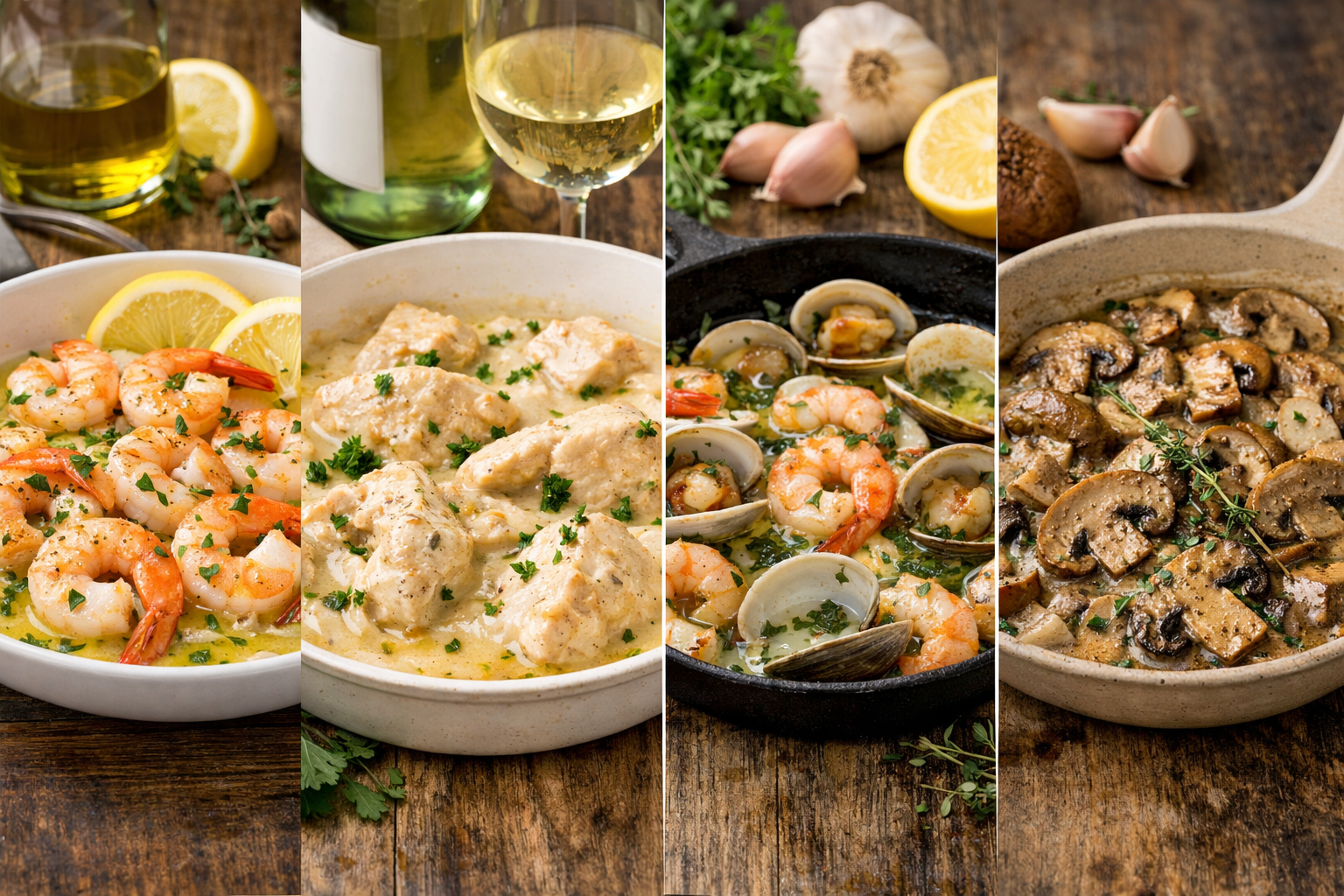
The protein matters, sure. The sauce matters more.
A shrimp dish can swing in two totally different directions. Shrimp scampi with lemon, parsley, and garlic wants brightness. Shrimp in a cream sauce with mushrooms wants more softness and body. Same protein. Different bottle.
How acid, salt, fat, and umami change wine perception is a useful framework from the Wine & Spirit Education Trust. In the pan, those same forces tell you which wine will feel balanced once the sauce is finished. Fat softens edges. Acid sharpens them. Umami can make a thin wine seem sour and stripped.
So read the loudest part of the sauce first:
- Bright and lemony: Go crisp. Sauvignon Blanc or Pinot Grigio usually works.
- Creamy and buttery: Go rounder. Unoaked Chardonnay is often the safe move.
- Briny and shellfish-heavy: Go clean and neutral. Pinot Grigio shines here.
- Earthy and mushroom-led: Go restrained, not razor-sharp. A neutral dry white or a quiet Chardonnay tends to sit better.
I like to think of it this way: choosing by grape name alone is like buying shoes by color. It looks decisive. It tells you almost nothing about fit.
If the sauce leans hard on butter and cream, a snappy Sauvignon Blanc can feel a little wiry. If the sauce has lemon and capers, a soft Chardonnay can land a bit sleepy. Match the energy of the wine to the energy of the sauce and you’re most of the way there.
Pinot Grigio vs Sauvignon Blanc vs Chardonnay: Which One Actually Fits Your Sauce?
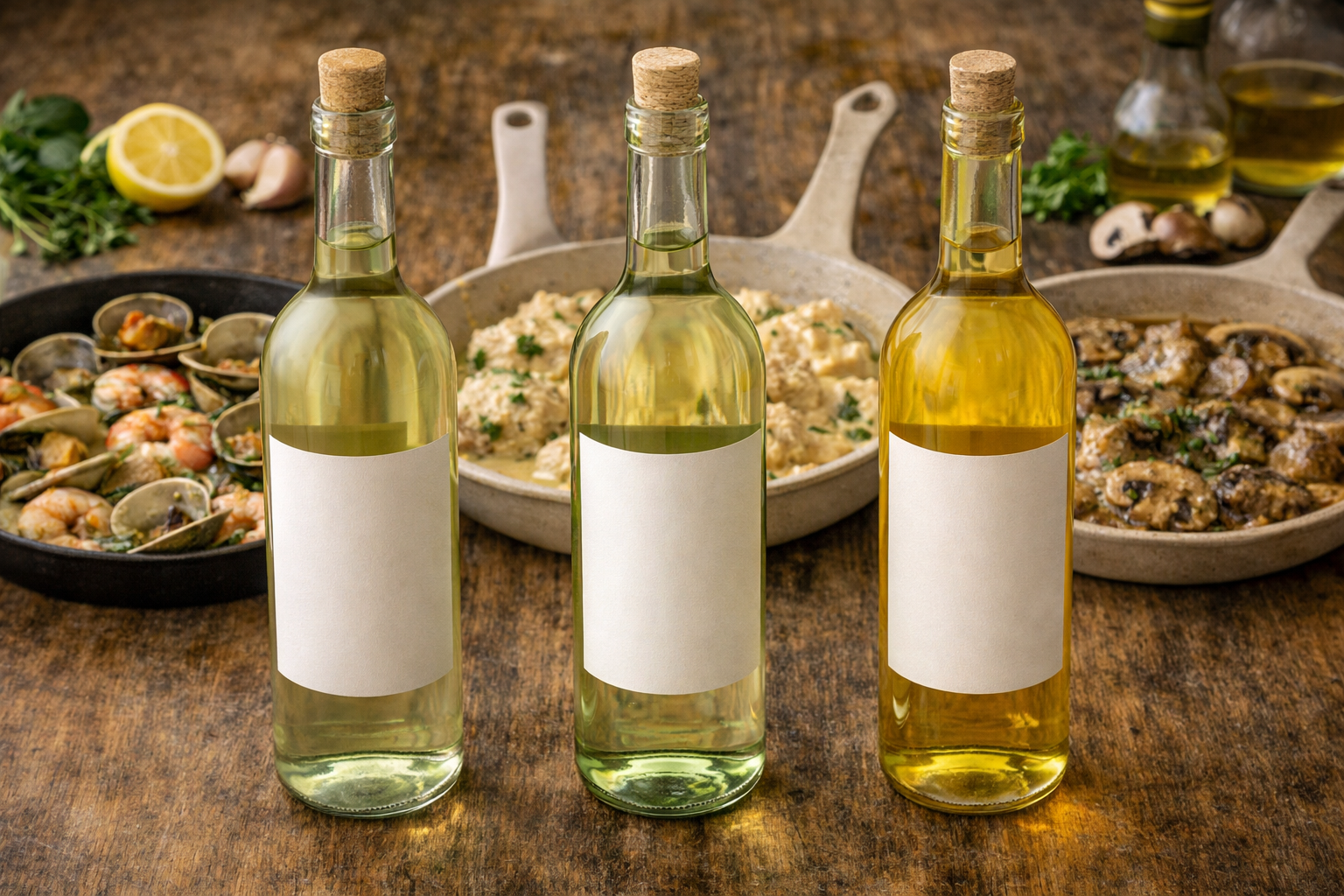
These are the three bottles most home cooks reach for, and for good reason. They cover most white wine sauce situations. The trick is knowing what each one does when the pan heats up and the liquid reduces.
Quick rule: Neutral is safer. Bright is livelier. Round is richer.
Pinot Grigio is the no-drama pick. It is usually light, dry, and fairly neutral. That makes it excellent for white wine pasta sauce with clams, shrimp, or white fish. It also works well when you’re deglazing a skillet and do not want the wine to leave a big aromatic stamp on the finished sauce. If you’re unsure what white wine to use for sauce, this is the bottle I would hand you first.
Sauvignon Blanc brings more zip. In a lemon butter sauce, a pan sauce for chicken with herbs, or a sharper seafood sauce, that extra lift can be exactly right. But there is a line. Some Sauvignon Blancs are intensely grassy or aggressively tart. Reduce those too far in a cream sauce and they can taste pointy, almost green.
Chardonnay is where people get tripped up. Chardonnay is not one thing. An unoaked Chardonnay can be clean, broad, and very handy in a buttery sauce. A heavily oaked Chardonnay can turn a delicate pan sauce into a vanilla-scented lumber yard. That’s not being dramatic. Oak, toast, and fake-butter notes do not get quieter in the pan. They get louder.
So which one is best?
- If the sauce is light, garlicky, and seafood-led, pick Pinot Grigio.
- If the sauce has lemon, herbs, or capers, pick Sauvignon Blanc.
- If the sauce has cream, butter, or a richer body, pick unoaked Chardonnay.
There are backup options too. Soave can work nicely. Dry Chenin Blanc can be lovely in the right pan. Dry vermouth is a smart pantry stand-in for small-batch sauces. But the Pinot Grigio vs Sauvignon Blanc vs Chardonnay question covers most real kitchens on most weeknights.
Avoid the Wines That Make White Wine Sauce Taste Bitter, Flat, or Oddly Sweet
If a white wine sauce tastes wrong, the usual culprit is not “bad technique” in the abstract. It is one of a few very specific bottle mistakes.
Sweet wine is the first trap. Reduction concentrates flavor. That includes sugar. A wine that feels merely off-dry in the glass can make the finished sauce taste clumsy and sticky. This is why Moscato is a bad idea here, and why off-dry bottles are risky unless the recipe is built around sweetness.
Heavy oak is the second trap. In a creamy sauce, some roundness is welcome. Toast, vanilla, and barrel char are another story. They can turn buttery sauce from plush to muddy in a hurry.
Cooking wine is the third trap. It often carries extra salt and a blunt flavor profile. When the sauce tastes oddly preserved or flat, this is often why.
Old leftover wine can also do sneaky damage. A bottle that has been open for a day or two is often fine for cooking. A bottle that tastes tired, nutty, or bruised can flatten a delicate white sauce. For stew, maybe you get away with it. For shrimp or fish, nope.
Remember: if the wine tastes sweet, hot, heavily oaked, or rough in the glass, it usually gets louder in the pan. White wine sauce is not a magic trick. It concentrates what you started with.
There is one more point worth keeping straight. Alcohol does not vanish the second a sauce simmers. In the FAQ below, you’ll see why time and pan size matter. For most cooks, that does not change which wine to buy. It does matter if you’re cooking for children, for guests avoiding alcohol, or for anyone who needs a no-alcohol version.
Deglaze, Reduce, and Finish the Sauce So the Wine Helps Instead of Shouts
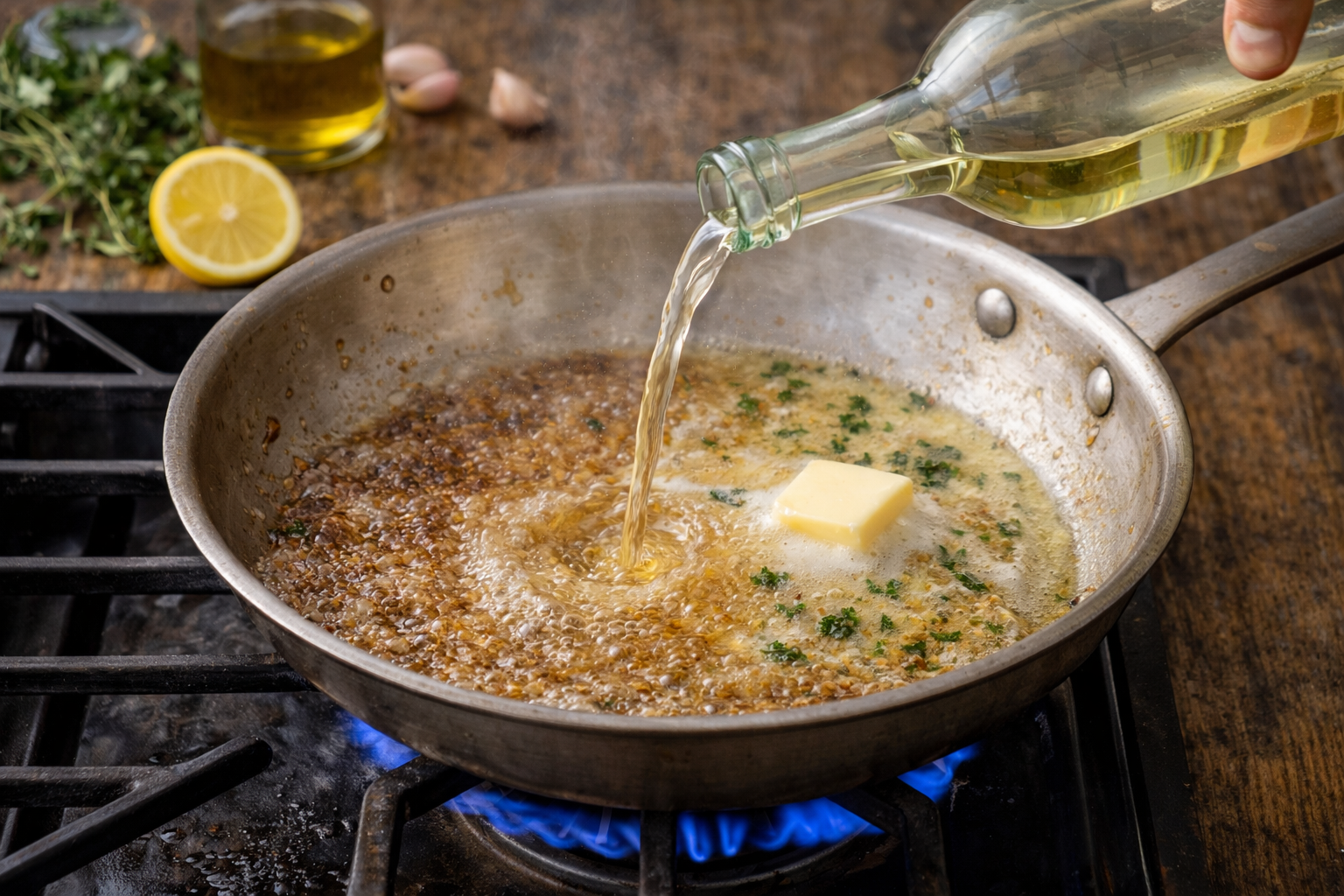
Good bottle choice fixes only half the problem. The pan still needs a little discipline.
Step 1. Deglaze to capture the browned bits
Once the protein comes out of the pan, add the wine while the heat is still lively. Deglazing pulls the fond into the sauce, as the Institute of Culinary Education explains. That is where much of the savory depth lives. The wine is not just flavoring. It is the tool that loosens all that stuck-on goodness.
Step 2. Reduce to tame the raw edge
Let the wine simmer down before you add cream. This matters more than people think. A white wine sauce made with 3/4 cup of wine can taste balanced or harsh depending on whether the wine had time to reduce and settle. If the pan smells boozy and thin, it is not ready.
Step 3. Add stock or cream to shape the sauce
Once the wine has reduced, add stock for a lighter pan sauce or cream for a fuller one. This is where the bottle choice shows its character. Pinot Grigio keeps things taut. Unoaked Chardonnay spreads out more gently.
Step 4. Finish with butter for body
Reduction concentrates flavor and butter finishing adds body, a point the Culinary Institute of America makes in its sauce training. A knob of butter at the end softens edges and gives the sauce that restaurant-style sheen. It also helps pull a bright white wine into the rest of the sauce so it tastes integrated instead of separate.
One practical thing from my own stove: if the sauce tastes too sharp before the cream or butter goes in, the first fix is usually more reduction, not more cheese. Cheese can cover a problem. Reduction often solves it.
Handle Tricky White Wine Sauce Situations Without Guessing
Most of the stress around cooking with white wine shows up in these small edge cases. They are not really edge cases, honestly. They are the meals people actually make on Tuesday night.
Shrimp scampi or lemony seafood sauce: Pinot Grigio is the easy win. Sauvignon Blanc can work too if it is not too grassy. The goal is lift and clarity, not perfume.
Creamy chicken sauce: Unoaked Chardonnay is usually the best fit. It gives the sauce enough width without forcing vanilla or toasted oak into the pan.
Mushroom white wine sauce: A neutral dry white works well if the sauce stays light. If the sauce gets creamy or buttery, restrained Chardonnay often tastes better than a sharper wine because mushrooms and cream can make thin wines seem sour.
Beurre blanc: Choose a dry, clean white that keeps its nerve. Too sweet and the sauce turns clumsy. Too aggressive and the butter never quite smooths it out.
Salmon with a white wine sauce: the sauce decides the bottle more than the fish does. For a fuller breakdown of that logic, see best wine with salmon.
White-sauce pasta bakes or seafood lasagna: if the sauce is moving into creamy, baked, béchamel territory, the same rounder-white logic shows up there too. Best wine for lasagna covers that sauce-first angle well.
No-alcohol version: Use stock with a squeeze of lemon or a small splash of white wine vinegar added carefully at the end. It will not taste identical. It can still taste good. Think “bright pan sauce” rather than “perfect white wine replica.”
Dry vermouth as a backup: for a quick weeknight sauce, dry vermouth is a solid trick. It keeps longer than table wine and works well in small amounts, especially for pan sauces and cream sauces.
Use This 30-Second Bottle Checklist in the Store
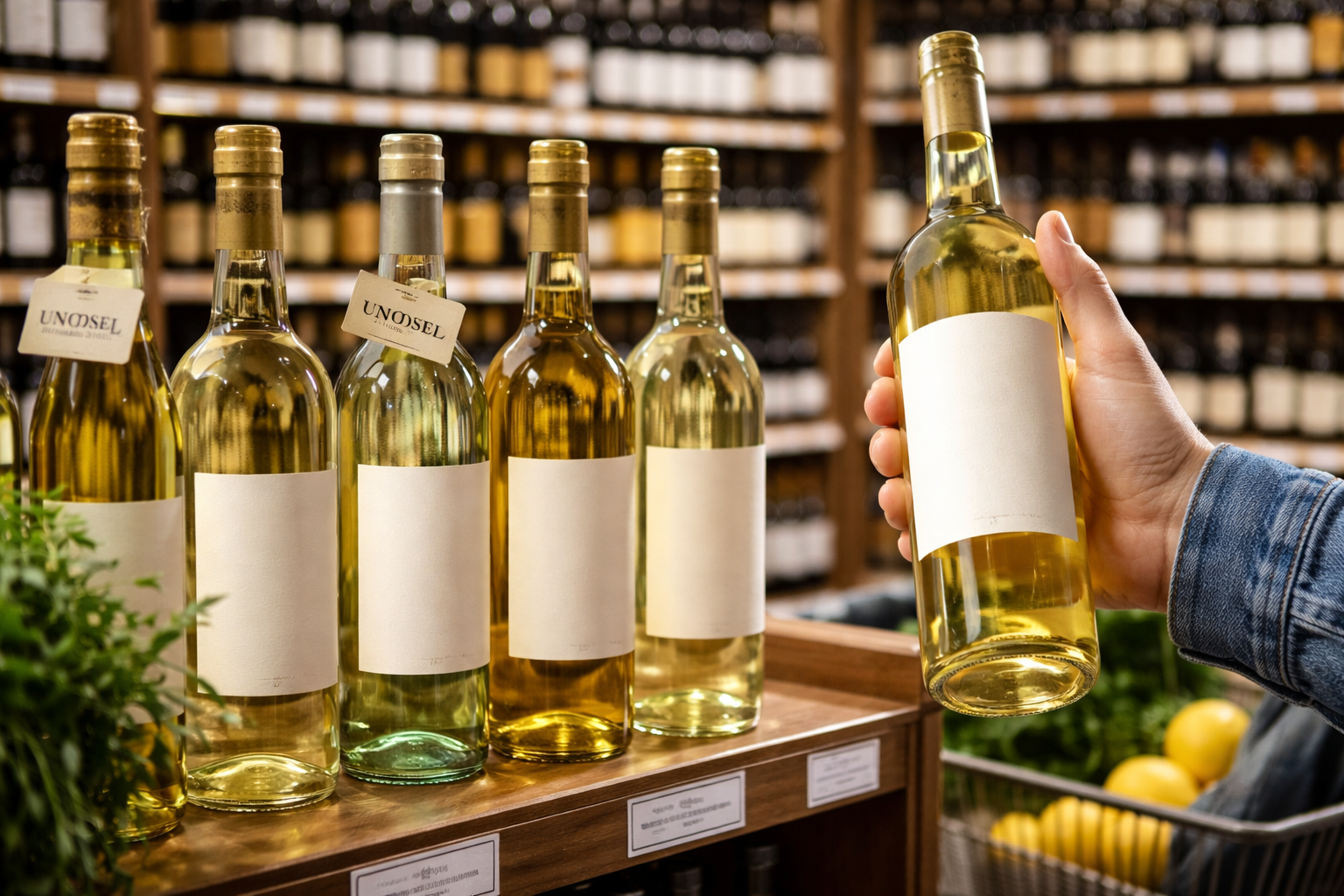
When you’re standing in the aisle trying not to overthink it, run this checklist:
- Dry: skip bottles that lean sweet or dessert-like
- Drinkable: if you would not pour a sip, do not pour it in the pan
- Restrained oak: “unoaked” or “stainless steel” are welcome clues
- Fresh over flashy: crisp, mineral, clean, and citrus-led usually work better than tropical, buttery, or heavily toasted styles
- Moderate price: enough quality to taste clean, not so much that you are paying for subtleties the sauce will bury
A simple rule worth remembering
For bright sauces, choose freshness. For creamy sauces, choose roundness. For almost everything else, choose restraint.
Mini bottles are fine if the wine itself fits the style. Boxed wine can be fine too. The format is not the problem. The flavor is. A clean boxed Pinot Grigio will beat a fancy but over-oaked Chardonnay in a white wine sauce every day of the week.
If you want one bottle that covers the most ground, buy Pinot Grigio. If you already know dinner is heading toward cream, butter, shallots, and a richer texture, buy unoaked Chardonnay. If lemon and herbs are running the show, grab Sauvignon Blanc.
FAQ
What is the best substitute for white wine in white wine sauce?
The closest practical substitute is stock plus acid. Use chicken stock, vegetable stock, or seafood stock, then add a small squeeze of lemon or a light splash of white wine vinegar near the end. It won’t taste exactly like wine because wine brings acid, fruit, and a faint bitterness all at once. Dry vermouth is a stronger substitute if alcohol is fine and you just do not have table wine open.
Does the alcohol cook out of white wine sauce?
Not all of it, and not right away. Alcohol does not simply vanish the moment a sauce simmers, as Idaho State University notes. The alcohol retention data summarized by the University of California’s Master Food Preserver Program shows that the amount left changes with cooking time and method. A quick pan sauce keeps more alcohol than a long simmer. If that matters for the people eating, use the no-alcohol path instead of guessing.
Are mini bottles or boxed wine okay for white wine sauce?
Yes, if the wine is dry and tastes clean. Mini bottles are handy when you need half a cup for pasta sauce and do not want leftovers. Boxed wine can work well for cooking because it stays usable longer after opening. The same rule still applies: dry, drinkable, and not heavily oaked.