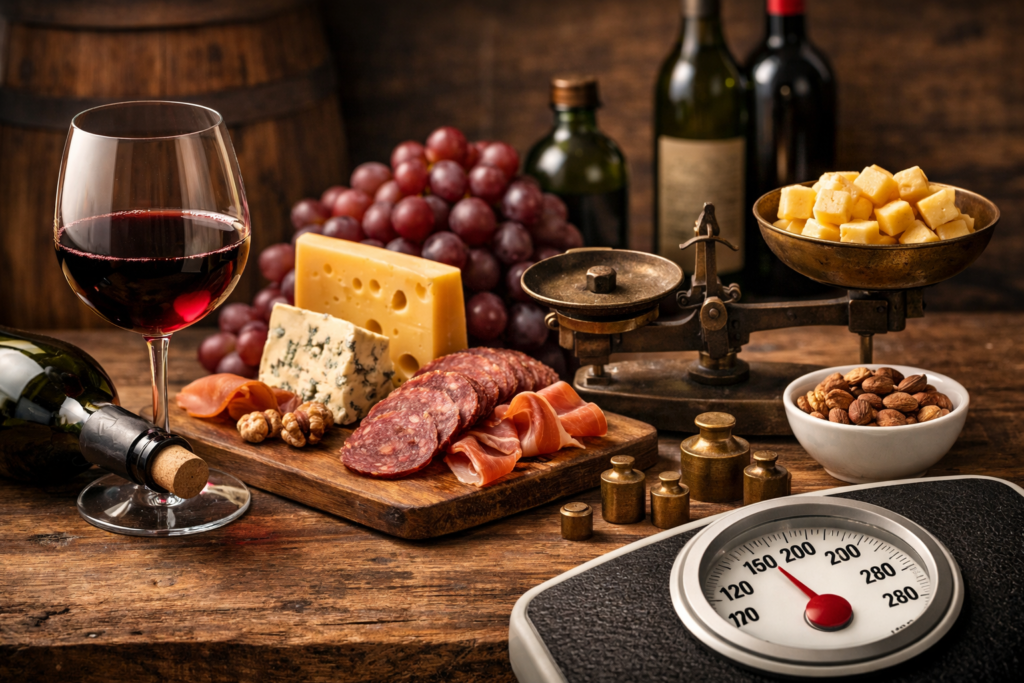
You’d think the best wine for weight gain would be a big red. Usually it isn’t. The calorie-dense end of the shelf is more often dessert wine or fortified wine, then high-alcohol-by-volume full-bodied table wine. That is the direct answer. The catch is less sexy: wine adds calories fast but it brings very little nutrition with it, so it works better as an add-on to meals than the backbone of a healthy weight-gain plan.
I see the same mix-up all the time in wine shops. Someone grabs a Cabernet because it “feels heavier” while a sticky late-harvest bottle a shelf over would outrun it for calories without breaking a sweat. Color looks like the obvious clue, but sweetness, alcohol by volume, and the size of the pour do far more of the heavy lifting.
- Which wine styles usually carry the most calories
- How to judge a bottle in under 30 seconds
- Why red versus white is the wrong first question
- When wine fits a weight-gain plan and when it backfires
- The mistakes that make this search go sideways fast
Fast Pick Rule: At a Glance
If a wine is sweeter, stronger, or poured bigger, it will usually land higher on the calorie ladder.
| Style lane | What usually drives calories | Where it tends to sit |
|---|---|---|
| Dry sparkling and light dry whites | Lower alcohol, low sugar | Lower |
| Full-bodied table reds and richer whites | Higher alcohol, fuller style | Middle to high |
| Dessert wines and fortified wines | Sugar, alcohol, or both | Highest |
Quick memory trick: sweet + strong + generous pour = more calories.
Best Wine for Weight Gain: The Straight Answer
The straight answer is simple. Dessert wines and many fortified wines usually carry the most calories per serving, then come fuller table wines with higher alcohol by volume. If the goal is purely “highest calorie wine,” that is the lane to look at first.
For a fair baseline, the 5-ounce glass of 12% wine that counts as one standard drink is the cleanest yardstick around. And the National Health Service notes that a 175 ml glass of 12% wine can reach 158 calories. Once the alcohol climbs or the wine gets sweeter, the number rises with it.
There are really two different questions hiding inside this search. One is “Which wine has the most calories?” The other is “Which bottle would I actually drink with dinner if I want a higher-calorie choice?” Those are not always the same bottle. A syrupy dessert wine can beat a big red on calories, but it is not always what people want on a Tuesday night with pasta.
Note: “Calorie-dense” does not mean nutritious. Wine can raise intake. It does not replace food that brings protein, fiber, vitamins, or minerals.
Dessert, Fortified, and Full-Bodied Wines: Which Styles Add Calories Fastest
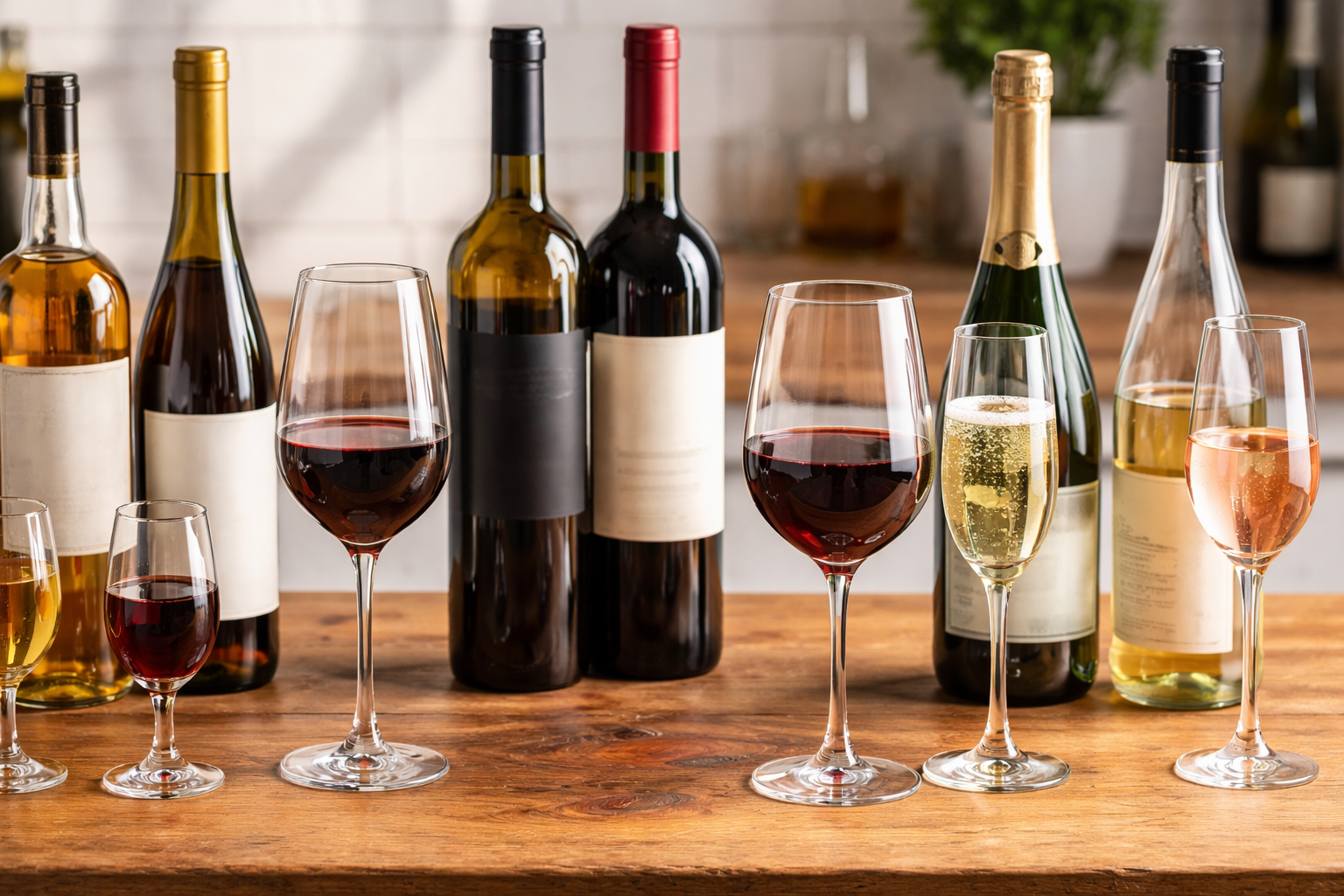
If you line up wine by calorie direction rather than by prestige or grape hype, three lanes show up pretty fast.
Lane 1: Dessert wines and fortified wines. Think port, cream sherry, many late-harvest wines, ice wine, and sweeter fortified styles. These wines climb because they carry more sugar, more alcohol, or both. This is the true top shelf for calorie density.
Lane 2: High-alcohol table wines. Big Zinfandel, ripe Cabernet Sauvignon, Amarone-style reds, and some plush Chardonnays live here. They are not dessert-sweet, but the alcohol itself drives calories up. A “dry” label does not rescue a wine from a high calorie load if the bottle is pushing into the 14% to 15% range.
Lane 3: Lighter dry wines. Brut sparkling wine, Sauvignon Blanc, Pinot Grigio, and many dry rosés sit lower. They can still add up fast if the pours get sloppy, but the style lane starts lower.
On most shelves, the rough pattern looks like this: dry sparkling often lands around 95 to 110 calories per 5-ounce pour, many dry whites and rosés sit around 100 to 125, and fuller table reds can move into the 135 to 165 zone. Dessert and fortified styles often beat those ranges, but their serving sizes are smaller and that is where people get fooled.
I have watched people compare a tiny port pour with a balloon-glass restaurant pour of Chardonnay like they were the same unit. They are not. Visually smaller does not mean lighter.
Fast Pick Rule
If the style name hints at dessert, late harvest, ice wine, port, or cream sherry, assume it sits near the high-calorie end until the label proves otherwise.
Use ABV, Sweetness, and Pour Size to Judge a Bottle in 30 Seconds
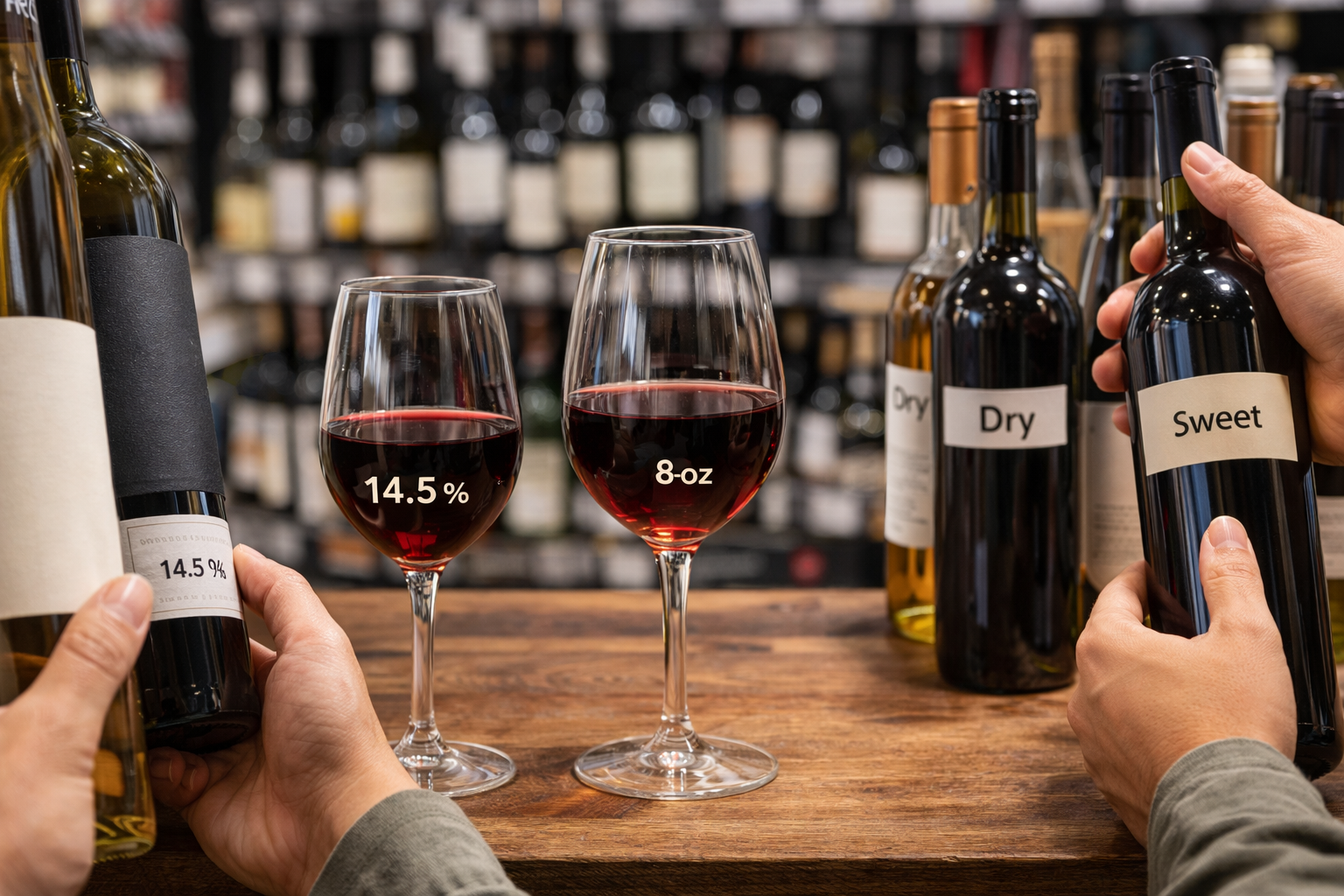
If you only have half a minute in the aisle, skip grape mythology and do this instead.
Step 1. Check alcohol by volume and spot the heavy hitter.
Alcohol does not just change how a wine feels. It changes calories. The National Health Service states that alcohol contains 7 calories per gram, so a 14.5% bottle will usually carry more calories than an 11.5% bottle before sweetness even enters the chat.
Step 2. Read the style cue and catch the sugar signal.
Dry, extra brut, brut, off-dry, sweet, dessert, late harvest, and fortified are not just flavor hints. They are calorie hints. Dry and lower-alcohol is the lighter lane. Sweet and strong is the heavier lane. If both are present, the wine is rarely light.
Step 3. Count the real pour and stop lying to yourself.
The standard drink guide for wine uses 5 ounces for table wine and smaller pours for stronger wines. That matters. A home pour can creep to 7 or 8 ounces fast, which turns a moderate table wine into a much bigger calorie event than the neat chart in your head.
Here is the useful shelf rule. If a wine is 14% alcohol by volume or higher, treat it as a higher-calorie table wine. If it is labeled dessert or fortified, treat it as calorie-dense almost by default. If your glass is large, the pour matters more than the grape.
Once the style lane is clear, value shopping gets easier. For a price-first angle after picking that lane, see value-driven wine picks.
Remember: A dry high-ABV wine can outrun a sweeter low-ABV wine. Sugar matters. Alcohol often matters just as much.
Red vs White vs Rosé vs Sparkling: What Actually Changes
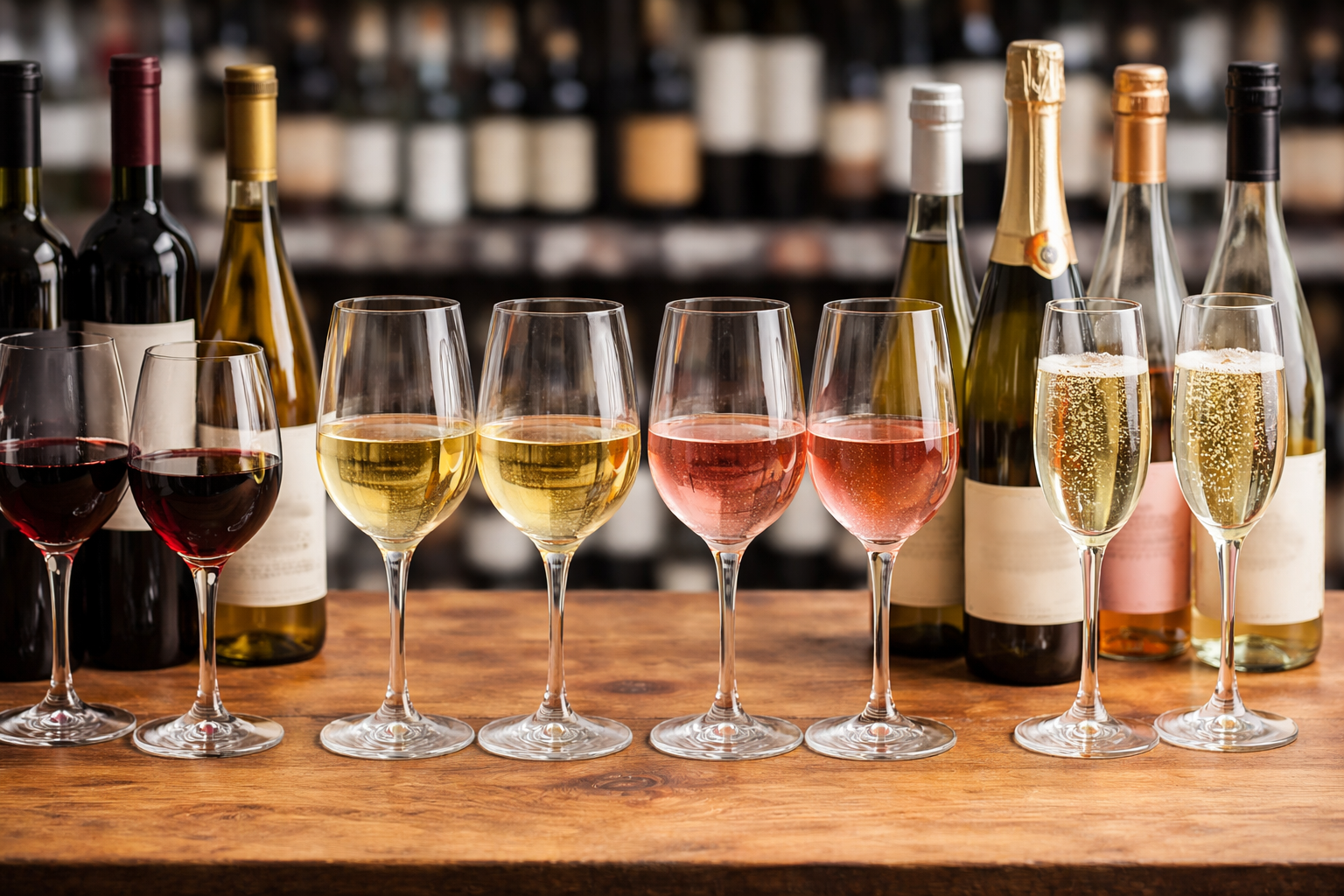
This is where a lot of articles drift off course. Color feels like the natural sorting tool. It just is not the best one.
Red wine: Reds often land higher when they are ripe, full-bodied, and pushed up in alcohol. Cabernet Sauvignon, Syrah, and Zinfandel can sit well above a crisp white when the alcohol level climbs. Pinot Noir can sit lower than many people expect.
White wine: White is not code for light. A sweet Moscato, a late-harvest Riesling, or a plush high-alcohol Chardonnay can outpace many reds. This is the part people miss. Sweet white wine can be the calorie sleeper pick in plain sight.
Rosé: Rosé often lands in the middle, but it is a broad category. Bone-dry Provençal rosé is one thing. A sweeter blush wine is another story.
Sparkling: Sparkling gets a “diet” halo it has not always earned. Brut and extra brut styles are often lighter. Demi-sec and sweeter sparkling wines can climb quickly. The bubbles do not erase sugar or alcohol.
So which is more fattening, red or white? Neither category wins cleanly on its own. A sweet or stronger white can beat a dry moderate red. A massive red can beat a lean dry white. Color is a shortcut. Sweetness and alcohol by volume are the better map.
| Category | Usually lighter | Usually heavier |
|---|---|---|
| Red | Pinot Noir, lighter dry reds | Zinfandel, fuller Cabernet, Amarone-style wines |
| White | Sauvignon Blanc, Pinot Grigio, dry Riesling | Moscato, late-harvest wines, high-ABV Chardonnay |
| Sparkling | Extra brut, brut | Demi-sec and sweet sparkling |
When Wine Fits a Weight-Gain Plan and When It Backfires
Wine can help create a calorie surplus. That part is true. It just does the job in a pretty blunt way.
The National Institute on Alcohol Abuse and Alcoholism notes in its alcohol calorie calculator that alcoholic drinks add calories while bringing few nutrients. That is the heart of the tradeoff. If the goal is healthy weight gain, extra food calories usually do a better job because they can bring protein, carbs, fats, fiber, and actual nourishment with them.
Wine fits better in a weight-gain plan when it sits on top of dinner instead of replacing dinner. A glass with a meal can push intake up without much effort. Using wine as the answer on nights when appetite is low sounds tempting, but it can crowd out food quality in a hurry. That is the part that gets a bit wonky.
There is also the behavior side. A richer wine often nudges richer food, late-night snacking, and larger pours. That can help somebody trying to gain weight. It can also turn into a sloppy pattern that adds calories without much structure. If the aim is controlled gain, food should do most of the work and wine should stay optional.
A better rule for healthy weight gain
Get most extra calories from food first. Then use wine, if at all, as a small add-on with meals rather than the engine of the plan.
The Mistakes That Make This Search Go Sideways
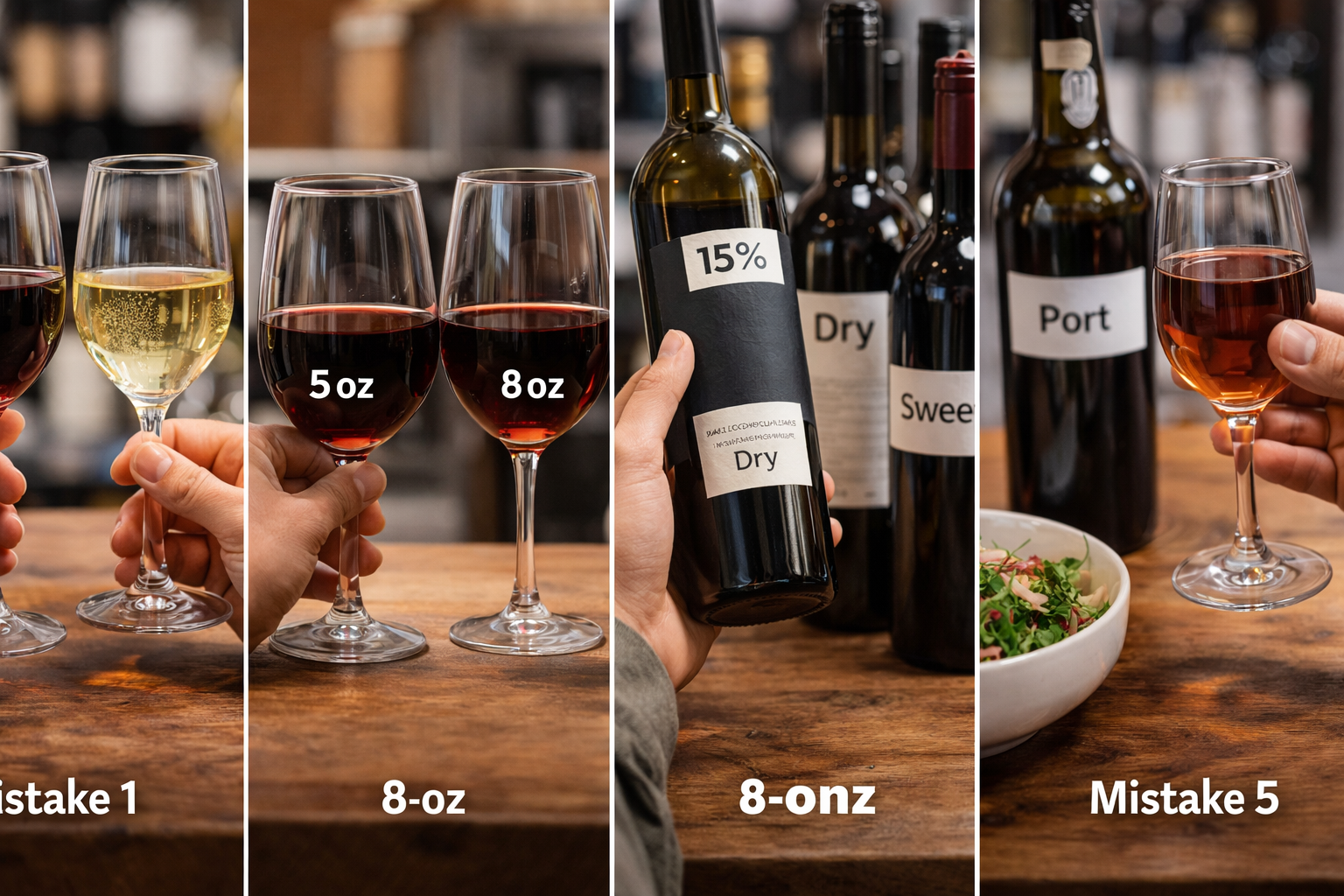
Mistake 1: Choosing by color alone.
Red versus white is catchy but it is a lousy first filter. A sweet white can beat a dry red. A big red can beat a lean white. The better first filter is sweetness plus alcohol by volume.
Mistake 2: Forgetting the pour.
A 5-ounce chart is neat. Real life is messy. Restaurant pours can stretch wide, and home pours drift even more. A generous 8-ounce glass turns a “moderate” wine into a much bigger calorie hit.
Mistake 3: Assuming dry means low calorie.
Dry only tells part of the story. A bone-dry red at 15% alcohol by volume is not light just because there is little residual sugar.
Mistake 4: Treating fortified wine like regular dinner wine.
Port and sherry often come in smaller pours for a reason. They are denser. If you drink them like table wine, the numbers stack fast.
Mistake 5: Using wine to replace food.
This is the big one. Wine can make a calorie target easier to hit. It is poor at building a balanced diet. That gap shows up fast if meals start shrinking while drinks grow.
Mistake 6: Thinking every bottle in one grape family is basically the same.
Cabernet Sauvignon from one producer at 13% is not the same calorie story as a riper bottling at 15%. The exact number shifts with bottle style, region, and serving size.
Short version: stop asking “red or white?” and start asking “how sweet, how strong, and how much am I pouring?”
Who Should Skip This Approach or Get Personalized Advice First
Some situations change the advice right away.
If pregnancy is part of the picture, alcohol is not the tool. The Centers for Disease Control and Prevention states that there is no known safe amount of alcohol use during pregnancy. That closes the door on using wine for weight gain in that setting.
If there is a history of alcohol misuse, recovery, or trouble controlling intake, building calories around wine is a bad setup. The same goes for people dealing with liver disease, pancreatitis, or medicines that do not play nicely with alcohol.
There is another point worth saying plainly. The World Health Organization’s Europe office says there is no safe level of alcohol consumption in relation to cancer risk. That does not mean every article about wine needs to sound like a scolding leaflet, but it does mean this choice should be framed with open eyes.
Practical takeaway
If any health flag is already on the table, food-based calorie strategies are usually the cleaner path.
A Simple Rule for Choosing Wine When Calories Matter
Here is the rule worth keeping: sweeter + stronger + bigger pour usually means more calories.
If the goal is the highest-calorie lane, dessert wine and fortified wine sit closest to the target. If the goal is a more normal dinner bottle that still trends heavier, look at fuller table wines with higher alcohol by volume. If the goal is healthy weight gain, put food first and treat wine as optional.
That is the whole thing, really. Choosing by color alone is like buying shoes by the box color instead of checking the size label. It feels like a shortcut. It sends you home with the wrong pair.
And that is why the best wine for weight gain is not one single bottle or one magic grape. It is a style decision. Read the shelf for sugar, alcohol, and serving reality. Then decide if wine is even the tool worth using.
FAQ
Is port higher in calories than regular wine?
Usually yes. Port is fortified, which means higher alcohol, and many styles also carry more sweetness. The serving size is smaller, but per serving it often lands above regular table wine.
How many calories are in a bottle of wine?
A 750 ml bottle holds about five 5-ounce glasses. So a wine that runs near 120 calories per glass lands around 600 calories per bottle, and a wine near 150 calories per glass lands around 750. The number moves with alcohol, sweetness, and pour size.
Does non-alcoholic wine have fewer calories than regular wine?
Often yes, but not always dramatically less. Removing alcohol cuts one calorie source, yet sugar still matters. Some non-alcoholic wines stay fairly light. Others lean sweeter and climb back up.