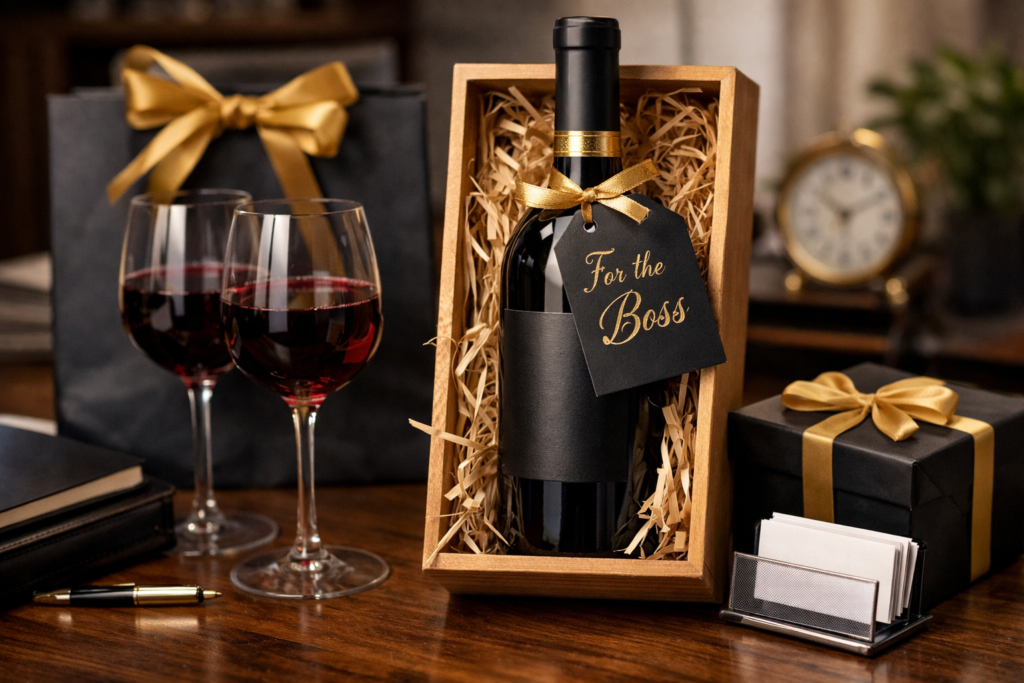
It usually happens in front of a wall of labels that all look more expensive than they are. You are not really asking about grapes at that point. You are asking, “What bottle says thank you, good taste, and normal adult judgment all at once?” For most people searching for the best wine for your boss, the safest answer is brut Champagne or another traditional-method sparkling wine. If you know they like red, reach for Pinot Noir or Rioja Reserva. If you know they prefer white, a balanced cool-climate Chardonnay is usually the cleanest move.
That answer gets useful only when you add context. A boss gift is half bottle, half social read. I have seen perfectly decent wine land with a thud because the price looked loaded, the timing looked strategic, or the bottle style screamed “I wanted to impress you” instead of “I know how to choose well.”
You do not need sommelier chops for this. You need a calm filter.
- When wine is a smart gift and when it is not
- Which wine styles are safest when you know very little
- How much to spend without making it weird
- How to pick a stronger bottle when you know their taste
- Which mistakes make a good bottle feel awkward
At a glance
| If this is your situation | Best move | Why it works |
|---|---|---|
| You know almost nothing about what they drink | Brut Champagne or quality traditional-method sparkling | Celebratory, broadly food-friendly, and hard to misread |
| You know they like red | Pinot Noir or Rioja Reserva | Polished, versatile, and less heavy-handed than a big Cabernet |
| You know they like white | Cool-climate Chardonnay | Feels thoughtful without getting too niche |
| You are going to dinner at their home | Sparkling or a food-friendly red | Works across more menus and puts less pressure on the host |
| The office vibe makes alcohol risky | Skip wine or make it a group gift | Better judgment beats a brave bottle |
The best wine for your boss, if you want the safest answer fast
If you want the short version, buy a dry sparkling wine first. A bottle of brut Champagne or another strong traditional-method sparkling wine has two things going for it. It feels celebratory without feeling intimate, and the food and Champagne pairing logic is broad enough that the bottle makes sense even when you do not know the menu.
If sparkling feels too obvious, the next safest lane is a red that reads polished rather than loud. That is where Pinot Noir and Rioja Reserva earn their keep. Pinot usually feels lighter on its feet. Rioja gives you a bit more structure and a more classic old-world feel. Both are easier to gift than a hulking Napa Cabernet when you are guessing.
For white wine drinkers, a cool-climate Chardonnay is the tidy answer. Think balanced fruit, good acidity, and no syrupy oak bath. The point is not to show range. The point is to pick a bottle with a high chance of being enjoyed.
Fast rule: Know nothing? Buy sparkling. Know they like red? Pinot Noir or Rioja Reserva. Know they like white? Cool-climate Chardonnay. Know they love bold reds? Then and only then step into Cabernet Sauvignon or Bordeaux-style red.
The generic answer falls apart when the bottle is fine but the context is wrong. So before you buy, check one thing first.
When wine is the wrong gift for a boss
Some workplace gifts are awkward before the ribbon even goes on. That is extra true when the gift moves upward. Workplace gift guidance from Insperity makes the basic point cleanly: gifts usually flow down the reporting line more easily than up it. Emily Post makes a similar case in its office gift-giving guidance. The bottle may be tasteful. The moment still may be off.
Run a quick red-flag check before you go any farther:
- You only know this person inside work and have no clue whether they drink alcohol
- The company has gift rules, spend limits, or a culture that dislikes upward gifts
- The timing looks transactional, like right before a review, bonus decision, or favor
- There is any personal, religious, or recovery-related reason alcohol could land badly
If two of those are true, skip the bottle. A group gift, a warm note, or a good non-alcoholic gift is cleaner.
This is one of those areas where restraint looks smarter than nerve. I would rather give no wine than give a bottle that makes the recipient think, “Why did this need to happen?”
Remember: “Best wine for a boss” sometimes means “wine is not the best gift here.”
A simple decision tree for picking the right bottle
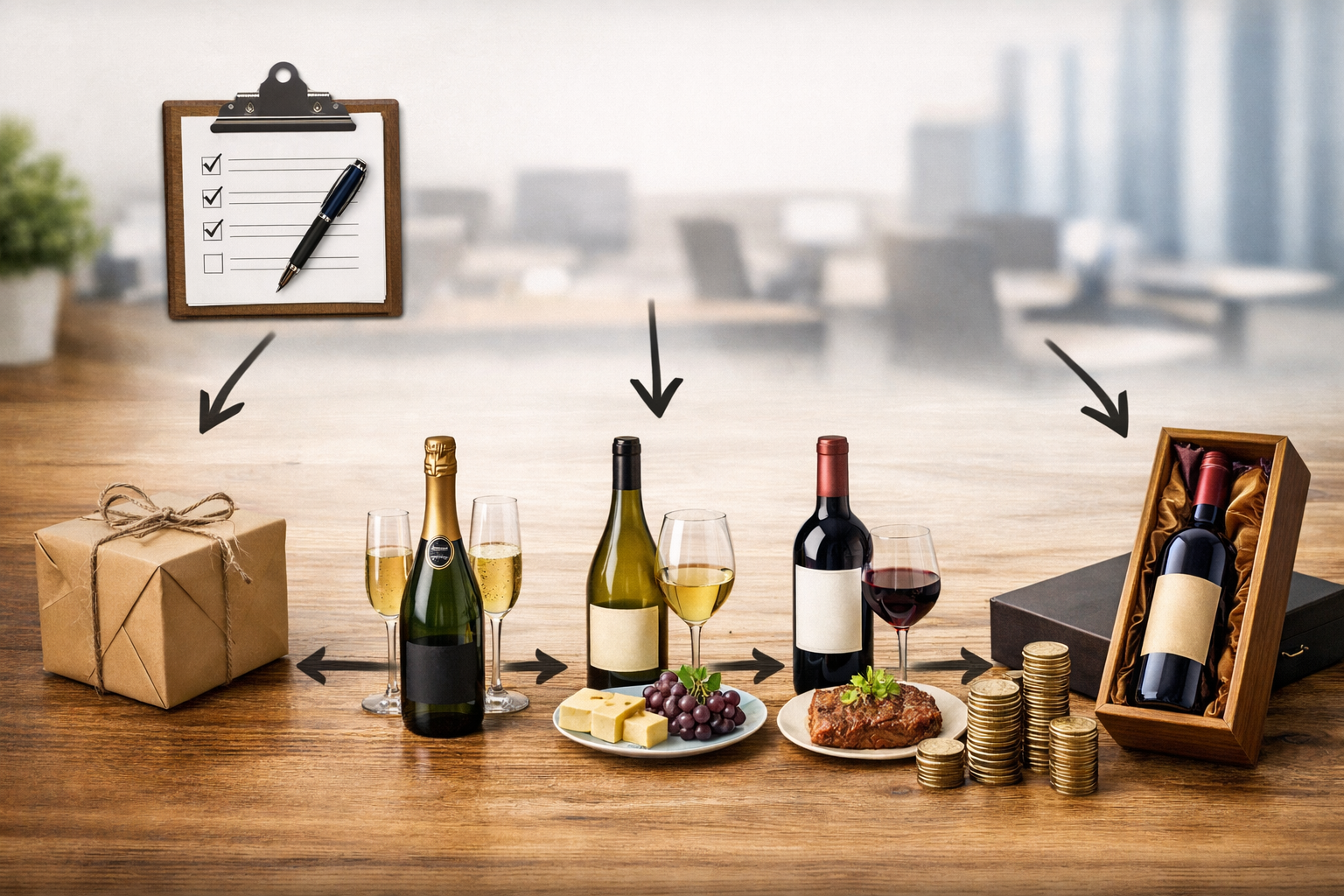
You can strip this down to three filters: appropriateness, style lane, and budget band. That is it. No swishing required.
Use this in order
Step 1. Check the setting and avoid an awkward gift.
If the office culture or timing makes alcohol feel loaded, stop there and change the gift.
Step 2. Match the bottle to what you know.
Known preference beats generic prestige every time.
Step 3. Pick the price that fits the relationship.
A strong bottle in the right band beats a “bigger” bottle that looks like overkill.
If you know what they drink: stay in that lane and trade up one notch. If they drink white Burgundy-style Chardonnay, get a better balanced Chardonnay. If they like Rioja, do not suddenly decide this is the moment to introduce volcanic Sicilian red. Cute idea, wrong task.
If you know the meal or occasion but not their taste: choose a food-friendly bottle. Sparkling works with more meals than most people think. Pinot Noir is a calm, adaptable dinner red. If the menu leans toward fish, a tighter pairing guide like best wine with salmon helps more than a prestige label does.
If you know almost nothing: default to sparkling. This is the best place to stop trying to be clever.
If they are wine-savvy: you can move one click off-center, but only when you can explain the choice in one sentence. “I know you like crisp, mineral whites, so I chose something in that lane” sounds thoughtful. “I found this fascinating skin-contact bottling from a tiny producer” sounds like you bought the wine for yourself and then changed the tag.
How much to spend without making it weird
Price is where a lot of people lose the plot. They feel uncertain, so they spend their way out of the feeling. That is how you end up with a bottle that says “I am trying way too hard” instead of “good taste, thanks for everything.”
A cleaner way to think about it is by social signal, not score or trophy value.
| Budget band | Best use | How it reads |
|---|---|---|
| Under $30 | Simple thank-you, casual host gift, modest office culture | Respectful and low-risk |
| $30 to $60 | Most solo gifts for holidays, thanks, or small milestones | Polished without looking loaded |
| $75 and up | Retirement, major milestone, or group gift | Special, but only when the moment justifies it |
If this is a solo gift, the $30 to $60 range is the sweet spot more often than not. It lets you buy a genuinely good bottle without turning the gift into a scene. If you are shopping in that lane, a guide to best wine for 50 dollars is right in the zone.
Go higher when the occasion is bigger or when the gift is from a team. A retirement bottle from a whole department can carry more weight than a year-end bottle from one direct report. Context changes what feels gracious and what feels off.
Simple rule: If the price would make you feel the need to explain yourself, it is probably too high for the setting.
The safest wine styles when you know very little
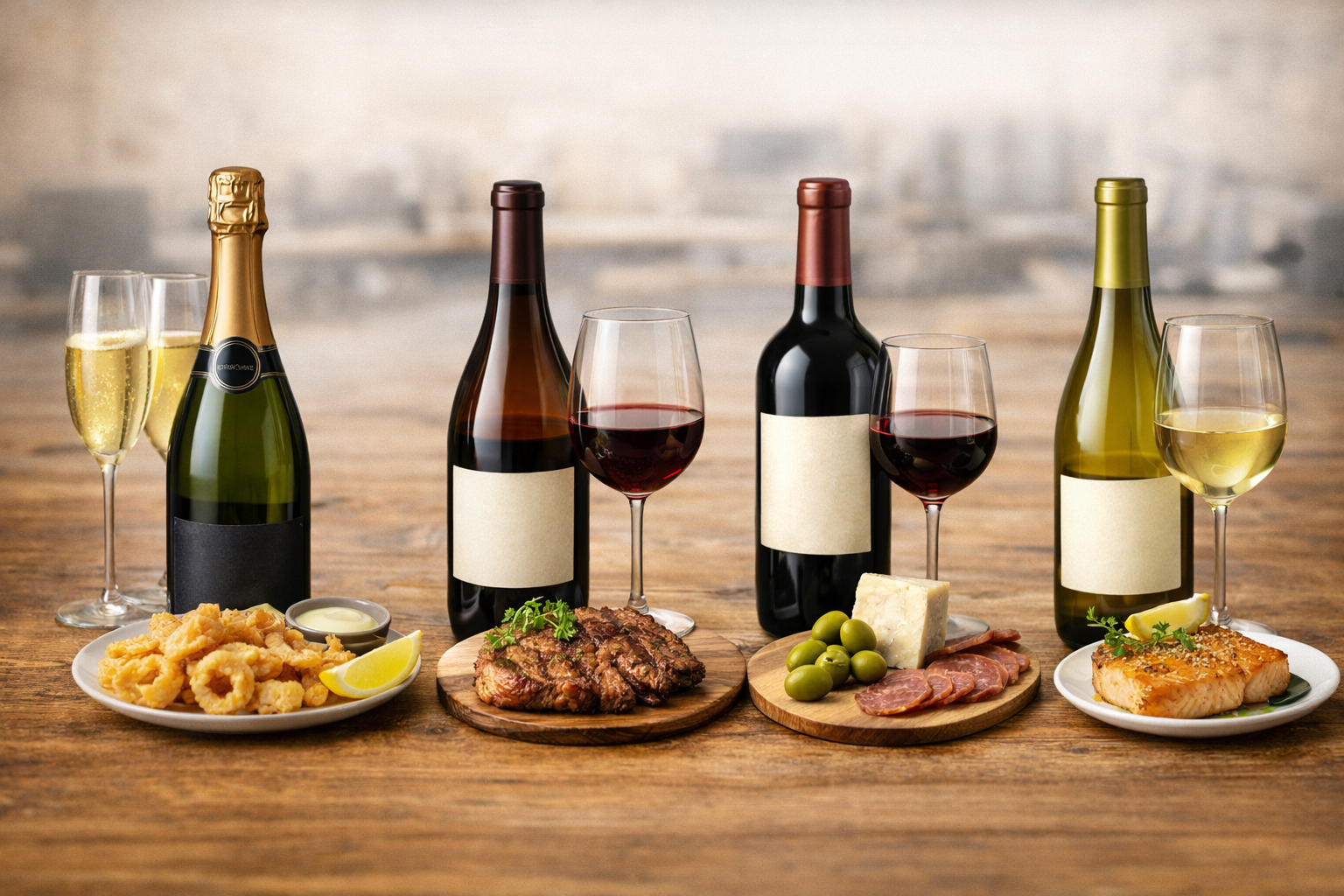
This is where broad wine advice either helps or gets mushy. The styles below work because they cover different situations cleanly.
Brut Champagne or quality traditional-method sparkling: This is the safest all-purpose answer because the bottle feels festive and works across food styles. Dry sparkling wine has lively acidity, and that is why it plays so well with salty, fried, creamy, and richer dishes. That is not wine poetry. That is just structure doing its job.
Pinot Noir: For red drinkers, Pinot is usually easier to gift than a big Cabernet. The texture tends to be softer, the fruit reads fresher, and the bottle feels more elegant than forceful. A WSET explanation of tannin and structure helps explain the basic tradeoff. Cabernet tends to feel more tannic than Pinot Noir, so Pinot carries less risk when you are not sure how bold the recipient likes their reds.
Rioja Reserva: This is one of my favorite “grown-up but not showy” gift lanes. It feels classic. It usually brings enough oak and savory detail to seem serious, but it does not smack you over the head. Rioja is also one of those categories that still offers very good value, which helps when you want quality more than label flex.
Cool-climate Chardonnay: Not buttery-popcorn Chardonnay. Not the bottle that tastes like toasted furniture. Go for balance, acidity, and restraint. If the boss likes white wine and the office crowd skews classic, this is a strong play.
Cabernet Sauvignon or Bordeaux-style red: This is the move only when you already know they like structured reds. A lot of gift guides toss Cabernet out as a default power move. I think that is lazy. Big reds can feel like dress shoes that are a half-size too tight. Impressive for ten minutes, then all anyone notices is the squeeze.
If-then picks
- If preferences are unknown, buy sparkling.
- If they are a red drinker and you want elegance, buy Pinot Noir.
- If they are a red drinker and you want classic polish, buy Rioja Reserva.
- If they are a white drinker and you want safe sophistication, buy cool-climate Chardonnay.
- If they love bold reds and you know that for sure, buy Cabernet Sauvignon or Bordeaux-style red.
When a more distinctive bottle makes sense
Some bosses know wine. You know the type. They can talk about producer style without sounding annoying, and they actually mean it when they say they like acid-driven whites. This is where generic “safe pick” advice starts to feel flat.
Still, this is not the moment to go full peacock.
A better rule is “one step off-center.” A grower Champagne, a dry Riesling with real precision, a Loire Chenin Blanc, or an elegant Nebbiolo can all work when the person has enough wine context to enjoy the choice. Those wines say thoughtfulness. They do not say performance art.
What usually misses is the bottle that is distinctive in a way that asks too much from the recipient. Funky natural wine, oxidative whites, orange wine, giant extracted reds, oddly packaged labels, and cult bottles chosen just because they are pricey can all feel like the gift version of someone explaining an inside joke you never asked to hear.
If you cannot explain the bottle in one calm sentence, back up a step. “I know you like taut whites, so I chose a dry Riesling” is enough. That sentence has taste and judgment. It does not have theater.
Good distinctive: recognizable category, cleaner style, clear reason.
Bad distinctive: obscure bottle, divisive style, no obvious fit.
How to present the bottle so it feels thoughtful
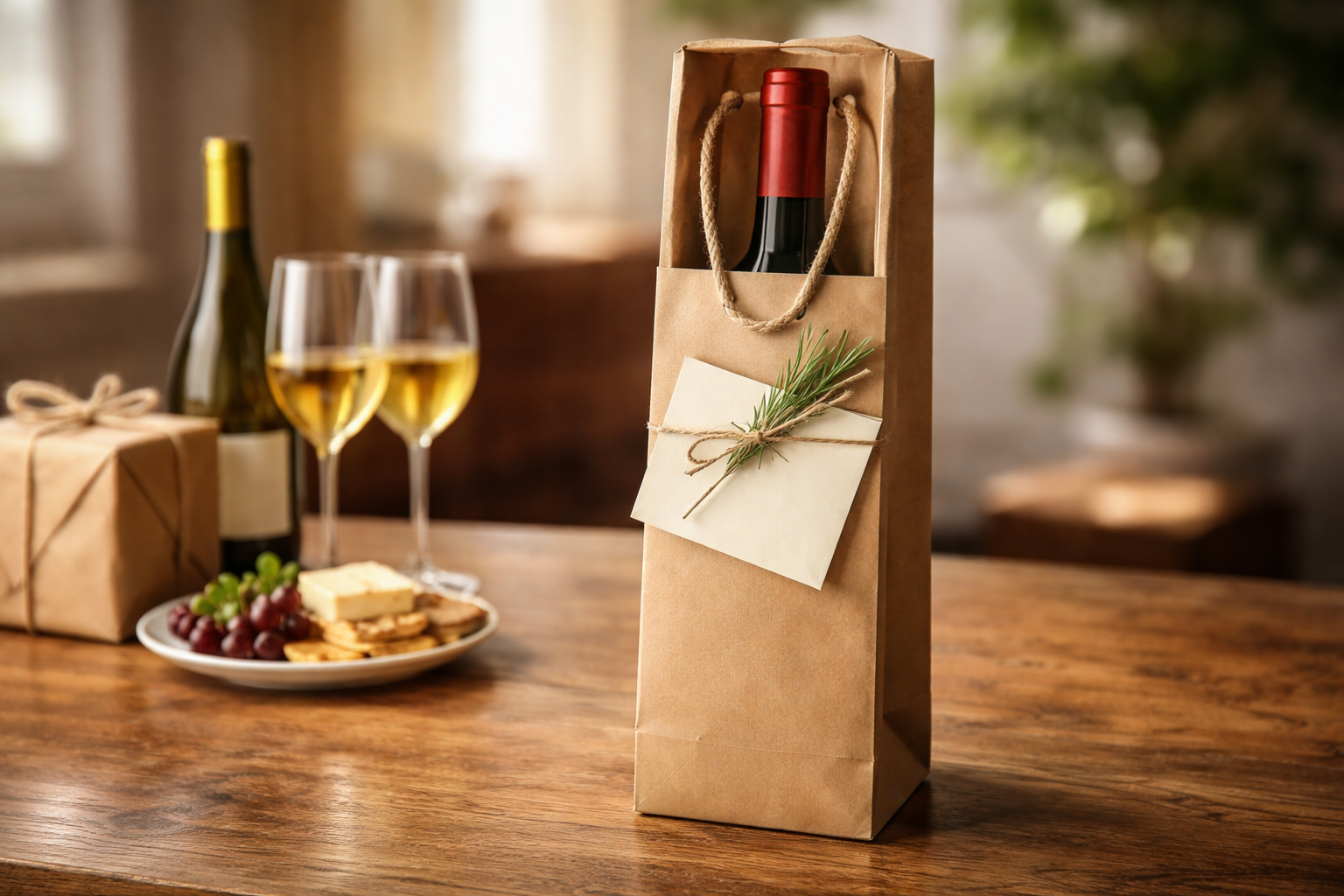
A strong bottle can lose half its charm if the handoff is clumsy. Presentation matters here, but not in a “buy velvet ribbon” way. The best presentation is simple, neat, and specific.
Start with the note. A short note does more work than fancy packaging because it explains the why without over-explaining the gift. Keep it to one to three sentences. You are not writing a toast. You are just putting warmth around the bottle.
Three note templates that sound normal
Thank-you: “Thank you for the guidance this year. I really appreciated it, and I hope you enjoy this.”
Holiday: “Wishing you a relaxing holiday season and a great new year. Hope this bottle finds a good dinner table.”
Farewell or milestone: “Congratulations on a remarkable run. Thank you for everything, and I hope you enjoy opening this at the right moment.”
Packaging should stay clean. A simple gift bag or wine box is enough. Novelty wooden crates, jokey tags, and oversized bows push this into the wrong register fast.
Delivery matters too. If you are shipping alcohol, home delivery is usually cleaner than office delivery. Adult signature requirements for alcohol shipments are a real thing, which means front desk confusion and failed office drop-offs are pretty easy to create. Send it where a real adult can receive it.
If you are bringing the bottle to your boss’s house for dinner, hand it over as a host gift and let go of what happens next. Do not hover around the bottle. Do not start explaining when it should be opened. The gift is the gesture, not the tasting note.
Mistakes that turn a smart wine gift into an awkward one
Most wine gifts do not go wrong because the wine is bad. They go wrong because the judgment is off.
- Buying the most expensive bottle you can justify. A boss gift should feel thoughtful, not strategic.
- Choosing a bottle that is too personal or too niche. This is not the time for weird labels, deep cuts, or inside-baseball wine flexes.
- Assuming red is more serious than white or sparkling. That old idea still hangs around, and it is not very useful. A crisp, beautifully made sparkling wine can feel more polished than a bruising red.
- Ignoring the office culture. In some teams, upward gifts are normal. In others, they feel loaded from the jump.
- Giving a solo bottle when a group gift would be cleaner. That one shows up a lot around retirement and holiday gifting.
- Sending alcohol somewhere inconvenient. Office buildings, reception desks, and alcohol shipments do not always mix well.
- Trying to look knowledgeable. You are not sitting an exam. Pick the bottle with the highest chance of making sense.
Quick check before you buy: If the bottle feels too expensive, too obscure, too personal, or too inconvenient, pull back.
One more thing. Do not assume the “best wine gift for boss” has to be memorable in a big way. The best gifts in this category often have a quiet competence to them. They just feel right.
Best wine-for-your-boss scenarios at a glance
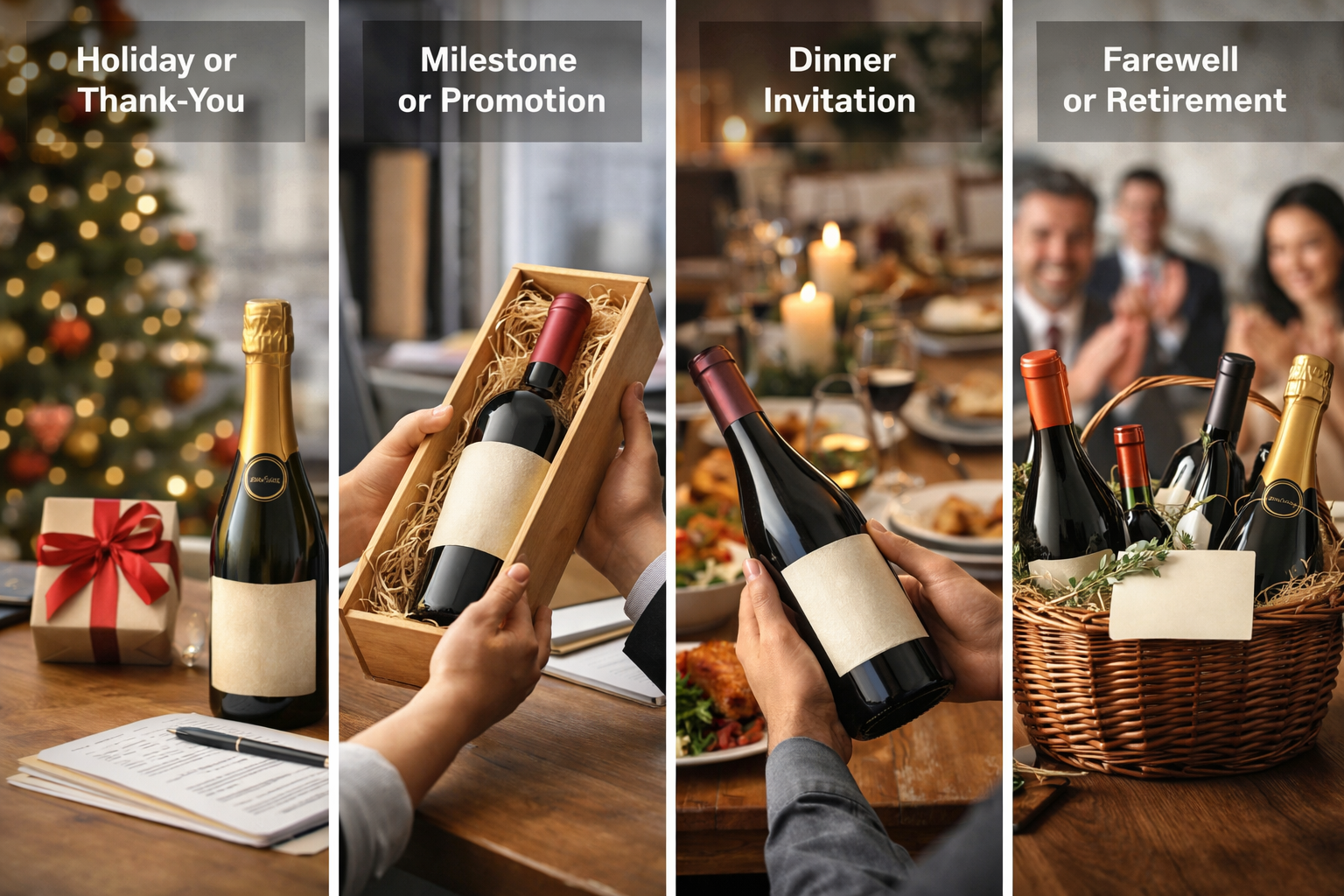
The right bottle changes with the job the gift needs to do. A year-end thank-you bottle is not the same object as a retirement bottle or a host gift for dinner.
| Occasion | Safest style | Risk level | Best format |
|---|---|---|---|
| Holiday or year-end thank-you | Brut sparkling, Pinot Noir, Rioja Reserva | Low to medium | Solo bottle in a modest price band |
| Promotion or milestone | Better sparkling or a polished classic red | Medium | Solo bottle or team gift, based on culture |
| Dinner at their home | Sparkling, Pinot Noir, or menu-matched bottle | Low | Host gift, handed over casually |
| Retirement or farewell | More special sparkling, age-worthy red, or team-selected bottle | Medium | Group gift works especially well |
| Shipped gift | Sturdy classic style in a sensible box | Medium | Send to home, not office |
Holiday gift: Keep it elegant and fairly modest. This is the easiest place for sparkling to shine because it feels festive without feeling intimate.
Promotion or big thank-you: You can go a touch better here, but keep the tone professional. A better bottle with a clean note beats a louder bottle with a long speech.
Dinner invitation: This is where food-friendliness matters more than status. Sparkling, Pinot Noir, and menu-matched bottles win here because they help the evening rather than dominate it.
Retirement or farewell: Bigger moment, bigger room for a special bottle. This is also where a group gift often looks smartest, because it turns the bottle into shared appreciation instead of a single-person gesture.
Shipped gift: Keep the logistics boring. Boring is good. The packaging should be secure, the delivery address should be workable, and the bottle should not need a lot of handling drama.
FAQ
Is a screw-cap bottle inappropriate as a gift for a boss?
No. A screw cap says more about closure choice than wine quality. Still, for a boss gift, a cork-finished bottle often looks a touch more ceremonial. If both bottles are equally good, the cork bottle usually reads more gift-like.
Should you give one bottle or a two-bottle set?
One strong bottle is the safer move for most solo gifts. Two bottles start to look bigger, more expensive, and more deliberate. Save the two-bottle format for a team gift, a retirement, or a host setting where multiple people will enjoy it.
Do critic scores matter when choosing wine for a boss?
Only a little. A strong score can help you avoid a weak bottle, but it should not outrank fit. The bottle that matches the setting, the person’s taste, and the tone of the gift is better than the highest-scored wine in the wrong style.