Standing in front of the serious-wine shelf with a $100 budget can make smart people do daft things. One bottle looks famous but young and tight. Another has a score sticker the size of a parking pass. A third sounds impressive and then drinks like oak syrup.
The best wine for 100$ is usually not one magic bottle. It is the right lane for the moment. If you want plush impact, go Napa Cabernet Sauvignon. If you want the safest celebration bottle, go Champagne. If you want depth without paying mostly for the name on the label, reach for Rioja Gran Reserva or a smart Bordeaux like a strong second wine. That is the short answer. The useful answer is knowing which of those lanes fits your dinner, your crowd, and your patience.
I’ve made this mistake myself more than once. I bought a famous bottle for a holiday meal, poured it too young, and spent the first glass waiting for it to wake up. The food was ready. The wine was not. Since then, I don’t ask “what is the best bottle?” first. I ask “what job does this bottle need to do?”
- How to pick the right $100 wine lane in under a minute
- Which categories tend to overdeliver around this budget
- Where $100 gets wasted fast
- How to match the bottle to steak, seafood, tomato dishes, and mixed menus
- Which bottles are worth buying when you want something memorable right now
At a glance: pick your lane first
| If you want… | Best lane | Why it works |
|---|---|---|
| A rich, impressive red | Napa Cabernet Sauvignon | Plush fruit, polish, and instant “special occasion” energy |
| A safe celebration bottle | Champagne | Broad food range, strong gift appeal, and less guesswork |
| Classic depth without flash | Rioja Gran Reserva or smart Bordeaux | Maturity, structure, and better value than a trophy label |
| A crowd-pleaser when food is unclear | Sparkling or balanced old-world red | Safer with mixed tastes and mixed menus |
Best Suggestions Table (These are the bottles I’d check first for this budget. Use the buttons below to jump to the reviews.)
| Product | Best for | Action |
|---|---|---|
| Heitz Cellar Napa Valley Cabernet Sauvignon | Steak night and instant “expensive” feel |
Check Price Review |
| Laurent-Perrier Cuvee Rose Brut | Celebrations and mixed food tables |
Check Price Review |
| CVNE Imperial Gran Reserva Rioja | Classic depth and built-in maturity |
Check Price Review |
| La Dame de Montrose | Classic Bordeaux feel without top-label pricing |
Check Price Review |
Tip: Clicking “Review” jumps to the full write-up. Retail pricing moves with vintage, market, and storage history.
Use the exact producer name and current release when comparing availability. A bottle that sits at this budget one month can drift above or below it the next.
The Best Wine for 100$, in One Clear Answer
If you only want the fast answer, here it is: the best wine under $100 is the bottle that matches the occasion first and the label second. For most people, that means one of four lanes.
Napa Cabernet Sauvignon is the cleanest answer when you want a big red that feels plush, polished, and a little bit luxurious right away. Champagne is the safest answer when you do not know the menu or the crowd because it can handle salty snacks, fried food, shellfish, soft cheese, and “we’re celebrating and nobody wants to think too hard.” Rioja Gran Reserva is one of the smartest answers when you want maturity and complexity without paying mostly for status. Smart Bordeaux, often a second wine or a strong estate outside the loudest names, is where you go when you want structure and old-school shape.
That is where most $100 mistakes start.
People treat the budget like a target. They feel odd spending $72 when they planned for $100, so they push upward toward the shelf that looks more serious. That can be the wrong move. Around this price, you are crossing from genuine value into prestige markup. Sometimes the best bottle for the table is closer to $75 or $85. The budget is a ceiling. It is not a dare.
Remember: if you cannot name the meal, the drink-now window, and who the bottle is meant to impress, you are not choosing a bottle yet. You are still choosing a lane.
Choose the Right $100 Wine Lane Before You Choose a Label
The easiest way to ruin a good budget is to buy by brand before you buy by purpose. It is a bit like shopping for shoes without knowing whether the event is a wedding, a mountain walk, or dinner at a place with white tablecloths. You can still spend money. You just won’t be right.
Start with three questions.
Who is drinking it? If the table has mixed tastes, an assertive young tannic red can feel like homework. Champagne or a softer, balanced red is safer.
What is on the table? Steak, duck, and braised beef can handle tannin and oak. Shellfish, smoked fish, creamy starters, and salty snacks love sparkling wine. Tomato-heavy dishes usually want acidity more than raw power.
Are you drinking it now or later? A cellar-leaning bottle can feel stern and closed on a Friday night. A generous drink-now bottle often feels “better” because it is ready when you are.
That is the whole game.
If you want a best wine gift under $100, lean toward Champagne or a refined Napa Cab. If you want the best red wine under $100 for dinner, decide whether you want plush and obvious or savory and layered. Plush points to Napa. Savory and layered points to Rioja, Bordeaux, or Nebbiolo. If you want one bottle for a table with no clear menu, sparkling usually beats a specific heavy red.
Pro tip: when the food is unknown, avoid wines that rely on one dramatic trait. High tannin, a lot of new oak, or very sweet fruit can feel impressive on a tasting card and clumsy at dinner.
The Wine Categories That Overdeliver Around $100
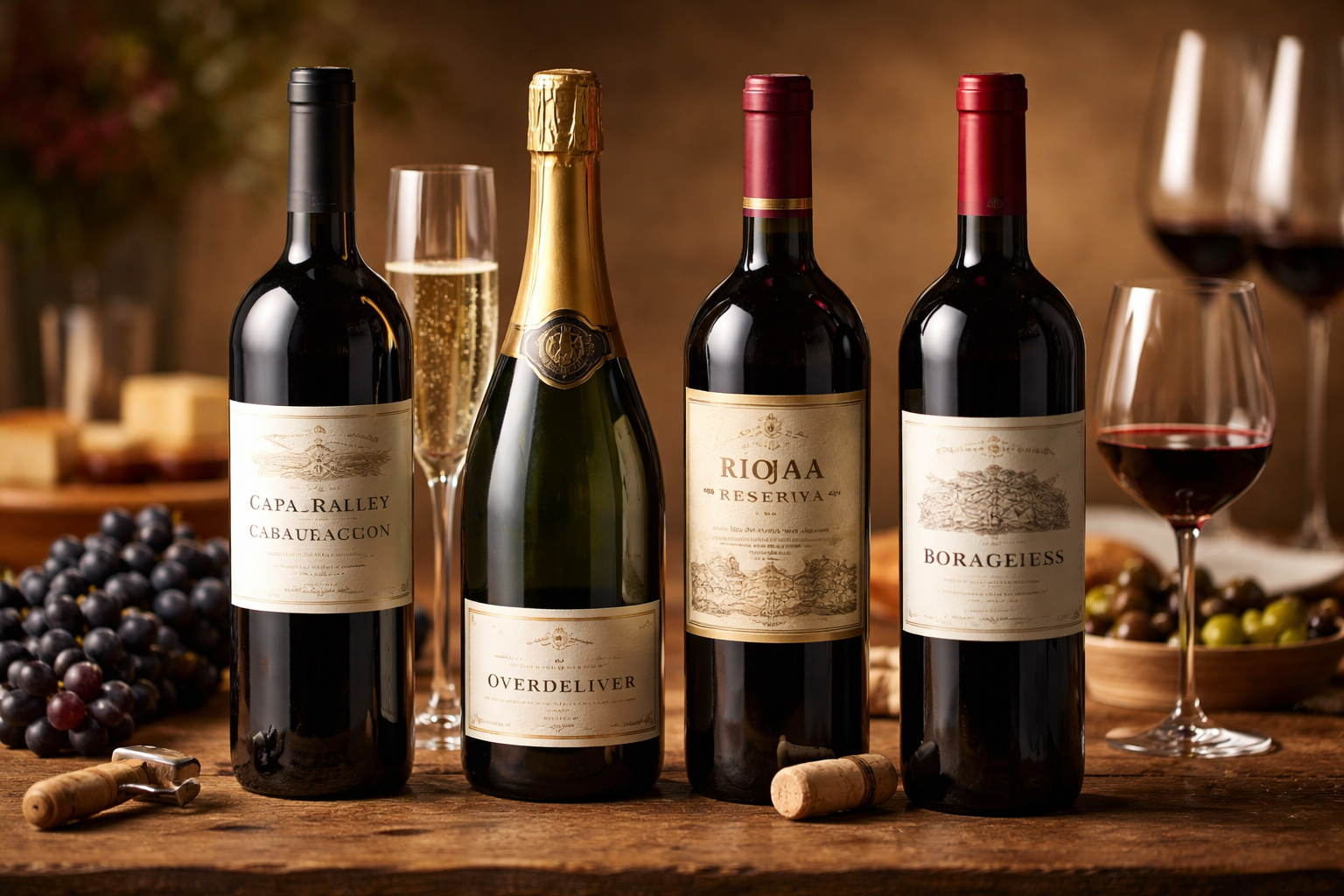
Some categories get noticeably better when you move into this budget. Others mostly get better packaging and fancier reputation. The smart move is knowing which is which.
Napa Cabernet Sauvignon overdelivers when you want impact. The good bottles here have ripe black fruit, enough oak to frame the fruit, and tannins that feel expensive rather than scratchy. Napa is not one flavor, either. The region contains 17 nested American Viticultural Areas, so a bottle with more specific place detail can tell you more than one that says only “Napa Valley.” Stags Leap District, Oakville, Rutherford, and Mount Veeder all pull the style in slightly different directions. For a buyer, that means specificity is useful, not just decorative.
Rioja Reserva and Gran Reserva are some of the best-value answers in the whole category because the wine often arrives with time already built into it. The Rioja council’s own classification rules say that Reserva wines age for at least three years, with at least one year in oak and six months in bottle, while Gran Reserva requires at least five years, with two in oak and two in bottle. You can taste that. The better bottles show dried cherry, cedar, tobacco, spice, and a softer, more integrated shape than many younger prestige bottles that cost more.
Champagne is a premium category where the floor is already high. The region’s own rules say non-vintage wines must spend at least 15 months aging in the cellar. That does not make every bottle great, but it helps explain why even solid non-vintage Champagne can feel more complete than cheaper sparkling wine. Around this budget, you move into rosé Champagne, stronger grower bottlings, and prestige-adjacent blends that feel special without becoming a museum exercise.
Smart Bordeaux overdelivers when you skip the loudest labels. This is where second wines and less-hyped estates shine. You still get cabernet-merlot structure, cedar, graphite, and that dry, firm shape Bordeaux drinkers love, but you are not paying purely for the front label.
Langhe Nebbiolo and entry-point Barbaresco can be brilliant if you like savory nuance more than plush fruit. These wines are not the safest gift and they are not built for everybody. Still, when you catch the style at the right time, the rose petal, tar, red fruit, and lifted acidity can feel a lot more interesting than another obvious “big red.”
Where a $100 Budget Gets Wasted Fast
The biggest waste is buying fame instead of fit. A bottle can be expensive, respected, and still wrong for the night you are having.
Young prestige reds are the most common trap. A structured Bordeaux or collectible Napa Cab can smell amazing, then taste rigid, woody, or plain unready when opened for dinner without air. If you want pleasure tonight, that is money burnt for no good reason.
Entry-level Burgundy with a famous place name can be another trap. Burgundy is full of beauty, but it is also full of prices that outrun the actual drinking experience at the lower end of the hierarchy. If you are not already comfortable reading village, premier cru, and producer signals, $100 does not buy much margin for error there.
Luxury-sounding back labels should also make you pause. “Reserve,” “special selection,” and lush tasting-note poetry can be fluff unless they tie to something concrete such as place, classification, producer track record, or real bottle age. I have bought wines like this. They often taste like the label designer got paid first.
Point chasing is sneaky. A score can tell you a wine is well made. It cannot tell you whether it fits roast chicken, shellfish, or a room full of people who do not enjoy aggressive tannin. A 95-point sledgehammer is still a sledgehammer.
Important: if the bottle looks prestigious first and specific second, slow down. The best buys at this level usually show you something concrete: producer, region, style, or maturity.
Use This 30-Second Shelf Test to Buy Confidently
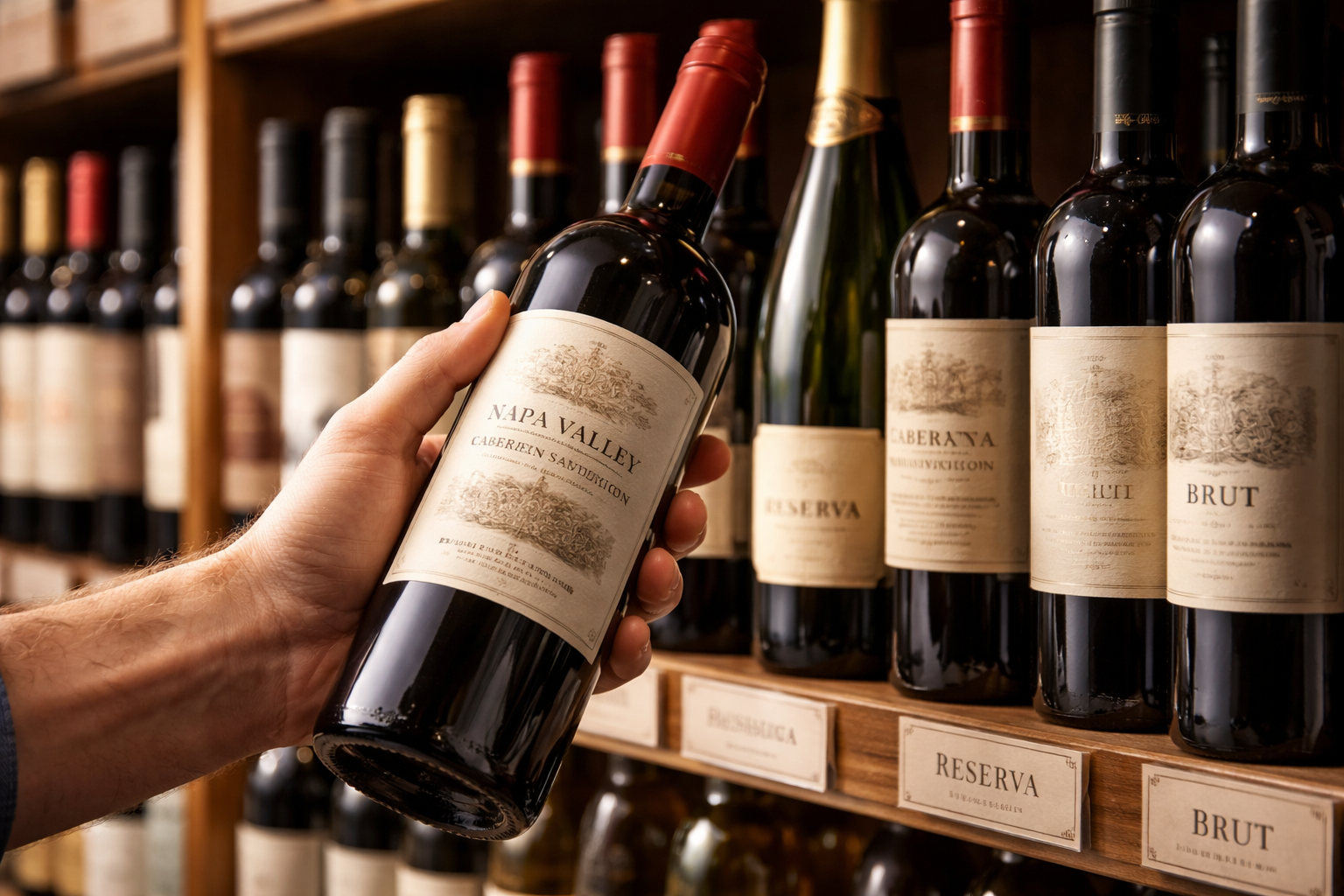
When the exact bottle from a list is missing, use this quick shelf test.
Step 1. Look for place detail and get a more reliable style read. A label that names a sub-region, vineyard source, or appellation often tells you more than a broad luxury vibe. In Napa, the jump from a broad valley blend to a specific district can change the wine more than most casual buyers expect.
Step 2. Check the producer before you chase the story. Reliable producers matter more than dramatic back-label copy. A plain label from a trusted house is usually a better bet than a flashy label with vague promises.
Step 3. Read for structure cues and avoid a mismatch. Words like “Reserva,” “Gran Reserva,” “Brut,” “Estate,” and named appellations can mean something useful. A back label that reads like jam, mocha, and toasted marshmallow might be fine on its own, but it can bully dinner.
Step 4. Ask one simple timing question and avoid a closed bottle. Is this for tonight or later? For tonight, go for drink-now confidence. For later, you can accept a little more grip and restraint.
This is the test I use when a shelf is full of “special” bottles and none of them are helping. You do not need to out-nerd the shelf. You just need to spot the bottles that are telling you something real.
Match the Bottle to Dinner, Not Just to the Price Tag
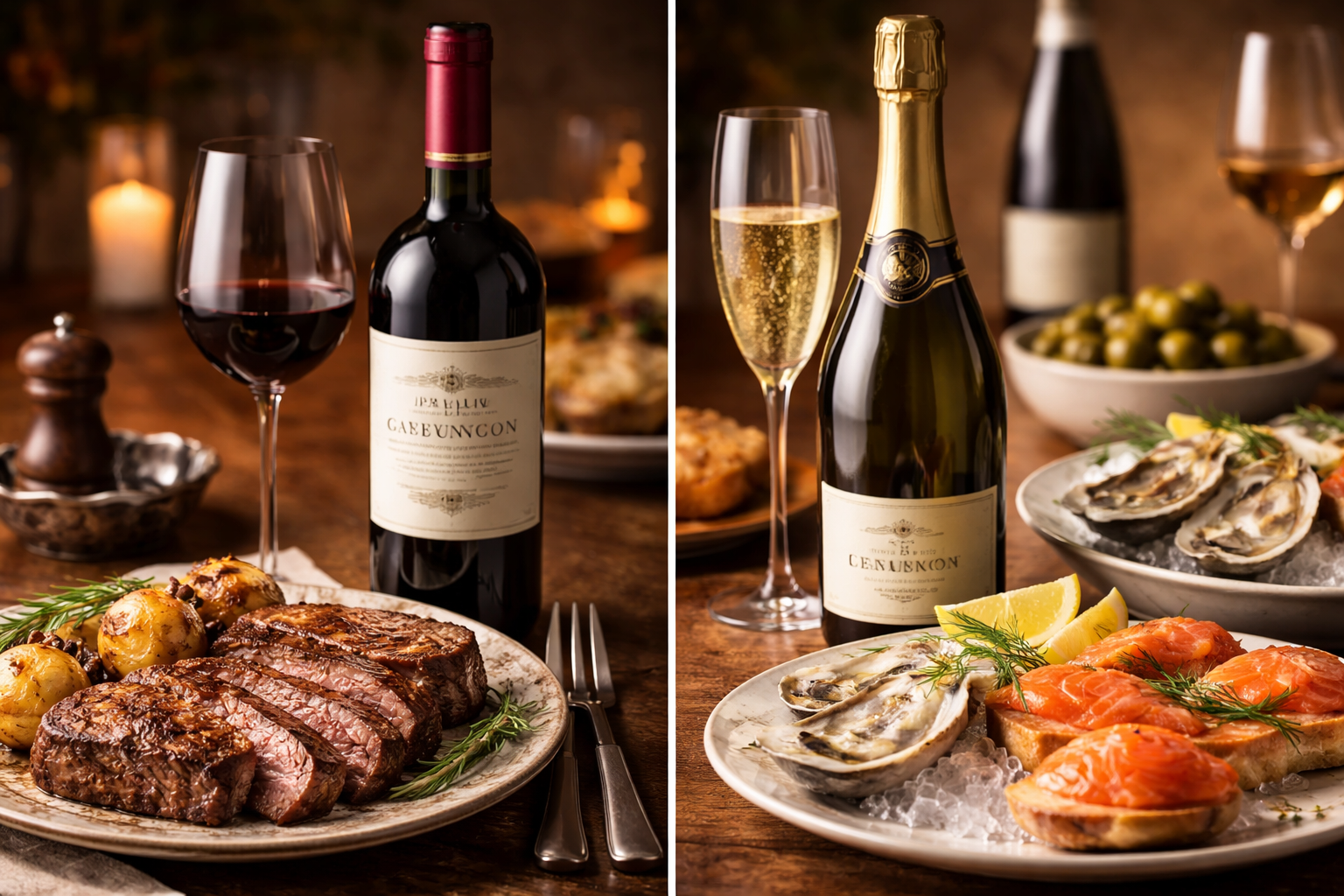
A good wine around $100 can look average with the wrong food and a modest bottle can sing with the right dish. Pairing is not fancy theory. It is practical. The loudest part of the plate usually wins.
Steak, lamb, and richer red meat can handle Napa Cabernet, classically styled Bordeaux, and deeper Rioja. Fat smooths tannin. Char loves oak and dark fruit. If you are making a slow braise or a glossy beef dish, a bottle with shape and grip makes more sense than a soft easy red. That is the logic behind pairing guides like best wine for beef bourguignon, where lift and structure matter more than sheer size.
Seafood and richer fish are where people overshoot. A lot of readers assume that a $100 bottle means a big red. Not always. The Wine & Spirit Education Trust explains that salt, acidity, and fat shape pairings in clear, practical ways. That is why Champagne can be brilliant with oysters, smoked salmon, fried bites, and buttery fish. For richer salmon dishes, a focused guide like best wine with salmon gives better direction than a generic “white with fish” rule.
Tomato-heavy and cheese-heavy dishes usually want acidity before power. This is where a balanced sangiovese, Rioja, or lighter Bordeaux blend can beat a hulking cabernet. If lasagna is on the table, the acid and cheese fight matters more than prestige, and a page like best wine for lasagna makes that tradeoff concrete.
If the menu is unclear, go sparkling or a balanced old-world red. That advice may sound less sexy than “buy the biggest bottle you can afford.” It works better. And that is what you are paying for here.
Note: match the wine to the sauce, the fat, or the smoke before you match it to the main protein. A cream sauce and a tomato sauce can push the same protein toward two very different bottles.
Decide Whether You Want Drink-Now Pleasure or Cellar Potential
This choice changes everything. A bottle that can age is not the same thing as a bottle that is best tonight.
The Wine & Spirit Education Trust points out that most wines sold are designed for immediate drinking and wines that age well tend to share intensity, acidity, tannin, and concentration. That is a helpful filter because buyers romanticize cellaring all the time. They buy a serious bottle, open it too early, and then blame the wine for being “overrated.” The wine was not wrong. The timing was.
If you want drink-now pleasure, choose bottles with integrated fruit, softer tannin, and a generous middle. Rioja Gran Reserva, polished Napa Cab, and well-chosen Champagne often shine here.
If you want cellar potential, choose structure and patience on purpose. Strong Bordeaux, firmer Cabernet, and Nebbiolo-based wines can all reward time, but only if you actually mean to give them time. Buying a cellar bottle for tonight is like buying green bananas for dessert. You can do it. It is just the wrong timing.
Decanting helps, but it is not magic. Give structured reds some air when they are young. Just do not assume two hours in a decanter will turn a tightly wound wine into a warm, open dinner guest.
Remember: if the occasion matters more than the wine itself, lean drink-now. If the wine is part of a longer story, then buy the bottle with more patience built into it.
Smart Bottle Examples Worth Buying Around $100
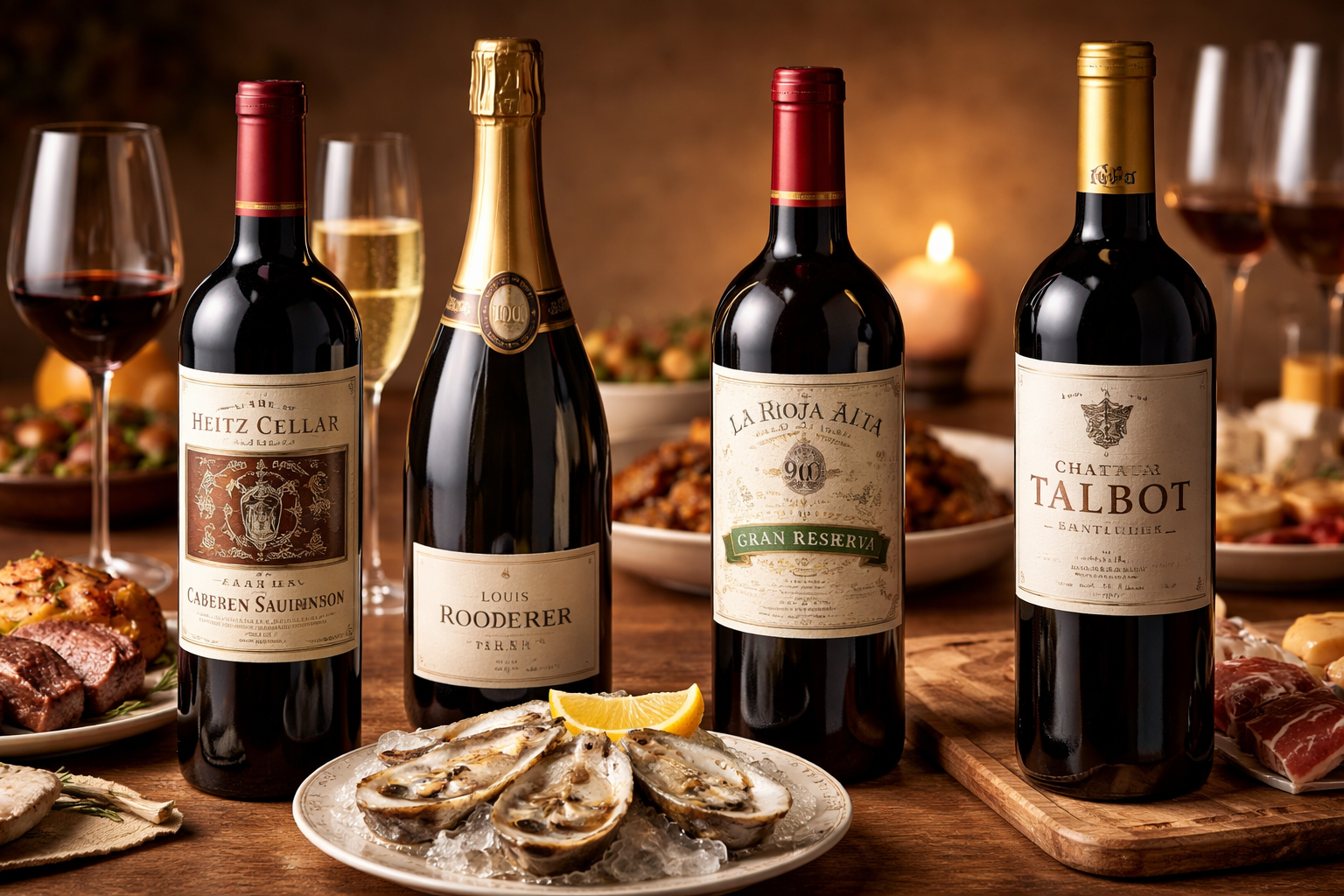
I chose these examples using the same six lenses for each bottle: style fit, balance, complexity, food flexibility, drink-now readiness, and whether the bottle feels like money well spent instead of money merely spent. I have had versions of all four styles at tables where the difference between “special” and “actually satisfying” got obvious fast. That is the frame here.
How we tested them
These are editorial reviews, not lab tests. I judged each bottle type by how it tends to show in real use: poured with dinner, opened for a celebration, and compared against the kind of bottles buyers cross-shop at this budget. I also weighted producer track record, category rules, and how forgiving the wine is when the food or crowd is not perfectly matched. A bottle that needs perfect conditions is less useful than one that still shines on a normal night.
Heitz Cellar Napa Valley Cabernet Sauvignon
Our rating: 9.2/10
This is one of the clearest answers when you want the bottle to feel expensive right away. Heitz has the sort of Napa signature that makes sense to both cabernet drinkers and non-obsessives: dark fruit, cassis, cedar, a clean polished frame, and enough lift that the wine still behaves at dinner. That last part matters. Plenty of rich Napa reds taste impressive for two sips and then get heavy. Heitz usually keeps its footing.
For a steak dinner, this is the “turn the room a little quieter” bottle. It gives you the plushness people often want from a special red, but it does not lean so hard on sweetness or mocha-oak that it feels cartoonish. I like it best when the job is simple: roast beef, ribeye, short ribs, or a gift where you want the label to feel established without becoming a chest-thumping trophy.
The tradeoff is that this is not the most subtle pick on the list. If the table loves savory reds with tension and earthy detail, Rioja or Bordeaux may be the smarter play. But when someone asks for a best red wine under $100 that feels luxurious and recognizable, this is the lane I reach for first more often than not.
Laurent-Perrier Cuvee Rose Brut
Our rating: 9.3/10
If you want the safest premium bottle in this whole article, it is probably a good rosé Champagne like this. Laurent-Perrier Cuvee Rose Brut manages the hard trick: it feels celebratory on its own and it still works once food arrives. That makes it one of the best wine gift under $100 answers when you do not know whether the bottle will be opened with caviar, fried snacks, salmon, or birthday cake being cut somewhere nearby.
The style matters. Rosé Champagne brings berry fruit and a little extra breadth, so the wine feels festive without turning soft. It keeps the snap and lift that make Champagne useful, then adds enough flavor to stand up to smoked fish, duck, and richer starters. I have opened bottles in this style when the menu was half-planned and the guest list was all over the place, and sparkling saved the night in a way a serious red never would have.
The tradeoff is easy to name. If your crowd reads “special” as “big red,” this will not scratch that itch. But for mixed tastes, mixed food, and zero desire to gamble, it is one of the strongest bottle choices anywhere near this budget. It feels generous, polished, and unfussy. That’s rare.
CVNE Imperial Gran Reserva Rioja
Our rating: 9.1/10
This is the bottle for people who want complexity, calm, and a sense that time has already done some of the work. CVNE Imperial Gran Reserva is not loud. That is part of the point. You get red and black fruit that has moved into a more savory register, then cedar, tobacco, dried herbs, and that mellowed texture that makes many Rioja Gran Reserva wines such strong buys. The bottle often feels more “ready” than a younger prestige red at the same spend.
I like this style when dinner has a bit of seriousness but not a need for brute force. Roast lamb, mushroom dishes, pork, older hard cheese, and cooler-weather food all fit. It is also one of the better answers when you want to show taste without waving money around. Rioja does not scream. It mutters something smart from the corner and then you keep going back to the glass.
The tradeoff is audience. Buyers who want glossy fruit and instant cabernet drama can read this as restrained. That is not a flaw. It just means the wine needs the right person or the right table. If the goal is subtle depth and built-in maturity, this is one of the best uses of the budget.
La Dame de Montrose
Our rating: 9.0/10
La Dame de Montrose is the kind of bottle that makes the case for smart Bordeaux. It gives you the region’s cabernet-merlot grammar, black fruit, cedar, graphite, dry shape, and food grip, but with a bit more accessibility than a bottle bought mainly for classification prestige. That is what makes it useful. You get the feeling of Bordeaux without needing a perfect collector’s budget or a decade of patience.
At the table, this shines with roast meats, duck, lamb, and dishes where tannin has something to hold onto. It is not a plush Napa substitute and it should not try to be. The pleasure here is in tension, line, and that dry, savory finish Bordeaux drinkers keep chasing. When this style is on song, it can make some richer wines feel a little clumsy.
The tradeoff is that it asks a touch more from the drinker. If the crowd wants obvious sweetness of fruit, look elsewhere. If the goal is a classic bottle with posture and better value than a trophy label, this is exactly the sort of answer that makes the $100 category more interesting than a simple shopping list.
When a $100 Bottle Is the Wrong Move
Sometimes the smartest choice is not one bottle at all.
If the group has mixed tastes, the food is casual, or the menu leans spicy, fried, or all over the map, one expensive bottle can be a worse play than two very good bottles at half the price. You get range. You get backup. You get less pressure on one wine to do every job at once.
If the store looks warm, dusty, or careless with storage, skip the aging fantasy. This is especially true for older reds and sparkling wine. A well-stored younger bottle is a better buy than a questionable older one that has been baking under lights. That sounds obvious, yet people ignore it once a label turns glamorous.
If the occasion is casual and the goal is easy pleasure, a bottle that demands decanting, a specific food match, and patient drinkers is probably the wrong move. It may still be a good wine. It is just not doing the right job.
The rule I come back to is simple: spend on the bottle only when the bottle is part of the memory. When the evening is doing most of the work, buy flexible and stop trying to prove something with the label.
FAQ
Is a $100 wine actually much better than a $40 wine?
Sometimes yes, but not in a straight line. Around $100 you often pay for better fruit, more careful winemaking, more bottle age, or a stronger producer name. You can also pay for fame. The jump feels worth it when the category really improves with the spend, like Champagne, Rioja Gran Reserva, or polished Napa Cabernet. It feels less worth it when you are buying a famous region at the edge of affordability.
Is it smarter to buy one $100 bottle or two $50 bottles?
For mixed groups or uncertain food, two bottles often win. One special bottle makes more sense when the dinner is focused, the crowd is small, and the wine is meant to be part of the event rather than just support it.
Should I decant a $100 bottle before serving?
A structured young red usually benefits from air. Champagne and more delicate mature wines usually do not. If the wine is firm, tight, or cabernet-heavy, a decanter can help. Just do not expect air to turn a cellar bottle into a ready bottle in one hour.