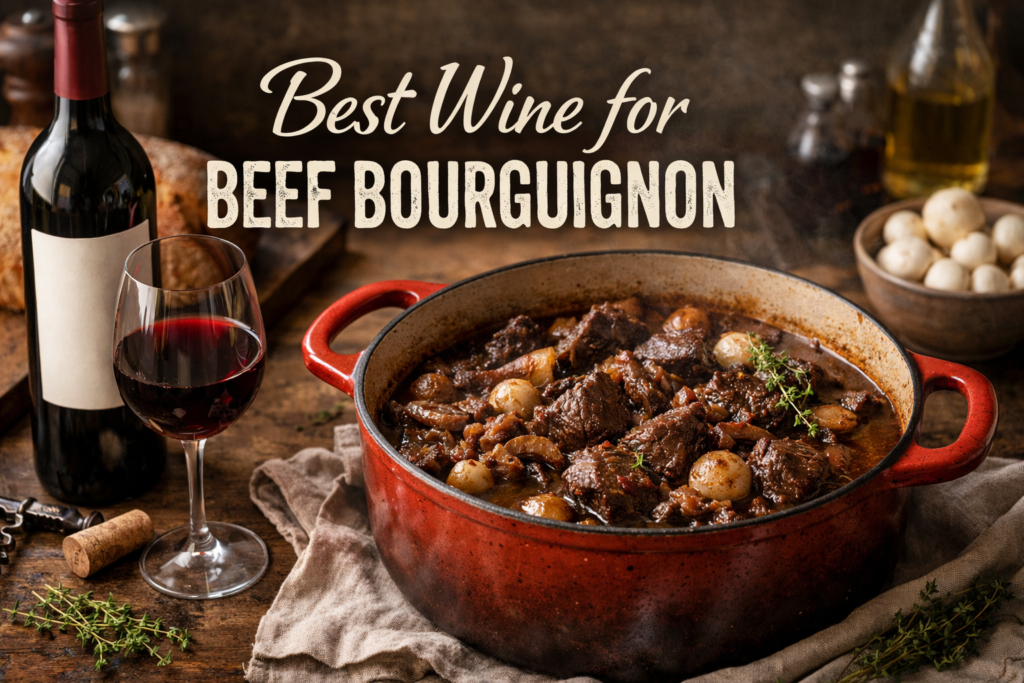
Beef bourguignon gets weirdly intimidating right when the pot is finally behaving. The beef is browned, the onions are soft, the bacon has done its job, and then the wine aisle starts whispering expensive thoughts. You can ignore that voice. The best wine for beef bourguignon is usually a dry Pinot Noir, most classically a simple red Burgundy or Bourgogne Rouge, because it brings freshness, gentle tannin, and earthy red-fruit character that fits beef, mushrooms, and onions without taking over.
That stock answer is only half useful though. Plenty of bottles say Pinot Noir and still miss the point. Some are too jammy. Some taste like oak first and fruit second. Some feel so soft that the stew loses lift and turns heavy. What matters is not the prestige of the label. It is the shape of the wine in the glass.
- Which wine style gives the stew depth without turning the sauce harsh
- What to buy when Pinot Noir or Burgundy is not on the shelf
- How to spot a good bottle in about 30 seconds
- Which reds make beef bourguignon taste bitter, muddy, or oddly sweet
- When to cook and serve the same wine, and when not to bother
At a Glance
| Situation | Best Fit | Watch Out For |
|---|---|---|
| Classic beef bourguignon | Pinot Noir or red Burgundy | Heavy oak, sweet finish |
| No Pinot on hand | Beaujolais, Cabernet Franc, restrained Cotes du Rhone | Big, grippy Cabernet |
| Mushroom-heavy version | Pinot Noir or lighter Gamay | Jammy Merlot |
| Serving wine at the table too | Same style family, not the same exact bottle | Buying prestige wine just to pour into the pot |
Fast rule: buy a dry red with freshness and moderate tannin. Skip wines that sound plush, sweet, or heavily oaked.
Best Wine for Beef Bourguignon: The Short Answer
The classic answer is red Burgundy because Burgundy’s signature red grape is Pinot Noir, and the region describes the grape as fresh with delicate tannins. That combination is exactly why the style works in the pot. Beef bourguignon is rich, but it is not a blunt instrument. The stew wants lift from acidity and just enough structure to hold the sauce together.
So the short answer is this: use a dry Pinot Noir if you can. A basic Bourgogne Rouge is great. A modest Oregon Pinot can work. A cooler-climate Pinot with red fruit and earthy notes often lands better than a plush, ripe, vanilla-heavy bottle.
Remember: “Burgundy” is a style clue first. It is not a command to buy the fanciest bottle in the shop.
When I make this stew at home, the bottles that behave best are the ones I would happily drink with roast chicken, mushrooms, or a simple pork loin. That sounds almost too plain, but plain is the point. A braise softens edges and deepens flavor. It does not magically improve a clumsy wine.
- Best classic pick: Pinot Noir or red Burgundy
- Best backup if you want similar energy: Beaujolais or Fleurie
- Best backup if your stew runs richer and darker: restrained Cotes du Rhone or Cabernet Franc
- Best rule: dry, fresh, moderate tannin, little obvious oak
Choose a Wine With Lift, Not Just Power
A good bottle for beef bourguignon does not need brute force. It needs balance. WSET describes Pinot Noir as light to medium in body with silky tannins, bright acidity, and earthy notes like mushroom and forest floor. Read that against the dish and the match starts to look obvious. Beef bourguignon already brings deep savory flavor from browning, stock, onions, bacon, and slow cooking. The wine’s job is to keep the stew from collapsing under its own weight.
That is why “big red for beef” can steer you wrong here. A grilled ribeye can handle swagger. A long braise is different. The sauce gets reduced. Mushrooms lean earthy. Pearl onions drift sweet. Bacon adds smoke and fat. The wine has to move through all that, not sit on top of it like a heavy coat in spring.
Food & Wine points out that wine’s acidity brightens a braise and that sweetness, acidity, and tannins become more concentrated as the liquid reduces. That is the whole game. Freshness is not a luxury here. It is what keeps the finished pot tasting alive.
Pro tip: If the label sounds like dessert, syrup, mocha, vanilla, or “bold and smooth,” keep walking. Those cues often spell trouble in a stew.
I’ve cooked this dish with a glossy, oak-forward supermarket red once. The meat still turned tender. The sauce did not. It tasted like the barrel got invited and then refused to leave. Lesson learned.
Use These Safe Alternatives When Pinot Noir Is Not an Option
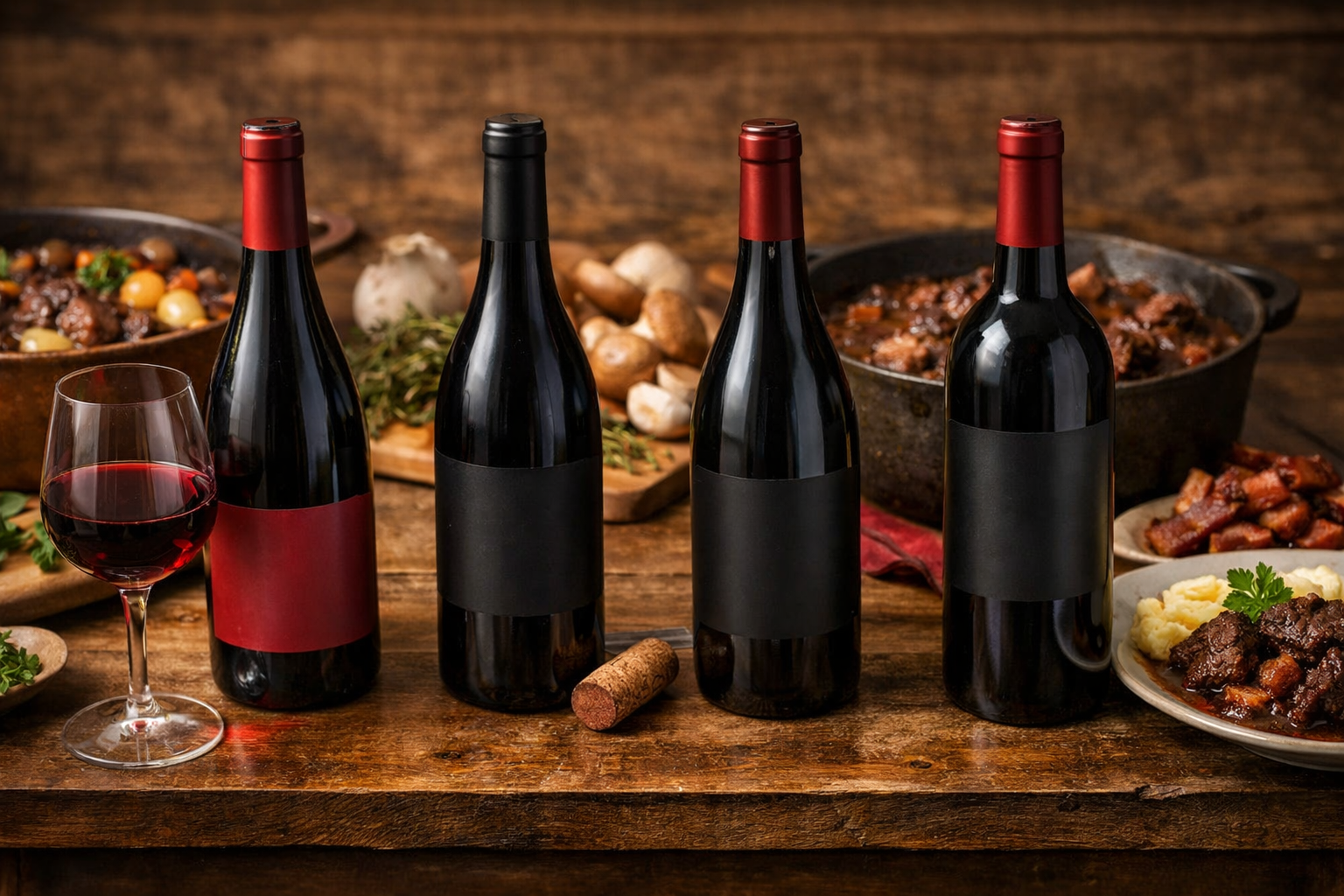
No Pinot Noir on the shelf is not a crisis. You just want wines that solve the same problem in slightly different ways. The easiest backups stay dry, keep tannin in check, and bring some freshness to the sauce.
| Wine style | Why it works | Best for | Watch out for |
|---|---|---|---|
| Beaujolais / Fleurie | Gentle tannin, floral red fruit, easy energy | Lighter, more elegant stews and mushroom-heavy versions | Very light bottles that feel thin |
| Cabernet Franc | Savory edge, herbal lift, firmer frame | Earthier stews with lots of mushrooms | Harsh, green, or very tannic examples |
| Cotes du Rhone | Rounder fruit and more body without going too severe | Richer bacon-forward versions | Hot alcohol or sweet oak |
| Merlot-dominant Bordeaux or restrained Merlot | Soft fruit and enough structure for a darker sauce | Heartier winter-style stews | Jammy, plush, or chocolatey styles |
The Beaujolais site describes Fleurie as gently tannic with floral notes and roundness on the palate. That makes it a smart lighter backup when you want the stew to stay graceful rather than burly. It is a very good call for a mushroom-forward pot where Pinot Noir feels right in spirit but is missing in action.
Cabernet Franc is my favorite “slightly more grown-up” backup. It can give the stew a savory snap that plays well with mushrooms and browned meat. Cotes du Rhone is the safer pick when your version skews darker, richer, and a bit more rustic. Merlot can work too, but only if it tastes dry and restrained. Plush Merlot is where people get into sticky trouble.
Note: A backup wine should solve the same structural problem as Pinot Noir. It should not just be “another red.”
Run the 30-Second Shelf Test and Buy Confidently
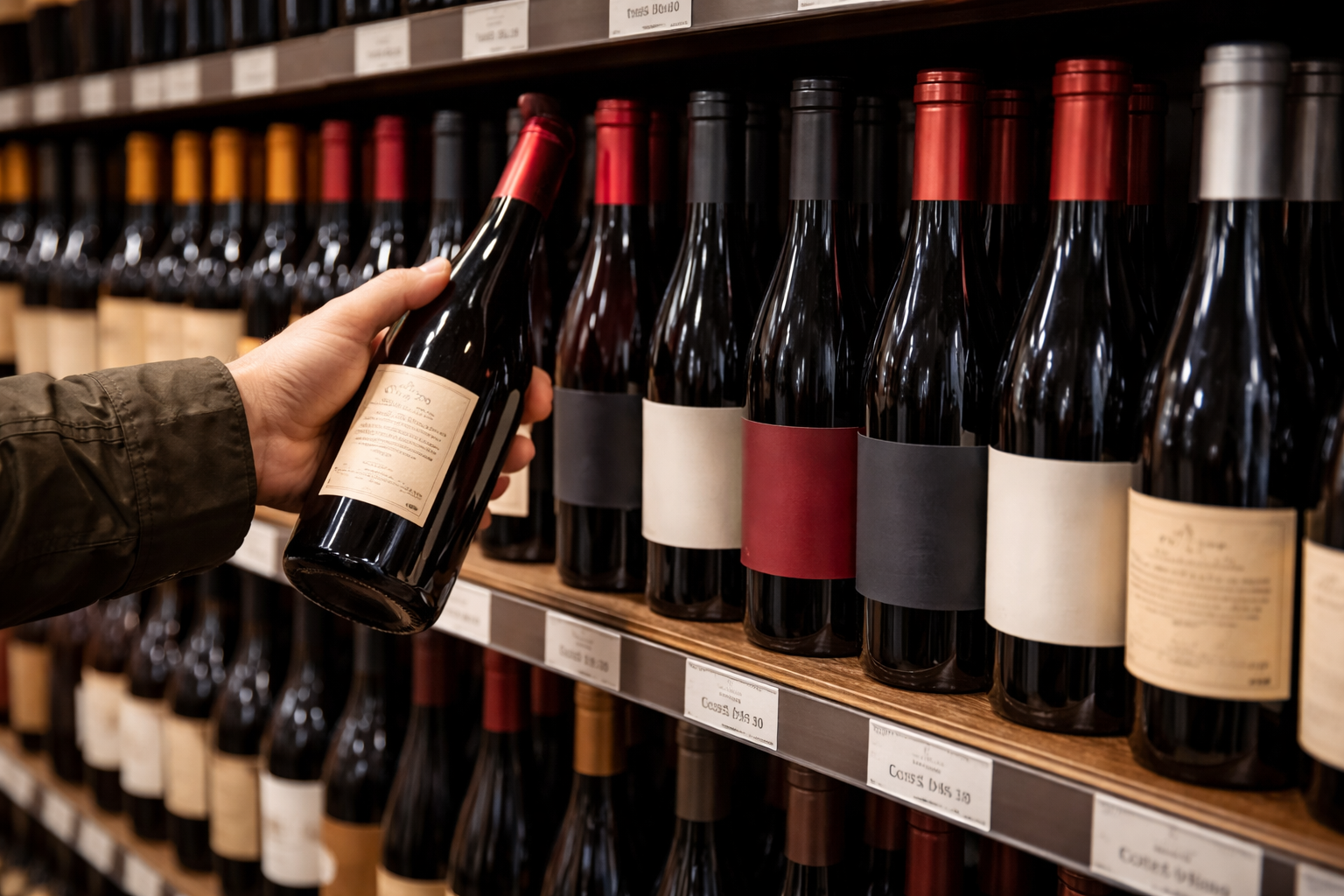
If you are standing in a normal wine shop or grocery store, this is the quick filter that saves you from overthinking.
Step 1. Look for dry and food-friendly.
Pinot Noir, Bourgogne Rouge, Beaujolais, Fleurie, Cabernet Franc, and restrained Cotes du Rhone are the clearest green lights.
Step 2. Read the back label for tone, not poetry.
Words like fresh, earthy, bright, red fruit, savory, and spice are usually helpful. Words like sweet oak, mocha, jammy, luscious, velvety, and bourbon barrel are not helping you here.
Step 3. Buy the middle, not the bottom and not the trophy shelf.
In many US stores, the practical lane is often around $15 to $30 for the cooking bottle. Cheaper than that can get rough in a hurry. Much above that and the extra nuance gets lost once the stew has been bubbling away for hours.
Step 4. Think Tuesday night drinkability.
If the bottle feels like something you would open with roast chicken, mushroom pasta, or a weeknight pork chop, you are usually close. If it feels built for a steakhouse and a cigar lounge, maybe not.
Quick yes / no test
- Yes: dry red, moderate tannin, little obvious oak
- Yes: red fruit, earth, herbs, freshness
- No: sweet finish, heavy vanilla, syrupy fruit
- No: labels that sound like a dessert menu in a leather jacket
That last line is a bit cheeky, but you know the type. Those bottles can be fun in the right place. A bourguignon pot is usually not that place.
Avoid the Wines That Make Beef Bourguignon Taste Bitter, Muddy, or Too Sweet
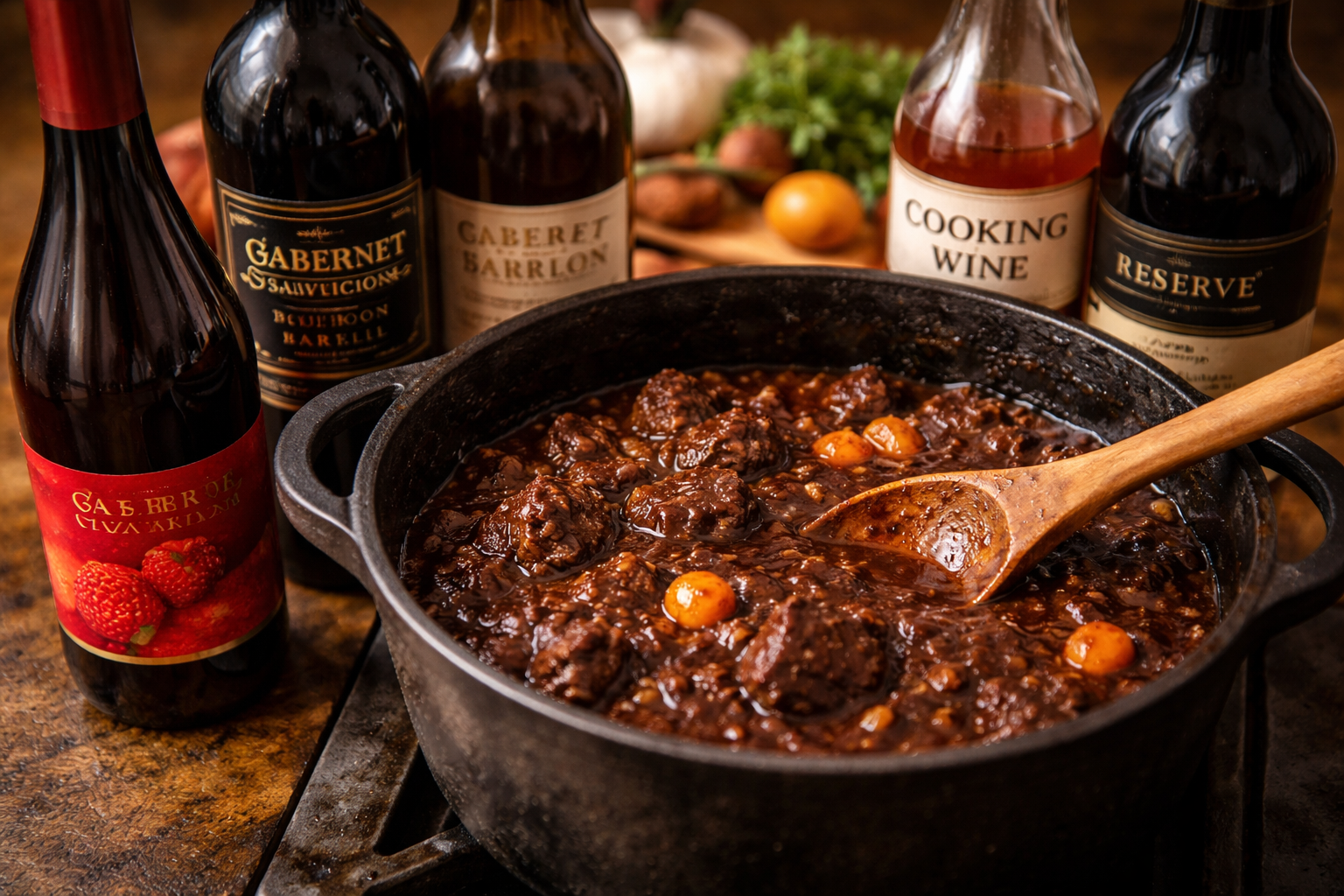
This is where a lot of home cooks get clipped. The stew turns out tender and rich, but the sauce tastes off. People often blame the recipe. The bottle is often the real culprit.
Food & Wine notes that sweetness, acidity, and tannins become more concentrated during cooking. It also points out that tannins can soften when they bind with proteins in meat or stock. That helps explain why some structured reds behave once they simmer. It also explains why sweet, hot, and heavily oaked reds can get louder and uglier as the sauce reduces.
- Skip sweet reds. Sweetness concentrates. The sauce can drift from savory to sticky fast.
- Skip salted cooking wine. It tastes flat and harsh. You are adding bad seasoning and bad wine at the same time.
- Be careful with heavily oaked reds. Vanilla, toast, and char can turn woody once the liquid cooks down.
- Go easy on very tannic Cabernet Sauvignon. It can work in a darker, richer braise, but in classic beef bourguignon it often feels like too much elbow.
- Skip hot, raisiny reds. They push the sauce toward jam instead of depth.
If the sauce tastes bitter: the wine may have been too oaky or too tannic, or the sauce may have reduced too hard.
If the sauce tastes flat: the wine may have lacked acidity or the dish needs a final hit of salt.
If the sauce tastes oddly sweet: the wine probably was not dry enough to begin with.
There is one tiny wrinkle here. A richer red can behave better when the stew is darker, meatier, and more reduced. That is real. But people take that truth and jump way too far with it.
Classic bourguignon is not asking for a battering ram.
If you have ever made mulled wine with bottles that turn bitter when heated, the lesson carries over. Heat changes the balance. A wine that is pleasant on its own can get pointy, woody, or clumsy once it cooks.
Match the Wine to Your Version of Beef Bourguignon
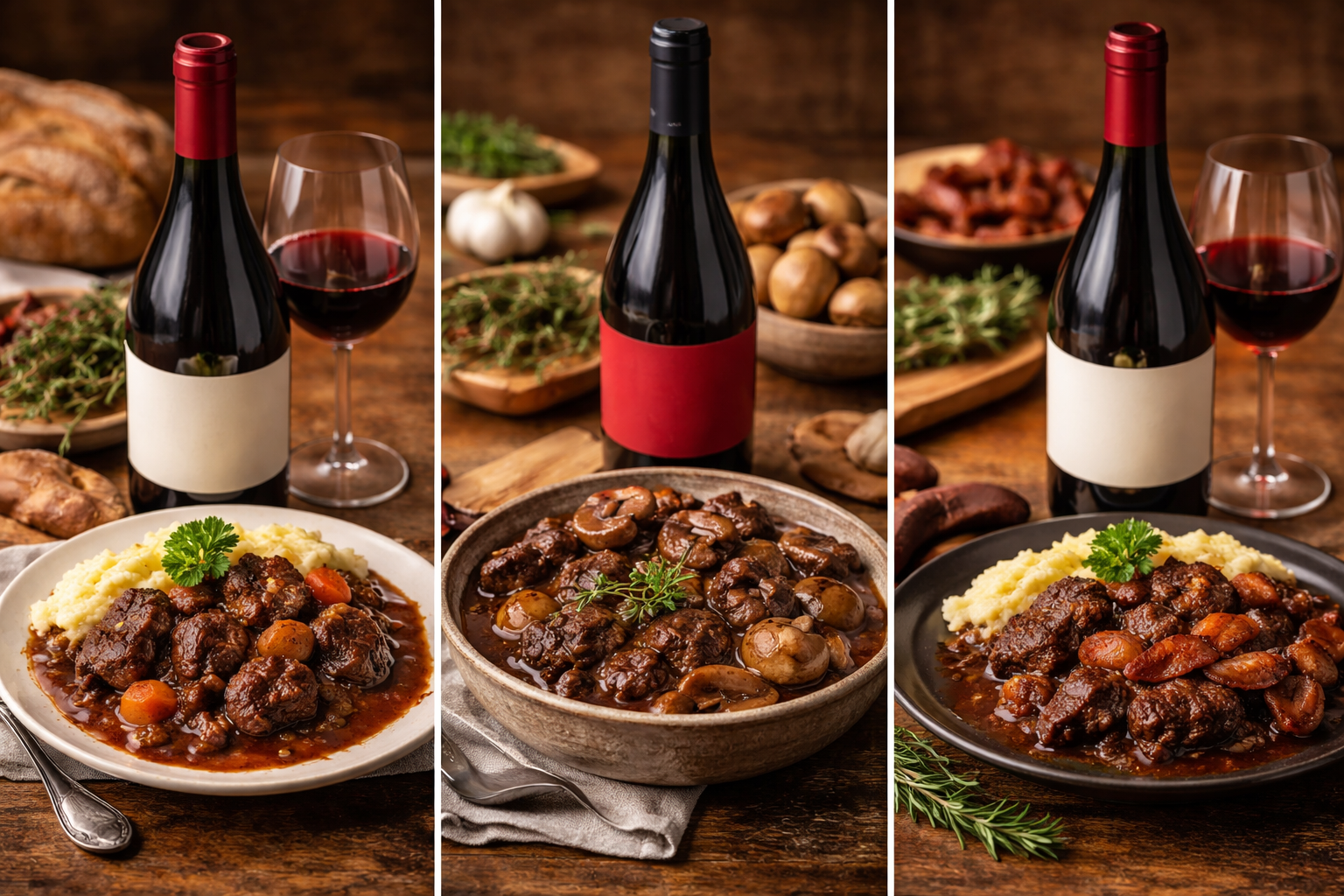
The quiet trick with pairings like this is simple: match the wine to the loudest part of the plate. That line works for fish too. The same logic shows up in a good salmon pairing rule set. Sauce, smoke, sweetness, and cooking method often matter more than the headline protein.
Beef bourguignon is no different. A lean, classic version wants a different bottle from a darker, bacon-heavy winter pot.
Classic French-leaning version
Use Pinot Noir or red Burgundy. This is the lane for a stew with steady acidity, moderate reduction, and more elegance than heft.
Mushroom-heavy version
Pinot Noir still leads. Beaujolais or Fleurie can be lovely here too because the wine does not crowd the earthy notes. Cabernet Franc works when you want a bit more savory edge.
Richer bacon-forward version
Move one step fuller. A restrained Cotes du Rhone or a drier Merlot-based blend can stand up to the darker sauce and extra fat.
Dinner-party version with a bottle for the pot and the table
Cook with a modest Pinot Noir or Bourgogne Rouge. Pour a better Pinot Noir, village Burgundy, or a polished Cabernet Franc at the table. Keep the family resemblance. That is enough.
Remember: when the stew gets darker and sweeter from reduction, you can move one click fuller. Not five clicks fuller.
This is one of those moments where “best for” wording actually helps. Best for the classic version is not always best for the richer version. Once you look at it that way, bottle choice gets easier and way less romantic in the annoying sense.
Decide Whether to Cook and Serve the Same Wine
You do not need the exact same bottle in the pot and in the glass. You want the same style family. That is the move.
Cooking wine and serving wine do two different jobs. In the pot, the wine gets reduced, mixed with stock, softened by fat, and pulled into the stew. In the glass, the wine has to be pleasurable on its own. So use the same logic, not the same SKU.
- If you are cooking with basic Pinot Noir, pour a slightly better Pinot Noir at the table.
- If you are using a restrained Cotes du Rhone for a richer stew, pour a fresher, cleaner Rhone red with dinner.
- If budget is tight, put the nicer bottle in the glass and the simpler dry bottle in the pot.
A practical split is this: an everyday bottle for cooking and a nicer bottle from the same neighborhood for serving. Roughly speaking, a $15 to $25 bottle in the pot and a somewhat better bottle in the glass is more sensible than dumping $60 Burgundy into a braise. Once the wine has spent hours with beef stock, onions, bacon, and mushrooms, subtle prestige details are gone. The stew does not care about your flex.
Open bottle already on the counter? Fine, as long as it still tastes clean and dry. If it tastes tired in the glass, it will not wake up in the Dutch oven.
Quick Recap: The Best Picks, the Best Swaps, and the No-Go Bottles
- Best default: Pinot Noir or red Burgundy
- Best lighter swap: Beaujolais or Fleurie
- Best savory swap: Cabernet Franc
- Best richer swap: restrained Cotes du Rhone or a dry, non-jammy Merlot blend
- Skip these: sweet red, salted cooking wine, heavy oak, raisiny high-alcohol reds, and most big Cabernet Sauvignon for classic versions
- Best buying rule: choose freshness, moderate tannin, and low obvious oak over label prestige
- Best serving rule: same style family for pot and glass, not the same exact bottle
The right wine should make beef bourguignon taste more like beef bourguignon. Not more like the wine aisle.
FAQ
Do I have to use Burgundy for beef bourguignon?
No. Burgundy is the classic because it is built on Pinot Noir, but a dry Pinot Noir from another region can work very well. So can Beaujolais, Cabernet Franc, or a restrained Cotes du Rhone when the stew runs richer.
Can I use Cabernet Sauvignon?
You can, but it is usually not the best fit for a classic version. Cabernet Sauvignon tends to bring more tannin and often more oak. That can make the sauce feel harder and less graceful unless the braise is unusually dark, reduced, and meaty.
What should I do if the sauce tastes bitter?
The most likely causes are an overly oaked or tannic wine, or a sauce reduced too far. Next time, choose a drier, fresher red with gentler tannin. In the moment, a splash of stock and a final taste for salt can help soften the edges.