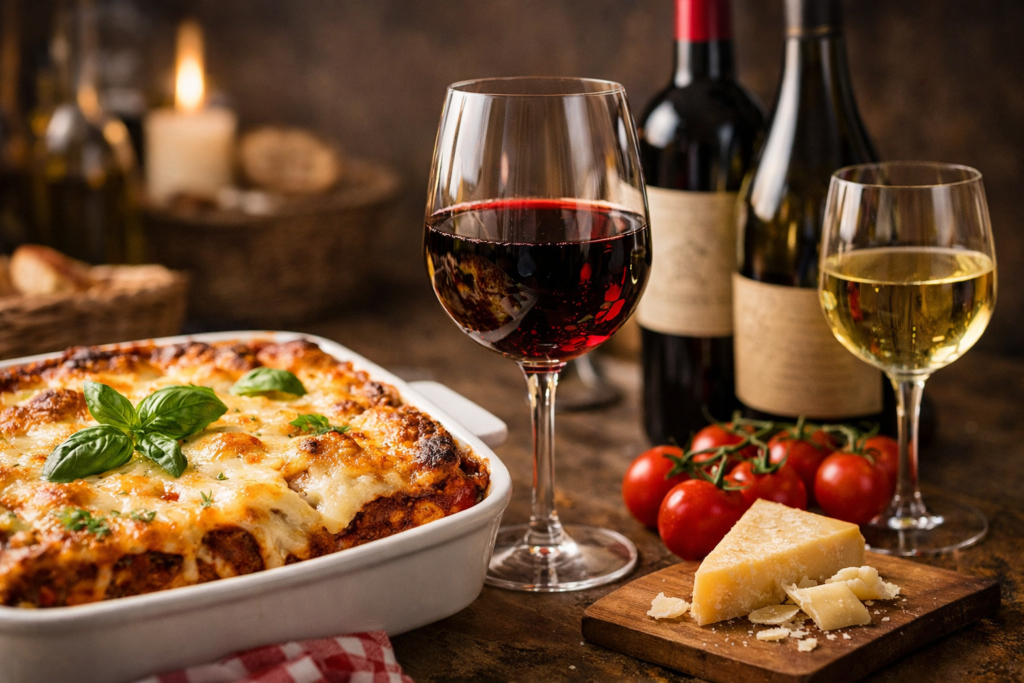
I’ve seen this play out at more than one lasagna dinner. Someone shows up with a big, expensive red because lasagna feels hearty, so the bottle should be hearty too. Then the first sip lands next to tomato sauce, mozzarella, ricotta, and browned edges from the pan, and the wine turns a little hard, a little woody, and a lot less fun.
So here’s the clean answer. For classic meat lasagna, the best wine for lasagna is usually Chianti Classico, another Sangiovese-led red, or Barbera. Those wines bring the acidity that tomato sauce asks for, and they still have enough shape for cheese and meat. When the tray shifts toward white sauce, mushrooms, vegetables, pesto, or seafood, the answer shifts too: lightly oaked Chardonnay, Soave, Vermentino, dry rose, or brut sparkling wine often make more sense.
Lasagna isn’t one dish. It’s a family of dishes wearing the same pasta sheets.
That is where most bad advice starts.
In the next few minutes, you’ll see:
- which bottle is the safest pick for classic red-sauce lasagna
- when Barbera beats Chianti, and when it doesn’t
- how white, veggie, mushroom, and seafood lasagna change the pairing
- which wines usually miss, with the reason attached right away
- a fast label checklist for the shop aisle
At a Glance: Start here if you need a bottle fast
| Lasagna style | Best first pick | Strong backup | What matters most |
|---|---|---|---|
| Classic meat + tomato | Chianti Classico | Barbera d’Asti | High acidity |
| Lasagne al forno with ragù + bechamel | Sangiovese | Valpolicella Ripasso | Acidity plus a bit more depth |
| White lasagna | Lightly oaked Chardonnay | Soave | Body without heavy tannin |
| Mushroom lasagna | Pinot Noir | Chardonnay | Earthy flavor match |
| Vegetable or pesto lasagna | Vermentino | Dry rose | Freshness and moderate body |
| Seafood lasagna | Brut sparkling wine | Vermentino | Restraint and palate lift |
Fast rule: match the sauce first, then the richness, then the weight of the meat or vegetables.
The best wine for lasagna, in one clear answer
If you’re serving classic meat lasagna with tomato sauce, go with Chianti Classico, Sangiovese, or Barbera. That trio wins so often because it solves the two biggest pairing jobs on the plate: tomato acidity and dairy richness.
Chianti Classico is the most classic call. Barbera is the easiest crowd-pleaser. A plain Sangiovese from a good producer often lands right between those two, which is handy when you want the same feel without paying for the name on the label.
Quick pick by style
Classic meat lasagna: Chianti Classico or Barbera
Lasagne al forno: Sangiovese or Ripasso
White lasagna: Chardonnay or Soave
Mushroom lasagna: Pinot Noir or Chardonnay
Vegetable or pesto lasagna: Vermentino, Soave, or dry rose
Seafood lasagna: brut sparkling wine, Vermentino, or a crisp rose
When you do not know the exact recipe, start with Chianti Classico. It is the safest blind buy for most red-sauce lasagnas because it brings freshness before bulk. That matters more than raw power. A lot more.
Barbera comes next when you want something softer and juicier. It tends to feel generous without turning heavy. I reach for it when the lasagna is cheesy, crowd-friendly, and maybe a touch sweeter from the sauce.
For white or vegetable lasagna, skip the reflex red. A lightly oaked Chardonnay has enough body for cream and cheese. Soave and Vermentino are better when the pan leans greener, lighter, or more herbal. Seafood lasagna is another pivot point. Brut sparkling wine or a brisk white usually does the job better than red because tannin and shellfish can get weird, fast.
The short version looks like this: tomatoes want acidity, cream wants body, mushrooms like savory low-tannin wines, and seafood wants freshness.
Match the wine to the loudest part of the pan, not the pasta
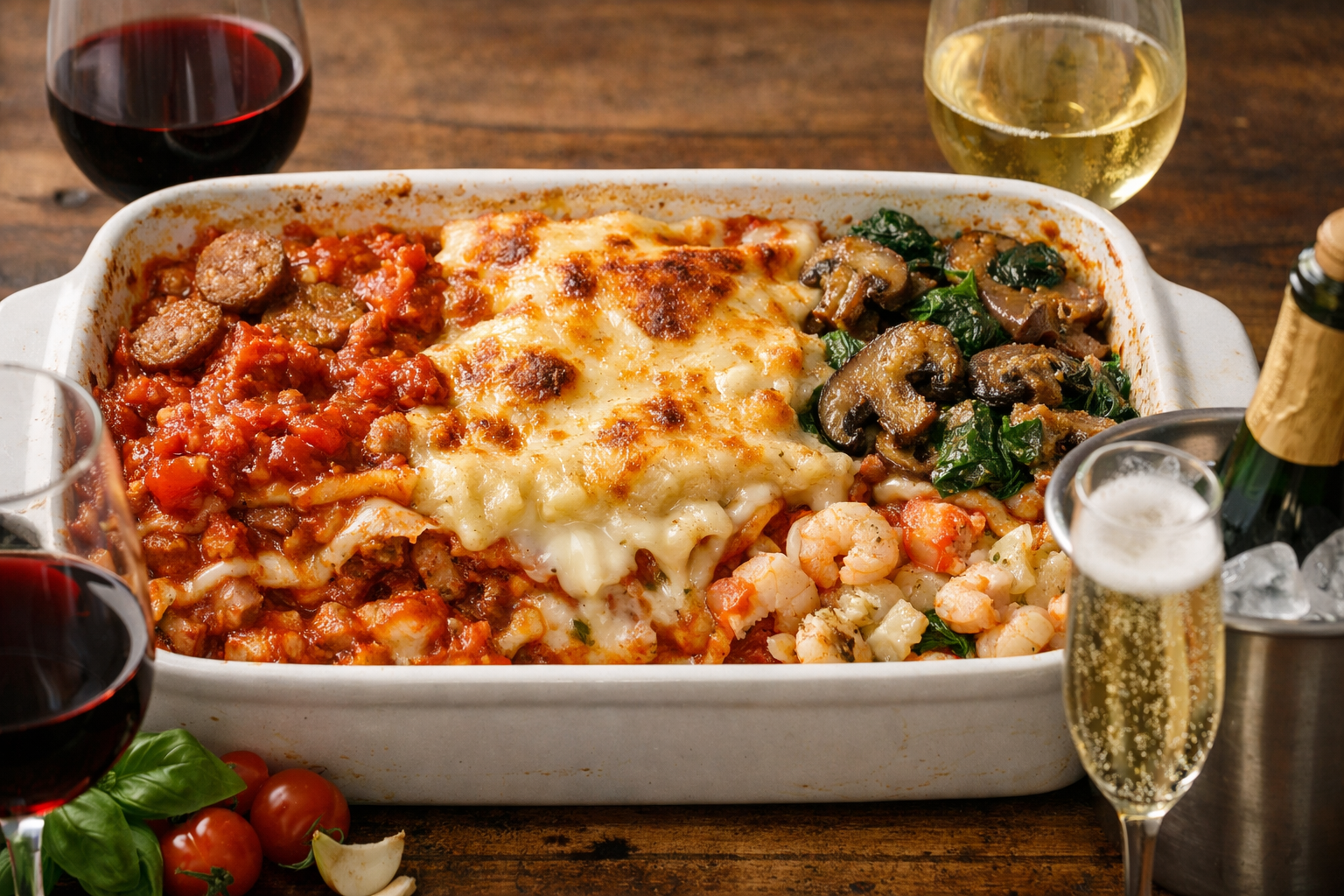
People say “wine with lasagna” as if the noodles are doing the heavy lifting. They’re not. The pasta mostly carries the louder pieces: tomato, ragù, bechamel, cheese, mushroom, herbs, sausage, spinach, seafood.
That is the whole trick.
When the Wine & Spirit Education Trust explains how acid in food changes a wine’s balance, it lines up neatly with lasagna. Tomato sauce can make a low-acid red taste dull. Salt and fat can soften tannin. Rich cheese can make a lean wine feel thinner than it seemed in the glass. That is why a bottle that tastes great on its own can feel clumsy once dinner starts.
Tomato-based sauces are often paired with high-acid wines for the same reason. The sauce is bright, sweet-acidic, and pretty pushy. A wine with matching freshness stays alive next to it. A soft, flat red does not.
Use this simple filter:
- If tomato leads, raise acidity. Think Chianti Classico, Sangiovese, Barbera.
- If bechamel leads, add body. Think Chardonnay, fuller Soave, or a red with gentler tannin.
- If mushrooms lead, look for savory, earthy tones and lower tannin. Pinot Noir often slides in well here.
- If seafood leads, back off tannin and heavy oak. Brut sparkling wine, Vermentino, and dry rose are safer.
It also helps to separate two versions that get mixed together all the time. American red-sauce lasagna with ricotta and mozzarella leans brighter, more tomato-driven, and more cheese-forward. Classic lasagne al forno with ragù and bechamel feels deeper and more layered, with less sharp tomato impact in each bite. The first asks for zip. The second can carry a little more depth.
Remember
Choosing by the word “lasagna” alone is like buying shoes by the brand on the box instead of the size on your foot. Close idea, wrong variable.
Choose the best reds for classic meat lasagna
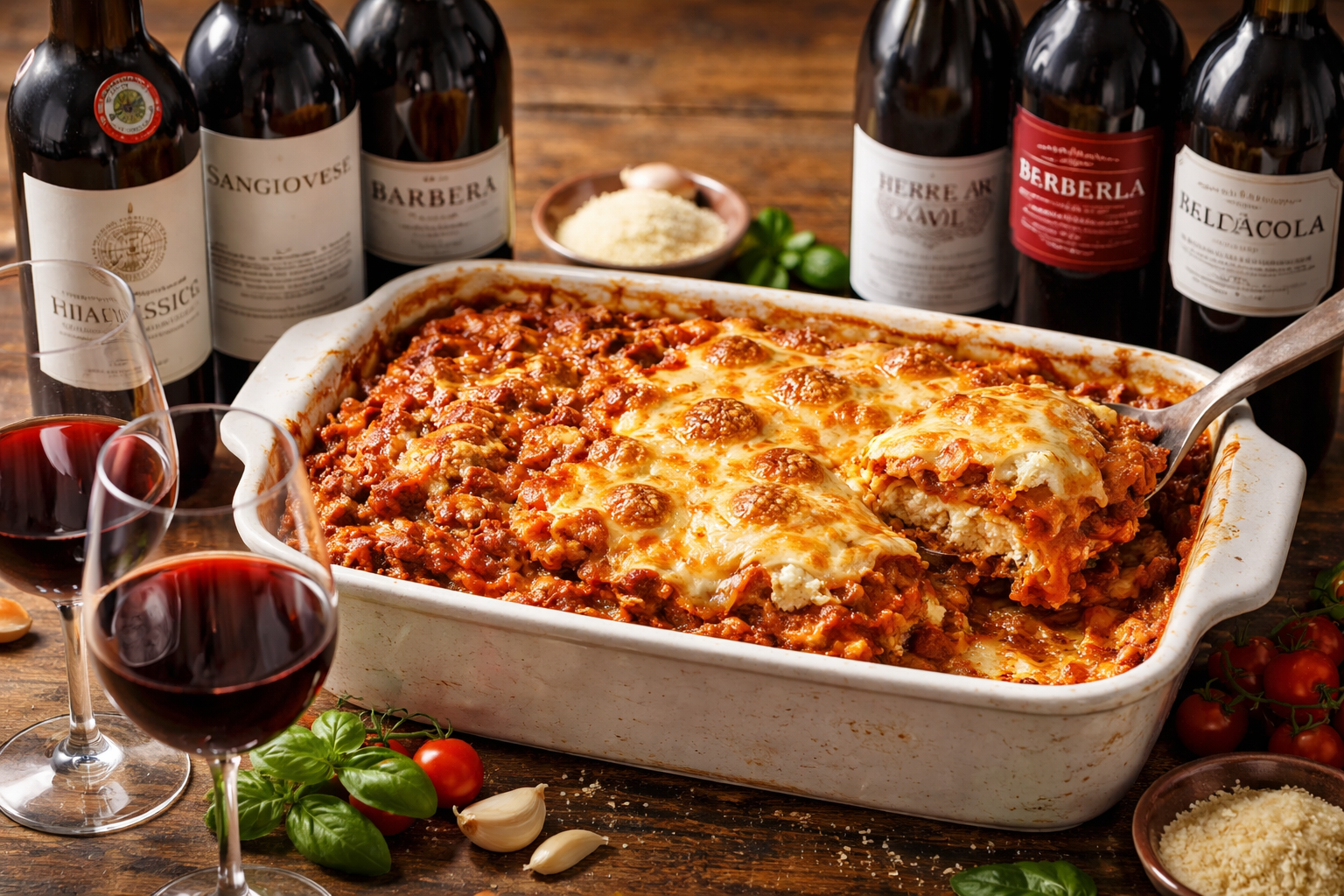
This is where most readers are really standing. Big baking dish. Meat sauce. Red top. Cheese bubbling at the edges. Maybe ricotta, maybe bechamel, maybe both. You need a red, and you want the safest good answer.
Here are the five red lanes worth knowing.
| Wine style | What it feels like | Best use | Risk |
|---|---|---|---|
| Chianti Classico | Fresh, savory, medium-bodied | Classic meat and tomato lasagna | Can feel firm if the sauce is sweet |
| Sangiovese | Bright cherry, herbs, tangy finish | General-purpose red-sauce pans | Producer style varies |
| Barbera | Juicy, rounded, acid-driven | Cheesy, crowd-pleasing lasagna | Some bottles get too oaky |
| Dolcetto | Soft, dark-fruited, easygoing | Simpler weeknight trays | Can feel too soft for sharp sauce |
| Nero d’Avola | Darker fruit, fuller body | Rich, meaty, darker-sauced lasagna | Can run warm and ripe |
| Valpolicella Ripasso | More depth, more dried-fruit weight | Lasagne al forno and richer ragù | Too much for lighter red-sauce pans |
Chianti Classico earns its place for more than habit. The official Chianti Classico rules require at least 80% Sangiovese, and Sangiovese’s tart cherry fruit, herbal edge, and fresh acidity make it one of the most reliable grapes for tomato-heavy dishes. That does not mean every bottle is identical, but the label points you in the right direction faster than a random generic red.
Barbera is the friendlier bottle when you want less edge and more glide. The Barbera d’Asti consortium describes the wine as having vigorous acidity and a rounded mouthfeel, which is pretty much why it works here. It stays lively next to sauce, and it doesn’t usually bark at the cheese.
So when does Chianti beat Barbera?
Pick Chianti Classico when the sauce is vivid, the herbs show, and the dish tastes more savory than plush. Pick Barbera when the pan is extra cheesy, a little sweeter, or headed to a mixed crowd that doesn’t want a firmer finish.
Dolcetto is fine, though I don’t love it as the first recommendation. It can work with simpler weeknight lasagna, especially if the sauce is not very acidic. But if your tomato sauce has real bite, Dolcetto can end up on the soft side.
Nero d’Avola steps in when the dish gets darker and meatier. Think sausage, longer-cooked ragù, or browned corners that taste almost roasted. It is still smarter to choose a fresher, less jammy example than the ripest bottle on the shelf.
Ripasso is the richer detour. It can be excellent with lasagne al forno, where ragù and bechamel build a denser feel than a bright ricotta-and-marinara tray. Still, it is not the safest blind buy for every lasagna. Use it when you know the dish is substantial.
Small warning
Cabernet Sauvignon can work if it is not too oaky and not too tannic, but it is rarely the smartest first pick. The same goes for very ripe Zinfandel or Primitivo. Lasagna looks hearty, yes. That doesn’t mean it wants a sledgehammer.
Pick better wines for white, vegetable, pesto, mushroom, and seafood lasagna
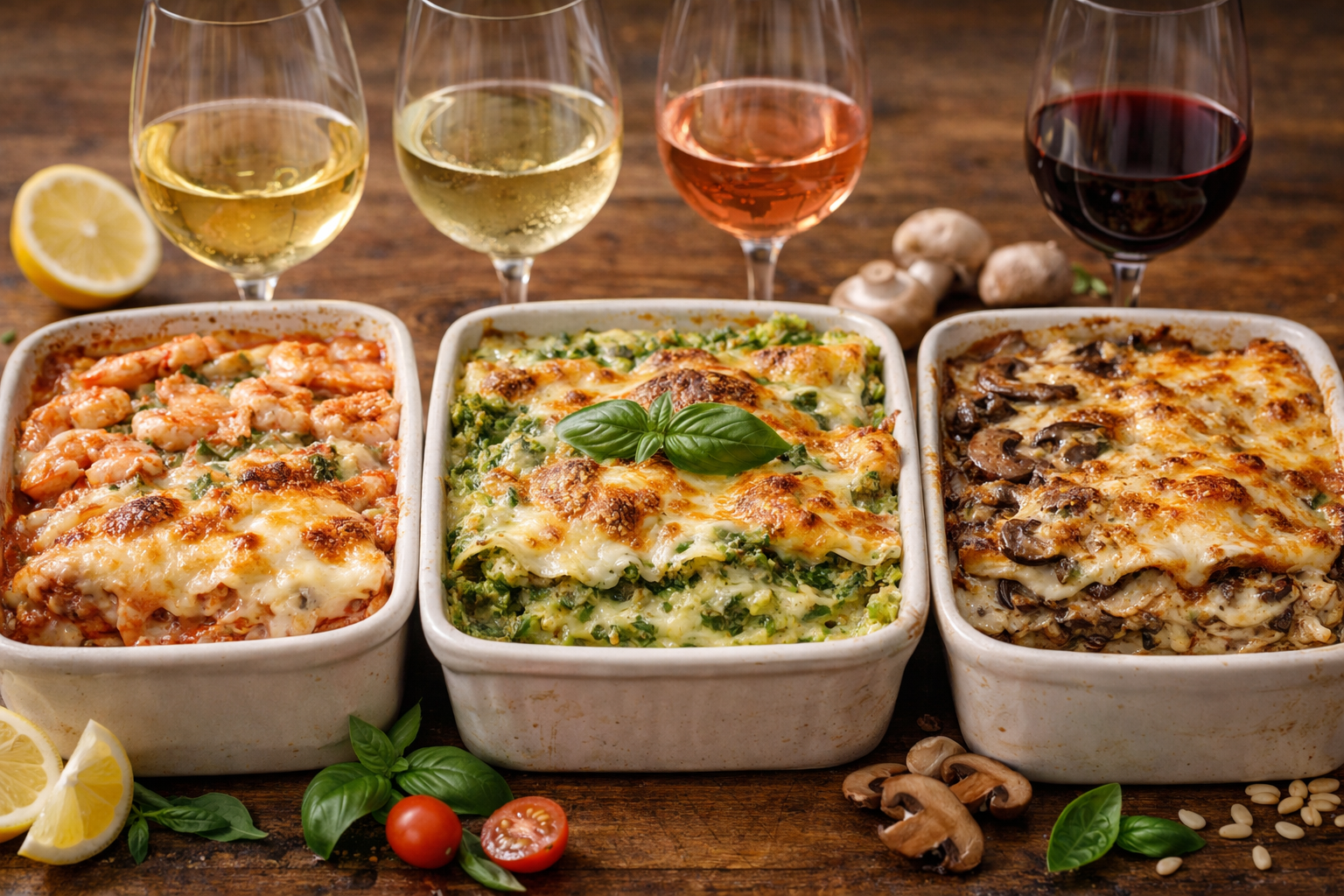
This is where a lot of one-size-fits-all wine advice falls apart. Once tomato stops being the loudest flavor, you can stop forcing red wine into the job.
White lasagna
When the dish leans on bechamel, cream, ricotta, and mild cheese rather than tomato, a lightly oaked Chardonnay makes sense. You want body, a little texture, and enough freshness to keep the mouth awake. Too lean, and the wine disappears. Too oaky, and the wood starts talking over dinner.
Soave is the cleaner option when you want less oak and more lift. Good Soave has body, almond-like edges, and enough freshness to handle cream without feeling heavy. For a white lasagna with chicken, spinach, or herbs, it often lands better than a buttery Chardonnay.
Mushroom lasagna
Mushrooms change the mood. They bring earth, depth, and that savory note people call umami when they want to sound fancy. Pinot Noir can work really well here because it carries earthy, leafy, forest-floor notes without much tannic grip. If the lasagna is creamy and pale, Chardonnay still plays. If it is darker, roasted, and deeply mushroomy, Pinot Noir usually feels more alive.
Vegetable or pesto lasagna
Green vegetables and pesto push the pairing toward fresher whites. Vermentino is a strong pick because it has citrus, herbs, and enough texture to keep up with cheese. Sauvignon Blanc can work too, though it is better when the vegetables stay bright and the pesto isn’t too rich. Dry rose is a nice middle path when the dish mixes vegetables, tomato, and cheese in roughly equal measure.
Seafood lasagna
Seafood lasagna needs restraint. Brut sparkling wine is a sneaky good answer because bubbles scrub the palate between creamy bites. Vermentino and dry rose are also smart, especially with shrimp, crab, or light fish. If the dish includes salmon, the pairing logic tracks closely with this guide to best wine with salmon, where freshness and texture matter more than brute force.
Pro tip
When you are torn between red and white for a creamy lasagna, dry sparkling wine is often the peace treaty. It handles fat, clears the palate, and does not pick a fight with the sauce.
Handle tricky lasagna styles without overthinking it
Some trays do not fit neatly into the usual boxes. That doesn’t mean the pairing gets mysterious. You just need the right shortcut.
Spicy sausage lasagna
Heat makes alcohol feel hotter, so skip the warm, high-octane reds if the sausage brings real spice. Barbera works well here. So can a fresher Nero d’Avola. Keep tannin in check. The more the wine grips, the harsher the spice can feel.
Sweet-leaning tomato sauce
A sauce with extra sweetness can make a bone-dry, tannic red feel sharp and thin. This is one place where Barbera can edge out Chianti. Lambrusco can also make sense if it is dry, lively, and not syrupy.
Extra-cheesy lasagna
When the pan goes heavy on mozzarella, ricotta, or bechamel, acidity and bubbles rise in value. Chianti still works if there is tomato. Brut sparkling wine starts to look very smart if the dish turns creamy and rich.
Mushroom-heavy lasagna
Once mushrooms become the main story, do not keep pairing as if the dish were tomato-first. Pinot Noir is the obvious move, but a savory, lighter Sangiovese can be very good too. The goal is less force and more echo.
Frozen or supermarket lasagna
This is not the moment for your fussy bottle. Store-bought lasagna tends to run sweeter, saltier, and less nuanced. Go forgiving. Barbera, basic Chianti Classico, or a simple dry rose will usually give a better result than a serious, oak-heavy red that wants more refined food.
Lambrusco deserves a quick, fair note. The official Lambrusco di Sorbara profile highlights freshness and elegant tannins, which is why dry examples can work with tomato sauce, cured meat, and cheese. That does not make Lambrusco the universal answer for every lasagna. It is better as a situational pick than a blanket rule.
Fast edge-case rule
If spice rises, lower alcohol. If sweetness rises, soften tannin. If cream rises, add body or bubbles. If mushrooms rise, go more savory and less oaky.
Avoid the bottles that usually clash with lasagna
You do not need a giant blacklist. A few common misses do most of the damage.
Heavily oaked reds
Tomato sauce and oak can make each other feel more aggressive. Vanilla, toast, and wood spice sound nice in tasting notes, but next to a bright red sauce they can taste forced. If the label screams barrel, smoke, chocolate, or bourbon, I’d keep walking.
Very high-tannin reds
Young Cabernet Sauvignon, young Nebbiolo, and other firm reds can feel stern beside cheesy lasagna. Salt and fat can soften tannin, sure, but a tomato-heavy dish still punishes wines that start too hard.
Low-acid, soft reds
This one is sneaky. A plush, low-acid red can taste charming on its own, then flop next to tomato sauce. The sauce feels brighter. The wine feels flatter. Dinner loses shape.
Delicate whites with classic meat lasagna
Pinot Grigio and light, simple whites can work with seafood or green vegetable lasagna. With a meaty red-sauce tray, they usually get steamrolled.
High-alcohol bottles with spicy sausage
Alcohol turns the volume up on heat. If the dish is spicy, keep the wine fresher and cooler. That one change fixes more pairing problems than most people expect.
What not to do
Do not choose the biggest wine just because lasagna is filling. The dish has richness, yes, but it also has acid, salt, and layers. Balance beats swagger here.
Buy a bottle fast with this 30-second label checklist
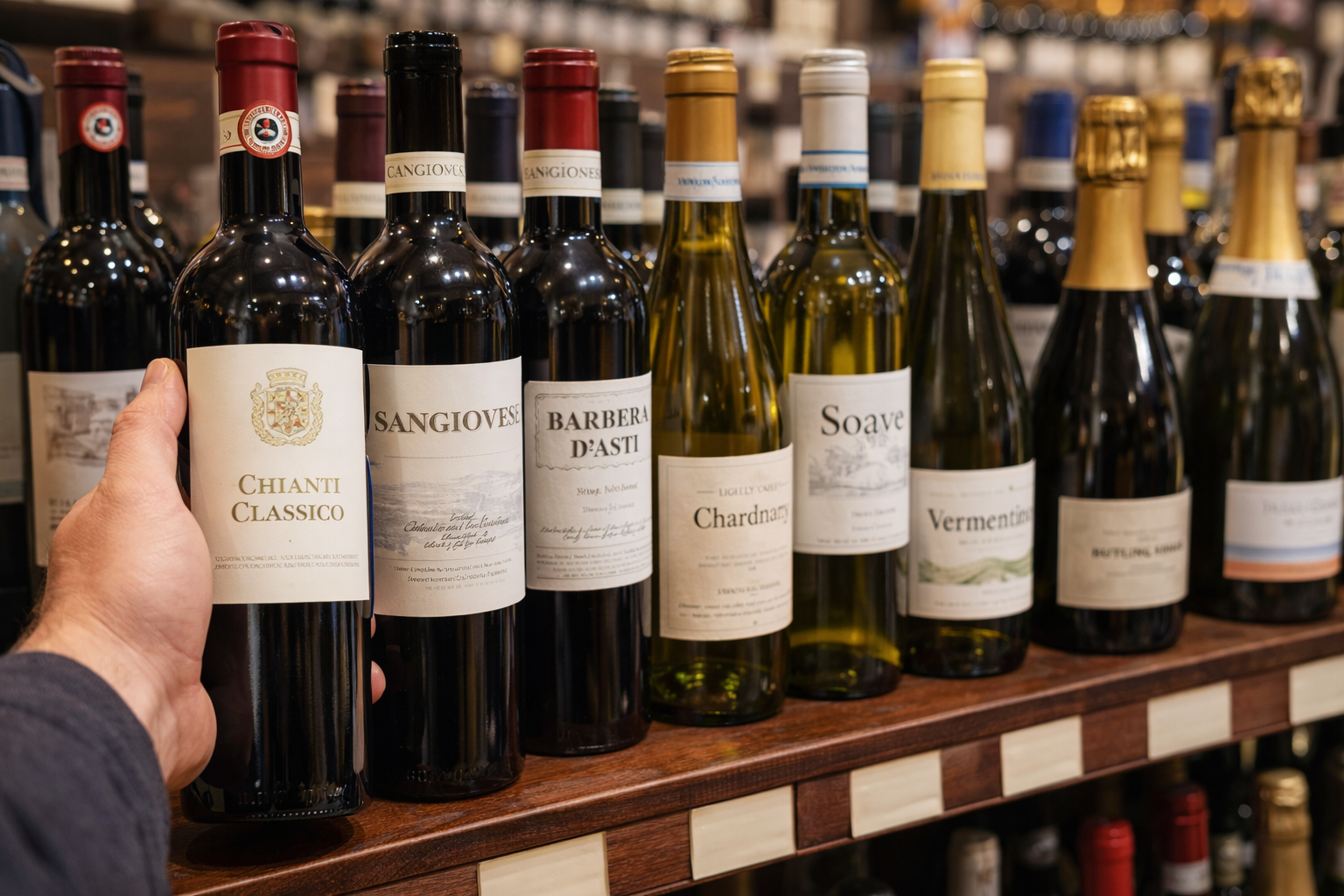
If you are standing in the store and do not have time for a deep think, use this.
30-second checklist
- Classic meat lasagna: look for “Chianti Classico,” “Sangiovese,” “Barbera d’Asti,” or “Barbera d’Alba”
- Richer ragù and bechamel: try Sangiovese first, then Valpolicella Ripasso
- White lasagna: look for lightly oaked Chardonnay or Soave
- Vegetable or pesto: look for Vermentino, Soave, or dry rose
- Seafood: look for brut sparkling wine, Vermentino, or dry rose
Be cautious with
- sweet red blends
- very jammy Zinfandel
- massive Cabernet Sauvignon
- heavily oaked red wines
- buttery whites for seafood lasagna
One more shortcut helps. If you only know that the dish is “some kind of lasagna,” buy freshness, not power.
That means Chianti Classico or Barbera for the red lane, and Soave or dry sparkling wine for the white lane. Those are not the only good answers. They are the answers that most often save you from the wrong one.
Serving temperature matters too, and people skip it all the time. Lighter reds show better around 55 to 60 F, or 13 to 16 C. Fuller reds can sit a little warmer, around 60 to 65 F, or 16 to 18 C. Whites and sparkling wines are happier cold, though not icy. Around 45 to 52 F, or 7 to 11 C, is a good place to land. A red that is too warm feels clumsier. A white that is too cold hides its shape.
That is really the whole game. Match the sauce, respect the richness, and leave the trophy bottle at home unless it actually fits the pan.
FAQ
What if I do not know which lasagna I am getting until I arrive?
Bring Chianti Classico if you want the safest red, or brut sparkling wine if you want the safest all-purpose bottle. Chianti Classico covers most meat-and-tomato trays. Brut sparkling wine is surprisingly flexible when the pan turns creamy, cheesy, or mixed.
Is Chianti Classico better than regular Chianti for lasagna?
For a blind buy, yes, often. Chianti Classico gives you a clearer path to a Sangiovese-led style with the freshness that tomato sauce likes. Regular Chianti can still work, but the style is broader, so the result is less predictable.
Should red wine for lasagna be slightly chilled?
Usually yes. A light chill helps many reds show more freshness and less alcohol. About 20 to 30 minutes in the fridge is a nice move for Chianti, Sangiovese, Barbera, and Pinot Noir before serving with lasagna.