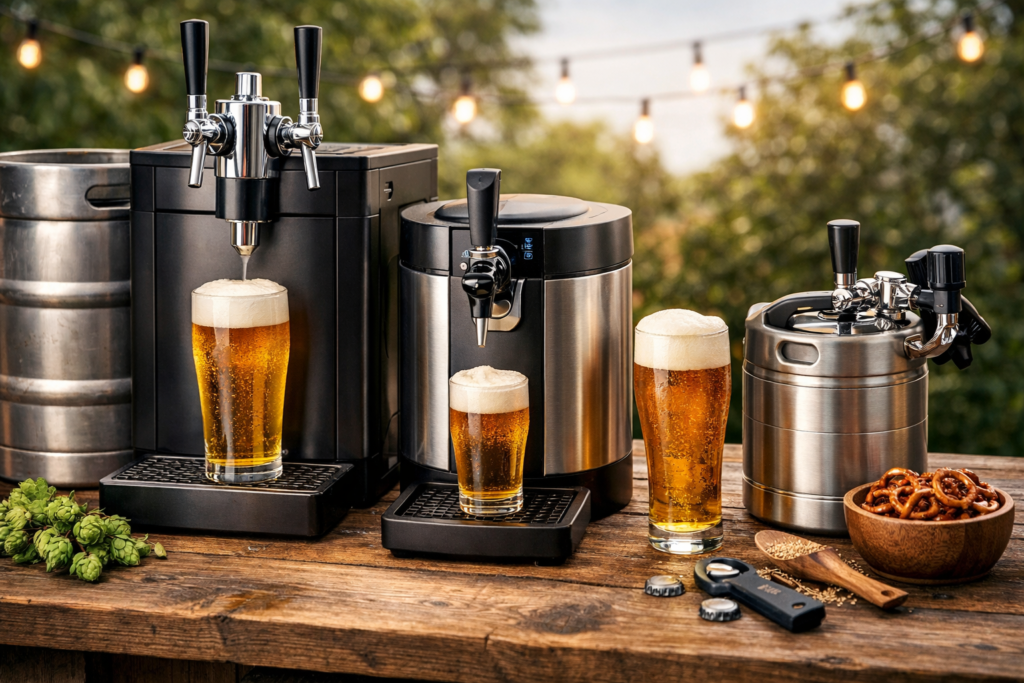
If you’re searching for the best beer keg and dispenser, the plain answer is this: for most people who really want draft beer at home, a freestanding full-size kegerator is the best long-term buy. If you only pour now and then, want less cleanup, or hate being locked into one keg ecosystem, a smaller countertop machine or a can-and-bottle dispenser makes more sense.
That sounds neat and tidy. The buying mess starts one click later.
A lot of “best” lists throw full kegerators, 5L countertop machines, Guinness gadgets, and can-pouring foam enhancers into one basket. That is like comparing a pickup, a hatchback, and a scooter because all three get you down the road. Technically true. Practically useless.
What changes the right pick is not the badge on the front. It is how much beer you actually drink, what keg format you can buy, how much space the machine eats, and whether you will still tolerate the cleanup after the first excited weekend wears off. I’ve seen this go sideways more than once: someone buys the shiny countertop unit, then learns it only works with a narrow keg range, or buys a full kegerator and discovers they pour two pints a week and now own a hobby by accident.
What this guide will help sort out
- Which kind of dispenser matches the way beer is actually consumed at home
- Which products are worth shortlisting and which ones are too niche for most buyers
- How keg compatibility, temperature, and gas setup change the first pour
- Where freshness claims are useful and where they hide a catch
- What mistakes waste money, fridge space, and a perfectly good keg
Fast pick module
- Buy a full-size kegerator if you host often, want true kegged beer, and don’t mind lines, CO2, and periodic cleaning.
- Buy a 5L countertop machine if you want plug-in simplicity and can live inside that machine’s keg ecosystem.
- Buy a can-and-bottle dispenser if you like variety and want draft-style foam without committing to kegs.
- Buy a Guinness-only device if Guinness is the ritual you care about. Not if you want an all-rounder.
- Skip all of them if you drink slowly and mostly want cold beer, not a tap handle in the kitchen.
Best Suggestions Table (Use the quick buttons below to jump to the review or the product source.)
| Product | Best for | Action |
|---|---|---|
| Kegco K309B-1 | Most homes that want a true kegerator |
Check Price Review |
| Krups BeerTender | Easy countertop draft with 5L kegs |
Check Price Review |
| Fizzics DraftPour | Occasional drinkers who want variety, not keg lock-in |
Check Price Review |
Tip: “Check Price” jumps to the source note for the brand page. “Review” jumps straight to the write-up.
Best Beer Keg and Dispenser for Most People
For most homes that want real draft beer, the safest default is a freestanding full-size kegerator with steady temperature control and broad keg compatibility. Not because it is flashy. Because it solves the whole job: it stores the keg cold, dispenses at the right pace when the system is balanced, and gives you room to grow into different keg formats.
That answer stops being right when one of three things is true. You drink slowly. You hate maintenance. Or you are not actually trying to keep a keg on tap at all.
Use this quick filter:
- If you want true kegged beer and host people with some regularity, go kegerator.
- If you want a simple countertop beer machine and can live with 5L or 6L compatible kegs, go mini-keg dispenser.
- If you mostly drink cans and bottles and just want a creamier pour, go with a draft-style enhancer.
The volume math helps here. A 5L mini keg works out to about 10.6 US pints. A 6L keg lands around 12.7 US pints. Those sound modest until you realise a “weekend only” drinker can stretch one keg across several weeks. That is fine for some systems. It is not always the happiest path for hop-forward beer, and it definitely does not make a full kegerator a smart default for every kitchen.
Choose the Right Type of Beer Dispenser for Your Setup
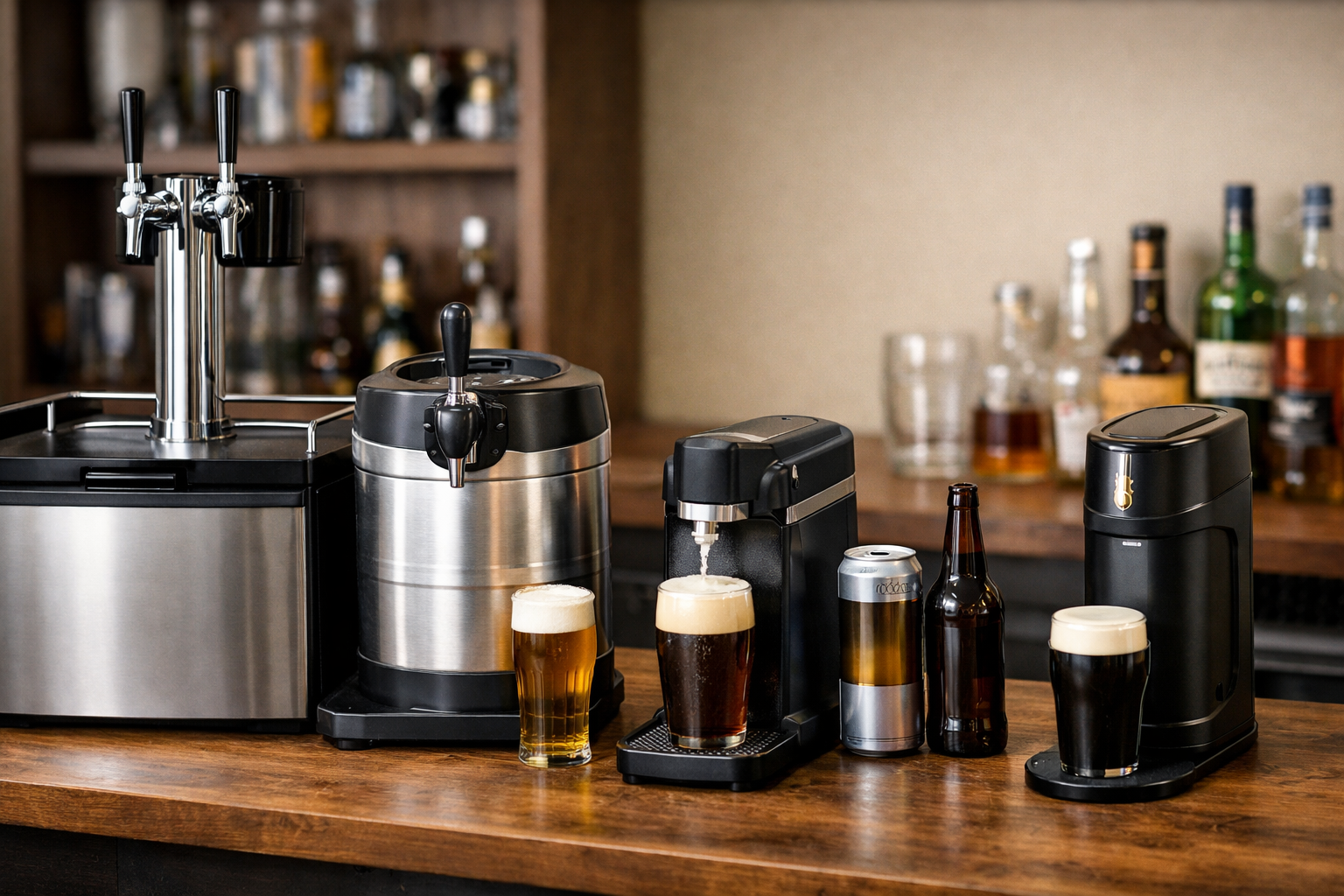
Before you compare products, compare jobs. This is where most roundup pages lose the plot.
| Type | What it actually dispenses | Best fit | Main tradeoff |
|---|---|---|---|
| Full-size kegerator | Commercial or homebrew kegs, depending on coupler and cabinet fit | Frequent pouring, parties, serious home bars | Needs floor space, gas setup, and line cleaning |
| 5L or 6L countertop machine | Brand-specific mini kegs | Plug-in simplicity and smaller volume | Beer choice lives inside that ecosystem |
| Can-and-bottle draft enhancer | Any can or bottle, poured through a foaming device | Variety drinkers and gifts | Not a true refrigerated draft system |
| Stout-specific device | Guinness-compatible format only | People chasing that one ritual | Very narrow use case |
| Brew-and-pour machine | Fresh beer you make in the unit | Curious hobbyists with limited space | Longer path from craving to pint |
A true kegerator is the closest thing to pub draft at home. It also asks the most from you. A 5L machine is the compromise people often wanted all along but did not know how to describe. It keeps the footprint sane and the pouring ritual fun, though the keg range can feel a bit fenced in. A can-and-bottle unit like Fizzics lives in a totally different lane. It is not storing beer on tap. It is improving the pour from packaged beer.
And then there are niche picks. Guinness NITROSURGE is a perfect example. Guinness says the device uses ultrasonic technology and is tuned to work exclusively with NITROSURGE cans. That makes it brilliant for Guinness fans and a bad all-round buy for everyone else.
Compare the Best Beer Keg and Dispenser Picks by Use Case
Before the shortlist, here’s how I judged it. Not with a fake lab coat and a spreadsheet pretending every buyer wants the same thing. I weighed each machine against the stuff that changes ownership fast: what it actually dispenses, how locked-in the keg ecosystem is, whether it can hold serving temperature, how annoying cleanup gets, how much space it eats, and whether the machine still makes sense after the novelty stage.
For true kegerators, gas management and keg flexibility matter a lot. For countertop units, simplicity and beer availability matter more. For can-and-bottle devices, the only honest question is whether the pour improvement is worth another appliance in the cupboard.
What changed the rankings
- System type before brand name
- Compatibility before looks
- Serving temperature before headline features
- Maintenance burden before marketing fluff
- Who should skip it, not just who should buy it
Kegco K309B-1
Best for: most homes that want a real kegerator and do not want to outgrow it in six months.
Kegco’s own product page spells out why this model keeps showing up on serious shortlists: the cabinet can hold a full-size keg, two 5-gallon D-system kegs, or up to three Cornelius ball-lock homebrew kegs, and the cooling range drops as low as 32 F. That matters because it tells you this is not a novelty box with a tap stuck on top. It is a real beer fridge with room to flex into commercial keg use or homebrew use later.
That flexibility is the whole sell. A lot of buyers say they want “a beer dispenser,” but what they mean is “I want draft beer at home and I don’t want to buy twice.” This is the kind of machine that prevents the second purchase. If your habits move from occasional half-barrel party duty to Cornelius keg homebrew, the cabinet is still useful. The fan-forced cooling also matters more than it sounds. Warm pockets inside draft gear are one of those maddening little things that turn the first pint foamy and the rest inconsistent.
The tradeoff is not subtle. This is a full appliance. It takes floor space, needs CO2, and asks for line cleaning like any proper kegerator. If that already feels like a chore while reading it, take that feeling seriously. Don’t buy a machine that turns every casual pint into a maintenance task list.
Still, if the brief is “true draft beer at home, not a workaround,” this is the strongest default pick in the bunch. It has the right boring strengths: capacity, temperature range, flexibility, and fewer dead-end compromises.
Krups BeerTender
Best for: buyers who want the draft ritual without going all the way into kegerator ownership.
BeerTender’s product page says the machine holds 5L kegs, chills to 4 C, and keeps beer in good shape for up to 30 days. Krups’ own BeerTender FAQ adds the fine print that matters more in daily use: a warm keg can take around 10 hours to cool inside the appliance and pre-chilling for at least 6 hours helps a lot. That’s the kind of detail that saves disappointment. People buy countertop beer machines expecting a quick plug-in miracle. A lot of the bad first impressions are really impatience and warm beer.
When the BeerTender fits your life, it fits beautifully. It is smaller, cleaner, and much less intimidating than a full-size kegerator. There is no “did I buy the right coupler?” spiral. You load the compatible keg, let it chill properly, and pull a pint. For weekend hosting or a kitchen counter setup where a floor unit would be a pain, that simplicity is a big win.
The catch is keg ecosystem lock-in. This is not the right machine for someone who wants broad beer choice, homebrew flexibility, or a cabinet that grows with them. It is also not a great buy for someone who falls in love with the idea of “draft beer at home” but does not check which 5L kegs they can actually get nearby. If the compatible range suits your taste, BeerTender is the easy answer. If not, it becomes a sleek little reminder that convenience always charges rent somewhere.
Fizzics DraftPour
Best for: occasional drinkers, gift buyers, and people who want variety more than they want a keg on tap.
Fizzics says the DraftPour works with cans and bottles, runs on USB or two AA batteries, and uses its Micro-Foam system to turn packaged beer into a nitro-style pour without CO2 cartridges or nitrogen. That tells you two things right away. One, it is portable and dead simple. Two, it is not pretending to be a kegerator.
That honesty is why I like it more than a lot of flashy countertop beer gadgets. It solves a narrower problem and solves it fairly well. If you enjoy trying different beers and hate the idea of committing to 5L or 6L mini kegs, this is the machine that keeps choice wide open. Pour your bottle or can through it, get a creamier head and a softer mouthfeel, then move on to something else tomorrow. For people who buy mixed six-packs or rotate styles all week, that is a better fit than any keg system.
The weak spot is easy to miss if you are a little starry-eyed about the word “draft.” This does not keep beer cold. It does not store a keg. It does not replace a true home beer tap setup. It improves the pour from packaged beer, and that is the lane. So if you want the pub-adjacent ritual and don’t want another fridge-sized appliance, great pick. If you want real kegged draft beer, this is like wearing dress shoes to a muddy campsite. Nice object. Wrong job.
Also worth a look
EdgeStar KC1000SS: a compact true kegerator that fits one sixth-barrel or one Cornelius keg. Good for small spaces. Not a “buy this and figure it out later” cabinet. Its smaller fit is the whole point.
Guinness NITROSURGE: a very smart niche buy. Guinness says it uses ultrasonic technology and is tuned for NITROSURGE cans only. Lovely if that is the ritual you want. Too narrow for most people.
Pinter 3: a brew-and-pour machine, not a conventional dispenser. Best for the person who likes the idea of making fresh beer in a fridge-friendly unit and does not mind waiting for it.
Once you’ve got yourself your desired Keg, I highly recommend checking out this keg preparation guide.
Check Keg Compatibility, Pressure System, and Capacity Before You Buy
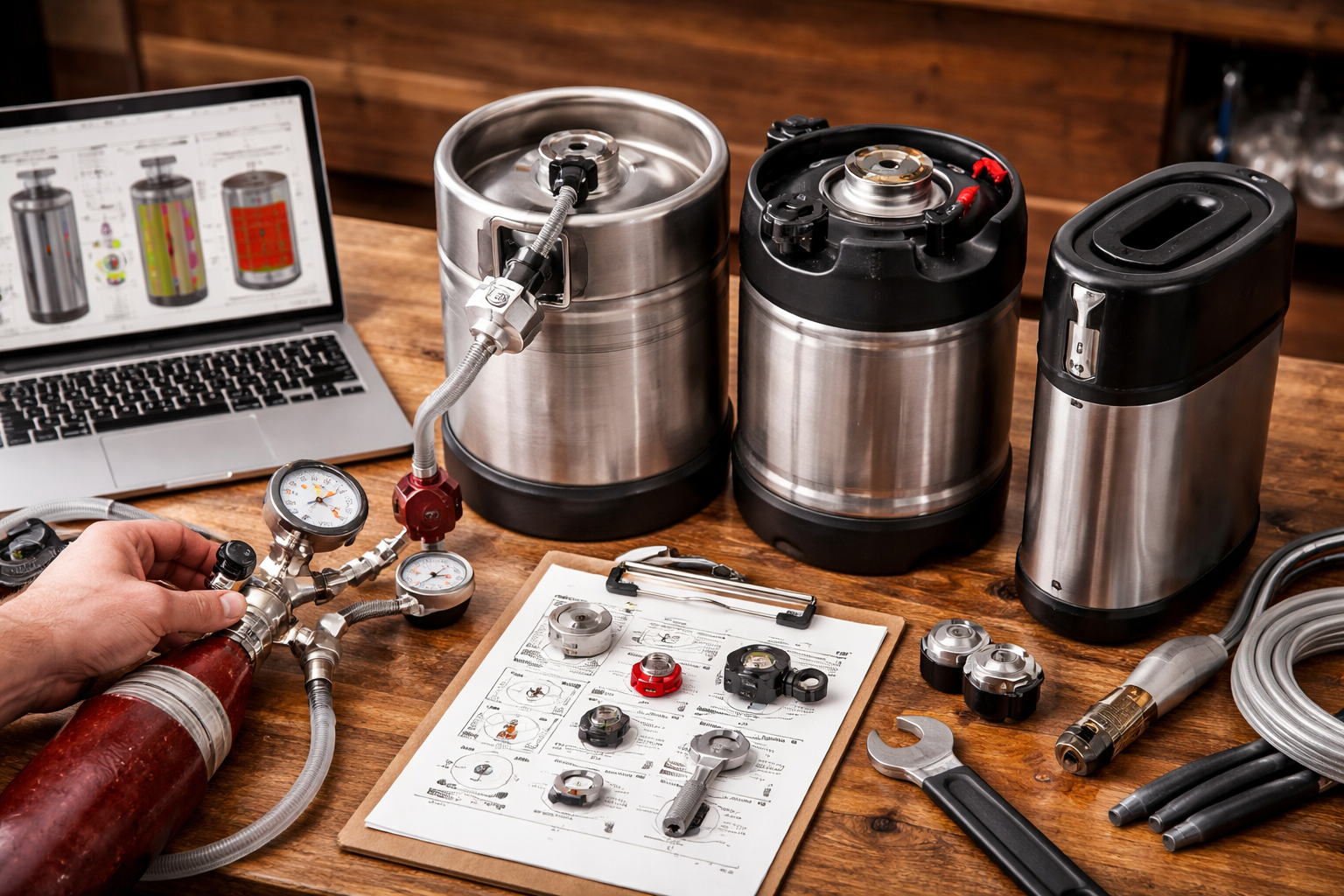
This is the section that saves the most regret.
The Brewers Association’s Draught Beer Quality Manual lays out a simple truth that home buyers run into the hard way: a balanced system pours clean beer at about 2 ounces per second, and a common reference point for direct-draw service is 38 F beer at about 11 psi to maintain 2.5 volumes of carbon dioxide. Those are reference numbers, not universal presets. Still, they tell you something useful. Draft beer is not “cold box plus faucet.” Temperature, pressure, line resistance, and the keg connection all have to work together.
So before you buy, check these four things:
Confirm the keg family and stop the worst mismatch
Some machines take full-size commercial kegs through a Sankey-style setup. Some take Cornelius kegs that homebrewers love. Some only take 5L or 6L proprietary formats. Some do not take kegs at all and just pour cans or bottles through a nozzle. If the product page does not make the compatible formats very obvious, that is already a bad sign.
Check the coupler or disconnect and save yourself a false “defect”
Plenty of first-week complaints are not broken machines. They are wrong hardware. A D-system coupler is not a Cornelius ball-lock disconnect. A cabinet that physically fits a keg may still need a different coupler, conversion kit, or clearance above the keg.
Match the capacity to the way the beer will actually get finished
A 5L mini keg equals about 10.6 US pints. A 6L keg equals about 12.7. If that sounds like “easy,” map it to real life. Two pints per weekend means a 5L keg lasts about five weeks. For malty beer in a sealed system, that can be fine. For bright, hop-forward beer, that pace can make the freshness promise feel less exciting than it did on the box.
Treat marketing freshness claims as system-specific, not universal
Cicerone’s draft guidance pushes the point that cold storage is always better for freshness, and that all kegs should be chilled for at least 24 hours before service to prevent foaming in refrigerated systems. That matters because the machine’s headline promise and the beer’s real condition are not the same thing. A “30 days fresh” claim only means something inside that machine’s sealed setup and only if the beer stays cold the whole time.
For a deeper build-and-fit walk-through, How to Set Up a Kegerator: 7 Smart Steps for a Perfect First Pour is the clean next read.
Match the Machine to Your Beer Habits, Space, and Budget
Good draft gear feels boringly easy once it is living in the house. Bad draft gear feels like an apology with a power cord.
Start with pace. If you drink several pints most weekends or host friends often, a full-size kegerator earns its footprint. If you drink one or two pints here and there, a countertop unit or a can-and-bottle dispenser usually fits better. A slow-drinking household can technically keep a mini keg going for weeks. That does not mean the experience stays equally satisfying the whole way through, especially with styles that lean on hop aroma.
Then look at space. Freestanding units need breathing room. Built-in or under-counter installs need front venting. Outdoor placement needs an outdoor-rated unit, not an indoor machine dragged onto the patio and hoped for the best. That last mistake is more common than it should be.
| If this sounds like you | Usually the better fit |
|---|---|
| “I host often and want true draft beer.” | Freestanding full-size kegerator |
| “I want simple countertop pouring with less commitment.” | 5L or 6L mini-keg machine |
| “I like trying different cans and bottles.” | Can-and-bottle draft enhancer |
| “I mostly want Guinness at home.” | Guinness-specific device |
| “I want to make beer and pour it without bottling.” | Brew-and-pour system like Pinter |
Budget is not just the machine. It is the ecosystem after the machine. A full-size kegerator brings CO2, cleaning supplies, replacement line bits, and the reality that a great cabinet still depends on the kegs you can buy locally. A mini-keg machine brings the quiet cost of being tied to a narrower format. A can-and-bottle unit has the lightest commitment because it rides on the beer you already buy.
One subtle trap here: people often overspend on machine polish and underspend on fit. A prettier unit that locks you into awkward kegs is worse than a plain one that matches how beer actually enters the house.
Readers already set on a traditional kegerator can move straight to 7 Best Kegerators for Cold, Hassle-Free Draft Beer at Home.
Set It Up for a Cold First Pour, Not a Foam Disaster
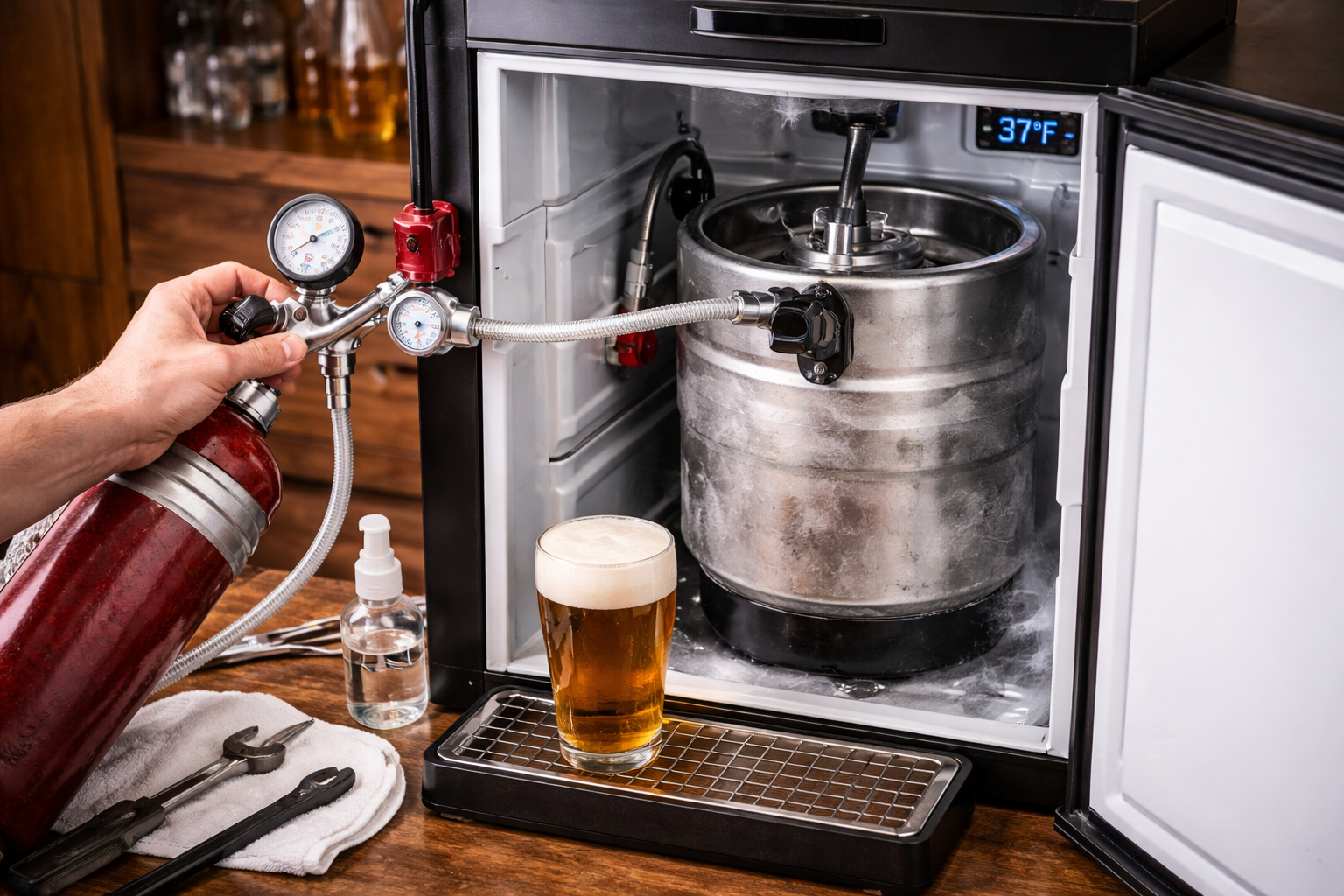
The first foamy pint is where a lot of buyers decide the machine was a mistake. Usually it wasn’t. Usually the setup was rushed.
Step 1. Chill the keg fully and calm the pour
Cicerone’s guidance is plain on this: refrigerated draught systems are best kept around 3 C or 38 F, and kegs should be in the cold space for at least 24 hours before service to prevent foaming. That one rule fixes a surprising number of “bad machine” stories. Warm beer throws off pressure balance and foams like mad.
Step 2. Start with sane pressure and stop chasing foam blind
The Brewers Association manual uses 38 F and 11 psi as a reference point for maintaining 2.5 volumes of CO2 in a keg, and it notes that a balanced system should pour around 2 ounces per second. That’s a starting line. It is not a law for every beer. Still, it gives you a way to think. If the keg is cold and the beer is racing out like it owes you money, slow down and look at pressure and line balance before blaming the faucet.
Step 3. Check the connection and catch the dumb little problems
Wrong coupler. Kinked line. Loose gas connection. Poorly seated keg. These are all painfully ordinary. They are also the reason plenty of first setups feel cursed. Take five minutes and check them before you start twisting knobs.
Step 4. Pour a test pint and read what it tells you
All foam usually points to temperature, pressure, or warm hardware near the tower and line. Flat beer points to the opposite direction. No pour points to gas, engagement, or blockage. That first pint is diagnostic. It is not just the reward at the end.
Quick foam check
- Keg warm? Chill longer.
- Pressure off? Reset from a sensible starting point.
- Line pinched or coupler not seated? Fix the hardware before changing anything else.
- First pint only is wild but later pours settle down? Tower and line warmth are often the culprit.
And one practical safety note while we’re here: keep CO2 cylinders upright and secured so they cannot tip or roll. That is just basic shop sense.
For a full step-by-step assembly walk-through, How to Set Up a Kegerator covers the whole first-pour sequence.
Clean and Maintain the Dispenser Before Taste Goes Sideways
Draft systems rarely fail all at once. They drift. One week the beer tastes a bit dull. Then the head looks odd. Then something buttery, sour, or stale starts creeping in and the machine gets the blame. A lot of the time, the beer line is the real villain.
Cicerone states that draught lines should be cleaned at least every 14 days. That is not a fussy gold-star rule. It is the minimum rhythm that keeps a serving system from turning into a flavor problem. On a full kegerator, that means line, faucet, coupler, and the bits that actually touch beer. On smaller countertop units, it means whatever removable tubing, nozzle parts, or contact surfaces the brand calls out.
The maintenance load changes by machine type:
- Full-size kegerator: highest cleanup burden, best draft payoff.
- Mini-keg machine: easier daily life, but still not no-maintenance.
- Can-and-bottle dispenser: easiest cleanup because the beer is not sitting in lines for long.
Freshness claims need a little daylight too. Sealed systems often say beer stays fresh for about 30 days after tapping. Fair enough, inside that specific setup and when the beer stays cold. But that is not a pass to skip cleaning, and it is not a promise that every style tastes equally lively for the whole window. A bright pale ale and a dark malt-forward beer do not fade in the same way.
The readers leaning toward a DIY cabinet or keezer build can go deeper with How to Build a Kegerator or How to Build a Keezer.
Avoid the Buying Mistakes That Waste Money and Beer
A few patterns keep popping up in bad buys.
- Buying the biggest machine by default. Bigger is not smarter if the keg will drag on too long and the cabinet turns into a monument in the corner.
- Assuming any keg fits any dispenser. This is the fastest route to buyer’s remorse.
- Treating “draft-style” and “draft system” as the same thing. They are not.
- Ignoring ventilation and install type. Freestanding and built-in are not swappable labels.
- Buying a niche device for a broad job. Guinness gear is a great example. Fantastic at one ritual. Not a general home beer tap.
- Underestimating cleanup. If you hate simple maintenance now, you will hate it more after the shiny-new phase.
If I had to cut the whole guide down to one practical recommendation, it would be this. Buy the least complicated machine that still solves the actual job. A full-size kegerator is the best pick for many homes, but only when the home really wants kegged beer on tap. A countertop 5L unit is a better answer for a lot of kitchens. And for some people, the right move is no keg machine at all. Just cold cans, good glassware, and move on with life.
If buying today, here’s the short list again
- Kegco K309B-1 for most people who want a true kegerator.
- Krups BeerTender for easier countertop draft with 5L kegs.
- Fizzics DraftPour for variety drinkers who want the pour upgrade without keg commitment.
- Guinness NITROSURGE if Guinness is the whole point.
- Pinter 3 if making fresh beer is part of the fun.
FAQ
Are beer dispensers worth it if I only drink on weekends?
Usually only the smaller ones. A full-size kegerator is hard to justify for slow casual use unless hosting is a big part of the picture. A 5L machine or a can-and-bottle dispenser makes a lot more sense for weekend-only drinking.
Can I use any keg in any beer dispenser?
No. Keg family, coupler type, cabinet fit, and pressure method all matter. This is why compatibility should be checked before price, looks, or even brand reputation.
Why does the first pint come out foamy?
Most of the time it is warm beer, warm tower hardware, or pressure that is out of step with the system. Chill first. Then check pressure. Then check the connections.
What informed this guide