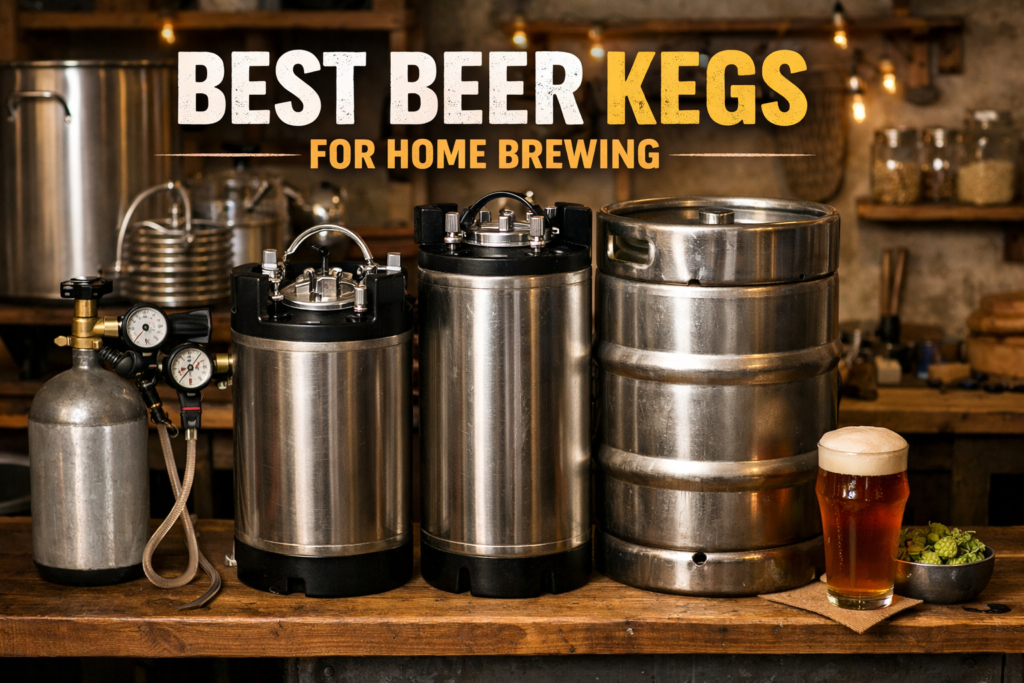
If you’re looking for the best beer kegs for home brewing, the short answer is this: for most homebrewers, a 5-gallon ball-lock Cornelius keg is the right buy.
That answer is right often enough to be useful, and wrong often enough to waste your money.
I have seen this play out in the same annoying way more than once. Someone buys a small stainless mini keg because it looks tidy and beginner-friendly. Then brew day comes, the batch is bigger than the keg, the disconnects don’t match the draft hardware, and the keg barely saves any space once the fittings are attached. The keg wasn’t bad. The choice was.
A good keg choice has to match three things at the same time: your batch size, your cold storage, and the way you plan to serve.
- Which keg size makes sense for a 1-gallon, 2.5-gallon, or 5-gallon batch
- When ball lock beats pin lock, and when pin lock still has a case
- Which real keg options are worth a look for standard, compact, and portable setups
- How to avoid the mistakes that lead to foam, leaks, awkward fridge fits, and buyer’s remorse
- What draft setup details matter so you don’t blame the keg for a system problem
Fast pick matrix
| If this sounds like you | Start here | Why |
|---|---|---|
| You brew standard 5-gallon batches | 5-gallon ball-lock Cornelius keg | Best match for common homebrew volume and common homebrew hardware |
| You split batches or have tight fridge clearance | 2.5-gallon ball-lock keg | More flexible without abandoning standard fittings |
| You brew one-gallon recipes or want a party-ready portable keg | 1.3-gallon or 5-liter mini keg | Light, compact, and actually useful for small-batch brewing |
| You want to pour commercial beer and homebrew from one setup | Corny for homebrew, Sankey for commercial kegs | Keeps cleaning and connections sane |
Best Suggestions Table (All products have been personally reviewed & tested by us! Click the buttons below to jump to the reviews.)
| Product | Best for | Action |
|---|---|---|
| Kegco 5 Gallon Ball Lock Keg with Strap Handle | Most homebrewers brewing 5-gallon batches | |
| AEB 2.5 Gallon Ball Lock Keg | Split batches and compact setups | |
| TMCRAFT 1.3 Gallon Double Walled Mini Keg Growler | Portable serving and true small-batch brewing |
Tip: Clicking the “Review” button will move you to the review so you can decide fast.
Start with the best default, then show when it stops being the best
The reason 5-gallon ball-lock Cornelius kegs keep coming up is simple. They match the volume of a standard homebrew batch, replacement parts are easy to find, the lids are wide enough for cleaning, and most homebrew draft hardware is built around ball-lock fittings. The American Homebrewers Association describes Corny kegs as the standard kegging option for homebrewers, and that tracks with what you see in real garages, basements, and converted chest freezers.
So yes, the best default is a 5-gallon ball-lock Cornelius keg.
But “default” is not the same as “always.”
If you brew one-gallon BIAB batches on a weeknight, a full-size corny keg can feel like wearing winter boots to mow the lawn. It works, but it is clunky. If you split a five-gallon batch into two dry-hop treatments, two 2.5-gallon kegs can make more sense than one full-size keg. If you want to take beer to a cabin, picnic, or club meeting, a compact mini keg is easier to carry, chill, and pour. And if you also pour commercial beer, a Sankey coupler probably belongs in the setup too, just not as the only path for homebrew.
Remember: “Best” means the keg that fits your batch, your fridge, and your hardware without making cleaning or serving annoying.
That last part matters more than people think. A keg can look perfect on a product page and still be a bad buy once you count the extra height of the gas and liquid disconnects, the width of the handles, and the reality of lifting a full keg into a keezer.
A useful rule of thumb is this: if your setup is still taking shape, buy for compatibility first and cleverness second.
Match keg size to your batch size, fridge space, and serving habits
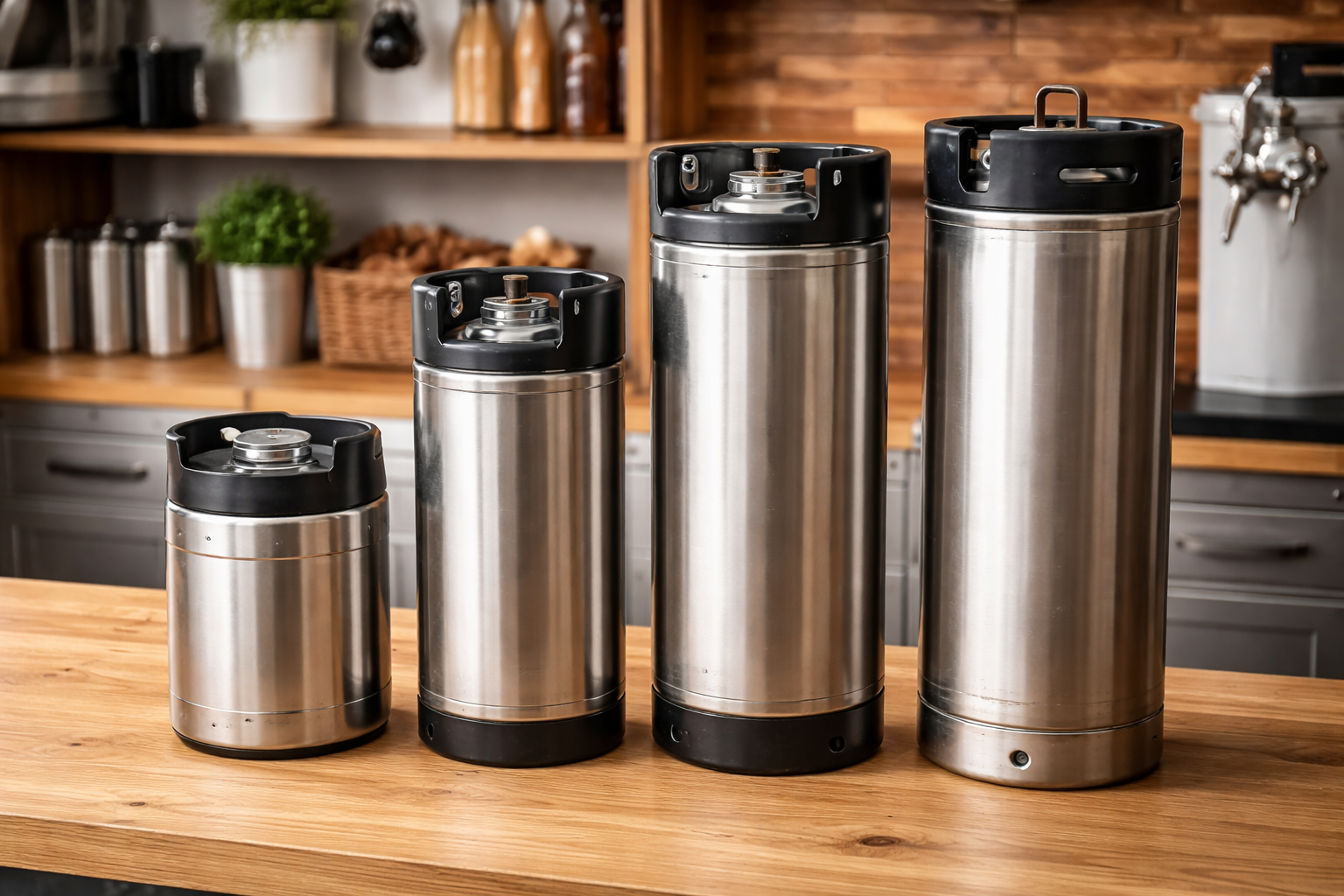
The lazy way to choose a keg is by capacity alone. The better way is to ask three blunt questions.
How much beer do you package at a time?
Where will the keg live?
Will it stay there or travel?
Those three questions sort most people into the right lane fast.
A standard Cornelius keg holds about 5 gallons, which works out to roughly 40 pints or 53 twelve-ounce pours. KegWorks lists a typical footprint at around 23 inches tall by 9 inches wide. A sixth-barrel, often called a sixtel, holds about 5.16 gallons and lands in a very similar range for pours, though the connection system is different. That is close enough in liquid volume to fool people into thinking they are interchangeable. They aren’t. One lives in the homebrew world. The other usually lives in the commercial draft world.
If you package full 5-gallon batches, buy a 5-gallon keg first. You can split later if you want. Starting smaller just means more vessels, more cleaning, and more seals to chase.
If you brew 2.5-gallon batches or love split-batch experiments, buy 2.5-gallon ball-lock kegs. This is one of the smartest niche choices in kegging. You keep standard fittings, you gain flexibility, and you can fit awkward spaces that reject full-height kegs.
If you brew one-gallon batches or want a genuinely portable serving keg, a 1.3-gallon or 5-liter mini keg earns its place. That is the point where “small” stops being cute and starts being practical.
Here is the catch: smaller kegs multiply work. Two 2.5-gallon kegs give you flexibility, but they also give you double the seals, double the posts, and double the cleaning. Sometimes that trade is worth it. Sometimes it is just more fiddly.
Quick fit guide
- 5-gallon ball-lock keg: best for standard homebrew batches and most first kegging setups
- 2.5-gallon ball-lock keg: best for split batches, smaller households, and tighter fridge geometry
- 1.3-gallon or 5-liter mini keg: best for one-gallon brewers, portable serving, and test batches
- Sixtel or sixth-barrel: best when commercial draft beer is part of the plan
The mistake I see a lot is buying a mini keg for a normal five-gallon brewing routine because the small vessel feels more manageable. It does feel manageable. Right up until bottling day turns into “why do I have three half-filled kegs and nowhere to put the rest?”
Choose the connection type that fits your draft setup
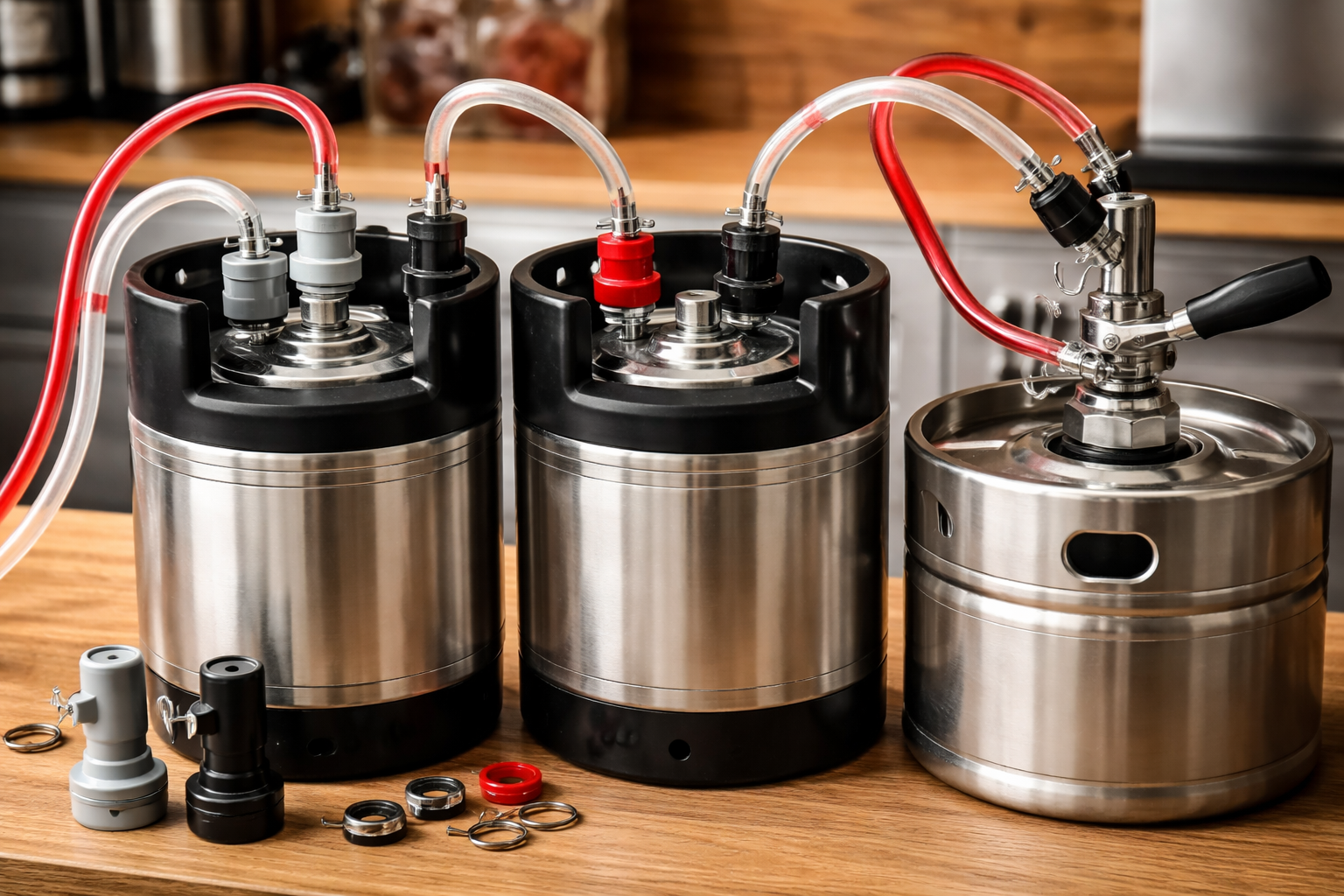
Once you pick a keg body, you are also picking a hardware ecosystem. That sounds dramatic. It isn’t. It is just the part people skip.
Ball lock is the easiest starting point for homebrew. Disconnects are easy to find. Tutorials assume ball lock. Accessories like spunding valves, floating dip tubes, and jumper lines are everywhere in that format. If you’re building a system from scratch, this is the safe bet.
Pin lock still has a case. Many pin-lock kegs are a bit shorter and wider than comparable ball-lock kegs, which can help in odd fridge layouts. If you already own pin-lock disconnects and working kegs, there is no reason to panic and switch. Just stay consistent.
Sankey, sometimes written “Sanke,” belongs in the conversation when commercial kegs are involved. Sankey couplers are standard for commercial draft beer. They are not the easiest everyday path for homebrew filling, cleaning, and tinkering. If you want to pour homebrew and commercial beer from one keezer or kegerator, the clean move is often a mixed setup: Corny for homebrew, Sankey for commercial kegs.
Micro Matic’s draft education material is useful here because it ties keg choice to the full draft system, not just the vessel. Standard direct-draw systems often use 3/16-inch beer line, and the actual pour depends on line resistance, pressure, and temperature all working together. So if you buy a ball-lock keg and the pours are wild, the culprit may be the line and balance, not the keg itself.
Note: First setup and homebrew only? Go ball lock. Already own pin-lock hardware and it fits the fridge better? Stick with pin lock. Pouring both commercial and homebrew? Keep Sankey and Corny in their own lanes.
Mixing formats because the kegs “look close enough” is where costs start sneaking in. Different disconnects, different couplers, adapter pieces you didn’t plan on, and then one annoying trip back to the shop because the gas side is wrong. Been there. Not fun.
Check build quality and cleaning access before you pay
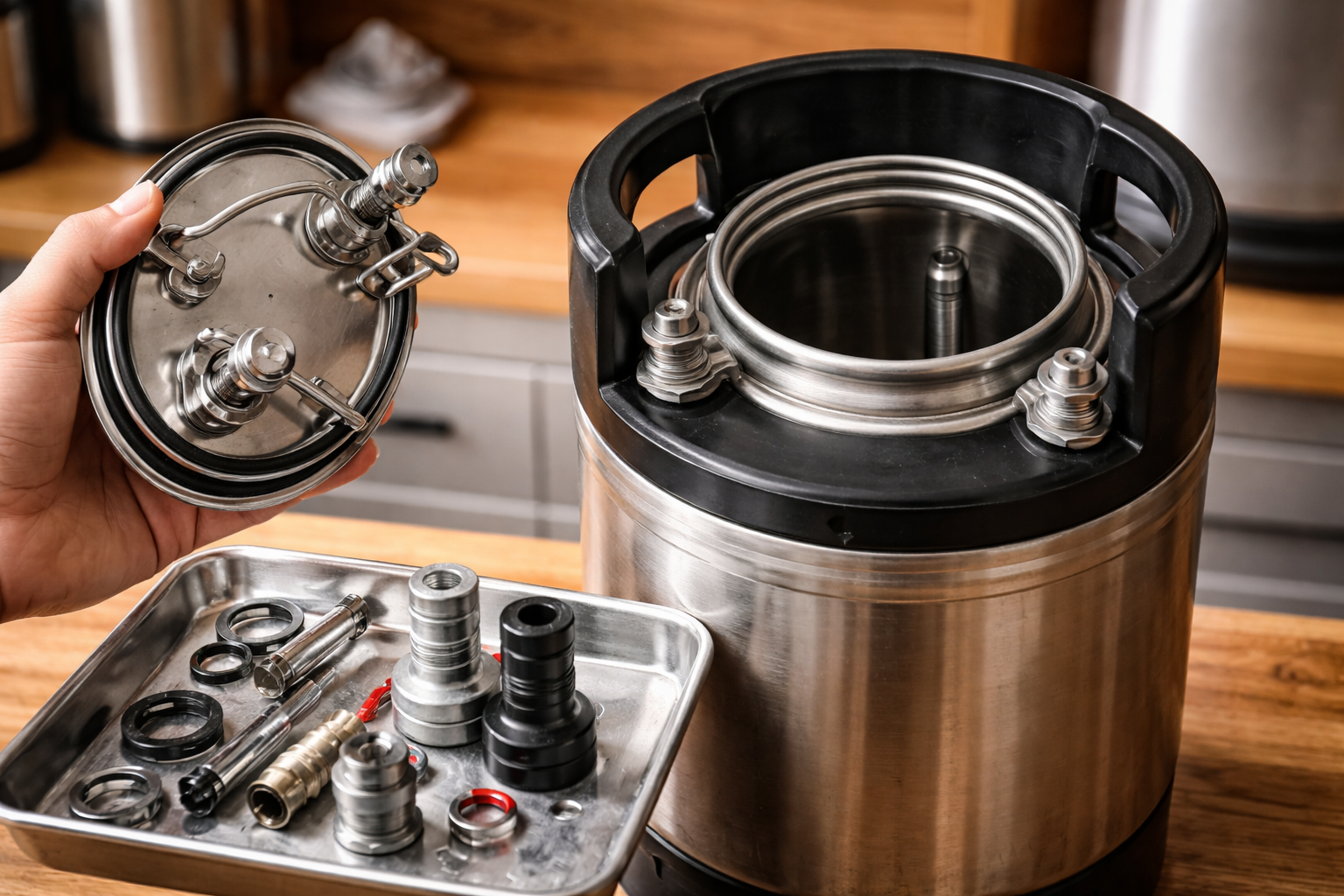
On paper, most stainless kegs look alike. In use, they do not.
A good keg is easy to live with after the novelty wears off. That means the lid seals without a wrestling match. The pressure relief valve is there and easy to trust. The handles are not weirdly sharp or flimsy. The posts come off without turning routine cleaning into a swear-jar event. And the base sits flat.
Kegco’s published specs on its 5-gallon ball-lock keg call out a stainless body, manual pressure relief valve, and a strap handle. Those are not flashy features. They are the stuff that keeps a keg usable year after year.
Cleaning access is where bad buys reveal themselves. A keg with a removable lid sounds easy to clean. That is not enough. You also need enough opening to rinse trub or hop debris, pull dip tubes, replace O-rings, and actually inspect what is happening inside. If the keg is going to see beer only, that is manageable. If you are tempted to ferment under pressure in it, cleaning becomes a bigger deal fast.
Used Cornelius kegs can still be a smart buy. Plenty of homebrewers run used kegs for years with zero drama. But a used keg is only cheap if you treat it like a used keg. That means fresh seals, a close look at the posts, and no rosy assumptions about what the last owner did or didn’t clean.
Five things to check before buying any keg
- Lid design and how easily it seats under pressure
- Condition of O-rings and whether replacements are easy to source
- Post type and whether standard tools fit cleanly
- Handle and base shape for carrying and stacking in a fridge or keezer
- Whether the opening and internal layout make cleaning realistic for the job you want it to do
If you want one vessel to both ferment and serve from, slow down for a second. A standard serving keg can do part of that job, but a purpose-built pressurizable keg fermenter with a wider opening and floating dip tube is often the better pick. That is one of those spots where “can” and “should” part ways.
Pick the best beer kegs for home brewing by scenario
Before the picks, here is the scoring logic I used, because without that a “best” list is just vibes:
- Capacity fit: does the keg actually suit the batch sizes people brew most often?
- Connector compatibility: can you build around it without weird hardware detours?
- Cleaning access: is routine cleaning straightforward, or annoying enough that you will start cutting corners?
- Cabinet fit: will it play nicely in a keezer or fridge with lines and disconnects attached?
- Portability: can you carry, chill, and pour from it without hating the process?
- Long-term value: will it still make sense a year from now?
And one more thing. These are editorial picks based on format, published specs, compatibility, and hands-on experience with these keg styles. I am not pretending I ran them through a lab rig for six months. The useful part here is how each one fits an actual homebrew setup.
Kegco 5 Gallon Ball Lock Keg with Strap Handle
Best for: standard 5-gallon homebrew batches
This is the safe recommendation because it lines up with the way most homebrewers actually brew. A five-gallon batch fills it cleanly, ball-lock fittings keep parts and add-ons easy to find, and the format does not force you into weird compromises later. Kegco’s published specs call out a manual pressure relief valve, a stainless steel body, and a standard Cornelius-style layout. That matters because you are not buying a novelty vessel. You are buying the keg other pieces will expect. In day-to-day use, this kind of keg hits the sweet spot. It is large enough to keep packaging simple, common enough that replacement posts and seals are a non-event, and easy enough to clean that regular use does not turn into a chore. The tradeoff is size. A full five-gallon corny keg is not tiny, and it is not the easiest thing to lift into a cramped keezer. So if your cold space is tight or you brew smaller batches, the full-size format can feel like more keg than you need. But for most people, this is still the one I would buy first because it solves the main problem cleanly and does not paint you into a corner later.
AEB 2.5 Gallon Ball Lock Keg
Best for: split batches, apartment fridges, and smaller households
A good 2.5-gallon ball-lock keg is one of the smartest “advanced beginner” buys in homebrewing. It keeps the same basic hardware logic as a full-size corny keg, so you are not jumping into a strange connector standard, but it gives you much more freedom with space and batch planning. That makes it a strong fit for people who split one wort into two dry-hop variants, brew smaller recipes, or just do not want a full five gallons of the same beer tied up in one keg. AEB is well known in the keg world, and its 2.5-gallon ball-lock format is a clean example of what makes this size useful. You still get the familiar ball-lock workflow. You just get it in a vessel that is easier to fit into short fridges and easier to move around when full. The tradeoff is work. Two small kegs mean more cleaning and more seals. That is not a disaster, but it is more fiddly than one full-size keg. I would not steer a first-time five-gallon brewer toward this as the only keg unless space is the deciding factor. I would steer a split-batch brewer toward it in a heartbeat. This is the keg size that makes experimental brewing feel practical instead of messy.
TMCRAFT 1.3 Gallon Double Walled Mini Keg Growler
Best for: one-gallon batches, test batches, and portable pours
Small kegs are easy to oversell, so this one needs a tighter frame. A 1.3-gallon double-walled mini keg is not the best all-purpose keg for homebrewing. It is the best keg for a narrow set of jobs that matter to a lot of people: portable serving, one-gallon batches, and short-run experiments you do not want to bottle. In that lane, it makes a ton of sense. The smaller volume chills faster, carrying it is far less of a production, and the insulated body helps when you are pouring away from the keezer. TMCRAFT’s 1.3-gallon mini keg is a good example of the format. The stainless build and compact size are the draw. The reason I would buy this type of keg is not because it is “cute” or because it saves space in the abstract. It is because it solves a real problem for small-batch brewers and for anyone who wants to take finished beer somewhere without hauling a picnic cooler and a full corny keg. The tradeoff is obvious: this is a specialist. If you brew five-gallon batches every month, a mini keg becomes an extra piece of gear, not the main event. Buy it for the job it does well, and it is great. Buy it as a substitute for a full-size homebrew kegging setup, and it gets old pretty fast.
Fast call: Most people should buy the 5-gallon ball-lock keg first. The 2.5-gallon keg is the clever second option. The 1.3-gallon mini keg is the fun specialist.
If you are shopping used, a refurbished 5-gallon Cornelius keg with fresh seals can still be the value play. Just do not treat “used” and “ready to run” like they mean the same thing.
Build the support setup that keeps a good keg from pouring badly
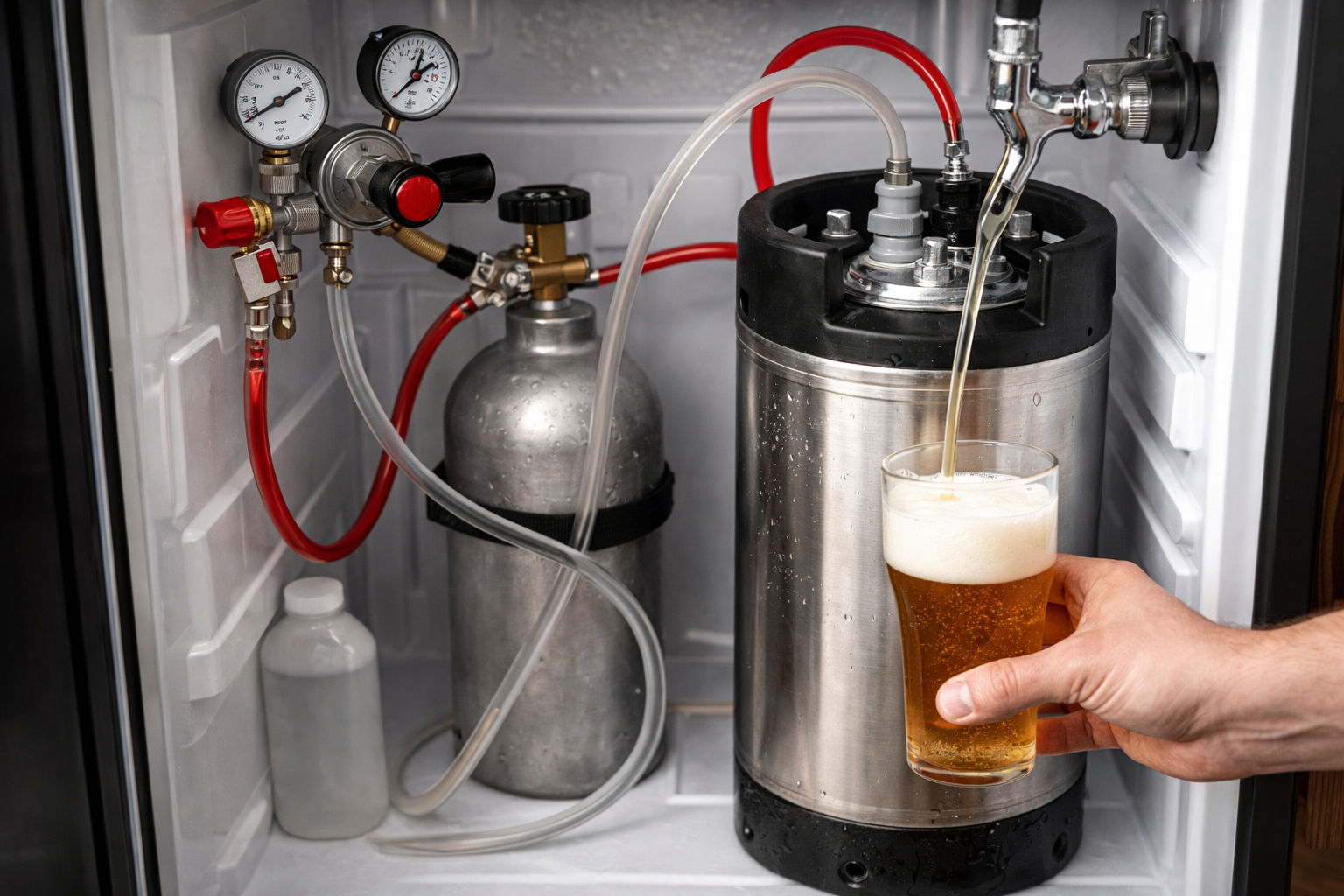
This is where people blame the keg for something the keg did not do.
The Brewers Association’s Draught Beer Quality Manual puts direct-draw beer service at 36 to 38 degrees Fahrenheit, and it notes that a keg arriving at 44 degrees can need about 18 hours to come back down to 38 degrees. So when a brand-new keg foams on the first pour, the smart first move is not “turn the pressure way down.” The smart first move is checking whether the beer is actually cold all the way through.
The same manual calls for draft line cleaning at least every 14 days, and the Cicerone Certified Beer Server syllabus backs that same interval. That matters because dirty lines can make a sound keg look flaky, especially when flavors start slipping or pours turn erratic.
Then there is balance. Micro Matic’s draft guidance lays out the usual home-style direct-draw logic: common 3/16-inch beer line, line resistance in the rough neighborhood of 3 pounds per square inch per foot, and pressure set to match the beer and temperature. Translation: if your beer line is too short, the pour can go wild no matter how good the keg is.
A solid base setup looks like this:
- CO2 tank secured upright
- dual-gauge regulator or equivalent setup you can actually read at a glance
- matching gas and liquid disconnects for the keg type
- beer line long enough to balance the pour
- cold storage that holds temperature, not “sort of cold sometimes”
If the keg will live in a chest freezer conversion, this is a good place to look at this keezer guide. If the plan is an upright fridge conversion, this kegerator guide is the tighter match. Both matter because keg size and keg count only make sense in the context of the box they have to live in.
Foam check, in order
- Check beer temperature inside the kegerator or keezer
- Check line length before touching pressure
- Check pressure against the style and serving temp
- Check for gas leaks and lid seal issues
- Check line cleanliness
A lot of “bad keg” stories are really “short beer line and warm tower” stories.
Avoid the buying mistakes that waste money and beer
The mistakes that hurt are not dramatic. They are small, ordinary, and expensive in a slow drip kind of way.
Buying a mini keg for routine five-gallon packaging.
If your brew calendar is full-size batches, a mini keg is an accessory. It is not your main workhorse.
Forgetting the height of the disconnects.
A keg that fits on paper can miss by an inch once the gas and liquid posts are dressed. That inch matters.
Mixing connector standards without a plan.
Ball lock, pin lock, and Sankey can all live in one draft world, but only if you intend that. Accidental mixed systems are just friction with fittings attached.
Assuming a used keg is ready because it holds pressure today.
Seals age. Posts get beat up. A used keg can be a gem, but only after a basic refresh.
Buying the keg before deciding where it will live.
This one gets people all the time. The keg is exciting, so it gets bought first. The fridge, taps, gas routing, and line length questions show up later with bad timing.
Trying to fix every bad pour by turning pressure down.
That move feels productive. A lot of the time it just papers over a warm keg or an unbalanced line.
There is one more mistake worth naming because it sounds harmless. Party pumps. The Cicerone syllabus notes that hand-pumped beer is exposed to air and should be consumed in less than a day. That is fine for a fast-moving party keg. It is not a real long-term homebrew plan.
And while we are here, keep the CO2 cylinder upright and secured. OSHA’s compressed-gas guidance is clear on that point. It is basic shop sense, but it is worth saying out loud because cylinders have a way of becoming “temporary” floor clutter.
Important: Check the stamped dates on CO2 cylinders and follow local filler rules. Requalification timing varies by cylinder type and testing method, so blanket one-size advice is sloppy here.
End with a fast buyer matrix so the reader knows what to do next
You do not need a twelve-point decision tree once the tradeoffs are clear. You need the right next move.
Fast pick matrix
| Brewer type | Buy this | Skip this if… |
|---|---|---|
| First-time 5-gallon brewer | 5-gallon ball-lock Cornelius keg | cold-space height is already tight |
| Split-batch brewer | 2.5-gallon ball-lock keg | you hate extra cleaning and mostly brew one beer at a time |
| Portable pour setup | 1.3-gallon or 5-liter mini keg | you expect it to replace a normal 5-gallon kegging setup |
| Commercial + homebrew draft user | Corny for homebrew, Sankey for commercial | you want one universal connector for everything |
| Ferment-and-serve tinkerer | purpose-built pressurizable keg fermenter | you just need a straightforward serving keg |
Buy the 5-gallon ball-lock keg if you brew standard homebrew batches and want the least complicated path into kegging.
Buy the 2.5-gallon ball-lock keg if batch splitting, small-space storage, or lower-volume brewing are part of your routine.
Buy the mini keg if you brew small and travel with beer. Not because it looks neat on a shelf.
Skip the urge to get fancy too early. Kegging gets better when the gear disappears into the background. The right keg does that. The wrong one keeps making itself the main character.
Last nudge: if this is the first keg in the house, buy the keg that matches the batch you brew most often, not the batch you might brew someday.
FAQ
Are used Cornelius kegs worth buying for a first setup?
Yes, if the price gap is real and you plan on replacing seals right away. A used Corny keg can be a great value. Just budget for O-rings and a proper cleaning from day one.
Do I need one keg per batch, or should I buy two right away?
One keg is fine to start if the goal is getting off bottles. Two starts making sense when you brew regularly, like keeping one beer on tap while the next one conditions, or when you want to split batches.
Is a party pump okay for serving homebrew?
Only for very short-term service. Once air goes into the keg, beer quality drops fast. For homebrew you want to keep for more than a day, CO2 is the right way to push beer.