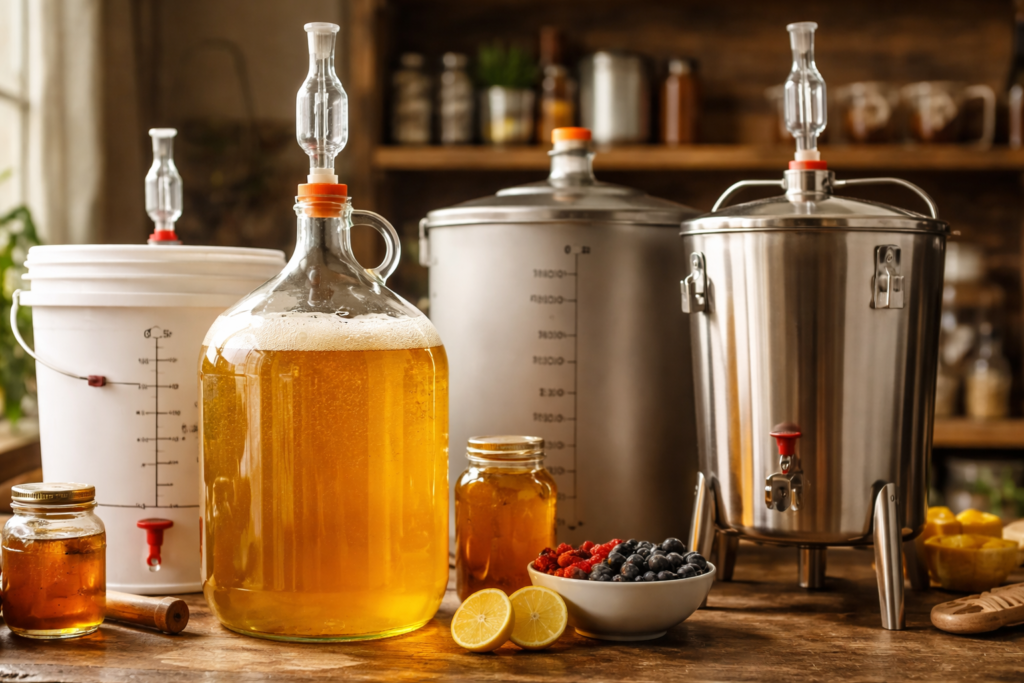
Choosing a fermentation vessel for mead gets weirdly confusing, fast. The stock answer is “bucket for primary, carboy for secondary” and that answer is mostly right. It is also too thin to help when you are deciding between a 1-gallon traditional mead, a fruit-heavy melomel, or a batch you plan to age for months.
If you want the shortest useful answer, here it is: use a roomy food-grade bucket or wide-mouth fermenter for active primary, then move the mead into a vessel that matches the real post-racking volume as closely as you can. The American Homebrewers Association’s mead guide says a bucket with an airlock works for primary and says to keep as little headspace as possible in secondary. That is the right backbone.
The catch is that primary and secondary are solving different problems. Early on, you need room, access, and easy cleanup. Later on, you need a calmer vessel with less air above the mead. I learned that one the sticky way after trying a narrow-neck jug for a nutrient-fed batch that had no business being in such a cramped home.
Fast pick cheat sheet
| Your batch | Best primary vessel | Best secondary vessel |
|---|---|---|
| 1 gallon traditional mead | 1.4- to 2-gallon bucket or wide-mouth PET fermenter | Jug or carboy sized close to true post-racking volume |
| 1 gallon fruit mead | 2-gallon wide-mouth bucket or fermenter | Tight-fit secondary plus a small backup vessel |
| 3 gallons | 4- to 5-gallon bucket or wide-mouth fermenter | 3-gallon carboy, PET fermenter, or similar tight-fill vessel |
| 5 gallons | 6.5- to 8-gallon bucket, Speidel-style fermenter, or stainless bucket | 5-gallon carboy, PET, or stainless vessel matched to the real fill |
Ask two questions before you buy: Will I open this vessel often, and will I age in it for a while?
- How primary and secondary call for different vessels
- What size makes sense for 1-, 3-, and 5-gallon mead
- When plastic, PET, glass, and stainless each make sense
- Which mistakes lead to extra oxygen, blowoffs, or awful cleanup
- Which real product styles are worth a look and which ones are just shiny distractions
Here’s the short answer, use a roomy primary and a tighter secondary
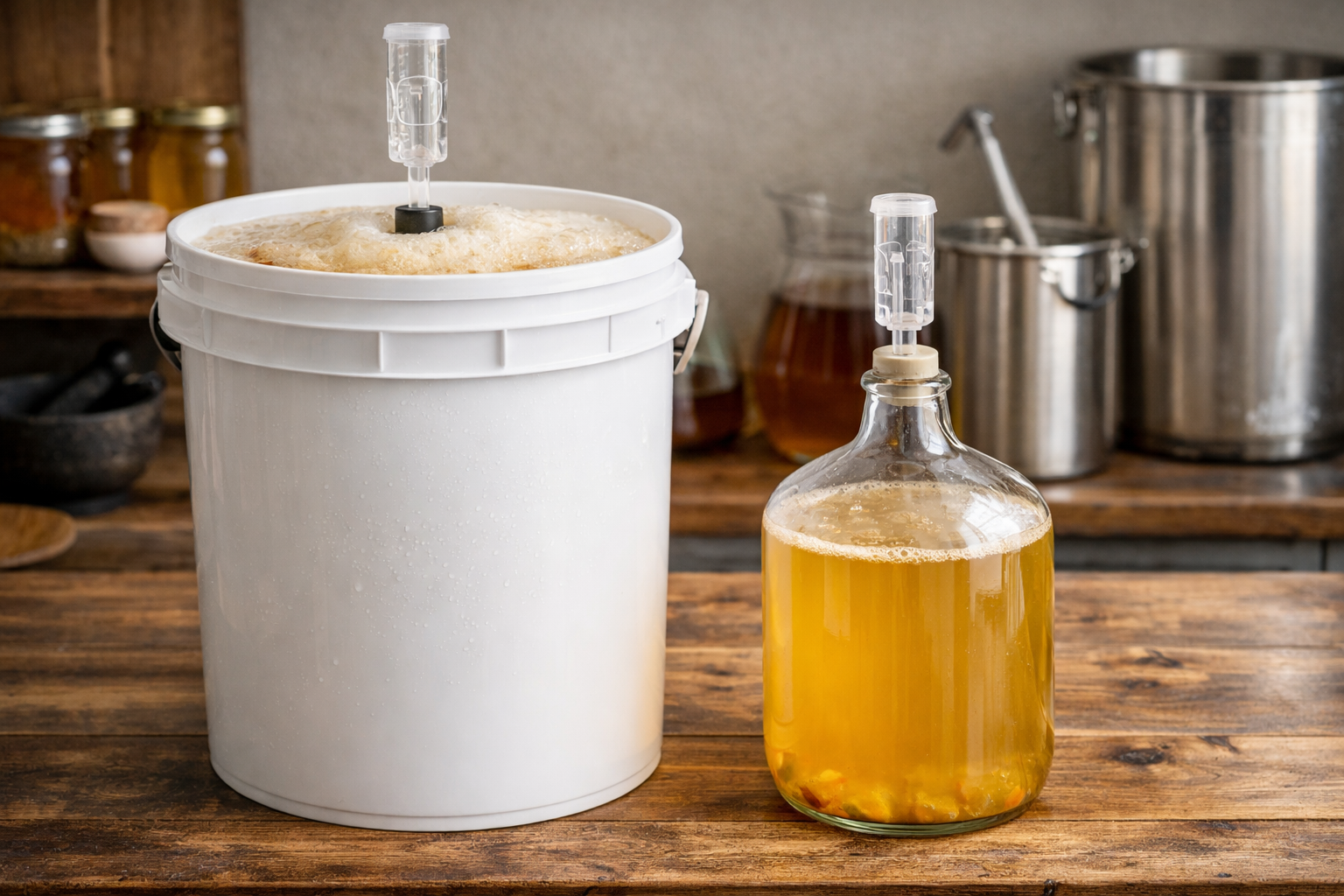
For most home mead makers, the right setup is a pair of vessels. Use a roomy primary fermenter that gives you space for foam, nutrient additions, degassing, and fruit if the recipe needs it. Then rack into a tighter secondary fermenter for clearing and bulk aging.
That usually means a bucket, a wide-mouth plastic fermenter or a stainless bucket for primary. Secondary is where carboys, PET fermenters, demijohns, and stainless vessels earn their keep because you can fill them closer to the shoulder and leave less oxygen above the mead.
For a plain 1-gallon batch, a 1.4- to 2-gallon primary is a safe lane. For 5 gallons, a 6.5- to 8-gallon primary is the usual lane. Fruit pushes you toward more room, not less.
Remember: The best vessel is often a pair, not one hero object.
- If the batch will be opened, stirred, fed, or checked often, go roomy and easy to access.
- If the batch will sit and clear for weeks, go tighter and calmer.
- If fruit is involved, go wider than your first instinct.
Match the vessel to the stage, and most of the confusion disappears
Primary fermentation is the messy part. Secondary is the quiet part. Treating them like the same job is where buyers get lost.
Honey must is not always easy on yeast. A review in Molecules notes that honey must is low in nitrogen and minerals, and that mead fermentation can run from weeks to months. That review is here. In practice, that means mead makers often open the fermenter during early fermentation for nutrient additions, gentle degassing, or fruit management. A wide-mouth bucket handles that with far less fuss than a narrow-neck jug.
Once primary slows, the job changes. You are no longer chasing access. You are trying to leave the mead alone in a vessel that fits the volume well. That is why a roomy bucket can be perfect on day three and a lousy place to age on day thirty.
The stage-first rule is simple:
- If you expect to touch the must often, wide mouth wins.
- If you expect to leave it alone for a while, tighter fill wins.
- If you plan to bulk age for months, matching volume matters more than material prestige.
A fuller process walk-through sits in how to brew honey mead, but vessel choice gets a lot easier once you split the job into active fermentation and quiet aging.
Size the fermenter so you get room when it matters and less oxygen when it matters
This is the part many guides blur. They tell you to leave headspace, but they do not tell you how that shifts by batch size and recipe.
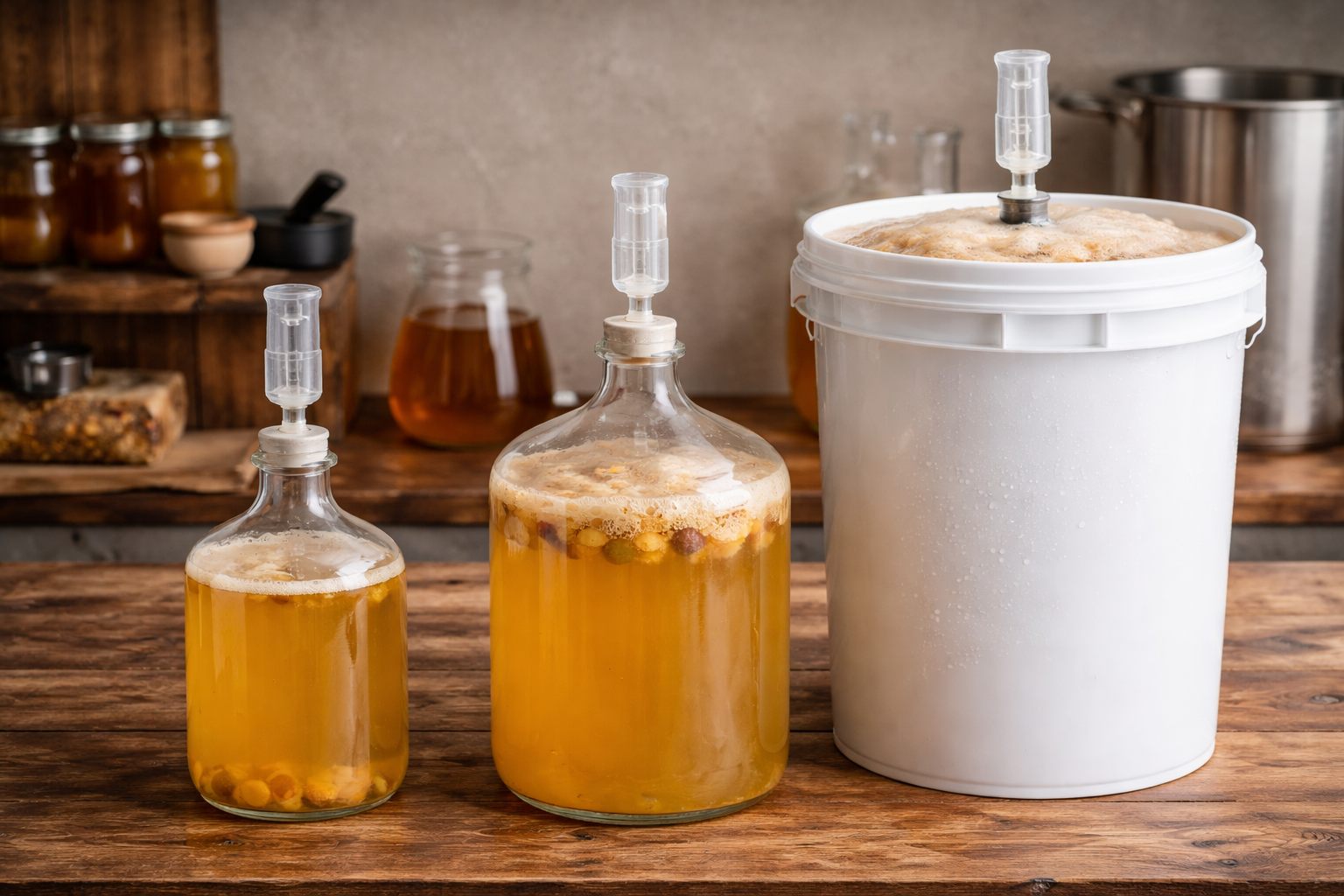
For a 1-gallon batch, a true 1-gallon jug is usually too tight for primary. It can work for a calm traditional must, though it leaves little margin for foam, nutrients, or fruit. A 1.4- to 2-gallon primary is kinder. Then rack to a 1-gallon secondary if the post-racking volume still fits.
For a 3-gallon batch, a 4- to 5-gallon primary is comfortable. For 5 gallons, the familiar 6.5-gallon bucket is popular for a reason. It gives a traditional mead enough breathing room without turning the setup into overkill. Fruit-heavy batches often need more freeboard than that.
Nominal size vs usable size
A vessel’s label tells you what it can hold. It does not tell you how pleasant that vessel will be once fermentation wakes up. A 1-gallon jug is not a roomy 1-gallon primary. A 5-gallon fermenter is not a roomy 5-gallon melomel primary.
The easiest sizing rules are these:
- Traditional 1 gallon: 1.4 to 2 gallons for primary, then a tight-fill 1-gallon secondary.
- Fruit-heavy 1 gallon: stay closer to 2 gallons for primary.
- Traditional 5 gallons: 6.5 gallons is often fine.
- Fruit-heavy 5 gallons: step up in room, or hold back volume and add fruit with care.
One quietly useful trick is keeping a small spare jug around for leftovers after racking. That little backup vessel can save a batch from lazy secondary headspace.
Choose material by tradeoff, not by myth
Material matters, though fit and cleanability matter more.
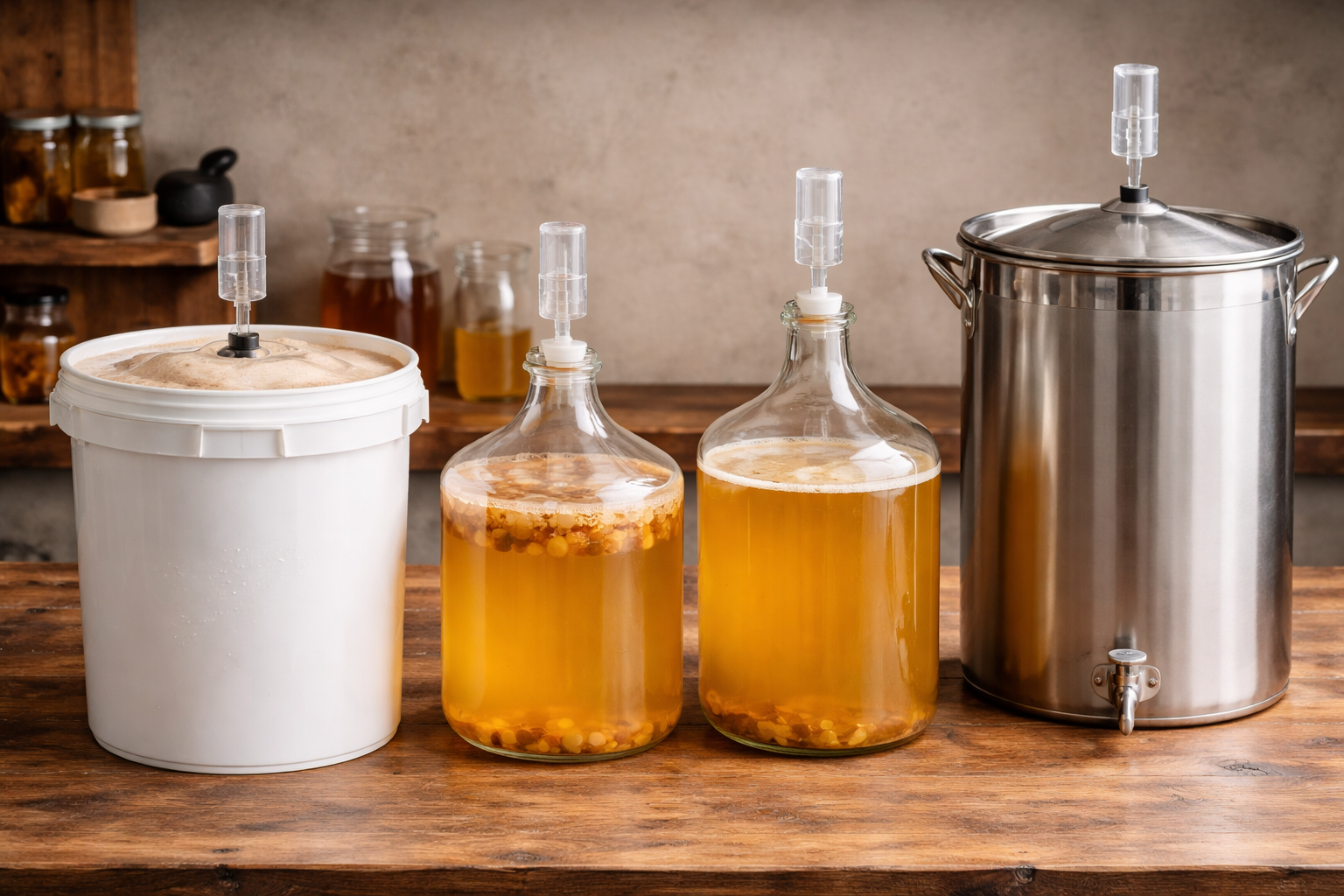
Food-grade buckets are cheap, roomy and easy to work in. For primary mead, that is a strong combo. You can add nutrients, stir, and clean them without turning the job into bottle-brush theater. Their weak spot is long aging with too much headspace, not the fact that they are plastic.
PET fermenters hit a sweet spot for many mead makers. They are lighter than glass, and many wide-mouth designs are easy to clean and easy to use with fruit. Just do not gouge them up with rough tools.
Glass carboys and demijohns still have a place. They resist scratching and they give you a clear view of the mead. But a full glass vessel is a handling risk, and narrow necks are a pain once fruit or heavy sediment shows up.
Stainless makes sense when you know this hobby is sticking. It is durable, easy to live with and nice to clean when the design is straightforward. Penn State Extension’s sanitation guidance draws a clean line between cleaning and sanitizing, which is a good reminder that the easier a vessel is to clean well, the less nonsense it invites later. That review is worth bookmarking.
Note: “Glass is pure” is not a buying framework. If the vessel is awkward to clean, stressful to move, and wrong for the batch size, the material halo does not save it.
- Bucket: best for active primary, fruit, nutrients, and value.
- PET wide-mouth fermenter: best for lighter handling and easier access.
- Glass carboy or demijohn: best for quiet secondary if you are comfortable with the handling risk.
- Stainless vessel: best for repeat batches and buyers who care more about durability than visibility.
Pick the vessel style that fits your recipe, not just your budget
Named examples help here because “bucket” and “carboy” still hide a lot of design choices.
For a first traditional mead, a simple bucket or a wide-mouth PET fermenter is still the easiest on-ramp. A Fermonster is a good example of the wide-mouth PET style. It is light, the opening is forgiving and it is far easier to clean after a nutrient-fed primary than a narrow-neck jug.
A Big Mouth Bubbler sits in the same family. The win is access. You can get fruit in and out without wrestling the vessel, and cleanup is a lot less annoying than cleaning a carboy shoulder through a small neck. For melomels, cysers, or anything pulpy, that design change matters.
For bigger recurring batches, a Speidel-style plastic fermenter is a strong middle ground. The opening is large, the shape is practical in tight spaces and it feels sturdier than a plain bucket without asking stainless money.
If you already know you will keep making mead, an Ss Brewtech Brew Bucket is the kind of stainless upgrade that makes sense in use, not just in photos. It is easier on the nerves than glass once the batch is heavy, and it is pleasant to clean. A FastFerment-style conical can be handy for sediment-heavy batches, but most buyers do not need a conical to make better mead.
How I judged these examples
By usable headspace, mouth width, cleanup effort, transfer hassle, and aging fit. Not by hype, and not by how serious the vessel looks on a shelf.
If the recipe is simple and the budget is modest, simple wins. If the recipe is messy, wide mouth wins. If the plan is years of repeat batches, stainless starts to pay you back.
Temperature control still matters as much as the vessel, so readers dialing in a colder room or a brew chamber can also compare best heating pad for fermentation or 5 best temp controllers for brewing.
Spend where it changes the batch, skip the shiny upgrades that barely help
A lot of gear buying goes sideways because people pay for prestige comfort, not workflow comfort.
The highest-value upgrade for many mead makers is a vessel that fits the batch and does not make primary work annoying. That is why a cheap 2-gallon bucket can beat a fancy 1-gallon glass jug for a beginner batch. The bucket fits the job better.
When money is limited, use this filter:
- Headspace fit: Can it handle active primary, and can I later age in something tighter?
- Mouth width: Can I clean it well and handle fruit without a fight?
- Transfer ease: Does the shape help or fight me when racking?
- Handling risk: Will I dread moving it when full?
- Long-term fit: Am I buying for one batch, or the next twenty?
A cheap bucket plus a properly sized secondary often beats one premium vessel that tries to do everything. If stainless is already on the shortlist, best stainless steel fermenters for wine is a good adjacent read because it frames stainless around headspace and fit.
Pro tip: Fix vessel fit or temperature stability before chasing boutique hardware.
Set up the vessel so fermentation stays clean instead of turning messy fast
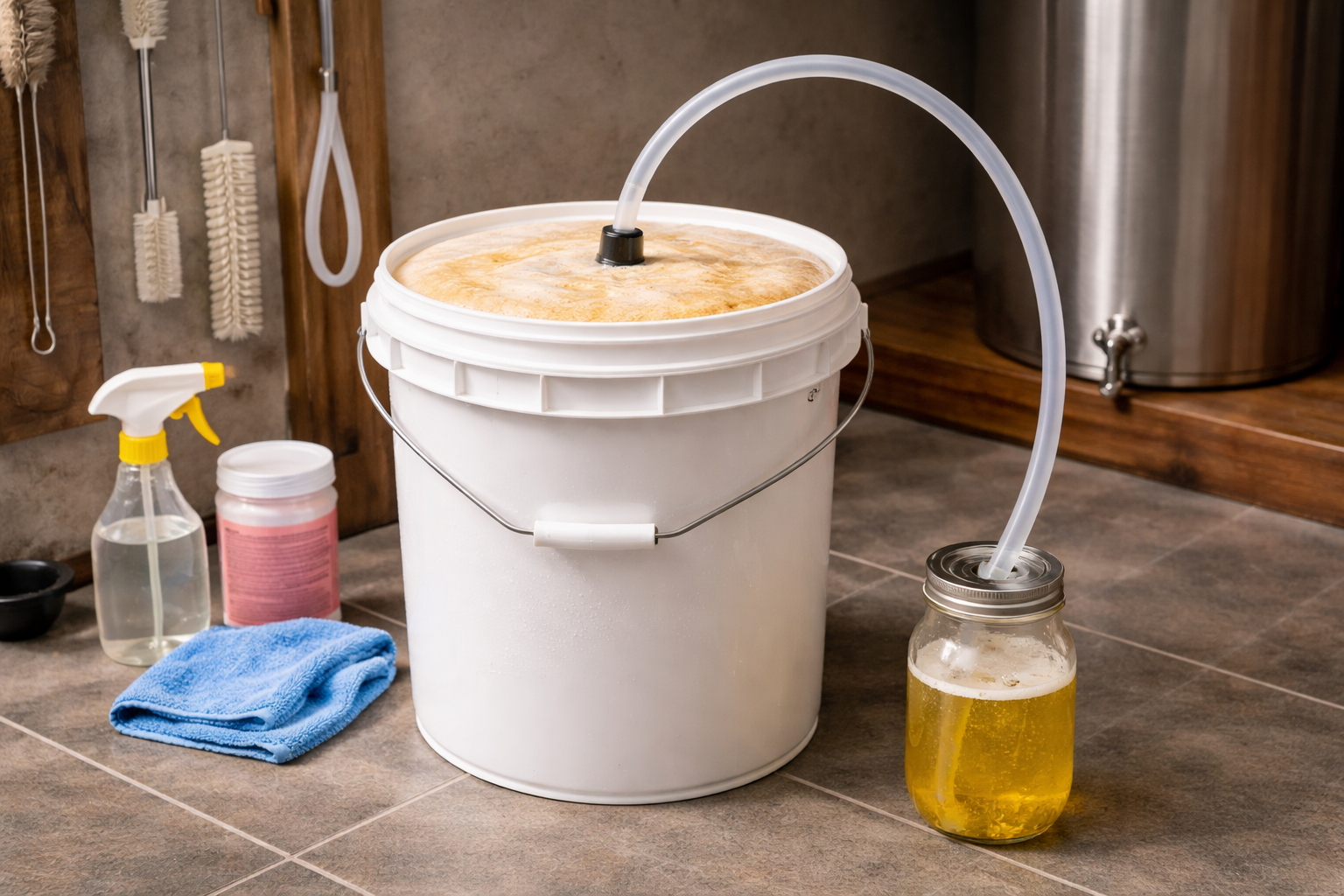
The vessel choice is only half the job. Setup does the rest.
Clean first, then sanitize. That sounds almost too obvious to write down, but dried honey, fruit residue, and grime around a gasket or spigot are classic troublemakers. If the vessel is hard to clean, it is already a worse vessel.
Then check the dull little parts. Does the lid seat well? Does the bung fit the neck? Is the airlock actually stable? The AHA guide places mead fermentation in the 60 to 70 F range, with the cooler end often preferred, so setup and temperature control work together from day one.
For active batches, leave yourself an escape route. A blowoff tube is cheap insurance when fruit, nutrients or a lively yeast could push foam higher than expected. I would much rather spend two minutes on a blowoff setup than scrape sticky must off a wall later.
Placement matters too. Put the fermenter where you can leave it alone. A full glass carboy should not be something you shuffle around with wet hands.
The other setup issue is oxygen during transfer. The American Homebrewers Association has a good piece on fermenter oxidation during racking. It explains why headspace starts rich in carbon dioxide, why transfers can still pull air in, and why very low pressure matters if someone is trying a gas-assisted transfer. It also warns that even 2 psi is dangerous with a 6-gallon glass carboy. That warning is worth reading.
Important
If you are new, skip pressure tricks with glass. A calm gravity transfer is boring in the best way.
Avoid the vessel mistakes that waste honey, invite oxygen, or make cleanup miserable
Most vessel mistakes are not chemistry mistakes. They are fit mistakes.
Using a too-small primary. A true 1-gallon jug for a 1-gallon primary looks tidy and feels cramped once the ferment wakes up. The fix is easy: oversize primary a bit, then tighten up in secondary.
Treating airlock bubbles like a hydrometer. They are not the same thing. The AHA mead guide says slowing bubbles do not prove fermentation has ended. Check gravity before you rack or bottle.
Leaving too much headspace in secondary. This is where a good mead can go dull. Keep a smaller vessel ready if the batch racks short.
Choosing narrow-neck glass for fruit mead. Fruit is fun at recipe time and less fun when it cakes the shoulder of a carboy you now have to clean through a neck.
Buying by prestige. Plenty of people spend stainless money to solve a problem that a better-sized bucket and a spare jug would have fixed.
Scrubbing plastic like cast iron. Food-grade plastic and PET need a lighter touch. You are cleaning them, not punishing them.
Forgetting the exit path. A vessel that ferments fine but is awful to move, lift, or rack from is still the wrong vessel for the space you have.
Remember: Buy for the awkward moments. Opening. Cleaning. Racking. Carrying. That is where the right fermenter proves itself.
For most readers, the grounded answer still wins: use a roomy primary, use a tighter secondary, pick width when the recipe is messy, and only pay extra for stainless or conicals when those features have a real job.
FAQ
Can I ferment 1 gallon of mead in a 1-gallon carboy?
You can, but it is a tight fit for primary and a poor fit for many fruit or nutrient-active batches. A slightly larger primary fermenter gives you safer room for foam, stirring, and additions. Then you can rack into the 1-gallon carboy for secondary if the finished volume still fits.
Do I really need a separate secondary vessel for mead?
Not every batch needs a dramatic multi-vessel routine, but many meads benefit from moving out of a roomy primary into a tighter vessel for clearing and aging. The more extra headspace you would leave in primary after fermentation slows, the more helpful that second vessel becomes.
Is stainless worth it for mead?
Yes, if you make mead often and want durability, easier cleaning, and less handling stress than glass. No, if you are still sorting out batch size and workflow. In that case, better fit and better process usually beat more metal.