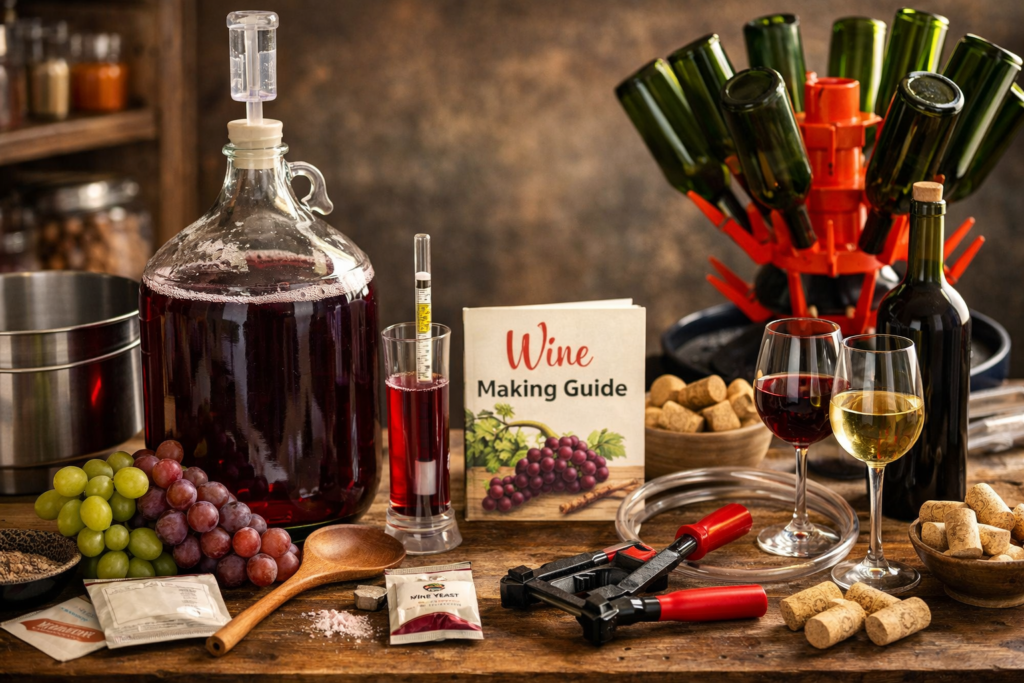
You usually spot the problem about 10 minutes into shopping for a beginner winemaking kit. One box says “complete.” Another says “starter.” A third shows a gallon jug, a siphon, a bag of ingredients, and a smiling person who looks far calmer than any first-time fermenter has a right to be. Then you notice the fine print. Some kits are equipment only. Some are ingredient only. Some make five bottles. Some make thirty. And that is where a lot of first batches go sideways before the yeast even wakes up.
For most people, the best wine making kit for beginners is a true all-in-one 1-gallon or small-batch kit with clear instructions, sanitizer in the box, and a manageable bottle count. That answer is right, but it is still incomplete. A beginner with a tiny apartment kitchen needs a different setup from a hobby-minded buyer who already knows they like fermentation projects. A person who wants quick white wine is not shopping for the same thing as someone dreaming about a big red that tastes “finished” in a month (it won’t).
The real tension is simple: the easiest kit to start is not always the most flexible, and the biggest kit is rarely the smartest first buy.
So this guide does the sorting for you.
- Which type of wine making starter kit actually fits a first-timer
- How batch size changes your cost, cleanup, and odds of success
- What a complete kit should include and what can wait
- The best beginner wine making kits by scenario, not by hype
- The mistakes that make new winemakers think the kit failed
Best Suggestions Table (All products have been personally reviewed & tested by us! Click the buttons below to jump to the reviews.)
| Product | Best for | Action |
|---|---|---|
| Craft a Brew Winemaking Kit | Most beginners who want the least intimidating start | Check PriceReview |
| Master Vintner Small Batch Wine Making Starter Kit | Small-batch learners who want a step up in control | Check PriceReview |
| Master Vintner Wine Making Starter Kit | Beginners who already know they want a larger setup | Check PriceReview |
| Vintner’s Best One Gallon Wine Making Equipment Kit | People who want equipment first and recipe freedom later | Check PriceReview |
| Brooklyn Brew Shop Sparkling Wine Making Kit | Gift buyers and bubbly-curious beginners | Check PriceReview |
Tip: Clicking the “Review” button will move you to the review so you can decide fast.
Start Here
- If you want the easiest first batch, start with a 1-gallon all-in-one home wine making kit.
- If you want to use your own fruit, skip ingredient-only kits and get the equipment first.
- If thirty bottles at once sounds fun, a 6-gallon setup makes sense. If that sounds like a chore, it doesn’t.
- If the kit does not list sanitizer, bottles, or whether ingredients are included, stop and check before buying.
The best wine making kit for beginners is the one that keeps your first batch simple
Wine Enthusiast’s beginner roundup leaned toward compact, approachable kits like Craft a Brew, and that lines up with what actually helps first-timers finish a batch with less fuss. Retailer starter pages tell the same story in a quieter way: the more moving parts a beginner has to source and juggle, the more likely they are to stall, skip a step, or wind up with a half-open box of gear sitting on the counter for three weeks. That is why the safest recommendation is a small, complete kit before anything else.
I have seen this play out in the most boring, human way possible. The person who buys the “serious” 6-gallon setup because it looked like better value often hits the wall around bottling day. Thirty bottles need cleaning. Space gets tight. The siphon feels fiddly. The whole thing turns from “fun weekend hobby” into “why did I make myself a part-time job?” The person who starts with a one-gallon beginner winemaking kit usually has a cleaner first experience. Less mess. Less risk. Less regret.
Quick read: A beginner does better with a kit that reduces hidden decisions. A kit that asks you to buy extra tools, guess at missing ingredients, or wrangle too many bottles is not beginner-friendly just because the box says so.
That does not mean every small kit is right for every person. A fruit-wine tinkerer needs flexibility. A buyer who already brews beer or makes kombucha can handle more gear. A gift shopper may care more about presentation and quick payoff than long-term expandability. Still, for the broad middle of the market, a complete 1-gallon or small-batch setup is the cleanest entry point.
Small really is doing a lot of work here. It lowers the cost of mistakes, cuts cleanup, and gives you room to learn what racking, airlocks, sanitizer, and fermentation timing feel like before you scale up.
Use this 5-point filter before you look at a single product
A good buying decision starts before the product list. Once you know the five things that matter, the category gets much easier to read.
Check completeness so you do not buy surprises
A true complete wine making kit should spell out whether it includes the fermenter, airlock, tubing, siphon or racking cane, stopper, sanitizer, and ingredients. If the page says “starter kit” but quietly expects you to add your own ingredient kit, bottles, or sanitizer, that is not a beginner set in any useful sense. It is a partial kit dressed up as an easy answer.
Check beginner friction so the process stays pleasant
Some kits are technically simple but annoying in practice. Thin instructions, poor labeling, or vague setup diagrams create beginner friction fast. You are looking for a kit that tells you what to do next without sending you down three side searches.
Check batch size because bottle count changes everything
The Alcohol and Tobacco Tax and Trade Bureau notes that many winemaking kits yield about 30 bottles. That is normal for larger kits. It is not beginner-light. One gallon lands around five standard bottles. That difference changes your space, your cleanup, and how painful a mistake feels.
Check process visibility so you are not guessing
Virginia Tech’s home winemaking guide points to hydrometer readings as a way to track fermentation progress rather than relying on guesswork. A kit does not have to include a hydrometer to be good, but the process should not force you to trust the calendar alone. “Wait 10 days” is not the same thing as knowing the wine is ready for the next step.
Check cleanup and storage burden before you click buy
This part gets skipped all the time. Five bottles are easy. Thirty bottles take planning. One small fermenter can live on a counter corner or closet shelf. A larger setup starts taking over a room in sneaky ways.
How we tested them
We judged each beginner wine kit against the same five-point filter above: completeness, beginner friction, batch size, process visibility, and cleanup burden. That means we did not just look at glossy product photos. We reviewed what the box includes, how much the user still has to source, how many bottles the kit pushes onto a first-timer, and whether the setup helps you track fermentation with any clarity. For the small-batch kits, the benchmark was simple: can a new user get from unboxing to a sane first fermentation without feeling lost? For larger kits, the question changed: does the bigger yield justify the extra work for a first batch, or does it pile on chores too early? That is the lens used in every review below.
Most common buying mistake: People compare product photos and price, then miss the real difference between an all-in-one kit, an equipment kit, and an ingredient kit.
Pick your lane: all-in-one kit, equipment kit, or ingredient kit
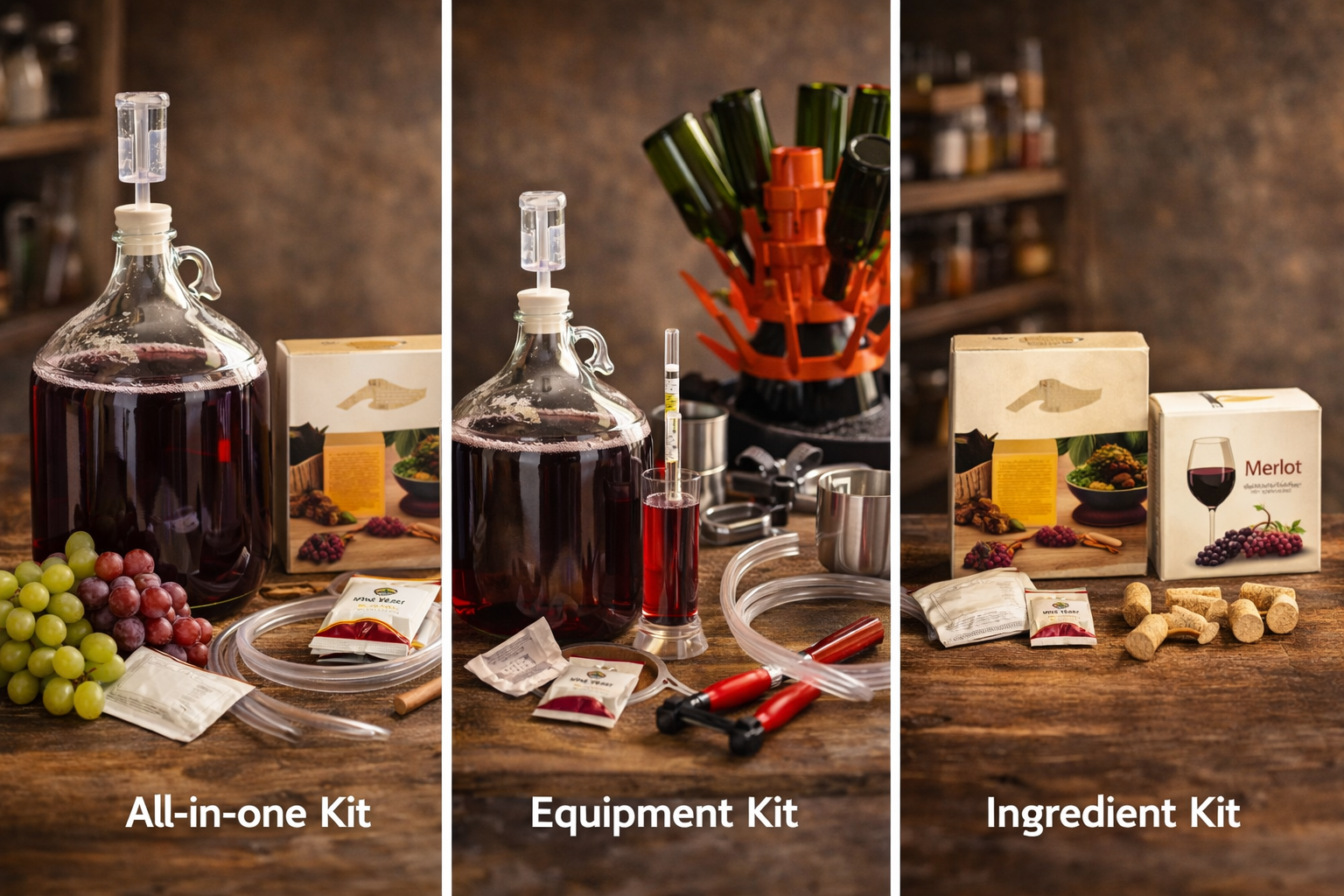
The category gets a lot less confusing once you split it into three lanes.
All-in-one kits bundle the basic equipment and the ingredients needed for a batch. This is the cleanest path for most first-timers. You open the box, sanitize, mix, ferment, rack, bottle, and learn the rhythm of the process. The tradeoff is less flexibility. You are buying the experience and the recipe together.
Equipment kits give you the hardware but not always the ingredient pack. This is a better fit for the person who wants to use fresh fruit, pick a separate wine ingredient kit, or build a setup they can keep using across recipes. The tradeoff is obvious. You now have to source the rest, and beginners often miss one annoying little item that stalls the project.
Ingredient kits are for people who already own the gear. They can be excellent, but they are a bad first purchase if you still need a fermenter, siphon, airlock, or sanitizer. Buying an ingredient-only kit as a first timer is a bit like buying cake mix when you still do not own a pan. Nothing is wrong with the mix. You just are not at the right stage for it.
If this, check that
- If you want the least confusion, choose an all-in-one kit.
- If you want to ferment your own fruit, choose an equipment kit.
- If you already have a fermenter, airlock, siphon, and sanitizer, then an ingredient kit starts to make sense.
The best lane is the one with the fewest invisible requirements. For most beginners, that is still the all-in-one path.
Choose the right batch size before you choose the brand
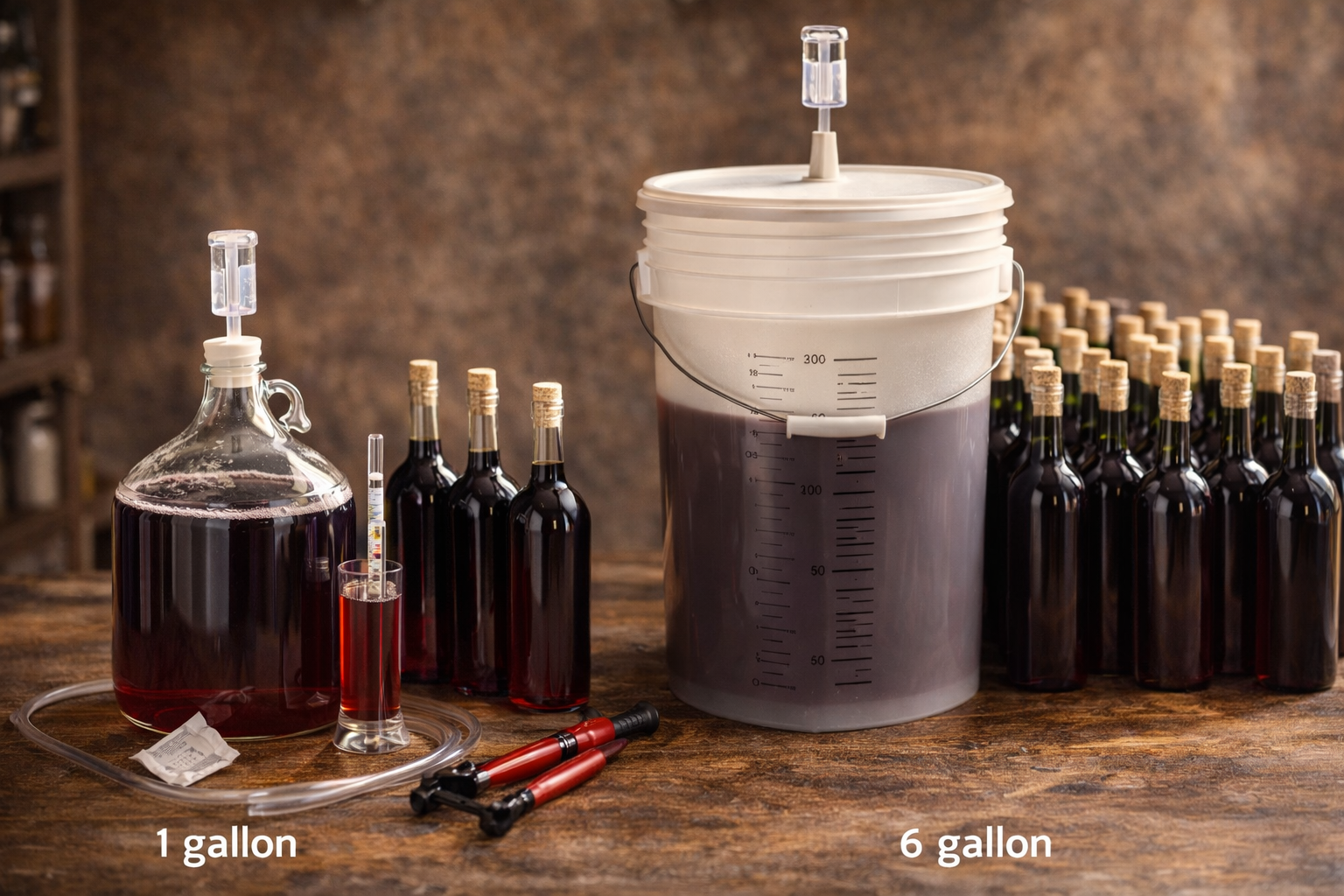
Batch size is not just a number. It is the whole mood of the project.
A 1-gallon wine making starter kit usually lands at about five bottles. That is enough wine to feel rewarding, but not so much that bottling becomes a Sunday-eating chore. It also softens the sting if the batch is only okay. You learned. You got a few bottles. You move on smarter.
A 6-gallon setup usually pushes you toward roughly 30 bottles. That can be great value per bottle. It can also turn one little beginner mistake into thirty reminders of it. This is why larger kits make more sense for the buyer who already knows they enjoy hands-on fermentation and has the space to prove it.
| Batch size | Best for | What changes |
|---|---|---|
| 1 gallon | Absolute beginners, apartments, gift buyers | About 5 bottles, less cleanup, lower failure cost |
| Small batch | Learners who want a little more control | Still manageable, usually more room to grow |
| 6 gallons | Committed hobby starters with space | Around 30 bottles, more gear, more bottling work |
If you want the easiest first run, buy small. If you already know you are the kind of person who labels jars, keeps spare tubing in a drawer, and does not blink at cleaning thirty bottles, a bigger setup stops looking excessive. Everyone else should resist the “better value” trap. Cheap per bottle is not the same as easy for a first batch.
Short version: Beginners should pick the batch size that makes success easier, not the batch size that looks most “serious.”
What a beginner kit should actually include, and what can wait
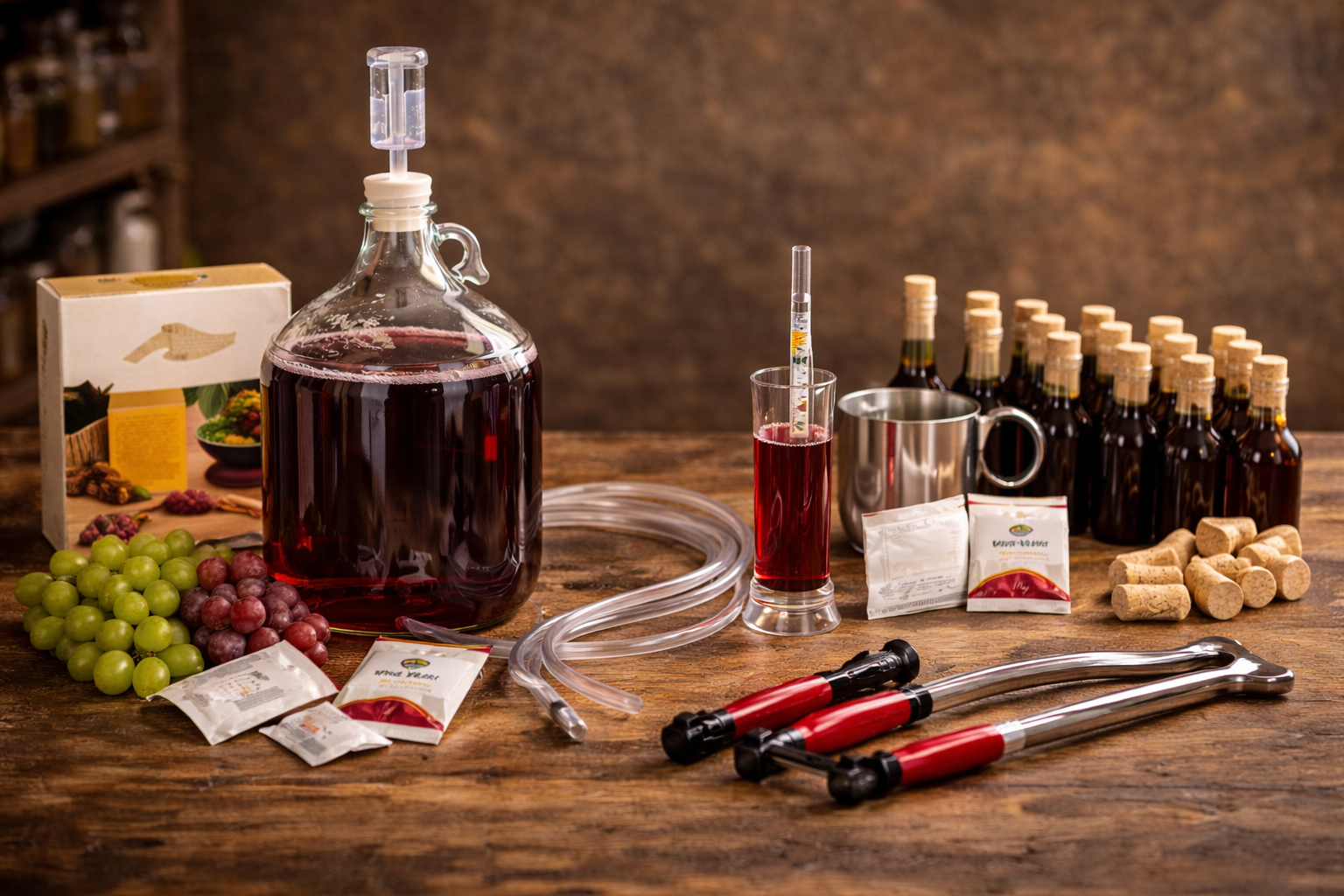
A complete beginner wine making kit does not need every nice-to-have accessory under the sun. It does need the core items that keep the first batch clean and workable.
What should be in the box: a fermenter or carboy, airlock, stopper, tubing, a siphon or racking cane, sanitizer, and instructions that are not written like a treasure hunt. If it is an all-in-one kit, it should also include the ingredient pack or make crystal clear that you need to buy one separately.
What is nice to have: a hydrometer, bottle filler, corker, and extra sanitizer. A hydrometer matters more than people think. Virginia Tech’s home guide uses it to check starting sugar and track progress. You do not need to become a numbers nerd about it. You just need a cleaner way to know what is going on than “I think the bubbling slowed down.”
What can wait: premium additives, extra fining toys, fancy testing gear, and all the “upgrade” clutter that makes beginner boxes look advanced. First batch success comes from clean gear, sound instructions, and patience. Not gadgets.
What to check first
- Does the kit include sanitizer?
- Does it include ingredients or only equipment?
- How many bottles will this batch need?
- Does the setup include a hydrometer or at least leave room for one?
- Are bottles and closures included, or will you need them later?
One more thing. New buyers often assume bottles are included because the product shots look so complete. They often aren’t. That is not fatal, but it is annoying when bottling day arrives and the project hits a silly speed bump.
These are the best beginner wine making kits by type, not by hype
These picks use the same filter each time: completeness, beginner friction, batch size, process visibility, and cleanup burden. The goal is not to crown one magic box. It is to match the right kit to the right first-timer.
Craft a Brew Winemaking Kit
Best for: most beginners who want the least intimidating first batch.
Craft a Brew gets mentioned in beginner-focused coverage for a reason. It keeps the project compact, approachable, and visually easy to decode. That matters. New winemakers do not need a giant pile of gear. They need a box that makes the sequence obvious. This kit fits that brief well because it behaves like a guided starter experience rather than a loose collection of tools.
On the five-point filter, its biggest wins are low beginner friction and manageable cleanup. A one-gallon style batch does not bury you in bottles. The smaller footprint also makes it easier to keep the fermenter somewhere stable instead of relocating it every few hours because it is “in the way” (a classic rookie move, by the way). For a first batch, this is exactly the sort of reduction in hassle that nudges a person over the finish line.
The tradeoff is ceiling, not floor. This is not the pick for someone who already knows they want a bigger, reusable home wine making kit with more room to branch into separate ingredient kits and expanded gear. It is also less compelling for the person who wants to make wine from their own fruit right away. Still, for the person who wants a clean first shot at a simple wine recipe, the kit makes a lot of sense. I like it because it respects the beginner’s attention span. It does not try to impress you with quantity. It tries to get you to batch one without drama, and that is the right job.
Master Vintner Small Batch Wine Making Starter Kit
Best for: small-batch learners who want a little more control without jumping straight to a full-size setup.
This one sits in a smart middle lane. It is still beginner-friendly, but it feels less gift-kit and more hobby-kit. That distinction matters if you already know you enjoy hands-on projects and want something you can grow into. The kit suits people who want the comfort of a starter package, but do not want to outgrow it in a weekend.
Its strength is balance. You keep the lower-risk appeal of small-batch winemaking, yet you get a setup that feels more reusable and less novelty-driven. That can be useful once you get past the first-timer nerves and start caring about repeat batches, process habits, and ingredient experimentation. It is also a better fit than the simplest all-in-one kits for the person who wants to learn the equipment side of the hobby without dealing with a 30-bottle bottling session on day one.
The tradeoff is that it asks a little more from you mentally. Not in a scary way. Just in the sense that it feels like a real starter system, not a hand-holding weekend project. If your main goal is “give me the easiest path to a drinkable first batch,” Craft a Brew still edges it out. If your goal is “teach me the hobby in a form I won’t outgrow fast,” this kit gets very appealing. I would steer the tidy, cautious beginner to the simpler kit. I would steer the curious tinkerer here.
Master Vintner Wine Making Starter Kit
Best for: beginners who already know they want a larger setup and do not mind the work that comes with it.
There is a certain buyer who should skip the one-gallon phase. Not many, but they exist. Usually it is the person who has done beer brewing, mead, cider, or another fermentation hobby and already knows that cleaning, siphoning, and bottling do not scare them off. For that person, a fuller Master Vintner-style starter kit can be the better buy because it avoids the “buy small now, re-buy bigger later” cycle.
Its biggest advantage is scale. A larger setup can make each batch feel more worthwhile, and once you know what you are doing, the per-bottle math starts looking much better. It also gives you more room to develop routine with standard winemaking hardware. The catch is simple and not small: the batch size raises the burden on every step. More volume. More bottles. More cleanup. More chances for a tiny lapse to become an annoying, visible problem in bulk.
That is why I would not call this the best wine making kit for beginners in general. I would call it the best one for a narrow kind of beginner: committed, patient, already a little fermentation-brained, and not short on storage space. If you are reading this because you want your very first homemade bottle to feel fun rather than like a logistics drill, this is probably too much. If you already know small kits would feel toy-like within a week, then it starts to fit.
Vintner’s Best One Gallon Wine Making Equipment Kit
Best for: people who want equipment first and more freedom over ingredients later.
This is the one to look at if your brain keeps drifting toward fresh fruit, custom recipes, or separate wine ingredient kits. An equipment-first kit like this can be a smart opening move because it gives you the core hardware in a manageable one-gallon format, then leaves the ingredient side open. That flexibility is the point.
It does, though, create a sharper decision boundary. A true beginner who wants one click and one box may find the open-endedness more annoying than empowering. You have to know what comes next. You have to source the ingredients cleanly. You need to confirm that your chosen path works with the gear on hand. None of that is difficult once you know the category a bit. On day one, it can feel like buying a starter puzzle with three pieces missing.
Where it shines is cost control and recipe freedom for the person who likes to choose. If the thought of making wine from grape concentrate one month and a fruit wine the next sounds like fun, the equipment-only route has real appeal. It also works for the beginner who has access to fruit and wants the process to feel more hands-on from the start. I would skip it for the first-timer who wants calm, tidy instruction. I would pick it for the beginner who already knows the recipe side matters as much as the gear.
Brooklyn Brew Shop Sparkling Wine Making Kit
Best for: gift buyers, bubbly-curious beginners, and people who want a narrower novelty-first experience.
Most beginner wine kit guides stick to still wine. Fair enough. Sparkling wine adds its own texture to the process, and that makes it more niche. Brooklyn Brew Shop’s sparkling wine kit earns a spot because not every beginner is chasing Cabernet, Chardonnay, or a classic table wine starter experience. Some want something more playful, more specific, and more giftable.
The appeal here is obvious. It is distinctive. It feels less like entering a lifelong hobby and more like trying one focused project with a clear personality. That can be great for a curious buyer who does not want to drown in options. It also tends to make more sense as a gift than a plain equipment set, because the use case is instantly legible.
The tradeoff is that it is a narrower lane. If your real goal is to learn the basics of general home winemaking and then branch into reds, whites, and separate ingredient kits, a standard beginner kit gives you a better base. Sparkling can be fun, but it is not the broadest first lesson. I like this pick for the buyer who knows they want bubbly and for the person buying a clever gift. I would not make it the default recommendation for a beginner who is still figuring out what kind of wine they even want to make.
Fast kit, good wine, easy process: pick two and understand the tradeoff
Marketing copy loves fast timelines. A lot of beginner kits sound like they go from box to bottle at a cheerful clip. That is not false, exactly. It is just incomplete.
WineMaker has made this point cleanly for years: a kit can be ready to bottle in a few weeks and still improve a lot with more time in bottle, with reds needing more patience than many beginners expect. That lines up with how first batches feel in real life. A young white or lighter-style wine can be surprisingly pleasant fairly soon. A fuller red at week four often tastes unfinished, sharp around the edges, or just kind of awkward.
So use a simpler rule.
If you want the easiest fast payoff, lean toward a white, a lighter style, or a small-batch kit built for approachability. If your dream is a richer red with more depth, buy with your future patience in mind. The kit is not failing you. The wine is just young.
Still in doubt? Here’s a fast guideline to save you some time.
- Want wine sooner: choose lighter styles and smaller kits.
- Want richer red character: expect more aging, even if bottling happens quickly.
- Want the least frustration: judge the kit by process clarity, not by the shortest calendar promise.
This is one of those sneaky beginner traps. People think “30-day kit” means “best-drinking bottle on day 30.” Not really. Think of bottling as a checkpoint, not the finish line.
Avoid the beginner mistakes that make people think the kit failed
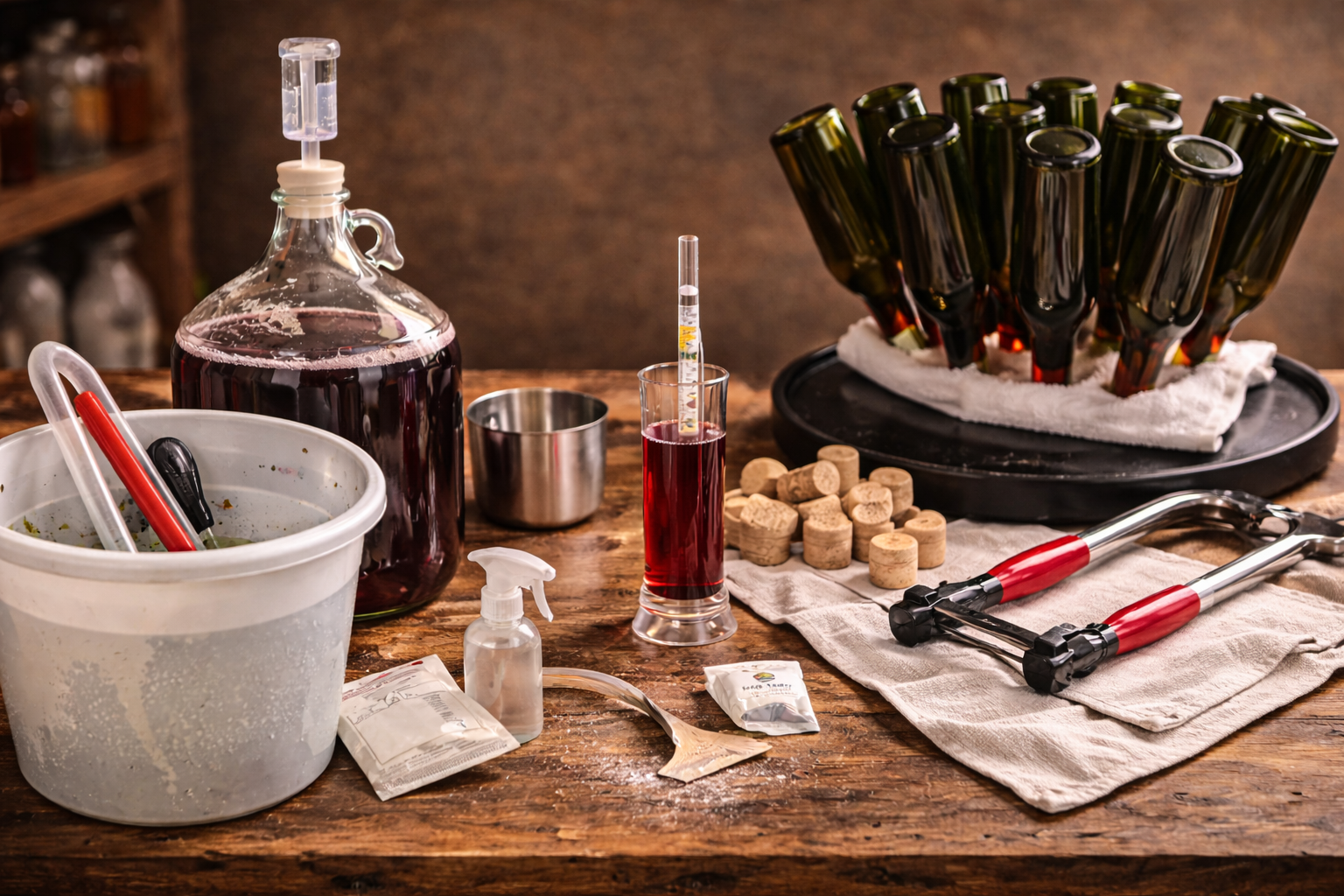
Most first-batch problems are not dramatic disasters. They are small, preventable errors that pile up.
Sanitize like it matters because it does
Penn State Extension’s review of winery cleaning and sanitizing draws a clear line between cleaning and sanitizing. The first removes soil. The second reduces microbes. Beginners often blur the two, give everything a quick rinse, and assume that is close enough. It isn’t. A wine kit does not need sterile-lab treatment, but it does need clean, properly sanitized gear. Skip that and you invite spoilage for no good reason.
Use the process, not just the calendar
Virginia Tech’s guide uses hydrometer readings to check sugar and follow fermentation. That is a better signal than “it has been ten days.” Bubbling can slow for a few reasons. Airlocks can mislead. A stable reading tells a cleaner story. If your kit lacks a hydrometer, that is not a deal-breaker, but it is one reason a kit feels less beginner-proof.
Count the bottles before bottling day
This one sounds silly until it happens. People do not realize how many bottles a larger batch needs, so bottling day turns into a scramble. If the kit makes around 30 bottles, you need those bottles clean, ready, and not scavenged at the last second from whatever happened to be in the recycling bin.
Stop moving the fermenter around
Beginners fuss. They want to check, peek, shift, and re-position. The fermenter likes calm more than attention. Pick a stable spot and leave it alone unless the step calls for action.
Do not confuse youth with failure
A lot of first red wines taste rough because they are young, not ruined. That can be frustrating. It can also save you from dumping a batch that just needed more time.
Safety note: The Alcohol and Tobacco Tax and Trade Bureau allows home wine production for personal or family use within set limits. This is about making wine, not distilling spirits. Different rules apply there.
The broad pattern is simple. Beginners usually do fine when they keep the batch small, the gear clean, and their hands off the fermenter unless a step asks for action.
Match the kit to your situation in 30 seconds
If you have made it this far and still feel split between two types of kit, use this.
| Your situation | Best match | Why |
|---|---|---|
| You want the easiest first batch | Craft a Brew Winemaking Kit | Low friction, small scale, less clutter |
| You want to learn more of the hobby without going huge | Master Vintner Small Batch Wine Making Starter Kit | More reusable feel, still beginner-manageable |
| You know you want a larger setup now | Master Vintner Wine Making Starter Kit | More volume, more hardware, better for committed hobby starts |
| You want freedom to use your own fruit or separate recipes | Vintner’s Best One Gallon Wine Making Equipment Kit | Equipment first, more recipe flexibility |
| You want a giftable bubbly-focused project | Brooklyn Brew Shop Sparkling Wine Making Kit | Distinct, compact, narrower but fun |
If you want the safest overall answer, buy the compact all-in-one kit and learn the rhythm of winemaking in a five-bottle world first. That one decision solves more beginner pain than any fancy add-on ever will.
If you want a final buying checklist, keep it brutally short:
- Batch size
- Sanitizer included or not
- Ingredients included or not
- Hydrometer included or room to add one
- How many bottles you will need
- Whether the timeline is to bottling or to good drinking
That is really it. Strip away the clutter and the category gets much easier to read.
FAQ
What is the easiest wine making kit for absolute beginners?
A compact all-in-one 1-gallon kit is the easiest starting point. It cuts down the number of bottles, the amount of cleanup, and the odds that you buy a partial kit by mistake.
Do wine making kits include everything you need?
Not always. Some include equipment and ingredients. Some include only the hardware. Some expect you to add bottles, closures, or sanitizer later. Check the contents list line by line before buying.
Do I need a hydrometer for my first wine kit?
You can finish a first batch without one, but a hydrometer makes the process easier to read. It gives you a better signal of fermentation progress than guessing from the calendar or from airlock bubbles alone.