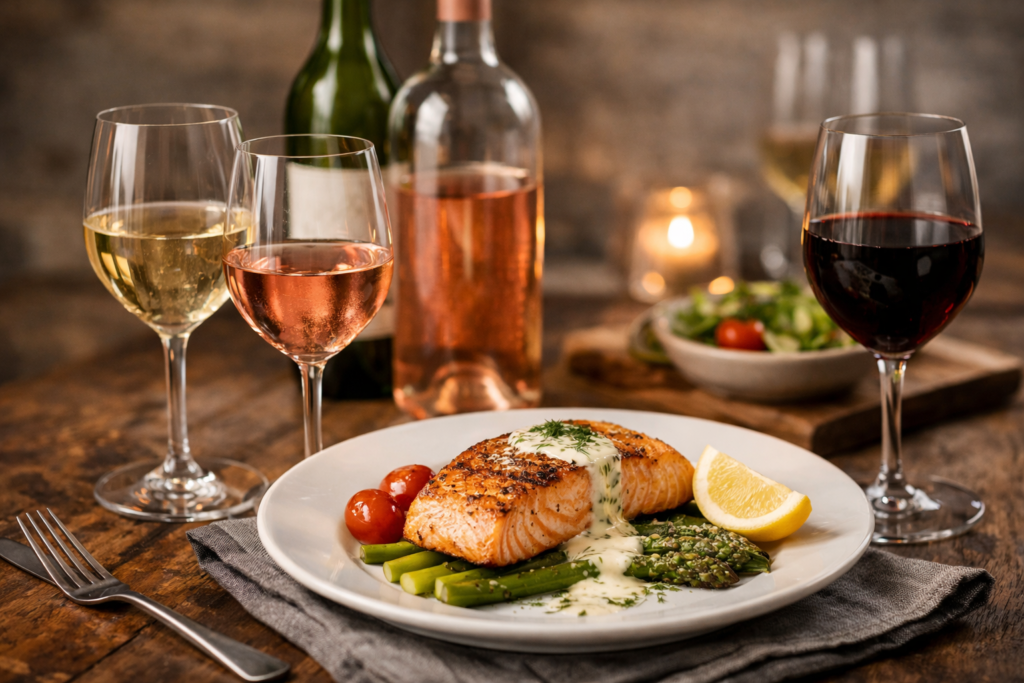
You can serve salmon with white wine, red wine, rosé, or sparkling and still get it very right.
That sounds annoyingly broad, I know. I learned this the same way a lot of people do: by opening a bottle that should have worked on paper, then watching it fall apart once the salmon hit the plate. A crisp white that sang with lemon-herb salmon tasted too thin next to a buttery cream sauce. A lovely red turned sharp and awkward beside a sticky glaze. Same fish. Different dish. Very different result.
So the best wine with salmon is not one bottle. It is a short list of safe families, then one simple filter: match the wine to the loudest part of the plate. Usually that means the sauce, the cooking method, or the smoke level. Not the fish alone.
That is the whole tension here. Generic pairing advice gives you grapes. Useful pairing advice tells you how to choose between them in under a minute.
- Which wine styles are the safest bets for most salmon dishes
- How to pick between Pinot Noir, Chardonnay, Sauvignon Blanc, rosé, and sparkling
- What changes when the salmon is grilled, creamy, smoked, spicy, or raw
- Which pairings usually go wrong, and why
- A quick routine you can reuse without memorizing wine jargon
Still in doubt? Here’s a fast guideline to save you some time.
| If the salmon is… | Start with… | Why it works |
|---|---|---|
| Grilled or roasted | Pinot Noir | Light tannin and savory notes handle char without bullying the fish |
| Lemony or herby | Sauvignon Blanc | Bright acidity keeps the pairing fresh and clean |
| Buttery or creamy | Chardonnay | More body fits the richer texture |
| Smoked | Dry sparkling wine | High acidity and bubbles cut through fat and smoke |
| Sweet-spicy or glazed | Off-dry Riesling | A touch of sweetness cools heat and handles glaze better than a dry red |
The best wine with salmon, in one clear answer
If you want the short answer, start with Pinot Noir, Chardonnay, Sauvignon Blanc, dry rosé, or dry sparkling wine. Those are the most reliable families for salmon wine pairing because salmon has more fat and texture than delicate white fish, so it can carry more body and a wider range of styles.
That broad answer is real, but it is incomplete.
A grilled fillet with char and herbs does not behave like smoked salmon on a bagel, and neither behaves like miso-glazed salmon or salmon in cream sauce. Once you see that, the rest gets easier fast.
Quick pick: If you do not know the exact recipe, bring a fresh Pinot Noir, a dry rosé, or a crisp sparkling wine. Those give you the most room for error.
Over time, the pairings I end up repeating most at dinner are pretty consistent. Pinot Noir with grilled salmon. Sauvignon Blanc with lemon and herbs. Chardonnay with richer sauces. Sparkling with smoked salmon. Riesling when sweetness or spice enters the picture. The pattern is boring in the best way. It works.
Read the dish first and the bottle second
The Wine & Spirit Education Trust teaches food pairing through a handful of variables that actually matter at the table: acidity, sweetness, bitterness, salt, umami, chilli heat, fat, and flavor intensity. That sounds like wine-school language, but it turns into very practical advice once you translate it.
Fat likes freshness. Smoke likes contrast. Chilli heat usually behaves better with lower alcohol and a little softness. Umami can make tannic reds feel harder. Acid in the food needs enough acid in the wine or the bottle goes flat.
That is why “what wine goes with salmon” is the wrong first question. Better one: what is happening around the salmon?
Use this quick read:
- If the dish tastes bright, lemony, or green, lean toward high-acid whites like Sauvignon Blanc, Pinot Gris, or Grüner Veltliner.
- If the dish tastes buttery, creamy, or silky, step up to a rounder white, usually Chardonnay.
- If there is char, cedar, mushrooms, or roasted notes, a low-tannin red like Pinot Noir makes more sense.
- If there is smoke and salt, dry sparkling wine is often the cleanest answer.
- If the glaze tastes sweet or the dish runs spicy, move toward off-dry Riesling instead of dry reds or high-alcohol whites.
Note: Taste the sauce before you commit. One forkful will tell you more than the recipe name.
The U.S. Food and Drug Administration’s advice on fish also helps frame why salmon is so pairing-friendly. Salmon is a richer, oilier fish, so it does not disappear next to a wine with some structure. That is why red wine with salmon can work. Just not every red.
Pick your safest bottle fast when you need a no-regret choice
Sometimes you are not pairing for a tasting menu. You are standing in a wine shop at 6:20, someone texted “we’re making salmon,” and that is the whole brief. In that case, speed matters more than theory.
Here is the no-regret order I would use.
- Best all-around red: Pinot Noir
- Best all-around white: Chardonnay, but not the heaviest, toastiest bottle on the shelf
- Best bright white: Sauvignon Blanc
- Best flexible crowd pick: dry rosé
- Best celebration wildcard: dry sparkling wine
Pinot Noir is the safest red because it usually brings light tannin, decent acidity, and enough savory depth for grilled or roasted salmon without turning the meal into a wrestling match. Chardonnay works because salmon has enough richness to meet it halfway, especially with butter, cream, or a pan sauce. Sauvignon Blanc shines with baked salmon, herb crusts, and lemon-forward plates. Dry rosé is the quiet overachiever at mixed tables. It keeps the freshness of white wine and a little of the shape of red.
If I had no clue how the salmon was cooked, I would skip the oak-heavy Chardonnay and the bold red, then buy either a dry rosé or a fresh Pinot Noir. Those are the bottles I have watched disappear without anyone overthinking them.
Pro tip: For salmon, “fresh” and “restrained” beat “big” and “impressive” most of the time.
Match the wine to the salmon style, not to a rule you heard once
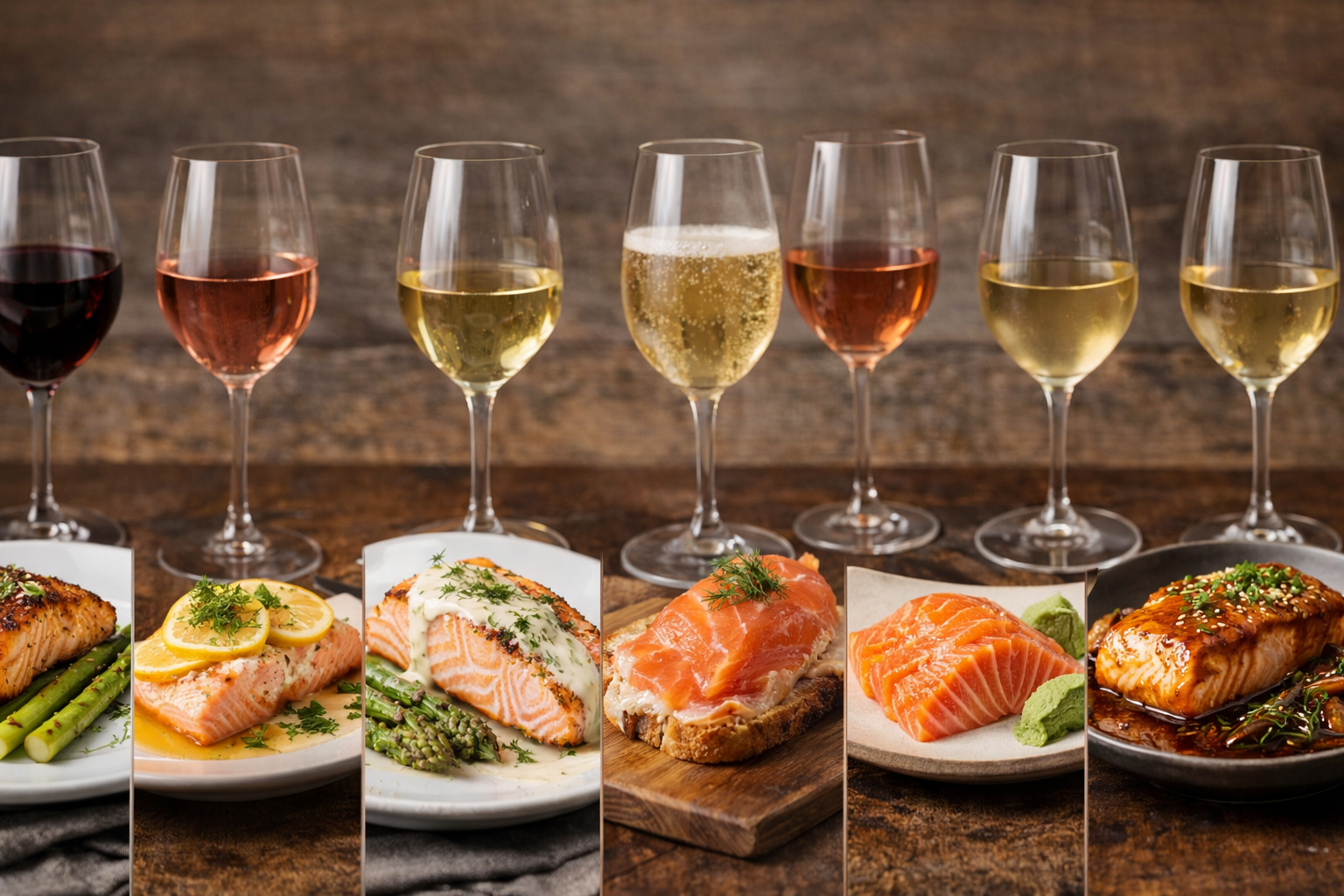
This is where the guesswork drops away. Think in scenarios.
Salmon style to wine pairing cheat sheet
| Salmon style | Best first choice | Backup pick | Why it works |
|---|---|---|---|
| Grilled or pan-seared | Pinot Noir | Dry rosé | Char and savory notes like a red with low tannin |
| Baked with lemon or herbs | Sauvignon Blanc | Pinot Gris | Acid and citrusy lift keep the plate lively |
| Buttery or creamy | Chardonnay | Dry sparkling wine | More body fits the sauce, bubbles keep it from feeling heavy |
| Smoked salmon | Dry sparkling wine | Dry rosé | Salt, smoke, and fat need acidity and cut |
| Raw salmon or sushi | Dry Riesling | Grüner Veltliner | Clean, zippy wines suit the delicate texture |
| Sweet-spicy or Asian-style salmon | Off-dry Riesling | Gewürztraminer | A touch of sweetness handles heat and glaze better than bone-dry wine |
A few of these deserve extra context.
Grilled salmon wine pairing: Pinot Noir earns its spot because smoke and char add a savory edge. That gives the wine something to grab onto. A lean red with bright fruit and low tannin feels natural here. A hefty Cabernet usually feels like too much shoe for the foot.
Baked salmon wine pairing: The cleaner the preparation, the more useful acidity becomes. Lemon, dill, parsley, capers, and olive oil point you toward Sauvignon Blanc or another crisp white.
Smoked salmon wine pairing: Dry sparkling wine is hard to beat. Acidity and bubbles scrub the palate after each bite, which matters with smoke, salt, and fat in the same mouthful.
Salmon sushi wine pairing: Keep things clean. Dry Riesling and Grüner Veltliner usually feel sharper and more composed than heavy oak or aggressive tannin.
Use these tradeoffs to choose between Pinot Noir, Chardonnay, and Sauvignon Blanc
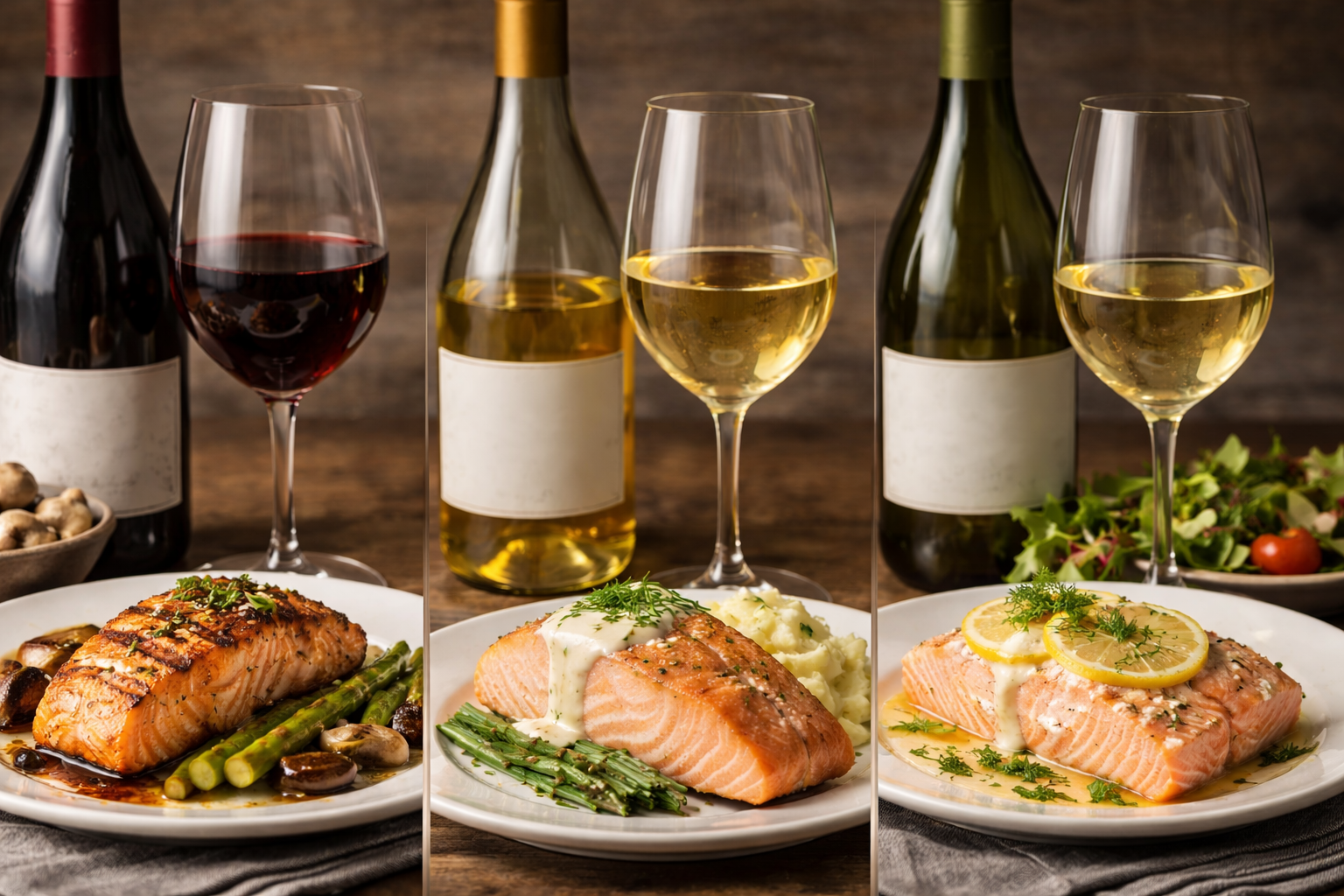
These three do most of the heavy lifting because they cover the main salmon personalities: savory, rich, and bright.
Choose Pinot Noir when the salmon feels savory.
Think grilled salmon, cedar plank, roasted salmon, mushroom sauces, soy glazes that are not too sweet, and plates with earthy side dishes. Pinot Noir works because it brings enough red-fruit lift and enough earth without the harsher tannin that clashes with fish. This is also why “best red wine with salmon” so often lands on Pinot Noir. Not because it is magical. Because its structure is usually gentle.
Choose Chardonnay when the salmon feels rich.
Butter-poached salmon, cream sauce, beurre blanc, richer roast preparations, or salmon served with silky potato dishes all lean this way. A moderate Chardonnay can feel seamless with that texture. But style matters a lot. If the bottle is loaded with oak and butter notes, then the dish should have enough richness to meet it. Put that same wine next to plain baked salmon and it can feel loud, almost clumsy.
Choose Sauvignon Blanc when the salmon feels bright.
Lemon, herbs, vinaigrettes, fresh greens, spring vegetables, and cleaner baked salmon dishes call for tension and lift. Sauvignon Blanc does that job beautifully. It is one of the best white wine with salmon options when the plate tastes fresh rather than lush.
What to check first: Ask whether the plate tastes more savory, more rich, or more bright. That one call narrows the bottle faster than the grape name alone.
Where people get tripped up is buying by grape and ignoring style. A light, lively Chardonnay and a heavily oaked Chardonnay are not interchangeable. Same with Pinot Noir. One bottle can be lifted and food-friendly. Another can be jammy, woody, and too warm for salmon. Same grape. Very different result.
Handle tricky salmon dishes without overthinking it
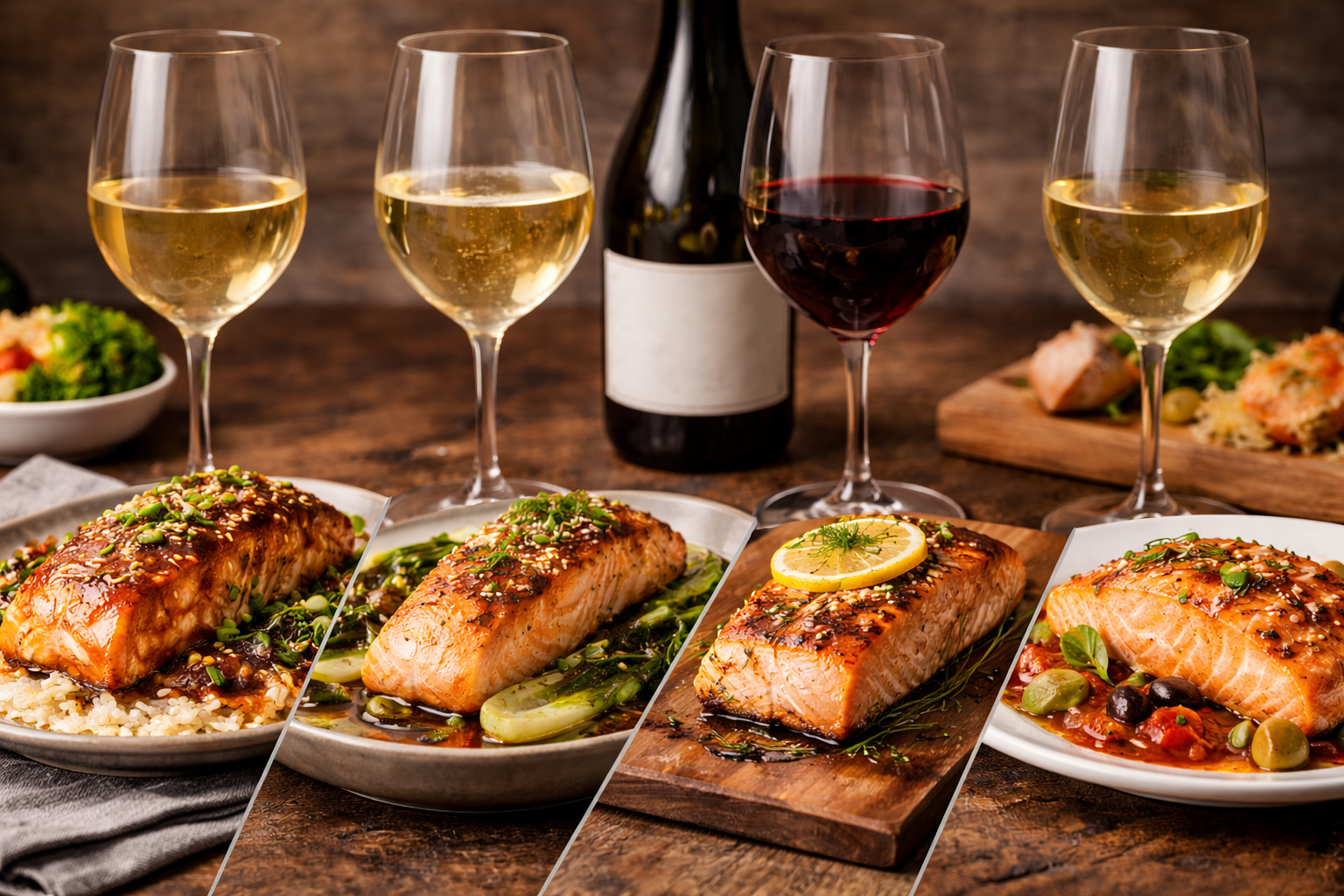
This is where broad wine advice usually falls apart. The fish stops being the main event, and the glaze or the seasoning takes over.
Teriyaki or maple-glazed salmon
Sweetness changes the game. If the sauce tastes sweet by itself, a dry red can come off harsh and thin. Off-dry Riesling is a cleaner call because a little residual sugar does not fight the glaze. It joins it.
Miso or soy-based salmon
Salt and umami push tannic reds in the wrong direction. The WSET pairing model flags umami as a food factor that can make bitterness and tannin feel stronger. That is why dry Riesling, off-dry Riesling, Gewürztraminer, or a very gentle Pinot Noir usually make more sense here than a bigger red.
Cedar-plank salmon
This one often leans Pinot Noir. The cedar and smoke add aromatic depth without turning the fish heavy. A red with freshness and subtle earth can be really good here. I have had sparkling wine work too, especially when the sides were lighter.
Salmon with tomato or capers
Acid in the food wants acid in the wine. If the tomatoes are bright or the capers are punching through, lean toward Sauvignon Blanc, Pinot Gris, or sparkling rather than softer, lower-acid bottles.
Salmon cakes or burgers
These are more forgiving because texture and seasoning usually get bolder. Dry rosé is a very smart middle lane. Pinot Noir works too, especially if the cakes are crisp on the outside.
Smoked salmon brunch spreads
Sparkling wine feels almost unfairly good here. The bubbles reset the palate after cream cheese, smoked fish, onions, and salty garnishes. It is one of those pairings that makes everyone look smarter than they are.
Important: If the sauce is sweet, spicy, smoky, or strongly salty, pair to that first. The salmon has already given up the steering wheel.
Avoid the pairings that sound impressive but usually fall apart
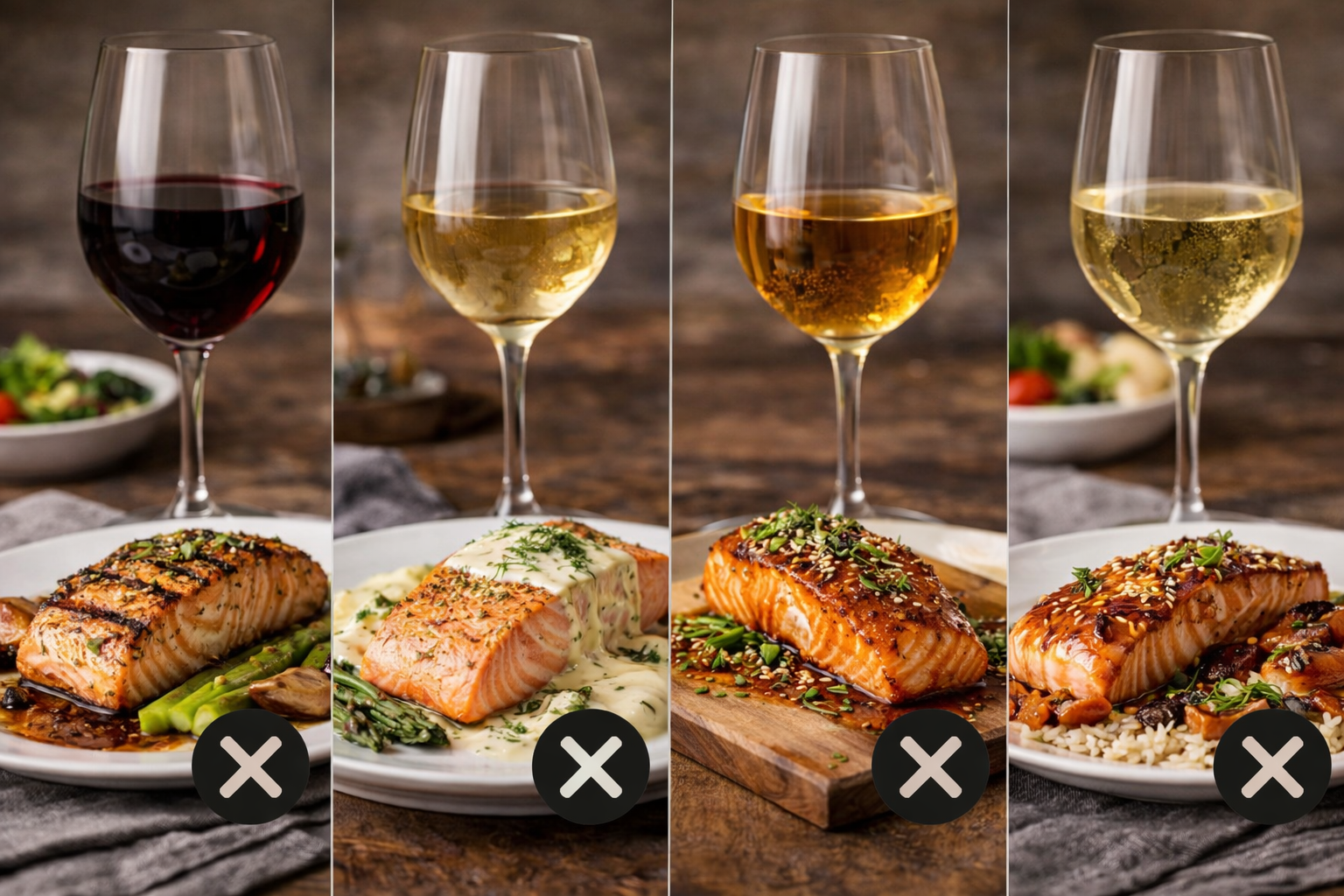
Some wine-and-salmon misses are predictable. You do not need to make them yourself.
Big tannic reds
A muscular Cabernet-style wine with lots of tannin usually steamrolls salmon. The tannin can turn the pairing metallic or bitter, especially when the dish is simple.
Heavy oak with delicate salmon
If the fish is lightly baked or poached, heavy toast and vanilla from oak can sit on top of the plate instead of with it. You taste the barrel more than the meal. Not ideal.
High alcohol with spicy salmon
Alcohol and chilli can amplify each other. That is one reason spicy glazes so often behave better with Riesling than with “serious” dry reds or warm-climate whites.
Bone-dry wine with sugary glaze
This one catches people off guard. The glaze makes the dry wine feel harsher and less fruity. A little softness in the wine fixes a lot.
Following the old fish rule too literally
“White wine with fish” is not wrong. It is just blunt. Salmon is richer than many fish, which is why low-tannin reds and fuller whites can work so well. The U.S. Department of Agriculture’s Agricultural Research Service notes salmon among fish valued for omega-3 fats, and that richer texture shows up at the table too.
If you like analogies, here is the cleanest one I know: pairing a bold tannic red with delicate salmon is like wearing hiking boots to a beach dinner. Not illegal. Just wrong for the ground under you.
Build an easy salmon-and-wine pairing routine you can reuse every time
You do not need a cellar or a sommelier voice. You need a repeatable filter.
Step 1. Spot the dominant flavor and choose a direction
Before you think about grape names, decide what is leading the plate. Lemon and herbs? Go bright. Butter and cream? Go rounder. Smoke and char? Go savory. Sweet glaze or heat? Go softer and cooler.
Step 2. Match the weight so the wine does not feel lost or loud
Light preparations want lighter wines. Richer salmon dishes want more body. This is the part most people already half-know, but it works better once you tie it to the sauce instead of the fish alone.
Step 3. Check sweetness and spice so the wine does not turn awkward
This is the sneaky one. If the glaze is sweet, do not grab the driest thing in the shop. If the dish runs spicy, keep alcohol in check. A modestly off-dry Riesling is often a rescue act here.
Step 4. Choose freshness or roundness based on the finish of the dish
If the dish finishes clean and citrusy, pick freshness. If it lingers with butter or cream, pick roundness. That call usually decides whether you land on Sauvignon Blanc or Chardonnay.
Step 5. Pick a safe backup if the shop selection is weak
No good Sauvignon Blanc? Look for Pinot Gris or Grüner Veltliner. No good Pinot Noir? Reach for dry rosé. No good Chardonnay? Dry sparkling can cover more ground than people expect.
I have done this in real kitchens, not just in neat pairing charts. The bottle that wins is usually the one that meets the strongest flavor on the plate with the least drama. That is it. The pairing does not need to be clever. It needs to make the next bite taste better.
FAQ
Is Pinot Noir or Chardonnay better with salmon?
Pinot Noir is better when the salmon is grilled, roasted, cedar-planked, or built around savory flavors. Chardonnay is better when the dish is buttery, creamy, or simply richer.
Can you drink red wine with salmon?
Yes. Red wine with salmon works best when the red is light on tannin and fairly fresh. Pinot Noir is the classic example. Bigger reds are where trouble starts.
What wine pairs best with smoked salmon?
Dry sparkling wine is the cleanest answer. It cuts through smoke, salt, and fat in one shot, which is why it feels so natural with smoked salmon and brunch-style spreads.