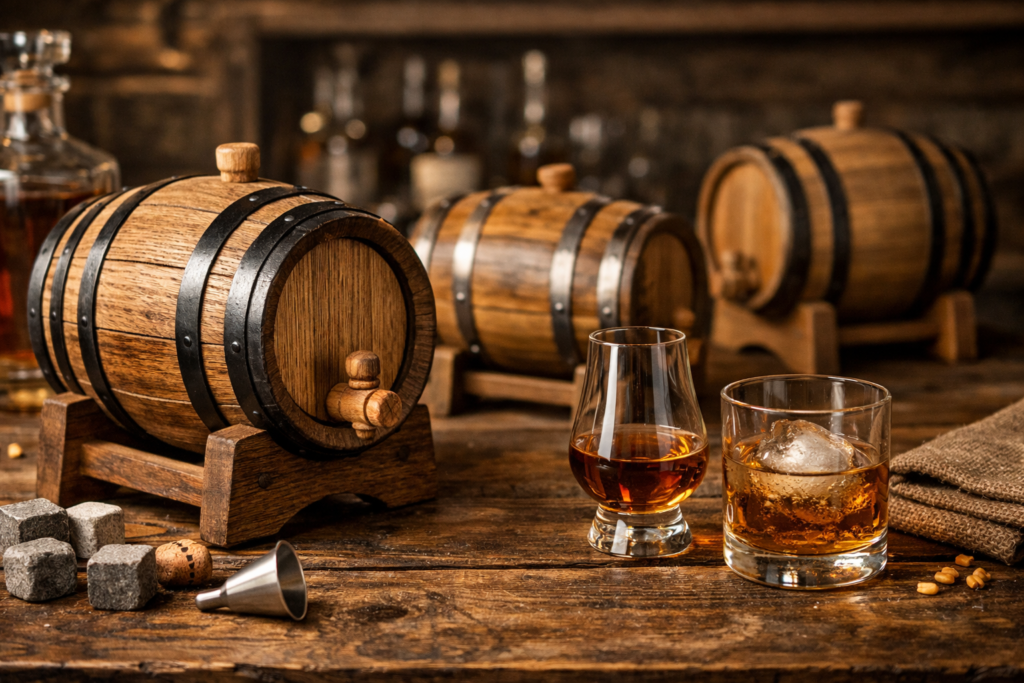
You buy a tiny oak barrel because the promise sounds irresistible: pour in whiskey, wait a bit, pour out something richer. Then the first sample tastes like fresh lumber and vanilla extract had an argument in a mason jar.
That is why the best mini barrel for aging whiskey is usually a 2L to 3L charred American white oak barrel, not the smallest barrel on the shelf and not the fanciest one either. A 1L barrel moves so fast that it can go from “interesting” to “too woody” before your routine catches up. A 5L barrel is steadier and easier to live with, but it asks for more whiskey and more patience. For most people, 2L to 3L is the sweet spot.
The tension is simple. Small barrels speed up oak extraction, but they do not recreate the slow warehouse life that shapes mature whiskey over years. Oak gives you color, vanilla, spice, coconut notes, tannin, and some smoothing. Time in a full-size rickhouse does other work too. So the smart buy is the barrel that fits what mini barrels are actually good at: finishing, tuning, experimenting, and giving you more control than loose wood pieces.
I have gone down this rabbit hole before, and the pattern is pretty predictable. People chase “faster.” What they usually needed was “more forgiving.”
- Which mini barrel size makes sense for whiskey, cocktails, or repeat batches
- What to look for in oak, char, and build quality before you get distracted by extras
- How to pick a starting whiskey and proof that works with fresh oak instead of fighting it
- How to cure, fill, sample, and stop the process before the barrel runs past the good part
- Which real barrels stand out for 1L, 2L, and 5L use cases
Best Suggestions Table (All products have been personally reviewed & tested by us! Click the buttons below to jump to the reviews.)
| Product | Best for | Action |
|---|---|---|
| Thousand Oaks Barrel 1 Liter Oak Aging Barrel | Fast experiments and small test batches |
Check Price Review |
| Red Head Barrels 2 L Premium Distillery-Grade Oak Barrel | Best fit for most whiskey hobbyists |
Check Price Review |
| Thousand Oaks Barrel 1 Gallon Oak Aging Barrel (Distillery Series) | Bigger batches and steadier control |
Check Price Review |
Tip: Clicking the “Review” button will move you to the review so you can decide fast.
Still in doubt? Here’s a fast guideline to save you some time.
- If you want quick whiskey finishing and you’re happy to sample often, start with 2L to 3L.
- If you only want one fun experiment and don’t mind a narrow window, 1L is fine.
- If you hate babysitting a barrel and want more margin for error, move up to 5L.
- If the barrel looks decorative first and functional second, skip it.
- If you plan to age an expensive bottle on the first fill, stop and use a cheaper test batch first.
The short answer: the best mini barrel for aging whiskey is usually 2L to 3L, not the tiniest barrel you can buy
The short version is pretty plain. A 2L to 3L mini oak barrel gives you enough surface area to move the whiskey along faster than a standard barrel, but not so much that the process turns twitchy and unforgiving. That is the balance most readers actually need.
A 1L mini whiskey barrel can work, and it can be fun. It is also the most likely to punish neglect. Miss a couple tastings and the barrel can pile on raw oak, tannin, and bitter edges fast. A 5L barrel slows the whole thing down. That can be a relief. It also means more liquid tied up in one project.
The reason this is not just opinion comes from the way whiskey interacts with wood. Research on whisky maturation points to oak as the source of many of the compounds behind color and familiar notes like vanilla, spice, and coconut, while barrel size, refill history, and char level change how that extraction behaves. Oak helps. Size changes the pace. It does not flatten every barrel into the same result. You can see that in the chemistry work on wood-extracted compounds and oak aroma compounds, which lays out why oak species, toasting, and charring change what lands in the glass and how strongly it shows up. A review on wood-extracted compounds in spirits and a study on oak whisky barrel aromas are both useful here.
So if you came here wanting a single purchase answer, here it is: buy a charred American white oak barrel in the 2L to 3L range unless you have a clear reason to go smaller or bigger.
Quick rule: 1L is “fastest.” 2L to 3L is “best for most people.” 5L is “slowest, steadiest, and least fussy.”
Choose the right barrel size so your whiskey improves instead of turning woody too fast
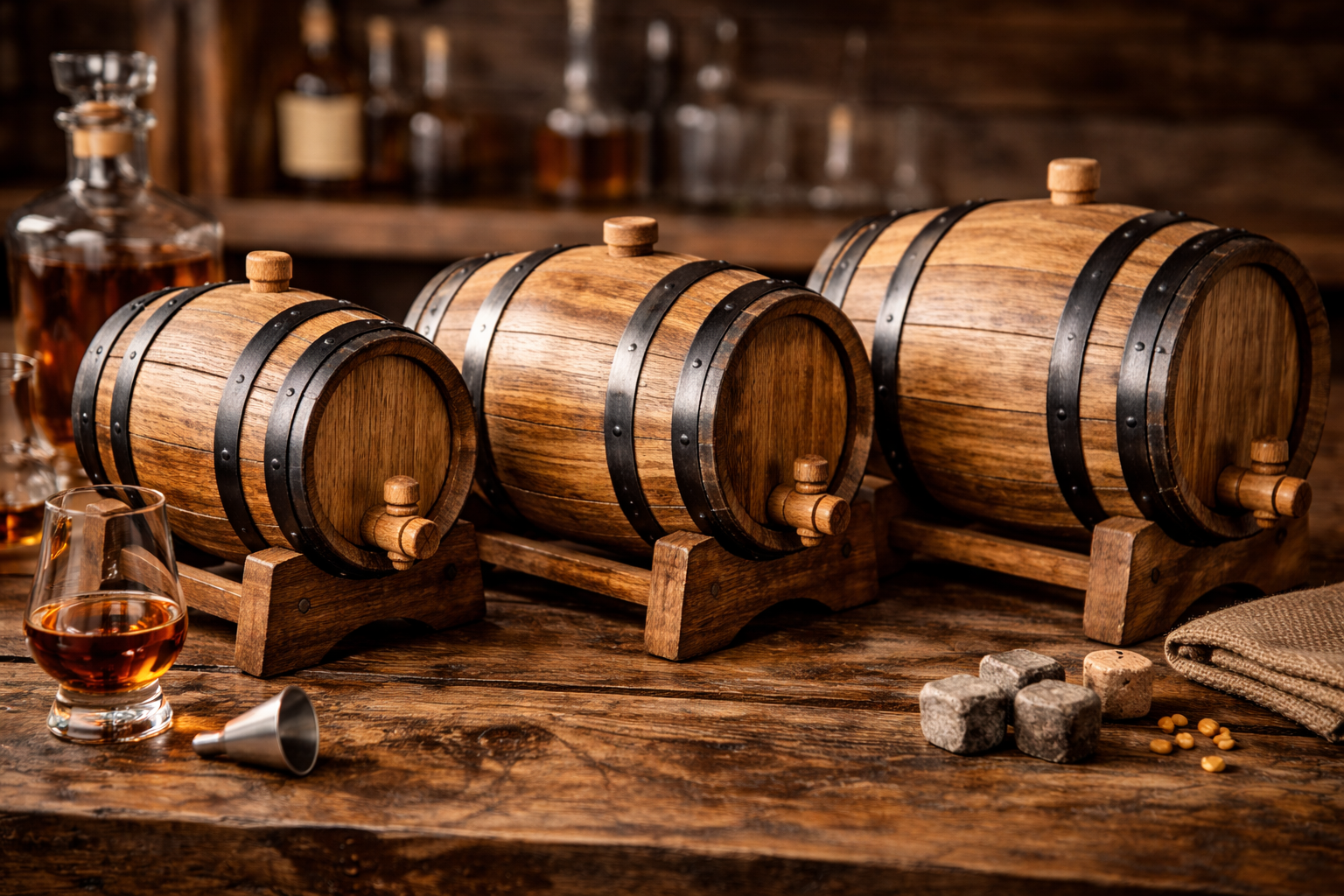
Size is the first real decision, and it changes almost everything. Sample schedule. Evaporation. How much whiskey you need. How often you need to pay attention. People talk about size like choosing a shoe color. It is closer to choosing tire pressure. Small changes alter the ride.
| Barrel size | What it does well | What can go wrong | Best fit |
|---|---|---|---|
| 1L | Very fast extraction, tiny test batches | Over-oaks fast, more fiddly, easier to outpace yourself | Experimenters and cocktail tinkerers |
| 2L to 3L | Good balance of speed and control | Still needs regular tasting, first fill can be assertive | Most whiskey hobbyists |
| 5L | More forgiving, steadier progression | Needs more spirit, slower feedback loop | Repeat users and larger batch makers |
If you want a few clear if/then rules, use these:
- If you want to finish one bottle quickly and keep the project small, 1L works.
- If you want the best odds of a good result on your first proper whiskey project, 2L to 3L is the safer bet.
- If you want barrel-aged cocktails, repeated use, and a wider tasting window, 5L feels calmer.
There is another piece people skip: evaporation and volume loss feel harsher in tiny barrels. Losing a modest amount from a 5L barrel is annoying. Losing a modest amount from a 1L barrel feels like you got pickpocketed.
A master’s thesis at Michigan State looked at aging whiskey spirits in smaller, non-traditional barrel volumes. The point was not that small barrels are fake. The point was that reduced volume changes the process. Faster wood interaction is real. It does not mean “same maturity, just quicker.” That research from Michigan State University is one of the better sanity checks on what small barrels do and do not do.
What trips people up: buying by novelty size instead of batch goals. A very small barrel is not a starter barrel by default. Quite often it is the advanced mode.
Prioritize oak, char, and build quality before extras like engraving, flavor kits, or chalkboard fronts
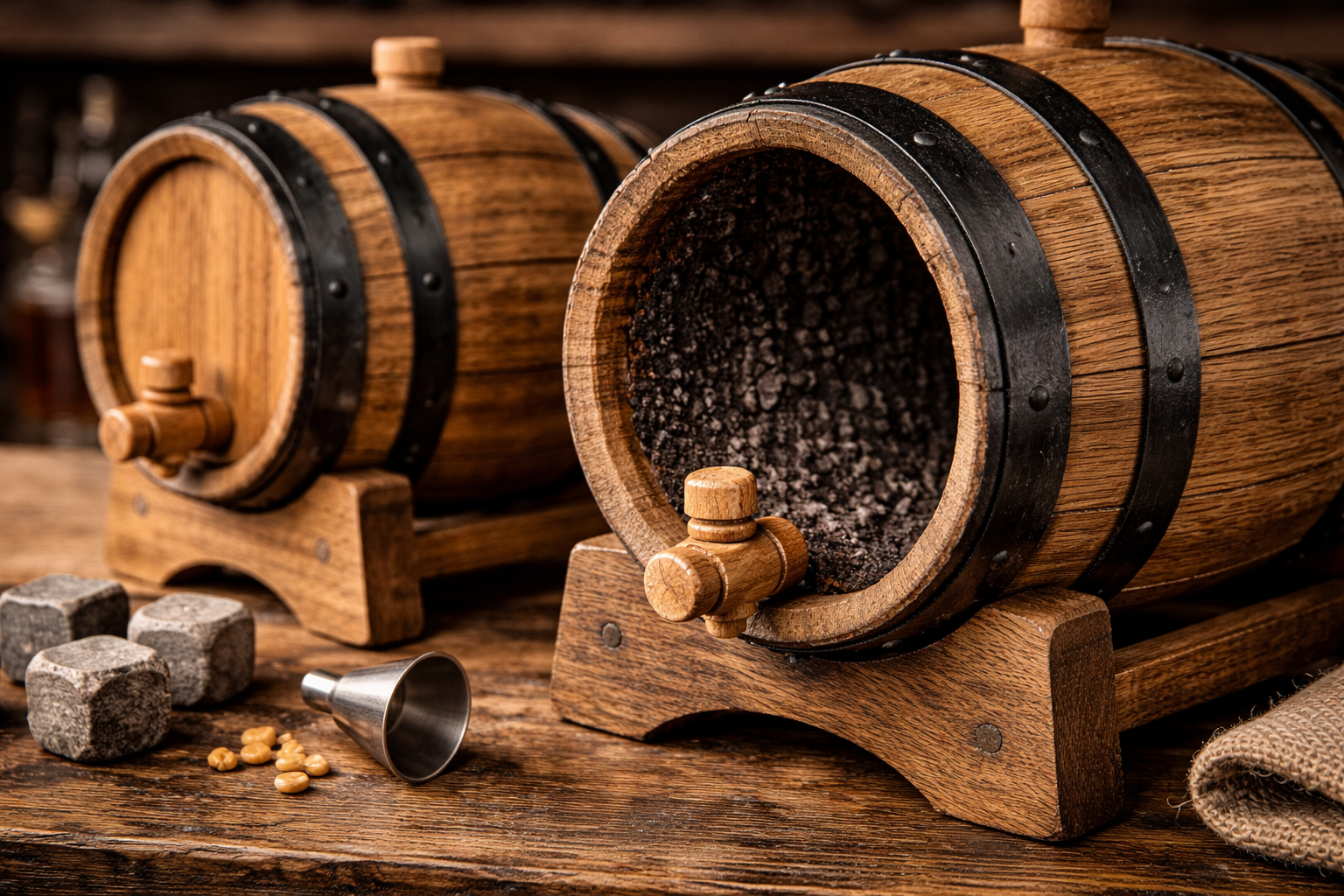
A mini barrel has one job. Hold spirit and let oak do its thing in a controlled way. So the buying checklist needs to start with what affects the liquid, not what looks good on a shelf.
The best barrels for whiskey are usually made from American white oak with a charred interior. That is not random tradition. Oak contributes familiar aroma compounds, including whisky lactones linked to coconut and oak notes, and char changes how the barrel behaves. The legal standards for straight bourbon also point to charred new oak barrels, which is a helpful reference even if your home project is not trying to make something you can legally call straight bourbon. The current standards are laid out in 27 CFR Part 5, Subpart I.
What to check first:
- Wood: American white oak is the default pick for whiskey work.
- Interior: Charred, not raw. Medium or medium-plus char is a practical place to start.
- Exterior: A clean finish is fine. Heavy varnish on a barrel sold for aging is where I start squinting.
- Hoops and seams: They should look snug and consistent. Sloppy hoop fit is a warning sign.
- Spigot: Convenient, yes. Also a common leak point on hobby barrels.
That last part matters more than people expect. A spigot feels useful because it looks like an easy pour. In practice, many home users sample with a thief, pipette, or a careful pour after removing the bung because each extra fitting is another place where a small barrel can seep. Not always. But often enough that I pay attention to it.
What to look for
- Charred American white oak
- No gimmicky finish that gets in the way of aging
- Solid hoops and tidy stave fit
- Clear curing instructions
- Size that matches how often you’ll taste and how much whiskey you’ll commit
Nice engraving is just dessert. The oak and the build are dinner.
Start with the right whiskey and proof so the barrel helps instead of bulldozing the flavor
The first-fill choice matters more than most product blurbs admit. Fresh charred oak is assertive. Give it a delicate, low-proof whiskey and the barrel can steamroll the original profile. Give it a sturdier spirit and you get more room to work.
There are three common starting points that make sense:
- Unaged or lightly aged spirit: biggest transformation, most control, biggest risk of rough edges if the spirit is poor.
- Affordable bottled whiskey: the easiest entry point for most people. You already know the base flavor and you can feel what the barrel changed.
- Cocktail batches: Manhattan, Boulevardier, or Old Fashioned variants often shine in mini barrels because the timeline is shorter and the oak effect makes sense quickly.
Proof matters too. The Kentucky Distillers’ Association notes that bourbon cannot enter the barrel above 125 proof, and that point is useful for home hobbyists even outside bourbon law because it reminds you that spirit strength changes how barrel extraction behaves. A higher-proof fill usually stands up to a fresh mini barrel better than a soft, lower-proof whiskey that already sits close to its sweet spot. You can see that entry-proof reference in the Kentucky Distillers’ Association FAQ.
That does not mean you need to chase brute-force alcohol. It means your first fill should have enough structure to take oak without collapsing into tannin and sweetness. For many people, a decent but not precious whiskey is the right call. I would not pour a special bottle into a new 1L barrel first. That’s asking the barrel to paint over something you paid to enjoy.
Good beginner move: start with an affordable whiskey you already know well. Then you can tell what the barrel actually changed instead of guessing.
Cure the barrel, run the first fill, and taste early so you do not miss the sweet spot
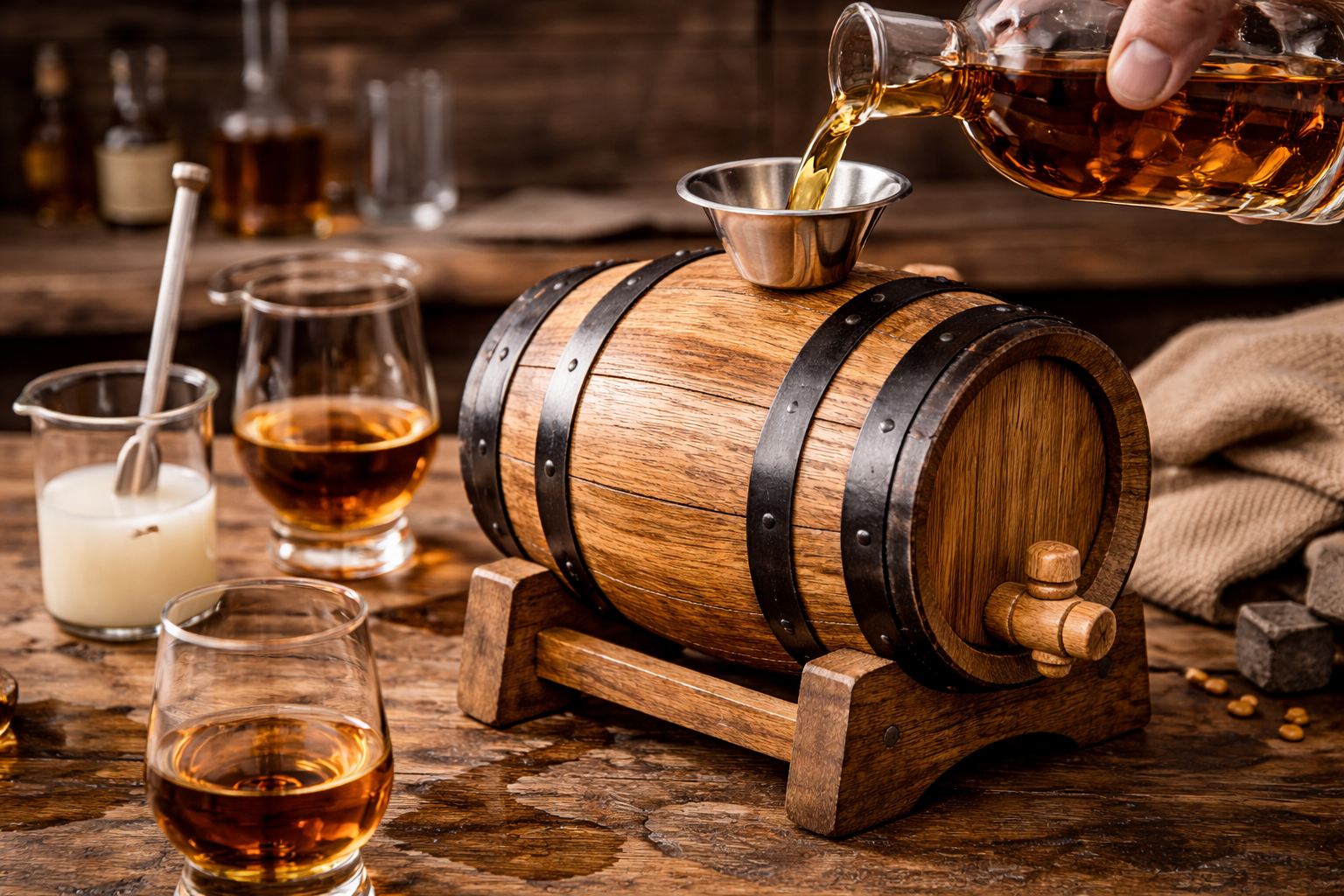
This part is not glamorous, but it makes the whole project work.
Step 1. Swell the wood and stop leaks.
Fill the barrel with water according to the maker’s directions and let the staves swell. The goal is simple: seal the seams before spirit goes in. Tiny drips during curing are common. Persistent leaks after a proper swell are not something to wave away.
Step 2. Fill it fully and keep headspace low.
Once the barrel is cured and emptied, fill it with your whiskey or cocktail batch. A fuller barrel gives you less air sitting above the liquid, which usually means steadier behavior and less weirdness.
Step 3. Start tasting earlier than your instincts tell you.
The first fill is usually the fastest and the most aggressive. For a 1L barrel, I’d start checking in days, not weeks. For a 2L to 3L barrel, I would start around week one or two. For a 5L barrel, week two or three is a fair first checkpoint.
Step 4. Bottle the batch when it tastes right, not when a random timeline says so.
Once the barrel gives you the extra vanilla, oak, spice, and texture you wanted, take the whiskey out. Bottled spirit does not keep aging the way barrel-filled spirit does, which is helpful. It lets you stop the clock.
| Barrel size | First tasting checkpoint | Follow-up rhythm |
|---|---|---|
| 1L | Within a few days | Every few days |
| 2L to 3L | Around week 1 to 2 | Weekly |
| 5L | Around week 2 to 3 | Weekly or every other week |
Note
These are starting checkpoints, not promises. Barrel construction, char, room temperature, the fill proof, and whether this is the first or second use all move the timeline around.
Avoid the 7 mistakes that make mini barrels disappointing
1. Buying too small because “faster” sounds better.
A very small barrel is not automatically the easiest one to use. Quite often it is the one that asks the most from you.
2. Letting the first batch sit untouched.
A fresh barrel can go hard, fast. The first fill is where people get over-oaked whiskey and then wonder if another month will mellow it. Usually no. Usually it just gets woodier.
3. Using an expensive bottle as the test run.
This one hurts because you know it the second you taste the result. A mini barrel should earn your trust before it gets your nice whiskey.
4. Letting the barrel dry out between fills.
Small barrels can dry quickly, then shrink, then leak. If you are not refilling soon, follow the maker’s storage guidance closely or clean it and keep it in active use. A neglected barrel gets grumpy fast.
5. Treating a decorative barrel like working equipment.
Some barrels are pretty. Some are built for aging. Those are not always the same thing.
6. Chasing “more oak” instead of better balance.
Good whiskey is not a contest to see how much wood you can extract. Mini barrels can make that temptation worse because the signs of progress show up quickly.
7. Expecting a home barrel to mimic years in a warehouse.
Think of a mini barrel less like a time machine and more like a pressure cooker. You can get intensity, concentration, and finishing character. You are not getting the full slow-motion warehouse arc that comes with seasonal cycling, deeper oxidation, and years of interaction.
The ugly truth: over-oaked whiskey is rarely “almost there.” Most of the time, it already crossed the line.
Pick the best mini barrel for your situation, not for somebody else’s hobby
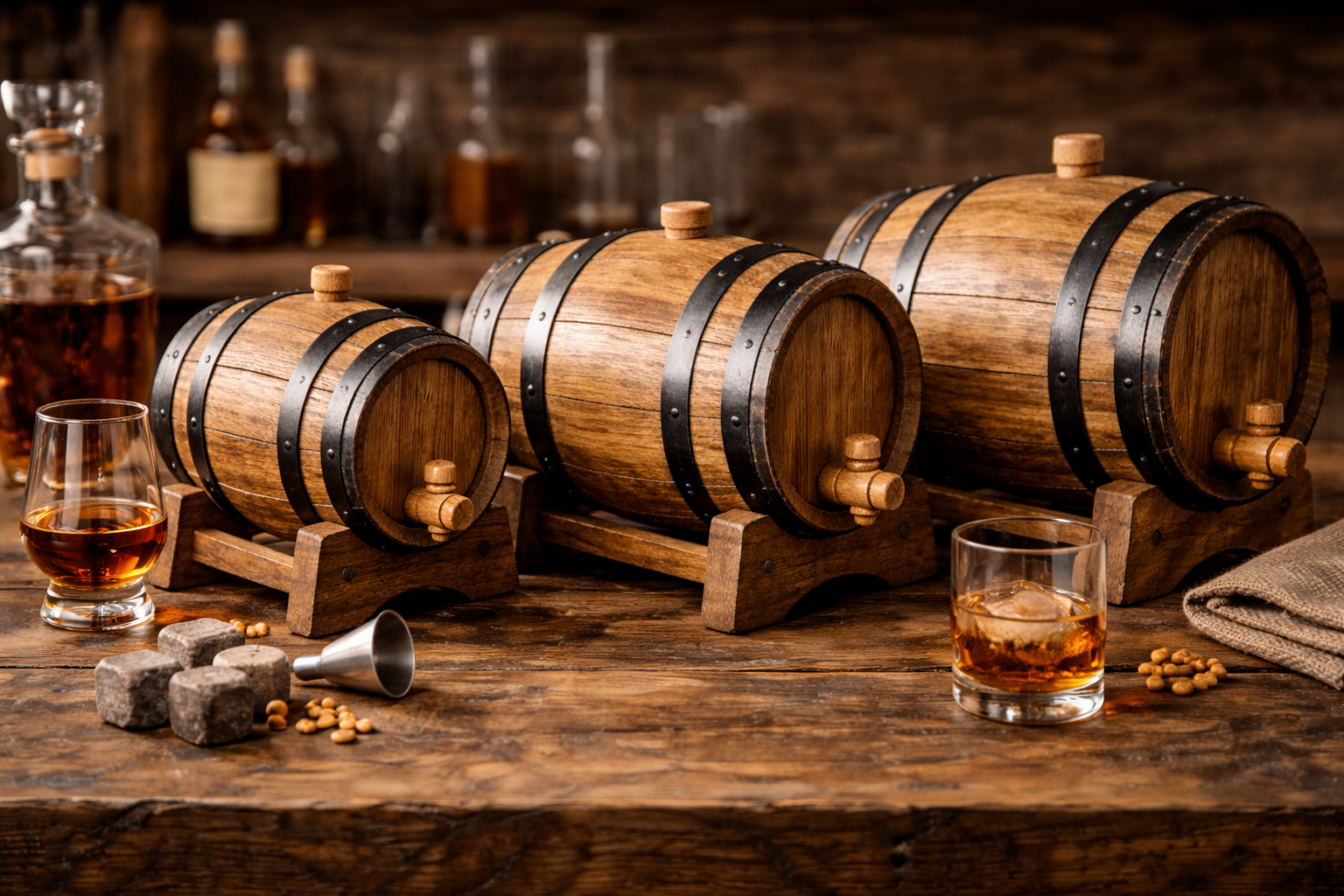
Here is where the buying part gets concrete. I used the same yardstick for each barrel: size and use case, oak and char, construction quality, ease of curing and monitoring, and the kind of mistakes each one is likely to forgive or punish.
For testing, the practical lens was simple. How hard is the barrel to cure cleanly? How stable does it look and feel? Is the size working with you or against you? And once filled, how hard is it to stay ahead of the extraction curve? That matters more than bundled trinkets.
Thousand Oaks Barrel 1 Liter Oak Aging Barrel
This one is for the person who wants a real 1L mini oak barrel experience, not a novelty prop. The product listing identifies it as a 1 liter oak aging barrel with stand, bung, and spigot. Capacity is clearly listed at 1 liter, which is what matters most here because size is the whole story with this barrel. In use, the appeal is obvious: tiny batch, low commitment, fast feedback. You can try a bottle finish, a spirit experiment, or a barrel-aged cocktail without tying up much liquid. That is fun. It is also the exact reason this barrel asks for discipline.
The barrel works best if you already accept that sampling starts early and the first fill can move in a hurry. I like this style of barrel for Manhattans, Boulevardiers, and small whiskey tests where the goal is “learn something fast,” not “build a patient long-term project.” The included spigot is convenient, though on a barrel this small I still treat every fitting as something to watch, not something to trust blindly. The oak barrel form factor looks good and the capacity makes it approachable, but there is not much room for lazy sampling habits. Miss your window and the barrel will not forgive you.
Who should buy it? Someone curious, attentive, and okay with frequent tasting. Who should skip it? A beginner who wants to fill once, forget about it for weeks, and come back to something polished. For that person, this barrel is a little too eager.
Red Head Barrels 2 L Premium Distillery-Grade Oak Barrel
This is the barrel size and style I keep coming back to for most readers. The product listing calls out new premium charred American white oak, and that combination is exactly what you want to see for whiskey use. The 2L format is where mini barrel aging starts to feel practical instead of twitchy. You still get accelerated oak contact. You still need to sample. But the process does not feel like a sprint where one missed week can wreck the batch.
That calmer pacing is why this barrel earns the “best for most people” spot. A 2L barrel holds enough whiskey to make the project feel worthwhile, yet not so much that you need a big stash just to get started. It also suits the way many home users actually behave. They taste at the end of week one, then a week later, then maybe once a week after that. A 1L barrel can punish that rhythm. A 2L barrel often works with it. The product description also leans into clean, non-engraved utility, which I like here because it suggests the barrel is being sold as working equipment first.
It is not magic. Fresh charred American white oak can still hit hard, and the first fill still deserves caution. But if a friend asked me which small whiskey barrel to buy without turning the project into a finicky little science fair, this is the lane I would point them toward. It is the most balanced choice for whiskey finishing, starter projects, and repeat use without drifting into gimmick territory.
Thousand Oaks Barrel 1 Gallon Oak Aging Barrel (Distillery Series)
The 1 gallon, roughly 5 liter, barrel is where the hobby starts to feel less like a toy and more like a working cask. The Distillery Series listing describes new American oak staves, a medium char interior, and an unvarnished exterior. Those details matter. New oak and a charred interior give you the right base for whiskey work, while an unvarnished outside makes more sense than a heavy decorative coating on a barrel meant to age liquid.
This is the pick for someone who wants more control and a bigger tasting window. A 5L barrel still moves faster than a full-size distillery barrel, but it is slower than the 1L and 2L crowd. That slower pace is not boring. It is useful. You get more time to sample, adjust, and decide. The tradeoff is obvious too: you need more whiskey to fill it, and more volume is tied up in one project. That puts it outside the comfort zone of many first-timers.
I like this size most for two types of users. First, people who already know they enjoy barrel-aged cocktails and want enough capacity to make the process worthwhile. Second, home whiskey hobbyists who already learned the basic lesson that tiny barrels can go from charming to bossy pretty quick. The Distillery Series angle, medium char, and unvarnished build are all good signs for function. The main question is not whether it is good. It is whether you are ready to commit enough liquid and enough time to use it properly.
Know what a mini barrel can and cannot do before you spend the money
A mini barrel can add color. It can push vanilla, oak, spice, caramelized wood tones, and sometimes that coconut-like note tied to whisky lactones in oak. It can round off a spirit that feels a little rough. It can turn a decent cocktail batch into something richer and more integrated.
What it cannot do is flatten years of warehouse aging into a few weeks and call it the same thing.
That is not snobbery. It is just how maturation works. A review on whisky sulfur compounds lays out maturation as doing three broad jobs: extracting oak flavor, adsorbing some unpleasant notes, and mellowing the spirit. Full maturation is not just “more oak.” It is a longer set of changes. This review on whisky maturation is a good summary of that point.
There is also a legal angle worth stating cleanly. In the United States, straight bourbon whisky has defined production standards, including storage in charred new oak barrels for at least two years. Home barrel-aging a bottled whiskey can be enjoyable, but it does not rewrite what that spirit is in legal labeling terms. The standards in federal regulation make that clear.
Important
Use clean food-contact equipment, watch for leaks, and bottle the whiskey once it reaches the profile you like. Leaving it in the barrel “just a little longer” is where many home projects go sideways.
Decide if you should buy a mini barrel, or skip it and use a different finishing tool
A mini barrel is worth buying if you like tinkering, tasting, and rerunning the process with what you learned the first time. It is also worth buying if you want the barrel itself to be part of the hobby. Some people want that. Some really don’t.
Skip the barrel and use oak spirals, cubes, or sticks if your main goal is adding oak flavor to a spirit with less fuss. Those tools are easier to control and easier to store. They also do not feel like using a barrel, which matters more than some people admit. Half the fun here is the object itself. The other half is seeing what it does.
Skip the barrel and buy a better bottle if what you really want is a reliably better whiskey tonight. A mini barrel is not an instant upgrade machine. It is a small project. That project can be rewarding. It can also be the kind of thing that sits on a shelf while life gets busy, then surprises you with a very woody lesson.
So the final call is pretty clean:
- Buy a 2L to 3L mini barrel if you want the best mix of speed, control, and repeatable fun.
- Buy a 1L only if you want fast experiments and you’ll sample often.
- Buy a 5L if you want more breathing room and don’t mind filling a bigger cask.
- Skip the whole category if you want zero maintenance or if your hope is “distillery maturity in a month.”
That is the real decision. Not “which barrel looks coolest?” More like, “which barrel fits the way I actually use whiskey stuff once the novelty wears off?”
FAQ
Is a 1 liter barrel too small for aging whiskey?
Not too small, but much less forgiving. A 1L barrel works best for quick experiments, cocktail batches, or people who will taste often. For most first-time buyers, 2L to 3L is easier to manage.
What wood is best for a mini whiskey barrel?
American white oak with a charred interior is the cleanest place to start. It lines up with the flavor profile most readers expect from whiskey and with the barrel tradition behind American whiskey styles.
Do mini barrels actually age whiskey or just add oak flavor?
They do both, but on a smaller and faster scale. A mini barrel can add oak compounds, color, and some smoothing. What it does not do well is mimic the full slow warehouse maturation that shapes whiskey over years.