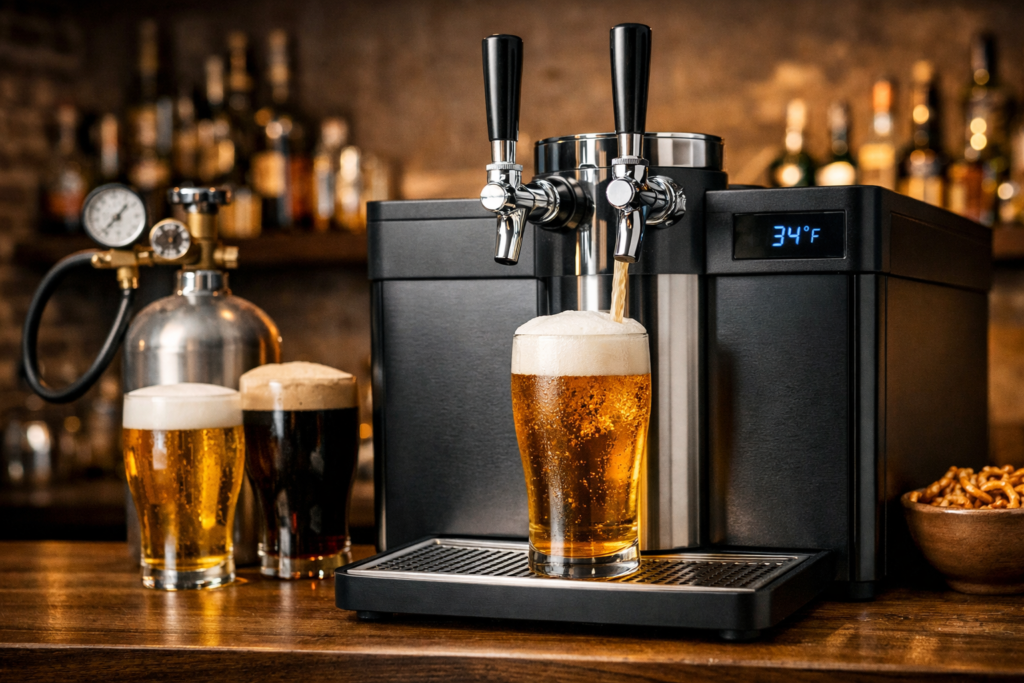
You usually spot the wrong kegerator after it arrives. The box is huge, the tower looks great, and then the first keg doesn’t fit the way you pictured it. Or the unit slides into a cabinet cutout that gives it no room to breathe. Or the beer pours like shaving cream because the keg was still warm in the middle.
So here’s the plain answer: the best kegerator for most homes is a freestanding full-size indoor model with steady temperature control, room for the keg sizes you will actually buy, and no built-in install demands you don’t need. That answer is useful for maybe half of readers. The other half need something else: outdoor-rated, front-venting, homebrew-friendly, or compact enough that it won’t eat the room.
That’s the tension with this category. People shop by “best overall” labels, but kegerators are less like buying a toaster and more like buying shoes in one fixed size. A “great” unit can still be a lousy fit if you drink slowly, want two beers on tap, brew with Cornelius kegs, or plan to park it in a hot garage.
This guide is built to fix that. You’ll get the short answer fast, then the buying rules that stop the expensive mistakes.
- How to cut the shortlist in a few minutes
- Which features actually change the pour and which ones are fluff
- Which kegerators fit home use, patio use, and homebrew setups
- How to avoid foam, bad fit, and stale beer
- When a kegerator is the wrong buy altogether
Best Suggestions Table (picked by fit, not by hype)
| Product | Best for | Action |
|---|---|---|
| Kegco K309SS-1 | Most homes, flexible keg fit, strong homebrew value |
Check Price Review |
| EdgeStar KC2000SS | Freestanding indoor use on a tighter budget |
Check Price Review |
| EdgeStar KC1500SSOD | Outdoor kitchens and covered patios |
Check Price Review |
| TMCRAFT Mini Keg Dispenser | Portable small-batch pouring, not full-time draft duty |
Check Price Review |
Tip: Use the review button if you already know the style you want. Use the sections below if you are still sorting out keg size, install type, or cleanup work.
Start here
- If you want the safest all-around pick for home use, start with a freestanding full-size model.
- If the unit is going under a counter, front-venting is not optional.
- If it will sit outside, buy outdoor-rated only.
- If you drink slowly or brew at home, smaller keg formats usually make more sense than a half barrel.
- If you hate cleaning gear, a beer fridge may fit your life better than a kegerator.
The best kegerator for most people is not the biggest one
The best kegerator is usually not the flashiest stainless tower with the most taps. For most home drinkers, the sweet spot is a freestanding full-size indoor unit that can keep beer around 36 to 38 degrees Fahrenheit, accepts the keg formats people really buy, and doesn’t lock you into a cabinet build.
That is why models like Kegco’s K309 line keep coming up in serious buying conversations. Kegco’s own product page shows a roomy interior that handles full-size kegs and also fits multiple 5-gallon Cornelius homebrew kegs. That sort of flexibility changes the ownership experience because you are not stuck with one keg plan forever.
The common advice is “buy bigger so you have options.” That sounds nice. It also gets people in trouble. A giant chassis is pointless if you mostly buy sixth-barrel kegs, drink one style at a time, or live in a place where a tall tower turns a clean kitchen corner into a metal monument.
The better rule is simpler: buy for your actual pour pattern.
If you host often, larger capacity matters. If you drink a few pints over the week, smaller keg compatibility matters more. If you want the unit tucked under a counter, install style jumps ahead of everything else. Once you look at the category that way, the “best kegerator” stops being a single winner and starts being a much shorter, much smarter shortlist.
Quick rule: Start with use case, then keg size, then install type. Do not do it the other way around.
Use this 3-question filter and you will cut the shortlist fast
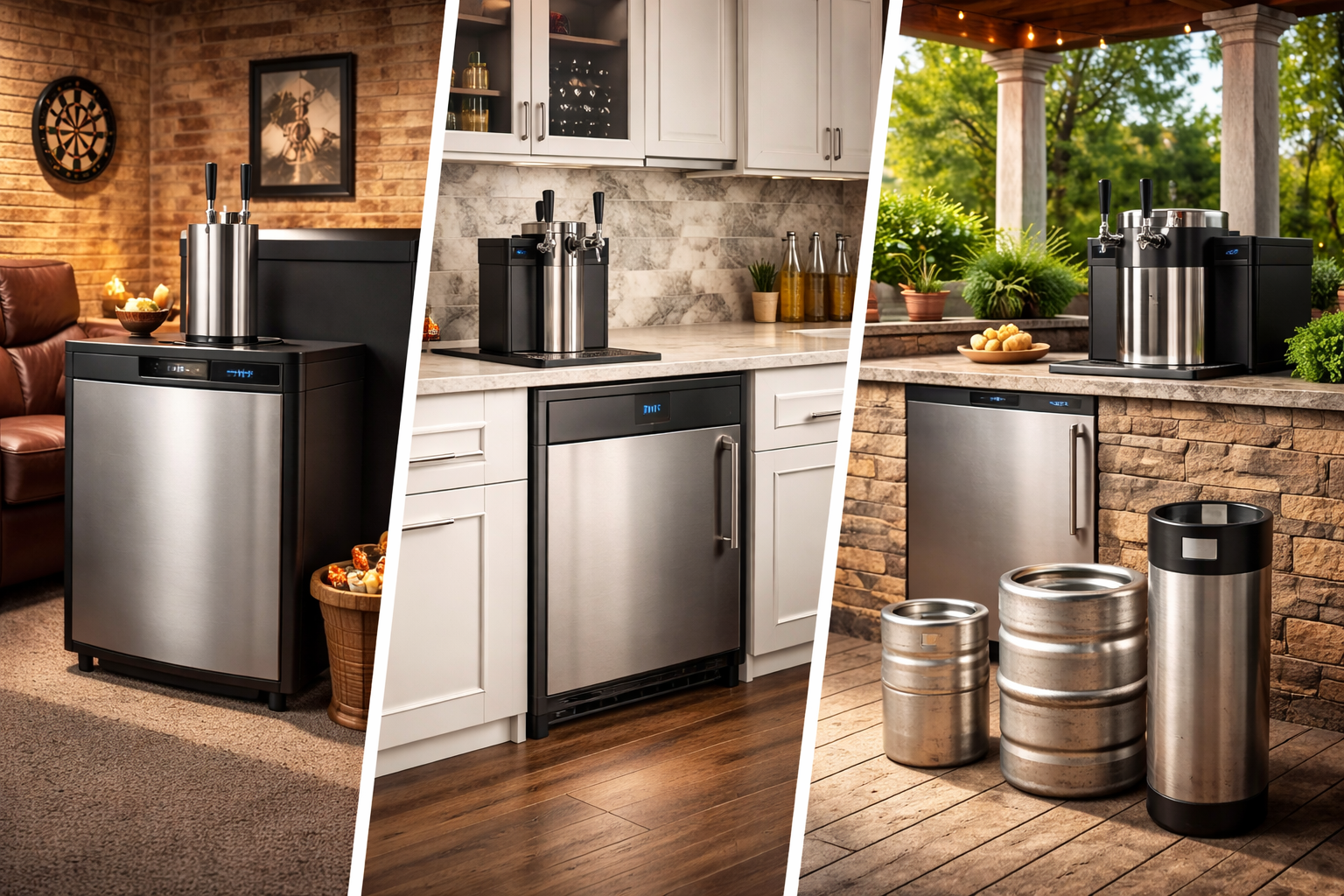
You can kill most bad options with three questions.
Question 1. Where will it live?
Indoor room, garage, covered patio, or a built-in outdoor kitchen are not the same environment. An indoor freestanding kegerator can work beautifully in a finished room and then struggle badly in a hot patio setup. Outdoor use needs an outdoor-rated unit. Under-counter use needs front ventilation.
Question 2. What keg sizes will you actually use?
This is where buyers get weirdly optimistic. They picture parties every other weekend and buy around full half-barrel capacity. Then they keep one massive keg around too long. If you drink slower, buy variety, or brew at home, sixth-barrel and Cornelius keg compatibility is usually the smarter target.
Question 3. One beer on tap or more?
A dual tap looks cooler. It also adds cost, complexity, and one more thing to clean. For a lot of homes, one good faucet beats two underused ones.
The operating part is straightforward:
| If this sounds like you | Check this first | Likely fit |
|---|---|---|
| Kitchen or game room, one beer on tap | Freestanding clearance and keg format | Single-tap full-size indoor kegerator |
| Cabinet install | Front-venting only | Built-in kegerator |
| Patio or outdoor kitchen | Outdoor rating and weather exposure | Outdoor kegerator |
| Homebrew and slower rotation | Cornelius keg compatibility | Flexible full-size unit or mini keg setup |
The Cicerone Certified Beer Server syllabus teaches a basic draft truth people learn the hard way: cold beer pours better, and kegs should be fully chilled before service. That is why a warm keg dropped into a cold box right before the guests show up is almost guaranteed to make you think the machine is broken.
What usually goes wrong: buyers pick for maximum capacity first, then notice too late that the real issue was placement, airflow, or the fact they only finish a small keg comfortably.
Judge every kegerator by these 7 criteria before you look at price
I like product roundups less when they skip the scoring logic. A reader cannot borrow a recommendation if they do not know what made the pick good in the first place. For this guide, every unit is judged by seven things that change life after the box is opened.
1. Keg compatibility. A unit that handles a full-size keg is not always the same unit that handles multiple Cornelius kegs comfortably. If you brew at home, this jumps way up the list.
2. Install type and ventilation. Freestanding, built-in, and outdoor-rated units are not interchangeable. If the unit needs rear or side breathing space, stuffing it into a cabinet is asking for heat problems.
3. Temperature control. The Brewers Association’s Draught Beer Quality Manual is blunt about temperature drift. Beer that is too warm pours worse and tastes off sooner. Digital control is not magic, but it makes dial-in easier than old vague knobs.
4. Tap setup. One tap is enough for a lot of homes. Two taps earn their keep when you truly rotate styles or pour for groups often.
5. Included hardware. Some packages look complete until you notice the tank, regulator, or coupler details. A “good deal” can turn into a parts hunt fast.
6. Cleaning friendliness. If the drip tray pops out easily and the faucet parts are easy to reach, you are more likely to keep the thing clean. That matters more than polished trim.
7. Value for the intended buyer. Not the lowest number. Not the fanciest spec. The right trade between fit, hassle, and long-term use.
That same grid shaped the picks below. No fake lab claims. No mystery scoring. Just the things that change the pour, the install, or the cleanup.
Best kegerator picks by use case, not by empty labels
Before the picks, one note on how they were judged. I weighed each one against the seven criteria above, then asked a more useful question: who will still like this unit six months in? That weeds out a lot of shiny “best overall” winners.
Kegco K309SS-1
Best for: most homes, especially buyers who want a full-size indoor kegerator with room to grow into homebrew or smaller keg formats later.
Kegco’s K309 line earns the top spot because it solves more real buyer problems than most single-faucet full-size units. Kegco’s own product page states that the interior can hold a full-size keg and also fit multiple 5-gallon Cornelius kegs. That matters. A lot. You are not locked into one kind of draft life. If you start with commercial beer and later brew your own, the chassis still works for you.
It also checks the things that make ownership smoother: digital temperature control, a removable drip tray, rolling casters, and a layout that does not feel annoyingly tight once the tank and keg are in play. Those are not glamorous features, but they are the bits you touch every week.
Where it really lands well is balance. It is not pretending to be a slim apartment model. It is not pretending to be an outdoor unit either. It is a proper freestanding indoor machine with enough keg flexibility that you do not outgrow it quickly. For buyers who host a few times a month, like the look of a real tower, and want room for Cornelius keg use later, this is the sane answer.
Tradeoffs: It needs real floor space, and it is a freestanding indoor unit, not a built-in cabinet piece. If your whole plan starts with under-counter installation, skip it. If your whole plan starts with a patio in summer heat, skip it faster.
Who should pass: apartment buyers who need compact dimensions, or anyone who wants a true outdoor-rated chassis.
EdgeStar KC2000SS
Best for: budget-minded indoor buyers who want a known freestanding model and do not need outdoor or built-in use.
The KC2000SS has been around long enough that buyers keep finding it for a reason: it makes a decent one-keg home setup without asking you to buy into a pricier install class. Third-party listings and archived retailer pages show the familiar formula here, with room for common quarter- and half-barrel setups, a basic full-size footprint, and a format that can convert into a refrigerator in some packages.
That kind of no-drama design still has a place. Not everybody needs digital bells and a more adaptable homebrew-friendly interior. Sometimes you want a straight-ahead freestanding unit for a rec room, finished basement, or weekend entertaining area and that’s it.
The catch is fit. Retailer listings tied to this model have also noted limits with oversized keg styles. So the KC2000SS works best for buyers who already know what local keg formats they buy and are not chasing maximum compatibility. It is the safer “value” play when the setup is simple: one beer on tap, indoor use, modest expectations, and no cabinet cutout dreams.
Tradeoffs: less flexible than the Kegco on keg-fit versatility, and not the model to buy if you want to grow into a mixed homebrew setup. Some seller pages also list it as freestanding only, which matters more than the stainless door ever will.
Who should pass: buyers who want broad keg compatibility, homebrew-first use, or built-in placement.
EdgeStar KC1500SSOD
Best for: outdoor kitchens, covered patios, and buyers who need front ventilation in a compact built-in footprint.
The KC1500SSOD gets the outdoor nod because its published specs line up with the two things patio buyers actually need: outdoor approval and front ventilation. Retailer listings and the model manual point to both. That alone puts it in a different league from the indoor freestanding units people try to push into exterior installs.
There is also a practical size angle here. Outdoor kitchens often do not have room for a large full-size box with extra side clearance. A narrower outdoor unit that breathes from the front is much easier to work into a clean patio plan. If the goal is one dependable tap outside, this type of layout is way easier to live with than a big indoor unit awkwardly parked under a cover and hoping for the best.
But do not romanticize it. Outdoor-rated does not mean “ignore the weather.” Shade still helps, and direct sun is still a pain. Hot conditions still make every refrigeration job harder. This unit makes sense because it is built for the category, not because it defeats physics.
Tradeoffs: smaller overall format than a big indoor floor model, and less of a catch-all pick if you want broad homebrew flexibility. Patio buyers usually know that going in.
Who should pass: anybody shopping strictly for an indoor game-room setup, or buyers who care more about max keg variety than install fit.
TMCRAFT Mini Keg Dispenser
Best for: portable pours, small-batch homebrew, and people who want draft-style service without a full-size kegerator.
This is the odd one in the list, and that is on purpose. A lot of readers looking for the best kegerator do not actually need a full kegerator. They need a neat way to keep a small amount of beer or cold brew on tap without giving up floor space or signing up for a bigger cleaning routine. TMCRAFT’s mini keg dispenser systems and mini Cornelius-style hardware fill that gap well.
The upside is obvious once you stop expecting it to do a full-size machine’s job. It is portable, easier to stash, and much better aligned with slower-drinking households or hobbyists handling small batches. If you are the kind of person who likes fresh beer but rarely wants a giant keg in the house, this can feel weirdly liberating.
The downside is just as obvious. It is not a replacement for a real full-size home draft tower. You are managing tiny volumes, not running a party station for a crowd. Temperature control depends on the fridge environment around the mini keg, not a self-contained kegerator body, and the whole experience is more hands-on.
Tradeoffs: far smaller capacity, more manual handling, and no illusion of “set it and forget it” built-in cooling.
Who should pass: anyone who wants regular full-size keg service at home.
Short version: Kegco K309SS-1 is the strongest all-around indoor pick. EdgeStar KC2000SS is the simpler value play. EdgeStar KC1500SSOD is the patio answer. TMCRAFT is the “I really wanted small-batch draft” answer, not a substitute for the others.
Match keg size to drinking pace so you do not buy more beer than you can enjoy
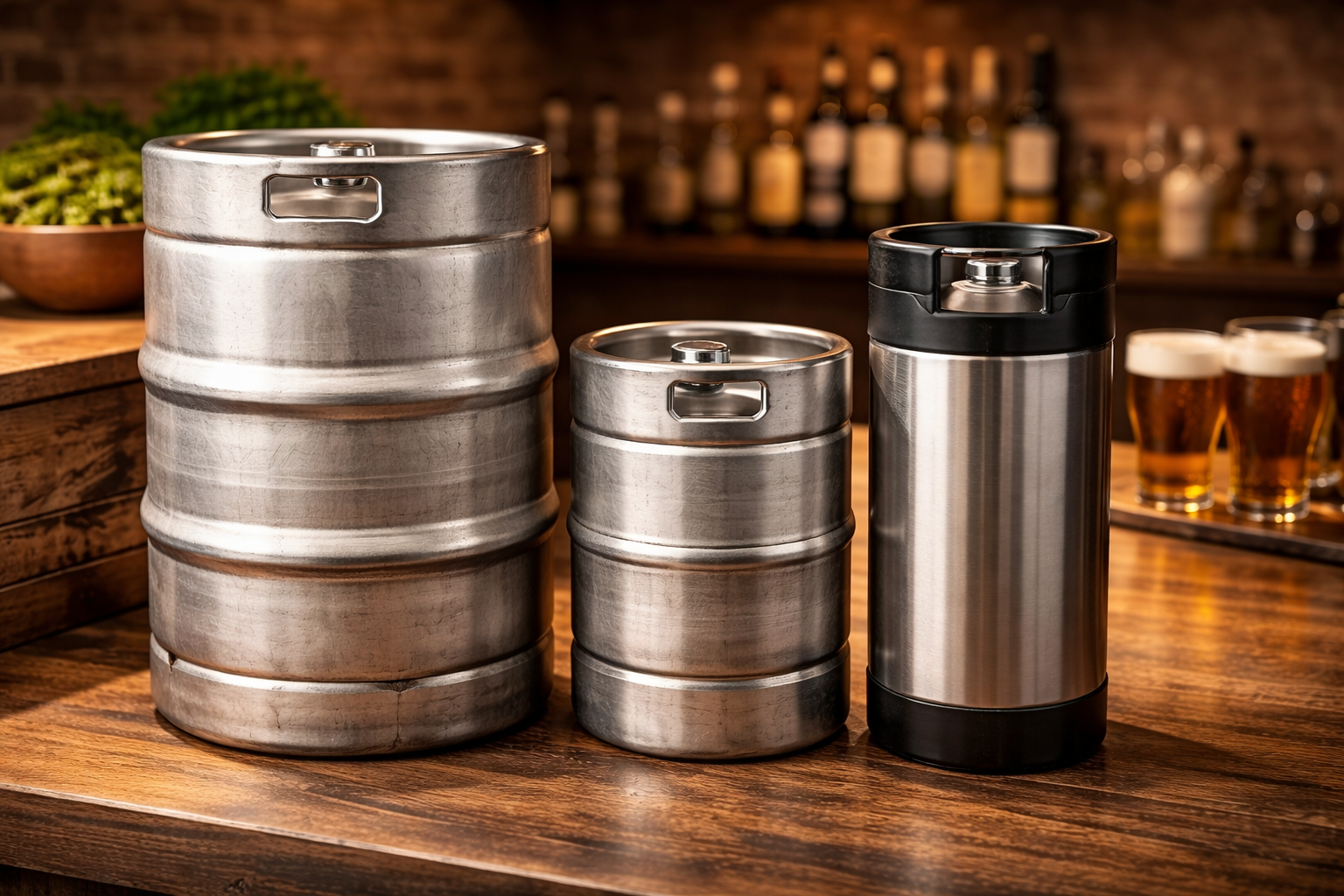
Keg size gets treated like a spec sheet footnote. It should be near the top of the buying process because it quietly decides freshness, convenience, and how much of your floor space feels justified.
A half-barrel is the big party move. It is also heavy, bulky, and overkill for a lot of homes. A sixth-barrel is far easier to live with for many households. Cornelius kegs are a natural fit for homebrewers and anyone working with 5-gallon batches.
The Brewers Association draft manual keeps coming back to cold storage, clean lines, and freshness discipline. That’s the clue. The bigger the keg, the more important your actual drinking pace becomes. If a big keg lingers too long, the money you saved per pour can get eaten by declining flavor and the fact that you get tired of the same beer.
Use it like this:
- If you host often and go through beer fast, half-barrel capacity has a real point.
- If you like variety or drink at a calmer pace, sixth-barrel is often the better compromise.
- If you brew at home, Cornelius keg fit should be on the front page of your checklist.
- If you are buying a compact or narrow unit, double-check usable interior space with the keg in mind, not just the external width.
I have seen buyers chase “fits a full-size keg” like it’s a gold star. Then the thing lives with a sixth-barrel nearly all year. That is not a disaster. It is just a clue that the buying logic started in the wrong place.
A cleaner buying rule
Buy around the keg size you will use 70 percent of the time. Let occasional party capacity sit in second place.
Pick the right installation and you avoid the most expensive setup mistake
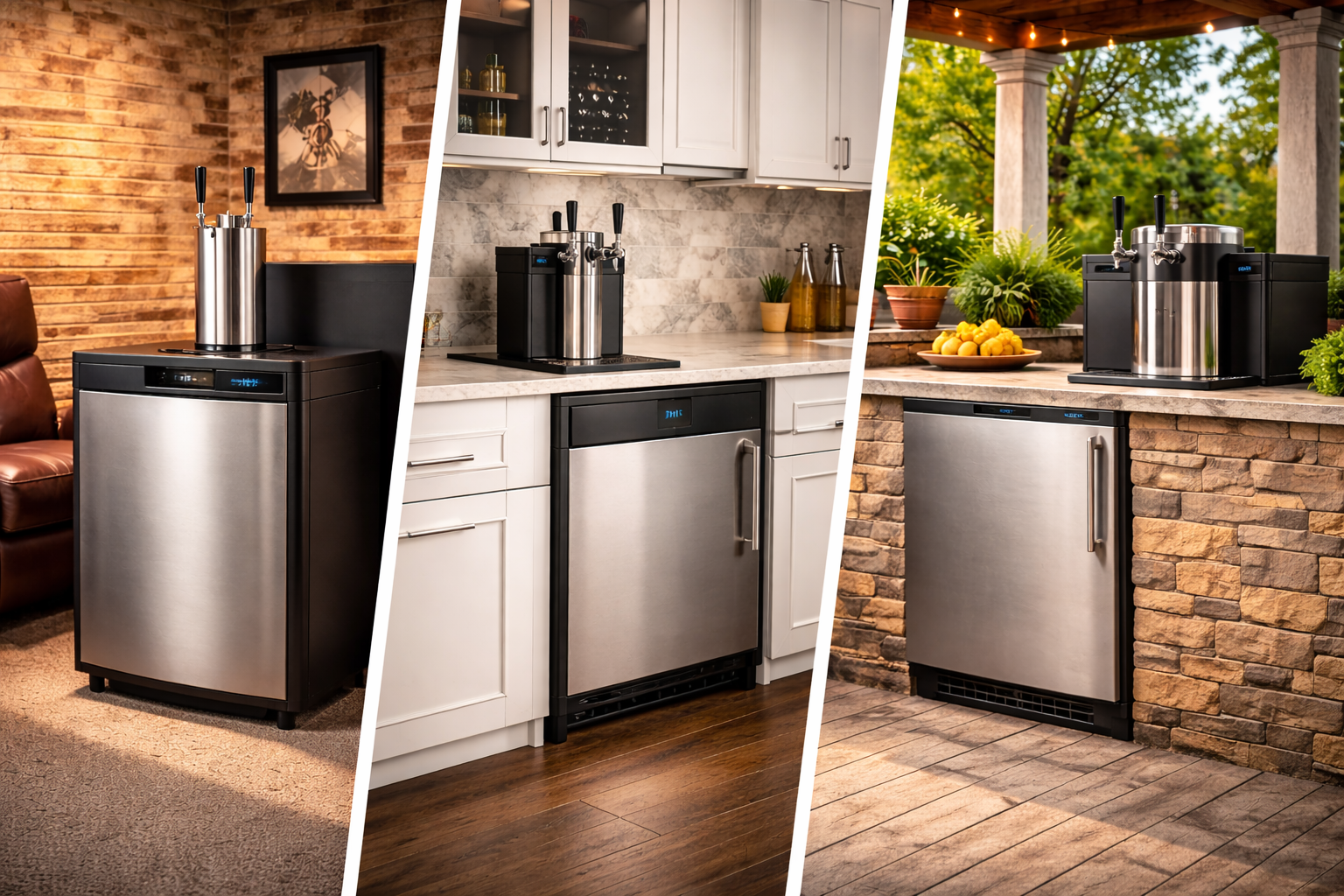
This is the mistake that hurts the wallet fastest: buying an indoor freestanding unit and sliding it into a tight cabinet opening because “it basically fits.”
It doesn’t. Not really.
Front-venting units are built to dump heat from the front. Freestanding models usually need breathing room at the sides or rear. If you trap that heat, you are asking the machine to work harder than it should. That can show up as poor cooling, more strain, and a setup you end up resenting.
Outdoor placement has its own version of the same bad idea. An indoor unit on a patio is still an indoor unit. An OSHA page on compressed gas is about cylinder handling rather than patio furniture, but it reminds you that draft setups are not decorative objects. They are appliances with gas cylinders attached. Placement matters, and so does basic common-sense handling.
Here is the clean install breakdown:
- Freestanding: best for open floor placement indoors where the chassis can breathe properly.
- Built-in: buy this only if you need an under-counter install and the unit is built for front ventilation.
- Outdoor-rated: buy this for covered patios, outdoor kitchens, and hot-weather exposure. Shade still helps. Outdoor-rated is not a free pass to ignore heat.
I would take a plain-looking unit that is right for the install over a prettier wrong one every time. Once the unit is in place, install fit matters every day. Door finish matters for about six minutes.
Check this before checkout: If the kegerator is going under a counter, look for front ventilation in the product details. If you cannot confirm it, do not guess.
Chill the keg, balance expectations, and stop blaming the machine for foamy pours
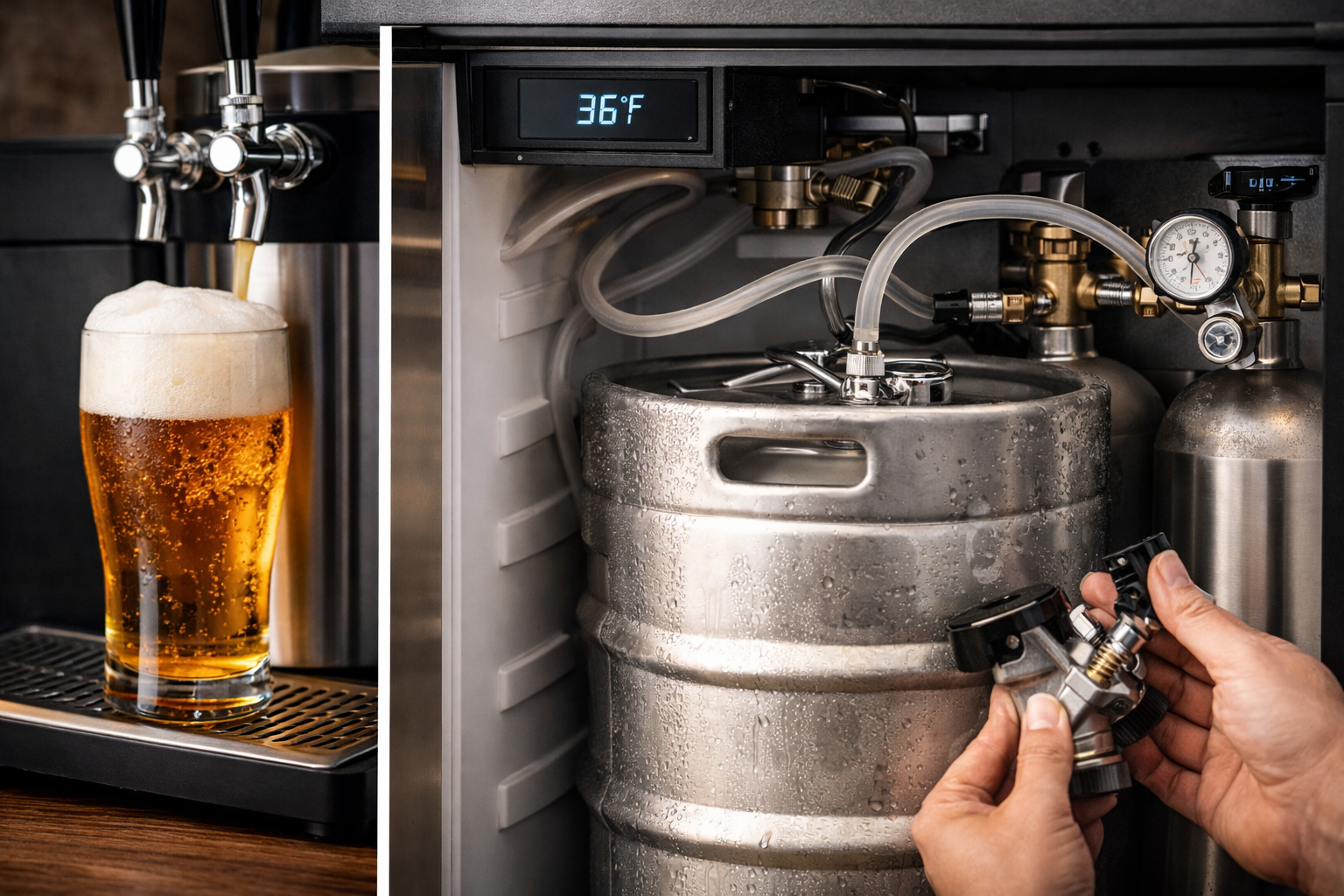
A warm keg in a cold box is like tossing a room-temperature soda into the freezer for ten minutes and acting surprised when it still pours rough. The outside cools first. The center takes time.
The Brewers Association’s draft manual gives one of the handiest real-world reminders in this whole category: a keg that reads around 44 degrees Fahrenheit can need roughly 18 hours to return to 38 degrees. Their guidance also notes that a keg can warm meaningfully in just a few hours outside stable cold storage. Read that first, and a lot of “my kegerator is junk” complaints suddenly make sense.
Three things cause most first-week foam drama:
Step 1. Chill the keg and get a calm first pour.
Give the keg a full day to settle and chill when possible. If it arrived warm or sat in a car, be patient. This alone fixes a lot.
Step 2. Set serving temperature and stop fiddling every hour.
For most draft beer setups, the sweet zone is around 36 to 38 degrees Fahrenheit. Keep it steady. Constant knob-twisting tends to make people chase ghosts.
Step 3. Check the obvious hardware and kill easy problems fast.
Look at the faucet, coupler, and lines. Sticky parts, poor seals, or neglected cleanup can wreck a pour that has nothing wrong with the refrigeration body.
| Symptom | Most likely cause | What to do next |
|---|---|---|
| First pours are all foam | Keg not fully chilled | Wait, chill fully, then pour again |
| Beer pours warmer than expected | Temp set too high or poor placement | Check setpoint, airflow, room heat |
| Off flavor, weird mouthfeel | Dirty lines or faucet parts | Clean draft path before blaming the beer |
This is the part of kegerator ownership nobody brags about on product pages. Getting a good pour is not just about the machine. It is about the keg being cold enough, the setup being clean, and you not trying to rush physics.
Clean less often than this and even a good kegerator starts tasting worse
Dirty lines make expensive gear taste cheap. That is the blunt version.
The Brewers Association draft manual sets a clear cleaning baseline for beer lines: every two weeks is the usual minimum bar. Some setups get cleaned more often. Home users see that and sometimes think it sounds obsessive. Then they taste old residue through a faucet and realize, nope, that was the real maintenance cost all along.
Routine care is not hard, but it is regular:
- Clean beer lines on a steady schedule.
- Take care of the faucet and coupler, not just the keg body.
- Wipe spills and the drip tray before sticky buildup gets gross.
- Check seals and connection points while you are in there.
The weird thing is this: buyers will compare compressors for an hour and then treat cleanup like an optional side quest. It isn’t. A kegerator is a draft system, not just a cold box with a tower on top.
There is also a low-key safety angle. CO2 cylinders should be handled with some respect and kept secure. You do not need panic about it. You do need basic care, decent placement, and a setup that is not getting knocked around.
A good honesty check
If you already know you will hate line cleaning, a beer fridge may suit you better than a kegerator. That is not defeat. That is fit.
Know when not to buy a kegerator and you will save yourself money and hassle
Sometimes the right answer is no kegerator at all.
If you drink slowly, like to switch styles often, and do not want cleaning on the calendar, a beer fridge is usually the calmer buy. If you brew in small batches and just want occasional draft-style serving, a mini keg setup can scratch the itch without turning part of the room into a draft station. If your place has no good floor spot and no valid cabinet install, a kegerator can become a bulky compromise you talk yourself into liking.
There is also the “looks great in theory” trap. People picture game nights, backyard hangs, and one perfect pint after work. Fair enough. But if the real pattern is a couple of cans on weekends, the draft rig starts to feel like owning a restaurant tool for a home that never needed one.
Buy a kegerator if you want the ritual, the convenience of tap service, and enough beer flow to justify the space and cleaning. Skip it if you mostly want cold beer storage with no extra chores.
That line is worth being honest about.
FAQ
Can you keep a kegerator in a garage year-round?
Sometimes, but the answer comes from the garage climate and the unit rating. A standard indoor freestanding model can struggle in very hot or very cold garages. If the space swings hard with the seasons, look harder at the manufacturer’s operating guidance or move to an outdoor-rated unit if the setup is truly exposed.
Is a dual-tap kegerator worth it for home use?
Only if you really pour two beers often enough to justify the cost and cleanup. For many homes, one faucet is the cleaner buy because it keeps the setup simpler and still covers the actual drinking pattern.
How long does beer stay fresh once the keg is tapped in a kegerator?
There is no one magic number that fits every beer and every setup. Cold storage, line cleanliness, the beer style, and how the keg was handled all matter. The practical rule is simple: smaller kegs suit slower drinkers better, and clean cold draft systems protect flavor longer than neglected ones.